Wednesday, August 11, 2010

"The [U.S.] Middle Class is Under Assault" says HuffPo. And what about Poor Women in the U.S.? Is that called NON-Assault?


2010-08-10-THIRDWORLDAMERICA.jpg
image is from here
Arianna Huffington, founder of the Huffington Post, is writing about the assault against the predominantly white middle class. (Intro and link are below.) The predominantly white middle class are suffering in the U.S., due in large part to fucked up ways of maintaining and intensifying economic injustice and corporate, government, and military corruption put in place by the last several presidents--whose platforms and policies criss-cross and weave together Republican and Democratic lines.

What makes me a bit furious about stories like this isn't the focus on how the middle class is suffering, exactly. I know too many people who have been living middle class who are currently out of work and whose unemployment checks have finally run out. This has happened because the Congress and the Senate would rather support a CORRUPT war in Afghanistan than extend benefits allowing unemployed people who are looking for work every damn day and who cannot find jobs, to be able to pay for food and housing. (And the U.S. government's completely illegal war in Iraq isn't over yet, either.) The U.S. government's war on people of color globally, and within the U.S. specifically, is still going on and given the ageist, gendered, and raced political nature of poverty, that means U.S. poor people = children and women of color--disproportionately.Which brings me to the matter of being furious.

Why aren't the lives of Black, Brown, and Indigenous women centered in the discussion of "Who is Being Assaulted in the U.S.A."? Because poor women of color face assault from a whole helluva lot of sources: the U.S. government and its agencies and representatives, white people of all genders, the rich/wealthy and their tax breaks and various forms of corporate welfare, as well as evading taxes by having billions in Swiss and other foreign bank accounts--never reported to the IRS. And last but not least, MEN. Each of these groups systematically stigmatises and degrades the public image and social personhood of poor women of color in the U.S., and rarely are the crimes against WOC's humanity discussed in open debate by mainstream media.

An occasional report will surface about some "greater health risk" to African Americans*1, perhaps. And all the sexism and misogyny that Black women in the U.S. endure will be left out of the story.

Or Amnesty International may come out with a particularly searing report on how one in three American Indian [Indigenous] women are raped*2, overwhelmingly by white men they do not know who come onto reservation land to commit this act of disgusting violating and degradation and violence on land that isn't governed by U.S. federal laws the way non-res U.S. land is. So the white rapists know they are more likely to get away with it, for all kinds of despicable reasons.

*1. See, for example, the article below, in which a white woman is an "expert" on African American health-risk factors. Note how she DOESN'T state that LIVING IN A RACIST SOCIETY is harmful to African American people's health, including by taking a FUCKING HUGE TOLL on their cardiovascular systems! Now how can it be that an "expert" AND The American Heart Association doesn't KNOW THAT? (More commentary and analysis follows.)

Why African-Americans At Greater Risk of Cardiovascular Disease

Related: Heart Disease, High Cholesterol, diabetes, African-American , [and what about WHITE MALE SUPREMACY????  -- JUST ASKING.  -- Julian]


Melanie Thomassian
Monday, August 24, 2009

Cardiovascular disease is the leading cause of death for all racial and ethnic groups in the U.S.—but this is even more evident in the African-American community.
The American Heart Association state that:
  • Compared to the general public, African-Americans have a higher risk of diabetes, high blood pressure, and vascular dementia.
  • More than 40 percent of African-Americans have high blood pressure and are at risk for stroke, which can lead to greater risk for developing Alzheimer’s.
  • African-Americans, as a group, are at greater risk for heart disease and stroke.
  • Every year more than 100,000 African-Americans have a stroke.

According to the American Heart Association's, “Heart Disease and Stroke Statistics,” the total cardiovascular heart disease prevalence in 2006 was:
  • 45.9% male, 45.9% female for Blacks
  • 37.8% male, 33.3% female for Whites
  • 26.1% male, 32.5% female for Mexican-Americans
But, why is there such a significant difference in these statistics?

Given that fact that African-Americans tend to have higher blood pressure levels than Caucasians, this increases the risk of heart disease.

It’s also true that African-Americans tend to have a much higher risk of disability and death from a stroke than Caucasians, partly due to high blood pressure as mentioned, and also because of higher rates of diabetes, which causes complications.

To clarify, the major modifiable risk factors for cardiovascular disease include:
  • Having high blood pressure
  • Having high blood cholesterol
  • Smoking cigarettes
  • Being overweight or obese
  • Being physically inactive
  • Having type 2 diabetes
  • Some other factors to note include high stress levels and drinking too much alcohol
What needs to be realized is that these conditions, and their resulting complications do need have to be a way of life for African-Americans—heart disease is not necessarily an inevitable outcome for you.

Perhaps you have a family history of heart problems, if you already know you have an elevated risk, one of the most important things you can do is to visit your doctor at least once each year for a general health check-up.

Over the next few weeks I’ll be focusing on specific ways to reduce your risk of suffering heart disease complications, including looking at what you can do right now to lesson these complications, and also taking a look at diet and exercise, etc, so stay tuned!

Don't forget to drop me a line with any queries or concerns and I'll try to answer them promptly!

Do you struggle with healthy eating or weight loss? Get your free ebook on how to break bad habits by visiting the award winning Dietriffic.com. Authored by registered dietitian, Melanie Thomassian.

*          *          *

So what "bad habits" is any Black person in the U.S. supposed to break that will cause "other factors" to be less harmful? Aren't "high stress levels" caused by the myriad ways white supremacy bears down ruthlessly and relentlessly hard on anyone who endures it daily? Perhaps some deep, relaxing breathing? Pilates classes? I don't fucking think so!

Here's the goddamned sad reality: if you're not Black, you don't know what white supremacy feels like to a person who is Black. And most people who are not Black don't want to know--don't care to find out, don't want to empathise, and, especially, will not organise to end white supremacy's devastating harm to African Americans currently living in the U.S.

To Melanie and to the AHA: please update your recommendations to include radical systemic, institutional change, organised by anyone and everyone with full accountability directly to African American women, to weed out all expressions and manifestations of white supremacy as a PRIMARY way to positively impact the cardiovascular health of African Americans.

*2. When will dominant media report and make recommendations that the following MUST END: the RAPE, BATTERY, HARASSMENT, OBJECTIFICATION, PIMPING, TRAFFICKING, and other forms of male aggression, violence, violation, degradation, humiliation, assault, and indignity against the personhood and humanity of women of color? When will THE SYSTEMATIC RAPE OF WOMEN OF ALL COLORS BE TERMED "AN ASSAULT" akin to the one Ariana Huffington notes is currently happening to the U.S.'s "middle class"? When will the poverty and sexual assault that women of color endure in the U.S. be seen as news-worthy? When will the stories and realities of what Indigenous North American women matter as much to Arianna Huffington and the largely white MALE press people who report on matters of "assault" against various demographics of people in the U.S.?

See below for Arianna Huffington's report on the disproportionately white middle class. And please don't forget that except perhaps for life on reservations in this country--people who are part of the Fourth World, most people in the U.S. have no idea what life in many parts of the Third World is like. And those of us in the Last World will have to establish respectful, mutual relationships with people, in which we are not materially or emotionally exploiting and psychically pillaging the lives of people who live in the Third World.

Arianna Huffington: Third World America: Chronicling the Assault on America's Middle Class...and the Solutions


Arianna Huffington: From foreclosures to unemployment to household debt to bankruptcies, the American middle class is under assault -- and America is in danger of becoming a Third World nation. That's why, in conjunction with the publication of my upcoming book, Third World America, HuffPost is launching a "Third World America" section to bear witness to what is happening to the American middle class in small towns and big cities all across the country. Every day, we will also focus on the solutions that are making a difference in the lives of ordinary Americans, and offer many ways for you to get involved -- things we can all do to make sure we never find ourselves living in Third World America. Start by watching this video, taking our Pledge for the American Dream, and sharing your story. Click here to read more of Arianna Huffington's report.

Tuesday, August 10, 2010

"ah" on Yahoo Answers thinks it's "ha-ha" funny to insult Andrea Dworkin

image of anti-misogyny statement is from here

What follows are recent questions posted to Yahoo Answers by someone who goes by the name of "ah". I'm not impressed. Fortunately, Toto takes him on. Thank you, Toto.

Open Question

Is Andrea Dworkin the sexiest left wing woman?

  • 12 hours ago
  • - 4 days left to answer.

Additional Details:

Or WAS? This fine female specimen is dead.
12 hours ago

Answer:
What intellectually gifted individuals have said about her:

When I read Andrea Dworkin's Our Blood in the early Eighties I was impressed, but it was her Right-Wing Women which convinced me that a substantial new voice had joined those of the other innovative feminists I admired. With its brilliant insights into the Right's anti-feminism, why women often choose conservative politics contrary to their specific interests, the book offered an advance in feminist political thinking almost as radical as Sexual Politics.

Just as Orwell was roundly attacked by the liberal left for daring to suggest that Stalin was as bad as Hitler, so Dworkin seems to arouse the ire of the left as thoroughly as the right! I have never seen such vitriolic reviews as those she receives. Yet her analyses of social problems -- femininist or otherwise -- are breathtaking in that you find yourself constantly saying -- Of course! That's why -- And in this she has the same effect as Tom Paine when he wrote Common Sense and The Rights of Man. Yet we live in very different times, when any form of criticism of the status quo is repressed, minimalized or mocked and Dworkin has received a barrage of heavy duty artillery.

Andrea Dworkin was a brilliant writer, philosopher, activist, and human being. She also was critical of the left as well as the right-wing.

Degrading a brilliant human rights activist is a sad act that only functions to degrade the person who does so. Your question, AH, is crass, immature, and insulting to humanity.

Source(s):

Open Question

How do I get over my crush on Andrea Dworkin?

I saw this woman's picture a few weeks ago and I have not been able to get her off my mind. It was love at first glance. I started looking on Google to try to find a way to get to her and court her but I learned that she passed away in April of 2005. This is heartbreaking. She is the perfect female specimen.
  • 9 hours ago
  • - 4 days left to answer.
Answer:
I recommend you develop the skill of not putting down human beings and that you show respect and regard for human rights activists who care about justice and ending oppression.

Stopping the many atrocities that are happening around the world will take collective action. Things like rape, sexual trafficking and slavery, racism, and genocide.

Your action here isn't helping that effort.

Your question, as stated, comes across as very immature, actually. If you'd like to learn about her love for humanity--for women and for men--and what she cared about, fought for, and considered important, please read the interview linked to below.

Source(s):

Responding to Questions about Misandry: a "How To" Tutorial, from Yahoo Answers

image is from here
I'm not sure I'm up for doing it, but someone named Toto Gotawa is. Below are three examples of how to honestly and effectively answer questions about the non-problem of women disrespecting or "hating" men, which is what some men want the rest of us to believe is a significant and serious human rights issue.

You have to be pretty damned ignorant about the systematic human rights abuses and atrocities occurring across the world to believe feminists are an enemy of anyone at all! And that level of ignorance usually comes from living in a structural political location high above everyone else--a position of privilege and entitlement to make anything you endure that's painful seem, using smoke and mirrors, "far worse" that what white het men do to everyone else every day. People being raped, terrorised, and mass murdered--usually and commonly by men, are serious human rights issues. Custody of children being given to battering and incest-perpetrating men and not to the abused women is a serious human rights issue, as is courts not offering appropriate levels of protection to women terrorised by men. Man-hating ("misandry") is not. And a few quotes from a few feminists taken out of context doesn't make it a serious human rights problem, in case you weren't sure about that.

Resolved Question

What do you guys think of misandry?

Misandry is a term used to explain a hatred or prejudice of men or boys.

http://en.wikipedia.org/wiki/Misandry

Its a pretty rare term to use, considering the society we live in nowadays. Let me ask you this, when was the last time you heard something positive on the news about a man? Or better yet, when have you ever heard that a man hasn't committed a crime or done something he shouldn't of?
"A man has raped...." "A man has killed...." "A man has stolen..." Is all you will here. Mostly because there's a constant media barrage saying that men are evil or chauvinistic.

http://www.youtube.com/user/manwomanmyth…

The above link shows a video that focuses on daily society and the elements of misandry. Watch it, I think you'll be surprised.
  • 1 week ago

Best Answer - Chosen by Voters

Media doesn't have a term for the crimes men commit against each other. I think "misandry" should refer to the social problem of men degrading, beating up, raping, and murdering other men. There's not enough media attention on prison rape, for example.

Wouldn't it be appropriate for the media to report honestly on who commits the violence most often? Men are also far more likely than women to be the victims of violent crime, with the exception of rape. Black men and other men of color are portrayed by the media as *the* perpetrators, not white men. See fair.org, linked to below, about racism and the mass media.

In the West, you'll find that two problems with the media is racism and anti-gay bigotry. There is no significant bigotry against straight white men in those countries, or anywhere else, really. In the media, straight white men are usually portrayed as the *victims* of other groups of people:

--of men of color, who are stereotyped as thieves and gangsters, even while we watch Tony Hayward and the rich white men of the U.S. Financial and Banking industries cause their companies to need bail-outs--but they still get their million dollar bonuses and get re-employed. In the U.K. the targeted group is Middle Eastern and Muslim men, not white or Christian men. In Australia, the bigotry is aimed at Black and Indigenous people. In the U.S. it is usually Black and Latino men who are scapegoated, with Mexican men being reported to be "stealing" jobs from white men (media's focus on white men as victims).

--of gay men trying to "destroy marriage" for example, by wanting equal rights. When white straight men in North America got a disease, called Legionnaires, it got all kinds of media attention--it was seen as a serious problem. When white gay men got AIDS in the 1980s, Ronald Reagan and major news media, wouldn't even talk about it--for years. It spread and has killed 300,000 gay men in the U.S. Reagan and the media would have spoken out right away if that population impacted was straight white men, just like they did with Legionnaires. Outbreaks of Legionnaires' disease receive significant media attention. However, this disease usually occurs as single, isolated cases not associated with any recognized outbreak. (Linked to below.)

The discovery and spread of HIV and AIDS was met with governmental indifference—specifically in the United States—to what was initially perceived as a gay disease. I also link below to a website that shows exactly which populations are most impacted by HIV/AIDS: there's very little media coverage about it now, because it mostly impacts poor people of color--disproportionately women and children.

--of women, with feminism being blamed as victimizing men. It is doing things like addressing the problem of women not being paid as much as men. Women earned 59% of the wages men earned in 1963; in 2008 they earned 77% of men's wages—an improvement of about half a penny per dollar earned every year. Feminists fighting for basic human rights that white men complain about as "man-hating" is a product of media distortion--it's always been feminists who want violence against boys to end, not men. Catholic priests are all men because they don't allow women to be priests. It would be a whole lot better for boys if the Catholic Church did.

Did the media tell you that 3000 women are killed each year in the U.S. by the men they live with or leave? And that's the same number of people killed by the Taliban on September 11, 2001. The media will tell us how many U.S. soldiers die each week in Afghanistan, because those men are seen as usually white and straight, or "boy-next-door Americans." Their deaths matter to the media.

When is the last time you saw anything in the major media about what's happening to Native American men--and women? Did you know that one in three Native American women are rape survivors--with 80% of the rapists being white men? (Link provided below.)

When white men do commit crimes the crimes against women are usually not reported. Usually such crime is blamed on the man being drunk or on the woman being "a gold digger," who was "out to get him" like with the recent Mel Gibson case. Media loves to blame women for men's violent behavior. I hope you can see now that straight white men are a very privileged and protected group in the world, and are in charge of every major social, religious, medical, media, and political institution in any country where they are a majority.

When men of color commit crimes the crimes are seen as "typical" of that group. Only white men can run a business into the ground and get paid well (and rehired) if and when they get fired from their job. What Black men does that happen to? Ask any Black man if he'd be getting a million dollars at the end of a year in which he did his job poorly, and see how much he laughs, or cries.

Source(s):

  • 1 week ago

These two questions can be combined:

J D J D
A Top 
Contributor is someone who is knowledgeable in a particular category.
Contributing In:
Gender Studies

Should "misogyny" and "misandry" have parallel definitions? Why or why not?

According to http://dictionary.reference.com/browse/m… misogyny is "hatred, dislike, or mistrust of women."

That made me think. For a long time, I think I was unduly trustung of women, excessively charitable in my interpretations of female motives and intentions. Now, even in my calmer, more even-tempered moods, I certainly do not trust them. At all. "Hatred" would be too strong a word, but "mistrust"? "Dislike"? Perhaps I am a misogynist.

But then, I thought, many feminists must be misandrists even when they don't say things like Dworkin, Daly, Solanas, and such. After all, a lot of "moderate" feminists express a good deal of mistrust of men!

However, look at this http://dictionary.reference.com/browse/m…
Unlike some dictionaries, they actually do include "misandry". But misandry requires actual "hatred" of men, not mere "dislike" or "mistrust"?

Why the difference? Is it justified?
  • 2 weeks ago

and:

Is misandry even a word?

its not in my YA dictionary I think men just made it up
  • 1 week ago
Toto Gotawa by Toto Gotawa
Member since:
April 14, 2010
Total points:
150 (Level 1)

Best Answer - Chosen by Asker

The question isn't only "is misandry even a word", it is also: when it is used as a term, what is it referring to by the users? Is it being used to mean something socially real, or socially imagined?

"Misandry" is a relatively new term actively promoted by predominantly racist and homophobic white men (this may be verified at the "antimisandry.com" website, which routinely uses terms like f-gg-t and b-tch and ignores the reality of white men's hatred of Black men and other men of color). The people who currently promote the word "misandry" want you to believe that straight white men are as oppressed as straight Black men, gay men of any color, and women of any color, and that's not true.

Woman-hating shows up in "men's magazines" and in "women's magazines." It is not only "a feeling" some people have and exhibit. It is much more than that. Don't confuse "a feeling" (such as "misandry") with systems of harm and oppression combined with very brutal and lethal hatred of women. (Link below detailing these abuses by men against women globally.)

Misogyny, unlike "misandry," is a term used to describe patriarchal societies where men's violence, degradation, discrimination against women is thousands of years old and crosses cultures and ethnic groups.

"Misandry", therefore, is not a parallel term for "misogyny", which is what many advocates for its use would support us believing. Misogyny is not just a feeling some men have. It is, more accurately, the interpersonal and institutionalized patriarchal hatred of women worked into every aspect of society: male dominated and controlled customs, media, religions, and laws.

There are no "parallel" societies in which women's violence against men is endemic, supported, protected, encouraged and made into "sexy" entertainment, produced for women, giving women billions of dollars annually in profits. The pornography business does make billions of dollars annually for straight white men. There are almost no societies left on Earth that are not patriarchal and male supremacist. And the more matriarchal societies that do still exist do not practice anything that can or ought to be called "misandry".

There are patriarchal/male supremacist societies that make men's hostile rape of women seem "evolutionarily necessary," or naturally inevitable. Some misogynist AND man-hating apologists for rape actually argue that "men, naturally, are rapists" as in the published book "A Natural History of Rape: Biological Bases of Sexual Coercion", by two Australian white men, Randy Thornhill and Craig T. Palmer. (Link below.)

There are no feminist books that argues men's rape of women is "natural" or "inevitable". Or that males are born to rape. Not one. Feminists believe men can stop raping women and must stop it. That's a very pro-humane view of men. There are far too many men who argue they "couldn't stop themselves" from committing rape against women. And often rapist men blame women for the rape, which is pure misogyny. That is misogyny in action, socially and legally. Even when men rape men, men do it to make men feel like they want women to feel when they rape women: degraded and terrorized, violated and made to submit to a rapist's hateful will. In prison, the raped man is called the b-tch, for a reason, and that reason isn't an example of "misandry." Once again, it is an example of misogyny, and man-hating among men.

Women who critique men's violence against women aren't man-haters. They are justice-seekers and human rights activists. Don't be fooled into believing "feminists hate men." They don't. Men hate feminists, and men hate men. Men exhibit and practice "misandry", not women. Feminists are humanity-loving people.

See, for example all of the twenty-plus books by radical feminist bell hooks, especially "All About Love" and "Salvation: Black People and Love." (Links below.) See also radical feminist Alice Walker's beautiful, loving letter to Tiger Woods when white men were condemning him. (Link below.) And please understand she was called a "man-hater" for writing The Color Purple, which is anything but that. She endured very hateful criticism from men for writing a book that was honest about relationships between men and women, and among women. Read any of her many books to see how loving of humanity she is. (Link below.)

"Misandry", meaning "man-hating, if it to be used as a term with legitimate social meaning, ought to refer to men's hatred of each other. There is currently no term for this. "Misandry" could be and should be that term.

Source(s):

  • 6 days ago
Another answer:
I think to answer your question we have to look at history, what's going on in the world, and reality. Because the word misogyny isn't just a word: it's a sentiment, a feeling, and an attitude that has an institutionalized ideology behind it called "male supremacy" or "patriarchy".

Forms of hatred, disdain, distrust, dislike, and disrespect are social problems when they dovetail with forms of institutional domination and social control. These dovetailed realities are acted out in the world in really horrible ways.

As a parallel, "homophobia" and "heterophobia" are not comparable terms, if we take them to be reflective of what's actually going on in society. The same with this idea of "reverse racism." This is still a very patriarchal (and white-ruled) society. Misogyny is fused into society, commonly and violently, in a way that "misandry" simply isn't. Nor is "heterophobia." Nor is "Blacks, Native Americans, Latinos, or Asian Americans discriminating (or distrusting or hating) against whites."

Similarly, contempt for the poor is real and is reflected in social policy and prejudice. We see every election that the only economic groups that are ever even mentioned in campaign ads are "the struggling middle class" and "the rich." What is important to challenge is how rich people use their disdain, disrespect, and disregard for poor people to keep them invisible (and abused and neglected) in society and in the media--which is owned by rich people, not poor people, and by mostly straight people, not lesbians and gay men, and by whites, not people of color, and overwhelmingly by men, not women.

Here's the simplest way to determine what is and is not a social problem:
Who owns media?
Who is in dominant places in religious institutions?
Who enforces laws in your community?

Historically and currently in the U.S. the answer was and remains: not women, not the poor, not people of color, and not gay men and lesbians. To pretend terms like "misogyny" and "misandry" are in any way equal, in terms of the harm they do to human beings, is to be SERIOUSLY out of touch with what's going on. Women aren't taking over any time soon, nor are the other oppressed groups I mentioned.

Do some women hate men? Maybe. (I don't know any, but that's just me.) And, so what? So what if some poor people hate the rich?

The problem, regarding gender, is misogyny and male supremacy, acted out against women by men. The overwhelming problem isn't misandry and female supremacy, by any stretch of the imagination.

So I'd argue what when we talk about "misandry" we need to move beyond any one person's feelings, or the feelings of a very small group of writers, most of whom aren't even alive and who didn't even hate men, except for Solanas who is a tiny footnote and not even part of the feminist movement. Dworkin loved women and didn't hate men. Criticizing patriarchal abuses of women isn't "misandry." It's what anyone should do if they have a heart. Why would anyone want to defend rape and battery and sexual slavery? And when those social problems are acted out against males, it's usually by other males.

I do know lots of men who feels as you, and by the way, I sincerely want to thank you for your honesty in telling people what and how you feel. I wish more men did what you do here. My experience is this: men who hold onto a lot of anger at women express it against women, often in things like battery and rape. And even anger at men is acted out against the wife for example. Teen males physically abusing and controlling and dominating teen females is epidemic right now, not the reverse. I only hope you deal with your feelings in constructive, healthy ways, and don't express it at or to women. Thanks for asking this important question.

Here's a related question: what do we call the extreme distrust and hatred AMONG men, for and towards each other? It's men killing men in wars, for example. And men shooting and stabbing each other. What's the term for that? There needs to be that term before we start talking about a social problem that really is just a word more than it is a reality. The fact that we have no term for men who distrust and hate on men says something, doesn't it? If "misandry" referred to that, that'd make sense.

(Yahoo's spell-checker doesn't even recognize "misandry" or "misandrist" as words. There's a good reason for that.)

Source(s):

  • 1 week ago

Ross-the-Teacher Has a PROBLEM. Ross thinks THE PROBLEM is HIS FEMALE STUDENT'S BREASTS being IN HIS FACE...

image is from here

Some days my profeminist work days are easier (and more hilarious) than others. This one is in the Top Ten Most Hilarious. And it would be even more funny if men didn't actually think using the Logical Phallusy employed here by Ross-the-Teacher.

If you think, for one millionth of one second that I believe this is a serious comment sent in earnestness by Ross to my blog, well, you must think I was born late this morning.

But, just for kicks, let's pretend HETERO/SEXIST Ross's question is COMPLETELY SERIOUS, because the truth is that LOTS of het men (AN ASTOUNDING NUMBER, ACTUALLY) do talk about themselves in relation to women in precisely this way: het men blame women for men's behaviors, so men don't have to be responsible for their own behavior and actions. The comment was submitted to an A.R.P. post that makes his question somewhat spurious. Click on the title for the post. It is titled:

"When Men Are Dickheads, They REALLY are Dickheads! See the kind of thinking dickheads do: Read these comments by AllenS and Jason, for example, and "Hoosier Daddy" (get it?), "Trooper York", and "Moose"..."

I've added a bit to my response since posting it to Ross on that other blog page.


WHAT FOLLOWS is a CLASSIC CASE of LOGICAL PHALLUSY, on the part of Ross:

Ross said...
Well I’m teaching a class of adult students and one of the female students who has a beautiful figure and very nice boobs comes into class wearing tight skimpy tops -very sexy looking. Does she not realize that it distracts me from my work. I don’t know why she dresses like that in my class. She seems like a nice girl. I want her to get her exams so she can get into university. I want to focus on her brains rather than her boobs but shes making it difficult for me to concentrate with those boobs in my face. I tried hard not to look at them - but I don’t want to ignore her either - shes a student in my class. What am I to do?
Ross
Tuesday, August 10, 2010 10:40:00 AM EDT

Julian Real said...
Hi Ross, I'll take it slow and sure here in responding to you.

I'd like you to examine your own language in what you wrote to me, because, as a teacher I'm sure you realise how important accurate communication is. So, let's have a look at what you attribute to her and to you--what you see as "her actions" and "your actions" and from there, what are "your responsibilities" and what are "her responsibilities", okay?

Your action/responsibility:
I’m teaching a class of adult students

You are the teacher, the most responsible person in your classroom regarding class conduct. Presumably, if you are teaching young people, you are also the most "mature" person in the room.

Your action/responsibility:  
one of the female students who has a beautiful figure and very nice boobs comes into class wearing tight skimpy tops -very sexy looking. 

This is about YOU determining the value of a female person's body who is a student, and your response to it. You are not owning that however. Instead you are describing what's going on as if she's "doing something to you"--arousing you, distracting you, making it difficult for you to concentrate, etc.

Ross, you're a big boy--in fact, a grown man. You can control your responses to other human beings and behave responsibly, can't you? If you cannot, you have no business being a teacher. Right?

You go on:
Does she not realize that it distracts me from my work.

So there you explicitly state YOUR action--being distracted--as HER full responsibility, not yours. That's a pretty serious error of judgment for a teacher to make. That's what we call "blaming the innocent party".

Your distractions are YOURS. You know there is meditation that can teach you how to be less distracted, right? Are you engaging in that practice? If not, why not?

Do you look at internet pornography off-hours? If so, do you realise how much more prone that makes you to sexistly objectifying women's bodies, regardless of what they are wearing? This has been demonstrated "scientifically" but all you need to do is stop looking at pornography for two weeks and you'll notice how much less prone you are to being "distracted" by women regardless of what they wear.

You then write:
I don’t know why she dresses like that in my class. She seems like a nice girl.

So now your making value judgments about her character based on her attire? That's called blatant sexism, sir. That, again, is your action and your responsibility to deal with, not hers. You wrote: I want her to get her exams so she can get into university.

Nothing you've described tells me she isn't an excellent student. In fact, you've curiously neglected to tell me anything about her except what you are inappropriately preoccupied by.
Tuesday, August 10, 2010 2:44:00 PM EDT

Julian Real said...

Part two of two, Ross.

You wrote:
I want to focus on her brains rather than her boobs but shes making it difficult for me to concentrate with those boobs in my face. 

Ross, she isn't putting her breasts in your face, by your own account.

She comes into class, sits, listens, takes notes, and leaves. Right?

So at no point does she rise up out of her seat, walk over to you, and place your face into her chest, right? So, she's not "putting" her "boobs" anywhere they don't belong, is she? (I mean, they stay in the vicinity of her own chest at all times, right?) I hope you can see how you, once again, are not holding yourself accountable for YOUR actions, and are trying to put responsibility on her for things she isn't doing, that you describe her to be doing.

You wrote:  
I tried hard not to look at them - but I don’t want to ignore her either - shes a student in my class. What am I to do? 

Ross, I really don't think you're being particularly serious here. But just because other people will read this, I'm going to pretend you are asking a sincere question, based on your misperception of there even being a problem here.

There's no problem here other than your unchallenged objectification of a female students' body, and your proclivity to discuss what's happening in VERY irresponsible and sexist ways.

What are you to do? Don't stare at her breasts, stop using pornography and other media that fuse into your brain that women's bodies exist for your eyes and "enjoyment", because that's not what women's bodies exist to do: they exist as the physical part of women's beings. Just like your body doesn't exist FOR women to objectify, be distracted by, etc.

You are speaking in a predatory way, Ross, as if you really don't have control over your own actions. You are using the "logical phallusies" of work-place sexual harassers and serial rapists. As if you "cannot concentrate" enough to teach properly because there's a woman in your class who you choose to objectify in ways that are distracting for you. YOUR behavior, not hers, is inappropriate.

Please do speak to your supervisor about YOUR problem, and also the school or university counselor, immediately and I guarantee, if they are responsible adults, they will be clear with you that this is YOUR problem to resolve without involving your student AT ALL.

And I hope you know that if you approached the student and asked her to dress differently because "your boobs are distracting me too much in my classroom" that YOU would or should be served up a charge of sexual harassment, because that, too, would be inappropriate and irresponsible of YOU to do.

Are you seriously telling me that in the era of the early seventies when males wore VERY tight pants, that heterosexual female teachers should have all complained to administrators that they couldn't teach due to being so distracted? Seriously? Yes, her breasts are above the desk, not below. But she's one student among at least a dozen, yes? So how about this:

Look at her face, and look at the faces of your other students too. That's the only part of them you should be looking at anyway.

If you can't control your own eyes, and where they look, that's a self-control problem that YOU need to get help with.
Tuesday, August 10, 2010 2:46:00 PM EDT

Craigslist founder Craig Newmark Left SPEECHLESS by brilliantly direct questioning from CNN reporter Amber Lyon about His Company Supporting and Promoting Girls Being Pimped and Raped by Adult Men

image of pimp and rape promoter Craig Newmark is from here
It is rare that men's endorsement, promotion, complicity, and financial investment in the rape of girls by men is seen nakedly on the face of a wealthy white het man from the U.S. who is confronted about his crimes against girls. Mass media is usually not so direct on this issue. And the pimps, the rich white male pimps, are usually able to throw their attorneys out to deal with the media so they can avoid being asked what they need to be asked: why are you promoting the pimping and rape of girls? But when Amber Lyon met up with Craig Newmark, she put the questions to him as sharply and quickly as I've ever seen on CNN, as he tries to shift the focus by asking her, "Have you reported this to us?" This is what criminal men usually do: get evasive and argumentative. And, consider the interview her reporting it to you, and us.

Why so, evasive, Craig? You ARE profiting off of the trafficking and rape of girls, after all. Why not just admit it, you PIMP and promoter of CHILD RAPE. I hope you are indicted on felony charges--as many charges as there are ads on your self-monitored website, allowing men access to pimped and trafficked girls. A woman who offered prostitution on Craigslist share her opinion below the article. While it is the case that there are plenty of websites that are run by callous pimps and pro-rape profiteers, their CEOs or web-hosts aren't claiming such things aren't going on under their careful watch.

So, SHAME ON YOU, Craig! And do humanity a favor by turning yourself in and going directly to jail, where you belong. For the rest of your life, or as long as it takes ALL the girls raped under your watch to recover fully from the trauma, the degradation, and the gross violation of their bodies and their human rights.

A writer for the Washington Post, here, accuses Lyon of "ambushing" him. Funny how that word is unlikely to be used when male reporters go after women and men who are participating in criminal activities against children. (Sadly, the author is female.) But let's be clear: Lyon confronted him with the truth of what his company was doing that he said it isn't doing, immediately following a speech he gave in Washington, DC, on, get this: trust. There's a term for men like Craig--not Jewish men, but men of any faith, ethnicity, color, or culture who commit such despicable acts against humanity: a schmuck.

What follows is from *here*.
Craigslist founder rendered speechless by CNN’s sex-trafficking questions 


By Liz Goodwin – Wed Aug 4, 11:50 am ET

The popular online classified ad site Craigslist is set to make about a third of its total revenue from its "adult services" ads section this year. But police and groups working to prevent human trafficking tell CNN the company is lining its pockets with money paid by prostitutes and pimps selling sex.

According to anti-trafficking advocates, some of the women featured on the site are underage and are being forced into prostitution against their will.

When CNN reporter Amber Lyon confronted Craigslist founder Craig Newmark with these accusations in an unplanned interview, the Internet magnate said his company was doing "more than anyone" to combat prostitution ads, before falling silent and eventually walking away from her questions.You can watch a clip of the interview here:


Lyon showed Newmark Craigslist ads that clearly involved women soliciting money for sex. Newmark asked, "Have you reported this to us?"

"Why do I have the responsibility to report this to you when it's your website? You're the one posting this online," she said.

Lyon also told Newmark that anti-trafficking advocates say his site is the "Wal-Mart of sex trafficking." Soon after, Newmark walked away.

"Of the thousands of U.S. venues that carry adult-service ads, including venues operated by some of the largest and best-known companies in the U.S., Craigslist has done the best and most responsible job of combating child exploitation and human trafficking," Craigslist CEO James Buckmaster told the New York Times in April. The company says it is not legally liable for what users post under the Communications Decency Act.

[The first comment under this post is this, at the website linked to above:]

I worked as a prostitute when I was 22. The primary source of my clients was Craigslist. This is a complicated issue, but I feel that it would be best for Craigslist to remove the adult services section off their site - not shut down their entire website. But like someone else said on here, the crime would still continue on; the business would just move to other websites.

Monday, August 9, 2010

From John Perkins: Reject Corporate-Rule in Venezuela

image is from here

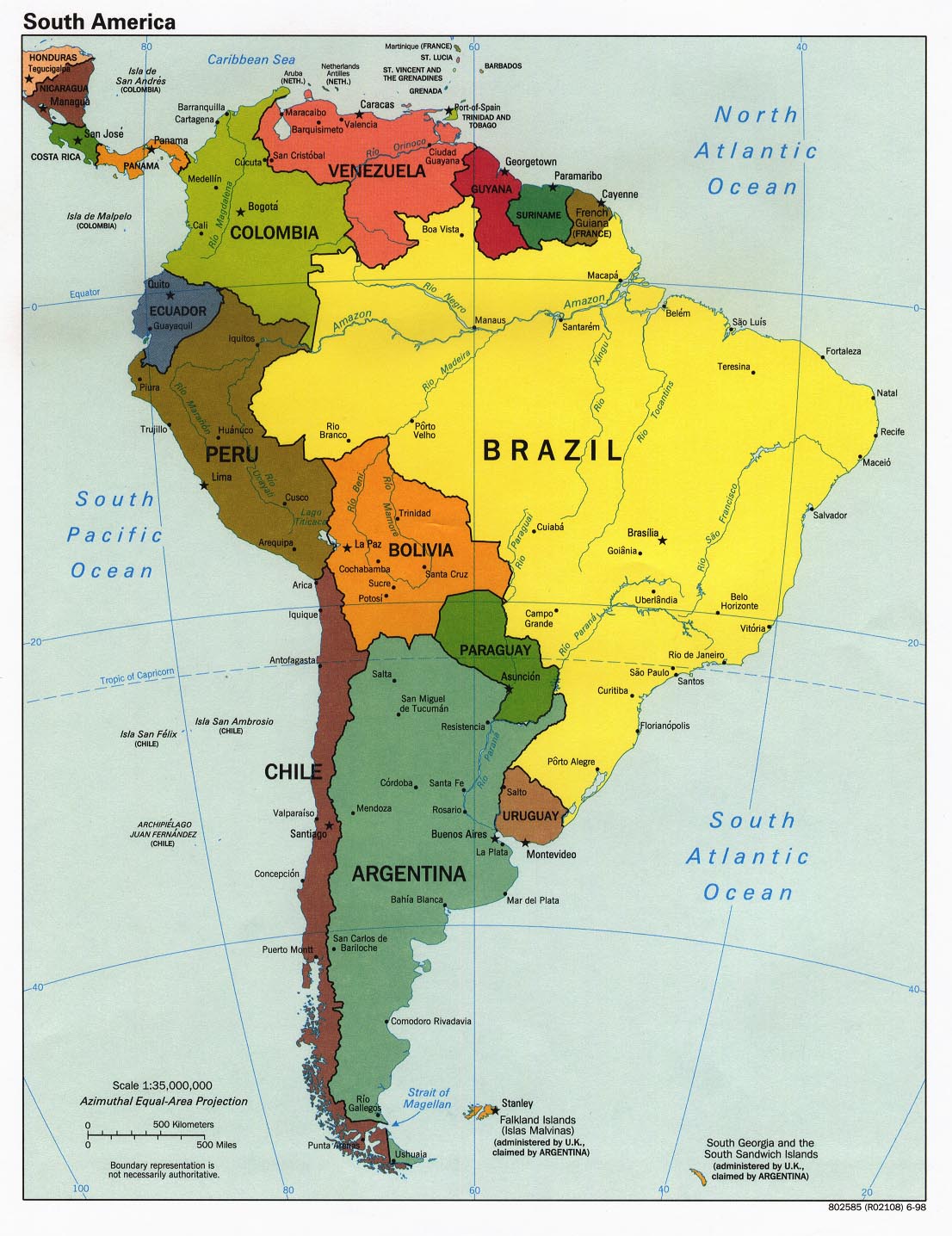
image of map of South America is from here
Hello dear A.R.P. readers across the Americas and beyond,

If I were to publish a list of the ten WHMen I most respect, John Perkins would surely make the list. I have heard him speak, and he shows great love and compassion for everyone, even understanding how the most corrupt people are caught in systems that control them as much as they control the systems.

See *here* at Amazon.com for a list of his excellent eye-opening books.

He's written a great deal about corporate greed and corruption, globalisation, anti-Indigenism, the destruction of the Earth and poor people by the rich corporate leaders and their lackies, who care only about vampiric consumption of the world's resources and making a profit, while caring nothing at all about human, non-human animal, or other life on Earth. Morally bankrupt and ethically unconscious aren't sufficient terms to describe these white het men who are also hit men at the tippety-top of  the systems of atrocity they oversee.

In South America, there has been astounding success in saying a big ol' NO! to globalising corporate capitalism, which also means, necessarily, saying no to many forms of genocide and ecocide.

With varying levels of success, a form of democracy exists across the continent that has never existed in supposedly "democratic" countries like the U.S., where our elections are media-events and where the public is left without information about how federal governmental politics works, what the true agendas are, and how any candidate who makes it to the top of our two party system will likely support the oppressive status quo.

Many leaders across South America are listening to the voices of The People--marginalised people, not the ruling class, and not the Pundits and Pollsters. Over the last decades, the changes have been dramatic and unequivocally pro-human/anti-corporate globalisation, which is not to say there are human rights for all people in South America. Indigenous women activists need plenty of support. So too do Black and Brown women fighting for women's human rights against the deadly mix of white and het male supremacy.

Colombia and Venezuela--note their location in the map--are still dealing off the radar with the U.S. in ways that threaten the region, and Mexico and Haiti are among two countries in Central America that the U.S. are working to manipulate and control in various ways, including militarily and through the spread of the cancer called corporate capitalism, destroying the possibilities of local/regional economies and social justice.

Basically, the U.S. wants military bases in all of these places to then attempt to militarily control more of each region of the world. This is partly how it works, in one of those countries: the U.S. sends weapons to Mexico, which allow more drug-trade/war related murders to happen there, allegedly making the case for increasing the U.S. military presence in that country. Everywhere the U.S. military is present, women are trafficked and raped.

Below is John Perkins latest newsletter:

Reject Corporatocracy Ambitions in Venezuela

Dear Friends,

Venezuela, Colombia, Iran, Afghanistan, Pakistan, Wikileaks, BP, assassination squads - these are times that try our souls (to paraphrase Tom Paine). These are times that raise our ire. These are times for action!

I receive lots of emails about the subjects listed above. In recent days I have been inundated with emails from people who believe the U.S. is about to take action against the Chavez administration in Venezuela and that the action will appear as a grass-roots movement initiated in Colombia . Many ask me to speak out against this.

I have no inside information as to whether or not this is true but I do know that Washington was elated at the election of its puppet, Juan Manuel Santos, to the presidency of Colombia, by the agreement to establish seven new U.S. military bases on Colombian soil, and that "wars on drugs" are often supported by the CIA as a way of financing its own "Black Ops" and also as an excuse for donating US military aid to countries that then are required to purchase equipment made by the corporatocracy (this model was perfected by the British during the 1800s Opium Wars and further refined by the CIA in Asia's Golden Triangle).

Many of my Latin American friends are convinced that the rising drug violence in Mexico is a response to the success of the Colombia drug wars - that it reflects the corporatocracy's determination to take greater control over Mexico, and through it, Central America, and that it is manipulated by the CIA. I can not verify the validity of this theory but it would be not inconsistent with things I experienced as an economic hit man. The fact that so many people are so deeply suspicious of Washington's motives sends a strong signal.

I am speaking out at every opportunity I have. On radio shows, at events where I lecture, and in my writings. I want to urge you to join me and to ask all your friends and your Facebook and Twitter connections to do so also. You and I have the power to prevent such actions - in Venezuela, Iran and throughout the world. We MUST exercise that power. These times are our testing ground.

The tired war machine that our country's leaders revert to in order to promote long-term economic gain for just a few elite must cease.

I'm asking for your help and your participation in raising a storm. Pick an issue or issues - any of the ones listed at the beginning of this article, or others that draw on your personal passions. Please do all the following and together our voices will be heard:

1. Write to every blog you can about this and link to ones that battle corporatocracy
2. Write letters to your local newspapers
3. Send emails to your elected officials
4. Do not buy from BP, Exxon, Chevron/Texaco (destroyed large sections of the Amazon), or Shell (responsible for the hanging of Ken Saro-Wiwa and his companions in Congo). If you must buy gas, do it from Citgo; a Venezuela-owned corporation, it is also the only major oil company that finances education and health services to some of the world's most impoverished people. Write emails to all these companies telling them why you are taking such actions.

We know that all the blustering of the Pentagon and White House over the Wikileaks disclosures is another indication that Washington is trying to cover up the crimes it commits in its rush toward resource domination. Rather than focusing on the real crimes committed by our troops in Afghanistan, Iraq, and elsewhere and the need to bring the guilty parties to trial and assure that such acts are never repeated, the U.S. government directs its energy at ferreting out the whistleblowers.

What we have to do is stop being hoodwinked by the communications people who constantly try to thwart us from reacting to the real issues at hand. We must start demanding transparency in our government and corporations and in their dealings with other countries. We must not let the U.S. propaganda networks blind us with fear. We must not reengage the old war machine in order to create a false economic boost for our country and devastation for so many others.

These are times when the corporatocracy is attempting to consolidate its power. It is up to each and every one of us to stand firm against those attempts. A line is being drawn in the sand in places like Venezuela and Iran. By the attack on Wikileaks. And the crimes of BP. Please take my hand and step across that line with me. United we will stop the U.S. from marching further to the drum of corporatocracy imperialism.

Many thanks and blessings,

John

John Perkins

New York Times bestselling author of "CONFESSIONS OF AN ECONOMIC HIT MAN" and "THE SECRET HISTORY OF THE AMERICAN EMPIRE"

http://www.JohnPerkins.org

http://www.dreamchange.org

Twitter: @economic_hitman

An Open Invitation to the Indigenous and Black women of the Caribbean, and a History of Women's Activism in the Caribbean, by Rhoda Reddock

photograph of Rhoda Reddock is from here
I welcome your stories of struggle and resistance, of strength and sustainability. I also welcome the stories of corruption and control by those who believe Black and Indigenous women should not be the leaders in the countries where they provide the most work and the most care. Your stories may be autobiographical, cultural, political, economic--whatever you wish to express about the conditions in which you live and work. I firmly believe individual, social, and political isolation as well as self-blame and self-ridicule, are all tools and weapons crafted by White Male Master. And I also know this: his days as global leader are numbered.

This invitation is extended, as well, to Black, Brown, Asian, and Indigenous women across the globe.

The email address to send your stories and histories to is: aradicalprofeminist@gmail.com

All materials will be copyrighted to you, in your name. You will hold the rights to your own words and writings.

In solidarity, Julian 

Below, a history of Women's Activism in the Caribbean

About the author:
Professor Rhoda Reddock, former Head of the Centre for Gender and Development Studies, was appointed Deputy Principal of the St. Augustine Campus of the University of the West Indies in August 2008.  In March 2002 she was awarded the 7th Triennial CARICOM Award for Women and in 2000, Professor Reddock was the Claudia Jones Visiting Professor in Africana New World Studies at Florida International University.

Professor Reddock has served as consultant for a number of international agencies, including the United Nations Development Fund for Women (UNIFEM), the United Nations Development Programme (UNDP) and the European Union.

Her main areas of interest are women’s labour; gender and history; and the intersectionality of race, class and gender.

Among her academic publications are the books, Women, Labour and Politics in Trinidad and Tobago: A History; Elma Francois, the NWCSA and the Worker’s Struggle for Change in the Caribbean; Ethnic Minorities in Caribbean Society; Women Plantation Workers: International Experience.  Articles by Prof. Reddock include“Women and Slavery in the Caribbean: A Feminist Perspective” and “Indian Women and Indentureship in Trinidad and Tobago 1845–1917: Freedom Denied”.


History of the Women’s Movement in the Caribbean (Part I)
By Rhoda Reddock
[source: here]

Thursday 1 June 2006


FEATURE ADDRESS TO THE HIVOS/UNIFEM MEETING OF WOMEN’S ORGANIZATIONS ORGANIZED BY THE CARIBBEAN ASSOCIATION FOR FEMINIST RESEARCH AND ACTION – GRENADA 1 – 2, DECEMBER 1998

I would like to begin by congratulating the various agencies and organizations which have brought us together in Grenada this morning to host this very important meeting. I believe it is very fitting that CAFRA – The Caribbean Association for Feminist Research and Acton was asked to organize this meeting as this is precisely the role the founders of this organization saw for it at its inception some time ago.

In the 1980s in the Caribbean the new women’s movement was still relatively young. Those of us who thought of the idea of founding such an organization were spread out throughout the region, battling the detractors who saw feminism as a foreign import and our brothers in the progressive movement who saw us as dividing the struggle.

I remember one of our main thoughts at that time was that an organization such as this would:
give support to the few, at that time individual feminists living and working in our different territories;
provide solidarity to struggles in particular countries or to collective struggles as we were able to do in relation to Free Trade Zones and facilitate and support the strengthening of the women’s movement in the region.

Over the years we have been able to do these things to varying degrees but no one can deny that the movement at this time is at a crossroads. We are facing a number of developments and natural changes and we need to really prepare to meet these challenges if the movement is to continue and grow and complete the massive task of social transformation to which we are committed.

This meeting is therefore timely and I am sure that by the end of it we will agree on the need for more sessions such as this at regional and national level.

Before I go into the challenges facing the movement I want to digress a bit into the past. As many of you know, I have done some exploration of the history of the women’s movement in the region. For me this was very important as it was important to establish a history of women’s feminist struggle in our part of the world from which we could draw lessons. Additionally I felt at that time that no one country or region could have a monopoly on consciousness or action, surely any oppressed group would find ways to fight back. My task was to find out the ways in which women did this in our region.

In my explorations for example I learned that women’s and feminist organization existed in this region since the late 19th and 20th centuries. They may not look like they look today but they nevertheless existed. At a recent conference of Caribbean Intellectuals, Linnete Vassel and I began discussing the possibility of expanding her project on documenting the Voices of Women for the entire region as a testimony to the intellectual tradition of women and feminists over this century and the last.

THE EARLY WOMEN’S MOVEMENT IN THE CARIBBEAN

Tracing the development of the feminist space and the sentiment in the Caribbean via the growth of the women’s movement has been an important contribution to recent discourses on Caribbean feminism. Regional studies have revealed a rich history of struggle and organization by women both in women’s movements and other social movements such as nationalist and labour organizations.

The Women’s Movement in the Anglophone Caribbean has its embryonic form in may of the women’s self-help societies of the 19th Century beginning with the Lady Musgrave Self-Help Society of Jamaica comprising primarily of ‘white’ and ‘highly coloured’ ladies. Although the membership of these organizations came form the upper and upper-middle classes, one of their primary aims was to provide economic support to “gentlewomen who had fallen on reduced circumstances”. By the early 20th century, these were followed by middle-strata women’s clubs and coteries of primarily ‘Black’ and ‘coloured’ women, which campaigned for women’s political rights, girls’ education and early legal reforms (see French and Fordsmith, 1985; Peake, 1993; Reddock, 1994).

In Jamaica, as early as 1901, Ms Catherine McKenzie, member of Robert Love’s Peoples Convention, a member of the Pan Africanist movement founded by Trinidadian Henry Sylvester Williams at the turn of the century, spoke on the subject of women’s rights at the Peoples’ Convention Congress of that year. According to Honor Fordsmith “she argued for equal rights for women and for women’s access to education and to the professions. She attacked laws which discriminated against women and urged then to join the fight to change them” in her own words:
...the rights accorded to women have left much to be desired. Just why woman has been denied all the rights which are accorded to man is one of the unexplained relations of life except that it is man who has made laws denying her such rights (Fordsmith, 1987:161)
Both Love and his mentor, Sylvester Williams were strong advocates of women’s rights and agitated especially for the education of Black women. Love also condemned what we now call sexual harassment of working-class women and supported universal adult suffrage (Fordsmith, 1987:161).

Like their counterparts in other parts of the world, the early women’s organizations combined their concern for women’s status with actions related to charity and social work. The ability and opportunity to act in the interest of others, through charity and social welfare work, at that time brought much prestige to its practitioners and for Black women this improved the status of their race. Additionally it was an area of activity which was not seen as selfish or challenging t the status quo. While to some extent it may have truly represented women’s concern with the plight of others, it was also a legitimate cover for action for women’s rights. In 1936, therefore the First Conference of British West Indian and British Guianese Women Social Workers was held in Port of Spain under the patronage of the Coterie of Social Workers led by Audrey Jeffers.

Working-class women were the presumed beneficiaries of many of the activities of these organizations but they were seldom seen as active participants. Indeed the word ‘charity’ and not ‘sisterhood’ best described the relation between Black women of these different classes. But working-class women were also active groups nationalist organizations, in lodges, friendly societies, church groups nationalist organizations such as the Garvey Movement and most importantly workers and trade union organizations and movements. These women participated n large numbers in protest action over conditions of work, and demonstrations and labour riots for improved working conditions. Some working-class women even founded their own worker or feminist organizations.

Middle strata women’s activists like Audrey Jeffers in Trinidad and Amy Bailey in Jamaica often combined a feminist consciousness with a concern with improving the condition of their race. Many were influenced by various strands of African nationalism and Garveyism. Indeed in the 1920s and again in the 1950s, Amy Ashwood Garvey, first wife of Black nationalist leader, Marcus Garvey visited the region. Ashwood Garvey, feminist and Black nationalist, was founder with her husband of the United Negro Improvement Association (UNIA) in Kingston, Jamaica in 1914. From its inception she founded a ‘ladies division’, and possibly due to her influence the UNIA was one of the few early nationalist organizations which always had positions for women in its executive (Fordsmith, 1987; Reddock, 1994). She was also the only woman among the organizers of the important Fifth Pan African Congress held in London in 1995 where she and another Jamaican woman Alma La Badie raised issues related to the situation of the Black women. As fellow Caribbean, Trinidadian Claudia Jones shad to say in 1949, Ashwood Garvey echoed in 1955:
Very much has been written and spoken on the Negro, but for some reason very little has been said about the black woman. She has been shunted into the social background to be a child-bearer. This has principally been her lot (Padmore, 1963:52).
In the modern era of the transition to self-government and independence, from the 1950’s to the 1970’s, the women’s movement in the Caribbean has also been configured by nationalist ideologies and political positioning. Characteristics of the women’s movement of the region since its inception has been a strong sense of a Caribbean identity, primarily among what was then the British Caribbean. In April 1956, in the wake of the short-lived West Indian Federation, a Caribbean Women’s Conference was held in Port of Spain, on the instigation of Audrey Jeffers, aimed at forming a Caribbean Women’s Association (CWA).

Among the stated aims of this organization was to:

provide the women of the Caribbean with a representative national organization dedicated to the principle that women must play a vital role in the development and life of the Caribbean community;

to encourage women’s active participation in all aspects of social economic and political life in the Caribbean and to work for the removal of the disabilities affecting women, whether legal, economic or social.

In 1958, the first Biannual conference of the CWA was held in the then British Guiana and the second in May 1960, in Barbados (Comma-Maynard, 1971:89).

Notably in this regard the emergence of women’s arms of the major political parties in the region, women were important members of the new nationalist political parties which were emerging in this era, providing a solid block of loyal support which was seldom, however, translated into political office or power (see Reddock, 1997b). In the 1970s, women were also involved in the radical challenge to these nationalist governments such as the Black Power movements in the 1970s and the socialist and New Left Movements which accompanied or followed in its wake.

To a greater extent than their male counterparts, women were denied the franchise through unattainable voting requirements. In some colonies, the age at which women could vote was higher that that of men in others, women were barred from seeking elected office in the Legislative Council until as late as the 1950s (Senior, 1991:152). The experience is varied though, for in St Vincent, women receive the same voting rights as men as late as 1951. In Trinidad, universal adult suffrage was obtained in 1946.

What was clear at that time just as much as now is that the women activists were up to date with developments in the international movement and were keenly interested in these developments. Unfortunately most of us know little of this early history of the Caribbean women’s movement and I encourage you to try to do more work in your own country.

Last week I saw a very earnest and interesting letter from a young woman to the editor of the Trinidad and Tobago newspaper. In this letter she was responding to a very anti-feminist letter in which the male writer had been attacking feminism and the women’s movement. This young woman although earnest clearly did not know much about the early women’s movement. She stated that feminism began in the 1960s.

III – THE CONTEMPORARY CARIBBEAN WOMEN’S MOVEMENT AND ITS CONTEXT


The emergence of second-wave feminism internationally also had its impact in the Caribbean region. On the one hand it caused older women activists of the 1950s, many now aligned with nationalist political parties to once more become concerned with women’s issues, it also stimulated a new generation of women activists, some coming from the New Left and Socialist Movements of the 1970s, while through the influence of the United Nations Women and Development programmes, governments and quasi-governmental organizations at national and regional level were encouraged to establish ‘national machineries for women’.

In the early 1970s therefore there was the establishment of CARIWA, a rekindling almost of the earlier CWA among ht eh older women’s organizations of the region, while later in 1985, there was the establishment of CAFRA, The Caribbean Association for Feminist Research and Action. Unlike CWA and CARIWA, CAFRA, moved beyond the boundaries of the Anglophone Caribbean and its membership includes all cultural and linguistic area so the Caribbean as well as the Caribbean diaspora. For the founding members of CAFRA, one of its important aims was to break down the barriers confronting women in the region. While the other was to support the development of and strengthen the women’s movement in the Caribbean.

The new feminists of the time sought to move beyond the earlier liberal and nationalist concerns of their predecessors who basically sought to improve the lot of their race and sex through improving rights to education, citizenship and political participation. These concerns remained but the new feminists claimed a larger vision which sought to come to terms with both their womanness and their Caribbeanness through a broad-based challenge to existing socio-cultural and economic and political structures. Writing in the introduction to the poetry collection Creation Fire two founding members had this to say:


For a start, the incorporation of the word ‘feminist’ in our name claimed for Caribbean and other Third World women the right to focus on all the strategic issues facing women in our societies, issues which span the range of social, economic, political, cultural, political and sexual. In addition, for Caribbean feminism as we sought to develop it, the emancipation of women and the transformation of exploitative social and environmental relations necessitated a clear challenge to the dominant world economic system and the development policies emanating from it (Baksh-Soodeen and Reddock, 1989: ii).


CONTEMPORARY FEMINISM AND FEMINIST SCHOLARSHIP

One of the most important developments of contemporary feminism in the Caribbean has been the emergence of feminist scholarship and women’s and gender studies. This has developed both within the outside of academic institutions. In 1993, the Center for Gender and Development Studies was established within the three campuses of the University of the West Indies. This was the culmination of eleven years work by the Women and Development Studies groups at the UWI. These Centers have now become bases for systematic teaching, research and outreach in feminist scholarship in the region building on the tradition which was established by the groups.

Alongside this has been the scholarship emanating from women’s research and activists organizations. While these are much more developed in the Hispanophone Caribbean this is also the case elsewhere. For example CAFRA has spearheaded some comprehensive region-wide research/action project sin the area of Women and Agriculture, Women and the Law and Gender and Human Rights. This work has been the advantage of involving and reaching women’s community based organizations in the small non-campus territories. While much of the work has been empirical and aimed at providing information for struggle and advocacy, it has often been informed by feminist insights and theorizing and so challenges traditional approaches in addition to supplying new knowledge.

At the same time it can be said that a Caribbean Feminist theorizing is emerging. Based on the work again of scholars within academia and without. In particular, some of the areas which have been theoretically developed include –
  • Gender
  • Race/Ethnicity and Class
  • Development Theory
  • Labour and Work
  • Differences

THE CHALLENGES FACING THE MOVEMENT AT THE PRESENT TIME

As I mentioned at the start of this presentation, the movement is at a crossroads and there are a number of challenges facing us. In a recent presentation – Stories of Caribbean Feminism: Reflections on the 20th Century, my colleague Patricia Mohammed noted that, for many young people Feminism is dead ‘ism’ like other isms – communism and socialism. She also noted to the amusement of the crowd that students at the Mona Campus were surprised that I was still alive and remarked that since they had read so much of my work, I must be dead.

This is interesting to me, as feminism is going through one of its generational transitions. This was the experience in the late 19th and early 20th century, so much so that my generation know nothing of that earlier time and now a new generation is emerging born after the 1960s and 1970s. In some ways we are in a better position in that there is a much larger literature than before, young students are exposed to gender studies courses at the UWI CXC syllabi includes components on women’s history, and other gender related aspects in other areas.

Nevertheless, we now are at a time where we have to manage the transfer from one generation to another. This is something which we all acknowledge and in many ways try to do but maybe we need some guidance on how exactly we can do this and this meeting or future meetings can probably give use the tools to do so.

DIFFERENCE, ETHNICITY AND SOLIDARITY


In large part, the majority of the Caribbean population comprises persons of Afro-Caribbean descent and the struggle of these peoples to recreate and validate themselves out of a tradition of self-hate and ethnically-based oppression is a continuing one. In this context, the concerns and different experiences of Caribbean minority ethnic groups have often been seen as invalid or competing. Recently, feminist scholars of various race/ethnicities, colours, and classes, have challenged attempts to homogenize women’s experience and therefore the path to their liberation. Eudine Barriteau in her 1992 article, critiques earlier generalizations of Caribbean women’s experience. Rawwida Baksh Soodeen for example has observed that in the emerging discourse on Caribbean feminism in the 1970s and 1980s, the analyses almost exclusively concentrated on the African-Caribbean experience within the post-colonial context. She noted that in Caribbean feminist historiography, (with one exception), studies of family and slavery has concentrated on issues of matrilocality, female-headed households and so-called male marginality. All issues which contrasted greatly with the more clearly patriarchal and characterized as ‘afrocentric”. The post-colonial experience however has been one of competing deprivations as all ethnic groups feel that they are discriminated against and all blame each other for the situation.

Baksh Soodeen continues however, to note that the issue of racial differences within the Caribbean feminist movement is quite distinct from that of the USA and Europe in that in the post-colonial situation the African population has had some degree of political if not economic control. As a result she notes the bitterness characteristics of inter-ethnic relations among feminists in North America and the United Kingdom Is not as characteristic of the Caribbean region. She posts that in spite of the real cultural differences among feminist of different ethnic and religion groupings, the larger tradition of anti-colonial struggle based on the commonalities within the differences have contributed to how we have conceptualized ourselves.

Differences in the Caribbean therefore can be a mechanism for showing interconnectedness. In other words, the long-term project of a feminist understanding of difference would not be simply to come to terms with the other or to celebrate diversity, but rather to understand the other within ourselves as we have in many ways been defined in opposition and in relation to each other. As a movement we need to therefore to work among our members against racism and towards an appreciation of diversity.