Showing posts with label LGBTIQA politics. Show all posts

Friday, June 28, 2019

Stonewall Rebellion: 50 Years Ago at Midnight

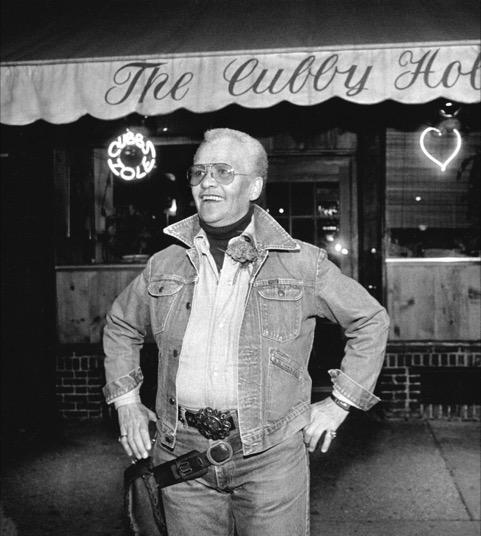
Aug. 2018 Stormé
Stormé DeLarverie is from here
Stormé was always clear: “It was a rebellion, it was an uprising, it was civil disobedience. It was no damn riot.”
Stories are missing from several accounts of what occurred that fateful night. For example, some say the grief over the death of Judy Garland, whose funeral service had ended not long before the midnight uprising, put many of her followers in a less obedient place: the deep grief may have fueled the rebellious anger and rage.

I grew up hearing that. I also grew up with the impression that this was primarily a white gay male story, of men fed up with police harassment and brutality, finally ready to fight back, for dignity and for freedom. Later I learned about Sylvia Rivera, a powerful figure in that story and in the story of NYC's political struggles at that time. There is a question over whether Sylvia was there that first night: https://en.wikipedia.org/wiki/Sylvia_Rivera

I then learned that homeless queer kids, queens, and trans people of color were part of this story.

Among the voices most often left out of the account is that of Stormé DeLarverie, the mixed-race Black lesbian butch who called out for others to do something when the cops invaded the Inn. Here is more about her: https://socialistaction.org/2018/07/31/storme-delarverie-the-lesbian-spark-in-the-stonewall-uprising/

Here, from a documentary, are other parts of the story of that night:
https://www.democracynow.org/2019/6/28/remembering_stonewall_on_50th_anniversary_leaders?utm_source=Democracy+Now%21&utm_campaign=4b622124a2-Daily_Digest_COPY_01&utm_medium=email&utm_term=0_fa2346a853-4b622124a2-191478001

May the rebellion continue, for all who participated back then, their memories, and for all of us who came along and came out after that night.


Sunday, March 6, 2016

Pippa Fleming: a Lesbian Butch Truth-teller

photo of Pippa Fleming is from here
I will not waste your time with many of my words here today. What I just realised, in a kind of palm-to-forehead way, is this: 30 years ago I used to say I was woman-identified, and more lesbian-identified than gay-identified. That was always a statement of political allegiance and affectional affiliation, not ever a demand for others (who I structurally oppress due to male privilege) to include me in their groups as one of them.

Now, I simply want to introduce you to a wonderful person. Pippa Fleming is "a long-time Performance Artist, Actor, Poet, Writer, DJ, Vocalist, Athletic Coach, Shapeshifting Lesbian = A force to be reckoned with!"

Below I hope there appear some working links to some video posts on Facebook.

I welcome you to listen thoughtfully, to take her words to heart, and to share them as acts of honoring and respecting Lesbians, their communities, and herstories.

1. https://www.facebook.com/pippa.fleming.18/videos/10203874688811751/

2. https://www.facebook.com/pippa.fleming.18/videos/10208915234662247/

3. https://www.facebook.com/pippa.fleming.18/videos/10203874688811751/

For more, please visit Pippa's YouTube channel.


Thursday, February 11, 2016

The Hidden Essentialisms in White, Trans, Anti-Radical Feminist Discourse


essentalism Power Point slide is from here

I want to explicitly state a Trigger Warning, in particular for survivors of patriarchal sexual atrocities. There is not anything very graphic below, but particular manifestations of rape culture are discussed by me as an important factor in understanding male socialisation and privilege.

I have had the feeling, for years, that important stuff ain't getting named, when I read some arguments white anti-RF pro-trans people make to discredit and distance themselves from those seemingly essentialist white Radical Feminists. What isn't getting named, are the experiences of most people in the world. What isn't getting named are hidden forms of 'essentialism'. I'm not yet hearing anti-essentialist pro-trans activists call this stuff out in trans-friendly spaces, possibly because that would mean decentering whiteness as a norm.

While I made a very small change to some of the content, the whole of what follows has been copied and pasted from the comments section of an A.R.P. post from late 2011: https://radicalprofeminist.blogspot.com/2011/11/andrea-dworkin-on-transsexuality-and-on.html

The comments, however, are brand new as of February 2016.


Blogger enhanta bodlar said...
Julian: it seems like you believe that trans women specifically are subject to male socialization and thus, male privilege--and in the case that they are also white, another level of advantage. However, despite being exposed to a form of male socialization, transgender women do not receive the same social instruction that shapes cisgender males, as they still internalize the example of female behavior that influences female socialization. Trans women's socialization really is distinct to trans women, and in reality they do not really benefit socially from any element of male socialization they may retain.

Blogger Julian Real said...
Hi enhanta,

TW for discussion that includes violating practices in rape culture.

My response is in a few parts.

Thank you so much for your comment. I'll do my best to clarify my position. Most trans women I have known grew up with some levels of male socialisation, male privilege, male entitlements, and so forth. Some with a great deal of it. Here's one example. A white, class-privileged trans woman was raised to be a boy and a man. She excelled in Anglo-white-masculine pursuits, including using firearms, negotiating a world from the vantage point of having wealth, and having a military career. She transitioned in her forties. She got involved with a nontrans lesbian and became controlling and abusive, in ways typical of people socialised to value power and domination as white men practice it. She was possessive. She leaned on her partner for economic survival. (Her family disowned her and she had no poverty survival skills.) This rendered her especially dependent on her partner, who grew up in poverty. She was sexually coercive and insensitive to her partner's reality as an incest survivor. (Of course some nontrans lesbian women can be batterers and committers of sexual assault: the point is that it is still learned from patriarchal socialisation.)

And, of course, regardless of being trans or not, whatever sex or gender we were or are, we are all raised, systematically, to value maleness, manhood, and masculinity. Some of that maleness and manhood is more despised, due to being raced Black or Brown, being effeminate, and so forth. And some forms of femininity and womanhood are less despised in colonial patriarchies, such as lighter-skinned people of color relative to darker-skinned people of color.

So I would say *we all do*, to varying extents: we are, collectively, subjected to colonial and patriarchal male socialisation, regardless of gender. And, in this view, there's no way a U.S.-raised trans woman would be exempt from such male socialisation, even if one never identified as a male, or boy, or man. If the issue is whether and how we benefit from it, I'd argue that, too, is very complicated, due to age, region, ethnicity, race, sexuality, generation, class, weight, height, build, tone of skin, abilities, and religion, among other variables.

Blogger Julian Real said...
When you state this, "transgender women do not receive the same social instruction that shapes cisgender males", do you mean pre-transition or post-transition? And, are you assuming all transgender women are transsexual, or have transitioned in medical or other ways? The current measure of being trans in trans spaces I'm familiar with is how one identifies, not what one has done in an effort to mitigate dysphoria, to whatever (again very varied) extents that has existed in one's life. Many trans, non-gender conforming, and genderqueer people do not identify as male or female, as masculine or feminine, and so have a different relationship to binary socialisation than do those who find meaning in expressing what they understand to be 'one end' of the binary. I find that younger people in queer communities are less 'observant' of the gender binary.

I reject the cis and trans linguistic binary because many, if not most, trans people also carry various forms of what is termed 'cis' privilege--particularly if one did not suffer greatly from dysphoria and if one is not transsexual. "Trans womanness" is not one thing, does not necessitate having dysphoria, does not mean one didn't feel like the gender of the child they were assigned at birth. For some, dysphoria comes later, for some 'dysphoria' isn't the compelling experience leading one to ID as trans.

Also, many people are 'trans' to gender dominants: whites view Black nontrans women's cisgender as unstable, for example. Many nontrans people who cannot but help present as gender ambiguous, or as effeminate males, or as butch lesbians, are not viewed as 'cis' by nontrans people. We all have our own relationships to the values and victimisations of male socialisation.

You write, "they still internalize the example of female behavior that influences female socialization".

On what are you basing that? Again, who is the 'they'? Black women internalising misogynoir? Many nontrans gayboys positively internalise the example of female behavior that influences their own socialisation--this is true of some non-gay boys too. The very elements that are highlighted as 'female behavior' may be embraced by a group of Brown gay men while rejected by white lesbians.

Blogger Julian Real said...
***TW for discussion of the violations of rape culture***:

You continue, "Trans women's socialization really is distinct to trans women, and in reality they do not really benefit socially from any element of male socialization they may retain."

What is this alleged universal (or 'essential') distinction? I'd appreciate it if you could articulate that.

Do class-privileged white trans women not benefit from any element of rich white male socialisation, if that socialisation acculturates someone to be a more successful navigator of white male supremacist society, such as the corporate business world? What are the lessons learned when one's experience in childhood, when socially regarded as an adolescent boy by other boys, was to not be targeted for sexual 'interest' and assault by those boys? Being bullied and being forcibly fingered are two distinct experiences, are they not? How does not being part of the group targeted for sexually violent groping and physical invasion benefit one? Perhaps the answer is: One isn't sexually assaulted by those boys at age 11 through 13. That's quite a specific benefit of male socialisation, is it not? What about a father by-passing 'the boys' bedroom to rape his daughters down the hall? Are you saying there's no benefit to that socialisation, for the trans child who the father regards as a boy (even if this child feared being discovered as a nonbinary child)? This trans child likely does not live with the internalised disgust and shame of their body that their sisters may carry, nor the fear of men entering their sleeping space. That child's shame may be quite different, but we ought not conclude there were no benefits to not being raped from ages three to ten.

To make the arguments you present, we have to essentialise transness, do we not? And cisness as well? And to standardise male and female socialisation out of the real world, such that race and other factors don't 'factor in'?

I look forward to your responses and to continuing the conversation.


Friday, January 29, 2016

Update on "The Conversations Project: The Radical Inclusivity of Radical Feminism"


upper image is from here; lower image is from here 

To me an important breakthrough, I felt, in my work and that of others was the call to use the term white supremacy, over racism because racism in and of itself did not really allow for a discourse of colonization and decolonization, the recognition of the internalized racism within people of color and it was always in a sense keeping things at the level at which whiteness and white people remained at the center of the discussion.  — bell hooks
Quote, p. 68, Critical Foundations in Young Adult Literature (author: Antero Garcia)

[M]y vehicle was going to be truth: not a global, self-deluded truth, not a truth that only I knew and that I wanted other people to follow, but the truth that came from not lying.  Andrea Dworkin
Heartbreak: The Political Memoir of a Feminist Militant, page 21

There is difference and there is power. And who holds the power decides the meaning of the difference. 
— June Jordan
Quote, p. 220, Virtual Equality: The Mainstreaming of Gay and Lesbian Liberation (author: Urvashi Vaid)


To the leaders and moderators of The Conversations Project:

It appears as though you disappeared a lot of my writing from the Facebook group without any direct notice or personally delivered warning that this would occur. For the record, I do not consider myself as having left the group, nor have I received any notification that I am barred. So I think appropriately, I consider myself a part of it. I'll steer clear of any presumptions, as I have been welcomed, quite recently, to continue to post there. But I feel like I'm getting mixed messages. As I think you know, from the start of my involvement, I stated that I will utilise my blog to process or expand upon things I have mentioned there. So this post is simply the latest, and is not intended to be the final analysis.

My last comment, for the record, was to share a link* as an addition to a relevant discussion within the group. This is, in fact, a five-part conversation on trans and feminist issues, which I'd entirely forgotten about. Here is the full series of conversations with Sara, which occurred in late 2010:

Part 1: https://radicalprofeminist.blogspot.com/2010/11/sara-and-julian-discuss-transfeminist.html
Part 2: https://radicalprofeminist.blogspot.com/2010/11/part-2-sara-and-julian-discuss.html
Part 3: https://radicalprofeminist.blogspot.com/2010/12/sara-and-julian-discuss-transfeminist.html
*Part 4: https://radicalprofeminist.blogspot.com/2010/12/sara-and-julian-discuss-transfeminist_03.html
Part 5: https://radicalprofeminist.blogspot.com/2010/12/sara-and-julian-discuss-transfeminist_05.html


To the readers of this blog:

At this point, I've been in the group a full three weeks. A couple of days ago I thought there was a breakthrough in finally acknowledging what that group is and isn't designed to be or prepared to do. I saw that one of the creators might move forward with radical honesty--I appreciated her so much for this indication, but that got immediately thwarted by another member.

What the group cannot as yet do is deeply interrogate key aspects of gender because triggering occurs when several topics and phrases get raised. It also can't, as yet, get far because it doesn't seem committed to looking beyond white norms except to appropriate concepts, experiences, and cultural understandings of those we whites work so diligently to destroy. Sadly, racist appropriation of things like "inclusivity" and "intersectionality" are among many colonial white norms.

As one feature of The Conversations Project, there is a series of interviews with feminists or queer theorists. Some of those have been posted. At last glance, all the experts are white. The principal authors of the project are also white. (And the most vocal members of the group are white-identified.) The project itself is tethered to work and perspectives that cannot be anything but white-centric and so it loses all possibility of radical contribution to Feminist and Queer theory, unless you think more white supremacist theory is radical. But, for whom could that be true?

Gender, there, has appeared to me to be understood as social and psychological, with political meaning as well. And also scientific, using the work of some neurobiologists to note there are not two 'discreet' genders. But that has never been claimed among radical feminists I have known for decades. The dimensions of gender not well-addressed there are the economic, racial, and patriarchally sexual.

Making room for some marginalised voices is identified as radical--and marginalised voices should certainly be heard. But bringing in usually excluded perspectives while not challenging the oppressive norms or exclusionary practices in the center of the room is also designated as radical. I have disagreed.

To date, the group has refused so much of the depth and dimension of Radical Feminist herstory, such as the more radical theories and activist efforts by white women and women of color; it has created an unfortunately narrow breadth of inquiry, even within an already stifling white discourse. An interview with Catharine A. MacKinnon avoided addressing the core issues in MacKinnon's work, such as the maintenance of sex inequality through harassment, degradation, and speech acts. All of Andrea Dworkin's insights on battery and rape, on occupation and subordination, have been ignored.

So it shouldn't come as any surprise that if a group doesn't, together, welcome dealing substantively with such sharp white activists' work, the work of brilliant women of color would be completely occluded. Beyond marginalised. Audre Lorde, Alice Walker, Gloria Anzaldúa, bell hooks, Winona LaDuke, Patricia Hill Collins, Vandana Shiva--all radically feminist writers of theory and art, practitioners of activism, have not been welcomed and are viewed as off topic, too tangential in focus. Have we not heard precisely this excuse during half a century of feminist discourse--and for many centuries?

The Facebook group pays lots of liberal lip service, however sincerely, to the problem of racism and the value of women of color. But the group, as a whole, or through its leadership, will not acknowledge the degree to which it is a white supremacist space. (If you have not as yet, I invite you to read the first quote that introduces this post.) If anyone from that group, or beyond it, wants more detail, just ask, in a comment here, and I'll explicate several points of critique.

Sadly for me, and as mentioned above, it appears someone there has already removed chunks of those critiques, while giving me no notice of that occurring and no opportunity to collect my work before deletion. This speaks to a problem with ethics and process. And smacks of passive-aggressive censure. I welcome whoever did it to own up to that, in a blog comment, or to otherwise explain their reasoning below. They have endeavored to communicate clearly in the past, so I hold out hope for this occurring here in this case.

My perseverance in seeking to address several limitations within the group was seen as distracting from a stated purpose. But to even believe such a direction amounts to a distraction, means one is willfully committed to a lack of knowledge about gender politics in colonial patriarchies. I'm arguing that not even the most privileged of us can afford to ignore how white manhood and capitalism combine with misogynoir and anti-Indigenism to create patriarchal rape culture. And to grasp it, those of us who are white have to learn about others and ourselves from writers like hooks and Collins. As another white member stated there, to my cheers, white people cannot lead us.

I am reminded daily of the refusal to acknowledge the meaning and force of our whiteness. The refusal was tangible there. Blatantly visible in a number of ways. But denied, which is often enough the first line of defense. (And hopefully the only line.)

In short, the group has not been radically feminist, or radically inclusive, if being either means centering voices and theories of women of color and non-binary POC. Nor has it been one that could go far or deep with its conversations. Here's one example: To ask what is patriarchal about the majority-white conflict between what is termed T--Fs and liberal trans activists, was effectively verboten. To ask which of the dynamics and practices participate in rape culture: forget it. No go. Not even a dead end: nothing paved to even get to a dead end. Partly, the reason had to do with triggering, but not by being triggered by men's violence, per se.

Fundamentally, I think it is a support and education group for a few white trans* people who are trauma survivors. I fully support traumatised people gathering in spaces where they, themselves, define and determine the parameters of their own safety. But the only trauma discussed was committed by white natal women. When the most harm you've experienced as a white person is from a few white Radical Lesbian Feminists, one could argue you've somehow managed to avoid the brunt of what patriarchy forces on people. When the harm is interpersonal to the point that the perpetrators have names (and just a few names), I'd argue we are in the realm of a kind of abuse that is not what attempts to kill most women. Most harm is structural, systemic, institutional, including the interpersonal or intimate expressions of it. To the extent the harm named there shows up in institutions, it is due to its application by white men, not white women. Or it is directly caused and controlled by men across ethnicity.

We were not discussing PTSD as arising from misogynist, institutionalised rapist violence. Or as emanating from racism alone, or from misogynoir. The forms of dissociation and denial I personally witnessed in that minority group have been raced white and were not assigned female at birth. (That is meant to be a deeply political, not an anatomical, point.)

Thus far, the group's efforts have had limited applicability to the actual world of oppression. This is partly due to mining only a few bits of some white radical feminists' work. Then combining that with liberally inclusive elements of white-dominated Queer theory. To be clear: the bits are veridical; the elements are estimable. But anti-feminism--the willed erasure of most women and the sources of their subordination and injury, ought not permeate radical pro-feminist conversations. It especially ought not delineate them.


Saturday, January 23, 2016

Moving Beyond the Turf Wars, by Margo Schulter


Amazon.com: Mini Peace Sign Cutouts (10/Pkg): Kitchen & Dining
peace symbol image is from here
What follows is another note from the Turf War Zone of majority-white Radical Feminist and Trans Activist conflict. A few updates: I consider Tee Eee Rr eFF--just the four initials together, to be hostile language, antifeminist, divisive, and whitemale supremacist. I won't use the term here. Margo doesn't spell it out either, as you'll see. I have been and remain committed to supporting women's space. Including, Radical Lesbian Feminist space, as RLF's define and need it. Trans spaces, as trans* people define it. Nonbinary people's spaces. Intersex people's spaces. In a rapist patriarchy, I support any group of women or any group of marginalised people defining and defending their spaces of safety and sustenance.

This is a guest post, written by one of the women in "Radically Inclusive Radical Feminism" The Conversations Project facebook group: RIRFTCPFG? I need a good acronym, bad. Her name is Margo Schulter. She has been part of Lesbian Feminist community and movement for a long time. Decades.

Moving Beyond the Feminist "Turf Wars"

Julian, having read the "Turf War Zone" statement again, and assuming that this was written by one or more women who, like me, have white privilege, I'd say that we have the same problem on both or all sides: where is the visible and indeed liberating co-leadership of Women of Color, AFAB or trans and/or intersex?

What I'd ask especially my sisters on both or all sides of this "Turf War" with white privilege is this: "Hasn't this four decades of Cold War between sisters, with all of its turning of horizontal differences, tensions, and conflicts into ideologies that verticalize the oppression in the best patriarchal style, really been an exercise in ersatz white-male politics?" All while the promises and demands of the Combahee River Collective go unsupported or `benignly neglected' while we use racism, the Maafa (African/African-American Slave Holocaust), and intersectionality (a term that belongs to Kimberlé Crenshaw and Women of Color, and the rest of us need to share with great humility and respect) mostly as tokens and metaphors.

To make it clear, "verticalizing" here means turning some kind of difference or conflict between women, sisters who are targets of different forms of patriarchal oppression, into a vertical or hierarchical issue where one side represents more "real" or more "oppressed" women, and the other some kind of hierarchal "privilege" that makes them not quite women or not quite human.

Let's quickly sum up this white-male style of verticalizing horizontal differences among feminist and often Lesbian feminist women, AFAB and trans, and intersex too. The Gender Critical Feminist (GCF) school as I've seen it practiced has a woman/trans-"woman" binary in which "transwomen are not women" is a polite version, and "transwomen are men" a less nuanced version. In this approach, there's no need to sort out the often complicated questions of trans women as newcomers to the women's community who've had past male privilege and like newcomers generally need acculturation and resocialization and reeducation. Rather, trans women are by definition either nonwomen or actual men, inherent lifelong oppressors and invaders. That's one version of "us vs. them," which we'd expect in a Cold War based on an ersatz white-male style.

And another white-male approach is the "cis/trans" binary, which holds actually that trans women, here let's say specifically those of us who transition as adults, and are newcomers to the women's and Lesbian communities, actually have and deserve seniority because survivors of lifelong AFAB oppression in fact have "cis privilege." And AFAB Butch Lesbians who every day may face all kinds of risks and oppressions while I enjoy not only white privilege but Femme invisibility -- not to speak of Butch Women of Color like Sakia Gunn who was murdered in 2003 at the age of 15 -- also supposedly have "cis privilege."

What would happen if they gave a Turf War, and lots of women came instead to talk about sex class consciousness, the seniority of AFAB women who have endured female oppression their entire lives, the validity and juniority of trans women, the need for female and more specifically feminist resocialization and reeducation as a lifelong process for those of us with past male privilege as an ongoing experience -- and also the validity of autonomous affinity groups, events, and spaces within the larger women's and Lesbian communities which can draw their own boundaries however they choose?

Quickly, I'd add that just as the Cold War had its nuclear arms race, the term T**F itself has become a weapon that I'm sad to say some of my sisters feel somehow provides safety or strength or protection. The women in 2008 or so who invented the term weren't seeking to dehumanize or degrade, just to distinguish between radical feminist views, just as Lise Meitner in 1938 wasn't seeking to destroy Hiroshima and Nagasaki or put the world at risk for a genocidal nuclear winter or autumn when she and her colleagues discovered nuclear fission. But weaponization is what happened, and Greenham Common is the place to be for feminist women with sex-class consciousness: it's time to "Ban the Bomb!" And I'd add that the T**F missile is absolutely *not" some magical Star Wars system that will "defend" against some equally ugly rhetorical missiles, or at least missives using the delivery system of the social media, targeted against trans bodies that, through fully consensual surgery for example, don't conform to the patriarchal sex binary that "Gender Critical" theory is all too happy to wrap around itself.

And as Cary Gabriel Costello has eloquently written, intersex people are "collateral damage" (his term) in these weaponized Turf Wars. Intersex gets treated as a rhetorical token or talking point rather than a community and movement of people who have faced horrible infant and childhood medical abuse, all for being born under patriarchy with bodies that don't fit the sex binary. The unique reality of intersex oppression raises issues distinct from those of dyadic (nonintersex) people, including dyadic AFAB or trans people, but how many of us who are dyadic women, AFAB or trans, have really become the allies that we can and should be?

There are also nonbinary/genderqueer/intergender people, some also intersex like Hida Viloria, who get neglected or even derided in these "Turf Wars" as the contest as to "Who's the most oppressed binary woman?" (in the white privilege division of the Oppression Olympics) goes on. And nonbinary activists like Cerien are calling us on our binary privilege, a rant I hope that enough of us will be feminist enough to welcome.

But, indeed, where in all this is the co-leadership of Women of Color, that could help liberate us all from these crazy white-male games of horizontal aggression between sisters in the name of feminism? Where is the common sense of Flo Kennedy, Jeanne Cordova (who as a Lesbian Woman of Color in 2013 offered a sane solution to the Michfest controversy), or bell hooks? Maybe if those of us with white privilege really, really owned it and did a bit of self-impeachment of ourselves as "leaders" in the best Indigenous tradition, then we -- the "we" emphatically including Women of Color -- could come to grips with the AFAB/trans thing also and emerge as sisters and allies in women's and Lesbian communities with many autonomous niches.

Any theory or ideology that tells us that a given woman belongs either in no women's spaces or in all women's spaces is inherently suspect as ersatz white-male verticalization of one kind of another. But having Women of Color more prominently and tellingly present in lots more of those spaces just might help end not only the AFAB/trans "Turf Wars" of the last four decades and a bit more between feminist and often Lesbian women, but the larger "Turf Wars" waged by European and Euro-American racism since the mid-15th century against Indigenous Nations and People of Color around the world.

Monday, January 18, 2016

RadFem. Check. LibTrans. Check. RadTrans? Checking.


The title of this post may be seen as mildly cheeky. But it is also deadly serious.

Life circumstances have kept me offline in the last while. A good friend died of metastatic uterine cancer. She was like a sister to me. And then there were other health issues in her family. The cancer and the treatment was brutal and she was increasingly brave with each passing month. The battle ended two and a half years after diagnosis. I know there are so many people fighting or coping with cancer in some regard. Most along with poverty and additional insults and insecurities of marginalisation and invisibility.

But I'm here today to speak to a few things that have been off my radar, more or less, during that period. For example, I have found that a lot more people across a much wider age bracket use the term 'radfem'.

Due partly to my age, I don't experience 'radfem' and 'radical feminist' as synonyms. I grew up before tweeting and texting when feminist terms being shortened was not usually a sign of respect. Such as when Women's Liberation was turned into Women's Lib.

So in my ancient mind, shortening means going from this: [Content Warning: the second image is stupidly sexist.]

women's liberation movement photo is from here
to this:

blatantly sexist visual is from here

So, no disrespect intended to anyone who identifies as radfem or who uses both terms. Lorde knows I'd have more time on my hands if I'd written radfem every time I wrote out the longer version.

Anyway, I realise that in the last couple of years, the shorter term has taken root more widely. And that's not all. What also seems to have amped up are distressing and awfully bitter battles over terrain and terms, land and language.

Whose land comprises the U.S. of Amerikkka? Will the Federal government or individual States or citizens ever hand back significant tracts and regions of Indigenous land, or does the government remain a land-hoarder and destroyer? Will whites ever concede, en masse, that the Confederate flag is a symbol of white supremacy? That people from Mexico aren't aliens. That Muslims aren't terrorists. Will the xenophobic CRAP that spills out of Dumpty Trumpty ever cease? Will Black Lives Matter?

Does it register that some of us don't have clean water to drink, or reliable access to water?

Will Bernie Sanders become the DNC candidate for president: how would he rule, and make reparations regarding government-stolen land and colonialist-dependent wealth? Will Hilary Clinton be the first white woman to be U.S. president?

Hey: If you want great political leadership in this country, I think Winona LaDuke and Alicia Garza are as good as you get. LaDuke/Garza 2020!!!

Winona, a revolutionary feminist, has pointed out how a curiosity, to me anyway, regarding Anglo uses of the term 'radical', relative to many Indigenist traditional values. That is, from an Indigenist point of view, one may see U.S. government policies as radical, extreme, militant, for decades, for centuries. Genocidal. Seen this way, we can concur that Indigenist feminism is deeply Conservative, but not using the term in at all the same way the U.S. Republicrats do. I read that perspective for the first time many years ago in Talking About a Revolution. We're still waiting for that and are literally dying for it to arrive. Too often, though, it is just liberal talk about terms. Here I go with that.

Digging down and scraping the bottom of the barrel of this blog's archives, from 2008, I found this:

What does 'Radical' mean here? It holds up for me.

What I bring with me as a way to understand any form of oppression are lessons taught to me by radical feminists across race, region, and ethnicity. There are many who deeply inform my thinking and feeling. Among the earliest and most significant are Audre Lorde and Andrea Dworkin. But there more contemporary voices of wisdom and radical knowledge on the scene.

I will bring radical feminist theory and agendas, of color and white, with me as I go, never settling into any perspective or practice with colonial patriarchal Certainty. Andrea Dworkin, for one, never advocated for theory being mistaken for truth. She knew theory could be made into reality--to look, feel, taste, sound, and smell like CRAP. And like everything. And like the core of who I am, which may be why so many people feel like CRAP. And the danger to us, in part, is not knowing whose theories we are living inside, which ones we benefit from and protect, and which we are under and must continue to rise up against.

The more liberal academic side of the sometimes-termed RadFem vs. LibTrans turf war is a contest over theory--issues of gender, essentialism, and privilege. But the social and legal side of it is about spaces of safety and struggle. As noted above, it is clear who is fighting for land and language. In some sense we all are. But not equally.

________________

When I approach any conversation about gender, I first center this question: Whose bodies are marked for terrorism and destruction? What I see is that the bodies, the souls, of those who are identified as female, Indigenous, Black, and Brown, especially, are being terrorised. As they have been for centuries, at least. More recently, it is also Black trans bodies that are marked and murdered.

Corporate media would rather tell us of these horrors as individual tragedies perpetrated by one, two, six, or a hundred 'bad men' or 'rogue cops'. Mainstream media will not report the violence as systematic: patriarchal, colonial. Most white people I know are willing to settle for dimensions of mass media's truth. As are most men. I wonder how many other excuses white folk can conjure to excuse a cop's murder of someone not threatening them. I wonder how many rapes have to occur before it is seen as something men do normally, whether or not most men normally do it. In some sense it should not be surprising that rape happens, even while it should always be understood as part of a complex, involving entitlement and the requirement patriarchies have for some people to be femaled, 24/7/365. It is, tragically, an arrogant and desperate need of too many people for access and accommodation; for violence as violation. For land and language.

I am speaking of a need imposed on others, by human beings who are maled, who are always complex and nuanced in their hirstories and their lives, located in positions of privilege and marginalisation, as most of us are. But the color and sex of normal brutality must be noticed and named. I am mindful, heartful, of the violent disappearance of trans and nontrans Black women, murder after murder. And of the reality of rape culture, and how it is tethered both to patriarchy and to colonialism.

Within white spaces, also always complex and multifaceted, the only L  G  B  T movement I've ever seen as being radical was the L. I have looked to white Lesbian Feminist theorists for keen analysis of heteropatriarchy for over thirty years. Among my fav of those philosophers is Marilyn Frye. But there are many. My most fav, however, is not white. She is, as noted above, Audre Lorde.

The _GBT+ organisations and campaigns which are white-led or coloniser-centered, that claim to be radical, do not appear to me to be revolutionary in theory or practice. This has been brought to my attention in detail quite recently.

In some of the next posts, I will endeavor to carefully and respectfully identify what I find to be politically problematic with a facebook group I have been in as a commenter. It is called "The Conversations Project: Radically Inclusive Radical Feminism". It is welcoming and not supportive of flame wars--that alone is rare online. It has tolerated my very privileged presence for almost two weeks: we'll see who exhausts the other first. Hopefully amicable relationships will be nourished. But unowned intellectual liberalism is toxic to me. And denial of any form of privilege by anyone, as a way of life, is atrocity-supporting. When I see it, I endeavor to call it out, hopefully respectfully and with increasing sensitivity to how my own places of privilege effect the reception of the critique.

The two founders are well known in some progressive circles that contend with gender and privilege. Cristan Williams with Trans/Gender politics. John Stoltenberg with what used to be called Sexual Politics. With the doubly radical title as my guide, I presumed they are doing something radically feminist. In at least two senses, I believe they are using the term, well, liberally.

I have already written to them about my concerns, within the closed facebook group. Projects termed radical that are, in theory and reality, liberal, are nothing new. But the name of the project did direct me to a set of expectations and I was intrigued. I am attempting, in many ways wrongly, to hold them to my expectations. It's an unfair thing to do and I can be a pest about it. They have been kind, and I do well with kindness, so I'm working diligently at keeping my critiques clear of passive-aggression and void of shaming under- and over-tones. That in and of itself is good work for me to be doing in an online or offline community setting.

___________________

I will update you, here, on my own issues by noting that I've been continuing to search for terms to locate my sense of myself relative to gender. Given that I believe (I think in a radical feminist tradition) that the subjectivity of the oppressed matters more than the subjectivity of the oppressor, how women experience me is, first and foremost, what my gender is. That means I don't get to control it: the naming. The best I can do, subjectively, personally, non-essentially, while using the English language is "a maled adult". (And, being a good Amerikkkan, I only speak one language.) I'm a white maled adult, nonbinary, with more economic security than most people, which increasingly doesn't have to be a whole hell of a lot; but I have a kind of stability few people have: I can pay my bills on time and have no debt. And, while gay (in this case: maled, attracted to men--very few, but men), I do not engage in romantic or sexual relationships. That means the ways I can harm people interpersonally are dramatically reduced. And, yes, the ways I can be hurt and misunderstood: but that's what the internet is for. Or not.

If we're talking about dominant gender--CRAP-loaded gender--then using a term like 'anti-gender' works well for me. I have been identifying as 'intergender' but as a fierce white Feminist Lesbian called out, doing so locates me, affirmatively, between the poles of a gender binary that's also a hierarchy. That is, such a term, applied to me, reinforces the hierarchy linguistically (her point). I agree. It also pretends that by being 'in between', I may have less male privilege or sense of entitlement than others who ID as men. So, as either trans and cis, or neither trans and cis, and while I don't have heterosexual privilege, and while I'm not of Northern European gentile stock, I am afforded most male supremacist advantages and benefits. No doubt about it. No denial about it. Please.

I yearn for social spaces which share and practice community-enriching, humane values that I learned from radical feminism. Values like listening, self-awareness, accountability, mutuality, humor, and assertiveness. One especially important ethic is radical honesty: digging for the truth of one's feelings and experience, not settling for the views and interpretations of others just because they appear to be mandatory or popular. And not forgetting: we live inside the theories of others--most of whom are long gone, who may not ever have had any living creature's best interests at heart. I leave you for now, with this:
The purpose of theory is to clarify the world in which we live, how it works, why things happen as they do. The purpose of theory is understanding. Understanding is energizing. It energizes to action. When theory becomes an impediment to action, it is time to discard the theory and return naked, that is, without theory, to the world of reality. People become slaves to theory because people are used to meeting expectations they have not originated—to doing what they are told, to having everything mapped out, to having reality prepackaged. People can have an antiauthoritarian intention and yet function in a way totally consonant with the demands of authority. The deepest struggle is to root out of us and the institutions in which we participate the requirement that we slavishly conform. But an adherence to ideology, to any ideology, can give us the grand illusion of freedom when in fact we are being manipulated and used by those whom the theory serves. The struggle for freedom has to be a struggle toward integrity defined in every possible sphere of reality—sexual integrity, economic integrity, psychological integrity, integrity of expression, integrity of faith and loyalty and heart. Anything that shortcuts us away from viewing integrity as an essential goal or anything that diverts our attention from integrity as a revolutionary value serves only to reinforce the authoritarian values of the world in which we live.  —  Andrea Dworkin, Letters from a War Zone, U.S. edition, pages 127-128
Thursday, January 7, 2016

My Statement to a New Trans-Inclusive Radical Feminist Conversations Facebook Group: "The Radical Inclusivity of Radical Feminism"


This is a shortened version of something I posted to a relatively new facebook group. I'll be writing more soon. The bottom line for me about the group is not only am I questioning what is radical about a white-led, liberal discussion project--however well-intentioned, but there is no system of accountability in place there to prioritise the concerns of radical feminist lesbians and radical womanist and feminist women of color I know and care about: long-time friends, colleagues, mentors, and some who probably don't like me very much for operating out of privilege and entitlement in ways that have hurt some women interpersonally online.

This was posted to the membership of this group: "The Radical Inclusivity of Radical Feminism":

I may be working out some of my concerns--stated [in the facebook group] already--on my own blog, because this space, itself, is a bit uncomfortable for me--in part due to it being facebook: I dislike the interface, as I've stated elsewhere here. (I feel the same way about Tumblr and Twitter!) The way my body/mind works and the way these interfaces work don't make engaged, sustained conversation very easy for me. Using the image of offline textual communication, It feels like I'm in a room where lots of sheets of discourse get distributed and are almost immediately covered up by lots of others. One paper gets tugged out from the bottom, notes are added, and it is then lost again. I actually tried to go back to the start of this forum and it was, wait for it... virtually impossible.
More seriously, I also need to be sure I am being respectful and accountable to people who are dear to me, to people who I endeavor to serve in my work. And that simply cannot happen in this space because they are not here, as far as I know!
Response-ability and Account-ability to those I structurally oppress is a core radical 'profeminist' value. One of many things I've learned from radical feminists is that I cannot be outside the structural positions of power and entitlement I occupy and am afforded.
I don't want to accidentally be presenting myself as someone who is embarking on a project that is purporting to be liberatory to children and women of color, to anyone of any ethnicity who identifies as radical, feminist, or lesbian unless that venture is clearly and unambiguously led by radical, womanist, anticolonial, and feminist women of color, in partnership with white feminists. And unless clear and functional systems of accountability to those women are in place. Operative. "Online."


Wednesday, December 2, 2015

The Transformation of Silence into Language and Action, by Audre Lorde (complete text)

Image taken from Autostraddle - click through to see an interesting article on the evolution of book covers.
two images of Audre Lorde's classic feminist text are from here
The full text of the Audre Lorde speech and essay appears below my intro.
So many people I know fight the debilitating, paralysing fear of speaking out, of being themselves to the best of their knowledge and fierceness, of being grounded in their own liberatory power as they work to share that power to make radical and transformative change collectively and responsibly. 
How do we continue these political struggles and campaigns when fear grips us and draws us repeatedly into silence? Is it more important to know what is underneath our fear, or to find ways to move with it? My tendency is to want the understanding before moving into action; it is a useful and self-defeating way to postpone the action. 
Due to the above questions and concerns, the following writing surfaces perennially in my life and in the lives of so many women I know. In order to share it with you, I found it as a PDF document online and have replicated it here, as it appears in Sister Outsider: Essays and Speeches by Audre Lorde (Crossing Press, 1984; republished in 2007 with a foreword by Cheryl Clarke).  
I have, I hope faithfully, corrected one minor typo from the original and several others that showed up in the pasting process. If you find any other typos, please send me a comment or email so that I may correct it. Note: Audre intentionally does not capitalise 'america'. 
This is earnestly presented here under Fair Use law, without any commercial interest and with the sole intention of sharing Lorde's written and spoken wisdom and political efforts to make the lives of Black lesbians and other women of color central to our revolutionary work. That work has been and remains the heart of this blog. 
If you have not as yet, I shall greatly and joyfully encourage you to read all fifteen chapters of Sister Outsider. For now,

The Transformation of Silence into Language and Action*

I HAVE COME to believe over and over again that what is most important to me must be spoken, made verbal and shared, even at the risk of having it bruised or misunderstood. That the speaking profits me, beyond any other effect. I am standing here as a Black lesbian poet, and the meaning of all that waits upon the fact that I am still alive, and might not have been. Less than two months ago I was told by two doctors, one female and one male, that I would have to have breast surgery, and that there was a 60 to 80 percent chance that the tumor was malignant. Between that telling and the actual surgery, there was a three-week period of the agony of an involuntary reorganization of my entire life. The surgery was completed, and the growth was benign.

But within those three weeks, I was forced to look upon myself and my living with a harsh and urgent clarity that has left me still shaken but much stronger. This is a situation faced by many women, by some of you here today. Some of what I experienced during that time has helped elucidate for me much of what I feel concerning the transformation of silence into language and action.

In becoming forcibly and essentially aware of my mortality, and of what I wished and wanted for my life, however short it might be, priorities and omissions became strongly etched in a merciless light, and what I most regretted were my silences. Of what had I ever been afraid? To question or to speak as I believed could have meant pain, or death. But we all hurt in so many different ways, all the time, and pain will either change or end. Death, on the other hand, is the final silence. And that might be coming quickly, now, without regard for whether I had ever spoken what needed to be said, or had only betrayed myself into small silences, while I planned someday to speak, or waited for someone else's words. And I began to recognize a source of power within myself that comes from the knowledge that while it is most desirable not to be afraid, learning to put fear into a perspective gave me great strength.

I was going to die, if not sooner then later, whether or not I had ever spoken myself. My silences had not protected me. Your silence will not protect you. But for every real word spoken, for every attempt I had ever made to speak those truths for which I am still seeking, I had made contact with other women while we examined the words to fit a world in which we all believed, bridging our differences. And it was the concern and caring of all those women which gave me strength and enabled me to scrutinize the essentials of my living.

The women who sustained me through that period were Black and white, old and young, lesbian, bisexual, and heterosexual, and we all shared a war against the tyrannies of silence. They all gave me a strength and concern without which I could not have survived intact. Within those weeks of acute fear came the knowledge  within the war we are all waging with the forces of death, subtle and otherwise, conscious or not  I am not only a casualty, I am also a warrior.

What are the words you do not yet have? What do you need to say? What are the tyrannies you swallow day by day and attempt to make your own, until you will sicken and die of them, still in silence? Perhaps for some of you here today, I am the face of one of your fears. Because I am woman, because I am Black, because I am lesbian, because I am myself  a Black woman warrior poet doing my work  come to ask you, are you doing yours?

And of course I am afraid, because the transformation of silence into language and action is an act of self-revelation, and that always seems fraught with danger. But my daughter, when I told her of our topic and my difficulty with it, said, "Tell them about how you're never really a whole person if you remain silent, because there's always that one little piece inside you that wants to be spoken out, and if you keep ignoring it, it gets madder and madder and hotter and hotter, and if you don't speak it out one day it will just up and punch you in the mouth from the inside."

In the cause of silence, each of us draws the face of her own fear  fear of contempt, of censure, or some judgment, or recognition, of challenge, of annihilation. But most of all, I think, we fear the visibility without which we cannot truly live. Within this country where racial difference creates a constant, if unspoken, distortion of vision, Black women have on one hand always been highly visible, and so, on the other hand, have been rendered invisible through the depersonalization of racism. Even within the women's movement, we have had to fight and still do, for that very visibility which also renders us most vulnerable, our Blackness. For to survive in the mouth of this dragon we  all america, we have had to learn this first and most vital lesson  that we were never meant to survive. Not as human beings. And neither were most of you here today, Black or not. And that visibility which makes us most vulnerable is that which also is the source of our greatest strength. Because the machine will try to grind you into dust anyway, whether or not we speak. We can sit in our corners mute forever while our sisters and our selves are wasted, while our children are distorted and destroyed, while our earth is poisoned; we can sit in our safe corners mute as bottles, and we will still be no less afraid.

In my house this year we are celebrating the feast of Kwanza, the African-american festival of harvest which begins the day after Christmas and lasts for seven days. There are seven principles of Kwanza, one for each day. The first principle is Umoja, which means unity, the decision to strive for and maintain unity in self and community. The principle for yesterday, the second day, was Kujichagulia  self-determination  the decision to define ourselves, name ourselves, and speak for ourselves, instead of being defined and spoken for by others. Today is the third day of Kwanza, and the principle for today is Ujima  collective work and responsibility  the decision to build and maintain ourselves and our communities together and to recognize and solve our problems together.

Each of us is here now because in one way or another we share a commitment to language and to the power of language, and to the reclaiming of that language which has been made to work against us. In the transformation of silence into language and action, it is vitally necessary for each one of us to establish or examine her function in that transformation and to recognize her role as vital within that transformation.

For those of us who write, it is necessary to scrutinize not only the truth of what we speak, but the truth of that language by which we speak it. For others, it is to share and spread also those words that are meaningful to us. But primarily for us all, it is necessary to teach by living and speaking those truths which we believe and know beyond understanding. Because in this way alone we can survive, by taking part in a process of life that is creative and continuing, that is growth.

And it is never without fear  of visibility, of the harsh light of scrutiny and perhaps judgment, of pain, of death. But we have lived through all of those already, in silence, except death. And I remind myself all the time now that if I were to have been born mute, or had maintained an oath of silence my whole life long for safety, I would still have suffered, and I would still die. It is very good for establishing perspective.

And where the words of women are crying to be heard, we must each of us recognize our responsibility to seek those words out, to read them and share them and examine them in their pertinence to our lives. That we not hide behind the mockeries of separations that have been imposed upon us and which so often we accept as our own. For instance, "I can't possibly teach Black women's writing  their experience is so different from mine." Yet how many years have you spent teaching Plato and Shakespeare and Proust? Or another, "She's a white woman and what could she possibly have to say to me?" Or, "She's a lesbian, what would my husband say, or my chairman?" Or again, "This woman writes of her sons and I have no children." And all the other endless ways in which we rob ourselves of ourselves and each other.

We can learn to work and speak when we are afraid in the same way we have learned to work and speak when we are tired. For we have been socialized to respect fear more than our own needs for language and definition, and while we wait in silence for that final luxury of fearlessness, the weight of that silence will choke us.

The fact that we are here and that I speak these words is an attempt to break that silence and bridge some of those differences between us, for it is not difference which immobilizes us, but silence. And there are so many silences to be broken.


* Paper delivered at the Modern Language Association's "Lesbian and Literature Panel," Chicago, Illinois, December 28, 1977. First published in Sinister Wisdom 6 (1978) and The Cancer Journals (Spinsters Ink, San Francisco, 1980).


Thursday, November 6, 2014

Find Sage Smith: a Conversation with CeCe McDonald and YM Carrington*

*The video below features a speech and conversation held at the Jefferson School African-American Heritage Center on November 1st, 2014 to raise awareness about Sage Smith's disappearance and also trans liberation with YM Carrington, CeCe McDonald, GABRIELA-DC, Sage Smith's family and community members. You can also click on this link to access this video: https://www.youtube.com/watch?v=iLI4rxjVJC8

Here is some information about Sage from this website: 
Sage Smith is a black trans woman who went missing on November 20th, 2012 and was last seen at the Amtrak train station in Charlottesville, VA. Since then, various community efforts have sprung up to raise voices around her continued disappearance. However, despite the persistence of family and community members, there are as many questions today about her disappearance as there were in 2012. 
Almost two years later, the family, alongside friends and community members, is putting new energy into this effort to find answers, and we need your help. The Wayside Center for Popular Education is sponsoring a campaign to raise funds that will go towards these efforts to find answers. We have set our goal for $5,000 so that we can ensure that we have the resources to put quality work into the search efforts, and any form of contribution from you or your community will go a long way. 
Sage's case has been written on by various trans activists like Monica Roberts and CeCe McDonald, as well as various media outlets around the region. However, this case still needs much more attention and support than has been gotten and we aim to amplify the voices of those involved in finding Sage.
On the right side of this blog is an appeal for funds to support the effort to find Ms. Smith. 

With thanks to all for your activist efforts.


Saturday, December 15, 2012

Yoko Ono gets Germany's Peace Prize and finally is publicly released from the lie that she broke up the Beatles

photograph of Yoko Ono is from here
There's been a fair amount of news of late about conceptual, musical, performance, and visual artist, Yoko Ono. As you may well know, she's also an environmental, human rights, and peace activist. Recognition and appreciation of a range of her work is happening, as it has on and off over the decades. Yes, much of it, especially her work in avant-garde movements during the 1950s and 1960s, was eclipsed and overshadowed for a time due to her relationship with Beatle John Lennon. And then came the association of her name with the break-up of the Beatles.

The inaccurate association has always been a deeply misogynist and racist one, primarily put forth by white men who love to hate on women and blame them for whatever hurt and pain happens in men's lives. (The assumption that any woman and man sharing power in an egalitarian, non-patriarchal relationship means she must be controlling and dominating him are flat-out misogynistic.)

As all four Beatles have said over the years, the lads from Liverpool were breaking up for a while, starting as early as 1966, due to many factors including growing apart after being so close since their teen years (with John, Paul, and George) and early twenties (with Ringo). But there were also differing levels of interest in drugs and spirituality, financial and business problems particularly since the death of manager Brian Epstein, and assorted musical and legal battles. But Paul McCartney finally came forth recently with this statement in interview with David Frost. (See *here* for more.)
"She certainly didn't break the group up, the group was breaking up," he says, which may do something to dispel decades of hostility directed at Lennon's widow by diehard fans since the group disbanded officially in 1970.
He goes further and says that without Ono opening up the avant garde for Lennon, songs such as Imagine would never have been written: "I don't think he would have done that without Yoko, so I don't think you can blame her for anything. When Yoko came along, part of her attraction was her avant garde side, her view of things, so she showed him another way to be, which was very attractive to him. So it was time for John to leave, he was definitely going to leave [one way or another]."
So now that that's out of the way, let's get back to focusing on Yoko Ono's work.

She and her son, musician Sean Ono Lennon, are speaking out against "fracking" or the process of forcefully injecting toxic chemicals into the earth's rocky crust to fracture it and release oil. It poisons earth and water and also has caused earthquakes in areas that never had them before. Big Oil wants to pretend it's all nice and safe and good for us (them). For more on that, see *here*.

The most recent news is this. It is of note for many reasons. One of them being that the most recent Nobel Peace Prize went to the EU, which does many things but promoting peace isn't among them. For more on how the prize going to the EU disrespects the will and work of Nobel himself, see *here*.

Someone who does promote peace and has done so for over forty years, is Yoko Ono.

Congratulations to you, Ms. Ono, for getting and deserving this latest award.

(You may click on the title below to link back.)

Yoko Ono picks up human rights prize in Berlin


Yoko Ono on Friday accepted a German human rights prize for peace activism with her late husband, Beatle John Lennon, as well as her more recent work championing equality for women and gays [and lesbians].

Ono, who will turn 80 in February, picked up the Rainer Hildebrandt Medal at Berlin's Checkpoint Charlie Museum next to the former Cold War border crossing.

Wearing a black top hat and trouser suit, she gave a two-fingered peace sign as she thanked the jury.
"I'm very honoured to get this award and I will consider this award as an encouragement to do more work in humanitarian causes," she said.

Hildebrandt, who died in 2004, founded the museum to document daring attempts by East Germans living under communism to escape over the Berlin Wall and in protest against the regime's shoot-to-kill policies.

His widow Alexandra handed Ono the prize, which was selected by a jury she said included German President Joachim Gauck, former US secretary of state Henry Kissinger and former German foreign minister Hans-Dietrich Genscher.

"Since the early days of her career, and in addition to her music and conceptual art, Yoko Ono has always drawn attention for her political statements and her fight for peace and human rights," the jury said.

"She is a great proponent of gender equality, and is committed to world peace and the recognition of same-sex partnerships."

Previous winners include jailed Kremlin critic Mikhail Khodorkovsky and assassinated Israeli prime minister Yitzhak Rabin.

The Tokyo-born artist -- raised in both Japan and the United States in a well-off family of bankers -- became a global icon when she married the rocker from Liverpool.

Since her Montreal honeymoon with Lennon, during which the couple called for peace from their marital bed, Ono has used her celebrity to raise awareness for causes.

In 2002, she launched the "LennonOno" grant for peace in Iceland, given every two years.

In honour of Ono's 80th birthday, the Schirn Kunsthalle in the western German city of Frankfurt will present a retrospective of her work from February.

Sunday, June 24, 2012

Pornography is the Depiction and Documentation of Sexual and Racial Oppression

image is from here
Below is a revised and expanded version of a comment I posted to a Kyler J.'s blog, A Radical Black Feminist Teenager. To read her post, titled "Erotica is not feminist and other things like Porn, BDSM, and Prostitution", please click *here*.

This is my response, adding to the discussion:
As a white gay intergender [anti-gender] male who has witnessed the effects of pornography on gay males over the last thirty years, I'll add a few thoughts about how corporate pimps exploit the LGBTIQA community.

I completely agree with you that "lesbian porn" is consumed by het men for het men's pleasure. There's nothing progressive about it in terms of its overall social effect, even if the intention by a very few lesbian producers is progressive. (Needless to say, most "lesbian porn" is not produced by lesbians.) Many times het men have asked me, "What about the porn that lesbians make for themselves?" Aside from noting that the question is blatantly (if not always consciously) self-serving, my response is this: Any such porn is such a tiny percentage of the whole of the horrific pornography-prostitution-trafficking industry; to pretend it actually effects any sort of progressive to radical change in the overall aesthetics or agendas of controlling forces (that, in the Western world, is predominantly rich white het men) is to engage in wishful thinking not backed up by "hard-core" reality. And whatever lesbians make, for whatever purposes, will, if it is public (such as being on the internet or for sale), be appropriated by het men. Once consumed by het men, it is then in service to their patriarchal, misogynistic sexual appetites, which, far too often, are acted out against pimped girls and women, usually poor and of color, with no lesbian empowerment in sight. And, as you well note, most of it is not distinguishable from dominant non-lesbian pornography in overall style and content.

The pornography that is marketed to gay males is also produced and owned by white het males and functions to reinforce white supremacy, het supremacy, male supremacy, corporate capitalism, and Western anti-Indigenous imperialism. Gay males have been willing to consume this material for complex reasons, but the effect on our community has been to teach us how to "do sex" the way patriarchal het men "do sex", except to one another not to women and girls. But the aesthetics of het pornography show up in white gay men's actions. A disheartening example of this in the "legitimate" film industry is the new film "Rock of Ages", which Adam Shankman had a strong hand in shaping as the director: the "look" (which means the racist misogynist behavior and the values) of white het men's pornography is infused into it. (You can get a sense of that from the movie's trailer: http://www.youtube.com/watch?v=USxhXb5VC5E)

The effect of gay male consumption of het male-made pornography has been to promote and promulgate white power, masculinist power, and anti-queer heterosexism among gay males of all colors and ages and to forge an alliance between gay and het men against feminist lesbians who have been taking on the rulers of pornography and prostitution, showing them up for what they are: corporate pimps, serial rapists, traffickers, and slave traders of girls and women of all colors.

The pornography of allegedly "transgender" people has been historically racist, anti-transgender, anti-gay, anti-lesbian, and anti-woman. It, too, serves the same dominant forces mentioned above. And it also promotes some very dangerous ideas about what being transgender is: male-bodied people with silicone breast implants and bleached, straightened hair, for example. Similarly to females in the sexxx-ploitation industries, gay and non-gay males, and intersex and transsexual people are economically coerced to alter our bodies to appear the way white het male consumers, procurers, and pimps insist we appear--and do what they profit from us doing. Similarly to "lesbian porn", very destructive portrayals of transsexual people of all colors are marketed by the pornography industry's owners as a niche fetish for non-transgender male consumers.

Liberals habitually promote "gender" as a social difference in need of greater diversification, while the radicals I know believe that it is the power of capitalism and heteropatriarchal white supremacist gender hierarchies that must be abolished. Gender has been diverse outside of white imperialist societies; this is both destroyed and forgotten by ruling classes of people. To argue for diversification of gender while keeping ruling structures in place is to participate in anti-Indigenous genocidal behavior.

Pornography, as an industry, is virulently anti-queer, anti-woman, anti-female, anti-transgender, anti-Black, anti-Brown, anti-Asian, and anti-Indigenous. The fact that many gay males and other queer people have supported it financially and otherwise only speaks to the effectiveness of the ruling class in trying to convince all oppressed people believe that we need to buy what the ruling class sells as if our sexual and social lives depended on it.