Showing posts with label colonialism. Show all posts

Wednesday, November 23, 2016

The Original U.S. Viral Fake News Story: The Good White Man's Thanksgiving


image is from here
On this eve of Thanksgiving, I will post a link to the true story, not the Good White Man story, of Thanksgiving. The Wampanoag story.

From this website: http://indiancountrytodaymedianetwork.com/2012/11/23/what-really-happened-first-thanksgiving-wampanoag-side-tale-and-whats-done-today-145807, an excerpt:

So the Pilgrims didn’t invite the Wampanoags to sit down and eat turkey and drink some beer?
[laughs] Ah, no. Well, let’s put it this way. People did eat together [but not in what is portrayed as “the first Thanksgiving]. It was our homeland and our territory and we walked all through their villages all the time. The differences in how they behaved, how they ate, how they prepared things was a lot for both cultures to work with each other. But in those days, it was sort of like today when you go out on a boat in the open sea and you see another boat and everyone is waving and very friendly—it’s because they’re vulnerable and need to rely on each other if something happens. In those days, the English really needed to rely on us and, yes, they were polite as best they could be, but they regarded us as savages nonetheless.


Wednesday, January 15, 2014

Audre'y Eby could use your support: create justice and fight racism and misogyny by signing this petition

Below please see the Lakota People's Law Project's photo and the compelling justice story that goes with it. The text comes from their websites. Here is one:
https://www.facebook.com/LakotaPeoplesLawProject?hc_location=timeline

A Lakota mother is fighting to regain custody of her disabled sons, who were horribly abused by their white father and his girlfriend. The racism in the family court system works against Indigenous parents and grandparents, breaking up families and exposing Indigenous children to racism and abuse from caregivers. Please sign this petition and help these teens stay with their mother.
A #Sioux mother in #Iowa has rescued her children from abuse, and now faces arrest! Her children are disabled and the Iowa Child Protection Services is aware of the abuse, but the children were still ordered to be placed back with the abuser. 

Read more here: http://lakota.cc/KKKtRA 
SIGN the petition here: http://lakota.cc/K42dqB
[Photo: The teenage sons of Iowa mom Audre'y Eby and a family friend. Eby is a Lakota woman fighting to regain custody of her disabled sons from her abusive ex-husband.]

A ‪#‎Sioux‬ mother in ‪#‎Iowa‬ has rescued her children from abuse, and now faces arrest! Her children are disabled and the Iowa Child Protection Services is aware of the abuse, but the children were still ordered to be placed back with the abuser. Read more here: http://lakota.cc/KKKtRA  

SIGN the petition here: http://lakota.cc/K42dqB


Thursday, January 24, 2013

Rape, India, and White Male Supremacy


India 'should reform' rape trials
image is from here
Rape is manufactured and mass produced in the U.S. and is marketed all over the world. This is done, in part, by patriarchal and white supremacist men carrying their racist misogyny to other regions of the globe. White men, especially but not only from the United States, travel to many places, including Southeast and South Asia, with the express purpose to rape girls and young women. The men then hide this crime from everyone, including their spouses and children. Millions of girls are trafficked and sold as slaves because of white men's belief that girls and women ought to belong to them to be used and abused sexually, economically, and socially.

I have not written here about the preponderance of rape in India because as a white Western male, I know such news is misused in the West to promote an idea that misogyny is worse in other places than within the U.S. Misogyny is organised and expressed in similar and dissimilar ways around the world; in the U.S. rape, battery, the sexual sale and renting of women and girls, forced sterilisation, restrictive regulations on abortion, economic inequality and capitalist exploitation are among the many ways woman-hating violence manifests. Violence occurs disproportionately against women of color. Indigenous women, for example, are raped more than non-Indigenous women in the U.S., overwhelmingly by white men. But when non-white men, here and internationally, are identified as abusers of women, that is erroneously determined to mean that white men are less violent than other men.

Feminists of all colors have been explicitly and systematically organising against men's violence against women for the last several decades. They have challenged male supremacist entitlements to take what they desire; they have confronted the industries that promulgate the idea that women want to be raped and sadistically hurt; they have fought for economic justice and civil rights, the lack of which keep women vulnerable to men. And even with this level of resistance, men still rape and do other harm to women, mostly with inpunity and with the perverse idea, shared among men, that such violence makes them more of a man.

Men of all colors commit atrocities against girls and women although some cultures have not historically promoted and protected men's commitment to violence. Structurally, socially, and economically, white men are most oppressively empowered and are therefore the most dangerous. Nonetheless, white men promote the lie that men of color are more dangerous: more dangerous to women and more dangerous to men. It is against great and overwhelming evidence that white men believe this.

Such a distorted view ignores the reality that colonial/imperialist invasion by white men into India is part of the story of how rape happens there. It is not the whole story, but invasion by white men anywhere brings the rape of girls and women with it. Military invasion is one form of assault against a country that is carried out with sexual violence against female bodies. Male soldiers commit rape systematically--not all male soldiers, but too many for the rape to not be systemic and protected. U.S. male soldiers rape not only the girls and women of occupied countries, but the women who militarily serve along with them.

This doesn't mean were it not for white men, no rape would occur. It is to notice, however, that white men's chronic and cancerous invasions of other countries and human bodies is historically undeniable but ought not be assumed to be inevitable. White supremacy, male supremacy, and corporate capitalism intersect and become mutually reinforcing.

Below is a perspective directly out of India that takes into account how the sexism of economics factors into the preponderance of rape. It is by the great feminist, philosopher, and activist Dr. Vandana Shiva. I believe her voice is so important and that what she has to say ought to be centered in Western conversations about how to stop rape. I post her words here to hopefully bring her message to a few more people. (You may click on the title just below to link back to the source website.)

Vandana Shiva: Our Violent Economy is Hurting Women

E-mail Print PDF
Source: Yes Magazine

Violence against women is as old as patriarchy.
Traditional patriarchy has structured our worldviews and mindsets, our social and cultural worlds, on the basis of domination over women and the denial of their full humanity and right to equality. But it has intensified and become more pervasive in the recent past. It has taken on more brutal forms, like the murder of the Delhi gang rape victim and the recent suicide of a 17-year-old rape victim in Chandigarh.
In India, rape cases and cases of violence against women have increased over the years. The National Crime Records Bureau (NCRB) reported 10,068 rape cases in 1990, which increased to 16,496 in 2000. With 24,206 cases in 2011, rape cases jumped to incredible increase of 873 percent from 1971 when NCRB started to record cases of rape. And Delhi has emerged as the rape capital  of India, accounting for 25 percent of cases.
The movement to stop this violence must be sustained till justice is done for every one of our daughters and sisters who has been violated.
And while we intensify our struggle for justice for women, we need to also ask why rape cases have increased 240 percent since 1990’s when the new economic policies were introduced.
Could there be a connection between the growth of violent, undemocratically imposed, unfair economic policies and the intensification and brutality of crimes against women?
I believe there is. I am not suggesting that violence against women begins with neoliberal economics. I am deeply aware of the deep gender biases in our traditional cultures and social organizations. I  stand empowered today because people before me fought against the exclusions and biases against women and children: My grandfather sacrificed his life for women’s equality, and my mother was a feminist before the word existed.
Violence against women has taken on new and more vicious forms as traditional patriarchal structures have hybridized with the structures of capitalist patriarchy. We need to examine the connections between the violence of unjust, unsustainable economic systems and the growing frequency and brutality of violence against women. We need to see how the structures of traditional patriarchy merge with the emerging structures of capitalist patriarchy to intensify violence against women.
Cyclones and hurricanes have always occurred. But as the Orissa Supercyclone, Cyclone Nargis, Cyclone Aila, Hurricane Katrina, and Hurricane Sandy show, the intensity and frequency  of cyclones has increased with climate change.
Our society has traditionally had a  bias against the girl child. But the epidemic of female feticide and the disappearance of 30 million unborn girls has taken that bias to new levels of violence and new proportions. And it is into this context of the dynamics of more brutal and more vicious violence against women (and multiple, interconnected forms of violence) that the processes unleashed by neoliberalism are contributory factors.
Firstly, the economic model focusing myopically on “growth” begins with violence against women by discounting their contribution to the economy.
The more the government talks ad nauseum about “inclusive growth" and “financial inclusion,” the more it excludes the contributions of women to the economy and society. According to patriarchal economic models, production for sustenance is counted as "non-production." The transformation of value into disvalue, labour into non-labour, and knowledge into non-knowledge is achieved by the most powerful number that rules our lives, the patriarchal construct of GDP—Gross Domestic Product—which commentators have started to call the Gross Domestic Problem.
National accounting systems which are used for calculating growth as GDP are based on the assumption that if producers consume what they produce, they do not in fact produce at all, because they fall outside the production boundary.
The production boundary is a political creation that, in its workings, excludes regenerative and renewable production cycles from the area of production. Hence, all women who produce for their families, children, community, and society are treated as "non-productive" and "economically inactive." When economies are confined to the marketplace, economic self-sufficiency is perceived as economic deficiency. The devaluation of women’s work, and of work done in subsistence economies of the Global South, is the natural outcome of a production boundary constructed by capitalist patriarchy.
By restricting itself to the values of the market economy, as defined by capitalist patriarchy, the production boundary ignores economic value in the two vital economies which are necessary to ecological and human survival. They are the areas of nature’s economy, and sustenance economy.  In nature’s economy and the sustenance economy, economic value is a measure of how the earth’s life and human life are protected.  Its currency is life-giving processes, not cash or market price.
Secondly, a model of capitalist patriarchy which excludes women’s work and wealth creation in the mind, deepens the violence by displacing women from their livelihoods and alienating them from the natural resources on which their livelihoods depend—their land, their forests, their water, and their seeds and biodiversity. Economic reforms based on the idea of limitless growth in a limited world, can only be maintained by the powerful grabbing the resources of the vulnerable.  The resource grab that is essential for “growth” creates a culture of rape—the rape of the earth, of local self-reliant economies, and of women. The only way in which this “growth” is “inclusive” is by its inclusion of ever larger numbers in its circle of violence.
I have repeatedly stressed that the rape of the Earth and rape of women are intimately linked, both metaphorically in shaping worldviews, and materially in shaping women’s everyday lives. The deepening economic vulnerability of women makes them more vulnerable to all forms of violence—including sexual assault.
Thirdly, economic reforms lead to the subversion of democracy and privatization of government. Economic systems influence political systems. The government talks of economic reforms as if it has nothing to do with politics and power. Leaders talk of keeping politics out of economics, even while they impose an economic model shaped by the politics of a particular gender and class. Neoliberal reforms work against democracy. We have seen this recently with the Indian government pushing through "reforms" to bring in Walmart through FDI in retail. Corporate-driven reforms create a convergence of economic and political power, a deepening of inequalities, and a growing separation of the political class from the will of the people they are supposed to represent. This is at the root of the disconnect between politicians and the public that we experienced during the protests that have grown throughout India since the Delhi gang rape.
Worse, an alienated political class is afraid of its own citizens. This is what explains the increasing use of police to crush nonviolent citizen protests, as we have witnessed in Delhi. A privatized corporate state must rapidly become a police state.
This is why the politicians must surround themselves with ever increasing VIP security, diverting the police from their important duties to protect women and ordinary citizens.
Fourthly, the economic model shaped by capitalist patriarchy is based on the commodification of everything, including women. When we stopped the WTO in Seattle, our slogan was, “Our world is not for sale."
An economics unleashed by economic liberalization—an economics of deregulation of commerce, of privatization and commodification of seeds and food, land and water, women and children—degrades social values, deepens patriarchy, and intensifies violence against women.
Economic systems influence culture and social values. An economics of commodification creates a culture of commodification, where everything has a price, and nothing has value.
The growing culture of rape is a social externality of  economic reforms. We need to institutionalize  social audits of the neoliberal policies which are a central instrument of patriarchy in our times. If there was a social audit of corporatizing our seed sector, 270,000 farmers would not have been pushed to suicide in India since the new economic policies were introduced. If there was a social audit of the corporatization of our food and agriculture, we would not have every fourth Indian hungry, every third woman malnourished, and every second child wasted and stunted due to severe malnutrition. India today would not be the Republic of Hunger that Dr. Utsa Patnaik has written about.
The victim of the Delhi gang rape has triggered a social revolution. We must sustain it, deepen it, expand it. We must demand and get speedy and effective justice for women. We must call for fast-track courts to convict those responsible for crimes against women. We must make sure laws are changed so justice is not elusive for victims of sexual violence. We must continue the demand for blacklisting of politicians with criminal records.
We must see the continuum of different forms of violence against women, from female feticide to economic exclusion and sexual assault. We need to continue the movement for the social reforms needed to guarantee safety, security, and equality for women, building on the foundations laid during India's independence movement and continued by the feminist movement over the last half-century. The agenda for social reforms, social justice, and equality has been derailed by the aganda of “economic  reforms" set by capitalist patriarchy.
And while we do all this we need to change the ruling paradigm that reduces society to economy, the economy to the market, and is imposed on us in the name of “growth."
Society and economy are not insulated from each other . The processes of social reforms and economic reforms can no longer be separated. We need economic reforms based on the foundations of social reforms that correct the gender inequality in society, rather than aggravating all forms of injustice, inequality, and violence.
Ending violence against women needs to also include moving beyond the violent economy to nonviolent, sustainable, peaceful, economies that give respect to women and the Earth.


Vandana Shiva is an internationally renowned activist for biodiversity and against corporate globalization, and author of Stolen Harvest: The Hijacking of the Global Food Supply; Earth Democracy: Justice, Sustainability, and Peace; Soil Not Oil; and Staying Alive. The last section of this essay was adapted by the author from “Forest and Freedom,” written by Shiva and published in the May/June 2011 edition of Resurgence magazine. Shiva is a YES! contributing editor.


Monday, November 12, 2012

Sign the petition to the Chief Minister of the Northern Territory in solidarity with Aboriginal activists

Justice for Kwementyaye Briscoe - lay charges against police
photograph and text below is all from here
I begin with this reminder: white male supremacy is a hateful and horrific institutionalised ideology and it must be overthrown for peace and justice to thrive. The terrorism by white-male/anti-Indigeous/anti-Aboriginal police forces of oppressed people of color is a pro-feminist issue because whatever the gender of the assaulted and imprisoned, the burden of care and protest disproportionately falls on women. And because harassment and murder of men and boys of color by white male supremacists is one way to reinforce the same white male supremacy that enslaves, assaults, and murders girls and women of all colors.

I have not been able to find the names of the people pictured above; if you know their names, please let me know, assuming they wish to be publicly identified. All that appears in this post including the photo, other than these two introductory paragraphs, is from Change.org. You may be linked back to it and related material by clicking on any of the text in color or by clicking *here* and *here*.

Justice for Kwementyaye Briscoe - lay charges against police

Trisha Morton Thomas
Petition by
Alice Springs, Australia
On 4 January 2012, my nephew T. Daniels Briscoe died in police custody.

He was slung about the Alice Springs lock up, resulting in a head injury that the police completely ignored. Other detainees yelled for help when they heard him choking, but they were ignored. Police listened to music and surfed the net while my nephew lay dying.

My nephew was taken into custody supposedly for his own protection. The coroner found his treatment was “completely inadequate”, and the police were “utterly derelict” in their duty of care. Yet not one of the officers involved has been sanctioned.

My nephew was a soft hearted, funny and humble man. He was slow to anger and readily forgiving. He was generous to a fault and would give his last  dollar to anybody in need. He kept my family connected and reminded us that money and wealth would not mourn for us when we passed, only those we love and love us.

Since 2009, four Aboriginal people in Alice Springs alone have died in the hands of police or NT corrections authorities. They have promised changes, but my nephew’s death is proof those promises were not kept. My nephew, other victims and our community have been ignored for too long.

The Coroner’s findings are, in our view, sufficient for the Director of Public Prosecutions to investigate and pursue charges for negligent manslaughter.

On behalf of our family and community, I’m asking for charges to be laid against police for what was done and for real changes to be implemented, rather than empty words.
Please sign the petition, and encourage everyone you know to help and lend their support.


Petition Letter

Justice for Kwementyaye Briscoe - lay charges against police

Mr Briscoe was taken into Police custody against his will, purportedly for his own protection, yet died directly as a result of a shocking indifference on the part of NT Police officers to his wellbeing. In delivering his findings on the death on 17 September 2012, Coroner Greg Cavanah laid the blame for the death squarely at the feet of Police, identifying a litany of failures on their part to care for Mr Briscoe. Mr Cavanagh called the actions of Police “completely inadequate and unsatisfactory and not sufficient to meet his medical care”, and to Police as being “utterly derelict in their duty of care”. The Coroner’s findings are, in our view, sufficient for the Director of Public Prosecutions to investigate and pursue charges for negligent manslaughter.

NT Police have proved incapable of being trusted to safeguard the wellbeing of detainees. NT Police had been chastised by the same coroner in 2010 following the death of C. Trigger whilst in Police Custody. Many of the same practices and failures contributed to the death of Mr Briscoe, notwithstanding that NT Police had made promises to the Coroner to remedy these practices. As a result of their failure to do so, another man is dead.

It is imperative that all individuals in Australia are subject to objective and independent investigation and prosecution of potentially criminal acts. In order for the Criminal Law to have any legitimacy in Australia, it must apply to all, including Police. Prosecution of offending officers is vital both for ensuring basic justice and sending a message such conduct is unacceptable and will be punished.

We the undersigned support the call by the Briscoe family upon the Northern Territory Department of Public Prosecutions to review the case immediately and prosecute the appropriate officers.
[Your name]

Wednesday, May 2, 2012

Navajo Testimony from Forgotten People at the Open Forum on the Rights of Indigenous People in Tucson, AZ, USA

What follows is being cross-posted from Brenda Norrell's Censored News website. You can link to and read this story at that site by clicking *here*.

Navajos testimony to UN Rapporteur: Housing and Water Rights

Forgotten People goes to the UN to secure
housing and water rights
Press statement by Forgotten People
Photo credit: Forgotten People
Censored News
TUCSON, Ariz. --  Mary Lane, Glenna C. Begay, Leta O’Daniel, Leonard Benally, Marlene Benally and Norris Nez of Forgotten People presented on Land and Resources, Self-Government and the Open Forum on the Rights of Indigenous People in Tucson. 
A delegation of 14 members of Forgotten People met with the UN to call for recognition of the human right to housing and water. They urged the U.S. to pass legislation that abides by the declaration they signed in 2010, which establishes minimum basic rights for indigenous people globally including the U.S.

Forgotten People appreciates the significance of this historic mission by the United Nations to conduct an investigation into the plight of US Native Americans. Forgotten People believes greater investigation needs to be conducted into the lack of housing, poisoning of water sources, and neglect by the US government in our region to identify how the standards of the declaration are reflected in US law and policy and needed reforms and good practices.

A 43-year US government imposed Bennett Freeze affecting approximately 1,500,000 acres denied Navajo people electricity, running water and adequate sewage disposal. Even though the freeze was lifted by President Obama in 2009, they cannot find any funding or plan for rehabilitation for infrastructure, housing, water and roads.  Only 3% of the families have electricity.  Over 90% of the homes do not have access to piped water, requiring families to haul their water from other locations. Only 24 % of homes are habitable today. 

Since 1966, the population in the area has increased by approximately 65 percent, forcing several generations of families to live together in dwellings that have been declared unfit for human habitation.

A Relocation Act passed in 1974, resulted in the forced eviction of over 15,000 head of households and their families. Those that resisted relocation are under siege to this day by the US Department of the Interior Bureau of Indian Affairs using federal monies to confiscate livestock, bulldoze and dismantle water wells and deny people their civil and human rights. Due to a lack of infrastructure, families live in substandard homes, are forced to haul their own water, suffer negative economic and health impacts, are trapped in a circle of poverty and are still drinking contaminated water because they have no choice or have no water at all. 

The U.S. Department of Energy calls Navajo land a “National Sacrifice Area” in a region at the heart of the global warming issue. Black Mesa, Big Mountain is a microcosm of the global problem. The energy is produced on our lands using our resources, yet we receive no benefits from this activity. We suffer the local costs of this production, such as environmental damage and interference with sovereignty. In addition, our traditional lifestyle hangs at the edge of survival in an arid climate, and scientists predict that global warming will cause a permanent drought and dust bowl in the American Southwest, making this life impossible.

Wars of the future will be fought over water, as they are over oil today, as water, our Blue Gold, the source of human survival, enters the global marketplace.  Currently, President Ben Shelly of the Navajo Nation is working with Senator Kyl and McCain to pass legislation for the Little CO River Water Rights Settlement that gives away our water rights to Peabody Coal Company and NGS. Forgotten People believes the Settlement is a tragedy not only due to the minimizing Navajo rights but is waiving hundreds of millions of dollars in potential compensation for rights waived.

To compound the effects, the water rights settlement forever waives without redress for past present and future contamination of water sources when the U.S. EPA reports the presence of over 1,300 abandoned mines on reservation land and up to 25 % of the unregulated sources in the western Navajo Nation exceeds drinking water standard for kidney toxicants including uranium.

Forgotten People believes the US should be held accountable under the declaration and to commitments made internationally which establish minimum basic rights for indigenous people, including UN General Assembly (GA) Resolutions on the right to safe drinking water and sanitation and a commitment by the U.S. EPA at the 2002 United Nations World Summit on Sustainable Development to reduce the number of its citizens lacking access to safe drinking water and sanitation by 50% by 2015.

Forgotten People believes President Obama and Navajo Nation should sign a binding version of the declaration to ensure access to clean and potable water and housing as fundamental human rights and participation in decision-making in matters which would affect their rights under the declaration and international law.

Copies of Forgotten People’s interventions are available. For more information please contact Mary Lane, Vice-President, Forgotten People at (928) 401-1777 or via email: info@forgottennavajopeople.org
Forgotten People

P.O. Box 1661

Tuba City, AZ 86045


(928) 401-1777

--------

Saturday, April 21, 2012

Male Supremacy, White Supremacy, and Heterosexism: what's missing from this list of oppressive forces?

image of book cover is from here
As I consider the movements organised to oppose and eradicate each of the above forms of grotesquely inhumane power, I am reminded that something is missing. Even if we work to end white and male supremacy and heterosexism, we are left with a world of industrialised and post-industrialised citizens who won't necessarily hear, comprehend, or respond to the activism of Indigenous People. Indigenism, when centered on women's experiences, offers a worldview that necessarily takes on white and male supremacy, and globalised Western economic and cultural imperialism.

It is the anti-oppression work that cannot divorce human rights from land rights, or destruction of people with destruction of the Earth. Indigenous People live on smaller and smaller portions of land, increasingly possessed and pillaged by white male and corporate power-brokers. A few years ago the call to Indigenist consciousness rang loudly in my head and I see how easy it is to let that echo fade. My world, my daily life, isn't obviously tied in obvious ways to the struggles of Indigenous people either regionally or globally. At least not as I experience my world of relative economic security, white-centered and white-dominated living, and heteromale supremacist values and expectations. My world is a world in which whites fight for land, and once possessed it is never relinquished. It is a world that uses science and spirituality differently, towards different aims. It is a world in which conceptions of gender and ethnicity are often considered matters of individual choice, not structural, social imposition.

I am beginning to question how and to what degree discussions of gender identity, when divorced from the politics of race, class, and region, locates the arguers' positions as anti-Indigenist. Among very socially and environmentally advantaged people, the practice of isolating forms of oppression is typical: one may fight for queer rights, for women's rights, or for the rights of the working poor. But often enough each of those struggles entails demanding or achieving access into a dominant society that is hell-bent on destroying every Indigenous person on Earth who isn't willing to divorce themselves from their own ethnic and ancestral traditions.

We know that the "kinder, gentler" version of genocide is, rather than committing mass-slaughter outright, to demand that Indigenous people give up language and land, among other things. And to assimilate into usually white supremacist society. White male-ruled nation-states are, without exception, anti-Indigenous: genocidal and ecocidal.

The white men who pride themselves on taking a "radical" stance on The Environment are notoriously misogynistic, racist, classist, and Western-focused, seeing land as something for white men to control, even if the effort is to "liberate" the land; white male environmentalists are known for taking on Indigenous People, framing the latter as the exploiters or heartless ones, and white men as the moral saviors of the Earth. For decades, I have seen how whites and men are famous for not being accountable to Indigenous women activists.

As a "First-worlder", I know that my concerns will tend to be myopic and self-centered. This is often enough true for me as a white person and as a male also. After all, the conditions most people live in are not the conditions I live in. I have to venture out of my tiny, powerful scene and myopic worldview to get to know people living with traditions and threats viscerally, experientially unknown to me.

I have posted about this before, but here again is an important piece of writing about the need to center Indigenous women's lives and work in social justice movements:

http://unsettlingamerica.wordpress.com/2011/09/08/indigenous-feminism-without-apology/

If you want to see a good example of how a "First World" activist refuses the perspective and worldview of a "Third World" activist, watch (and read) this:

Part 1:
http://youtu.be/3BcVxgW-vO8

Part 2:
http://youtu.be/pPue0Gq4JmE

Transcript

AMY GOODMAN: Our guests are Gwynne Dyer — he’s author of Climate Wars: The Fight for Survival as the World Overheats — and Vandana Shiva joins us, an Indian environmentalist, scientist, philosopher, global justice activist and eco-feminist, a longtime critic of genetically modified crops and the system of corporate-driven agriculture and neoliberal globalization that’s privatized natural resources and impoverished farming and indigenous communities across the Global South.
Well, we’re talking about geoengineering. You just came from giving a speech last night at St. John the Divine. What are your thoughts on geoengineering, Vandana Shiva?
VANDANA SHIVA: Well, three thoughts. The first is, it is the idea of being able to engineer our lives on this very fragile and complex and interrelated and interconnected planet that’s created the mess we are in. It’s an engineering paradigm that created the fossil fuel age, that gave us climate change. And Einstein warned us and said you can’t solve problems with the same mindset that created them. Geoengineering is trying to solve the problems with the same old mindset of controlling nature. And the phrase that was used, of cheating — let’s cheat — you can’t cheat nature. That’s something people should recognize by now. There is no cheating possible. Eventually, the laws of Gaia determine the final outcome.
But I think the second thing about geoengineering is, we’ve just had the volcano in Iceland, in — yes, it was Iceland. And look at the collapse of the economy. And here are scientists thinking that’s a solution? Because they’re thinking in a one-dimensional way. It’s linear, issue of global warming, anything to do global cooling. I work on ecological agriculture. We need that sunlight for photosynthesis. The geoengineers don’t realize, sunshine is not a curse on the planet. The sun is not the problem. The problem is the mess of pollution we are creating. So, again, we can’t cheat.
And the final issue is that these shortcuts that are attempted from places of power — and I would add, places of ignorance — of the ecological web of life, are then creating the war solution, because geoengineering becomes war on a planetary scale, with ignorance and blind spots, instead of taking the real path, which is helping communities adapt and become resilient. That’s the work we do in India. We save the seeds that will be able to deal with sea level rise or cyclones, so that we have salt-tolerant varieties. We distributed them after the tsunami. Last year we had a monsoon failure. But instead of sending armies out, we distributed seeds. And the farmers who had seeds of millets had a crop. The farmers who were waiting for the green revolution chemical cultivation had a crop failure. So building resilience and building adaptation is the human response. It’s the ecological response. And we don’t have to panic. The panic and fear is coming out of ignorance.
JUAN GONZALEZ: I’d like to ask you about the — something you’ve talked about quite often: the global land grab that is going on around the world by countries fearing the scarcity in terms of their food products, going out and grabbing other countries’ lands. Could you talk about that?
VANDANA SHIVA: Well, you know, my last book, Soil Not Oil, I talk about the fact that, you know, the oil culture has given us climate change. And if we continue on that same paradigm, the only next step is eco-imperialism: grab what remains of the resources of the poor and take it to create insularity and a false defense of security, because the planet is interconnected, our lives are interconnected. The rich cannot isolate themselves in islands of defense against a planetary instability. The other option is earth democracy, as I talk about it. Now, those who have power, those who have money, and those who are driven by greed and injustice, are now seeking to grab the lands of the poor. It’s happening on a very large scale in Africa. It’s happening in India. The World Bank is promoting it, because there’s this very false idea that large-scale farms will help us with food security, when all the detail is showing smaller farms produce more food, so if you have to be food secure, you’d better be small. Diversified farms can deal with climate change much better, because if one crop doesn’t do well, some other crop will do fine. And the monoculture of large farms will be more vulnerable to climate collapse. And, of course, the biggest issue is half the world farms, you can’t rob them of their livelihoods.
Forget the running out of water and climate wars related to water wars. You’re going to have — you already are having in India, as a result of the land grab, in this case more for mining and industry, what we are seeing is a war within. And Operation Green Hunt has been launched by the government in order to clean out the lands to be able to grab the lands on behalf of corporations. We talked about the Kashmir crisis and the shootouts. But those scenes are taking place in every remote tribal area today. And that issue of war for resources, that as long as you’re powerful, you have the right to grab anyone’s resources, and you have a right to use all kinds of illegitimate violence, that militarized mindset that I say comes from capitalist patriarchy, is really at the root of so many of our problems, which is why we need to feel at home with nature, and we need to recognize that the resources of the earth belong to all, have to be shared. And the land rights of the poor defenseless indigenous person and the peasant is the biggest peace initiative of today, and it’s the biggest climate insurance of today.
AMY GOODMAN: Gwynne Dyer, define and defend geoengineering, and tell us which governments are engaging in it.
GWYNNE DYER: Well, first of all, Vandana and I agree about 95 percent.
VANDANA SHIVA: We agree about the problem, that there is a problem.
GWYNNE DYER: Yeah, yeah. We agree about the problem, and I don’t disagree with any of her solutions. But I don’t think they’re going to happen in time, if we do not intervene directly, as well, to avoid a massive human dieback in population. We are heading for the brink very fast.
VANDANA SHIVA: But your solutions commit the planet to a massive dieback.
GWYNNE DYER: I don’t — I don’t agree with you. Holding the temperature down is an intervention. It’s an intervention that’s intended to be temporary. It wins you time to get your emissions down. The goal is still to get the emissions down. And many other goals that you and I would agree upon are attainable, but only with time. And we don’t have the time. We are going to be — the last report out of the Hadley Center suggested, on current track, we are four degrees Celsius hotter, average global temperature, by 2060. It’s only fifty years.
VANDANA SHIVA: But Gwynne, every one of your solutions is further disrupting the web of life, which is the problem. The problem is not warming and cooling. We can survive. The planet can survive that.
GWYNNE DYER: Oh, of course, it can. But not all of us.
VANDANA SHIVA: Yeah, but the problem —- not all of us, but the problem is the -— geoengineering is an experiment. It is not a solution.
GWYNNE DYER: No.
VANDANA SHIVA: And you cannot experiment in such a violent way without full assessment of the impact. And as I said, just the simple thing of blocking the sun rays is a problem for the planet. It’s a problem for humanity.
GWYNNE DYER: You’re talking one percent. I mean, you’re talking about one percent of solar radiation.
VANDANA SHIVA: No, but the iron filings? Iron filings being thrown into the ocean?
GWYNNE DYER: I don’t like iron —- that’s ridiculous.
VANDANA SHIVA: Or reflectors in the sky, or artificial volcanoes. But that’s geoengineering. Every one of them, if the solution is looked at, all its spinoffs, in a full ecological way, and a full social impact of what does it mean. And the most important thing is, it’s undemocratic. I think the crisis of the climate is so serious that people need to be involved. The problem of geoengineering or genetic engineering is a bunch of experts sitting with a bunch of corporations saying, "We’ll decide on behalf of the people."
GWYNNE DYER: Vandana.
VANDANA SHIVA: That’s part of the problem.
GWYNNE DYER: Yeah.
VANDANA SHIVA: And that’s why I really respect Evo Morales.
GWYNNE DYER: Well, I’m -—
VANDANA SHIVA: He called the people of the world after the collapse of Copenhagen, and so the people of the world will decide the solution.
GWYNNE DYER: OK, the people of the world will not decide. You know that, and I know that. This is not —-
VANDANA SHIVA: But they are deciding.
GWYNNE DYER: I haven’t noticed yet.
VANDANA SHIVA: Well, there’s a Universal Declaration on the Rights of Mother Earth that came out of that amazing gathering, that we need to shift to an earth-centered paradigm -—
GWYNNE DYER: I’d love to believe this.
VANDANA SHIVA: — rather than an arrogant, narrow, reductionist, mechanistic, science expert-based paradigm.
GWYNNE DYER: Do you know what will happen? Do you know what will happen —-
AMY GOODMAN: I just want to interrupt for a second -—
GWYNNE DYER: Yeah.
AMY GOODMAN: — to say, Gwynne Dyer, if you can explain —- I don’t even think most people understand what geoengineering is.
GWYNNE DYER: OK. Geoengineering is short-term interventions to avoid a climate runaway disaster, in order to give us more time to get our emissions down, which, in themselves, will cause a runawa, climate disaster if we simply allow them to go ahead. Without geoengineering, you hit that disaster in less than fifty years. And you probably need more than fifty years to get your emissions down. Now, first of all, obiously, you’ve got to do the experiments. You’ve got to figure out are there horrendous side effects you don’t want to do. But if you don’t do this, you know who dies first? It’s the people in the tropics and the subtropics. Not up here. We watch you die on television.
JUAN GONZALEZ: Can I ask you, in terms of geoengineering, what companies or what governments are now promoting this as a potential solution?
GWYNNE DYER: We still don’t have any official government commitment to it anywhere.
JUAN GONZALEZ: What companies are investing in it and developing it?
GWYNNE DYER: Companies are investing in a couple of marginal things that, frankly, I don’t believe have any credibility. Vandana mentioned iron filings chucked into the sea. Well, I don’t think that’s actually -—
AMY GOODMAN: What does that do?
GWYNNE DYER: Well, the idea was you cause blooms of algae, which will then die, and as their bodies drop to the seabed, embed carbon in the seabed, and take it out of the atmosphere.
AMY GOODMAN: And volcanoes, what are they?
GWYNNE DYER: Well, the volcano, the idea is that big volcanoes, when they explode, put sulfur dioxide, large amounts of it, into the stratosphere, where it stays for a couple of years, because it doesn’t rain up there. The particles stay, and they reflect enough sunlight to lower the temperature of the earth.
AMY GOODMAN: And seeding the clouds?
GWYNNE DYER: Seeding the clouds is make them more reflective, spray up some sea water into low-lying clouds, and they’ll reflect a little bit more incoming sunlight than they did before —-
AMY GOODMAN: And what else?
GWYNNE DYER: —- and lower the temprature. The other proposals — I mentioned, you know, paint the hollow roofs green —- or white, but I think that’s probably a one-time solution.
VANDANA SHIVA: And I wouldn’t object to that.
GWYNNE DYER: No, I wouldn’t object -—
VANDANA SHIVA: What color you paint, it doesn’t really matter.
GWYNNE DYER: Yeah, yeah. There’s a new one that’s come up recently. A fellow at Harvard suggested that you could actually begin with rivers and resevoirs, but put rather microscopic scale bubbbles into the water, which would whiten it. In other words, you know, it would reflect more sunlight than normal dark water does, without actually changing the quality of the water.
AMY GOODMAN: And as Juan asked, the corporations involved?
GWYNNE DYER: In none of these cases so far are there corporations involved. This is coming out of the scientific community. They’re looking for —-
AMY GOODMAN: Is it also coming out of the Pentagon?
GWYNNE DYER: —- links with both the Pentagon, I think, and the scientific community, and with corporate funding. But the initiatives are coming out of the scientific community. The scientific community is scared and desperate. I mean, there’s an undercurrent of panic in most of the interviews that I held with the scientists.
AMY GOODMAN: Well, Vandana, Gwynne’s argument that there’s just not enough time to talk about the people-oriented solutions you’re talking about?
VANDANA SHIVA: Well, the first thing is, there’s never enough time, but you have to find the solutions. And to use the excuse of immediacy and urgency to take the wrong action is not a solution. In terms of time, we do orgaic farming, and again, in my book Soil Not Oil, we’ve shown that a localized ecological biodiverse system of farming could solve 40 percent of the climate problem, because 40 percent emissions are coming from food miles, nitrogen oxide emissions, cutting down the Amazon forest, all linked to a globalized industrialized food system. Tomorrow we can do that. In three years’ time, all of the world’s farming could be ecological, absorbing the carbon dioxide and putting fertility back in the soil. It’s not a fifty-year experiment. It’s an assured, guaranteed path that has been shown to work.
And it does three things for you. It reduces emissions, while increasing food security and food productivity and increasing water security, because soils rich in carbon and organic matter are the best reservoir of water. But I want to just mention — actually, there’s — just as there are a group of scientists who are panicking because of their reductionist approach —- I’m a scientist. The reason I do ecology today is because I realize science was just shrinking in terms of the knowledge an individual gets in a particular stream. And so many of the narrow expertise is where you’re getting this panic, because they don’t know there are other solutions. I’d love to take some of your geoengineering friends from the scientific community to our farm, to show here’s a solution that works in the short run, in the immediate run. But there is an organized movement now -—
GWYNNE DYER: I don’t think —- I don’t think that they -—
VANDANA SHIVA: I want to mention this.
GWYNNE DYER: Yes.
VANDANA SHIVA: There is a movement against geoengineering called HOME — Hands Off Mother Earth —- citizens telling irresponsible scientists, arrogant in their path, hands off mother earth.
GWYNNE DYER: Look, your solutions are good. They will work. And if you were the dictator of the world and could impose -—
VANDANA SHIVA: Which I would never be.
GWYNNE DYER: No, but let me finish. Let me finish. If you were the dictator of the world —-
AMY GOODMAN: You have ten seconds.
GWYNNE DYER: —- and could change land ownership patterns in the United States, like that, you could have it all done in three years.
VANDANA SHIVA: It’ll happen.
GWYNNE DYER: You can’t do that.
VANDANA SHIVA: No, it will happen.
GWYNNE DYER: Not in three years. Not in thirty.
VANDANA SHIVA: The young people will. They are ready to make change.
AMY GOODMAN: We will leave it there. Vandana Shiva, her books — well, among them, Soil Not Oil. And Gwynne Dyer, Climate Wars: The Fight for Survival as the World Overheats. 


Thursday, January 5, 2012

Censored News Honors Many Indigenous Women, selected by readers

poster image is from here

There are many groups of activists and heroes who are utterly ignored and willfully shut out of dominant society's cultural, economic, and political news. One such group is Indigenous women. In North America, there is a corporate media policy of not reporting news from an Indigenist perspective, or that is produced by Indigenous people. Anti-Indigenist white male supremacy works very hard to leave all of us with the idea that if Indigenous people exist and are activist, they must be men.

Leave it to Brenda Norrell at the very appropriately named "Censored News" website to publicly honor and make more widely visible the centuries-long reality of Indigenous women's activism. What follows is copied and re-posted with permissions granted by Brenda. She states:
Please feel free to repost this article and photo, with author and Censored News credits appearing at top of the article. Media, for contact info for interviews of the heroes: brendanorrell@gmail.com

Thank you to all the named and unnamed, recognised and unrecognised Indigenous women activists who fight battles unseen by most non-Indigenous people. And thank you, once again, to Brenda Norrell. Love and justice to you in 2012.

You may link back to the original site by clicking on the title just below. There are many more honored Indigenous activists named in that post beyond what I have re-posted here. I also provide at link back to the original site and article at the bottom of this post.

Censored News Person of the Year: The Indigenous Woman

By Brenda Norrell
Censored News
http://www.bsnorrell.blogspot.com

Who made a difference this year?

The Indigenous Person of the Year, selected by readers of Censored News, is the Indigenous Woman.

Debra White Plume, Morning Star Gali, Waziyata Win, Tantoo Cardinal, Kahentinetha Horn and her daughter Dr. Ojistoh Horn, Corrina Gould, Kandi Mossett, Louise Benally, Buffy St Marie, Rigoberta Menchu, Hacha C Norris, Cheyenne Bellecourt Eagleman and many more were selected by readers as the Person of the Year. Censored News focuses on Indigenous Peoples and human rights.

Debra White Plume, Lakota grandmother and longtime activist from Pine Ridge, S.D., received the most nominations. Shown in the top left photo, White Plume, grandmother and voice against uranium mining on Lakota lands, was among those arrested this year at the White House during the action to halt the Tarsands and Keystone XL dirty oil pipeline during September.

Gwen Caldwell said that Debra White Plume was her top choice. "I selected Debra, because she sets an excellent example of what we as women should be doing and how we should be living. She is humble courageous, speaks her truth with honor and integrity!"

CJ Christian said, "Debra White Plume has made herself visible before the UN, fighting to save the Black Hills and to stop the Keystone pipeline. She works tirelessly for the First Nations People with sincere devotion, dedication, spirituality and integrity."

Roxann Karonhiarokwas selected Kahentinetha Horn, publisher of Mohawk Nation News, and her daughter, Dr. Ojistoh Horn, the first female Mohawk medical doctor from Kahnawake. Roxann described the mother and daughter as, “An amazing duet and strong women."

Roxann said, “I nominated Ojistoh because she delivers our babies. Being a matrilineal society she is responsible and takes a hands on role in the delivery of the mothers of our nation." She added, "That woman does not sleep. She does house calls and even looks after people during family events on her time off! I love that beautiful woman. She’s an inspiration and deserves it!”

"Kahentinetha is a woman who always worked for our people! I am honored to say I know these lovely ladies personally.”

Ben Manuel selected four dynamic, tireless human rights warriors: "Waziyata Win, Jessica Yee, Morning Star Gali and Debra White Plume." Richard Flittie added another voice of recognition for Morning Star Gali and Corrina Gould, both longtime activists struggling to save sacred places and reclaim Indigenous lands in California.

Manuel was among many who selected Dakota activist Waziyata Win for her work to bring Indigenous perspectives to the Decolonize/Occupy movement. (Shown in top right photo. Click for Oakland video.)

Among the dynamic Native American youths honored was Kandi Mossett, who hosted the Indigenous Environmental Network annual gathering in her homeland this summer, was arrested at the White House protesting the Tarsands Keystone XL pipeline in September, and was featured as a voice to protect Mother Earth at COP 17 in Durban, South Africa, in December.

Hahana Bear selected Kandi, shown in lower left photo at top of page. Kandi was compelled to speak out after the deaths of friends and family from the oil and gas trucks, and devastating pollution, on her homeland, the Mandan, Hidatsa and Arikara Nations in North Dakota, also known as Three Affiliated Tribes and Fort Berthold.

Indigenous Women Honored

Ruth Nolan honored Cahuilla Indian Elder and Tribal Leader Dr. Katherine Siva Sauvel, Morongo/Cahuilla, who passed away this past November.

Nolan said, “I selected Dr. Katherine Siva Sauvel, Cahuilla elder. elder, teacher and Cahuilla culture bearer (1920-2011) because she has been instrumental in saving the endangered Cahuilla language and way of life, and dedicated her life to passing along the oral histories and language and culture of the Cahuilla into the modern world. She was the first American Indian inducted into the National Women's Hall of Fame, and is a co-founder of the Malki Museum, the first American Indian museum in the United States.

“I had the incredible honor and good fortune to have met and learned much from Dr. Sauvel through my California desert Indian scholarship and position at College of the Desert, and was and remain incredibly touched, professionally and personally, by her extreme generosity and gentle yet strong touch in all matters related to sharing with so many others her native culture, to which she dedicated her passion and life's work. She is deeply appreciated by people across the country and globe, and truly missed.”

Toni Reynolds selected Cheyenne Bellecourt Eagleman. “She tells it like it is. She doesn't care if people get upset with her or not. She fights for Native rights, works with young people, raises her own children as a single parent, and works with numerous other issues. She is very respected and well known.”
Richard Flittie honored Pte San Win. "She is a young Lakota woman who lives on the Pine Ridge Reservation and works hard to take care of all the people there who need help. She is raising money for propane and for firewood and continues in her fathers footsteps on the political front for the Lakota people.Things like the Keystone XL pipeline. And she is always supporting and encouraging the carrying on of tradition and ceremony for her people."

Jeanne Combo selected Wangari Muta Maathai, who passed away in September of this year. She started the Green Belt Movement in Africa in 1977. She was honored for working with women to improve their livelihoods by increasing their access to resources like firewood for cooking and clean water. "She became a great advocate for better management of natural resources and for sustainability, equity, and justice."

Becka Nan Amos selected Hacha C. Norris. “Hacha is a strong and fearless woman who has taken her own education seriously -- and by this I mean learning truths and concepts the overculture has tried to hide and/or eradicate. She understands deeply the wrongness of the overculture and speaks out about it regularly with her actions as well as her words. I have learned so much from her, especially concerning my own white privilege -- and that's what I respect the most about her -- she's not afraid to call out people on the ways of thinking that we so badly need to change but often cannot even see. She's got guts, and not the greedy kind.”

Hacha C Norris, said, “Debra White Plume, Bertha Gutierrez, Buffy St. Marie, Tom BK Goldtooth, Alex White Plume, Kris Barney, Evo Morales, Subcomandante Marcos, Rigoberta Menchú, and yes all the 'Protestors' (whose names are many) who fight for Indigenous sovereignty, self-determination, truth, justice and an end to capitalist exploitation and plunder of Mother Earth, and those who fight for food, heat, housing, education, jobs, health care and a voice.”

Bertha Gutierrez thanked Hacha C. Norris for selecting her. "I am humbled. All the people you have mentioned are people who inspire me and in no way shape or form do I feel I could fit in their shoes. Thank you for also inspiring me. Mi respeto para ti."

The women of the Blood Reserve are honored who faced off with oil and gas trucks this year in Alberta, Canada. On the southern border, O'odham Ofelia Rivas, and O'odham struggling against border agents and repression are honored. Northern Paiute traditional gatherer Wesley Dick, Kwassuh, is honored for refusing to accept the charges of Nevada Fish and Wildlife, and demanding justice. The longstanding efforts of Western Shoshone Carrie and Mary Dann are also recognized for their decades of struggle for the land and people. Lakotas Kent Lebsock, Debra White Plume and Alex White Plume, are honored for the Owe Aku International Justice Project.

The Navajo and Hopi of Black Mesa are honored who work together in their struggle to protect the land, air and water. Navajo Louise Benally and Ofelia Rivas, O'odham, are honored for speaking out at protests in December against the corporate profiteers, now coopting Arizona legislators, the American Legislative Exchange Council (ALEC) in Phoenix.
Please click *here* for the rest of the post.


Friday, July 29, 2011

2 Spirits: Native Lesbians and Gay Men : Osa Hidalgo de la Riva for Royal Eagle-Bear Productions

http://images3.cpcache.com/product/39835803v14_480x480_Front.jpg
image is from here


I support Indigenist struggles to regain land and everything else that was and continues to be stolen from Indigenous people worldwide, including the means and methods to name their own experience and struggles without those names and efforts being colonised and controlled by whites. I also think for those of us who are not Indigenous or Two Spirit, it is important to be responsible allies in the struggles of multiply oppressed and genocidally threatened people.

Please click on the link, *here*, to view and listen to a video on Two-Spirited Activists and spokespeople.


Wednesday, July 6, 2011

A Relatively New Radical Feminist blog!!! With thanks to Christina, the Angry Fem

http://i23.photobucket.com/albums/b362/freaksonaleash27/My%20Icons/feminist2.jpg
image is from here

It is with great pleasure that I introduce my readers to a new blog, Christina the Angry Fem, that I am so glad to see added to the many radical feminist blogs out there. The host is a wonderful, fierce woman named.. can you guess? Christina. I call her "friend". I want to direct you to her series on South Africa, here:

Racist and Sexist White Afrikaner Males, The Real Threat to SA - Part 1

Racist and Sexist White Afrikaner Males, The Real Threat to SA – Part 2

Racist and Sexist White Afrikaner Males, The Real Threat to SA – Part 3


And I encourage you to read and respectfully comment on all of her other posts thus far. 

Keep telling it like it is, Christina!!!!!! 

http://chelsiking.files.wordpress.com/2011/05/feminism-symbol1.jpg
image is from here


Saturday, July 2, 2011

Continuing my conversation with James Huff (MRA), while he's away

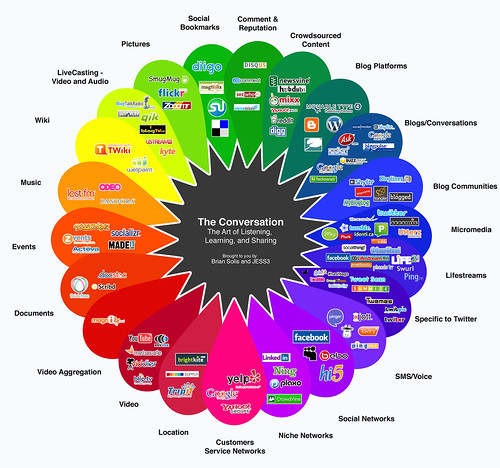
click to enlarge the image, here
A note to my dear readers:

As James Huff has disappeared for the time being—with hopes from me that he'll make a return to our conversation—I'll take the pause button off and continue exploring some of the themes he and I were beginning to explore in our exchange. At least I found that really pretty diagram about conversation!

What follows is for anyone to read, but is directed specifically at James.

So I've been thinkin' a lot about what we've said to one another thus far, and what you haven't answered. The main point I was trying to make is that the world looks one way to you, based on all the information you have about the world you see, and the world looks quite different to me, inclusive of what you experience, but also containing a lot of reality beyond it. You've admitted you don't know much about the world beyond whiteness. Your connections to cultures are limited to those in the US, the UK, Germany, and Australia. I'd say that's a very narrow strip of humanity, relative to the humanity of the whole world. And given how globalised oppressive, mass murderous ideologies like capitalism, white supremacy, heterosexism, colonialism, imperialism, anti-Indigenism, and male supremacy are—especially to the regions of the world you don't know much about—that leaves you with an information deficit. A lack of knowledge sufficient to make your understandings of what's wrong in the world too incomplete.

The world you live in is a small part of a much larger world. That smaller world unfortunately—but deliberately—exists to oppressively control the larger one. Your world operates on oppressive control, not on behaving humanely or responsibly towards the larger world. From globalisation to militarism to white het male supremacy, your world is very callous to the rest of the world—the places where the rest of us live structurally and regionally. You'd experience it as callous also, if you were willing to really open yourself and honestly see what is going on from the perspective of everyone who isn't like you, positionally and locationally speaking. I believe you are fully human, and have the capability of learning and knowing more than you have had the opportunity to learn and know from life around you. But to do that, you'll have to go a bit out of your way, down the mountain so to speak.

The way the world is structured for you, for me also, we don't have to step outside our worlds to live well. We don't have to escape. We can enjoy the privileges and entitlements we are more than welcomed to take advantage of—we are more than welcomed to do so by our people, who benefit from us doing just that. We don't ever have to know who pays the price for what we have: from our inexpensive clothes, to our relatively inexpensive oil, to the other material resources we have in abundance.

It's not just a matter of what we have, James. It's a matter of how we acquired it to begin with. I'm sure you've heard many US white men say, “That's in the past” when African Americans bring up slavery as a fundamental cause for conditions still actively working against anyone who isn't white, but especially against Black, Brown, and Indigenous people in the US. It's surely not in the past if the same mechanisms for maintaining white supremacy are grinding out degradation, discrimination, genocide, and white dominance. 

White supremacy remains one of a few dominant social-political ideologies in the US. Property-owners ruling are regulating the economic and political systems (predominantly white men are running them—are we surprised?). This is done along with the fierce and overtly forceful maintenance of male supremacy, which still dominates the imagination and our institutions that help shape and tether that imagination. How could brutal white supremacy exist only in the past if white dominance, white control, and white power still rule the show, cast the show, and produce the show?

Do you not agree we live in an unconscionably and disgustingly white supremacist country?

I'll leave you with those questions to answer, along with all the others posed earlier.