Showing posts with label trafficking. Show all posts

Monday, June 6, 2011

An Open Letter to Leslie Cannold @ The Age about the Rape-and-Tape Industry (Pornography)

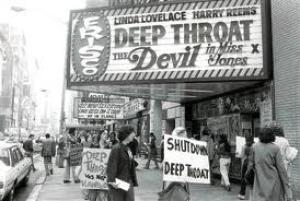
photograph chronicling the early years of anti-pornography activism is from here

Hi Leslie Cannold,

I've known many women across my life who have been negatively effected by pornography both inside and outside the industry. I found your comments about pornography startling in some regards. I'll note what was surprising or problematic for me below. You ask what motivates people: fear or hope? I'd first like to say that there are more choices than that. Hatred motivates some people. Desire to acquire power or to acquire more power--as they define it--motivates lots of people. So too does the desire to survive another day or night. Other motivators in my experience are selfishness, addiction, loneliness, desperation, need, compulsion, obsession, desire to not feel certain feelings, to not feel pain, and to not feel disconnected or isolated or alone.

As you probably know, most women in the pornography industry got there out of a need to survive, and to not be alone. A good friend of mine was taken off the street by a male pimp when she was fourteen. He seasoned her to be available to strange, much older men for sex--she was at least as young as many of the procurers' daughters. She was still on the street part of the time--working, but at least had a place to rest occasionally.

Her story would be "an anecdote" were it not for the fact that her age at the point of becoming a prostitute is the average one. This means that half the women in prostitution are fourteen or older when they start, and half the girls are fourteen or younger. Half. Do you want us to focus only on those fourteen and older in order to get us to feel more hope? Or ought we contend with the harsh reality of the fourteen and younger population no matter what it leads us to feel--even despair? I'll take the despair and the hope--and the fear--that comes from consciousness. The denial your article supports actually makes me feel far more hopeless than the facts Gail Dines brings to the public for consideration. I find activism inspiring, and efforts to shut down appropriate activism really disheartening.

Trafficking of girls as sex slaves and sexxx-things for consumers is globalised. Millions of girls are trafficked daily, as I hope you know. Every girl--a person with a future collapsed into getting through one more day--is made to endure some form of sexual abuse, or to withstand another rape, several times a day or night. To say the conditions are abysmal wouldn't be inaccurate.

This is the primary population of people who comprise the performers in pornography. And by pornography I mean the corporately produced material that is published by pimps for mass consumption that earns billions of dollars annually for those already rich-enough pimps. (I'm not talking, at all, about some heterosexual or gay or lesbian couple's sex tape, or individuals who have a web cam and decide to earn money letting people see into their bedroom as they masturbate or have sex with someone else. That stuff, quite honestly, isn't my concern. If people genuinely want to do that, then they will and they should. Nothing in my own political practice or that of any anti-pornography feminists I know will have any effect on their ability to earn money or to try and get other needs met that by performing sex in those ways. This is also to say, there's nothing the anti-pornography feminists are doing that will take away or "ban" any of your pornography of that of any else. Gail Dines opposes all efforts to ban porn: you didn't make that explicitly clear in your article.)

The primary population of girls and women who are raped and otherwise sexually assaulted as a requisite way of getting them into the industry, or to keep them there, means there's nothing only-anecdotal about the experience--it is common, usual, ordinary, and entirely status quo. (I accept that a few, more privileged women in the world "freely choose" to be in pornography, although when women are paid as much to do everything else, I'll find the words "free" and "choose" to be more socially and economically meaningful.)

Girls and women are being raped multiple times a day and some of them are photographed or videotaped and some of those images and films are sold. This is accepted, defended, protected, and accommodated in every country in which it is happening: the trafficking of girls is accepted, defended, and protected; the prostitution is accepted, defended, and protected; visually recording rape is accepted, defended, and protected. For most women--for most of us--to do it for any length of time, opiate and other categories of addictive drugs are usually needed. That's the norm, not the exception. It's easier to go after messengers of that unpleasant news than to really emotionally comprehend what that feels like.

So we have a large group of girls and women, many drug-addicted so they're not in the most empowered or liberated frame of mind, who have been raped countless times--dozens, at least; more likely hundreds. Do you really mean to pretend that there's no normalised harm in that industry? If so, I'd say that's a stunningly callous and pro-status quo position to hold.

Throughout your article, you phrase and frame the issue as if it is one of ideas only--with no rapes happening anywhere at all to the girls and women in the industry who are being photographed and videotaped while drugged. Do you honestly believe most of those performers are not experiencing routine sexual harassment and sexual abuse? If you do, please see The Price of Pleasure. You can find it free, online. (Note: I'm linking you to images that are pornographic, not trying to censor them.)

I would argue, based on the knowledge of pornography and pornographers you show in your article, that you're living an unusually advantaged life relative to most women on Earth. One kind of advantage is having the option to be unaware of the atrocities going on around the world in places you do not socialise or live.

I had some contacts in Tokyo after the earthquake hit earlier this year. Had I not, I wouldn't have known what was really going on there. The US media was not reporting most of what was happening that was terrifying--long after the tsunami destroyed so many people and so many other people's livelihoods and homes. I had to have those connections to know. (It's still a nuclear nightmare.) But being a US citizen, I wasn't required to have those connections. This is how it is with most atrocity that isn't happening to you or me, of course. Those of us who can afford to not know, generally won't take the time--or don't have the time--to find out.

If you were a girl in many cities across North America, in Europe, and in Asia, you would be far more likely not be able to not know what I've written above. You might find ways to block it, blunt it, or dissociate from it, but not knowing a thing about it would be exceptional to impossible.

Your article contains a few statements that skip over the atrocities I've identified above as socially existent and significantly and traumatically affecting the lives of millions and millions of female human beings--and plenty of male human beings too.

I'll excerpt a few below from your recent article for The Age.
Dines used her many festival and media platforms to contend that pornography degraded women. It did this by modelling Brazilian waxes and depicting women enjoying anal sex and men ejaculating on their faces. 
Have you seen a great deal of the pornography--the stuff produced by millionaire pimps? It appears from this statement you have not. Again, I hope you see The Price of Pleasure.
Dines asserted without evidence that boys as young as 11 were viewing this material, which she said was not only more violent than Playboy or Hustler but also apparently the snuff films of the 1980s that so outraged her hero, the American radical feminist Andrea Dworkin. 
Surely you're kidding. (Aren't you?) You don't actually think most eleven year-old boys with access to computers have never sought out images from that rape-and-tape industry? Do you seriously doubt that most eleven year-old boys have seen internet pornography that we used to call "hard core", and plenty of images depicting more degrading violence against women than that?

And surely you're kidding when you imply that today's pornography, overall, isn't any different than that from the 1970s. You don't see images ubiquitously on the internet that are more violent than Playboy and Hustler? You must not be looking. As I recall, those paper magazines were violent in many ways that people didn't readily see as such. Hiding the worst of what's done is standard practice for all major corporations. Why would the pornography industry be an exception to this rule? For example, with its own abuses, the pharmaceutical industry does a great deal of harm to animals, people, and the environment, but not in full-frontal view of those of us who purchase or are prescribed their allegedly safe drugs. To say any significant industry hasn't changed much in the last thirty to forty years is to not know much about what has and is going on there.
The minds of young Aussie boys would be deformed by this stuff, Dines conjectured, leading to a future filled with sexual assault, paedophilia and all forms of "economic, political, and legal discrimination" against women.
The minds of anyone who consumes anything at all--from sugar and sugar-substitutes, to McDonalds fast food,  to cocaine, to cell phones, to the exhaust from fossil fuel-burning cars, to pornography to television commercials will have their minds affected--that's the reason those things can be marketed and sold at all: surely you don't think they exist to actually meet our deepest needs or for our health. Or do you?
Dines's claims are vulnerable on almost every level.
They'd be more vulnerable if they were, in fact, just claims. But, as several commenters have noted at the article's website, her facts are backed by very solid research. That other researchers--often those hired by pimps--come up with other results that makes the industry seem not-so-bad, surprises me not at all: tobacco industry researches told us cigarettes were harmless for decades after they knew they were both addictive and damaging to our health.

So I'd argue Dines' assertions of fact are not vulnerable on the level of reality, if one cares enough to know what is happening there. Again, you'd have to be willing to leave the comforts of a middle class life to really find out. The pornography industry is many things: 'pretty' isn't one of them. Here's the first portion of what each of the two filmmakers of The Price of Pleasure--a woman and a man--have to say on beginning the journey into that largely hidden world:
Having grown up in Taiwan, I did not see my first porn film until I was thirty years old, when I came to the U.S. as a graduate student in Boston in 1990.
Contrary to many women being pushed to watch porn by their boyfriends, I had a shy partner who never had the courage to rent a porn video. The few times that I reached for the top shelf at the Video Smith in Brookline to grab a porn video, I had to endure the torturous journey – ignoring other men peering at me out of the corner of their eyes while I was cruising through this off limits section, holding the extra large video box with vivid pictures for everyone to see while I stood in a long check-out line, and then waiting for the clerk to slowly take the video out of its box and put it in a black box which everyone knew was for porn anyway. Although this journey made me descend from a respectable to a fallen woman, there was something thrilling and daring because I was against the constraints set by both Chinese and American patriarchy that disapproved of women's consumption of porn. I figured, if not being allowed to watch porn was part of the sexual repression, then rebelling against it must be liberating and even feminist. -- Producer, Director & Writer: Dr. Chyng Sun
When I began working on The Price of Pleasure over 4 years ago, I expected, more than anything, to learn the process of filmmaking. That the film’s topic was to be pornography was, at the time, of a secondary consideration. I had what can be considered conventional liberal beliefs about pornography and the contemporary pornography industry – pornography was free speech; pornography represented a liberatory sexuality, intervening in the repressive moral codes of religion, conservatism, and infantilizing protectionism; that pornography was a “free” choice, made by both consumers and performers who made their living by engaging in sex onscreen; and I had also assumed that the majority of the pornography out there looked very much the like the pornography I had experienced as an adolescent, or saw at bachelor parties during my career in investment banking – mostly “conventional” sexual practices, with a nominal degree of mutuality. -- Co-writer and Associate Producer: Robert Wosnitzer
They don't sound like fascistic anti-free speech people to you, do they? Their film is more speech on this subject, not less--isn't it?

You go on:
She confuses evidence with anecdote (talk of "my students" is the latter) and correlation with causation
Is someone referencing the experiences of people they know unethical to you? As commenters below your article remark, what backs up your arguments, besides anecdotes and possibly some well-funded research paid for by pimps to produce the outcomes that put them in the least criminal light? You offer nothing to bolster your speculations and distortions.
(does horrible violent porn turn healthy men into rapists or do rapists watch horrible violent porn?).
It might work for you to pose ridiculous-sounding questions as a strategy to discredit an expert speaker on a subject. I'll have a go at it:

Do cigarettes always turn smokers into lung-cancer patients who die an early wretched death? The answer is no. But the answer is also that cigarettes do substantively contribute, as one factor among others, to the normal maintenance of significant and grievous harm--people do lose their lives, and many lives are cut short. Many of us grieve our lost relatives or loved ones who died of smoking-related illness and disease. Someone arguing your points on this matter would come across like a shill for the tobacco industry. Do you intend to do that for the rapist pimps?

You also wrote:
She also wasn't averse to mischief


This is not to mention the irrationality of her basic proposition. Rape and misogyny pre-date hard-core internet porn by thousands of years. How then was turning off the tap of internet porn going to solve the problem?
Rape and other sexual violence against women pre-existing pornography doesn't mean pornography isn't tied to rape, Leslie. Your argument, put in other terms, might go like this: massive human suffering and death caused by plagues pre-dates the AIDS crisis by thousands of years. How then would curing AIDS stop suffering and death caused by disease? Do you get what's truly cynical, callous, and flawed, about the argument?

Unfortunately, it will probably work for most readers for you to use these words: contend, asserted, conjectured, claims, mischief, irrationality, to categorise and dismiss the work of a long-time human rights activist, professor, and writer. Regardless, I think it fair and reasonable to assume that she knows far more about the pornography industry and exactly how it is implicated in harm to human beings than do most people--except those who have worked in it and survived it. If you think Gail has never bothered to speak with many women who are in or have survived and gotten out of the rape-to-tape industry, you'd be just plain wrong. I say "survived it" because I'm not willing to make atrocity disappear; that seems like something Germans-in-denial wished to do during the era of Nazi rule. As a Jew, I object to that sort of evasion of difficult or inconvenient truths. And if the mass rape of girls isn't enough of enough of an atrocity to you, I'm worried about your conscience and your heart.

You continued:
But the big difficulty with the Dines approach is its cultivation of fear over hope. From the moment Dines set foot in Australia, she was beating the panic drum. Panic about the internet, about the developing sexuality of adolescent boys and the inevitable victimisation of poor, vulnerable girls. Don't forget about rape and sexual violence, girls, she seemed to be saying, or the complexity of pre-marital sex! Don't get too confident, or careless with your trust or your movements, the world is still a terrifying place. 
If we correct your misstatements and inaccuracies, and simply deal with the facts of the matter,  we are left with this question: what is the appropriate level of disregard and denial when confronted with news that is disturbing and upsetting because it involves actual human beings being treated inhumanely? Should we work hard to repress our anger about rape and gross sexual exploitation of girls and women--and boys and men and transgender and intersex people too? Should we try and shore up our false sense of security and delusions that the status quo works by not harming millions of people in dreadful ways?

If you are a white Australian citizen, I'm hoping you know about the genocide in your country, and the anti-Indigenous genocide in the US as well. Or do you think that because dominant media won't cover these atrocities, they aren't happening? Shall we feel hope in the face of mass denial and the corporate maintenance of delusion? Is disrupting the relative peace of the privileged, perhaps even to the point of generating some fear in those masses--or outrage, compassion, or a consciousness with which to do then work with others to effect social change--really something that is unwanted and unwelcomed by you?
I see it differently. When I look at the sexuality and values of young people, I feel hopeful of a increasingly gender egalitarian world. I read the studies and see the young men who populate my own world and feel confident that growing numbers of men understand the difference between healthy lust and sexual violence, accept their duty to share the work of home and children and respect women's rights.
Which world is that, Leslie? What part of the big, challenging world is that happening in? To whatever extent it is happening, great. But that doesn't mean that's all that's happening, does it? I mean if we have some promising research in cancer cures, does that mean chemical pollution of our bodies stops causing cancer, globally--at alarming rates?

Things can be (and are) truly awful--increasingly so for millions of people who are far less advantaged than you and me. These are the people who, so far, don't seem to be real to you. If you did, would you relate to, befriend, and believe them?
Yes, nasty porn is nasty and I'd certainly advise against watching it.
Once again you and Gail see things differently: Gail actually thinks we should be watching it--to know what it's trying to tell us about ourselves, our sexuality, and our society. So once again you're making stuff up and pretending it's a position Gail Dines takes. She doesn't. So why do you feel the need to lie? Why not just argue with the facts she describes? Are they too threatening to deal with? 
When it comes to sex, and all areas of life, I'd urge young women who don't want to do something to learn to say no. For a saner take on this issue Google Cindy Gallop's Make Love Not Porn TED video.
To learn to say no? So you want girls to say no to their fathers or step-fathers who rape them, who then grow up and have many problems with boundaries due to being told, incorrectly, that they are worthless or only exist to sexually please men? Do you want drug-addicted women living on the street, picked up by pimps, to say "no" and remain on the street--and to just say no to drugs too? Do you want the Indigenous, Black, Brown, and Asian girls and women who are enduring misogyny and racism to do what you're able to do because you're so advantaged? That's a callous and utterly compassionless thing to suggest to people, I'd say.

For the record, I like the Make Love, Not Porn website very much. And, it doesn't exist to help the privileged masses come to terms with the atrocities happening to girls and women around the world.
Yes, violence against women still happens and must be stopped but violence is not caused by porn.
How, Leslie, must it be stopped? I mean honestly and sincerely: how? Because it's very easy for liberal-minded white people to say things like "racism is bad" and "misogyny must end" without ever following that up with (or, even, promoting and supporting) decades of sustained activism actually working to achieve it. Someone once told me the definition of liberalism is that its practitioners make promises they have no intention of keeping. What are you, in your life, doing to stop the violence women and girls endure for being female not male, including in the pornography industry? Is attempting to discredit someone (who actually has been working to lessen racism and misogyny by showing it to people in such a way that they can't deny it's prevalence in our society, for decades) the best you can do?

Julian Real

Monday, April 18, 2011

What do The F Word, 60 Minutes, Piers Morgan, and A. C. Grayling have in common? (Clue: the silencing of radical feminist women of color)

image of Audre Lorde is from here

photo of Angela Davis is from here

image/photo of Marimba Ani is from here

photo of Yanar Mohammed is from here

photo of Vandana Shiva is from here

photo of Andrea Smith is from here

I often blog about things that come before me, sometimes because I seek out various bits of news or media, and sometimes because news comes to me. This post is a process of combining the two.

I received a link to a podcast of a program called The F Word (F is for Feminist), the program title of which asked this question: "Where have all the radicals gone?" The program features audio of a speech and interviews with Andrea Dworkin and Sheila Jeffreys. (Link provided below.) My immediate response is that the radical feminists are all over the Earth, particularly but not only in Asia. My question back to the producers of The F Word is this: are whites willing to listen to and interview radical feminist women of color who aren't from white-majority countries? (If it's an expense issue, there's always Skype.)

In his assessment of "feminism", A. C. Grayling does some really fucked up things. Read all about that *here* if you wish. But one of the things he does is assume feminism is all-white, and that women who are not white could benefit from the "advanced" ideas of white US and UK feminists.

I've also just recently seen a segment on 60 Minutes on rape. (For more on that, please see *here*.) The focus was a story about a college campus rape, of one woman by three men. The woman is white. The three men are Black. Also seen recently was an episode of a show I thought I'd stop watching week 1: Piers Morgan Tonight. On the program I saw, his guests were Demi Moore and Ashton Kutcher. They were there to discuss their "Real Men Don't Buy Women" campaign. (You can read more about that campaign *here*, at Huffington Post.) The problem with the campaign is that it puts mostly white het men front and center, pretending white men know a goddamned thing about ending rape or trafficking. Why not put the faces and voices of women of color who fight against rape and trafficking on the campaign cover, and also promote their work and perspectives on the atrocities? Because it isn't and won't be whites who solve the problem of trafficking. It will be women and girls of color around the world. It already is.

What all of these stories have in common are racist themes. Here's a list of the dangerously racist-misogynist themes.

--Feminism, especially radical feminism, is allegedly something only white women created and something that only white women can share with the world, for the betterment of the world, which is comprised of women of color, in the majority. This appears to be the viewpoint presented on a podcast of The F Word, as well as by A. C. Grayling in his 2009 book, Ideas That Matter.

--Black men, according to this 60 Minutes report, rape white women. Black men, according to 60 Minutes, don't rape Black women. And when rape happens, feminists of color are rarely to never invited in front of the US camera to explain the sexual (and racial) politics of rape and how media does and doesn't report on it as an act of terrorism by het men against women and girls, usually within an ethnic group, with the exception of class-privileged white het men, who, disproportionately, go out of their way travel all around the world to rape women and girls of all regions and colors.

--When US and UK white het men rape girls and women, the racial, regional, and national identities of the men are often not explicitly revealed. And when Black men assault white women, you can be damn sure the white male media will identify the rapists by race, to perpetuate the myth that the group white women have to fear most is Black men. And that's a giant load of C.R.A.P. Class privileged white het Christian men, specifically, are the most dangerous, predatory, serial raping men on Earth.

--White het men (from Hollywood and music celebrities to Bill Gates) are (allegedly) heroes, good guys, and can lead us all to be better people and make the world a better place.

They can't. Why? Because they and Bill Gates aren't doing anything substantive, radical, or revolutionary to stop C.R.A.P. His agenda and other Big White Men's humanitarian work (like that of Bono and Sting) is to educate poor children and end diseases in the Third World so they can become part of globalised Western/Global North systems of C.R.A.P. too, ultimately making other white men a lot more money. That view is a bit cynical. I'd feel less cynical if Bill Gates, Bono, and Sting, gave their money to organisations like RAWA, MADRE, The Audre Lorde Project, and groups of women working to end corporate capitalism which "bottom line" is white patriarchy in white sheep's clothing.

If famous WHM explicitly spoke out against patriarchal or male supremacist atrocities against girls and women, in those terms, and white supremacist atrocities too, that'd be helpful to the cause of composting C.R.A.P.

Instead, we'll get platitudes on the importance of ending poverty, illiteracy, disease, and famine, never bothering to notice how wealthy white men from Europe and the US profit, as a distinct demographic and economic class, from any effort that doesn't directly take power out of white het men's hands, individually, structurally, institutionally, and systematically, and redistribute that power into the hands of women of all colors, individually, structurally, institutionally, and systematically.

Taken together, these and hundreds of other media stories promoted by conservative, liberal, progressive, commercial mainstream media, and independent media, all tell a more-or-less single story in which women of color are not central figures in feminism, do not construct and build the foundational ideas found in feminist philosophy and activism, including in what is termed "radical feminism" philosophy and activism, and are not understood to be or promoted as role models, heroes, and leaders.

For years I have seen how these themes and memes impact women of color who are doing radical feminist work--some of whom use and embrace that term, some of whom do not. It means they are invalidated, unacknowledged, and invisibilised--silenced and erased--by white media. When this is done consistently enough, it appears to be "fact" and "reality" that feminists, especially radical feminists, are only white.

And it can appear that white women have to fear rape from Black het men, not from white het men or, more simply, "het men". And it can appear that women of color are not raped at all, or that when girls and women of color are raped, it doesn't matter to the media, which then communicates that it isn't important to the media-consuming public, which also communicates to raped girls and women that the assaults against them--sexual, social, and economic--don't matter.

I think all of this is very dangerous. I'm advocating that programs  like The F Word, Piers Morgan, 60 Minutes, and people like A. C. Grayling promote as central to feminism, the ideas and contributions--in philosophy, in society, in activism--of women of color, particularly and especially Black, Brown, Latina, Asian, Middle Eastern, Arab Muslim, and Indigenous women. I'm recommending that such programs and individuals, with far more public clout and political power in the mainstream world that any woman of color--even Oprah Winfrey--recognise who really is leading us out of hell-on-Earth. The people who are doing so, in the majority, are generally not white and are especially not male.

Women from Africa, Asia, the Americas, and from Indigenous populations globally, are responsible for the most revolutionary, radical, and complex perspectives and political campaigns to resist and rebel against patriarchy in all it's many regional and globalised forms. Why don't whites know this?

I leave it to you to answer that question. And, please do listen to this podcast, to get more of a sense of what I'm referring to. And, please take the words and perspectives of Andrea Dworkin and Sheila Jeffreys seriously. Andrea was and Sheila still is one of many important radical feminist writer-activists, most of whom are not white. For more discussion of the important work of radical feminist women of all regions and races, please see the post I did recently on A. C. Grayling, linked to above and again *here*. I will add that I do not believe whites can adequately comprehend the complexities and issues facing women of color globally. And that every region, the women of that region are the experts on their lives, and know best how to resist the forces, including the force of patriarchal white supremacy and misogynistic racism, in their organised efforts to survive and thrive. See the work of RAWA and MADRE for more.

What "radical" too often means when whites speak or write of it, when it is paired up with the term "feminist" is 'dealing explicitly with sexuality as men understand it'. This is but one area of central focus in radical feminism, globally. There are others. And if all your work centers only the writings and activism of whites who only write about male sexuality as it is acted upon the world terroristically and gynocidally, it is likely you'll never come to understand, appreciate, or support the work of most of the world's women, who have far more to contend with and survive than men's understanding and practice of sexuality, or white queer people's understanding and practice of transsexuality. I wish there was more coalition work among women across region. But men sure do fuck up most attempts at that.

I'll add that most of the whites I see online using and identifying themselves as "radical" do not appear to be radical to me. Their analyses and visions do not, usually or responsibly, center the experiences, struggles, and solutions put forth by women of color globally. Sometimes lip service is paid to women of color. Usually women of color are condescended to, marginalised, or ignored in white spaces, in my experience.

I'll leave you today with this: many women who do not identify as radical or as feminist, are the some of the women I most look to as exemplars and proponents of radical feminist revolutionary theory and practice.

All that follows is from The F Word. I want to thank Sheila Jeffreys for her critically important work. And, as you ought to know, I adore Andrea Dworkin. Enjoy the show.

The F Word

Where have all the radicals gone? When feminism gets moderate

| April 15, 2011
  •  

Show Notes:

In a world where feminism as a whole is often touted as a bad word, radical feminism in particular is marginalized, not only by the mainstream media, but often within third-wave feminist discourse. Are we afraid to be 'too' radical at the risk of alienating the masses? Or is radical feminism simply misunderstood?
This radio documentary asks: Where have all the radicals gone? Has feminism been swept up in the neoliberal current? Have we de-radicalized in order to be more palatable to the masses? In the face of strippercize, Sarah Palin, and 'post-feminism,' is feminism in need of a re-radicalization?
Featuring an interview with renowned feminist scholar, Sheila Jeffreys, your host Meghan Murphy explores all these questions and more.
Veering quite a bit in format from The F Word's regular programming, this extensive exploration of radical feminism and how it relates to contemporary feminist discourse is a little more academic in nature. Hang in there!

Tuesday, August 10, 2010

Craigslist founder Craig Newmark Left SPEECHLESS by brilliantly direct questioning from CNN reporter Amber Lyon about His Company Supporting and Promoting Girls Being Pimped and Raped by Adult Men

image of pimp and rape promoter Craig Newmark is from here
It is rare that men's endorsement, promotion, complicity, and financial investment in the rape of girls by men is seen nakedly on the face of a wealthy white het man from the U.S. who is confronted about his crimes against girls. Mass media is usually not so direct on this issue. And the pimps, the rich white male pimps, are usually able to throw their attorneys out to deal with the media so they can avoid being asked what they need to be asked: why are you promoting the pimping and rape of girls? But when Amber Lyon met up with Craig Newmark, she put the questions to him as sharply and quickly as I've ever seen on CNN, as he tries to shift the focus by asking her, "Have you reported this to us?" This is what criminal men usually do: get evasive and argumentative. And, consider the interview her reporting it to you, and us.

Why so, evasive, Craig? You ARE profiting off of the trafficking and rape of girls, after all. Why not just admit it, you PIMP and promoter of CHILD RAPE. I hope you are indicted on felony charges--as many charges as there are ads on your self-monitored website, allowing men access to pimped and trafficked girls. A woman who offered prostitution on Craigslist share her opinion below the article. While it is the case that there are plenty of websites that are run by callous pimps and pro-rape profiteers, their CEOs or web-hosts aren't claiming such things aren't going on under their careful watch.

So, SHAME ON YOU, Craig! And do humanity a favor by turning yourself in and going directly to jail, where you belong. For the rest of your life, or as long as it takes ALL the girls raped under your watch to recover fully from the trauma, the degradation, and the gross violation of their bodies and their human rights.

A writer for the Washington Post, here, accuses Lyon of "ambushing" him. Funny how that word is unlikely to be used when male reporters go after women and men who are participating in criminal activities against children. (Sadly, the author is female.) But let's be clear: Lyon confronted him with the truth of what his company was doing that he said it isn't doing, immediately following a speech he gave in Washington, DC, on, get this: trust. There's a term for men like Craig--not Jewish men, but men of any faith, ethnicity, color, or culture who commit such despicable acts against humanity: a schmuck.

What follows is from *here*.
Craigslist founder rendered speechless by CNN’s sex-trafficking questions 


By Liz Goodwin – Wed Aug 4, 11:50 am ET

The popular online classified ad site Craigslist is set to make about a third of its total revenue from its "adult services" ads section this year. But police and groups working to prevent human trafficking tell CNN the company is lining its pockets with money paid by prostitutes and pimps selling sex.

According to anti-trafficking advocates, some of the women featured on the site are underage and are being forced into prostitution against their will.

When CNN reporter Amber Lyon confronted Craigslist founder Craig Newmark with these accusations in an unplanned interview, the Internet magnate said his company was doing "more than anyone" to combat prostitution ads, before falling silent and eventually walking away from her questions.You can watch a clip of the interview here:


Lyon showed Newmark Craigslist ads that clearly involved women soliciting money for sex. Newmark asked, "Have you reported this to us?"

"Why do I have the responsibility to report this to you when it's your website? You're the one posting this online," she said.

Lyon also told Newmark that anti-trafficking advocates say his site is the "Wal-Mart of sex trafficking." Soon after, Newmark walked away.

"Of the thousands of U.S. venues that carry adult-service ads, including venues operated by some of the largest and best-known companies in the U.S., Craigslist has done the best and most responsible job of combating child exploitation and human trafficking," Craigslist CEO James Buckmaster told the New York Times in April. The company says it is not legally liable for what users post under the Communications Decency Act.

[The first comment under this post is this, at the website linked to above:]

I worked as a prostitute when I was 22. The primary source of my clients was Craigslist. This is a complicated issue, but I feel that it would be best for Craigslist to remove the adult services section off their site - not shut down their entire website. But like someone else said on here, the crime would still continue on; the business would just move to other websites.

Monday, May 17, 2010

Gail Dines on Playboy and How Pornography Hijacked Our Sexuality


This is the cover of Gail Dines' most recent book:

What follows is from CounterPunch, *here*. But first, a photograph of the author.


[photo of Gail Dines is from here]


May 17, 2010

"Then the Shutter Falls, You See All In 3D ... "

Not Your Father's Playboy

By GAIL DINES
Playboy’s June issue features a 3D centerfold - complete with the requisite geeky 3D spectacles. This latest gimmick, just a few months after their Marge Simpson feature, speaks to desperate times for the magazine. Hollywood certainly got a boost from Avatar’s 3D experience, but Playboy’s circulation has plummeted from more than 3 million in 2006 to about 1.5 million today, and is never going to be a favorite with the younger porn crowd. Playboy’s trademark soft-focus images, even in 3D, of women wearing coy smiles and little else, are no match for the industrial strength porn that is now all over the internet. Boys and men brought up in the internet age have very different tastes than their fathers, whose own access to porn was limited by the amount they could pilfer from their fathers or older brothers. Today, access is unlimited anytime anyplace, from computer screens to cellphones, and this  cheap, anonymous accessibility has sent demand soaring. 

When Playboy first came out in 1953, many thought that Hefner was on his way to prison and the magazine was destined to die a quick death. Instead, Hefner became a media celebrity and Playboy was such a success that it helped to lay the foundation for a multi-billion dollar porn industry. What made it a success was the willingness of companies to advertise in Playboy. While skittish at first about placing their ads in a porn magazine, within a few years of publication Playboy was seen as a perfect environment by corporations to advertise products aimed at the upwardly mobile middle-class male. Flush with ad dollars, Playboy seemed untouchable in the 1950s and 60s as it built an international empire. 

In 1969 a full page ad appeared in the New York Times featuring a bunny in the crosshairs of a rifle. The caption read “we’re going rabbit hunting.” This was an ad for Penthouse magazine, which would hit the newsstands later that year. The next few years saw Playboy and Penthouse battle it out to see which one could be the best selling porn magazine in this country. Their theater of war was the female body, with each trying to produce the more sexually explicit magazine. In August 1971, Penthouse carried its first full-frontal centerfold and in January 1972 Playboy did the same.  

The real winner of this conflict was a strip club owner from Ohio. Always the savvy businessman, Larry Flynt saw that the Playboy and Penthouse war had pushed the envelope on what was considered acceptable mainstream porn imagers, and Hustler was born in 1974. Known for its explicit imagery, its tasteless humor and its overt contempt for women, Hustler set a new standard for the porn industry that ultimately helped open up the hardcore market. By the time the internet hit, these three magazines had laid the economic, legal and cultural groundwork for the images that now make up much of the mainstream porn industry. 

What is out there today may shock many not familiar with porn websites. As boys and men click around today’s popular sites they are assaulted by images of body-punishing sex that pushes women’s bodies to their limit. Gone are the coy smiles and in their place are women saying they love it and begging for more. But if you look carefully, some are grimacing, others crying and many look uncomfortable as their body is penetrated, pummeled and pounded by any number of men as they call her a whore or a slut. This is available to anyone who can turn on a computer. 

Called Gonzo by the industry, it is not your father’s Playboy. It is cruel and brutal and it creates a taste for harder and harder porn. One Gonzo producer told Adult Video News that “One of the things about today’s porn and the extreme market, the gonzo market, so many fans want to see much more extreme stuff that I’m always trying to figure out ways to do something different.” This is a real problem for the industry because it has done just about everything you can do to a woman’s body. When I interviewed producers at the Adult Entertainment Expo held every year in Las Vegas, they told me that this was an industry fast running out of ideas. This particular producer’s latest movie showed a woman being anally penetrated as she lay in a coffin.

In this world, Playboy seems rather quaint in its sexism.  It is a throwback to a bygone era when men had their porn delivered in brown paper envelopes. Playboy helped pave the way for today’s porn and during the process, made itself obsolete. 

Gail Dines is a professor of Sociology and Women’s Studies at Wheelock College and chair of American Studies. A nationally known lecturer and author, she is a founding member of Stop Porn Culture. Her new book, Pornland: How Pornography Has Hijacked out Sexuality, will be published in July by Beacon Press.  She can be contacted at gdines@wheelock.edu

Saturday, May 1, 2010

Andre Picard Sort of Gets It that Gynocide and Genocide Are Atrocities, but not that they are what normal men and whites are invested in

[original caption]
Photographs of missing or murdered women from British Columbia are displayed during a Sisters in Spirit vigil to honour the lives of missing and murdered aboriginal women in Vancouver on Oct. 4, 2009.
DARRYL DYCK/THE CANADIAN PRESS 
[this image is from here]

I just came across this and wanted to cross post it. The original is from *here*. And what follows has my interruptions and commentary, in bold and in brackets.

Andre Picard's Second Opinion

With more than 500 aboriginal women missing, action is overdue

How can this not be considered a national priority for police, justice and public-health officials?

Andre Picard
Last week, the Manitoba government announced the creation of a joint RCMP and Winnipeg Police task force to investigate dozens of cases of missing and murdered women in the province.

The news, while welcome, raises the question: Why limit the investigation to Manitoba?

It is true that there are at least 75 missing women in the province, virtually all of them aboriginal. Police have been seemingly incapable of solving the cases and halting the race-based violence. [That would be also be GENDER-BASED VIOLENCE, Andre, unless we find out all the killers are women! And likely also class-based. Killing poor women never gets the mass media attention as the killing of middle class and wealthy white people does.]

But, nationwide, the data are even more gut-wrenching: The Native Women's Association of Canada has catalogued 520 cases of missing or murdered aboriginal women, half of them since the year 2000.

The women, most under the age of 30, are overwhelmingly victims of sexual violence. They are being preyed upon systematically by sexual sadists, killers and probably more than one serial killer. [Or by normal men. You could at least use the word: MEN.]

How can this not be considered a national priority for police, justice and public-health officials? [For human rights activists, for people who care about ending white/het/male supremacist genocide and gynodicde!]

Sadly, when a native woman is murdered or vanishes under suspicious circumstances, it does not mobilize police action nor generate near as much media attention as similar cases involving non-native women. [And this is a tangled mess of racism and specifically anti-Indigenism, misogyny, and classism.]

They were drunk. They were sex workers. [The callousness and cruelty inheres more in the fact that they were poor and desperate, they were pimped and trafficked and some may have been sold into sexual slavery. They were seen as existing only for men's sexual pleasure--primarily white het men's, and were seen as expendable, because there's supposedly always more where they came from, up to a point.] They came from unstable family backgrounds. They were runaways. They were party girls. An endless litany of excuses for inaction is trotted out with shocking regularity. [They weren't wealthy white het men.]

Let's be blunt. The main reason an in-depth investigation is required is that the situation reeks of racism, stereotyping and discrimination. There seems to be a deadly double standard at play. [Why is it about "gendered violence" that isn't screaming out at you, Andre? Are these women NOT women? Are the perpetrators, the rapists, the murderers NOT men? For a group stalked and murdered precisely because they were not men, you really go out of your way to make this seem like it's only about racism. If that were true, the stats would be just as high for missed and murdered men of color, right?]

It is true that many of the 500-plus aboriginal women who have been murdered or disappeared had difficult life circumstances. [As one tends to have when surviving genocide and racialised and gendered poverty and misogyny. As Mary Brave Bird said, if you're white and male, you're lucky.]

But it is precisely these circumstances - alcoholism, drug addiction, sexual abuse, the sequelae of residential schools, poverty, survival sex, etc. - that placed them at much higher risk. ["Survival sex"?? That's a new one. Why not call it being pimped? Why not call it being a prostitute? Women who are very poor are very vulnerable not just to the occasional "good samaritan procurer" who will trade sex for cash. Women and girls tend to be preyed upon by pimps, Andre. So "survival sex" really makes the systems of racist/classist/misogynist/heterosexist exploitation and lethal violence sound like they aren't systems of harm at all.]

The life expectancy of an aboriginal [person] is a decade less than a non-aboriginal [person] in Canada. The rate of infant mortality is three times higher. The suicide rate is six times higher. Aboriginal people have a rate of diabetes and heart disease three times the national average, and dramatically higher rates of infectious diseases like tuberculosis, HIV-AIDS and H1N1 influenza. [It's not called genocide for nothing. You think maybe white folks want Indigenous North Americans to SURVIVE or something?]

The key determinants of health - individually and collectively - are social and economic factors such as housing, income, education, environment and empowerment. First nations, Métis and Inuit communities fare particularly dismally in these essential areas. [One key factor is building a whole civilisation based on white male entitlement to take over the world. It's called racist patriarchy, and it shows up in every facet of life, in every system, in every corner of one's experience. So I'd call that a key factor that is political.]

Unemployment levels and poverty rates in aboriginal communities are three times higher than in mainstream society. Only 4 per cent of natives have a university education, one quarter the rate in mainstream society. More than one third of aboriginal people in Canada have, in government jargon, a "core housing need," meaning their homes do not meet the most basic standards of acceptability. Overcrowding, lack of running water and inadequate sewage services are the norm in many native communities. [Which, I'd argue, meets the standards of acceptability quite well, for genocidalists. If it were genuinely unacceptable, it wouldn't exist. It exists precisely because it IS acceptable to whites, the wealthy, and men who are not members of the First Nations.]

Not to mention that an aboriginal is five times more likely to be murdered than a non-aboriginal Canadian.
The murder of poor (literally and figuratively [?!--as in "pitiful"?!]) aboriginal women is the most extreme manifestation of the price first nations, Inuit and Métis peoples are paying for the abysmal social conditions in which they are trapped. [I'd say it is the most acceptable manifestation of white het male supremacist civilisation. I'd say it's mandatory, in fact. Proof of that is how few predators/normal white men are caught and prosecuted. You can bet if the victims were wealthy white men there wouldn't be 520 disappearances before it got some major press--half of those in one year!]

The murders are also a gruesome symbol of society's indifference to that plight. [Indifference, callousness, cruelty, denial, destruction, death, and delusion are core values of any capitalist racist patriarchy.]

Much was made of the fact that virtually all of mass murderer Robert Pickton's victims were sex workers. But rarely did we hear that almost all his victims were young aboriginal women. There is evidence that a serial killer may also be at work in Manitoba, and a single [white het] man may also be responsible for the carnage along British Columbia's infamous Highway of Tears. (The Yellowhead Highway, which stretches 750 kilometres from Prince George to Prince Rupert has been the site of nine murders and disappearances since 1990, all but one of the victims young aboriginal women.) But the reality is that the Highway of Tears stretches from sea-to-sea-to-sea in this country: Aboriginal women have been murdered or disappeared by the score in every single province and territory in Canada. [As well as in 'the lower 48', and as well across the globe.]

This is not a Manitoba-only problem. [To say the least.]

Beverley Jacobs, president of the Native Women's Association of Canada, has repeatedly called for a national investigation into this on-going horror.

As she noted, the deaths and disappearances of 520 aboriginal women is the equivalent of 18,000 missing and murdered non-aboriginal women.

Would we stand idly by while a massacre of our daughters, sisters, mothers and grandmothers unfolded on this scale? [And by "our" you mean... white? That's taking assumptions about literacy a bit far, don't you think? And you know damn well that if all the missing and dead were Black, non-Indigenous women, there'd be no major press about that either. So let's call it like it is: if you're not white and you are not wealthy and you are killed, media doesn't care what happens to you. Put in place an economic system that is entirely white male supremacist, and you'll end up with very poor women of color.]

We would not and we should not. [But "we" whites, will and we whites do. It's not like the gynocidal genocide started a couple of years ago, right? I mean we whites have had a few centuries to get a grasp on how this particular atrocity works, yes?]

Incomprehensibly [or not], Ms. Jacobs's call for a national investigation has gone unheeded by the federal government. Instead, politicians have contented themselves with funding research into the problem. [Dude, that's all that's supposed to happen. I'm glad you're outraged and upset, but please don't pretend this is new or at all unusual. It is, literally and figuratively, "status quo" behavior and practice.]

A report published earlier this year, entitled Voices of Our Sisters in Spirit, makes for chilling reading, recounting the stories of many murdered and missing aboriginal women. The data therein are as humbling as they are sickening: More than half the murders of aboriginal women remain unsolved. [Don't worry: whites won't read it. It's too chilling and sickening.]

It's time to go beyond mere cataloguing of the carnage, and to understand the root causes. [WHITE HET MALE SUPREMACY, and WESTERN CAPITALIST CIVILISATION.]

In Canada, a death or a disappearance should not be taken less seriously because of the colour of a person's skin. [Yeah, well. Welcome to the world of reality. Again, sir, you're not like 18. You've had plenty of time to notice THERE'S A GYNOCIDAL GENOCIDE GOING ON.]

And [non-Indigenous] Canadians should not tolerate that the horror of these crimes - 520 daughters, sisters, mothers and grandmothers stolen away from their families, friends and communities - be redoubled by indifference. ["Our" indifference doesn't go away because crimes happen against the poor, against women, and against people of color. Not unless "our" means a federal government comprised of ethical people of color, women, and poor people.]

Our willful blindness to the plight of aboriginal women is the greatest injustice. [I agree it's an atrocity. But it's one you and every other white Canadian benefit from, so don't leave that out. Because whether you say so or not, you are invested, literally and figuratively, in genocide and in gynocide within and beyond Canada.]

Friday, April 23, 2010

Sunday, April 11, 2010

Women's Rights In Danger In Iraq: Thanks to the "Good Ol' U.S.A.": When Will Western Media Tell the Truth?!


What follows are two related articles on the condition of women's deteriorated rights in Iraq since the U.S. invasion. That the pro-U.S. media pretends women are better off now: this is a blatant lie. See below for more. The original locations for these posts are here and here.

Iraq: Women's rights in danger
Iraqi women demonstrators protest lack of security and basic services [EPA]

Prior to the US-led invasion of Iraq, women working in the public and government sectors were entitled to receive a year's maternity leave under family laws enforced by the former Saddam Hussein leadership.

In the seven years since the US-led invasion which ousted Saddam, however, maternity leave has been cut to six months.

Since the Personal Status Law was enacted on July 14, 1958, when Iraqis overthrew the British-installed monarchy, Iraqi women have enjoyed many of the rights that Western women do.

But the statutes governing the status of women since 1958 have been replaced with Article 2 of the new Iraqi Constitution, which states that "Islam is the official religion of the state and is a basic source of legislation."
Sub-head A says "No law can be passed that contradicts the undisputed rules of Islam." Under this Article the interpretation of women's rights is left to religious leaders.

Islamic governance
Yanar Mohammed, a women's rights campaigner in Iraq, believes that the US has "let go of women's rights" in the war-ravaged country.

"Political Islamic groups have taken southern Iraq, are fully in power there, and are using the financial support of Iran to recruit troops and allies," she says.

"The financial and political support from Iran is why the Iraqis in the south accept this, not because the Iraqi people want Islamic law."

According to the post-2003 Iraqi constitution, parliament should be comprised of no less than 25 per cent female candidates. As a result, the amended electoral law of December 2009 stipulated that parliament should comprise 82 female representatives.

Each party and coalition list must ensure that 25 per cent of its nominated candidates are women. However, the women's quota has not been filled since 2005 and as a result, the elections commission said "special measures" must be implemented to ensure the quota is met.

Women's rights groups in Iraq and abroad have complained that the Iraqi parliament has not provided information on what the measures involve or how it would go about implementing them.

According to Maha Sabria, a professor of political science at Al-Nahrain University in Baghdad, women members of parliament "stand up to defend their party in the parliament, not for women's rights".

Lack of infrastructure
Sabria also makes a direct link between the deteriorated status of women in the country to the lack of infrastructure, political and economic stability, and security. She believes that women bear a "double burden" as they have lost many of their freedoms due to, and under, the US occupation.

"The violation of women's rights [is] part of the violation of the rights of all Iraqis," she says.

"More men are now under the weight of detention, so now women bear the entire burden of the family and are obliged to provide full support to the families and children. At the same time, women do not have freedom of movement because of the deteriorated security conditions and because of abductions of women and children by criminal gangs."

Women, she says, are also now under pressure to marry at a younger age in the hope that a husband (including his family and tribal affiliations) will bring added security.

Sabria says that the abduction of women "did not exist prior to the occupation. We find that women lost their right to learn and their right to a free and normal life, so Iraqi women are struggling with oppression and denial of all their rights, more than ever before."

"Tribal, backward laws"
The Constitution mandates that 25 per cent of seats in Parliament be allocated to women 
Since 2003, many Iraqis sought refuge in the tried and tested security offered by tribal affiliations and allegiances.

As contemporary Iraqi society fell apart in the face of lawlessness, abductions, revenge killings and overall lack of security, the tribal system offered both refuge and order.

Some Iraqis believe that the decline in the modern and secular standard of living since 2003 propelled the social dynamic back by several decades.

"The real ruler in Iraq now is the rule of old traditions and tribal, backward laws," Sabria says.

"The biggest problem is that more women in Iraq are unaware of their rights because of the backwardness and ignorance prevailing in Iraqi society today."

Fleeing Iraq
Compounding the severity of the situation is the fact that many women also fled their homes because their husbands were arbitrarily arrested by occupation forces or government security personnel. A household without a male figure became far more vulnerable since 2003. Women sought refuge with relatives and failing to do so fled to Syria or Jordan.

According to United Nations estimates, more than four million Iraqis have been displaced in the past seven years, including approximately 2.8 million registered as internally displaced persons.

Many live as refugees mainly in neighbouring countries, according to a report by Elizabeth Ferris, co-director of the Brookings Institution-University of Bern Project on Internal Displacement.

The report, titled, Going Home? Prospects and Pitfalls For Large-Scale Return Of Iraqis, says most displaced Iraqi women are reluctant to return home because of continuing uncertainties.

Obstacles to repatriation
For its part, the Washington-based Refugees International (RI) says in another report - Iraqi Refugees: Women's Rights and Security Critical to Return - that "Iraqi women will resist returning home, even if conditions improve in Iraq, if there is no focus on securing their rights as women and assuring their personal security and their families' well-being".

The RI report covered internally displaced women in Iraq's semi-autonomous northern Kurdish region and female refugees in Syria. "Not one woman interviewed by RI indicated her intention to return," the report says.

"This tent is more comfortable than a palace in Baghdad; my family is safe here," a displaced woman in northern Iraq told RI.

The situation continues to be challenging for women within Iraq. Yanar Mohammed believes the constitution neither protects women nor ensures their basic rights. She blames the US for abdicating its responsibility to help develop a pluralistic democracy in Iraq.

"I am an employee, and everyday go to my work place, and the biggest challenge for me and all the suffering Iraqis is the roads are closed and you feel you are a person without rights, without respect," a 35-year-old government employee, who asked to be referred to as Iman, said.

"To what extent has this improved my security," she asked. "We have better salaries now, but how can women live with no security? How can we enjoy our rights if there is no safe place to go, for rest and recreation and living?"

Dahr Jamail is an independent American journalist who reported from Iraq for eight months in 2003-2004. He is the author of Beyond the Green Zone: Dispatches from an Unembedded Journalist in Occupied Iraq.

Published under an agreement with IPS.

The views expressed in this article are the authors' own and do not necessarily reflect Al Jazeera's editorial policy.

*           *          *
This is a cross-post from here.

Women in Iraq

Abstract: The American government has claimed that the overthrow of Saddam Hussein’s government in Iraq has given women freedoms that they did not have prior to the beginning of the 2003 war. Independent journalists in Iraq have stated that not only is this a lie, it is exactly opposite of the truth. Many independent sources have confirmed that the US led invasion has cause great suffering and oppression to the Iraqi women. Further, the US backed government in Iraq has enacted un-Islamic law that mirrors American perception of Islamic law, but has no basis in true Islamic jurisprudence.

At the Republican National Convention in 2004, President George W. Bush stated that because of the wars in Iraq and Afghanistan, "young women across the Middle East will hear the message that their day of equality and justice is coming." The implication of this statement is that women in the Iraq were oppressed prior to the U.S.-led invasions. President Bush and his staff made such insinuations frequently. In reality, women in Iraq had more rights before the U.S.-led invasion than anywhere else in the Middle East (Suri, Saddam Better for Women).

As a result of this constant misrepresentation of the facts on the ground, as well as the gross failure of much of the Western media to report the facts as they are, many Americans have a distorted view of the life of women in Iraq prior to the 2003 U.S.-led invasion. Numerous independent reports have shown that most women highly preferred Saddam Hussein’s “barbaric” regime to current conditions, and that they are substantially more oppressed now than ever before in Iraqi history. Even in Afghanistan, women say that their lives are getting progressively worse since the U.S. invasion (Motevalli, First Afghan Woman Mayor Says Women's Rights Worsened).

One of the areas of life where women’s rights have devolved is in the area of education. Most Americans will agree that an educated woman is an empowered woman. Iraq’s constitution, created by the Baath party, guaranteed women and men equal access to education. Six years after Saddam Hussein took power, there was a 75% literacy rate among women. U.S. sanctions in the 1990s forced the Iraqi government to reduce their education budget. By the year 2000, only 25% of Iraqi women were literate (Al-Azzawi, Deterioration of Iraqi Women's Rights and Living Conditions Under Occupation). Today, women are almost entirely unable to go to school. Nora Hamaid, 30, told reporters, “I completed my studies before the [American] invaders arrived because there was good security and I could freely go to university.” Now she is afraid to send her children to school, because the abduction and murder of women and children is so common: “I mean, every day, from when they depart to when they return from school, for fear of abductions.” (Jamail, Women Miss Sadam)

Women also had the ability to pursue careers of their own choosing. They had many rights and benefits provided them by law. Women holding government jobs received one year paid maternity leave. That time has been cut in half (Jamail, Women Miss Saddam). A government employee who asked to be called “Iman” (Faith) told reporters: “I am an employee, and everyday go to my work place, and the biggest challenge for me and all the suffering Iraqis is [that] the roads are closed and you feel you are a person without rights, without respect. To what extent has this improved my security? We have better salaries now, but how can women live with no security? How can we enjoy our rights if there is no safe place to go, for rest and recreation and living?”

But for her complaints, Iman is one of the lucky ones. In “Brutalized For Western Profit” (Nousratpour), the Organisation of Women’s Freedom in Iraq says: “Women have all but disappeared from public life for fear of being raped, killed, kidnapped or trafficked to foreign countries." Before the U.S. led invasion, women were able to roam the streets fearlessly. Today, only 10% of Iraqi women have regular salaried jobs. Ironically, inability to leave the house for fear of rape has driven tens of thousands of women into such dire poverty that they are forced into prostitution (Nousratpour, Brutalized for Western Profit).

Before the invasion, women were able to leave the house dressed however they willed. (RWOR, What the U.S. Occupation Has Meant for Iraqi Women). They had the freedom to choose their own ways of dress, just like western women. If they chose to wear hijab (veil), they did; if they did not wish to do so, no one compelled them to do so. Today, tailors have been ordered to only make certain types of clothing (Ibid.). Women are afraid to leave their houses dressed in ways that the local government condemns.

Not only has the life of women outside the house become unbearable, the life of women within their own houses have been increasingly threatened since the invasion. In Fallujah alone, more than seventy women have been killed just for opening the doors of their homes when men knocked. (Ibid.) Women are trapped: if they person knocking is a soldier and they do not answer, the door will be broken down and they will be shot; but if they do open the door, the person may be a thug who will shoot them for this “crime.” This never happened before the invasion.

The married life of women has also deteriorated. Without the ability to hold down jobs, poverty-stricken women are forced to marry in the hopes that a husband can provide for them. The marriage age of women is getting lower because younger and younger girls need husbands to provide for them (Jamail, Women Miss Saddam). Saddam Hussein’s government made polygamy practically impossible, but the current government is enabling it. Even in relatively progressive Kurdistan, polygamy is being touted by the new government (Nousratpour, Brutalized for Western Profit).

Under Saddam Hussein, women had the right to divorce their husbands, had equal consideration in the custody of children, and even had the ability to receive child support (al Azzawi, Deterioration of Women’s Rights). The current government only allows men to divorce women, and automatically gives children of divorced women to the husband. Women were protected against domestic violence in marriage (Ramdas, U.S. Invasion Makes Life Worse for Women of Iraq). Today this right is also gone, and gruesome and despicable “honor killings” are on the rise.

Perhaps the next issue that comes to the reader’s mind is, “Perhaps Islamic law, the official basis for the new law, is the problem.” Then we must ask, “Does Islam support the way that women are being treated in Iraq today?” The answer is a resounding “No.” Islam has always been, and remains, ahead of its time in the equal and fair treatment of women.

To understand my next points, we must begin with a basic understanding of basic Islamic law. Islamic scholars are divided into groups called “madhabs”. Each madhab has a distinct way of deriving law. The two basic sources of Islamic law are the Qur’an and the hadith (anecdotal stories from the life and teachings of Muhammad). Shi’a also add logic. Shi’ite courts traditionally seek logical cases endings more than Sunni courts. Sunni courts, on the other hand, traditionally rely more on legal precedent and the consensus of Islamic scholars, especially the early scholars.

In Islamic law, women and men are both ordered to seek knowledge and education. Sahih Bukhari (the most respected collection of hadith) says: "Seeking knowledge is mandatory for every Muslim". Muslim women have, from the earliest times, had equal education to men. Aisha bint Abu Bakr, who married Muhammad after the death of his first wife Khadija, became one of the most important “authors” (narrators) and teachers of Islamic law. Men came from afar and sat at her feet to learn. Before her marriage, she had overseen her father’s travels, packing his provision for many weeks’ travel into the harsh Arabian desert.

Women have had jobs in Islamic history. Islamic law guarantees women and men equal wages, a right American women do not enjoy to this day. Also, a Muslim woman is not required to share her income with her husband. He is required to provide for her provision, but if she does not wish to give him money from her earnings, there is no fault in her. During the Middle Ages, most of the wealth owned by Muslims was owned by women. Women inherited money from their fathers and husbands, or earned it, and used this money to affect many aspects of daily life, including the building of schools and mosques.

Islam does not compel women to veil themselves against their will. There is no set penalty for women who do not wear hijab under Islamic law. The only years a woman is strongly recommended to wear hijab are the years she menstruates. Before puberty and after menopause, it is purely optional. Also, a woman does not only need to wear hijab when she is at home, or with those who are close relatives of hers.

It is also useful at this juncture to mention that Islam is not the only major religion that orders women to wear the veil. Both Judaism and Christianity mandate the complete covering of women’s hair. In the Mishne Torah, Sefer Qedusha, in Hilkhoth Isurei Bi'ah 21:17 one can read the Rambam’s strict order that all women of marriage age must cover their hair, whether they are married or unmarried. In the Christian scriptures, Paul says, “For if the woman be not covered, let her also be shorn: but if it be a shame for a woman to be shorn or shaven, let her be covered.” (1 Cor. 11:6).

The killing of women within their own homes, simply for the crime of opening the door, is deplorable and without any precedent in Islamic law. Even in wartime, the killing of women and children is strictly forbidden unless the woman is actively engaged in combat. Non-combatant women are never to be killed.

Islamic law, though it allows polygamy, makes actually keeping multiple wives practically impossible. The man must be financial capable of fully supporting each wife and all of her children, something very few men can do today. Also, receiving the permission of the first wife to add a second wife to the family is strongly recommended.

Women in Islamic law have the right to divorce their husband in court. As the following well-known and accepted hadith shows, the mother is considered three times as important as the father, giving her preference in case of divorce except in cases when she abandons the children:

Bahz bin Hakim, on his father’s authority, said that his grandfather told him that he had asked Allah’s Messenger to whom he should show kindness and that the Prophet had replied: “Your mother.” He asked who came next and he replied: “Your mother.” He asked who came next and he replied for the third time: “Your mother.” He again asked who came next and he replied: “Your father, then your relatives in order of relationship” (Abu Dawud, 5120).

Islam, before any other culture, directly outlawed the killing of newborn daughters—still a common practice in China and parts of Hindu India. Kindness to daughters is one of the ways to be assured of Paradise in the hereafter according to Islam. There is no greater sin in Islam than the murder of one’s own daughter.

Women have always held a high place of honor in Islamic society. The first person to accept Muhammad as a prophet was a woman, as was the first Muslim casualty of war. Women served positions in government; Ash-Shefaa bint Abd’Allah al-Adawiyyah served as minister of finance during the first Caliphate. Umm Hani, the cousin of Muhammad, gave pardons to prisoners of war, and her pardons were accepted by Muhammad as valid and those she declared free were freed. Women received the right to vote and to pledge their allegiance to a leader during the time of Muhammad himself, and women were consulted in the nominations of the Caliphs, whereas American women did not receive the right to vote until 1917.

A woman can be a judge in an Islamic court, a position they did not hold in American courts until the 1870. Women have been heads of state in four of the five most populated Muslim-majority countries, as well as many other Muslim-majority countries, but have not yet reached this level in the United States.
By now, it should be clear to the honest reader that Islam does not and has not ever oppressed women. Rather, the oppression of women occurring today in Iraq is the direct result of the American occupation and puppet government. Iraqi women were not oppressed under Saddam Hussein as much as they are today under American rule.

Works Cited
Al-Azzawi, Souad N. "Deterioration of Iraqi Women's Rights and Living Conditions Under Occupation." Deterioration of Iraqi Women's Rights and Living Conditions Under Occupation. Web. 8 Apr. 2010. .
Jamail, Dahr, and Abdu Rahman. "Iraq: Women's Rights in Danger." Al Jazeera English. 20 Mar. 2010. Web. 8 Apr. 2010. .
Jamail, Dahr. "Women Miss Sadam." Dahr Jamail's Mideast Dispatches. 12 Mar. 2010. Web. 8 Apr. 2010. .
Motevalli, Golnar. "First Afghan Woman Mayor Says Women's Rights Worsened." Reuters. 15 Jan. 2009. Web. 8 Apr. 2010. .
Ramdas, Kavita. "U.S. Invasion Makes Life Worse for Women of Iraq." SeattlePI. 2 Jan. 2007. Web. 8 Apr. 2010. .
Suri, Sanjay. "IRAQ: Saddam Better for Women." Inter Press Service. 29 Mar. 2006. Web. 8 Apr. 2010. .
"What the U.S. Occupation Has Meant for Iraqi Women." Revolution 38 (12 Mar. 2006). Rwor.org. Web. 8 Apr. 2010. .
Nousratpour, Louise. "Brutalized for Western Profit." Equality In Iraq. Organisation for Women's Freedom in Iraq, 10 Feb. 2010. Web. 10 Apr. 2010. .