Showing posts with label A. Lorde. Show all posts

Wednesday, December 2, 2015

The Transformation of Silence into Language and Action, by Audre Lorde (complete text)

Image taken from Autostraddle - click through to see an interesting article on the evolution of book covers.
two images of Audre Lorde's classic feminist text are from here
The full text of the Audre Lorde speech and essay appears below my intro.
So many people I know fight the debilitating, paralysing fear of speaking out, of being themselves to the best of their knowledge and fierceness, of being grounded in their own liberatory power as they work to share that power to make radical and transformative change collectively and responsibly. 
How do we continue these political struggles and campaigns when fear grips us and draws us repeatedly into silence? Is it more important to know what is underneath our fear, or to find ways to move with it? My tendency is to want the understanding before moving into action; it is a useful and self-defeating way to postpone the action. 
Due to the above questions and concerns, the following writing surfaces perennially in my life and in the lives of so many women I know. In order to share it with you, I found it as a PDF document online and have replicated it here, as it appears in Sister Outsider: Essays and Speeches by Audre Lorde (Crossing Press, 1984; republished in 2007 with a foreword by Cheryl Clarke).  
I have, I hope faithfully, corrected one minor typo from the original and several others that showed up in the pasting process. If you find any other typos, please send me a comment or email so that I may correct it. Note: Audre intentionally does not capitalise 'america'. 
This is earnestly presented here under Fair Use law, without any commercial interest and with the sole intention of sharing Lorde's written and spoken wisdom and political efforts to make the lives of Black lesbians and other women of color central to our revolutionary work. That work has been and remains the heart of this blog. 
If you have not as yet, I shall greatly and joyfully encourage you to read all fifteen chapters of Sister Outsider. For now,

The Transformation of Silence into Language and Action*

I HAVE COME to believe over and over again that what is most important to me must be spoken, made verbal and shared, even at the risk of having it bruised or misunderstood. That the speaking profits me, beyond any other effect. I am standing here as a Black lesbian poet, and the meaning of all that waits upon the fact that I am still alive, and might not have been. Less than two months ago I was told by two doctors, one female and one male, that I would have to have breast surgery, and that there was a 60 to 80 percent chance that the tumor was malignant. Between that telling and the actual surgery, there was a three-week period of the agony of an involuntary reorganization of my entire life. The surgery was completed, and the growth was benign.

But within those three weeks, I was forced to look upon myself and my living with a harsh and urgent clarity that has left me still shaken but much stronger. This is a situation faced by many women, by some of you here today. Some of what I experienced during that time has helped elucidate for me much of what I feel concerning the transformation of silence into language and action.

In becoming forcibly and essentially aware of my mortality, and of what I wished and wanted for my life, however short it might be, priorities and omissions became strongly etched in a merciless light, and what I most regretted were my silences. Of what had I ever been afraid? To question or to speak as I believed could have meant pain, or death. But we all hurt in so many different ways, all the time, and pain will either change or end. Death, on the other hand, is the final silence. And that might be coming quickly, now, without regard for whether I had ever spoken what needed to be said, or had only betrayed myself into small silences, while I planned someday to speak, or waited for someone else's words. And I began to recognize a source of power within myself that comes from the knowledge that while it is most desirable not to be afraid, learning to put fear into a perspective gave me great strength.

I was going to die, if not sooner then later, whether or not I had ever spoken myself. My silences had not protected me. Your silence will not protect you. But for every real word spoken, for every attempt I had ever made to speak those truths for which I am still seeking, I had made contact with other women while we examined the words to fit a world in which we all believed, bridging our differences. And it was the concern and caring of all those women which gave me strength and enabled me to scrutinize the essentials of my living.

The women who sustained me through that period were Black and white, old and young, lesbian, bisexual, and heterosexual, and we all shared a war against the tyrannies of silence. They all gave me a strength and concern without which I could not have survived intact. Within those weeks of acute fear came the knowledge – within the war we are all waging with the forces of death, subtle and otherwise, conscious or not – I am not only a casualty, I am also a warrior.

What are the words you do not yet have? What do you need to say? What are the tyrannies you swallow day by day and attempt to make your own, until you will sicken and die of them, still in silence? Perhaps for some of you here today, I am the face of one of your fears. Because I am woman, because I am Black, because I am lesbian, because I am myself – a Black woman warrior poet doing my work – come to ask you, are you doing yours?

And of course I am afraid, because the transformation of silence into language and action is an act of self-revelation, and that always seems fraught with danger. But my daughter, when I told her of our topic and my difficulty with it, said, "Tell them about how you're never really a whole person if you remain silent, because there's always that one little piece inside you that wants to be spoken out, and if you keep ignoring it, it gets madder and madder and hotter and hotter, and if you don't speak it out one day it will just up and punch you in the mouth from the inside."

In the cause of silence, each of us draws the face of her own fear – fear of contempt, of censure, or some judgment, or recognition, of challenge, of annihilation. But most of all, I think, we fear the visibility without which we cannot truly live. Within this country where racial difference creates a constant, if unspoken, distortion of vision, Black women have on one hand always been highly visible, and so, on the other hand, have been rendered invisible through the depersonalization of racism. Even within the women's movement, we have had to fight and still do, for that very visibility which also renders us most vulnerable, our Blackness. For to survive in the mouth of this dragon we – all america, we have had to learn this first and most vital lesson – that we were never meant to survive. Not as human beings. And neither were most of you here today, Black or not. And that visibility which makes us most vulnerable is that which also is the source of our greatest strength. Because the machine will try to grind you into dust anyway, whether or not we speak. We can sit in our corners mute forever while our sisters and our selves are wasted, while our children are distorted and destroyed, while our earth is poisoned; we can sit in our safe corners mute as bottles, and we will still be no less afraid.

In my house this year we are celebrating the feast of Kwanza, the African-american festival of harvest which begins the day after Christmas and lasts for seven days. There are seven principles of Kwanza, one for each day. The first principle is Umoja, which means unity, the decision to strive for and maintain unity in self and community. The principle for yesterday, the second day, was Kujichagulia – self-determination – the decision to define ourselves, name ourselves, and speak for ourselves, instead of being defined and spoken for by others. Today is the third day of Kwanza, and the principle for today is Ujima – collective work and responsibility – the decision to build and maintain ourselves and our communities together and to recognize and solve our problems together.

Each of us is here now because in one way or another we share a commitment to language and to the power of language, and to the reclaiming of that language which has been made to work against us. In the transformation of silence into language and action, it is vitally necessary for each one of us to establish or examine her function in that transformation and to recognize her role as vital within that transformation.

For those of us who write, it is necessary to scrutinize not only the truth of what we speak, but the truth of that language by which we speak it. For others, it is to share and spread also those words that are meaningful to us. But primarily for us all, it is necessary to teach by living and speaking those truths which we believe and know beyond understanding. Because in this way alone we can survive, by taking part in a process of life that is creative and continuing, that is growth.

And it is never without fear – of visibility, of the harsh light of scrutiny and perhaps judgment, of pain, of death. But we have lived through all of those already, in silence, except death. And I remind myself all the time now that if I were to have been born mute, or had maintained an oath of silence my whole life long for safety, I would still have suffered, and I would still die. It is very good for establishing perspective.

And where the words of women are crying to be heard, we must each of us recognize our responsibility to seek those words out, to read them and share them and examine them in their pertinence to our lives. That we not hide behind the mockeries of separations that have been imposed upon us and which so often we accept as our own. For instance, "I can't possibly teach Black women's writing – their experience is so different from mine." Yet how many years have you spent teaching Plato and Shakespeare and Proust? Or another, "She's a white woman and what could she possibly have to say to me?" Or, "She's a lesbian, what would my husband say, or my chairman?" Or again, "This woman writes of her sons and I have no children." And all the other endless ways in which we rob ourselves of ourselves and each other.

We can learn to work and speak when we are afraid in the same way we have learned to work and speak when we are tired. For we have been socialized to respect fear more than our own needs for language and definition, and while we wait in silence for that final luxury of fearlessness, the weight of that silence will choke us.

The fact that we are here and that I speak these words is an attempt to break that silence and bridge some of those differences between us, for it is not difference which immobilizes us, but silence. And there are so many silences to be broken.


* Paper delivered at the Modern Language Association's "Lesbian and Literature Panel," Chicago, Illinois, December 28, 1977. First published in Sinister Wisdom 6 (1978) and The Cancer Journals (Spinsters Ink, San Francisco, 1980).


Sunday, August 5, 2012

The Politics of Cultural Appropriation

image of  "American Indian" "wallpaper" is from here

What follows is a typically LONG comment I left on a blog called "Race Files", linked to *here*. I encourage you to read the conversation there. Yes, being white, middle class, and male means I feel very entitled to blather on and on about things, and, often enough, I act accordingly. 

Hi Scot. I just read your post and the comments here. I have several thoughts to add to the conversation. First, I want to commend you on keeping the focus on the political contexts in which cultural appropriation happens. For me, there are a few key issues that I try and keep central when considering this stuff.

One is: who politically benefits from such appropriations? Who is left with more or less than what they had? What are the larger patterns of appropriation and exploitation? Are those patterns part of something else that is less easily disguised as innocuous or innocently done (such as genocide)?

Another key issue, speaking as a middle class white gay Jewish male, is this: what assumptions are carried, usually unconsciously or insensitively, into the process of appropriating others' cultures?

I agree with a commenter above: I'd also say that learning from great thinkers and activists about oppression and resistance isn't "appropriation". Keeping in mind the first key issue, you are using this knowledge to co-create a less oppressive world WITH marginalised people, not just FOR yourself.

I see many middle class whites with Native American, Asian, and Caribbean art and "artifacts" in their possession. They will speak very positively about those cultures and admire the artwork. And I wonder: what do you offer to those cultures and to the people, collectively, who make the art you consume and enjoy? Because what a one-time or regular "collector" paid an individual artist or seller for the artwork isn't a way of responsibly and ethically being with other people with less social privilege and political power. It is an expression of the advantage, the privilege, and the power. This isn't to say that owning the artwork is "bad"; the money one paid for the artwork was likely needed by the artist (this is also true for most white artists I know). It is to say it is part of something beyond but inclusive of the act that is more insidious and hideous.

I learned as a white person to consume despised-while-coveted cultures in a very white supremacist/male supremacist/capitalist way, with great regard for what such acquisition could do for me, and with little to no consideration of what I ought to be offering in return. My people didn't encourage me learn what the conditions were and are that led me to be able to be that kind of consumer or coveter; instead, they taught and encouraged the behavior; after all, it serves the rulers of the oppressive status quo by mimicking their most horrible acts without revealing the rulers' bloody hands.

I see many white middle class people practice New Age spirituality which sloppily and grossly (racistly or "whitely") appropriates practices that may or may not be Indigenous North American. Workshops are offered or classes are taught, never to Indigenous people; only to other whites. The goal is to enrich the lives of whites, to make "culturally deprived" white lives seem more fulfilled, and maybe to cut a profit while doing so. But the capitalist/male supr./white supr. practice of taking-without-giving, and taking-without-asking, operates under an overarching assumption that the world is "for" me not "with" me; it exists to plunder and pillage; bodies exist to be exploited and raped. This is the problem. Appropriating more and more, consuming more and more, is not likely to be a solution--surely not an ethical, responsible, or considerate one. Lorde's caution to us, "The master's tools will never dismantle the master's house", comes to mind.

The most central global atrocity, to me, is this: white/Western/Anglo and male supremacist "cultures" are built on the backs, brains, and blood of other cultures and people. The ruling classes mass murder, exploit, rape, and otherwise seek to steal from, deplete, and destroy, people and their/our ways of being as well as their/our natural "resources", including stealing and polluting land bases intimately and intricately tied to the cultures being destroyed.

Middle class whites purchasing stocks of corporations that commit genocide for retirement, and whites teaching "Native Ways", and white het men purchasing corporate, for-profit pornography or renting girls or adult women, usually poor, often of color, for sexual assault named "consensual" and "harmless" by the men, all contribute to genocide and gynocide. In my experience, men don't encourage other males to learn what the conditions were and are that led us to be able to be that kind of consumer; instead, we teach and encourage the behavior in other males.

In this view, these practices are all part of a dominant US white/male supremacist culture: these practices define, delineate, replicate, and enforce that culture. These practices, and so many others, tell us what it exists, fundamentally if not only, to do. Ignorance, sometimes feigned or willed, and arrogance, often denied, are two crucial ingredients of that culture.

So, for example, whites appropriate Indigenous North American cultures without understanding the history of whites forcing Native Americans to either give up their own cultures, "adopt" the dominant culture (religion and language, for example), or perish. Another example: men consume corporate pornography as if the people in the pictures or videos aren't as real as the consumer and without regard for the conditions that led the prostituted person to be in front of a camera to begin with. Are girls and women and LGBTIQA people across gender made to fear homelessness and poverty, or are they/we beaten or killed if they/we don't do what pimps (with or without cameras) want? The women I know who have endured and survived such abuses say racist and misogynistic threat and force are endemic and systematic: requisite and definitive rather than anecdotal or apolitically "unfortunate". And of course too often they/we are made homeless, are impoverished, are beaten, raped, and killed for doing exactly what the pimps want, which is, after all, to be a thing for him and other men to possess, use up, and discard--dead or alive.

Whites and the rich appropriate, steal, and consume the lives and cultures of people of color and the poor, including through slavery and mass murder. Men appropriate, steal, and consume girls and women, including women's sexuality and labor, including through slavery and mass murder. We do not share or borrow. We certainly do not "give back". "White-giver" or "Anglo-giver" ought to replace the deeply racist term, "Indian-giver".

I believe these realities ought not be obscured or ignored when the conversations happen. I believe those of us with at least one foot in a structurally oppressive position, if not also a hand, a home, and a retirement account, must strive to continually arrive at less exploitive, less oppressive, less lethal ways of being while challenging and transforming those larger structures and systems of harm and horror. Thank you for not putting these issues aside in your discussion here and in your work beyond the internet.

Post script:
I'll add this question to the discussion: do whites' and men's seemingly non-terroristic acquisitions, purchases, and collections of Asian, African, Pacific Island, Caribbean, Latina/o, and Indigenous cultures contribute to and reinforce the problem of Western white and male supremacist imperialism and terrorism, or do they work against it?

Saturday, April 14, 2012

A Couple of Profeminists Talk About Radicalism, Sex, Race, and Responsibility

image of book cover is from here
As Michael Kimmel and Thomas Mosmiller's book details, men advocating for women's rights and women's liberation from patriarchal oppression isn't new. I don't have much of a sense of the state of profeminism today. Perhaps one day they will write a new book with profeminists from around the world. A common misconception both about radical feminists and radical profeminists is that they're/we're all white. Most radical feminists I know are not white. And I know of a few men who are profeminist, but only one of them is white, and only one of them lives in North America. So I imagine there are many more men out there in the world advocating for women's liberation, hopefully in ways that are meaningfully accountable to the women in their own communities.

What follows is a fictionalised conversation between two adult white males who identify as profeminist and who value radical social transformation.

Jeremy: I have been reading some of your posts and share your wish for society to be radically different than it is. What I am sometimes critical of is how you focus on what some women but not all women experience. From my point of view, all women are oppressed by men, and discussions by men that focus on other oppressions or other dimensions of life in patriarchal societies tend to do what anti-feminists do—take the focus off of how Men.Oppress.All.Women.

Julian: So are you saying that profeminists who write about women's struggles for liberation in—or from—patriarchal societies, have an ethical obligation to write about how men oppress all women?

Jeremy: Yes.

Julian: I don't disagree. Should my work or the work of other profeminists stop confronting male power and the many insidious and lethal forms it takes, I'd question the veracity of any male's claim that he is, in fact, profeminist. Males must counter the systematised male-bonding acts of men and boys as they limit the world of women and girls through ridicule and rape. To value bonding with men is to value misogyny to at least some extent; so even while gay, I make it my political and spiritual business to make sure my closest relationships are with women. I do this not with a sense of sacrifice; I have gained much more from my friendships with women than I have in any kind of relationship with men; and if I weren't asexual my choices would probably be different in some regards.

I believe we need to focus our energies on what other males do that is oppressive to girls and women, and to publicly challenge systems of male supremacist reward and punishment that benefit men-not-women. And it is white supremacy, too, that allows men to oppress women and girls, and this point is not one I see emphasised enough in white, anti-status quo, politically active communities. So, to respond more to what you bring as critique, Jeremy, I'll ask if you have noticed how many Western and white men and women who critically discuss the oppression of women, while perhaps intending to speak about how men oppress all women, instead do one or two other things, thinking that they suffice: they speak about dynamics among whites, as if white people represent all people—as if white men represent all men, and as if white women represent all women? We do that, or we may speak without awareness as whites about how men of color oppress women of color and white women—acting on a structurally very white and very male entitlement to speak about populations of people we don't know much about. We speak out about what others do, when it is what we do that we most need to be clear about, and stop. We speak as whites or as men in ways that make ourselves seem like the heroes or the saviors of the world. Have you noticed any of that?

Jeremy: I've seen plenty of examples of what you're talking about.  But do you think white men shouldn't call out how men of color hurt and oppress women of color?

Julian: I think white men should only do so when in relationships of accountability to the women of color they claim to be concerned about. Or when supporting organisations run by women of color doing anti-oppression work. And I think if white males are going to do so, we'd better be very clear about how we oppress men of color, women of color, and white women. 

I think this is shocking: I see very few whites of any sex being truly accountable to women of color, honestly. Very few. What I see happen a lot is white liberals, white progressives, and white radicals deciding what the appropriate courses of action are, self-determining our own values and practices with little to no regard for how such courses of action actually impact women of color. I see whites consistently speak about ourselves as if we are unraced and unclassed, as if our lives are less intersectional than the lives of women and men of color. Given that everyone is raced in a racist system, and that everyone occupies some structural place on social hierarchies of sex and class, how could the lives of some people be less intersectional than others?

Jeremy: Well, I think that someone who doesn't have to deal with white supremacy—who doesn't have to fight against racism from the vantage point of being harmed by it, I mean—might have a sharper, less complicated view of male supremacy for just that reason.

Julian: I think just about everything that informs such an assumption is profoundly fucked up and not only racist but misogynist to the core. Let's start with the assumption that “less complicated” means “sharper”. What if surviving multiple linked systems of abuse and subordination is what women are enduring? How does simplifying that, focusing only on class, only on sex, or only on race, become an example of seeing reality more sharply? I've been hearing this nonsense for decades: male supremacy is a political reality that somehow exists beyond or outside the world of white supremacy or other raced systems. And to adamantly maintain this position somehow allows for greater clarity about what is happening to women worldwide. These are assumptions only the masters in a raced or sexed system can afford, it seems to me. I seriously doubt that perceiving oneself as only oppressed or only oppressive in one regard allows for greater clarity about what is happening to women of color. If we're addressing conditions Indigenous women are facing in Australia or in the Americas, or what Black and Brown women are facing across Africa or the Americas, or what Asian women are facing across Asia and beyond, or what women in Pacific and Caribbean Island nations are facing, it would distort reality grossly to pretend women's condition is only encountering patriarchy, or only racism, or only economic oppression and exploitation.

Jeremy: How do you explain white women being able to so effectively name the intricacies of sexualised male supremacy—women such as Andrea Dworkin, Mary Daly, Catharine MacKinnon, and Sheila Jeffreys? Isn't their ability to do this shaped in part by not also having to resist and survive racism?

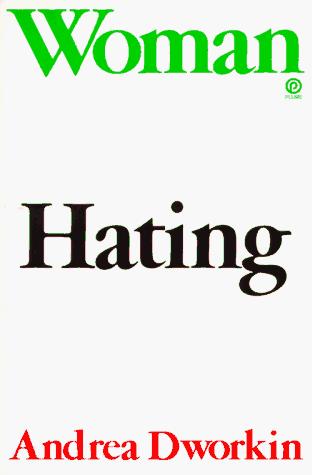
Julian: I think what white people do who speak about the condition of “women”, is make a very incomplete and simplistic assumption that either male supremacy doesn't exist at all, or that it is a system of brutality that can and ought to be understood as separate from other systems of oppressive harm and horror. Only for white power-protecting white people can such an assumption pretend to have radical validity; it therefore doesn't surprise me at all that any number of Western white women, such as the ones you name—each one offering brilliant analysis and insights, might describe how male supremacy works as if it was not bound to white supremacy. And of those women, only Andrea Dworkin—not irrelevantly the only Jew among them—refused to ignore the danger to women (and men of color) of white supremacy. She maintained, from her earliest work to her later work, that for feminism to be radical and revolutionary it must overthrow class power and white power as well as male power. That white, Jewish woman's challenge to other whites has gone generally unheeded, including by those who love to quote her. The two US women she chose to acknowledge as exemplary revolutionary feminists in the introduction to Woman Hating were Black women: Sojournet Truth and Harriet Tubman; that's not by accident--she didn't choose white women for a reason. Neither of those revolutionary women focused on "sex", per se, in their liberation work. She understood that women positioned politically, socially, structurally, to know much more about how race and sex and class harm women are far more likely to bring that knowledge into an organised plan of resistance and revolutionary struggle. 

I think the reasons why some white women have focused on sexuality as the central site and source of male supremacy is complicated. One reason is that it was the work that needed to be done at the time; it is what those writers had to say as they brought political insight to practices promoted by men as allegedly apolitical. Another reason, I believe, has to do with how the sexuality of white women is discussed and analysed by whites as an unraced while political experience. I wonder if this has a silencing effect on people whose sexual lives are known to be a product of both white and male supremacy. 

While I've read a great deal by some of the white women you mention, I see how the sexualities--and the larger lives--of women of color are systematically being ignored, marginalised, tokenised, distorted, or exploited by whites and by men in writing and in life. When women of color write about sexuality as intricately and historically tied to supremacist systems based on race and sex, their work is too often ignored by those who don't want to deal with how all of our sexual lives are shaped by both. 

Audre Lorde and Alice Walker spoke against sadomasochism and pornography due to how they are tied to racism and misogyny, yet when progressive to radical whites write against sadomasochism and pornography, only the patriarchal features are discussed. That white, self-termed 'sex radicals' are untroubled by those patriarchal features, while also ignoring the raced aspects, only shows how the term 'radical' can sometimes mean ultra-conservative.

I think there have been many men of color who have had brilliant insights and analysis of white supremacy, but when you consider that their contributions usually leave out observations and critiques of their own male power and how that is exercised against women of color, including the women of color in their intimate lives, you might come to the conclusion that their analysis is in service to their male power over and against women of color. We can also note how so few white men critically understand or are even moderately aware of how white and male supremacy along with economic exploitation, shape the lives of women and girls detrimentally. If damage to human sexuality, to human life, is seen, it is seen as happening most significantly to men and boys. And so white men, as a group, ought not be consulted on the matter of how to organise or foment revolution. Because when white men do so, their willed or unconscious protections of white and male power will be built into the plan. We have to conclude, I think, that white women's writing about an unraced sexuality that is male supremacist to the core, tells us how unwilling whites are to deal with racism in our own lives, and how little we listen to feminists of color when they speak about the politics of sexuality.

Jeremy: So you think Western white women who don't speak much about racism, about white supremacy, while they are interrogating male supremacy, are supporting white power?

Julian: Yes, of course they are. How could they be doing otherwise? Just as men of color who speak against racism as a system as if it isn't attached at the root level to male supremacy are protecting patriarchal power—including their own. 

But let's not forget who benefits most here: it is white men, not white women, not men of color, and certainly not women of color. White adult males are the material and social beneficiaries of white and male supremacy. Everyone else is oppressed by at least one of those systems. Given how ignorance of our own positions of advantage and unjust power over others works, it surprises me not at all that along with white men, white women and men of color also willfully ignore the oppressive power of their own whiteness and maleness, respectively. This is said to be done without will and without intent, quite unconsciously, by whites and by men. But on various levels, whites and men know very well and very consciously how white and male supremacy structurally benefits people atop the hierarchies. That knowledge, accumulated over a lifetime, is often enough repeatedly unremembered. But that is done so the individual white or man can hold to some notion of being “good” and “moral” and “ethical” as conservatives and liberals rather perversely define such terms. Liberal whites and men get to think of themselves as good and moral because they see that sexism and racism exists even while they won't speak about how they participate in maintaining each. 

Jeremy: Is that the only reason you think white people or men won't own what we do that is oppressive?

Julian: No. I believe the refusal to publicly own what we do, the evasion of personal responsibility, is also done so the often repressed shame of being oppressed by race, sex, sexuality, or economic class, for example, isn't triggered by the very different shame of being an oppressor. Also because we are likely to lose status among oppressors if we speak out against our political kin.

The internal battles in many of us to believe ourselves “good”, and to ignore how most of us stand on other people to be where we are, leaves us unprepared to be honest with ourselves or anyone else about who we are, politically speaking. The US, in particular, emphasises an individualised sense of identity while enforcing various social collectives. What if individuals' goodness and integrity was understood first in terms of what we-as-whites do, or what we-as-men do? 

In such conditions of ignorance and denial we can and often do mistake other oppressed people as enemy #1, when “the enemy”, if we're to think in those terms, is found in the shape of the structures and in the mechanisms of the systems which harm us. Structures of enemyhood, as my feminist mentor pointed out to me, are what we have to identify and uproot if liberation is to occur. If we don't, then we are perpetually at war not only with those who aren't in control, but with ourselves as well. 

For example, picking up on some issues which matter a great deal to some race- and class-privileged people online, no matter how oppressive a lesbian feminist or trans person acts, s/he is not structurally positioned to be in charge of the fate of other human beings collectively. Very few people, with enormous power inside complex systems of gross and brutal force, are truly “in charge”. Unless or until they are dethroned--and their systems and institutions are radically transformed--the rest of us fighting among ourselves will not bring about collective liberation. We will not co-create meaningful liberation from systems of harm and horror. As has been stated hundreds of times by many activist women of color, organised coalitions built by those oppressed by race, sex, region, class, age, ability, and sexuality are our only hope. 

Those few people with enormous power and access to seemingly endless resources cannot simply be replaced. Most simply put in a way that might be meaningful to those of us whose lives are shaped by the experiences and traditions of Europe, killing Hitler would not have meant European Jews were suddenly safe or free. The hands of the architects of HaShoah were not only Hitler's. The whole of any system that unjustly puts the few in power and keeps them there must be radically dismantled so that they no longer obtain and maintain oppressive power from being in such a place: the place itself as a structural location must be dissolved. 

Audre Lorde's essay on the Masters Tools has been misunderstood or mischaracterised by many progressives and radicals to be some kind of call to fight without the tools we need to succeed; as a kind of pacifist screed. I see her essay as reminding us that, for example, replacing “bad men” with “good men” doesn't solve the problem of men being in charge. Replacing white men with white women doesn't solve the problem of whites being in charge. Redistributing wealth inside a system of economic exploitation and global destruction won't result in those without money--or the Earth itself, being free from exploitation and destruction. And I see her essay as a reminder that institutional and psychological structures, as well as oppressors' political locations, must be radically transformed. 

We see what happens when the structures of enemyhood are left in tact when white het men aren't around. It is disheartening and discouraging to me to witness how various marginalised groups see one another and treat one another as “THE enemy” rather than as co-crafters of the route to liberation for all oppressed people. I see astounding levels of disrespect and disdain being dispensed among various oppressed people. Meanwhile, elite groups of white men—especially white het men—retain the most concentrated control of the many systems that advantage and empower whites, heterosexuals, and men to maintain advantages and commit atrocities against everyone else.

Jeremy: Do you mean marginalised groups online?

Julian: Yes, I do; but not only online. That said, I can't pretend that I directly what people experience who have less structural power than me or you. I cannot easily understand, viscerally or emotionally, what it means to be deeply threatened and invaded by liberal or conservative political activists that you or I might see as intellectually problematic but not “threatening” to our communal existence. 

Gay male society isn't going to disappear because conservative trans and queer theories take hold; only heterosexist male rulers have the power to systematically destroy gay men. Gay men have too much power as men to maintain the systems and cultures that are important to them. The same cannot be said for lesbian cultures; I think conservative and liberal forces in contemporary white queer communities and white het ones are profoundly and aggressively destructive to lesbian existence across race. But when you see the battles taking place online that only or primarily occur among whites, then you'd better be clear that one form of power that will not be questioned—let alone transformed—is white supremacist power over and against all trans and non-trans women of color, including lesbians.

I take what Flo Kennedy said about horizontal hostility very seriously, as I have seen how within white-dominated and white-majority lesbian, bisexual, and gay communities from decades ago, the in-fighting so often functioned to take the focus off of the myriad ways white het men were in charge of how the rest of us understood ourselves and experienced things such as safety and community, or the lack thereof.

My struggles with coming out as gay were not the ones typically portrayed in mass media. For example, my struggle was not coming out of denial that I was attracted to men. I knew since before adolescence that men were attractive to me in ways that they weren't supposed to be according to the heterosexual world I lived in. Well, SOME men. In my late teens and early twenties, my struggles were with assessing how gay male sexuality was mirroring the practices of het men, and carried het male supremacist misogyny into the lesbian and gay communities I was considering being part of at the time. My struggle was paying attention to what it was about men that I was attracted to that drew me to them. I was also wanting to disengage from a culture of white gay men who were raised, as I was, to believe white het men are the most valuable human beings on Earth. Embedded in this belief was a king of spiritually deadly seeking of their approval for our own well-being and self-esteem. I needed to understand how white masculinity, while positioned as superior to white femininity, didn't make white femininity liberatory just because it wasn't valued in white patriarchies.

I saw the danger of white gay men acting out white masculinity and white femininity without interrogating how each is constructed and maintained with force by white het male supremacist structures that live in and all around queer and het people. Those structures and practices, to the extent they are products of white and male power, have only ever served white het men primarily. But the white power in them also serves to protect the supremacy of whites across sex and sexuality, and the male power in them also serves to protect the supremacy of men across sexuality and race.

I also came to see that white gay men's agenda for liberation was usually designed to protect and defend white and male power as due to that, was spiritually and politically bankrupt. It also ignored, rather completely, how queer people of color were surviving not only homophobia and heterosexism, but also imperialism, colonialism, misogyny, and racism. To hear white class-privileged gay men speak about "our fight for liberation", you'd think battling homophobia was the only task at hand.

Jeremy: I grew up seeing white heterosexual men put down gay men and women—lesbian or heterosexual, but in putting them down they were mostly just promoting ways of being that were inhumane, including to ourselves. Being deprived of an emotional life isn't great.

Julian: And assuming that it is only white het men who are deprived of an emotional life, or who live with what's called a spiritual-emotional “straight-jacket”, means one has to ignore all the ways that the rest of us also have to deny or dissociate from so many aspects of ourselves and our feelings. I grew up hearing endlessly about how white het men, in particular, suffer in North American patriarchy. And how white women got to be so free with their emotions. But none of the white women in my family got to be all that free emotionally. Rape, incest, and battery, and a kind of ever-present condescension and contempt for girls and women, were each perpetrated by white het men who were intimately involved with female family members. Each form of spiritual destruction and visceral terrorism ensured that many women in my family of origin were lost to themselves or didn't feel very safe to express very much, or were quick to be apologetic and acquiescent to men, or were otherwise deferential to men in a deeply compulsory way—meaning that it wasn't so much a psychological habit as much as it was survival-based behavior rooted in knowledge that plenty of men will attack you verbally and physically if you don't obey them.

In so many ways that white het men won't acknowledge, you all are freer than the rest of us to feel, to emote, to express yourselves in sloppy and loud ways, and in silent and sulking ways, that command the attention of the rest of us and assume you will have people around you to care about your feelings and attend to them with concern, regard, and affection. I learned at an early age to attend to your feelings, Jeremy, to white het men's feelings, and put them before my own.

Jeremy: I learned to do that with my father, who was a raging alcoholic. His ego seemed to require constant attention and soothing.

Julian: And I suspect the alcoholism isn't necessarily the most potent element in that emotional equation. I think the maleness and whiteness is. Because I see how males and whites each command similar kinds of attention, or demand it, or just expect it the way we expect air to contain oxygen. And god forbid anyone female and anyone of color NOT show “proper” deference, or “appropriate” compassion to someone white or male, especially when they are struggling in some way but even when they are just walking down the street.

Because structural advantage, by race, class, or sex, often brings with it a kind of perennial permission to allow oneself to be centrally attended to, to be cared about and cared for, what we see is that whites will position ourselves as in need of something when around people of color. And the same for men when around women. As soon as something is asked of a white man by someone of color and female, the white man will predictably change the course of the conversation so that the oppressor's needs are presented as more important. Attending to the white people's or men's confusion about what she has said that is challenging to their sense of self, is supposed to trump her objection to what he is doing—including an objection to him manipulating everyone around him to pay attention to him at her expense.

Jeremy: So what's wrong with identifying how men manipulate women in those ways?

Julian: Nothing. Any profeminist ought to do that. But if you put women of color at the center of your concerns about “women”, then what you will see is that it's not only white men, or only men, who are being oppressive, and who are preventing women of color from experiencing socialised dignity and institutionalised respect. It is also white women. And so if women of color's struggles for liberation matter as much as anyone else's, then, I'd argue, only paying attention to male supremacist harm likely leaves women of color unsupported in their struggle to be free of white contempt and white ignorance. 

If we are going to herald the writings of white feminists—which white profeminists generally do, then let's not forget that Andrea Dworkin said, if it hurts women, feminists are against it. If feminism, as a lived political practice, is supposed to challenge all forms of oppressive hurtfulness towards women, then what whites do to women of color has to matter as much as what men do to women of color, and register in our minds and hearts as just as wrong and just as intolerable. 

Being profeminist means speaking out about all of it—not just against the behaviors that implicate men of color, for example. We can't let whites off the hook. So when I see whites speaking out about what “those” men of color do to “their women”, what I am left wondering is when do we speak about what we do, as whites, to those same women? And when do we speak out about it as profeminists?

Jeremy: Well, you do that, right?

Julian: Yes, but you may notice that when anyone does it, there are usually whites and men who will point out how inappropriate it is, how misandrous it is, how misogynistic it is, for me or anyone else to do so. It's no accident that, almost without exception, it is ONLY whites and men who object, which lets me know that any challenge to their unjust and unearned power as whites and men is what is being objected to.

So when you state, as you did earlier, that profeminists ought to only speak out about how Men.Oppress.All.Women, I have to wonder if you give a shit about how women of color are oppressed and demeaned on many fronts as women, including racially by white men and white women.

Jeremy: I see what you mean now. But don't you think that white males critiquing white women's racism is a way for those males to be misogynistic?

Julian: If white men critique white women disproportionately—say, more than they critique white men, then I'd question what's going on, yes. And if white males do so in sexist and demeaning ways to white women, then yes. But, again, if women of color matter, if women of color are “women” just as much as white women are, then hadn't your question also better be: “Don't you think that white males not critiquing white women's racism is a way for those males to be misogynistic—to women of color?”

Jeremy: Hmm. I guess I hadn't thought about that.

Julian: Do you think it warrants asking, how someone so dedicated to radicalism and profeminism could neglect to ask such a basic question about women's liberation? And how could it be that you didn't you encounter these points again and again in the radical writings by whites and men you've read over the years?

Jeremy: Where did you encounter them?

Julian: In the writings of radical and feminist women of color. And in conversation with radical feminist women of color who have systematically refused to allow my white and male supremacy to go unchallenged. 

Jeremy: So you were open to changing yourself. 

Julian: Yes. But someone I structurally oppress maintaining a willingness and ability, against great frustration and exhaustion, to call me out is only part of the story; I had to have something meaningful to offer in relationship. Progressive to radical males and whites too often assume that our consciousness would benefit greatly from relationships with people we oppress, but we don't consider what we have to offer people we oppress. 

Jeremy: I don't think I've ever had a close friendship with anyone of color.

Julian: Do you know what, Jeremy? I honestly don't know many whites who do. This is one of many ways that race and sex are different: I know very few males who don't have close relationships with women. But whites really do resist friendships with people of color who demonstrate a willingness to call whites out on their white supremacist nonsense.

It isn't enough you or I are willing to listen carefully, change our behavior, not consider ourselves finished with the work of being less interpersonally oppressive, and understand that our structural whiteness and maleness don't ever disappear. In my life, that stuff has been more of a prerequisite for just the possibility of on-going friendship. Deep friendship requires real giving and sharing. Before you consider asking a woman of color for guidance or support in becoming less oppressive, please first be clear about what you have, emotionally, spiritually, to offer her. Don't be heterosexist in your assumptions and actions: don't approach women for what you can get from them, for what they can teach you or for how they can take care of you; that, for me, would be standard het male practice. And don't ever pretend you're not racist and not sexist; I mean don't pretend you're not a white or male supremacist. Because we're structurally positioned to be each, every minute of every day.

Jeremy: You don't see any difference between acting in racist ways and being a white supremacist? 

Julian: In reality, in our region of the world, there is no meaningful difference; catering to the very political ego needs of whites might compel some of us to make such distinctions. But in North America, if the reality that is most real to you is that of women of color, then we must accept that there is no distinction worth making between sexism and male supremacy, or between racism and white supremacy. What I don't see discussed nearly enough in communities that call themselves "radical" is how sexism/male supremacy and racism/white supremacy cause PTSD in those targeted for harassment, debasement, subordination, and death. The truth of male supremacist behavior is true also of white supremacist behavior: terrorism underlies every expression of it. Given that women of color are viciously and normally targeted by each, we have to ask: how is racism not one more form of misogyny when it affects women of color? Do women of color stop being women when insulted and assaulted by white's racism? 

Some feminists argue that all systems of institutionalised power are gendered and that subordination by sex, sexuality, class, or race isn't just designed to degrade your humanity and limit or snuff out your life, it is designed to feminise you as well. Any political vulnerability is seen as feminising. Any position of power, whether sexed power or raced power, or power achieved through acquisition or theft of wealth, is masculinising. Seen this way, racism masculinises white people and white supremacy becomes a form of male supremacy. I'd say the same is true about how many forms of oppression take on raced qualities: being rich and being male can be an experience of becoming whiter, politically speaking--not that Oprah Winfrey ever gets to be white or male even one day in her life, despite her wealth. 

If we accept all of that as part of how these oppressive systems work and impact each other, then the only conclusion to come to is this: protecting white supremacy by denying its existence among white women or among white men, or by relegating activism against it to the margins of one's work, is a male supremacist practice. And so some of the very people, white ones, who argue we must only focus on male supremacy--or let's say, on capitalism, as far too many white male "Occupy" activists do, are being male supremacist in doing so.

Jeremy: But this kind of takes us back to where we started: isn't focusing on how to eradicate sexism, or male supremacy, the primary work of feminists, and profeminists, given that no other group wants to put what men do that harms women at the center of their work?

Julian: I guess I've come to see radical profeminist work differently. There is a kind of stigma and denigration of social status among men if your work only or centrally concerns itself with what happens to women. I've been called everything from mangina to a wimp to a woman simply because what happens to women is the center of my political work. I think we need to consider it "radical" to put what happens to women at the center of your political concerns and work. But I can't call activist work that ignores either male supremacy or white supremacy, including among the activists, "radical". There's nothing at all radical to me about protecting and defending one's power to abuse others based on structural location. And intentionally or not, that's what males and whites are doing when we deny the power that inheres in our positions atop social hierarchies.

Jeremy: What do you call white radical feminism if it doesn't analyse and seek to eradicate the power of whiteness? 

Julian: I guess I'd call it a branch of white conservatism that also offers a sometimes useful critique of some forms of male supremacy. Just as I'd call the so-called "radical" political work of men across race, "conservative" and "male supremacist" if that work didn't name, address, and oppose male supremacy. This doesn't make the work only conservative. But it makes it conservative with regard to sex. It kind of boils down to this, for me: if someone's activism ignores race, it is functionally white supremacist. If someone's work ignores sexual oppression, it is functionally male supremacist. This isn't really that difficult conceptually, and if you live it, it's rather obvious. 

Jeremy: You make it sound as if you live it--as if you are being negatively or oppressively affected by white and male supremacy. 

Julian: The experiences of those I love become part of my experience of the world. I think that's true for most people, except maybe for the most self-absorbed and sociopathic. Beyond that, being a gay male means that I encounter misogyny, woman-hating, regularly, daily. It is aimed at me systematically because het supremacists enforce an idea that being gay is a degraded state of being, one that puts males in the same structural bracket, politically, as females. As a Jew who grew up studying both the history of Jews and HaShoah, I learned that dark features are devalued and are seen as suspect by people who are white and Gentile. I learned that my Jewishness was raced "dark and dangerous" in Nazi Germany. Here in North America, Jewishness is primarily an ethnicity or a religious affiliation. 

I understand that symbologies and cultural associations that see darkness and blackness as essentially negative and dangerous are both white supremacist and anti-Semitic. White Jews--as opposed to Jews of color, I mean--have to work out our mixed allegiances with people of color and white Gentiles, hopefully building genuine, trustworthy alliance with people of color. Gay white men have to consciously work to not fall into the trap of trying to get what het white men have or try to possess. 

I'd say I'm undeniably and heavily advantaged--structurally empowered and statused--due to being male and white, and I am also targeted in some ways, in oppressive ways, for being gay and Jewish. The time and place where I live doesn't put me in a lot of danger for being either gay or Jewish, thank goodness. But living in a heterosexist society, and in an anti-Semitic one, even if they aren't the most virulent in either regard, does have a destructive effect on queer people and on Jews. Male supremacy is a very crucial dimension of heterosexism just as white supremacy is absolutely central to anti-Semitism. And it is an on-going struggle to call out the sexism and racism I see in those oppressed-while-advantaged communities.

Jeremy: This is a lot to think about. 

Julian: You got that right. Not dealing with these issues and related ones is sometimes desirable to just about everyone I know. But it is only possible to not deal with them if one is only advantaged in these various systems of harm and horror. One of the ways we can know someone is advantaged by race, or by sex, or by sexuality, is that they never seem to need to discuss it, they don't make it a priority to be aware of the horror, and they don't put effort into stopping the harm.

Wednesday, April 4, 2012

Alice Walker discusses the life and legacy of Adrienne Rich (1929-2012)

I never got to meet or speak with Adrienne Rich. Or Alice Walker for that matter. But there's still time with Alice. What I remember most about Adrienne was her willingness to struggle with whiteness and the unearned power that defines and sustains it, and her lesbian-feminist brilliance in analysing heterosexuality as a socially and politically compulsory condition for women, not a natural one.

Below is the video featuring Alice Walker. Below that is a transcript of the conversation.


To link to any of this, please click here: http://www.democracynow.org/2012/3/30/adrienne_rich_1929_2012_alice_walker
Adrienne Rich (1929-2012): Alice Walker & Frances Goldin on the Life of the Legendary Poet
by via Democracy Now!, Wikipedia & Flickr
Friday Mar 30th, 2012 11:57 AM
Adrienne Cecile Rich (May 16, 1929 – March 27, 2012) was an American poet, essayist and feminist. She has been called "one of the most widely read and influential poets of the second half of the 20th century", and was credited with bringing "the oppression of women and lesbians to the forefront of poetic discourse.

In 1997, Adrienne Rich famously declined to accept the National Medal of Arts in a protest against the Clinton administration, writing that art "means nothing if it simply decorates the dinner table of power which holds it hostage."

Rich died on March 27, 2012, at the age of 82 in her Santa Cruz, California home.


PHOTO: Audre Lorde, Meridel Lesueur, Adrienne Rich 1980 by K. Kendall
"They led a writing workshop together in Austin, Texas. I was in it, and they let me take this picture of them."

Adrienne Rich (1929-2012): Alice Walker & Frances Goldin on the Life of the Legendary Poet & Activist

by Democracy Now! — March 30, 2012

The legendary poet, essayist and feminist Adrienne Rich, who died on Tuesday at the age of 82, was one of the most celebrated poets of the last half-century and a lifelong advocate for women, gay and lesbian rights, peace and racial justice. Rich drew widespread acclaim for her many volumes of poetry and prose, which brought the oppression of women and lesbians into the public spotlight. She was a key figure in the women’s movement and an uncompromising critic of the powerful. In 1997, Rich famously declined to accept the National Medal of Arts in a protest against the Clinton administration, writing that art "means nothing if it simply decorates the dinner table of power which holds it hostage." We remember Rich’s life with Pulitzer Prize-winning author Alice Walker and Rich’s literary agent Frances Goldin.

Guests:

Alice Walker, Pulitzer Prize-winning author, poet and activist. When Adrienne Rich was awarded the 1973 National Book Award, she refused to accept the award alone. She appeared onstage with poets Audre Lorde and Alice Walker, and the three accepted the award on behalf of all women.

Frances Goldin, Adrienne Rich’s longtime literary agent and friend.

This transcript is available free of charge. However, donations help Democracy Now! provide closed captioning for the deaf and hard of hearing on the TV broadcast. Thank you for your generous contribution.

Transcript:

JUAN GONZALEZ: The legendary poet, essayist and feminist Adrienne Rich died on Tuesday at the age of 82. Rich was one of the most celebrated poets of the last half-century and a lifelong advocate for women, gay and lesbian rights, peace and racial justice. Rich drew widespread acclaim for her many volumes of poetry and prose, which brought the oppression of women and lesbians into the public spotlight. She was a key figure in the women’s movement and an uncompromising critic of the powerful. Rich won numerous awards and honors, including the National Book Award for the 1973 collection Diving into the Wreck. Refusing to accept the award alone, she appeared onstage with poets Audre Lorde and Alice Walker, and the three accepted the award on behalf of all women.
AMY GOODMAN: In 1997, Adrienne Rich famously declined to accept the National Medal of Arts in a protest against the Clinton administration, writing that art, quote, "means nothing if it simply decorates the dinner table of power which holds it hostage."
In a moment, we’ll be joined by Pulitzer Prize-winning author Alice Walker and Rich’s literary agent Frances Goldin. But first we’re going to go to Adrienne Rich herself, reading her poem "What Kind of Times Are These."
ADRIENNE RICH: There’s a place between two stands of trees where the grass grows uphill
and the old revolutionary road breaks off into shadows
near a meeting-house abandoned by the persecuted
who disappeared into those shadows.
I’ve walked there picking mushrooms at the edge of dread, but don’t be fooled
this isn’t a Russian poem, this is not somewhere else but here,
our country moving closer to its own truth and dread,
its own ways of making people disappear.
I won’t tell you where the place is, the dark mesh of the woods
meeting the unmarked strip of light—
ghost-ridden crossroads, leafmold paradise:
I know already who wants to buy it, sell it, make it disappear.
And I won’t tell you where it is, so why do I tell you
anything? Because you still listen, because in times like these
to have you listen at all, it’s necessary
to talk about trees.
AMY GOODMAN: That was Adrienne Rich reading her poetry. She died on Tuesday at the age of 82. Alice Walker, as well as Frances Goldin, her literary agent, are here to talk about her life.
Alice Walker, your thoughts about Adrienne?
ALICE WALKER: Well, it was very interesting. She and I saw each other infrequently and almost always by accident, so it was quite magical. We would be sometimes in an elevator together, and she would have come from one part of the country and me from somewhere else, and there we’d be. Or we’d show up at a movie, and there she’d be, and there I’d be. She was very close to a friend of mine, June Jordan, and so I got to know more about her through June, and also, of course, through her poetry, which was very meaningful to me. And my sense of her, the thing that I most loved, was her integrity. She lived exactly what she said. And this was so rare and so beautiful. And we will miss her.
AMY GOODMAN: Can you talk about the National Book Award in 1973 that she won for Diving into the Wreck that she insisted that you, Alice, and Audre Lorde accept the award with her on stage? Talk about that moment. Where were you?
ALICE WALKER: I was in Mississippi. I was, you know, fighting the good fight down there. But anyway, what happened was that we were all three nominated for this award. And we understood that we were living under apartheid and segregation and, you know, all of that, and that under such a system, which favored white people, she would get the award. We knew that. And so, we decided, before anybody—anything was announced, that we would not accept being ranked, and we would not accept the racism implicit in an award that would go to someone—you know, she was a great poet, but it would go to her also because she was a white person. And to her immense credit, she had no desire to be honored as we would be dishonored. And so, we got together. Audre called me in Mississippi, and we chatted about it, and Adrienne. And so, we decided that we could only accept an award so suspicious if we accepted it in the name of all women and indicate by that action that we understood that women were not honored in the arts and elsewhere.
JUAN GONZALEZ: And Frances, you represented her for many years. Talk to us about how you first came to know her and what kind of person she was, and especially this issue of her stances on principle and social justice.
FRANCES GOLDIN: I met her at a dinner. The gay and lesbian rights groups had a dinner the night before, every year, when the publishing world came together in various countries—cities in the country. And I was sitting next to her and met her for the first time at that dinner. And we bonded, because we had similar politics, and we had wanted to meet each other for some time. And when the meeting was over, I said to her, "Can I hug you?" And she said, "It would be a pleasure." And we hugged. And then I said, "Well, if we can hug, can I kiss you?" And she said, "I would love to." And we left, and that happened.
And then I really campaigned for a couple of years to be able to represent her. And I remember taking a camera on a city bus, because they had on the billboards of the buses the poet of the month. And once, it was Adrienne. And so, I took a picture of that and sent it to her and said, "Millions of people in New York know about you because you were on the bus this morning." And, you know, I just courted her with anything I could think of.
And then, one day, she called and said, "I need some help. My publisher, Norton, has two offers from England, and I don’t know which one to take." So I said, "Well, just sit there, and don’t go away from your phone." And I called my British agent, because I certainly didn’t know which was the better of the two. And he called her, and she explained it, and he told her which was the best publisher for her. And she called back and said, "He was so wonderful, and he didn’t take any money, and he wouldn’t charge me." And I said, "Well, of course not. It was just a favor." And she said, "Well, then, can you represent the book?" And I said, "How can I? You signed a contract. And if I called with a question about it, they would hang up on me, because I didn’t agent this book." And she said, "Well, can you do my next one?" And I said, "Does night follow day?" And we became agent and author. And it’s been 25 years.
AMY GOODMAN: I want to go back to that moment in 1997 when Adrienne Rich refused the National Medal for the Arts to protest the growing concentration of power in fewer and fewer hands. Adrienne Rich informed the Clinton administration of her decision in a July 3rd letter to Jane Alexander, the chair of the National Endowment for the Arts at the time, which administers the awards. Adrienne Rich appeared on Democracy Now! soon afterwards, and she read her letter.
ADRIENNE RICH: "Dear Jane Alexander,
“I just spoke with a young man from your office, who informed me that I had been chosen to be one of twelve recipients of the National Medal for the Arts at a ceremony at the White House in the fall. I told him at once that I could not accept such an award from President Clinton or this White House because the very meaning of art, as I understand it, is incompatible with the cynical politics of this administration. I want to clarify to you what I meant by my refusal.
“Anyone familiar with my work from the early Sixties on knows that I believe in art’s social presence—as breaker of official silences, as voice for those whose voices are disregarded, and as a human birthright. In my lifetime I have seen the space for the arts opened by movements for social justice, the power of art to break despair. Over the past two decades I have witnessed the increasingly brutal impact of racial and economic injustice in our country.
“There is no simple formula for the relationship of art to justice. But I do know that art—in my own case the art of poetry—means nothing if it simply decorates the dinner table of power which holds it hostage. The radical disparities of wealth and power in America are widening at a devastating rate. A President cannot meaningfully honor certain token artists while the people at large are so dishonored. I know you have been engaged in a serious and disheartening struggle to save government funding for the arts, against those whose fear and suspicion of art is nakedly repressive. In the end, I don’t think we can separate art from overall human dignity and hope. My concern for my country is inextricable from my concerns as an artist. I could not participate in a ritual which would feel so hypocritical to me.
"Sincerely,
Adrienne Rich"
AMY GOODMAN: Adrienne Rich, reading on Democracy Now! the letter she wrote to the actress Jane Alexander, who was then the head of the National Endowment for the Arts, rejecting the 1997 medal, the 1997 National Medal for the Arts. Alice Walker, your final thoughts on Adrienne Rich?
ALICE WALKER: I think that that letter demonstrates that integrity that she had that I so admired. And I think her legacy for all of us is to continue to believe in the power of art, especially in the power of poetry, and to keep moving and not to be dissuaded, not to be discouraged, but to take heart from a woman who lived for 82 years giving her very best, growing out of every shell that society attempted to force her into to become this really amazing figure of inspiration and hope and love.
AMY GOODMAN: Alice Walker, we want to thank you for being with us, Pulitzer Prize-winning author and activist. Frances Goldin, Adrienne Rich’s agent and friend. And we will post you reading, Frances, Adrienne’s letter to you on our website at democracynow.org.

Saturday, November 5, 2011

Andrea Dworkin on Transsexuality, and my own thoughts on Trans and "Rad Fem" Politics

image of book cover is from here
There is an update following the main post, which is below.

Earlier this year I wrote a great deal here about concerns regarding liberal queer politics, including liberal trans politics. Please see those posts for more detailed discussion on those topics, if you wish to. In this post I'll take on some current mischaracterisations and oversimplifications of radical feminism. (I've also posted a fair amount here over the years about misogynist men's nonsense about radical feminists. This post won't concern itself with those virulent anti-feminists.)

Any time anyone speaks of what "those radical feminists" or "those radical lesbian feminists" are doing, or believe, or feel, I'm skeptical to disappointed. For one thing, when "they" are accurately referenced, the criticism of radical feminism tends to reference only a very few region-, race-, and academically-privileged white women.

Two women who get touted as exemplars of radical feminism are Mary Daly and Janice Raymond. So let me begin by saying that while Mary Daly and Janice Raymond are two voices in the herstory of US radical feminism of the last forty years, they aren't "US radical lesbian feminism" to me. Alice Walker and Audre Lorde are two key voices in US radical lesbian feminism. Their work has had a much greater impact on me. Why are they rarely-to-NEVER referred to when anti-radical feminist spokespeople are expressing their own critiques?

One answer is racism: the obnoxious and erroneous contention that all radical feminists are white women is but a wee part of the on-going effort within and beyond the cultivators and purveyors of anti-feminism to erase women of color from the "canon" of radical feminist writers and activists. Another answer is that Lorde and Walker's written views and values don't necessarily match up with those of Daly and Raymond. And this inconvenience for those who wish to lump all radical feminists together as being all "transphobic" or "anti-male" or "anti-sex", isn't so easy if one contends with the depth and breadth of US radical feminist writings.

Personally, I never read Janice Raymond during the long years of my own initial education in radical feminism. I've read very little by Mary Daly. Neither woman represents "radical feminism" to me, while I fully acknowledge the significant--and amazing--contribution to radical lesbian feminist thealogy by Mary Daly. As noted above, Lorde and Walker, and also Andrea Dworkin, have been far more influential in teaching me what radical feminism can do in responsible theory and activist practice.

I found what follows typed up online, on a Tumblr account called Head Girl (*here*), and so cannot vouch for the accuracy of the text, but it sounds like what I remember reading in Woman Hating (1974). I'm checking online for the text and from what I can find there are several inaccuracies in what was at the Tumblr page and so I've made some corrections in what appears below.
Transsexuality

How can I really care if we win “the Revolution”? Either way, any way, there will be no place for me.
A transsexual friend, in conversation
Transsexuality is currently considered a gender disorder, that is, a person learns a gender role which contradicts his/her visible sex. It is a “disease” with a cure: a sex-change operation will change the person’s visible sex and make it consonant with the person’s felt identity.
Since we know very little about sex identity, and since psychiatrists are committed to the propagation of the cultural structure as it is, it would be premature and not very intelligent to accept the psychiatric judgment that transsexuality is caused by a faulty socialization. More probably, transsexuality is caused by faulty society. Transsexuality can be defined as one particular formation of our general multisexuality which is unable to achieve its natural development because of extremely adverse social conditions.
There is no doubt that in the culture of male-female discreteness, transsexuality is a disaster for the individual transsexual. Every transsexual, white, black, man, woman, rich, poor, is in a state of primary emergency (see p. 185) as a transsexual. There are 3 crucial points here. One, every transsexual has the right to survival on his/her own terms. That means every transsexual is entitled to a sex-change operation, and it should be provided by the community as one of its functions. This is an emergency measure for an emergency condition.
Two, by changing our premises about men and women, role-playing and polarity, the social situation of transsexuals will be transformed, and transsexuals will be integrated into community, no longer persecuted and despised.
Three, community built on androgynous identity will mean the end of transsexuality as we know it. Either the transsexual will be able to expand his/her sexuality into a fluid androgyny, or, as roles disappear, the phenomenon of transsexuality will disappear and that energy will be transformed into new modes of sexual identity and behavior.
Andrea Dworkin, in Woman Hating, 1974

At another blog called Transmeditations, with posts written by Joelle Ruby Ryan, there was a post documenting tensions between a few non-trans radical feminist-identified people and one trans-identified person (who I believe also identifies as a radical feminist). The account of what happened is one person's experience of it; I've heard differing accounts by people who were also there about inaccuracies in Joelle's description. But of course that is likely to be the case with any upsetting or triggering experience.

I've commented there, most recently to another commenter. I just saw that my comment was not posted (so far) and I'd like it to be on record here. First, the link to the post and comments is *here*.

Amber is the name of the recent commenter. Here's that comment edited slightly (please see the full comment in context at the site linked to above), and after that is my response to her:

[...] The vicious hate related here truly upset me. Dont these so-called “rad-fems” understand that the people they hate so badly are real people with real things and that they detest am entire group of people, with no reason, who mean them no harm and who are often a great danger but only to themselves.
amber said this on October 26, 2011 at 11:26 pm | Reply
  • Hi amber,
    I know of countless examples of trans-identified people demonstrating willful, purposefully aimed misogyny and anti-feminism at lesbians. From arrogantly insisting on invading lesbian spaces, to disrespecting lesbians interpersonally, I’ve seen it happen and I have read so many accounts of it happening that I really have to challenge, as woefully inaccurate, the statement you make above. Misogyny and anti-lesbianism is flourishing right now in many queer spaces. Gay and bi men have been perpetrating it for decades and more recently far too many trans people do too. Do you doubt that?
    JulianReal said this on Your comment is awaiting moderation. November 3, 2011 at 8:39 pm |Reply

I probably ought to note that people who identify as "rad fem" are not necessarily representatives of radical feminist thought or exemplars of radical feminist practice. I'll tell you a story that illustrates the necessity of me making that point. A pro-radical, pro-feminist male I know told me a year or more ago that he was considering giving up on radical feminism as a valid political theory and practice. I asked him why. He told me that he found some of the beliefs there absurd, such as the anti-sex viewpoints. I told him that radical feminism, in my experience, isn't anti-sex at all. He referenced an online discussion among a few privileged white women that did seem to be anti-sex. I suggested that he not assign to those few women what is most notable and necessary from the vast writings and activism by radical feminist women. It hadn't really occurred to him to doubt the validity of what some "Rad Fem"- identified women said as allegedly accurate about "radical feminist" on the whole. So if Amber is also referring to a few privileged white women online who express themselves as if speaking for all of radical feminism, that might be important to know.

Given the significant contributions to radical feminist theory and practice made by heterosexual and other non-lesbian women, radical lesbian feminism and radical lesbian politics are not the sum total of radical feminism. In fact, I know of at least one Radical Lesbian who doesn't ascribe to what many "traditional" radical feminists believe about gender and sexual oppression. And I know of another woman who has identified more as a revolutionary lesbian feminist than as a radical lesbian feminist for most of her long activist life. Her own views are different than either the Radical Lesbian woman I am referring to or the views of many other radical feminists.

All of this should help build a case for the danger or saying that a single person or group's viewpoints are representative of what all radical feminists believe and do. I find the whole herstory of radical feminist accomplishments--named as such in writing and in life, to be complex, compelling, and anything but monolithic, which isn't to say the term "radical feminism" refers to anything at all.

But the assumption that some online and offline white, class-privileged trans activists or spokespeople--who often enough seem to speak for all trans people--do no harm and mean no harm is nonsense. There are too many examples of gross insensitivity and blatant hateful behavior towards radical lesbian feminist people to pretend that all actions by trans people are benign and free of misogyny and anti-feminism. (How could it be, really, that trans people, as one of many diverse populations of people--many of whom don't identify as "trans"--are free of misogyny and anti-feminism? I know of no group of people who have managed to accomplish that, including the group "radical feminists".)

I don't know what Andrea Dworkin would say about the various contests for safe space and the power to name reality that are currently occurring between those two groups in some places on- and off-line. I also wouldn't presume to know. What I've found in Andrea's writing is a commitment to name male supremacy wherever and whenever it exists, displays itself, and asserts dominance in social and personal spaces. I've seen some trans and many more non-trans people be (or, rather: act) male supremacist in many different ways, almost never owning the male supremacy embedded in the behaviors.

I think there is plenty to critique in contemporary liberal, white, class-privileged trans and non-trans understandings of gender and social justice. I make it a point to have this blog be a space that values such critique. And people telling me I'm "transphobic" or "anti-male" for doing so won't silence me. I find those sorts of accusations typical derailing strategies almost always by people with significant social privilege and power. And I see such strategies being designed and implemented to stop the radical inquiries and interrogations, not deepen and expand them.

Andrea Dworkin's own views developed and deepened. She has critiqued some of what she wrote in Woman Hating and that self-critique may be found in a 1998 book by Cindy Jenefsky titled Without Apology: Andrea Dworkin's Art and Politics. Part of Dworkin's own critique has to do with lack of interrogation of the Freudian influence she accepted in her own understandings of sexuality in her first feminist book. I have never read anything else she wrote since that demonstrates a lessening of regard and respect for transsexual people, however. (Please see the update in purple for more.)

9 Nov. 2011 UPDATE: 
I just found this post, which is a cross-post from other Tumblr accounts but is added to at The Trans Woman's Anti-Violence Project: 
http://transfeminism.tumblr.com/post/12371381560/andrea-dworkin-wasnt-a-friend-to-trans-people

As an anti-misogyny/anti-patriarchal violence activist, I don't agree with the writer's assessment or conclusions. I think regarding Andrea's views as identical to Jan Raymond's is a spurious thing to do: Andrea had her own voice. What she wrote in her own voice is what should be used to either agree with or disagree with her, not the writings of other women. The guilt by association tactic for condemning a writer-activist is not a respectable or responsible thing to do, imo.

The fact that Andrea didn't speak directly to this issue after writing Woman Hating means something. What it means is up for interpretation, of course. But what I know about Andrea is that she was a deeply compassionate person towards anyone who enduring the violence and violations of male supremacist harm and horror. I do not know Jan Raymond at all. But I did know Andrea and I regard Dworkin's work as a tremendously important resource, theoretical base, and activist approach to all anti-misogyny work. That someone is framing her work as being pro-misogyny (supportive of misogyny directed at some trans people) is rather absurd to me.  On that Tumblr page, there is a statement about Dworkin's promotion of "androgyny" as being terrifying. I'm troubled that an idea in a book that has no institutional or social support in the actual world, is regarded as more of a threat than the rampant, unowned, unacknowledged white and male supremacy inside and outside white-dominated queer communities. Here is that passage:
Also, I think Dworkin’s militant advocacy for replacing the sex binary with a monolithic compulsive androgyny is terrifying. Androgyny as the socially enforced norm would lead to something like the gender repression featured in “The Outcast” episode of Star Trek: The Next Generation, or Tobi Hill-Meyer’s The Genderfellator.
privilegedandgoodlooking:

“Andrea Dworkin (yes, THAT Andrea Dworkin) on Trans people: …
WOMAN HATING- by  Andrea Dworkin 1974
BRB, Continuing to be amazed that Dworkin is like, right next to Raymond and Delay as the patron saints of 2nd wave hardline anti-trans stances.
(via unobject)

As discussed a bit below in the initial post I wrote recently, Dworkin repudiated what was in parts of Woman Hating and what she believed in 1973 and 1974 ought not be held against her, given the amount of more thorough work she did on male supremacy in the twenty years that followed.

I find it troubling that people working to stop misogyny don't attach that work to addressing and challenging male privilege and male supremacy in our lives--including in the lives of people who are queer and trans. I experience that as far more terrifying than Dworkin's later-rejected theory of androgyny from a book published over 35 years ago.