Showing posts with label Catharine MacKinnon. Show all posts

Friday, April 22, 2016

John Stoltenberg's and Cristan Williams' The Conversations Project: Some Final Thoughts

graphic is from here
Note: When I heard Prince died earlier on Thursday, what I recalled was how much Andrea Dworkin loved his work.

The message in the above graphic was never anything 
The Conversations Project endeavored to do. 
Yet they insisted they were a radical feminist group.

I may be writing more about this, but just wanted to update you that after four months of very engaged involvement, I've been purged without notice from The Conversations Project Facebook group started by John Stoltenberg and Cristan Williams, although John was largely absent.

Here are a few concluding thoughts:

1. The group was steadfastly anti-radical feminist, but couched this as
anti-T--F, as if those radical feminists who are against the liberalism and male supremacy in trans politics should and can be separated out from those who are or were not.

2. There was consistent refusal to admit that they were misusing and misunderstanding the early work of Andrea Dworkin while ignoring all of Dworkin's later work (like, at least 11/12ths of what Andrea wrote). The only passages of hers they ever referred to (a lot) were Dworkin's most liberal points in Woman Hating about multisexuality and androgyny. They refused to acknowledge Andrea's mid-70s discussion of androgyny was something that wasn't specific to her, and something that was of political interest during that decade, but never thereafter. (As was the case for so many white feminists in that period: Kate Millett, Shulamith Firestone, and Marge Piercy, for example.) They refused to consider why Andrea later rejected the last section of Woman Hating as politically and intellectually problematic. They clung to a few early ideas because dealing with anything else--such as pornography, prostitution, male privilege, male power, white and male supremacy, the process of subordinating female bodies such as through intercourse, battery, and rape--would have implicated some of their own politics as more overtly pro-patriarchal and white supremacist. The only snippets of Catharine MacKinnon's work they paid any attention to were from a grossly overly-steered interview Cristan did with Catharine. As if that's what MacKinnon's thirty plus years of radical feminist activism should be reduced to.

3. There were less than five pro-radical/pro-feminist people in the group. One person, a white transsexual (not transgender) woman, left the group only after about a week being there due to the incessant liberalism, anti-radicalism, and anti-feminism. Now there are no radical feminists in the group, although one member, Margo, who identifies as a white lesbian feminist, has consistently advocated for feminist values and sisterly approaches to dealing with the Turf War, and I respect her very much for that. And one man there has been consistently affirmative of radical feminist perspectives on gender and sex. When Margo posted things that called for respect and regard for all feminists, few to no members "liked" her comments. Cristan and John never "liked" them.

4. The group was so white (how white was it?) that the only posts made about women of color, or even more generally, people of color, were exploitive: John and one other member, early on, posted links to Navajo understandings of gender, not because he ever discussed or linked to how to end white colonialist-patriarchal genocide, but, disturbingly, just because such ideas might be useful to or of interest to whites.

5. The white members of the group (the great majority) refused to center women of color. They refused to center an examination of how their race, sex, and class privileges shaped their views, their values, and their agendas. Doing so was considered 'off topic'. Supporting white, class-privileged transwomen was always on topic. No one white and trans in the group ever made it a point to name how they had white privilege.

6. The dominant membership always positioned some radical feminists as THE enemy. They did not critique or focus on white men (as a structurally positioned enemy class). When white men were critiqued, it was without the same disdain and derision as they demonstrated for some white radical and lesbian feminists. (I call that blatant misogyny, anti-lesbianism, and anti-feminism.) They never, ever considered what trans-critical feminists were arguing against or for. It was always only viewed as "hatred" and "wanting us dead". As if white and male privilege and power--including theirs--doesn't result in the deaths of women across many differences.

7. The group was never committed, even vaguely, to an anti-capitalist, anti-patriarchal, or anti-colonialist agenda. Never. Ever. Ever. In this sense and others, the group was willfully and determinedly liberal yet being called liberal was considered an insult, for reasons which remain unclear. If it is so blatantly what you are and is all you want to be, own it and be proud of it, for god's sake. I conclude they valued the term "radical" because it allowed them to discuss the rare liberal points of Dworkin and MacKinnon as if those were radical. I think it gave them a kind of cache to make it seem as if they were distinguishable from their more honest liberal comrades. When I linked to useful ways to understand historical radicalism (as an actual political stance against institutionalised oppression), they rejected or ignored them. Sadly and outrageously, there was nothing about their perspective that was radical. Nothing. And their name revealed this from the start: no group that is seriously radical (that I've ever been aware of) makes a point of cramming the term into their title twice.

8. The group never considered what it is that causes the mass deaths of marginalised women of color. It was beyond their vision, their call to action, to do so. All they could come up with is transphobia. As if.

9. It became crystal clear to me that Cristan, and more surprisingly John, did not understood the traditional political meaning of "radical" when it comes to radical feminism. Again, John was largely absent as an active member, although he read a lot of the comments. But what became distressingly clear was that he could not articulate what Andrea's radical feminism meant or was. He was and is only concerned with prioritising the points of view of white and/or male-privileged people, over and against lesbian feminists. He refuses to see that Andrea never divorced 'woman' (the patriarchal construction) from what actually happens, oppressively, violatingly, demeaningly, to almost all female people from birth to death. Instead, he believes that what Andrea said about "multisexuality" in 1974, or this, from 1975, "it is not true that there are two sexes that are discrete and opposite, which are polar...", were in fact radical things to say. They were radical things to read--for him, a white man. What the group seemed to mean by 'radical' was allegedly post-modernly complex or intellectually ground-breaking. 'Radical', for him, only addressed acts of speech or ideas in writing, not political campaigns or efforts at social change. (For some discussion about Andrea's later abandonment of such 'radical ideas', please see the notes in a book called Without Apology: Andrea Dworkin's Art and Politics, by Cindy Jenefsky.) I repeatedly pointed out, if these are such 'essential' points of Andrea's, why do they never again appear in her work, over the next twenty years? Crickets chirped. This was a stubbornly anti-activist group. The only allegedly 'radical' action John engaged in was introducing young people to a liberal idea of multisexuality. Campaigns to end violence against women? Nope. How to organise against heteropatriarchy? Nope. Talking to college students about being colors in a color wheel: that's where it's at for John.

10. Also, members had no interest in supporting or working towards a truce between some white radical lesbian feminists and some white liberal trans activists. Only Margo, and the transsexual woman who left in disgust, explicitly welcomed this as a goal. The rest were intent on demonising some feminists (not just some of their views, but their personhood), while ignoring how their own political perspective was misogynistic, racist, and, yes, anti-trans.

The Conversations Project: The Radical Inclusivity of Radical Feminism should be titled:
"John and Cristan's Project: Radically Ignoring Radical Feminism".

Sad. And predictable. There's this old expression, 'When someone shows you who they are, believe them.' Yup. Everything I first experienced in that group in January proved to remain the case in April. Lesson learned.


Saturday, January 16, 2016

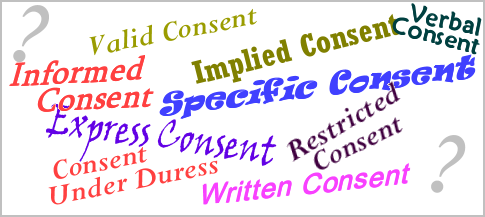
Rape + Consent = Rape. "Rape Redefined" by Catharine A. MacKinnon

image is from here
This is being reprinted here as an act of Fair Use, to clarify what rape is in oppressive societies such as the U.S., Canada, and the UK.

What follows is from here: http://kirangandhi.com/2014/10/28/sex-equality-with-professor-catharine-mackinnon/

Toward ending rape altogether. -- Julian


Rape Redefined
© Catharine A. MacKinnon, 2014
Nordiskt Forum, Malmö, June 2014
1.  Rape is recognized in international law as a “gender crime,” meaning it happens to women because they are women. It is a crime of gender inequality.
2. This analysis, partly operationalized in international law, e.g. by the International Criminal Court, is not implemented in any country’s domestic law.
3. So, What would a rape definition governed by sex equality principles look like?
4. Rape is generally defined in Western countries as sexual intercourse by force or without consent or both. It is only without consent in the UK. It is only by force or violence in France. Most US jurisdictions require both: by force and without consent.
5. None of these has a good track record even for reported rapes, which are a small percentage of actual rapes. The conviction rate for reported rape in the UK is around 6%.[1] In France, it is a breathtaking 2.6%.[2] The conviction rate for reported rapes in the US, where most states require some version of both force and nonconsent, is between 12% and 25%. Given that in the United States about one out of every ten acts of rape or attempted rape is reported that essentially fit the legal definition, this is pretty appalling.
6. Consent definitions – in which the prosecution has to prove nonconsent – require a woman be believed concerning a sexual fact that is by its nature subjective. This is why it puts the victim on trial. Essentially, it attributes victimization to the victimized. It makes the case be about what she was thinking, or what he thought she was thinking, rather than about what he did. It makes rape occur in someone’s mind, not by his body on her body.
7. It is therefore no surprise that, in legal application, consent has been found when women are married, drunk or drugged, repeatedly said no, were asleep, comatose, just seen to be raped by several other men, threatened with deportation or false criminal charges or loss of her job. In legal operation, consent to sex is routinely found in situations of despairing acquiescence, frozen fright, terror, absence of realistic options, socially situated vulnerability, and even death. Prostituted sex is regarded as consensual because it is paid. All this is what consent actually means legally, not mistakes in what it legally means.
The often accompanying standard of mistaken belief in consent means that if the accused is found to have believed she consented, whether she did or not, it is not rape. In societies saturated with pornography, a lead pipe over the head can sincerely be believed to produce consent to sex. Further no surprise that “rough sex” is such an increasingly effective consent defense.
In other words, consent is often found in situations where considerable force was used, building into law the misogynistic assumption that women want to be forced into sex. This is the real meaning of requiring a showing of both force and nonconsent, as prevails in US state laws. The same assumptions tend to be attributed to a gay man when he claims another man raped him. He is feminized, reduced on a gendered basis.
If sex occurred, her consent is essentially presumed on the most minimal of acquaintance between the parties; the survivor has to disprove it. Socially speaking, if sex happened, or if a woman had ever had sex before, especially with the accused, consent is effectively assumed. She has to disprove it. It’s a social burden of proof women enter the law burdened by. Consent in law is consistent with economic, psychological, and hierarchical threats, so long as physical injury or life are not threatened (for which purpose rape itself is generally not considered a physical injury).
8.  Consent as a concept was never designed to apply between two people in civil society. It was given its current meaning in Western liberal philosophy, hence Western law, as the basis for legitimizing the obligation to obey the laws of the state. Even as a fiction[3] it never envisioned equal parties. It exists to rationalize the exercise of dominant power (ie the state) over its subordinates (the governed). This is what it is for. Applied to sex, he is the government, she is the governed. Its purpose is to attribute and justify the requisite obedience of the powerless to the rule of the powerful. It is about compliance. One is regarded as tacitly consenting, for example, to whatever one does not leave,[4] ie you consent because you are there, whether leaving is a realistic option or not. Silence in sex, as in governing, is deemed consent, not dissent. These assumptions, along with the presumption that the two parties involved are somehow axiomatic equals—an assumption never articulated far less sought to be justified in theory or law—operate powerfully in sex- unequal circumstances, contrary to its realities, and remain invisible as assumptions under even the best of consent standards.[5]
9. Attempts to correct for this social burden of proof, the assumption of YES, women being walking consent—attempts  women are often seduced by—involves adding additional words to make consent mean anything at all, such as positive, chosen, affirmative, autonomous, unequivocal, freely-willed, etc. These can be helpful, but they cannot be relied upon to overcome what consent fundamentally means. Requiring a woman say yes – and there is a lot of not-yes-saying out there – is not enough. If you can get a woman to suck an employer’s penis weekly to keep her job or to have sex with a dog, I would suppose you can get her to say yes. Pornography is full of yes. Consensual is a fall-back stand-in for “it wasn’t so bad” in societies like ours, in which sex by definition fulfills you, it doesn’t violate you, because sex is what women are for.
10. Fundamentally, it needs to be faced that consent is not an equal concept. It is an intrinsically unequal one that presupposes an actor and an acted-upon — the purported form of power of the acted-upon being acceding to the actor’s actions, doing what you are told to do — with no guarantee of equality of circumstance. That it might make sense in a society of actual social equality does not mean that it will get us there, because it silently presupposes that the parties are equals whether they are or not. It relies on an illusory image of a woman’s “agency” under conditions of inequality, as if one can be free without being equal. The corresponding fantasy—one that well-intended, strong progressive women often accept politically and argue for, not knowing what it has actually meant legally—is that if consent is the legal standard, what the woman says, even what she actually felt she wanted whether she said it or not, will be believed and will be carry the day, determining in a criminal trial whether sex was rape.
Apart from the problem of relying for incarceration on a victim’s subjective state of mind, including when unexpressed, the concept of consent relies for its social appeal on the assumption that it stands in for desire. This is its credibility cover, but nothing limits it to that. In social discourse, the crucible of its meaning, sex that is actually desired or wanted or welcomed is never termed “consensual,” because it does not need to be. Its mutuality is written all over it. Sex women want is never described by them or anyone else as consensual, as in, “I had a great hot night last night, I consented.” 
11.  Although the European Court of Human Rights (in M.C. v. Bulgaria[6]) and the CEDAW Committee (in Vertido v. Philippines[7]) has said that consent is the core of an equality approach, for these reasons of principle and practicality, it is not. Far from it. These cases unintentionally endorse the active/passive model of sex and social conditioning to trauma and the acquiescence that goes with it, and call that equality. Under unequal conditions, many women acquiesce in or tolerate sex they cannot as a practical matter avoid. That does not make the sex wanted. It certainly does not make it equal. It does make it legally consensual in most jurisdictions. This is the wrong road. Consent is a pathetic standard of equal sex for a free people.
12. Force definitions have also been problematic. The main problem has been that they have been largely confined to physical force, and typically require an excessive and unrealistic amount of such force, often with weapons, in a standard that seems to have in mind a fight between two men. In addition, it tends to require proof of resistance as evidence that force existed, even if the law has eliminated the resistance requirement.
13. On the view that a rape is about what (usually) a man did, mostly to women and children, sometimes to other men, a useful legal starting point is the Akayesu decision (ICTR): rape is defined as a “physical invasion of a sexual nature committed on a person under circumstances which are coercive.” The notable features here are the absence of nonconsent, seen as essentially redundant – coercion is present because consent is absent – and the exclusive use of coercion, which can be circumstantial as well as physical. The definition is on the force side but is not limited to physical force. In international criminal law, when a nexus with war or genocide or campaigns of crimes against humanity is established for a sex act, such that sexual assault is weaponized, those circumstances of coercion make it arguably unequal, vitiating consent of any operative meaning. Which is why it isn’t there. In settings outside recognized zones of armed conflict or genocide, “circumstances” adapted to domestic settings of so-called peacetime could include psychological, economic, and hierarchical forms of coercion – which, in limited ways, some jurisdictions already recognize in the sexual assault context.
14. Survivors of prostitution often cogently describe it as serial rape, let’s say sex unwanted for itself that is coerced by multiple circumstances of inequality. With this in mind, consider the international definition of sex trafficking, the destination of which is prostitution, from the Palermo Protocol (2000). It prohibits the use or threat of use of force or other forms of coercion, abduction, fraud, deception, or abuse of power or a position of vulnerability for purposes of sexual exploitation. And, where any of these means is used, the consent of a victim “shall be irrelevant.”
15. The proposal for rape redefined: Suppose we combine the best of the international definitions to redefine rape domestically as “ a physical invasion of a sexual nature under circumstances of threat or use of force, fraud, coercion, abduction, or of the abuse of power, trust, or a position of dependency or vulnerability.”
16. It would be essential to explicitly recognize that psychological, economic, and other hierarchical forms of force are coercive, including age, mental and physical disability, and other inequalities, including sex and gender, and that states like drunkenness and unconsciousness are positions of vulnerability. Inequalities would be recognized as a form of coercion when mobilized to force sex in a specific interactions. As in the international context with war and genocide, for a criminal conviction, it would be necessary to show the exploitation of inequalities, their direct use, not merely the fact of them.
17. And, where any of the listed means is used, the consent of the victim would be irrelevant.
18.  Apparently it is difficult to think about sexuality in equal terms. The Swedish model of prostitution is educating the world that paid sex is forced sex, engaging in world leadership by setting a standard for what violence against women includes. This proposed definition of sexual assault in terms of circumstances of coercion could do the same. Let’s think together about it. “It all starts somewhere.”[8]
[1] Liz Kelly, Jo Lovett, & Linda Regan, A Gap or a Chasm? Attrition in Reported Rape Cases, Home Office Research Study 293 (2005), available at http://www.homeoffice.gov.uk/rds/pdfs05/hors293.pdfreport the study by Harris & Grace on p. 28 with this figure, among others.
[2] European Sourcebook of Crime and Criminal Justice Statistics 169 (4th ed, 2010). The same rate is cited by J.M. Jehle. Attrition and Conviction Rates of Sexual Offences in Europe: Definitions and Criminal Justice Responses, European Journal on Criminal Policy and Research 18,145-161 (2012). An updated edition of European Sourcebook is due out this year.
[3] David Hume was vividly clear on this, see “On Civil Liberty,” II.XII.20.
[4] See John Locke, Two Treatises on Government 224-25, ¶ 121 (5th ed. 1728). For a distinct but related doctrine, see Thomas Hobbes, Leviathan: Or, the Matter, Forme and Power of a Commonwealth, Ecclesiasticall and Civill 521-22 (A. R. Waller ed., Cambridge University Press 1904).
[5] Another use of consent in law is to allow medical intrusions to be inflicted upon a person that are injurious, but are being allowed for some other benefit. Does this sound like sex to you? Apparently, it doesn’t sound foreign to women’s situation in sex to a lot of men.
[6] M.C. v. Bulgaria, Eur. Ct. H. R. 39272/98 (2003). This opinion contains the statement regarding a U.S. case, Berkowitz, that “Pennsylvania courts held that the victim’s repeated expressions of “no” were sufficient to prove her non-consent.” As to rape, this is not the case. The appeals court held that her statements of “no” would be relevant to the issue of non-consent, but were not relevant to the issue of forcible compulsion, the requirement for rape in Pennsylvania. The jury conviction for rape was accordingly overturned. Commonwealth v. Berkowitz, 609 A2d 1338 (1992). The case was remanded for retrial on “indecent assault,” which requires nonconsent, a conviction the appeals court upheld. Commonwealth v. Berkowitz, 415 Pa. Super. 505, 641 A.2d 1161 (Pa., 1994). No discussion of equality occurred in the case.
[7] Vertido v. The Philippines, CEDAW/C/46/D/18/2008 contains excellent equality analysis of rape myths and misogynistic stereotypes. However, it does not consider inequality as a form of coercion, but challenges the force-only law in the Philippines as lacking the “essential element” of rape law: “lack of consent,” which it redefines to mean “unequivocal and voluntary agreement.”
[8]Ane Brun, It All Starts With One (2011).

Sunday, August 11, 2013

Catharine A. MacKinnon on "Lovelace", and the subject (not object) of the film, Linda Marchiano


All that follows is a cross-post from Harvard University Press Blog.

09 August 2013

Catharine MacKinnon on Lovelace

Lovelace PosterThe pornographic film Deep Throat, released in 1972, was a cultural sensation whose star, “Linda Lovelace,” was said to put a girl-next-door face on the sexual revolution. But the actual life of Linda Boreman, as depicted in the new biopic Lovelace, was one of beatings, rape, and terror. Feminist legal scholar Catharine MacKinnon, author of such works as Toward a Feminist Theory of the State and Only Words, represented Boreman after she came forward with her story, and later, with Andrea Dworkin, pursued civil rights litigation as a means to fight pornography. We asked MacKinnon about Boreman, Lovelace, and the potential impact of the film.
-----
Q. You’ve noted that prior to the 1980 publication of Linda Lovelace’s Ordeal, you had no view of pornography one way or the other. For those unfamiliar with her story, who was Linda Lovelace?
“Linda Lovelace” was the fictional name of Linda Boreman, later Linda Marchiano, who was forced into captivity and made to perform fellatio and other sex acts by pimps, including organized crime, so that pornography, notably the notorious film Deep Throat, could be made of her. The film was instrumental in establishing pornography as culturally legitimate in the 1970s. After her escape, Linda’s valiant opposition to the sex industry included chronicling her abuse in Ordeal and extensive public testimony. Her revelations enabled a change in the way pornography was debated legally and socially, shifting the focus from morality to harm.
Q. This film comes decades after the landmark pornography civil rights hearings at which Marchiano testified, as documented in In Harm’s Way. Can you remind us what was at stake in those hearings?
The anti-pornography civil rights hearings collected in In Harm’s Way created a space for people victimized by pornography to speak about what had been done to them in its making or through its use.  Up to that point, the legal argument over pornography had essentially only considered the freedom of speech issues.
The hearings documented the inequality that is foundational to the industry: that the “speech” of the pornographers is the use and abuse of the bodies of mainly women, who were far from free and were not speaking for themselves. The consequences of the distribution and use of the materials was shown to be equally silencing and endangering to legions of women and children who are abused by its consumers.  Thus the sexual exploitation of women and children in making pornography is mass-produced through its consumers to become violation of other women and children.
The civil rights ordinances the hearings debated were passed several times, then found to violate the First Amendment on the theory that the more harm the materials do, the more protected as speech they are–an incorrect, indeed reversed, view of First Amendment law. The ordinances could still be passed and found constitutional today.
Q. What was your involvement with the Lovelace film?
I represented Linda from 1980 until her death, was her friend, and continue to represent her Estate and her children. Lovelace is based in part on our life story rights. It shows Linda as human and credible, as she was not seen as being in life. All she ever wanted was to be believed and respected, to have people face what really happened and take steps to stop it. We see this film as a major step forward in that process. Apparently, when you make fact into fiction, people begin to believe it is true.
We participated in the making of the picture, are proud of it and the people who made it, and feel strongly that Linda would be proud of it.
Q. Gloria Steinem has said of the film that the true story is actually much more violent, but that the filmmakers “did the best they could.” To the extent that the trauma of Marchiano’s life had to be toned down to bring the film to a wide audience, why is that a compromise worth making?
The filmmakers had full creative control, which is as it should be. The film’s compromises with factual accuracy are not mine to defend. Artists operate on assumptions of what the experiences of audiences prepare them to see; sometimes audiences say they want to see pretty standard tropes when they go for entertainment.
Through a brilliant structure, Lovelace unmasks the myth that Linda was freely acting and shows her enduring coercion and terror, trapped by lack of support from her family and authorities. And it shows her victorious, getting free of what is increasingly understood as sex trafficking. It shows the core truth of her story and her triumph.
Q. The impact of the internet on the pornography industry has obviously been enormous, and this film depicts an era much different from that in which we now live. With that said, what would you hope that the Lovelace audience takes from the film?
Society is substantially more saturated with pornography than it was before, as Andrea Dworkin and I predicted in 1983 would happen if nothing was done to stop it. That means we need a law like the civil rights law we proposed even more now than we did then, because even more people are being violated as a result of the sex industry.
Linda had no rights over Deep Throat when it was made, and without the law we wrote for her and others, she would have no rights over it today. And she is not alone–far from it.
Once Linda is seen as a human being rather than a sex doll and sperm spittoon, a process Lovelace advances light years, we hope audiences will begin to consider that the pornography industry traffics in a form of sexual slavery that is neither protected speech nor free. Meantime, they will see an enlightening story as they enjoy a very smart, splendidly acted, and good movie.


Friday, March 9, 2012

The White Male His-story of Sexuality, and the Power of The Marginalised Voice

image is from here

Unlike some of my peers, I do not regard Sigmund Freud as unworthy of study. But nor do I place him at the center of such study. Across cultures and eras, white men have had some really bizarre ideas about sexuality and gender. They've theorised there's only one sex, and that there are only two (opposite) sexes. However many genders and sexes white men believe exist, they seem incapable of imagining a world in which men do not dominate and control women and "women's sexuality"--often enough a sexuality designed by men for men. I've watched enough white male science fiction wherein the white male writer or producer creates new worlds in future eras. I've watched enough to know that however far into the universe the white het male supremacist's mind goes, he cannot creatively conceive of women *not* dressing in tight outfits designed for his voyeuristic pleasure. He cannot conceive of her as not existing for him.

Whatever the theories, they have tended to serve both white and male supremacy against the bodies and and human rights of millions of women and girls of all colors and cultures. Their theories are also traditionally anti-lesbian and anti-gay. Their theories have functioned to promote the humanity of white (and usually het) men (the minority) while denigrating and demonising the humanity of everyone else (the majority). His inhumanity is often enough rendered invisible, or is termed something else--the product, perhaps, of unfortunate events early in his life. That white men, as a class, ensure that unfortunate events will systematically scar the lives of girls globally seems not to worry him. In this theories and in his world, only white men act out their pain in gynocidal and genocidal ways. White men traditionally theorise their pain as an explanation for their abusive actions. If painful childhoods, troubled by rape and invasion, were the source of acting out violence against other people, and if victimised people were allowed do violence to their perpetrators, men the world over would have a lot to worry about. And white men who travel the world over to rape trafficked and enslaved girls and women would have cause to worry a great deal.

What I look for in theory is a human story, a humane understanding, that reveals to the reader the role of white and male supremacy, among other forces of institutionalised ideology, in making things as they are. I look for theory to bring into focus the experiences and worldviews of the people who whites and men seek to silence and destroy.

One such theory of sexuality is found in Catharine A. MacKinnon's essay "Does Sexuality Have a History?", which may be read here:

http://quod.lib.umich.edu/m/mqrarchive/act2080.0030.001/16:2?g=mqrg;page=root;rgn=full+text;size=100;view=image;xc=1

I've praised the following work before, and this time won't be the last. But one of the best essays on sexuality, one of the best theories on sex that I've seen, is the one that follows. Referencing the video (well, the audio), I don't quite understand the laughter from the audience at one point. Although times have changed and margarine isn't regarded in the same way as it was in the 1970s, nothing about her analogy is funny to me. Taken without today's negative associations, I see it as useful to her points, especially as it conjures such a tactile, sensual relationship to her ideas on the Erotic.

This is an early version of a speech and essay that later appeared in her brilliant collection of speeches and essays called Sister Outsider. It was delivered at a radical and feminist conference on pornography and prostitution in the late 1970s in San Francisco, CA, USA.


Here is a link to the speech as presented in that book:

http://radicalprofeminist.blogspot.com/2010/08/uses-of-erotic-erotic-as-power-classic.html

Please consider the theories of radical feminist women of color as necessarily central to our understandings of all of us, and organise your revolutions around their ideas and visions.

image is from here
 

Monday, January 30, 2012

An Anti-racist Radical Profeminist Critique of a Socialist Review of White Radical Feminism

image/logo is from *here*


image is from here

(The NOTES section was revised and added to on 1/31/2012.)

The excerpted writing below is from Links: International Journal of Socialist Renewal. You may click *here* to link back to that site in order to read the whole article. You may also link back by clicking on the title just below:

Socialists in the Australian women's liberation movement


The author is Margaret Allan. She is a member of the national executive of the Democratic Socialist Party of Australia. This article is based on an educational talk to the party's congress, held in Sydney in January 1999.

Below is the section of that article on Radical Feminism, reproduced here for the sole purposes of radical pro-feminist political analysis and discussion. 

I have not altered the content of the text in any way other than to add footnote numbers which may refer you to comments below the original writing, within this blog post. The section by Margaret Allan is reproduced here in full, but again keep in mind it is part of a larger piece of writing. Please refer back to that for the context in which the following discussion occurs.

Radical feminism
First I will look at radical feminism. “Patriarchy” was the word used by Engels[1] when describing anthropologically the different types of family or kinship units that have existed. He called families, clans or other social groupings that traced descent through the mother's side matrilineal. Descent traced through the father's side was patrilineal. Matriarchal or patriarchal were used to describe situations in which the auhtority and power over the group were invested in either the woman or the man.
The term patriarchy was redefined by radical feminism, and put into common usage, to refer to whole social systems controlled by men through their control of women's reproductive functions. That is, women are seen as oppressed because of their biology and their role as child-bearers.[2]

Adherents to patriarchy theory tend to agree on these four points:
  1. Patriarchy expresses the totality of the social relations of male supremacy and female subordination.[3]
  2. Patriarchy has existed in all known socioeconomic formations, though most analyses tend to focus on the particular features of capitalist patriarchy.[4]
  3. Patriarchy is a hierarchical system in which power and control are vested in men to effect and reproduce their domination over women. Patriarchal relations are said to be reproduced through the sexual division of labour and patriarchal ideology.[5]
  4. Patriarchy unites men across class lines. Their unity is based on the fact that although men hold different degrees of power within the patriarchy, all men dominate at least some women.[6]
Radical feminist arguments are explicitly or implicitly biologically determinist -- women are “naturally” caring, sharing, nurturing peaceful beings -- a stabilising force in society, whereas men are prisoners of their raging hormones, aggressive, warmongering.[7] Men cannot control their animal-like instincts -- they rape women and are violent, so for women to survive, they must separate from this threat to them and their children.[8]
An extreme view held by some radical feminists was summed up by Kimberley O'Sullivan in Girl's Own, a Sydney-based radical feminist newspaper, No. 5 1981:
Wimmin and men are two different species. Not different races within the one humanoid species but different species who evolved separately and differently. Wimmin are biologically and morally superior but men hold power by force of arms.[9]
The flaw of any theory that relies on this notion of patriarchy (our theory is also based on patriarchy, but as Engels defined it) to explain women's oppression is that it counterposes the liberation of half of humanity to the liberation of the other half. All men are said to have a primary interest in women's oppression.
Like liberal feminism, this type of radical feminism is fundamentally a bourgeois feminist current. While liberalism seeks to humanise capitalism through reforms -- getting more women into positions of power, etc. -- both tend inevitably to develop a reactionary aspect because of their insistence that capitalism is not founded ultimately and necessarily on class exploitation, and therefore on women's oppression.
The two most influential and original statements of radical feminism were Kate Millett's Sexual Politics and Shulamith Firestone's The Dialectic of Sex: the case for feminist revolution, both published in 1971.[10]
Since then, writings from academics such as Andrea Dworkin (a vehement supporter of censorship, who says that pornography is the theory, rape is the practice)[11] and Renate Klein and Robyn Rowland in Australia have been influential. One of the main centres for radical feminist theory in Australia in recent years has been women's studies courses at Deakin University in Geelong. This is also the base of finrrage, Feminist International Network Resisting Reproductive and Genetic Engineering, which campaigns against the use of science to violate and manipulate women's bodies and their reproductive capability.
They oppose all reproductive technology -- including things such as IVF technology and the use of RU486, the morning after pill, on the basis that male doctors experimenting with women's bodies is another form of the violence that is naturally a part of men's attitudes and behaviour. This is an ironic reversal for radical feminism, which originally argued in favour of reproductive technology to free women's reproduction from men's control.
We have argued against radical feminist views consistently, in many different forums. One area was the censorship and pornography debate, on which we wrote and distributed a pamphlet encapsulating our opposition to censorship as a path to stopping the sexual exploitation of women.[12]
One section of radical feminists advocate separatism as political practice, based on their analysis of the origins and nature of women's oppression.
The identification of men as the enemy led many radical feminists to the conclusion that women should separate themselves from men politically and socially. Lifestyle preferences for all-women households, personal relationships, cultural institutions and even communities, were often promoted as the key to liberation.
This often leads to the assertion by some separatists that a “true feminist” is one who does not have sex with men, and is celibate or a “political lesbian”.
Most radical feminists in the second wave eventually went into academia or worked in women's services such as rape crisis centres and women's shelters.[13]
NOTES:

My overall critique of the discussion about radical feminism is four-fold:

--it relies on anti-radical, anti-feminist academic assessments of radical feminist work
--it is very white-centered and white supremacist
--it ignores crucial writings by white radical feminists and radical feminists of color that directly address and contradict the points made above
--it reproduces and reinforces many of the anti-radical and anti-feminist arguments made by well-published corporate pimps and other white male supremacists interested in defending their right to rape and traffic in women and girls and otherwise maintain rule over female human beings

1. There has been a fairly thorough rejection of Engel's understanding of women's oppression based on family relations as Engels understood them. That some non-feminist Socialists still prefer to hold to his theories when better theories by radical feminists exist only means to me that some people prefer to believe, sexistly, that men (or Socialists) are the best theorists, including on matters relating to women and women's liberation. Very generally speaking, I don't find this to be the case at all. I don't think it is because men and women think and theorise differently due to biological or natural factors. Instead, I think that men's minds, as shaped and structured in patriarchal and woman-hating societies, learn to abstract reality and organise theory around hypothesis--well away from the scary feelings and emotions men dread consciously including into their intellectual work, while many feminist's minds, in response to patriarchal conditions in which men's abstractions about women are part of the problem, learn to be able both to abstract reality and keep theory grounded in it. For more discussion on what's wrong with Engels, please see the following links to a four-part post by Stan Goff. I will add that many white het men there were willing to read a pro-feminist (Goff's) and feminist critique of Engels (MacKinnon's) only because a white het man with Socialist cred produced and published it.
Why the Left should drop Engels on Gender, part 1

Why the Left should drop Engels on Gender, part 2

Engels and Gender, part 3

Engels and Gender, Last Installment

2. This goes against the bulk of radical feminist writing I'm familiar with. See, especially, Catharine A. MacKinnon's radical feminist critique of such biologically deterministic viewpoints in Feminism Unmodified and in Toward A Feminist Theory of the State.

3. I'd argue that other systems of oppression carry within them the means and methods to reproduce male supremacy. White supremacy and capitalism, to name two, are infused with patriarchal (male supremacist) power structures, values, and practices. White supremacist notions of Race are also sexed. Class positions are infused with sexual meaning. Thus, if a woman is poor and of color she is subordinated socially, sexually, and economically in multiple ways, with each reinforcing her subordination to rich white men and to various groups of less economically powerful men. We may note how this manifest in the global trafficking of girls and women, predominantly poor girls of color to predominantly rich white het men. This horrific reality cannot and ought not be understood or analysed only in terms of patriarchy, capitalism, or race oppression. It is the weaving together of the three that identify key features of the atrocity. Similarly, the higher incidence of rape of Indigenous North American women by white het men, compared to the also-alarming rate of rape of white women by white het men, cannot either.

4. This conclusion, proposed by some white-centered and/or European-centered feminists, ignores and further marginalises of the work of many other radical women of color, particularly Indigenous and Black feminists who note how white or European patriarchy is currently globalised. See, for example, Yurugu, by Marimba Ani.

5. Another key site of male supremacist (or patriarchal) oppression is the sexual subordination of women by men through normalised sexual acts and sexual behavior as men experience and define it. Among other radicals, including many male socialists, the oppressive nature (as opposed to the "natural power") of sex expressed and enforced by men over and against women has largely been ignored or relegated to the realm of the "natural".

6. It is not only that patriarchal societies function to allow and encourage all men to dominate at least some women. With female human beings denied basic human rights such as access to private safety and sustained dignity, and with so many girls and women surviving (or not surviving) sexual assault and other misogynist atrocities and gynocidal practices, boys are encouraged to dis-identify with girls, men are encouraged to dis-identify with women, and males on the whole are supported in engaging in misogynistic practices which simultaneously homosocially bond males to one another and socially subordinate women to men in various ways. One example of this may be seen in the normalised rapist practices of young men in college and university fraternities. Men across class and race from region to region in many places--but not universally--are seen as more manly by other males if they engage in such practices. In such places, the man or boy who refuses to degrade or assault women or girls in front of other males is understood by the men present to be "less of a man"; he loses sexual status among those patriarchally positioned to confirm it. See note 2 for more.

7. Even if reviewing white feminist writings alone, this is not generally the case. No radical feminists I have ever read or known make such a case, and in fact argue exactly the opposite: to be a radical and feminist is to believe in the humanity of men against much evidence that men value being inhumane to women. See, for more, Andrea Dworkin's speech to 500 men, "I Want A Twenty-Four Hour Truce During Which Their Is No Rape".

8. No anti-rape or anti-pornography radical feminist-identified women I know or have read believe that men are "naturally" prone to rape, to batter, or to otherwise exhibit masculinist or patriarchal aggression against girls and women. To be an activist is to believe that such behavior and systems which promote it are "not natural". The only women I know who do believe this are not "Radical Feminist" identified. Instead, some are Radical Lesbian identified.

9. For a good example of how this was challenged within a predominantly white branch of the US Women's Movement, please see: "Biological Superiority: The World's Most Dangerous and Deadly Idea", by Andrea Dworkin.


10. This would be true only according to mostly white academics who only consider white authors and activists to be worthy of writing about, reviewing, and critiquing. That white editors compile the writings of white writers is nothing new and ought not be seen as an indication that women of color were not and are not centrally involved in all realms of radical anti-patriarchy activism.

11. This is inaccurate in three respects:
  1. Andrea Dworkin was not an academic. She as a front-line Women's Liberation activist and author. She quit college before graduation. She marched in streets to protest women's subordination to men. She didn't teach except once in Minneapolis (a course on pornography, and also a course on literature), while also doing non-academic activist work.
  2. Andrea Dworkin was not "a vehement defender of censorship". She was against all state censorship and was opposed to the ways her ordinance was (mis)used in Canada in a censorial manner. She wrote eloquently about what censorship is and she and MacKinnon wrote about the myth--perpetuated by corporate pimps and spread by liberal academics who defended them--that their stance on pornography was pro-censorship. For more, see Pornography and Civil Rights: A New Day for Womens' Equality. See also, Andrea Dworkin, "Against the Male Flood: Censorship, Pornography, and Equality".
  3. Andrea Dworkin never said or wrote "Pornography is the theory; rape is the practice". The quote belongs to Robin Morgan. Dworkin said "Pornography is the practice; rape is the practice." Andrea understood pornography materially, not primarily or centrally as an idea or a theory; it is one white and male supremacist (racist patriarchal) industry that makes sexual subordination socially existent, marketing rape as entertainment primarily for men. Meanwhile, pornography's defenders--including those who materially profit from the industry--see it as only idea, fantasy, and subjectively determined. (One wonders how they got so rich only engaging in thinking.) Dworkin and MacKinnon have argued convincingly against such a determination. (Source: *here*.)
12. I have witnessed how debates among Socialists misunderstood--often willfully--Dworkin's views and activism on the issue. She was a key proponents and crafters of a radical feminist anti-pornography law, and other actions against the industry, and she's already been miscategorised above. This doesn't surprise me as anti-radical feminists in Socialist and Libertarian circles commonly and purposefully misrepresented the positions and actions of radical feminists against pornography. The Socialist anti-feminists I'm aware of did this, in part, as a means of protecting the power of men against women practiced and promoted in industry pornography.

13. The whole "wave theory" of feminism is academic mythology as much as anything else, steeped in narrow white- and euro-centric understandings of activism and liberation struggles against men's cultural and systematised subordination of women. Asian, Black, Brown, and Indigenous radical feminists, self-defining as such or not, are usually written out of such "wave theories", or are marginalised in special chapters or sections on race--as if women of color must only ever speak for people of color as a class, never for women as a class. The above discussion by Margaret Allen, unfortunately, perpetuates this euro-centrism and white supremacy. And the supposition that a great many radical feminists went into academia is in itself classist; most radical feminists are poor women of color globally, with little to no access to the academic institutions run by ruling class whites and men.

I hope that future discussions among Socialists about radical feminism demonstrate more awareness of the many theories and practices of radical feminist women of color, and also don't distort the political viewpoints of white radical feminists usually misinformation provided by corporate pimps and their defenders and apologists.

I encourage radical and feminist activists to offer comments at the original site.