Showing posts with label lesbian existence. Show all posts

Friday, June 28, 2019

Stonewall Rebellion: 50 Years Ago at Midnight

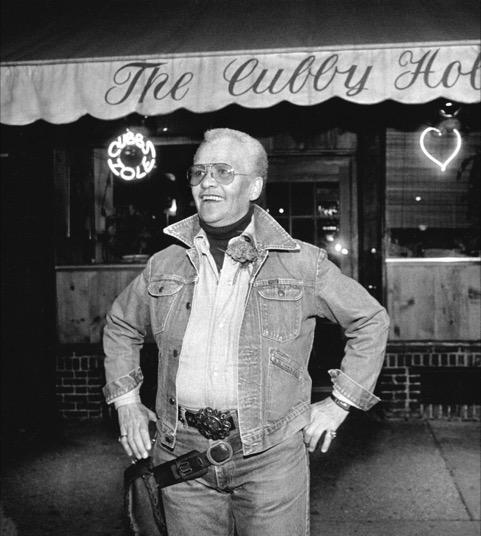
Aug. 2018 Stormé
Stormé DeLarverie is from here
Stormé was always clear: “It was a rebellion, it was an uprising, it was civil disobedience. It was no damn riot.”
Stories are missing from several accounts of what occurred that fateful night. For example, some say the grief over the death of Judy Garland, whose funeral service had ended not long before the midnight uprising, put many of her followers in a less obedient place: the deep grief may have fueled the rebellious anger and rage.

I grew up hearing that. I also grew up with the impression that this was primarily a white gay male story, of men fed up with police harassment and brutality, finally ready to fight back, for dignity and for freedom. Later I learned about Sylvia Rivera, a powerful figure in that story and in the story of NYC's political struggles at that time. There is a question over whether Sylvia was there that first night: https://en.wikipedia.org/wiki/Sylvia_Rivera

I then learned that homeless queer kids, queens, and trans people of color were part of this story.

Among the voices most often left out of the account is that of Stormé DeLarverie, the mixed-race Black lesbian butch who called out for others to do something when the cops invaded the Inn. Here is more about her: https://socialistaction.org/2018/07/31/storme-delarverie-the-lesbian-spark-in-the-stonewall-uprising/

Here, from a documentary, are other parts of the story of that night:
https://www.democracynow.org/2019/6/28/remembering_stonewall_on_50th_anniversary_leaders?utm_source=Democracy+Now%21&utm_campaign=4b622124a2-Daily_Digest_COPY_01&utm_medium=email&utm_term=0_fa2346a853-4b622124a2-191478001

May the rebellion continue, for all who participated back then, their memories, and for all of us who came along and came out after that night.


Sunday, March 6, 2016

Pippa Fleming: a Lesbian Butch Truth-teller

photo of Pippa Fleming is from here
I will not waste your time with many of my words here today. What I just realised, in a kind of palm-to-forehead way, is this: 30 years ago I used to say I was woman-identified, and more lesbian-identified than gay-identified. That was always a statement of political allegiance and affectional affiliation, not ever a demand for others (who I structurally oppress due to male privilege) to include me in their groups as one of them.

Now, I simply want to introduce you to a wonderful person. Pippa Fleming is "a long-time Performance Artist, Actor, Poet, Writer, DJ, Vocalist, Athletic Coach, Shapeshifting Lesbian = A force to be reckoned with!"

Below I hope there appear some working links to some video posts on Facebook.

I welcome you to listen thoughtfully, to take her words to heart, and to share them as acts of honoring and respecting Lesbians, their communities, and herstories.

1. https://www.facebook.com/pippa.fleming.18/videos/10203874688811751/

2. https://www.facebook.com/pippa.fleming.18/videos/10208915234662247/

3. https://www.facebook.com/pippa.fleming.18/videos/10203874688811751/

For more, please visit Pippa's YouTube channel.


Saturday, January 23, 2016

Moving Beyond the Turf Wars, by Margo Schulter


Amazon.com: Mini Peace Sign Cutouts (10/Pkg): Kitchen & Dining
peace symbol image is from here
What follows is another note from the Turf War Zone of majority-white Radical Feminist and Trans Activist conflict. A few updates: I consider Tee Eee Rr eFF--just the four initials together, to be hostile language, antifeminist, divisive, and whitemale supremacist. I won't use the term here. Margo doesn't spell it out either, as you'll see. I have been and remain committed to supporting women's space. Including, Radical Lesbian Feminist space, as RLF's define and need it. Trans spaces, as trans* people define it. Nonbinary people's spaces. Intersex people's spaces. In a rapist patriarchy, I support any group of women or any group of marginalised people defining and defending their spaces of safety and sustenance.

This is a guest post, written by one of the women in "Radically Inclusive Radical Feminism" The Conversations Project facebook group: RIRFTCPFG? I need a good acronym, bad. Her name is Margo Schulter. She has been part of Lesbian Feminist community and movement for a long time. Decades.

Moving Beyond the Feminist "Turf Wars"

Julian, having read the "Turf War Zone" statement again, and assuming that this was written by one or more women who, like me, have white privilege, I'd say that we have the same problem on both or all sides: where is the visible and indeed liberating co-leadership of Women of Color, AFAB or trans and/or intersex?

What I'd ask especially my sisters on both or all sides of this "Turf War" with white privilege is this: "Hasn't this four decades of Cold War between sisters, with all of its turning of horizontal differences, tensions, and conflicts into ideologies that verticalize the oppression in the best patriarchal style, really been an exercise in ersatz white-male politics?" All while the promises and demands of the Combahee River Collective go unsupported or `benignly neglected' while we use racism, the Maafa (African/African-American Slave Holocaust), and intersectionality (a term that belongs to Kimberlé Crenshaw and Women of Color, and the rest of us need to share with great humility and respect) mostly as tokens and metaphors.

To make it clear, "verticalizing" here means turning some kind of difference or conflict between women, sisters who are targets of different forms of patriarchal oppression, into a vertical or hierarchical issue where one side represents more "real" or more "oppressed" women, and the other some kind of hierarchal "privilege" that makes them not quite women or not quite human.

Let's quickly sum up this white-male style of verticalizing horizontal differences among feminist and often Lesbian feminist women, AFAB and trans, and intersex too. The Gender Critical Feminist (GCF) school as I've seen it practiced has a woman/trans-"woman" binary in which "transwomen are not women" is a polite version, and "transwomen are men" a less nuanced version. In this approach, there's no need to sort out the often complicated questions of trans women as newcomers to the women's community who've had past male privilege and like newcomers generally need acculturation and resocialization and reeducation. Rather, trans women are by definition either nonwomen or actual men, inherent lifelong oppressors and invaders. That's one version of "us vs. them," which we'd expect in a Cold War based on an ersatz white-male style.

And another white-male approach is the "cis/trans" binary, which holds actually that trans women, here let's say specifically those of us who transition as adults, and are newcomers to the women's and Lesbian communities, actually have and deserve seniority because survivors of lifelong AFAB oppression in fact have "cis privilege." And AFAB Butch Lesbians who every day may face all kinds of risks and oppressions while I enjoy not only white privilege but Femme invisibility -- not to speak of Butch Women of Color like Sakia Gunn who was murdered in 2003 at the age of 15 -- also supposedly have "cis privilege."

What would happen if they gave a Turf War, and lots of women came instead to talk about sex class consciousness, the seniority of AFAB women who have endured female oppression their entire lives, the validity and juniority of trans women, the need for female and more specifically feminist resocialization and reeducation as a lifelong process for those of us with past male privilege as an ongoing experience -- and also the validity of autonomous affinity groups, events, and spaces within the larger women's and Lesbian communities which can draw their own boundaries however they choose?

Quickly, I'd add that just as the Cold War had its nuclear arms race, the term T**F itself has become a weapon that I'm sad to say some of my sisters feel somehow provides safety or strength or protection. The women in 2008 or so who invented the term weren't seeking to dehumanize or degrade, just to distinguish between radical feminist views, just as Lise Meitner in 1938 wasn't seeking to destroy Hiroshima and Nagasaki or put the world at risk for a genocidal nuclear winter or autumn when she and her colleagues discovered nuclear fission. But weaponization is what happened, and Greenham Common is the place to be for feminist women with sex-class consciousness: it's time to "Ban the Bomb!" And I'd add that the T**F missile is absolutely *not" some magical Star Wars system that will "defend" against some equally ugly rhetorical missiles, or at least missives using the delivery system of the social media, targeted against trans bodies that, through fully consensual surgery for example, don't conform to the patriarchal sex binary that "Gender Critical" theory is all too happy to wrap around itself.

And as Cary Gabriel Costello has eloquently written, intersex people are "collateral damage" (his term) in these weaponized Turf Wars. Intersex gets treated as a rhetorical token or talking point rather than a community and movement of people who have faced horrible infant and childhood medical abuse, all for being born under patriarchy with bodies that don't fit the sex binary. The unique reality of intersex oppression raises issues distinct from those of dyadic (nonintersex) people, including dyadic AFAB or trans people, but how many of us who are dyadic women, AFAB or trans, have really become the allies that we can and should be?

There are also nonbinary/genderqueer/intergender people, some also intersex like Hida Viloria, who get neglected or even derided in these "Turf Wars" as the contest as to "Who's the most oppressed binary woman?" (in the white privilege division of the Oppression Olympics) goes on. And nonbinary activists like Cerien are calling us on our binary privilege, a rant I hope that enough of us will be feminist enough to welcome.

But, indeed, where in all this is the co-leadership of Women of Color, that could help liberate us all from these crazy white-male games of horizontal aggression between sisters in the name of feminism? Where is the common sense of Flo Kennedy, Jeanne Cordova (who as a Lesbian Woman of Color in 2013 offered a sane solution to the Michfest controversy), or bell hooks? Maybe if those of us with white privilege really, really owned it and did a bit of self-impeachment of ourselves as "leaders" in the best Indigenous tradition, then we -- the "we" emphatically including Women of Color -- could come to grips with the AFAB/trans thing also and emerge as sisters and allies in women's and Lesbian communities with many autonomous niches.

Any theory or ideology that tells us that a given woman belongs either in no women's spaces or in all women's spaces is inherently suspect as ersatz white-male verticalization of one kind of another. But having Women of Color more prominently and tellingly present in lots more of those spaces just might help end not only the AFAB/trans "Turf Wars" of the last four decades and a bit more between feminist and often Lesbian women, but the larger "Turf Wars" waged by European and Euro-American racism since the mid-15th century against Indigenous Nations and People of Color around the world.

Wednesday, December 2, 2015

The Transformation of Silence into Language and Action, by Audre Lorde (complete text)

Image taken from Autostraddle - click through to see an interesting article on the evolution of book covers.
two images of Audre Lorde's classic feminist text are from here
The full text of the Audre Lorde speech and essay appears below my intro.
So many people I know fight the debilitating, paralysing fear of speaking out, of being themselves to the best of their knowledge and fierceness, of being grounded in their own liberatory power as they work to share that power to make radical and transformative change collectively and responsibly. 
How do we continue these political struggles and campaigns when fear grips us and draws us repeatedly into silence? Is it more important to know what is underneath our fear, or to find ways to move with it? My tendency is to want the understanding before moving into action; it is a useful and self-defeating way to postpone the action. 
Due to the above questions and concerns, the following writing surfaces perennially in my life and in the lives of so many women I know. In order to share it with you, I found it as a PDF document online and have replicated it here, as it appears in Sister Outsider: Essays and Speeches by Audre Lorde (Crossing Press, 1984; republished in 2007 with a foreword by Cheryl Clarke).  
I have, I hope faithfully, corrected one minor typo from the original and several others that showed up in the pasting process. If you find any other typos, please send me a comment or email so that I may correct it. Note: Audre intentionally does not capitalise 'america'. 
This is earnestly presented here under Fair Use law, without any commercial interest and with the sole intention of sharing Lorde's written and spoken wisdom and political efforts to make the lives of Black lesbians and other women of color central to our revolutionary work. That work has been and remains the heart of this blog. 
If you have not as yet, I shall greatly and joyfully encourage you to read all fifteen chapters of Sister Outsider. For now,

The Transformation of Silence into Language and Action*

I HAVE COME to believe over and over again that what is most important to me must be spoken, made verbal and shared, even at the risk of having it bruised or misunderstood. That the speaking profits me, beyond any other effect. I am standing here as a Black lesbian poet, and the meaning of all that waits upon the fact that I am still alive, and might not have been. Less than two months ago I was told by two doctors, one female and one male, that I would have to have breast surgery, and that there was a 60 to 80 percent chance that the tumor was malignant. Between that telling and the actual surgery, there was a three-week period of the agony of an involuntary reorganization of my entire life. The surgery was completed, and the growth was benign.

But within those three weeks, I was forced to look upon myself and my living with a harsh and urgent clarity that has left me still shaken but much stronger. This is a situation faced by many women, by some of you here today. Some of what I experienced during that time has helped elucidate for me much of what I feel concerning the transformation of silence into language and action.

In becoming forcibly and essentially aware of my mortality, and of what I wished and wanted for my life, however short it might be, priorities and omissions became strongly etched in a merciless light, and what I most regretted were my silences. Of what had I ever been afraid? To question or to speak as I believed could have meant pain, or death. But we all hurt in so many different ways, all the time, and pain will either change or end. Death, on the other hand, is the final silence. And that might be coming quickly, now, without regard for whether I had ever spoken what needed to be said, or had only betrayed myself into small silences, while I planned someday to speak, or waited for someone else's words. And I began to recognize a source of power within myself that comes from the knowledge that while it is most desirable not to be afraid, learning to put fear into a perspective gave me great strength.

I was going to die, if not sooner then later, whether or not I had ever spoken myself. My silences had not protected me. Your silence will not protect you. But for every real word spoken, for every attempt I had ever made to speak those truths for which I am still seeking, I had made contact with other women while we examined the words to fit a world in which we all believed, bridging our differences. And it was the concern and caring of all those women which gave me strength and enabled me to scrutinize the essentials of my living.

The women who sustained me through that period were Black and white, old and young, lesbian, bisexual, and heterosexual, and we all shared a war against the tyrannies of silence. They all gave me a strength and concern without which I could not have survived intact. Within those weeks of acute fear came the knowledge  within the war we are all waging with the forces of death, subtle and otherwise, conscious or not  I am not only a casualty, I am also a warrior.

What are the words you do not yet have? What do you need to say? What are the tyrannies you swallow day by day and attempt to make your own, until you will sicken and die of them, still in silence? Perhaps for some of you here today, I am the face of one of your fears. Because I am woman, because I am Black, because I am lesbian, because I am myself  a Black woman warrior poet doing my work  come to ask you, are you doing yours?

And of course I am afraid, because the transformation of silence into language and action is an act of self-revelation, and that always seems fraught with danger. But my daughter, when I told her of our topic and my difficulty with it, said, "Tell them about how you're never really a whole person if you remain silent, because there's always that one little piece inside you that wants to be spoken out, and if you keep ignoring it, it gets madder and madder and hotter and hotter, and if you don't speak it out one day it will just up and punch you in the mouth from the inside."

In the cause of silence, each of us draws the face of her own fear  fear of contempt, of censure, or some judgment, or recognition, of challenge, of annihilation. But most of all, I think, we fear the visibility without which we cannot truly live. Within this country where racial difference creates a constant, if unspoken, distortion of vision, Black women have on one hand always been highly visible, and so, on the other hand, have been rendered invisible through the depersonalization of racism. Even within the women's movement, we have had to fight and still do, for that very visibility which also renders us most vulnerable, our Blackness. For to survive in the mouth of this dragon we  all america, we have had to learn this first and most vital lesson  that we were never meant to survive. Not as human beings. And neither were most of you here today, Black or not. And that visibility which makes us most vulnerable is that which also is the source of our greatest strength. Because the machine will try to grind you into dust anyway, whether or not we speak. We can sit in our corners mute forever while our sisters and our selves are wasted, while our children are distorted and destroyed, while our earth is poisoned; we can sit in our safe corners mute as bottles, and we will still be no less afraid.

In my house this year we are celebrating the feast of Kwanza, the African-american festival of harvest which begins the day after Christmas and lasts for seven days. There are seven principles of Kwanza, one for each day. The first principle is Umoja, which means unity, the decision to strive for and maintain unity in self and community. The principle for yesterday, the second day, was Kujichagulia  self-determination  the decision to define ourselves, name ourselves, and speak for ourselves, instead of being defined and spoken for by others. Today is the third day of Kwanza, and the principle for today is Ujima  collective work and responsibility  the decision to build and maintain ourselves and our communities together and to recognize and solve our problems together.

Each of us is here now because in one way or another we share a commitment to language and to the power of language, and to the reclaiming of that language which has been made to work against us. In the transformation of silence into language and action, it is vitally necessary for each one of us to establish or examine her function in that transformation and to recognize her role as vital within that transformation.

For those of us who write, it is necessary to scrutinize not only the truth of what we speak, but the truth of that language by which we speak it. For others, it is to share and spread also those words that are meaningful to us. But primarily for us all, it is necessary to teach by living and speaking those truths which we believe and know beyond understanding. Because in this way alone we can survive, by taking part in a process of life that is creative and continuing, that is growth.

And it is never without fear  of visibility, of the harsh light of scrutiny and perhaps judgment, of pain, of death. But we have lived through all of those already, in silence, except death. And I remind myself all the time now that if I were to have been born mute, or had maintained an oath of silence my whole life long for safety, I would still have suffered, and I would still die. It is very good for establishing perspective.

And where the words of women are crying to be heard, we must each of us recognize our responsibility to seek those words out, to read them and share them and examine them in their pertinence to our lives. That we not hide behind the mockeries of separations that have been imposed upon us and which so often we accept as our own. For instance, "I can't possibly teach Black women's writing  their experience is so different from mine." Yet how many years have you spent teaching Plato and Shakespeare and Proust? Or another, "She's a white woman and what could she possibly have to say to me?" Or, "She's a lesbian, what would my husband say, or my chairman?" Or again, "This woman writes of her sons and I have no children." And all the other endless ways in which we rob ourselves of ourselves and each other.

We can learn to work and speak when we are afraid in the same way we have learned to work and speak when we are tired. For we have been socialized to respect fear more than our own needs for language and definition, and while we wait in silence for that final luxury of fearlessness, the weight of that silence will choke us.

The fact that we are here and that I speak these words is an attempt to break that silence and bridge some of those differences between us, for it is not difference which immobilizes us, but silence. And there are so many silences to be broken.


* Paper delivered at the Modern Language Association's "Lesbian and Literature Panel," Chicago, Illinois, December 28, 1977. First published in Sinister Wisdom 6 (1978) and The Cancer Journals (Spinsters Ink, San Francisco, 1980).


Monday, January 14, 2013

Did Jodie Foster Come Out? Yes: Here's the Complete Transcript of Jodie Foster's Coming Out Speech, Accepting the Cecil B. DeMille Award for Lifetime Achievement in Television and Motion Pictures at The 70th Golden Globes, January 13, 2013


***UNEDITED, UNBLEEPED TRANSCRIPT OF COMING OUT SPEECH BELOW***

Revised on 16 Jan. 2013.

Preface: 
There's much more to be said about this whole matter. Lenses interrogating white supremacy, male supremacy, Western culture, the systematic eradication of lesbian existence, white queer politics, and feminism can all focus different points of attention on this event. I was quite disturbed to see Mel Gibson's face so front and center at this year's Golden Globe awards. I consider his expressed values and abusive and oppressive behavior (virulently anti-woman, homophobic, racist, and anti-Semitic) to be antithetical to progressive social change. But for right now, I'm narrowing the lens considerably to focus on who Jodie was to me in my early and later life.

Jodie and I are the same age and I grew up watching her on television and in movies, including lying atop my aunt and uncle's station wagon with my cousins while seeing her in Napoleon and Samantha at a Drive-In, with my parents watching Tom Sawyer on the big screen (indoors), on the small screen on The Partridge Family and Paper Moon, and in ABC Afterschool Specials, and in movies from The Little Girl Who Lived Down The Lane to The Hotel New Hampshire, to her especially fine and feminist work in The Accused and Silence of the Lambs, to Sommersby and Maverick, to two of my favorites in which I also thought she was brilliant: Nell and Contact. I also saw her in Taxi Driver, but not when it came out as it was rated R and I was underage, as was she.

I've watched her grow up and wondered early on about her sexuality. Among my lesbian and gay friends in my adult life, it was kind of known she was a lesbian. Not known the way I might now my best friend was lesbian or gay, but just known, the way it is known that Meryl Streep is heterosexual, but with the added secrecy about the actual orientation that straight folks don't need because they believe being straight is normal and natural. Being lesbian and gay is just as normal and just as natural--if any sexual or affectional orientation and ways of naming oneself can be said to be natural; it's just less prevalent and is, too often, socially despised.

So it was very cool for me to finally hear her come out beyond acknowledging a female partner as she did in 2007. I probably would have thought the speech was cooler if she did so while using the word Lesbian to describe herself. But it surprised me to read online that some people doubt she came out at all! Below is a transcript of her speech from 13 January 2013 as she accepted the Cecil B. DeMille Award at the Golden Globes ceremony at the Beverly Hills Hilton in California.

I think after reading this and re-watching the speech, there will be little doubt about whether she did or did not come out as lesbian. Here is the complete unedited speech in which she addressed several matters in addition to coming out, such as her love for her ex-partner, her sons, the future of her career (she's not retiring, by the way), and her, perhaps most poignantly of all, the expression of her abiding love for her mother at this time of her mother's dementia. Source for the transcript is *here*.
Well, for all of you SNL fans, I'm 50! I'm 50! You know, I need to do that without this dress on, but you know, maybe later at Trader Vic's, boys and girls. What do you say? I'm 50! You know, I was going to bring my walker tonight but it just didn't go with the cleavage.
Robert [Downey Jr], I want to thank you for everything: for your bat-crazed, rapid-fire brain, the sweet intro. I love you and Susan and I am so grateful that you continually talk me off the ledge when I go on and foam at the mouth and say, "I'm done with acting, I'm done with acting, I'm really done, I'm done, I'm done."
Trust me, 47 years in the film business is a long time. You just ask those Golden Globies, because you crazy kids, you've been around here forever. You know, Phil you're a nut, Aida, Scott — thank you for honouring me tonight. It is the most fun party of the year, and tonight I feel like the prom queen.
Thank you. Looking at all those clips, you know, the hairdos and the freaky platform shoes, it's like a home-movie nightmare that just won't end, and all of these people sitting here at these tables, they're my family of sorts, you know. Fathers mostly. Executives, producers, the directors, my fellow actors out there, we've giggled through love scenes, we've punched and cried and spit and vomited and blown snot all over one another — and those are just the costars I liked. But you know more than anyone else I share my most special memories with members of the crew. Blood-shaking friendships, brothers and sisters. We made movies together, and you can't get more intimate than that.
So while I'm here being all confessional, I guess I have a sudden urge to say something that I've never really been able to air in public. So, a declaration that I'm a little nervous about but maybe not quite as nervous as my publicist right now, huh Jennifer? But I'm just going to put it out there, right? Loud and proud, right? So I'm going to need your support on this.
I am single. Yes I am, I am single. No, I'm kidding — but I mean I'm not really kidding, but I'm kind of kidding. I mean, thank you for the enthusiasm. Can I get a wolf whistle or something? Jesus. Seriously, I hope you're not disappointed that there won't be a big coming-out speech tonight because I already did my coming out about a thousand years ago back in the Stone Age, in those very quaint days when a fragile young girl would open up to trusted friends and family and co-workers and then gradually, proudly to everyone who knew her, to everyone she actually met. But now I'm told, apparently that every celebrity is expected to honor the details of their private life with a press conference, a fragrance and a prime-time reality show.
You know, you guys might be surprised, but I am not Honey Boo Boo Child. No, I'm sorry, that's just not me. It never was and it never will be. Please don't cry because my reality show would be so boring. I would have to make out with Marion Cotillard or I'd have to spank Daniel Craig's bottom just to stay on the air. It's not bad work if you can get it, though.
But seriously, if you had been a public figure from the time that you were a toddler, if you'd had to fight for a life that felt real and honest and normal against all odds, then maybe you too might value privacy above all else. Privacy. Some day, in the future, people will look back and remember how beautiful it once was.
I have given everything up there from the time that I was three years old. That's reality-show enough, don't you think?
There are a few secrets to keeping your psyche intact over such a long career. The first, love people and stay beside them. That table over there, 222, way out in Idaho, Paris, Stockholm, that one, next to the bathroom with all the unfamous faces, the very same faces for all these years. My acting agent, Joe Funicello — Joe, do you believe it, 38 years we've been working together? Even though he doesn't count the first eight.
Matt Saver, Pat Kingsley, Jennifer Allen, Grant Niman and his uncle Jerry Borack, may he rest in peace. Lifers. My family and friends here tonight and at home, and of course, Mel Gibson. You know you save me too.
There is no way I could ever stand here without acknowledging one of the deepest loves of my life, my heroic co-parent, my ex-partner in love but righteous soul sister in life, my confessor, ski buddy, consigliere, most beloved BFF of 20 years, Cydney Bernard. Thank you, Cyd. I am so proud of our modern family. Our amazing sons, Charlie and Kit, who are my reason to breathe and to evolve, my blood and soul. And boys, in case you didn't know it, this song, all of this, this song is for you.
This brings me to the greatest influence of my life, my amazing mother, Evelyn. Mom, I know you're inside those blue eyes somewhere and that there are so many things that you won't understand tonight. But this is the only important one to take in: I love you, I love you, I love you. And I hope that if I say this three times, it will magically and perfectly enter into your soul, fill you with grace and the joy of knowing that you did good in this life. You're a great mom. Please take that with you when you're finally OK to go.
You see, Charlie and Kit, sometimes your mom loses it too. I can't help but get moony, you know. This feels like the end of one era and the beginning of something else. Scary and exciting and now what? Well, I may never be up on this stage again, on any stage for that matter. Change, you gotta love it. I will continue to tell stories, to move people by being moved, the greatest job in the world. It's just that from now on, I may be holding a different talking stick. And maybe it won't be as sparkly, maybe it won't open on 3,000 screens, maybe it will be so quiet and delicate that only dogs can hear it whistle. But it will be my writing on the wall. Jodie Foster was here, I still am, and I want to be seen, to be understood deeply and to be not so very lonely.
Thank you, all of you, for the company. Here's to the next 50 years.
Thank you, Jodie, for 47 years of quality work in the entertainment industry. I hope in the next fifty, you get the life you most desire.


Wednesday, September 12, 2012

Audre Lorde's Legacy Film & Cultural Festival 2012 marks the 20-year anniversary of Audre Lorde's passing: Press Release

photo, taken by  Dagmar Schulz, is from here
Audre Lorde died on November 17, 1992 after a long battle with cancer. To honor her life's work the following event has been planned. All that follows in this post is the press release that I found on WindyCityMedia:

  Windy City Times    Download PDF Issue

Audre Lorde Legacy Films screening here From a news release 2012-09-12


Audre Lorde's Legacy Film & Cultural Festival 2012 marks the 20-year anniversary of Audre Lorde's passing. She was a highly influential, award-winning African-American, lesbian, poet, author, mother, teacher and activist. In honor of her legacy four films will be will be brought to universities, libraries, and community venues, accompanied by a reading from the biography of Ika Hugel-Marshall. Fall 2012 USA tour of the Audre Lorde Legacy Film & Cultural Festival with Ika Hugel-Marshall and Dagmar Schultz

The films:
-A Litany for Survival: The Life and Work of Audre Lorde by Ada Griffin and Michelle Parkinson
-The Edge of Each Other's Battles: The Vision of Audre Lorde by Jennifer Abod
-Hope in My Heart: The May Ayim Story by Maria Binder
-Audre Lorde—The Berlin Years 1984 to 1992 by Dagmar Schultz

The reading:
-Ika Hugel-Marshall from Invisible Woman: Growing Up Black in Germany
University of Illinois at Chicago, Oct. 2
Screening of "Audre Lorde—the Berlin Years 1984 to 1992"
Contact: Prof. Elizabith Loentz (loentz@uic.edu).
Northwestern University, Evanston, Illinois, Oct. 3, 4

The films include:
Audre Lorde - The Berlin Years 1984 to 1992 (2012). Dagmar Schultz, 58 minutes
This film introduces American audiences to a littleknown chapter of Audre Lorde's prolific life. From 1984 through her death in 1992, she spent a part of each year in Berlin, Germany, first as a visiting professor, but more significantly, as the mentor and catalyst who almost single-handedly ignited the Afro-German movement. With her active support a whole generation of writers and poets for the first time gave voice to their unique experience as people of color in Germany. Lorde had a decisive impact on white women—challenging them to acknowledge the significance of their white privilege—and to deal with difference in constructive ways.

The film outlines her contributions to the German discourse on racism, xenophobia, antisemitism, classism, and homophobia within the Black movement and the Black and White women's movement, a discourse alive and growing today. Present-day interviews explore the lasting influence of Lorde's ideas and the impact of her work and personality.

The film contains never-before seen images and audio recorded during this period of Lorde's life, showing Lorde on and off stage. Dagmar Schultz, a personal friend and her German publisher, will be present to introduce the film and follow up with Q&A. web site: www.audrelorde-theberlinyears.com .

A Litany for Survival: The Life and Work of Audre Lorde, (1995). Michelle Parkerson and Ada Griffin, 90 minutes

An epic portrait of Audre Lorde, whose writings—spanning five decades—articulated some of the most important social and political visions of the century. From Lorde's childhood roots in NYC's Harlem to her battle with breast cancer, this moving film explores a life and a body of work that embodied the connections between the Civil Rights movement, the Women's movement, and the struggle for lesbian and gay rights. At the heart of this documentary is Lorde's own challenge to "envision what has not been and work with every fiber of who we are to make the reality and pursuit of that vision irresistible." web site: http://www.twn.org/catalog/pages/cpage.aspx?rec=1126&card=price.

The Edge of Each Other's Battles: The Vision of Audre Lorde (2002). Jennifer Abod, Ph.D., 59 minutes

This powerful documentary is a moving tribute to Audre Lorde (1934-1992). One of the most celebrated icons of feminism's second wave, Lorde inspired several generations of activists with her riveting poetry, serving as a catalyst for change and uniting the communities of which she was a part: black arts and black liberation, women's liberation and lesbian and gay liberation.

Nowhere was this more apparent than the groundbreaking I AM YOUR SISTER CONFERENCE which brought together 1,200 activists from 23 countries, including thrilling footage of the inimitable Lorde herself, and candid interviews with conference organizers. This film powerfully brings Lorde's legacy of poetry and politics to life and conveys the spirit, passion and intensity that remains her trademark.
web site: http://www.wmm.com/filmcatalog/pages/c621.shtml.

Hope in My Heart: The May Ayim Story (1997). Maria Binder, 29 minutes
A moving documentary about the life and untimely death of Ghanaian- German poet, academic and political personality May Ayim.

May Ayim was a personal friend of Audre Lorde. As to Lorde's influence on her poetic work Ayim said: "One of my models is Audre Lorde, (...) who does stand very much behind what she is doing and expressing it openly, for instance, that she is lesbian, mother, Black, poet, cancer survivor. The way she stood there saying who she was impressed me a lot, because normally people hide behind their words."


Ayim was one of the founders of the Black German Movement, and her research on the history of Afro-Germans, but also her political poetry, made her known in Germany and other countries. Ayim wrote in the tradition of oral poetry and felt a strong connection to other black poets of the diaspora.

Poetry gave her an opportunity to confront the white German society with its own prejudices. Interviews and poems reveal the search for identity, how and why the term Afro-German was introduced. An insightful look at how a young black woman experiences the German reunification. (German with English subtitles).

Dagmar Schultz, co-producer of the film and publisher of May Ayim, will be present to introduce the film and to follow up with Q&A. web site: http://www.twn.org/catalog/pages/cpage.aspx?rec=1015&card=price.

In addition to the films, author Ika Hugel-Marshall, M.A., will appear in person to read from her autobiography, Invisible Woman: Growing Up Black in Germany (2001). She was the recipient of the Audre Lorde Literary Award, which enabled her to write this critically acclaimed work. Hugel-Marshall also appears in the film Audre Lorde - The Berlin Years, and was a close personal friend of Lorde. web site: www.ika-huegel-marshall.de Dagmar Schultz, Ph.D., was a co-founder of the Feminist Women's Health Center in Berlin in 1974, the first of its kind in Germany. In 1974 she also co-founded Orlanda Women's Press (Orlanda Frauenverlag) and was its (co-)publisher until 2001. In addition, Schultz was a professor at Berlin universities. Since 2004, Dagmar Schultz has been involved in writing and in organizing reading tours in the US for her partner Ika Hugel-Marshall (author of Invisible Woman. Growing up Black in Germany) as well as other projects. In 2007 she co-produced the film Hope in My Heart.


— The May Ayim Story. Recently she was awarded the Margherita-von-Brentano-Preis 2011, by the Free University of Berlin, for work and projects which further the development of equal rights and opportunities for women in academia and the promotion of women's and gender studies and research. She is the producer of the documentary Audre Lorde — The Berlin Years 1984 to 1992. web site: www.dagmarschultz.com .

This event could be presented as a full day, or cover two evenings. Suggested tour dates with Ika Hugel-Marshall and Dagmar Schultz are February through March (African-American and Women's History Months) and/or September 2012.
www.northwestern.edu


Tuesday, August 14, 2012

Fall 2012 Screening Schedule for "Audre Lorde - The Berlin Years"

This is being cross-posted, in full, from here: http://blogs.indiewire.com/shadowandact/fall-screening-schedule-for-audre-lorde-the-berlin-years-home-video-release-info?nl_success=true#nlform

You may also click on the title below to link back to the source website.

With thanks to Tambay A. Obenson!


Fall Screening Schedule For 'Audre Lorde - The Berlin Years' + Home Video Release Info

News
by Tambay A. Obenson
August 12, 2012 1:12 PM
  • |

Previously profiled on S&A, it made its world premiere in the Panorama Documentary section at the Berlin Film Festival in February, and last screened at the Blackstar Film Festival in Philly last week.

Now Dagmar Shultz's Audre Lorde - The Berlin Years 1984 to 1992 will continue its screening tour, and specific dates and locations have been provided for upcoming screenings over the next few months, in the USA.

So if you're interested in seeing it, take a look at the schedule below and find out if it'll be coming to your neck of the woods. I especially encourage you folks in the USS to attend these screenings if in you're area, and if you're interested in seeing the film, because, a message posted on the film's Facebook page yesterday stated that:

Home video distribution in North America is not clear yet, but will follow soon after.

"Soon after" being after Third World Newsreel releases the film to the education market in September. So, if you don't see it at one of the below screenings, it may end up being some time before you are actually able to, since it's not clear when it'll become available on home video for you to rent or purchase.

It's stated that the DVD will have some special features including Audre reflecting on her work two months before her passing, Audre in conversation with Ellen Kuzwayo, deleted scenes and more. 

As a recap... the film focuses on...

Audre Lorde's years in Berlin in which she catalyzed the first movement of Black Germans to claim their identity as Afro-Germans with pride. As she was inspiring Afro-Germans she was also encouraging the White German feminists to look at their own racism

The trailer for the film is embedded below; and underneath the trailer, see the upcoming USA screening schedule:


Fall 2012 USA Audre Lorde Film & Cultural Festival tour

University of Hawai’i The complete program of the Festival
Contact: Prof. Christina Gerhardt
Sept. 20 & 21
University of California, Berkeley Reading by Ika Hügel-Marshall from Invisible Woman: Growing Up Black in Germanyand screening of “Audre Lorde – the Berlin Years 1984 to 1992”
Contact: Alisa Bierria
Sept. 25
Sonoma State University Reading by Ika Hügel-Marshall from Invisible Woman: Growing Up Black in Germany and screening of “Audre Lorde – the Berlin Years 1984 to 1992”
Contact: Prof. Michaela Grobbel
Sept. 27
Goethe-Institut, San Francisco
Berlin and Beyond” film festival
Reading by Ika Hügel-Marshall from Invisible Woman: Growing Up Black in Germanyand screening of “Audre Lorde – the Berlin Years 1984 to 1992”
Film: Director Sabine Erlenwein, Geothe-Insititut
Reading: Dr. Marion Gerlind, Gerlind Insititute for Cultural Studies
Sept. 29
University of Illinois at Chicago Reading by Ika Hügel-Marshall from Invisible Woman: Growing Up Black in Germany Contact: Proof. Elizabeth Loentz
Oct. 2
Northwestern University, Evanston, Illinois The complete program of the Festival
Contact: Proof. Anna Parkinson
Oct. 3 & 4
Harvard University, DuBois Institute 
Reading by Ika Hügel-Marshall from Invisible Woman: Growing Up Black in Germany and screening of “Audre Lorde – the Berlin Years 1984 to 1992”
Contact: Dr. Abby Wolf
Oct. 9
University of Massachusetts
Reading by Ika Hügel-Marshall from Invisible Woman: Growing Up Black in Germany and screening of “Audre Lorde – the Berlin Years 1984 to 1992”
Contact: Proof. Sara Lennox
Oct. 10 - Reading
Oct. 11 - Screening
Hunter College, NY
Reading by Ika Hügel-Marshall from Invisible Woman: Growing Up Black in Germany and screening of “Audre Lorde – the Berlin Years 1984 to 1992”
Contact: Rupal Oza
Oct. 16
www.audrelorde-theberlinyears.com
www.ika-huegel-marshall.de
www.dagmarschultz.com
(click here to download this schedule)
The complete Program of the festival includes:
The films:
  • A Litany for Survival: The Life and Work of Audre Lorde by Ada Griffin and Michelle Parkinson
  • The Edge of Each Other's Battles: The Vision of Audre Lorde by Jennifer Abod
  • Hope in My Heart: The May Ayim Story by Maria Binder
  • Audre Lorde - The Berlin Years 1984 to 1992 by Dagmar Schultz
The reading by Ika Hügel-Marshall from Invisible Woman: Growing Up Black in Germany

Wednesday, April 4, 2012

Alice Walker discusses the life and legacy of Adrienne Rich (1929-2012)

I never got to meet or speak with Adrienne Rich. Or Alice Walker for that matter. But there's still time with Alice. What I remember most about Adrienne was her willingness to struggle with whiteness and the unearned power that defines and sustains it, and her lesbian-feminist brilliance in analysing heterosexuality as a socially and politically compulsory condition for women, not a natural one.

Below is the video featuring Alice Walker. Below that is a transcript of the conversation.


To link to any of this, please click here: http://www.democracynow.org/2012/3/30/adrienne_rich_1929_2012_alice_walker
Adrienne Rich (1929-2012): Alice Walker & Frances Goldin on the Life of the Legendary Poet
by via Democracy Now!, Wikipedia & Flickr
Friday Mar 30th, 2012 11:57 AM
Adrienne Cecile Rich (May 16, 1929 – March 27, 2012) was an American poet, essayist and feminist. She has been called "one of the most widely read and influential poets of the second half of the 20th century", and was credited with bringing "the oppression of women and lesbians to the forefront of poetic discourse.

In 1997, Adrienne Rich famously declined to accept the National Medal of Arts in a protest against the Clinton administration, writing that art "means nothing if it simply decorates the dinner table of power which holds it hostage."

Rich died on March 27, 2012, at the age of 82 in her Santa Cruz, California home.


PHOTO: Audre Lorde, Meridel Lesueur, Adrienne Rich 1980 by K. Kendall
"They led a writing workshop together in Austin, Texas. I was in it, and they let me take this picture of them."

Adrienne Rich (1929-2012): Alice Walker & Frances Goldin on the Life of the Legendary Poet & Activist

by Democracy Now! — March 30, 2012

The legendary poet, essayist and feminist Adrienne Rich, who died on Tuesday at the age of 82, was one of the most celebrated poets of the last half-century and a lifelong advocate for women, gay and lesbian rights, peace and racial justice. Rich drew widespread acclaim for her many volumes of poetry and prose, which brought the oppression of women and lesbians into the public spotlight. She was a key figure in the women’s movement and an uncompromising critic of the powerful. In 1997, Rich famously declined to accept the National Medal of Arts in a protest against the Clinton administration, writing that art "means nothing if it simply decorates the dinner table of power which holds it hostage." We remember Rich’s life with Pulitzer Prize-winning author Alice Walker and Rich’s literary agent Frances Goldin.

Guests:

Alice Walker, Pulitzer Prize-winning author, poet and activist. When Adrienne Rich was awarded the 1973 National Book Award, she refused to accept the award alone. She appeared onstage with poets Audre Lorde and Alice Walker, and the three accepted the award on behalf of all women.

Frances Goldin, Adrienne Rich’s longtime literary agent and friend.

This transcript is available free of charge. However, donations help Democracy Now! provide closed captioning for the deaf and hard of hearing on the TV broadcast. Thank you for your generous contribution.

Transcript:

JUAN GONZALEZ: The legendary poet, essayist and feminist Adrienne Rich died on Tuesday at the age of 82. Rich was one of the most celebrated poets of the last half-century and a lifelong advocate for women, gay and lesbian rights, peace and racial justice. Rich drew widespread acclaim for her many volumes of poetry and prose, which brought the oppression of women and lesbians into the public spotlight. She was a key figure in the women’s movement and an uncompromising critic of the powerful. Rich won numerous awards and honors, including the National Book Award for the 1973 collection Diving into the Wreck. Refusing to accept the award alone, she appeared onstage with poets Audre Lorde and Alice Walker, and the three accepted the award on behalf of all women.
AMY GOODMAN: In 1997, Adrienne Rich famously declined to accept the National Medal of Arts in a protest against the Clinton administration, writing that art, quote, "means nothing if it simply decorates the dinner table of power which holds it hostage."
In a moment, we’ll be joined by Pulitzer Prize-winning author Alice Walker and Rich’s literary agent Frances Goldin. But first we’re going to go to Adrienne Rich herself, reading her poem "What Kind of Times Are These."
ADRIENNE RICH: There’s a place between two stands of trees where the grass grows uphill
and the old revolutionary road breaks off into shadows
near a meeting-house abandoned by the persecuted
who disappeared into those shadows.
I’ve walked there picking mushrooms at the edge of dread, but don’t be fooled
this isn’t a Russian poem, this is not somewhere else but here,
our country moving closer to its own truth and dread,
its own ways of making people disappear.
I won’t tell you where the place is, the dark mesh of the woods
meeting the unmarked strip of light—
ghost-ridden crossroads, leafmold paradise:
I know already who wants to buy it, sell it, make it disappear.
And I won’t tell you where it is, so why do I tell you
anything? Because you still listen, because in times like these
to have you listen at all, it’s necessary
to talk about trees.
AMY GOODMAN: That was Adrienne Rich reading her poetry. She died on Tuesday at the age of 82. Alice Walker, as well as Frances Goldin, her literary agent, are here to talk about her life.
Alice Walker, your thoughts about Adrienne?
ALICE WALKER: Well, it was very interesting. She and I saw each other infrequently and almost always by accident, so it was quite magical. We would be sometimes in an elevator together, and she would have come from one part of the country and me from somewhere else, and there we’d be. Or we’d show up at a movie, and there she’d be, and there I’d be. She was very close to a friend of mine, June Jordan, and so I got to know more about her through June, and also, of course, through her poetry, which was very meaningful to me. And my sense of her, the thing that I most loved, was her integrity. She lived exactly what she said. And this was so rare and so beautiful. And we will miss her.
AMY GOODMAN: Can you talk about the National Book Award in 1973 that she won for Diving into the Wreck that she insisted that you, Alice, and Audre Lorde accept the award with her on stage? Talk about that moment. Where were you?
ALICE WALKER: I was in Mississippi. I was, you know, fighting the good fight down there. But anyway, what happened was that we were all three nominated for this award. And we understood that we were living under apartheid and segregation and, you know, all of that, and that under such a system, which favored white people, she would get the award. We knew that. And so, we decided, before anybody—anything was announced, that we would not accept being ranked, and we would not accept the racism implicit in an award that would go to someone—you know, she was a great poet, but it would go to her also because she was a white person. And to her immense credit, she had no desire to be honored as we would be dishonored. And so, we got together. Audre called me in Mississippi, and we chatted about it, and Adrienne. And so, we decided that we could only accept an award so suspicious if we accepted it in the name of all women and indicate by that action that we understood that women were not honored in the arts and elsewhere.
JUAN GONZALEZ: And Frances, you represented her for many years. Talk to us about how you first came to know her and what kind of person she was, and especially this issue of her stances on principle and social justice.
FRANCES GOLDIN: I met her at a dinner. The gay and lesbian rights groups had a dinner the night before, every year, when the publishing world came together in various countries—cities in the country. And I was sitting next to her and met her for the first time at that dinner. And we bonded, because we had similar politics, and we had wanted to meet each other for some time. And when the meeting was over, I said to her, "Can I hug you?" And she said, "It would be a pleasure." And we hugged. And then I said, "Well, if we can hug, can I kiss you?" And she said, "I would love to." And we left, and that happened.
And then I really campaigned for a couple of years to be able to represent her. And I remember taking a camera on a city bus, because they had on the billboards of the buses the poet of the month. And once, it was Adrienne. And so, I took a picture of that and sent it to her and said, "Millions of people in New York know about you because you were on the bus this morning." And, you know, I just courted her with anything I could think of.
And then, one day, she called and said, "I need some help. My publisher, Norton, has two offers from England, and I don’t know which one to take." So I said, "Well, just sit there, and don’t go away from your phone." And I called my British agent, because I certainly didn’t know which was the better of the two. And he called her, and she explained it, and he told her which was the best publisher for her. And she called back and said, "He was so wonderful, and he didn’t take any money, and he wouldn’t charge me." And I said, "Well, of course not. It was just a favor." And she said, "Well, then, can you represent the book?" And I said, "How can I? You signed a contract. And if I called with a question about it, they would hang up on me, because I didn’t agent this book." And she said, "Well, can you do my next one?" And I said, "Does night follow day?" And we became agent and author. And it’s been 25 years.
AMY GOODMAN: I want to go back to that moment in 1997 when Adrienne Rich refused the National Medal for the Arts to protest the growing concentration of power in fewer and fewer hands. Adrienne Rich informed the Clinton administration of her decision in a July 3rd letter to Jane Alexander, the chair of the National Endowment for the Arts at the time, which administers the awards. Adrienne Rich appeared on Democracy Now! soon afterwards, and she read her letter.
ADRIENNE RICH: "Dear Jane Alexander,
“I just spoke with a young man from your office, who informed me that I had been chosen to be one of twelve recipients of the National Medal for the Arts at a ceremony at the White House in the fall. I told him at once that I could not accept such an award from President Clinton or this White House because the very meaning of art, as I understand it, is incompatible with the cynical politics of this administration. I want to clarify to you what I meant by my refusal.
“Anyone familiar with my work from the early Sixties on knows that I believe in art’s social presence—as breaker of official silences, as voice for those whose voices are disregarded, and as a human birthright. In my lifetime I have seen the space for the arts opened by movements for social justice, the power of art to break despair. Over the past two decades I have witnessed the increasingly brutal impact of racial and economic injustice in our country.
“There is no simple formula for the relationship of art to justice. But I do know that art—in my own case the art of poetry—means nothing if it simply decorates the dinner table of power which holds it hostage. The radical disparities of wealth and power in America are widening at a devastating rate. A President cannot meaningfully honor certain token artists while the people at large are so dishonored. I know you have been engaged in a serious and disheartening struggle to save government funding for the arts, against those whose fear and suspicion of art is nakedly repressive. In the end, I don’t think we can separate art from overall human dignity and hope. My concern for my country is inextricable from my concerns as an artist. I could not participate in a ritual which would feel so hypocritical to me.
"Sincerely,
Adrienne Rich"
AMY GOODMAN: Adrienne Rich, reading on Democracy Now! the letter she wrote to the actress Jane Alexander, who was then the head of the National Endowment for the Arts, rejecting the 1997 medal, the 1997 National Medal for the Arts. Alice Walker, your final thoughts on Adrienne Rich?
ALICE WALKER: I think that that letter demonstrates that integrity that she had that I so admired. And I think her legacy for all of us is to continue to believe in the power of art, especially in the power of poetry, and to keep moving and not to be dissuaded, not to be discouraged, but to take heart from a woman who lived for 82 years giving her very best, growing out of every shell that society attempted to force her into to become this really amazing figure of inspiration and hope and love.
AMY GOODMAN: Alice Walker, we want to thank you for being with us, Pulitzer Prize-winning author and activist. Frances Goldin, Adrienne Rich’s agent and friend. And we will post you reading, Frances, Adrienne’s letter to you on our website at democracynow.org.

Thursday, January 5, 2012

Audre Lorde Remembered


Audre Lorde in 1983.
Photograph: Robert Alexander/Getty Images.
Click *here* for where I found this photo

It startles me to write it: Audre Lorde left us twenty years ago this November. I had the great pleasure of meeting Audre Lorde at a conference a few years before her passing. I shall never forget it. I was nervous, the way people talk about being nervous about meeting a great leader or famous actor whose work they've admired. I held back, wanting to be sure the women in line had the opportunity to greet her and share their own moments. Finally when there was no one else in line, I moved towards the table where she sat and greeted her. We exchanged a few words. She was kind and strong. Beyond that meeting, both before it and since, my overall politics and understandings of "what's wrong with the world" have been profoundly shaped by her work and words; the deep insight and wisdom in each enriches me to this day.

I've come across the following article and am reposting just an excerpt linking you to the full story. This is an account by Jackie Kay of how Audre Lorde affected her life. The article may be linked to *here at The Guardian*.
Lorde was openly lesbian before the gay movement existed. Her wise words often seem eerily prescient. "Sometimes we are blessed with being able to choose the time and the arena, and the manner of our revolutions, but more usually we must do battle where we are standing." Back in the 70s and 80s Lorde's was an important and singular voice: "I began to ask each time: 'What's the worst that could happen to me if I tell this truth?' Unlike women in other countries, our breaking silence is unlikely to have us jailed, 'disappeared' or run off the road at night … our speaking out will permit other women to speak, until laws are changed and lives are saved and the world is altered for ever."
For more with Jackie Kay, please see this (you may click on the title just below to link to the web page that has the podcast):
Jackie Kay Audio (7min 28sec), 29 Sep 2011: Jackie Kay talks to children's books site member Luke Shore about her half-Nigerian, half-Scottish upbringing and her creative process.


Friday, October 28, 2011

Winnie Small and Julian Real chat about Radical Feminist Lesbian Space and Liberal Het/Trans/Queer Politics

image of book cover is from here

For many reasons, the preservation and supportive maintenance of Radical Lesbian Feminist spaces and political practices is very important to me, as they are foundational to my political work. I am a firm believer in and supporter of Woman/Womyn-only space, of Lesbian-only gatherings, and of Radical Lesbian Feminist work not catering to the needs and wishes of anyone who is not Radical, Lesbian, or Feminist, as life-long Radicals, life-long Lesbians, and life-long Feminists define those terms.

We may note that anyone female, among humans, is targeted by patriarchy as a girl or a woman; part of what the targeting does is mark female human beings as the people who will serve males, from birth to death. This marking isn't primarily textual or abstract. It is done aggressively, with manipulation, coercion, and force. With violence: social, physical, sexual, spiritual, cultural, intellectual, medical, and mental.

These and related oppressive aggressions generate post-traumatic stress, and are sources of despair and fierce resistance both. But as June Jordan has noted, resistance isn't sufficient for those of us working to bring humanity to a more humane place. We must also win. We must also defeat the powers that are so cruel and callous as to insist that it is there way or no way at all. It's a compromised, accommodating life under patriarchy or it's death.

I have seen how male supremacy operates in queer-only and queer-majority spaces. I have also seen how it operates in het-only and het-majority spaces. In every community I've been part of, what I see is that appeasing men and male supremacists is taken as a given--we are all expected to bow down or bend over to the force men unleash against everyone.

Whether the men are het, gay, bi, or queer in other ways, male supremacy is never rooted out by the males themselves, but is challenged by a few brace women. Sometimes a man also "gets it" but this is, in my experience, the exception that proves the rule.

In the last fifteen years, especially, I have seen a male supremacy-denying and terribly liberal-to-conservative Trans and Queer politic come on the queer/lesbian/gay scene, demanding things that most women I know have no institutionally protected right to demand. Especially Lesbians. In queer spaces where there are contests of privilege and power, including of "Who gets to name reality and have their experience matter most", I only see very privileged gay and trans people having that power. Liberal and Conservative Queer/Trans Politics, bound up in unexamined ways with het male supremacist politics and practices, have taken over like an invasive plant. attempting to strangle the life out of Radical Lesbian Feminism, and largely succeeding.

In a patriarchal society where all female human beings are forcefully and coercively required to accept the terms of pro-patriarchal agendas and practices, I will use my own male privileges to demand that spaces be protected for Radical Lesbian Feminism and its practitioner-activists.

Below is a recent discussion I had with a tribade white Canadian young woman activist named Winnie Small. (If you, like me, didn't or don't know what "tribade" means, read on...)

2:31 PM me: hey winnie!
  u there?
2:34 PM Winnie: Hey!
 me: HEY!
 Winnie: :)
 me: I was just typing out a message to you but I'll copy and paste it here! :)
 Winnie: K
 me: I'm hearing from various Lesbians that Queer spaces are increasingly hostile or, well, at least unfriendly and unaccepting of any Lesbians who don't accept the terms Trans people set for discussion and community. Is this your experience as well? My sense is that Lesbians, if radical feminist, are being shoved out of our community, such as it is.

I'm wondering though, what you're own experience with that is.
2:35 PM And, I hope all is well with you, in this very strange and mean world.
 
2:39 PM Winnie: Thanks. "Women's space" is increasingly becoming women and trans space, and most homosexual women I know (eg in teens to thirties, many in or graduated from university) do NOT call themselves lesbian, but gay or queer. Julia Serrano's Whipping Girl is becoming a bible of feminism for them. (which has useful and correct points at times, but left me going wtf? At other times and contradicted itself all over)
2:40 PM me: How does this effect you, dearie, socially and personally and so on?
  (For me, it just means being ever more alienated from my community.)
2:43 PM Winnie: Identity over reality is taking precedence. For example "female-identified" rather than female or female assigned at birth. Specifically self identifying, eg even in regards to people of colour. So lesbians, females, indigenous people, black folks, etc aren't those things and that's reality, but they self identify as those labels, hence they are.

5 minutes
2:48 PM Winnie: I think it actually reduces the chance for a concrete analysis of power and who has it, how much, and why. Most of the trans folk I know are nice people and I get along with them, but I feel trans theory is taking away our ability to say this group is different from another group, particularly based upon how they are materially treated regardless of how they personally identify. I identify as a tribade and prude and such, but I am still female, and those reclaimed labels are shaped by being a poor, white female. I'm those things because I AM (poor, fab, white) not because I tell myself I am and get validated for my special snowflakeness by others.
2:50 PM (In fact I am a tribade based upon having a vulva, but I digress ;) )
 me: Tribade is a new term for me! What does it mean?!??
  (And I've always suspected you had a vulva.) ;)
2:53 PM I'm increasingly upset by efforts to distance the realities of girls' and women's bodies from gendered experience/identity. For example, growing up knowing breast cancer, cervical cancer, uterine/endometrial cancer, ovarian cancer are risks for one's own life and the lives of other women in one's life is rendered "transphobic" in some spaces, it seems. I don't think growing up knowing one's chest will be a visual and tactile battleground in ways male chests never are, isn't "essentialist": it's social reality. The medical/health and other social/sexual experiences and concerns ought not be turned into sources of shame, if any girl or woman wants to identify those struggles and issues as important.
 Winnie: Care and compassion are really important, but they shouldnt supplant political analysis and ethical discernment. I also think as I mentioned earlier, lesbian in particular is getting a bad rap as "exclusionary" and whatnot. It's not cool to be a lesbian, especially if one doesn't also identify with male-centric labels like top/bottom or engage in roleplaying. Lesbians are supposed to call themselves queer, gay, genderqueer, bi, etc not lesbian.
2:54 PM me: I find there's little else other than misogyny going on among male-bodied people claiming "breasts" are things one has implanted.
  (Don't get me started.)
  What do you think/feel about any of that, Winnie?

9 minutes
3:03 PM Winnie: Haha, I'm always having to explain tribade ;) it is historically used by psychiatrists, sexologists to mean "female homosexual" althlough it comes from to rub (like frottage), and specifically denotes a female rubbing her vulva on her partner's body. Those men, instituting and trying to ensure male supremacist sex (eg penetrocentric sex), applied tribadism and tribade only to the big bad lesbians ;) and tried to erase it out of heterosex. So I'm using it as an actual reclaiming. I even asked my lesbian friends online if I could use it ;) people, mainly females and young gay/queer men, are pushed into dichotomous, hierarchical sexual labels based around penetrative sex and/or sex based on inequality (eg dom/sub, top/bottom), so I'm hell nawwing to that :) it is also a way of identifying within bisexuality as a female who doesn't have PIV. Sorry that was so long
3:05 PM me: No apologies! I'm glad you took the time to take me through the intricacies of the definition--historically and presently!
  May I copy and paste this chat and send it to a Queer woman friend who I've had some discussions with about Trans issues?
3:06 PM I got an email from a Lesbian woman expressing gratitude that I'm speaking out about the misogyny and anti-Lesbianism in Queer/Trans-accepting spaces.
  I'm realising how marginalised Lesbians and Radical Feminists are in Queer spaces/places.
3:07 PM And how male supremacy is taking hold--or is continuing to, in spaces that are supposed to care about women/wimmin.
3:11 PM Winnie: Bodies matter, yes! And menstruation, and avoiding pregnancy, and white men fucking with women of colour and indigenous women's reproductive abilities (eg forced sterilization, contraception without informed consent), medicalization of female bodies (eg healthy uteruses and vulvas as diseased and in need of removal/cosmetic surgery, childbirth becoming a hospital with male doctors who disempower females and deny midwifery and would rather cut into vulvas than massage them (massaging the vagina really helps it to stretch without tearing), etc

6 minutes
3:17 PM Winnie: Yes, you can copy paste this convo. It really sticks in my craw how gender has replaced sex as a basis for feminist analysis and categorization. Gender and sex operate differently, and fab folks experience oppression regardless of how we are gendered or gender ourselves. My view re: trans women is that they are women, but not female. It's not their fault, obviously, but it is different and just as trans theory goes on about lived experience of trans folk, we/feminist theory needs to go on about female lived experience, sexed reality.
3:19 PM me: I don't see why trans people cannot hold to a theory of being trans, cannot own being trans as a particular experience of being human and struggling with gender, without taking from women the term: women.
3:20 PM And, gender is largely economic, not theoretical or social, in many parts of the world. Contemporary Western theories of gender simply don't apply in places where being female and a girl-woman are one and the same political phenomenon.
3:21 PM Winnie: Feminism needs to deal with both gender and sex, and prioritize sex, and work to dismantle gender. Gender was created to help oppress females and consolidate male rule (both males as class, and groups of elite men like men who didn't not just want to have power over women, but most men too), not make people comfortable and fuzzy inside.
3:22 PM me: I won't advocate women changing (for example) "the Boston Women's Health Collective" to the Boston Female Health Collective" as what is done to female people is done to women because they are female and women, both. I see a reticence in some queer spaces to call out the male privilege--and power--that some trans people, and many non-trans Lesbians, wield against non-trans Lesbians who call out the male supremacy of contemporary pro-trans theories and practices.
3:24 PM Yes. I agree with you. The masculinism and male supremacy punishes many people, including girls, women, intersex people, trans people, and any boy or man who doesn't isn't willing to do what many men do to be men, politically.
3:25 PM a Lesbian sent me this link: butch-femmeplanet.com
 Winnie: Gender is so about material resources in most of the world. Andrea Smith and Silvia Federici goes into that when they say that in order to successfully have capitalism and colonialism, you need to naturalize patriarchy and colonize/capitalize locally (eg Europe had to have witch hunts, organized prostitution/rape/mandated PIV, destroy communalism in order to spread its rule to the Americas)
 me: As one place these discussions are fierce, I guess.
  Exactly!
3:26 PM Is that work online, Winnie? Can I link to it?
 Winnie: Yep, how we are perceived, and the meanings attached to it matter ;) sex and gender interrelate
 me: (I mean, is there a link I can publish on my blog, to that work?)
  When it is said that women's bodies are "text" what I think of most is that most women's issues with men is not that men "read" them. You know?
3:27 PM "Text" is a woefully inadequate and misleading term for what men do with women's bodies.
3:28 PM Winnie: Yes! And "rewrite". Wha??
 me: Yeah. Totally.
3:29 PM Has this critique we are sharing with one another been written up somewhere that you've seen, Win?
3:30 PM Winnie: Federici and Smith wrote separately, not together. I just synthesized them lately myself :) caliban and the witch: women, the body and primitive accumulation, and conquest (which I know you know about :) )
3:31 PM me: Yes, the latter I know well. But not the other. Have you written about this anywhere, win?
3:35 PM Winnie: I've written it on fb, including on a closed radfem group. I can copy paste a coherent theory on mah blog. And of course, the domesticization of animals really enabled to then argue that rule over other humans (slavery, genocide, rape) was ok because they weren't really human but animals. And controlling female animal reproduction really set the stage for controlling human women's reproduction. And carries into even now, eg reproductive technologies developed on farmed animals then applied to human females.
3:37 PM me: I wonder which came first, honestly: men controlling the reproduction of what is termed "domesticated" non-human animals, or of women.
  Yes, please do copy and paste and send to me any/all writing on this topic, and please also let me know if you welcome me to publish it, along with your name and any other info you'd like to have with your name.

6 minutes
3:44 PM Winnie: I can put something up next time I'm on a real computer (I'm on a phone). Either tomorrow or Friday. Yes, it is a scurvy knot, figuring it out. I figure in some geographical areas/groups of people sex was the first oppression, in others species. Oppression based on race is relatively new, but xenophobia is old too. But I think their needs to be another othering first before fear and oppression of those in another nation/tribe can take hold. Meaning probably oppression of a group one is familiar with somewhat needs to happen first before of the idea of oppressing (as opposed to avoiding, being apathetic, disliking) an unknown group can happen.
3:46 PM me: Perhaps. I think speaking with people in many different cultures can help us all identify how oppression morphs and transmutes into other forms. And, thank you for sending me writings! I'm looking forward to reading them, and publishing them to the blog with your permission.
3:47 PM Winnie: Did you want the trans stuff or just the origins of oppressions wonderings?
3:51 PM Yes, and looking at lots of old stuff from millenia ago from around the globe, and tracing changes. Oral histories are important too. And reexamining things already interpreted and giving them an in context analysis. Eg things from several thousand years ago are interpreted by universitied European white men and either ignore other possibility or apply racism, male supremacy, etc to them.
 me: Yeah, exactly!
3:52 PM Winnie: For example, art by women is assumed to be by men, one specific case I read, art that was done by women and focuses on happy naked women bonding is interpreted as "revenge porn" carved by a jealous man. Wtf?

11 minutes
4:04 PM me: WTF indeed.
4:05 PM Toodles for now, Winnie. Thanks for being you. <3


4:13 PM Winnie: :)