Showing posts with label HIV/AIDS. Show all posts

Monday, June 6, 2011

An Open Letter to Leslie Cannold @ The Age about the Rape-and-Tape Industry (Pornography)

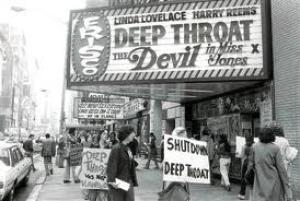
photograph chronicling the early years of anti-pornography activism is from here

Hi Leslie Cannold,

I've known many women across my life who have been negatively effected by pornography both inside and outside the industry. I found your comments about pornography startling in some regards. I'll note what was surprising or problematic for me below. You ask what motivates people: fear or hope? I'd first like to say that there are more choices than that. Hatred motivates some people. Desire to acquire power or to acquire more power--as they define it--motivates lots of people. So too does the desire to survive another day or night. Other motivators in my experience are selfishness, addiction, loneliness, desperation, need, compulsion, obsession, desire to not feel certain feelings, to not feel pain, and to not feel disconnected or isolated or alone.

As you probably know, most women in the pornography industry got there out of a need to survive, and to not be alone. A good friend of mine was taken off the street by a male pimp when she was fourteen. He seasoned her to be available to strange, much older men for sex--she was at least as young as many of the procurers' daughters. She was still on the street part of the time--working, but at least had a place to rest occasionally.

Her story would be "an anecdote" were it not for the fact that her age at the point of becoming a prostitute is the average one. This means that half the women in prostitution are fourteen or older when they start, and half the girls are fourteen or younger. Half. Do you want us to focus only on those fourteen and older in order to get us to feel more hope? Or ought we contend with the harsh reality of the fourteen and younger population no matter what it leads us to feel--even despair? I'll take the despair and the hope--and the fear--that comes from consciousness. The denial your article supports actually makes me feel far more hopeless than the facts Gail Dines brings to the public for consideration. I find activism inspiring, and efforts to shut down appropriate activism really disheartening.

Trafficking of girls as sex slaves and sexxx-things for consumers is globalised. Millions of girls are trafficked daily, as I hope you know. Every girl--a person with a future collapsed into getting through one more day--is made to endure some form of sexual abuse, or to withstand another rape, several times a day or night. To say the conditions are abysmal wouldn't be inaccurate.

This is the primary population of people who comprise the performers in pornography. And by pornography I mean the corporately produced material that is published by pimps for mass consumption that earns billions of dollars annually for those already rich-enough pimps. (I'm not talking, at all, about some heterosexual or gay or lesbian couple's sex tape, or individuals who have a web cam and decide to earn money letting people see into their bedroom as they masturbate or have sex with someone else. That stuff, quite honestly, isn't my concern. If people genuinely want to do that, then they will and they should. Nothing in my own political practice or that of any anti-pornography feminists I know will have any effect on their ability to earn money or to try and get other needs met that by performing sex in those ways. This is also to say, there's nothing the anti-pornography feminists are doing that will take away or "ban" any of your pornography of that of any else. Gail Dines opposes all efforts to ban porn: you didn't make that explicitly clear in your article.)

The primary population of girls and women who are raped and otherwise sexually assaulted as a requisite way of getting them into the industry, or to keep them there, means there's nothing only-anecdotal about the experience--it is common, usual, ordinary, and entirely status quo. (I accept that a few, more privileged women in the world "freely choose" to be in pornography, although when women are paid as much to do everything else, I'll find the words "free" and "choose" to be more socially and economically meaningful.)

Girls and women are being raped multiple times a day and some of them are photographed or videotaped and some of those images and films are sold. This is accepted, defended, protected, and accommodated in every country in which it is happening: the trafficking of girls is accepted, defended, and protected; the prostitution is accepted, defended, and protected; visually recording rape is accepted, defended, and protected. For most women--for most of us--to do it for any length of time, opiate and other categories of addictive drugs are usually needed. That's the norm, not the exception. It's easier to go after messengers of that unpleasant news than to really emotionally comprehend what that feels like.

So we have a large group of girls and women, many drug-addicted so they're not in the most empowered or liberated frame of mind, who have been raped countless times--dozens, at least; more likely hundreds. Do you really mean to pretend that there's no normalised harm in that industry? If so, I'd say that's a stunningly callous and pro-status quo position to hold.

Throughout your article, you phrase and frame the issue as if it is one of ideas only--with no rapes happening anywhere at all to the girls and women in the industry who are being photographed and videotaped while drugged. Do you honestly believe most of those performers are not experiencing routine sexual harassment and sexual abuse? If you do, please see The Price of Pleasure. You can find it free, online. (Note: I'm linking you to images that are pornographic, not trying to censor them.)

I would argue, based on the knowledge of pornography and pornographers you show in your article, that you're living an unusually advantaged life relative to most women on Earth. One kind of advantage is having the option to be unaware of the atrocities going on around the world in places you do not socialise or live.

I had some contacts in Tokyo after the earthquake hit earlier this year. Had I not, I wouldn't have known what was really going on there. The US media was not reporting most of what was happening that was terrifying--long after the tsunami destroyed so many people and so many other people's livelihoods and homes. I had to have those connections to know. (It's still a nuclear nightmare.) But being a US citizen, I wasn't required to have those connections. This is how it is with most atrocity that isn't happening to you or me, of course. Those of us who can afford to not know, generally won't take the time--or don't have the time--to find out.

If you were a girl in many cities across North America, in Europe, and in Asia, you would be far more likely not be able to not know what I've written above. You might find ways to block it, blunt it, or dissociate from it, but not knowing a thing about it would be exceptional to impossible.

Your article contains a few statements that skip over the atrocities I've identified above as socially existent and significantly and traumatically affecting the lives of millions and millions of female human beings--and plenty of male human beings too.

I'll excerpt a few below from your recent article for The Age.
Dines used her many festival and media platforms to contend that pornography degraded women. It did this by modelling Brazilian waxes and depicting women enjoying anal sex and men ejaculating on their faces. 
Have you seen a great deal of the pornography--the stuff produced by millionaire pimps? It appears from this statement you have not. Again, I hope you see The Price of Pleasure.
Dines asserted without evidence that boys as young as 11 were viewing this material, which she said was not only more violent than Playboy or Hustler but also apparently the snuff films of the 1980s that so outraged her hero, the American radical feminist Andrea Dworkin. 
Surely you're kidding. (Aren't you?) You don't actually think most eleven year-old boys with access to computers have never sought out images from that rape-and-tape industry? Do you seriously doubt that most eleven year-old boys have seen internet pornography that we used to call "hard core", and plenty of images depicting more degrading violence against women than that?

And surely you're kidding when you imply that today's pornography, overall, isn't any different than that from the 1970s. You don't see images ubiquitously on the internet that are more violent than Playboy and Hustler? You must not be looking. As I recall, those paper magazines were violent in many ways that people didn't readily see as such. Hiding the worst of what's done is standard practice for all major corporations. Why would the pornography industry be an exception to this rule? For example, with its own abuses, the pharmaceutical industry does a great deal of harm to animals, people, and the environment, but not in full-frontal view of those of us who purchase or are prescribed their allegedly safe drugs. To say any significant industry hasn't changed much in the last thirty to forty years is to not know much about what has and is going on there.
The minds of young Aussie boys would be deformed by this stuff, Dines conjectured, leading to a future filled with sexual assault, paedophilia and all forms of "economic, political, and legal discrimination" against women.
The minds of anyone who consumes anything at all--from sugar and sugar-substitutes, to McDonalds fast food,  to cocaine, to cell phones, to the exhaust from fossil fuel-burning cars, to pornography to television commercials will have their minds affected--that's the reason those things can be marketed and sold at all: surely you don't think they exist to actually meet our deepest needs or for our health. Or do you?
Dines's claims are vulnerable on almost every level.
They'd be more vulnerable if they were, in fact, just claims. But, as several commenters have noted at the article's website, her facts are backed by very solid research. That other researchers--often those hired by pimps--come up with other results that makes the industry seem not-so-bad, surprises me not at all: tobacco industry researches told us cigarettes were harmless for decades after they knew they were both addictive and damaging to our health.

So I'd argue Dines' assertions of fact are not vulnerable on the level of reality, if one cares enough to know what is happening there. Again, you'd have to be willing to leave the comforts of a middle class life to really find out. The pornography industry is many things: 'pretty' isn't one of them. Here's the first portion of what each of the two filmmakers of The Price of Pleasure--a woman and a man--have to say on beginning the journey into that largely hidden world:
Having grown up in Taiwan, I did not see my first porn film until I was thirty years old, when I came to the U.S. as a graduate student in Boston in 1990.
Contrary to many women being pushed to watch porn by their boyfriends, I had a shy partner who never had the courage to rent a porn video. The few times that I reached for the top shelf at the Video Smith in Brookline to grab a porn video, I had to endure the torturous journey – ignoring other men peering at me out of the corner of their eyes while I was cruising through this off limits section, holding the extra large video box with vivid pictures for everyone to see while I stood in a long check-out line, and then waiting for the clerk to slowly take the video out of its box and put it in a black box which everyone knew was for porn anyway. Although this journey made me descend from a respectable to a fallen woman, there was something thrilling and daring because I was against the constraints set by both Chinese and American patriarchy that disapproved of women's consumption of porn. I figured, if not being allowed to watch porn was part of the sexual repression, then rebelling against it must be liberating and even feminist. -- Producer, Director & Writer: Dr. Chyng Sun
When I began working on The Price of Pleasure over 4 years ago, I expected, more than anything, to learn the process of filmmaking. That the film’s topic was to be pornography was, at the time, of a secondary consideration. I had what can be considered conventional liberal beliefs about pornography and the contemporary pornography industry – pornography was free speech; pornography represented a liberatory sexuality, intervening in the repressive moral codes of religion, conservatism, and infantilizing protectionism; that pornography was a “free” choice, made by both consumers and performers who made their living by engaging in sex onscreen; and I had also assumed that the majority of the pornography out there looked very much the like the pornography I had experienced as an adolescent, or saw at bachelor parties during my career in investment banking – mostly “conventional” sexual practices, with a nominal degree of mutuality. -- Co-writer and Associate Producer: Robert Wosnitzer
They don't sound like fascistic anti-free speech people to you, do they? Their film is more speech on this subject, not less--isn't it?

You go on:
She confuses evidence with anecdote (talk of "my students" is the latter) and correlation with causation
Is someone referencing the experiences of people they know unethical to you? As commenters below your article remark, what backs up your arguments, besides anecdotes and possibly some well-funded research paid for by pimps to produce the outcomes that put them in the least criminal light? You offer nothing to bolster your speculations and distortions.
(does horrible violent porn turn healthy men into rapists or do rapists watch horrible violent porn?).
It might work for you to pose ridiculous-sounding questions as a strategy to discredit an expert speaker on a subject. I'll have a go at it:

Do cigarettes always turn smokers into lung-cancer patients who die an early wretched death? The answer is no. But the answer is also that cigarettes do substantively contribute, as one factor among others, to the normal maintenance of significant and grievous harm--people do lose their lives, and many lives are cut short. Many of us grieve our lost relatives or loved ones who died of smoking-related illness and disease. Someone arguing your points on this matter would come across like a shill for the tobacco industry. Do you intend to do that for the rapist pimps?

You also wrote:
She also wasn't averse to mischief


This is not to mention the irrationality of her basic proposition. Rape and misogyny pre-date hard-core internet porn by thousands of years. How then was turning off the tap of internet porn going to solve the problem?
Rape and other sexual violence against women pre-existing pornography doesn't mean pornography isn't tied to rape, Leslie. Your argument, put in other terms, might go like this: massive human suffering and death caused by plagues pre-dates the AIDS crisis by thousands of years. How then would curing AIDS stop suffering and death caused by disease? Do you get what's truly cynical, callous, and flawed, about the argument?

Unfortunately, it will probably work for most readers for you to use these words: contend, asserted, conjectured, claims, mischief, irrationality, to categorise and dismiss the work of a long-time human rights activist, professor, and writer. Regardless, I think it fair and reasonable to assume that she knows far more about the pornography industry and exactly how it is implicated in harm to human beings than do most people--except those who have worked in it and survived it. If you think Gail has never bothered to speak with many women who are in or have survived and gotten out of the rape-to-tape industry, you'd be just plain wrong. I say "survived it" because I'm not willing to make atrocity disappear; that seems like something Germans-in-denial wished to do during the era of Nazi rule. As a Jew, I object to that sort of evasion of difficult or inconvenient truths. And if the mass rape of girls isn't enough of enough of an atrocity to you, I'm worried about your conscience and your heart.

You continued:
But the big difficulty with the Dines approach is its cultivation of fear over hope. From the moment Dines set foot in Australia, she was beating the panic drum. Panic about the internet, about the developing sexuality of adolescent boys and the inevitable victimisation of poor, vulnerable girls. Don't forget about rape and sexual violence, girls, she seemed to be saying, or the complexity of pre-marital sex! Don't get too confident, or careless with your trust or your movements, the world is still a terrifying place. 
If we correct your misstatements and inaccuracies, and simply deal with the facts of the matter,  we are left with this question: what is the appropriate level of disregard and denial when confronted with news that is disturbing and upsetting because it involves actual human beings being treated inhumanely? Should we work hard to repress our anger about rape and gross sexual exploitation of girls and women--and boys and men and transgender and intersex people too? Should we try and shore up our false sense of security and delusions that the status quo works by not harming millions of people in dreadful ways?

If you are a white Australian citizen, I'm hoping you know about the genocide in your country, and the anti-Indigenous genocide in the US as well. Or do you think that because dominant media won't cover these atrocities, they aren't happening? Shall we feel hope in the face of mass denial and the corporate maintenance of delusion? Is disrupting the relative peace of the privileged, perhaps even to the point of generating some fear in those masses--or outrage, compassion, or a consciousness with which to do then work with others to effect social change--really something that is unwanted and unwelcomed by you?
I see it differently. When I look at the sexuality and values of young people, I feel hopeful of a increasingly gender egalitarian world. I read the studies and see the young men who populate my own world and feel confident that growing numbers of men understand the difference between healthy lust and sexual violence, accept their duty to share the work of home and children and respect women's rights.
Which world is that, Leslie? What part of the big, challenging world is that happening in? To whatever extent it is happening, great. But that doesn't mean that's all that's happening, does it? I mean if we have some promising research in cancer cures, does that mean chemical pollution of our bodies stops causing cancer, globally--at alarming rates?

Things can be (and are) truly awful--increasingly so for millions of people who are far less advantaged than you and me. These are the people who, so far, don't seem to be real to you. If you did, would you relate to, befriend, and believe them?
Yes, nasty porn is nasty and I'd certainly advise against watching it.
Once again you and Gail see things differently: Gail actually thinks we should be watching it--to know what it's trying to tell us about ourselves, our sexuality, and our society. So once again you're making stuff up and pretending it's a position Gail Dines takes. She doesn't. So why do you feel the need to lie? Why not just argue with the facts she describes? Are they too threatening to deal with? 
When it comes to sex, and all areas of life, I'd urge young women who don't want to do something to learn to say no. For a saner take on this issue Google Cindy Gallop's Make Love Not Porn TED video.
To learn to say no? So you want girls to say no to their fathers or step-fathers who rape them, who then grow up and have many problems with boundaries due to being told, incorrectly, that they are worthless or only exist to sexually please men? Do you want drug-addicted women living on the street, picked up by pimps, to say "no" and remain on the street--and to just say no to drugs too? Do you want the Indigenous, Black, Brown, and Asian girls and women who are enduring misogyny and racism to do what you're able to do because you're so advantaged? That's a callous and utterly compassionless thing to suggest to people, I'd say.

For the record, I like the Make Love, Not Porn website very much. And, it doesn't exist to help the privileged masses come to terms with the atrocities happening to girls and women around the world.
Yes, violence against women still happens and must be stopped but violence is not caused by porn.
How, Leslie, must it be stopped? I mean honestly and sincerely: how? Because it's very easy for liberal-minded white people to say things like "racism is bad" and "misogyny must end" without ever following that up with (or, even, promoting and supporting) decades of sustained activism actually working to achieve it. Someone once told me the definition of liberalism is that its practitioners make promises they have no intention of keeping. What are you, in your life, doing to stop the violence women and girls endure for being female not male, including in the pornography industry? Is attempting to discredit someone (who actually has been working to lessen racism and misogyny by showing it to people in such a way that they can't deny it's prevalence in our society, for decades) the best you can do?

Julian Real

Wednesday, June 1, 2011

Enemies or Allies, part 2 of a conversation between profeminist Julian Real and men's rights activist James Huff: Het Men's Threats and Fathers' Wrongs


 HET MEN'S THREATS &
image is from here
Coming up in part 3, I hope, will be James' direct responses to the questions I posed in part 1 that he, as yet,  hasn't answered.

For now, this:

On Wednesday, 1 June 2011, a man named Noah Benzing emailed me. The subject heading said, "AIDS". The body of the email is as follows:

Just wanted to let you know that AIDS kills fags dead and I hope you die soon. 


**********


Pithy, isn't it? I've gotten a number of emails like this--dozens at least. From many men. So many men: so little originality.


I decided to send it on over to James, so he could see how his allies typically "respond" to me. He very kindly sent me this response:

James to Julian:
Wed., June 1, 2011
Ridiculous assholes.  It's no different than the calls of "baby-killer" for me.   Ever think they are scared of you? or jealous  ;)

Ignore the troll.   They have no place decent to hide when universal truth comes knocking at their door. Remember your mind is your most powerful weapon.


**********
I responded as follows and await his thoughtful reply.

Wed., 1 June 2011
Hi James,

I'm going to respond a bit to that, because it points out something that is significantly different about us. And that, again, has to do with our political location socially and structurally.

First, though, on one level it is no different: on the level of its absurdity and stupidity, perhaps it is no different (I'll ask you about this later in this email). But on many other levels it is quite different and is designed to do something very different.

People who hurl misogynist and anti-gay or racist or anti-Semitic epithets at those who speak out (allegedly freely) against bigotry, hate crimes, and institutionalised social and economic discrimination, social oppression, and political (domestic and international) terrorism by one group against another, are doing something else other than being jealous, fearful, silly, and ignorant. But I agree they may well be all of those things.

The whites who do this to people of color; the men who do this to women; the hets who do this to lesbians and gay men are doing something else too. They are participating in the culture of terrorism against those oppressed people. And that culture of terrorism is not abstract: the terrorism is real, even while Noah's email to me is pathetic.

As I wished to make clear earlier on in our correspondence, "reality" is a collection of experiences, an agreed-upon episteme, an accepted while rigorously socially enforced ethical and ideological framework built with systematic or compulsory actions that sometimes bolster identities.

It is only the powers-that-be in charge that are thuggish terrorists which get to act without accountability, however. If someone is a Muslim-identified extremist-terrorist and threatens the US or does something aggressive that makes US citizens feel afraid--or die--the US military will take a decade to track them down and murder them. But if our white male-led country bombs the shit out of Afghanistan and Iraq, and Pakistan, making Afghani, Iraqi, and Pakistani citizens feel afraid or die? What means do those countries have to get the US and NATO invaders out? The US's power to invade is far greater than the powers of the relatively powerless (and relatively few) active Muslim terrorists. And the kinds of corrupt power exercised by the US government and its corporations is often enough cowardly and ignorance-based. But that's not all it is. It is also largely effective, which is why power is exercised in those ways at all, some of the time but not necessarily all of it.

Consider this: without acts of terrorism, what is al Qaeda? A group of people who are jealous, perhaps? A group of people who feel humiliated by not being in power the way the US currently is? Some of those members may organise to do something aggressive and hostile, but it can only ever be "extremists" who do it. This is not the case with US aggression and hostility. Normal, red- and blue-blooded Americans can and do want us to bomb the shit out of Afghanistan, Iraq, and Pakistan. I cannot begin to tell you how many times I've heard white Americans say that "we ought to make a parking lot out of [fill in the name of the country we are warring against]. Even if al Qaeda is not acting against the US there. Even with no weapons of mass destruction. Even with no Osama bin Laden.

There is no accountability in the US for what its military does. The people do not control the military. The military leaders control it. So our speech is not effective and therefore it doesn't really matter how "free" it is. If it is perpetually ineffective, or regarded as noise, what does the freedom of it actually mean? Isn't the point of speaking out to be able to have an effect--beyond speaking into air, I mean?

Often enough the cloaked-while-terroristic institutionalised means, methods, and mechanisms is sufficient for keeping groups of people down on the social hierarchies. But occasionally a few of the oppressed--or larger numbers of us--get what people atop social hierarchies term "uppity". We can note here that to be uppity means you're not at the top of the social hierarchy, practically by definition. And when that happens you will see violence used to shut them the fuck up. Verbal and physical violence. If the verbal doesn't work, the physical will be unleashed.

We might not that only Black people in the US were called uppity by whites. Not the reverse. And whites don't generally call one another "uppity". Why? Because on the racial hierarchy, whites are already on top, are already up, and have stayed there for as long as this country was a country. So there's nowhere else to go but down, in the minds of many whites. Equality feels like a demotion in status and acquisition of resources and power.

Similarly, het men are atop the sexual hierarchy in the US and elsewhere, over and above het and bi women, lesbian women, and gay and bi men. Their heterosexist ideology rules, and any threat to its sovereignty and to het male domination is seen as an attack, not just a critique. Women's critiques of male supremacy are supremely misunderstood and mis-experienced by men as an attack. It is a critique. There is no attack. The attacks are the rapes, the domestic and international terrorism, in the form of sexual assault, trafficking, and slavery. There is a trade in women and girls--and some boys--by white men internationally. There is no sexual slave trade of men and boys by women. No rackets of women trading pics of their latest assaults against boy-children are busted up by the FBI. That's not because the FBI aren't finding them.

So such actions as Noah Benzing's would be entirely ridiculous except for one thing: he and his colleagues and allies knows that most times, the tactic works to silence the allegedly "equally free" people who are speaking out too much. Only some people in any society founded on and intentionally maintaining oppressive social hierarchies need to resort to such tactics, but some must. Some men must rape, to keep alive the fear of rape. Some men must assault and terrorise women domestically to keep alive women's fear it could happen to them too.

For example, if you called on your MRA colleagues and allies to stop doing these silly while terroristic tactics, they wouldn't and they won't. Why? Because they are convinced this level of aggression is necessary to maintain their unjust privileges, their corrupt power over others, and unearned entitlements they wish to maintain. It is the lifestyle to which they have become accustomed, to borrow from divorce court lingo. Except they are the ones with the money, the social capital, to begin with--the status, the lack of stigma, the cultural clout, the political position. They have gotten accustomed to being on top and so efforts by the oppressed to achieve equality feel like and is experienced as a demotion, a lessening of value, a lowering of status, and a very serious threat because they can't really imagine the value of a truly equal society with no one on top.

Because they can't imagine this, they project onto women a desire to rule 'the other gender'; they project onto feminists a belief they want to create a matriarchy. It'd be only absurd if it weren't so prevalent a belief, seriously and terroristically acted out against feminists.

So many forms of violence are employed to keep the people at the top in charge. All forms of it. Every form necessary. By any means necessary men will rule women; whites will rule people of color; the rich will rule the poor; and heterosexuals will rule lesbians and gay men.

With that, all we have to do is notice the violence and name it as such. So when women name "rape" men must chime in and say, no, you're lying. And when gay men and lesbians deem something a hate crime, some heterosexuals must come back with, "No, they were just kidding. It wasn't serious." To whom, James, is it not serious?

Which brings me back to the beginning. What Noah did, in the context of living in an anti-gay society where truckloads of young and perhaps not-so-young het men do wish for me to be dead, do welcome me being beaten and raped, is a threat. Not such an idle one, even if Noah is, among other things, a buffoon and a coward.

And while my mind is stronger than his, his fists are stronger than mine--or the fists of his thug-buddies. I've received their death threats, with quite detailed information about how they wish to accomplish the deeds. Your counsel pretends this is only ever an exchange of words, of ideas, of thought. But for me being chased down the street was not an idea only. And for almost all the women I know, rape and sexual harassment from men are not words, even while words are used during the acts. And oppression--discrimination, subjugation, violation--isn't a thought primarily.

On these grounds, I respond with this: me being called a "f*g" who should die of AIDS is not the same thing, socially and structurally, as you being called a baby-killer. Because there is no plague that took out a generation of your people while the president who ruled the country refused to speak about how to prevent it being spread. And bullying in schools doesn't propel het boys--socially perceived and regarded as such--to commit suicide disproportionately. Boys aren't called "het" as a way to humiliate and terrorise them. This demonstrates the lack of equality present. But I'm wanting to know is anyone calling you a baby-killer? On what "logical" or "moral" grounds?

And, do you see any of their tactics as honorable?

Julian

**********


And here is James' latest reply to me:

Wed. 1 June 2011

I understand where you are coming from, in that a threat is a threat..to be taken soberly..with all the ramifications it implies.

My own uncle called me a "baby-killer", and wouldn't let me attend a family reunion after getting back from Iraq...on the grounds he thought I was a danger and a bad influence to his family.  I do not believe such a position was logical or moral.  I thought that blood would be thicker than water in this case, but I was wrong.

As far as terms of humiliation....hmmm.
I have been called any number of things, and I must say that "baby-killer" was perhaps the worst, regardless of its source.
I think my peculiar way of looking at things, keeps me from being able to really see much beyond logical speculation...even when  faced with such persecution.
I knew he was wrong in his base assumptions...and I took his threats of violence against me seriously if I showed up..but I also knew that he cast himself in a light that paint him forever in a negative fashion.  So for some reason, I remained rather immune to the effect I think he intended to have on me.

These self-identified MRAs who do these things are nothing of the sort.  The REAL MRAs are already speaking to legislators and lobbyists.  They are already scouring court documents, civil and criminal cases alike.  The movement has become a multi-headed hydra...each moving on a different front, a loose coalition that is already gaining the attention of lawmakers and the media in ever increasing numbers.  Look up the National Coalition for Men, and S.A.V.E.  These are just a few of the organizations who are moving in a big way in the last year......and they plan on hitting hard right before the election season next year.

There are independent research and lobby groups located in Australia and the U.K. as well....U.K. has a group called Fathers for Justice which has already been active for a couple of years, and they are bringing to the public consciousness the skewed DV and rape statistics used in that country. They have also been successful in bringing up how false rape allegations are hurting men and women.  Women because of the "cry wolf" idea.  This is why there have been a couple prominent cases already over there where women have gone to court and been found guilty of perjury and sentenced to one to three years off a false allegation.

So you see that I am learning more about WHO is out there, actually doing work...and these are the real MRAs.  My task is to educate new people. Those who seek to become active like these groups must not give sway to hateful or angry rhetoric.  No one would see us as anything other than evil trolls if that is the case.  As it is, there are already a number of fine groups out there who keep it exactly where it needs to be.....in the courts, in lawmakers offices, and in awareness projects that are starting to spread across Western culture.

It's much bigger than I thought.....So much bigger.  It just has sooooo many groups on local, state, and national levels that no one has even kept track of them all.  And most of them have sprung up within the last 5 years.

Have you looked up Erin Pizzy or Eva yet.  I think you will see what I mean. The threats of violence go both ways.


**********

Hi James,

I have not, as yet, looked them up. 

It appears you're stating that the "MRAs" online are not real MRAs, and are, instead, unconscionable and unethical bullies and imposters. Do I have that right?

I'll add that it'll take other than anecdotal cases, or a few cases, to prove that your perspective on things approaches the greater truths of what's going on and going down. I'm counting the experiences in the millions, not one or two or three. In the millions women are beaten savagely by men, sometimes to death. Often enough men do these beatings, and other humiliations of women, in front of children and then want custody of them after the woman leaves him. On what grounds ought any battering terrorist man get custody of children who he abuses? Do you believe that men who terrorise and beat up the mothers of their children should get custody of those children?

I have known battered women very well. And the stories MRAs and FR guys like to promote leave out so much reality that it's a wonder they have the standing they do in places like Australia, except for one thing: the courts have never been anything other that viciously patriarchal, anti-woman, and pro-white het male supremacist. This is to say, the courts are for the maintenance of the status quo: a culture, a government, a legal system, and a value system which enforces and protects class-privileged white men's right (read: wrong) to discriminate egregiously against women of all colors. It is comparable in the UK and in the US. Men rule in all three countries, and FR activists and MRAs help make sure the power stays in men's hands, to control, terrorise, and assault women, in so many ways.

I grew up seeing the effects of battery on women. As soon as women got the courage to speak out, through the shame, along came men saying silly things like "women hit us too!" As if being systematically terrorised is comparable to being hit occasionally. As if men go to the hospital emergency rooms with broken bones and bloody flesh from being savagely attacked by "the men who love them". What do you think the penalty should be for a man who rapes or batters his wife, James?

Here's a piece I wrote on the subject, in case you haven't seen it. I have lots of contact who know, in grim detail, what FR activists are doing in Australia, and I'll detail their atrocities if you'd like. For now, this, which may also be found *here*. I do personally know a woman in Australia who is an immigrant and her white Aussie ex-hubby battered her and abused their child, and the courts awarded him full custody. It's horrible. The girl-child wants to be with the mother.

The Heart of Justice, for a wonderful woman, also a loving mother, fighting for justice for herself, her daughter, and women and children throughout Australia

 [image is from here]

This was written for a newsletter put forth by an organisation
working to make custody decisions in Australia 
centered on what is in the best interests for children, 
based on principles of justice and compassion, 
not in service to abusive husbands and fathers. 

Here is the link to that organisation: www.safety4parentsandkids.org.au
 

The Heart of Justice
by Julian Real, copyrighted 2010. All rights reserved.

Men have asked over the centuries a question that, in their hands, ironically becomes abstract: "What is reality?" They have written complicated volumes on this question. The woman who was a battered wife and has escaped knows the answer: reality is when something is happening to you and you know it and can say it and when you say it other people understand what you mean and believe you. That is reality, and the battered wife, imprisoned alone in a nightmare that is happening to her, has lost it and cannot find it anywhere.
The issue concerning men's unearned rights and unjust male ownership of women and children is one which continues to exist not only in Australia, the US, and the UK but also the Scandinavian countries. Increasingly, there is a pernicious patriarchal myth that children must have regular contact with their violent fathers/stepfathers. Family court systems refuse to accept that the male partner who commits violence against the female partner cannot be viewed as an appropriate 'parent' when it concerns the welfare of the children. Male supremacist thinking is that issue of violent male partners is separate to the issue of 'the same violent men being granted contact/guardianship of the child/children.'
The dangerous and sometimes deadly belief is that in a household wherein the man commits violence against his female partner, this domination supposedly does not impact on the child's/children's welfare. This is partly due to the unquestioned presumption of public and private male dominance. Even worse, despite efforts to make international legislation concerning the rights of children more just and humane, this harmful impact is commonly ignored; the 'rights of the violent male partner' supersede the rights of the child/children not to be subjected to male violence. Contact with violent fathers is seen as vital because of this misogynist myth that children need the abusive 'male role model in their lives'. We must not question 'violent man's suitability' since mere fact he is male is prioritised over everything other factor. The effects of violence and the rights of children, hand in hand, go ignored. The mother--’the female role model in their lives’--is constantly subjected to the most minute, discriminating sexist male-centered scrutiny concerning their suitability to parent their child/children. Male sex right over children always trumps women's and children's right not to be forced to live or have contact with violent, manipulative, self-obsessed men.
-- Jennifer Drew, UK Feminist Activist and Researcher Challenging Male Violence Against Women

In countries which have national laws that impact people globally, across class, race, ethnicity, and gender what is the moral and political obligation of such a country’s legislative bodies and criminal justice systems to understand, empathically, the experiences of those most marginalised, most disempowered, and most harmed? If laws center the experiences of the most privileged and powerful, the people with the most financial access to those legal systems, and the people with the least likelihood of being arrested due to social position and political clout, what is the impact on those with the lowest social position and the least political clout?

Cases flash before my eyes. A mother appeals to the court to prevent the man who regularly raped her from having custody of the children he also sexually abuses. The court doesn’t believe her that he repeatedly raped her because she’s his wife and finds inconclusive evidence of him having abused his children. Because the court determines her to be a liar they award sole custody to the man who then goes on to sexually assault his children until they leave home. A woman fights for her children’s rights to be free of the man who has terrorised all of them, sometimes with fists, sometimes throwing objects, sometimes with verbal assaults that cut as swiftly as a sharp knife. Or, on the gentler side of things, a man seeks psychological control and power over his family and his spouse decides she wants more out of life for herself and her children than to be dominated in this way. She leaves, with her children. He sues her for custody because he wants her back. The children are less important to him. I knew this father who pretended to want custody to care for his children when all he really sought was to have more abusive access and control over the children’s mother. The mother told me that was his sole motivation. I wanted to believe he was more complex than that, more humane. He wasn’t. He lost his custody case and has done very little to keep in contact with his children, now grown, although he was not legally or otherwise restricted in his ability to contact or visit with them. He lost control of his first wife so he married another woman and had two more children. So much for his court-pleaded desire to raise the first two.

There are so many cases of men using the unjust while socially real power they have to oppressively regulate the lives of women they love, hate, or regard merely as a pawn in their sadistic mental chess game called life. (He may tout that she is The Queen who holds all the power. Sometimes he actually believes his own grand delusions of political impotence.) When seen collectively and compassionately the cases, sorted and stacked, cease being anecdotal and instead reveal patriarchal patterns of men terrorising women and children, using any and all means available to them to attempt to regain the forms of control and dominance that usually escalates with little to no intervention. Misogynist violence is minimised by society generally--or normalised, or naturalised. It is blamed on women; it is seen as a weakness in men, a cause for concern and pity. Perhaps therapy will help (him).

In most cases men’s sexual violence against women can and will be ignored altogether. Most battered women remain silent. Most raped women never speak about it. Most girls violated by their fathers are too afraid to say anything for years, if at all. In my own family of origin, virtually all the female members are survivors of abuse from men in the family. None of them prosecuted. None of them ever accused the perpetrator of assault. The lie is that women make false allegations against men about battery, rape, and incest. The truth is that most women are silent, sometimes due to being killed, sometimes due to taking their own lives to escape the present or past horror and pain. Those that survive and build up the courage to speak out, to confront, to challenge the wrongs of his rights and the legitimacy of his entitlements are seen as scornful and uppity. A woman who publicly challenges a man’s ability to do what he wants and not be accountable to anyone--which is usually how it goes--is presented socially as someone who doesn’t know what she’s talking about. Confused. Irrational. She may speak; but being believed is another matter altogether. Remember: he defines and authors reality; she cannot. That’s how he wants it and that is, too often, how the courtroom sees it.

The reality presented before a judge or a jury is tightly bound to male supremacist beliefs and attitudes, values and practices that do to women what men do to women: make them seem incapable of telling the truth about their own experiences. He’ll do just fine with a misogynist attorney appealing to the court’s patriarchal sympathies. She will need extensive outside verification: corroboration, reports, findings. Compounding the problem is the reality that child welfare and social service agencies are often so underfunded and understaffed that they must pick and choose which cases they can investigate.

My hearts breaks when I learn of yet another case where men are allowed to abuse their children and torture their ex-wives. What I feel vacillates between despair and outrage. Girls and boys are being ordered by court into the homes of their abusive fathers rather than their caring mothers because the fathers have social status and political power, not because they are the best parents. Custody may be determined based on the father having economic stability when a mother is poor for having spent years raising children and finally leaving him without his blessing or access to the financial portfolio he filled because she took care of the family from home, out of love, not for money.

What is horrifying is learning what happens when a woman leaves an abusive man. A woman who worked in the medical field as a technician, assisting a male doctor I’d seen for years, suddenly wasn’t around. I inquired about her absence. Co-workers looked down. I felt dread. They quietly told me she’d been killed by her ex-boyfriend. I felt sick. Only a month or two ago she was with him and alive. Now she was away from him and dead. That’s quite a high price to pay for deciding to be single. The newspapers reported him saying “I realised she wouldn’t come back and I couldn’t bear the thought of her being with another man.” His lethally jealous, irrational rage betrays his truth claim; it’s not like she had the chance. Let’s be thankful they didn’t have children because they likely would have been raised by the man who murdered their mother.

This is more than wrong. It is immoral and unacceptable because it is preventable destruction of human life presented as acceptable and fair by men’s lawyers and patriarchal judiciaries allegedly empowered to protect the vulnerable and the harmed from such abuses. Instead laws and courtrooms conspire to do just the opposite--adding promise to a husband’s threats and force to his fist.

The fact that men dominate, control, and regulate every institution in society is somehow missed when the legal lens focuses in on particular cases argued with spurious logic by attorneys well-paid by selfish and sadistic men. With increasing vigor and determination, Father’s Rights groups are attempting to misuse questionable facts to make it appear that women have all the control and only want more and with that presumed power they only want one thing: to punish the men who hurt them. If that’s how the world really worked the medical technician would be alive today and her ex-boyfriend would be dead. Men’s capacity to project onto women what they themselves feel and do is astoundingly, acidly hallucinogenic and horrifyingly effective in accomplishing their goals of continued dominance.

Centuries of documented despicable patriarchal violence by men against women and children is conveniently kept out of view when the hostile fathers’ attorneys build bogus cases against the women who loved them and were compelled to leave them when unable to endure their hatred and hostility. Wicked is a word applied to step-mothers and women generally. Not to men who have demonstrated a willingness to be wicked in ways women have never been, not necessarily because they lacked the cause. But women’s rage is institutionally impotent while simultaneously demonised. Men’s rage, however, is systemically existent and institutionally enforced. His rage cannot be demonic because he’s always entitled to it as a human quality. Law tries to curb its uglier expressions, but for him to be enraged, in and of itself, is no crime at all. When women rage, they are portrayed as many things--none of them especially human.

Misogynistic Men's Rights Groups are organising to do what they do best: spread woman- and child-hating, utterly self-serving and self-centered portraits of themselves as the Fathers Who Always Know Best. Online and off, they distribute distortions about their own children's testimony against them and about the caricatured characters of their ex-wives, who are, after all, the mothers of their children. The pain she allegedly caused him, actually generated by his own commitment to control and conquest, is played up to epic proportions. He suffers; therefore he is victimised by her, not by inflicting his own inhumanity against her. Meanwhile, her pain, from his outbursts and his beatings, is downplayed, denied completely, or blamed on her decision to stay with him. When are men not socially responsible for their own violent behavior? When the recipient of them is a woman.

His abuses may be emotional, psychological, physical, or sexual. Some may be public but most are expressed privately against the wife and kids, intentionally hidden from public scrutiny so as to maintain his social standing as “a good man”. Because of a socially ingrained sexist assumption that men speak both with greater authority and more accuracy in society-at-large, fictional tales can be promulgated by these male supremacist men and their adoring attorneys who are never paid to be truthful, only convincing.

Consider the following assessments made by a loving father and husband I know who has been studying the contours and conceits of sexist men’s stories. What follows are excerpts on myths about domestic violence, researched and compiled by the sociological specialising on gender violence, Dr. Michael Flood, from Fact Sheet #2: The Myth of Women’s False Accusations of Domestic Violence and Rape and Misuse of Protection Orders.

Myth:
Women routinely make up allegations of domestic violence and rape, including to gain advantage in family law cases. And women use protection orders to remove men from their homes or deny contact with children.

Reality:
     The risk of domestic violence increases at the time of separation.
     Most allegations of domestic violence in the context of family law proceedings are made in good faith and with support and evidence for their claims.
     Rates of false accusations of rape are very low.
     Women living with domestic violence often do not take out protection orders and do so only as a last resort.
     Protection orders provide an effective means of reducing women’s vulnerability to violence.

Reality:
Separated women are at elevated risk of violence by men, whether physical, sexual, or lethal,  relative to women in intact unions (Brownridge, 2006), and women are at risk of increasingly severe violence when separating from violent partners (Riggs et al., 2000). The risk of post-separation violence decreases with the passage of time since separation, and is greatest in the first two or three months after the commencement of the separation, at least from homicide data. [...]

Reality:
Further situational variables influence post-separation violence. Leaving a marital or cohabiting relationship or trying to leave it increases women’s changes of being physically or sexually assaulted especially if they are connected to men with patriarchal and/or sexually proprietary attitudes (DeKeseredy et al., 2004). Women are at greater risk of post-separation violence if they are more ‘available’ for victimisation: if they live in the same city as their former partner, and at riskier times such as court appearances and exchanges of or visits to children (Brownridge, 2006). The presence of a new partner can be either a risk or a protective factor, as can children. For example, joint custody may become an opportunity for conflict and violence, may increase opportunities for violence at visitation and the exchange of children, and children may be used as tools for violence by abusive men (Brownridge, 2006). [...]

The Australian evidence is that protection orders provide an effective means of reducing women’s vulnerability to violence. An early study in New South Wales found that the vast majority of complainants experienced a reduction in violence and abuse from the defendant in the six months after the order was served on the defendant, and over 90 per cent reported that the order had produced benefits such as reduced contact with the defendant and increased personal safety and comfort (Trimboli & Bonney, 1997). Finally, research among young women aged 18 to 23 and subjected to violence by intimate partners found that “preventive strategies for young women at the early stage of a relationship can eliminate, or at least reduce, physical violence by a partner” (Young et al., 2000, p. 5). The severity of violence was reduced after legal protection, but the benefit was not as marked unless women sought help from the courts as well as the police.

Mothers are desperately awaiting the feel of their sons and daughters arms around them, finally out of the psychological and physical grip of their patriarchal parent. So let’s get to the heart of the matter. Women are socially and legally disadvantaged in life and in law due to men's jurisdiction over each. The sexist beliefs and attitudes that are foundational to men's violence against women and children are supported, not exposed, not challenged, not remedied, when judges and juries carry those same beliefs and attitudes into the courtroom. This effectively ensures that at the end of the day, male supremacists win, patriarchal power is bolstered, and abusive fathers and husband regain control and custody. Women lose credibility, if not courage. They lose faith that justice is fair and unbiased. Mothers and children lose trust and hope in systems that are supposed to protect and defend their human rights to not be dominated and violated. More heart-breaking still is the loss of mothers and children’s irreplaceable relationships to each other. They are legally and forcibly separated for months, years, and sometimes forever. This is not justice. This is the tyranny of unearned patriarchal privilege ruling justice systems.

Some of these fathers have controlled, dominated, manipulated, violated, subordinated, raped, and battered the children’s mothers secretly, others have done so in front of the children, also to them, but none of this is appreciably and appropriately factored into who gets custody when parents separate and divorce due to domestic violence. Why are men being given visitation rights to children they abuse? Why is a man who batters his children’s mother being given full custody when the children need to be safely with her, and they all need reliable protection from him? With official rulings such as these, one wonders: where is the heart in justice?

If our choices rest between a woman who has been harmed significantly by a husband’s abuse but who is still standing and speaking out, naming him as the perpetrator of that harm, the best parent available to the children ought never be the abuser. Even if he is rich and she is poor.

The fact of him being male ought not be reason to grant him access to family members he has terrified. Being male doesn’t preclude being a good parent but being an abusive husband and father always does--definitionally--if reality is allowed to be defined by the harmed, that is. Being an abusive husband in a home where there are children means you are unequivocally an abusive father also. To believe otherwise is to deny children have human feelings. To believe otherwise is to deny that everyone in a home with domestic violence is impacted negatively by that violence. We know this is the case with alcoholic homes. We know this about families where there is rampant drug abuse. The same is true in any home with children where misogyny is expressed by domineering men who psychologically control and terrorise women. Whether he appears kind or callous to his children, the fact of him systematically subordinating their mother to his will, regardless of how he directly treats the children, ought to be sufficiently substantiating evidence he ought not parent them.

Overwhelmingly, by all accounts, it is males, not females, who use brutal force, bone-breaking force causing bodies to bleed and faces to bruise beyond recognition. These male supremacist traumas are not only physical. Men humiliate and degrade women with sarcastic ridicule and caustic contempt. Men’s attitudes and entitlements, both interpersonal and institutional, reveal their behavior, their actions, are aimed at women because they are female.

No child is safe when home is a war zone. Ought the safety and care of children and the humanitarian well-being of women be more centrally valued in society and in law than preserving a detrimental father-child relationship when determining where and with whom children will best be raised? If a husband and father has demonstrated his ability to terrorise and dominate other human beings “in his care”, why doesn’t the courtroom see this as just cause to award sole custody of children to the mother, without visitation by the predator?

This would be an absurdly unnecessary thing to say except that it is not routinely believed: criminal terrorists ought not be made legal guardians of those they terrify. Findings of post-traumatic stress due to threats and violence, and symptoms of Stockholm Syndrome due to degradation and domination exacted against the wills and beings of mothers and children ought not be ignored, understated, or deemed irrelevant when custody rulings are rendered in any court of law that calls itself just and humane.


Sources for some of the content above:

Sunday, January 16, 2011

Celebrating Thirty Years of My Love for Chrystos, a repost of an interview with her from The Gully online magazine

Image of cover of one of Chrystos's books of poetry is from here. A link to the book appears at the bottom of this post.
With thanks to Kelly Cogswell for permission to cross-post what follows, which was first published in The Gully online magazine, which may be found here:
http://www.thegully.com/essays/gaymundo/020313_chrystos_native_gay.html
Copyright information appears at the bottom of this post.

I'd like to take this opportunity to support lesbian visibility by also linking to Kelly's project documenting the activism of the Lesbian Avengers, the promo of which may be seen here: http://www.lesbianavengers.com. All that follows is from the first link. More links of interest related to the work and bio of Chrystos and Barbara Cameron appear at the end. Barbara Cameron's Daughters of Copper Woman was one of the very first feminist books I ever read. And I had the honor of meeting Chrystos once at a conference in the mid-1980s. One day I will tell that story, with her permission, as she greatly influenced my understanding of feminist integrity by demonstrating it. So thank you, Chrystos, for shaping my whole adult life.

Photograph of Chrystos, credit to Lieve Snellings

Chrystos on Queer Native America 
 

MARCH 13, 2002. Chrystos, Native American poet, artist, and activist, talks to The Gully about queer Native America and the de-queerifying of mainstream queers.

The Gully: What are the main issues facing queer Native Americans?


Chrystos: Some of us are working in AIDS education and prevention, some in prison activism, some in land and treaty rights claims. Some of us are just holding jobs. Though queer Native Americans, or two-spirit people, as we call ourselves, have huge gatherings every year, we don't tend to be as cohesive as other queer communities, which is more typical of the way native people are in general. We aren't as institutionalized. A lot of what happens is based on personal relationships.

I'm in the process of making a film about two-spirited women, and we'll be filming this summer out on the reservation. One of the women we'll be focusing on is called Smiley. She lived for years as a butch-identified dyke in Seattle. Hopefully, the film will make our lives more visible. You don't see native people on the 6 o'clock news, and queer native people are entirely invisible even in the gay community where, I have to tell you, I thought it would be different.

One of the things I find really difficult is how racism is presented as a black-white issue. It erases the whole issue of genocide. Of the worst genocides in the history of the world, maybe the worst is what happened in this country and in Canada, and is still going on around the world, including in Brazil and some places in Central America. The eradication of native people is still a core issue for me.

Barbara Cameron understood that. She was one of the most important people in my life. She understood exactly what I was talking about. We knew each other for 30 years. We had a lot of discussions that contributed to my political development, and to giving me a sense of dignity about my place in the world, and my right to be in that place. A lot of who I am is a result of that friendship.

Is it difficult to do work around native issues as an out dyke?


I've actually experienced more overt homophobia from heterosexual women of color than I have from native peoples. Part of the misunderstandings have been about the rules of manners for native people. We have a very different standard for what is acceptable behavior than the mainstream.

Like, here's a simple example. Any kind of intrusiveness is impolite. So, for instance, you don't point at people, that's intrusive. You don't ask, "What do you do?" That's a sort of invasive question that shows you have to be doing something to be human. I'm not very good at these things myself — I was raised in the city. One thing about Barbara, is that she was very respectful of other people even when she disagreed with them. A lot of times people are disrespectful when they disagree.

Another thing we'd think is inappropriate would be "outing" people. Who a person is and what they want to tell other people about themselves should be in their control.

Is it the same standard for straight people?


Yes, straight Indian people wouldn't even hold hands in public. It's just a different sense of boundaries. We're not as crazy and wild. I remember in high school the guys who streaked. Mainstream queer culture has a lot of that streaker mentality in it. I'm not ashamed of my body or anything, I just wouldn't have done it. We also have a different sense of humor. Native people tease one another a lot, but it's not mean. It's very affectionate. You might call someone who was your best friend "Potato Nose."

Do the different standards of behavior make it difficult to organize with other queers of color?


Yes, sometimes. There's also no difference in the level of ignorance as compared to white people, or very little. What can you expect when people go to the same schools and learn, or don't learn, the same things?

What about the many different cultures in the queer native community? Do you have problems organizing across them?

Native culture is not as homogeneous as I've made it sound. There are native drag queens that can be as outrageous as white ones. But there are more similarities than differences. The other thing is that oppression does tend to unite people across differences. And we remain, in my opinion, the most oppressed people in the United States.

We don't have access to media power. There is no national native news anchor, for instance, when there are Asian, Latino and black anchors. We don't have a history month. We do not have the ear of the American public, for specific reasons: because the original intent of the "Founding Fathers" was to eradicate native people from the earth. There was never any intention to eradicate African people, though they were treated as property, which is horrible enough. But they weren't systematically murdered because they were in the way.

And I think what happens for queer people is, as long as they are participating in corporate America, or creating new software, or looking pretty on TV, as long as they are part of mainstream America, they thrive. When they resist that agenda, that's when they are attacked.

I think a lot of what has happened in the last 10 years in queer politics has not been in control of queer people. Like queers in the military. Why is that an issue for us? I understand there are issues of inequality in the military and that's wrong, but should we even be signing up for something in which we'll be asked to kill people for reasons we don't even always know?

The three main issues now in the queer community are not issues of resistance. The military, marriage — which I wouldn't do even if I was straight: what right does the government have to be in my bedroom? — and mainstreaming, becoming like June Cleaver. Wanting to be part of the mainstream is essentially de-queerifying queer people, because if we can get married, and be in the military, and be June Cleaver — and I maintain that being queer is different, it's not the same as being straight, there's a totally different mindset — we'll be mushed all together into a kind of Melissa Ethridge clone. That is repulsive to me.

And having all the known queers being white is also repulsive to me. I don't think mainstream queer culture has even noticed that yet. Not too long ago they had some show on TV about lesbians, a women's program, maybe Vanessa Redgrave was in it. In the paper ad, all of them were white, all blond. That really scares me, the German Reich values.
 
Chrystos' books include Fugitive Colors, Dream On, and Not Vanishing.

Remembering Barbara Cameron
 

Related links:
For Chrystos bio and links.
For A review of Chrystos' work in Speakeasy.
For the LGBT and Two Spirit Native American Community at Tenemos.
For a Native American LGBT Web Ring.

About the Gully | Contact | Submit | Home
� The Gully, 2002. All rights reserved.

Friday, December 24, 2010

Jumping Into The Deep End of the Gay Jean Pool: Analysing "Gay Sex in the '70s"


image of this documentary's DVD cover is from here


 "A burst of sexual liberation." That's what it says in the top right, there; see it? It also says "one long sex party." I'd agree with the latter more than the former.

A burst of sexual expression, maybe. A burst of anti-repressive sexual activity, which had its own forms of repression built into it, often unacknowledged because such knowledge doesn't come easy--especially if you're used to be drugged in order to have sex at all. One way gay men deal with their self-hatred for being gay is to obliterate their minds when having sex.

This movie was difficult for me to watch because it reminded me of how much gay men do just to try and have real contact with one another--a high price is paid to feel something beyond pleasure, beyond sensation--and it is the price of knowing who you are and what living in the world as both a privileged and oppressed person, both statused and stigmatised, costs you. And it'll be difficult for me to analyse, but here goes. I'm jumping in the deep end of the denim jean pool.

I remember this era but was too young to participate in it sexually. But some people I knew who were a little older got to experience it, participate, and allegedly enjoy it. And some of them got HIV. One of those people is still alive and well: an ex-boyfriend of mine: we were together when teenagers; he was fifteen and I was sixteen; this was first love for me with a boy and for him too. But love cannot co-exist well with hate, and I hated myself for so many reasons. The story of our love affair is for another time. But years after we were forced to end our relationship by his evil step-father, he ventured into the Big Apple, to take a bite or two. He's someone who is probably genetically lucky, having a body that is more virally resistant than most people. And he does take meds too, but didn't for a long, long time after knowing he was HIV positive. He's healthier than me, probably. And I don't have HIV. But it's not just his genes. It's far more to do with his class and race. Because he didn't have to hate himself also for being poor and of color. He only had to contend with the self-hatred of being gay.

For me, given my age, this is what I think about when I hear about "gay sex in the '70s": I think about HIV/AIDS in the '80s, and what's happened to HIV since then--how it is now, disproportionately, killing so many poor women of color in the U.S. and elsewhere.

But when white guys with some economic privilege want to have fun, fuck everyone else. Literally. "Gay men having lots of sex in the 1970s" are not a discreet, quaranteened group, despite many homophobe's best efforts to accomplish that rounding up. The most vile of the homophobes did and do still argue that AIDS was the gay plague, something visited upon that population by a het white sky-god who hates f*gs. I won't tell them G-d, our Lorde, is a medium- to dark-skinned lesbian. I'm not sure they could handle it.

Gay men in the 1970s included bisexual and bi-curious men in the 1970s, who would visit the many places the video documents in NYC: the West Side

There's another cover, I guess, to the same video/DVD, and this is it:

image of DVD cover is from here
Oh, and one more cover too:

this image of the DVD cover is from here
Now, if you're paying attention you'll notice something about each of those covers. Do you know what it is? That's right: all white men.

Except for one African American man who is interviewed along with a few other men, this is a white man's story. It's not REALLY a white man's story, but only white men tell the story, except for this one Black man. These are the survivors of that era, and one anecdote is kind of chilling about how this comes to be the case. One of the white interviewees tells us of arriving at a party brimming with handsome men in a posh flat, a NYC apartment that seemed, much to his potential delight, like it might turn into an orgy. A real live orgy. As he'd never experienced one, but had experienced just about everything else one could have in NYC in the '70s, he was really excited about what might happen. Except, well, his boyfriend said "We're going. Come on, let's get out of here." He left with his boyfriend, bitterly. And as the story-teller informs us, soberly: four years later only he and his boyfriend were alive, of everyone who attended the party that day. (They knew the men who were there--these were not strangers to one another.)

So, given my age, I think of the '80s aftermath: of Ronald Reagan REFUSING to promote educating people about how to not transmit AIDS, and refusing even to discuss AIDS at all. It's called mass murder by neglect. That's what Ronald Reagan was guilty of. And he was doing it to appease a group he didn't even really agree with: the U.S. "Religious" White Right who he felt beholden to for helping him get elected. "Religious", here in this context, means evil white Christian-identified people who were the Devil incarnate.

But if we back up into the era I didn't really know much about--the one prior to the '70s, we learn a fair amount about the context for why it would be that sex would "explode" onto the scene in NYC. That context was almost unbelievable sexual repression, gross overt hatred, and institutional oppression of gay men. Also of lesbian women, but this movie doesn't concern itself with women--at all. Not even one lesbian. Not even an accidental shot of one lesbian. I think there's one heterosexual woman in the film; heck, maybe she's bi or a lesbian--how the hell do I know. One. Make no mistake--the cover sure doesn't--this is a MAN'S MOVIE, for men, about white men having sex with men of many colors--manly sex with manly men who were very hated and reviled, who'd been beaten or painfully closeted in high school. Who'd been told their sexuality--who they were as sexual beings--was contemptuous, dirty, and evil: and sick, too. Very sick. In need of shocking therapies. Horrid [mis]treatments to "cure" them of this affliction of homosexuality. That this bullshit still exists today in the form of quasi-Christian camps, compounds, and counseling centers to cure gayness makes me sick.

So we already have a few things going on here: the disproportionate class privilege of white gay men due to being white men and not having families to financially support or be responsible for in any number of other ways; the race privilege of having wealthy left to you, and being able to go to various places and not be considered a criminal based on skin tone--no matter how tan that white skin got; the unbridled expression of male supremacist sexuality, unmitigated and unresponsive to feminist/womanist critiques and challenges; and a form of man-worship that Marilyn Frye (in her first book of white radical lesbian feminist philosophical essays, The Politics of Reality) once said should make gay men the patron saints of patriarchy. Or something like that: maybe she said the Cardinal Bishops. Ironically, the Catholic Bishops are, often enough, closeted homosexuals; others are child molesters and nun-rapers. Such a holy bunch, those high-ranking Catholics and other Christians. NOT.

When viewed through just about any lens that isn't white class-privileged gay men's, this story doesn't get told the same way, because it has implications for every other demographic that the white gay story-tellers don't tell us about, at all. They pretend white gay sexual activity that is public and pervasive, not perverse, doesn't spread disease to women, for example. They pretend this. They pretend none of these males are prostitutes. That none of those prostitutes and bi-curious men have sex with other men who have sex regularly with women at home. They get to pretend this. The women at home didn't. The women prostitutes didn't.

From a trans perspective, I am left to wonder about all those males who just didn't look like those guys on the covers of those DVDs. Meaning, really, MOST males. We can add from a man-of-color perspective, because the scene really was VERY dominated--and I DO mean DOMINATED--by white men, some of them in leather, with chains and whips and shackles--pretending this had nothing to do with being white in Amerikkka. But what of those males, myself included, who were into androgyny, who were intersex, intergender, transgender, or asexual? Where did we go? This isn't really answered, except to note there were clubs for us to dance in. But not to have rollicking, robust sex. But one answer is that we were often the prostitutes and street people, kids who ran away from home, often enough, who were being rented and bought and sold to white men with money who wanted to pay for some form of sex, instead of getting sex in abundance for free. We're not mentioned in this movie. AT ALL. The men who are in this movie are all masculinist men; all male supremacist men; all the kinds of men who I didn't find in the least bit attractive because they were so goddamned butch and into being "MEN". The politics, along with the sex, of the day, was that gay men are REAL MEN. And REAL MEN have lots and lots of sex. Het men, bi men, and gay men too.

Which brings me to my next area of analysis: what of this extreme fetishisation and obsession with men-as-objects, as body-parts, as things-to-fuck? What about the rapes that are talked about repeatedly in this film, but NEVER ever once using the word "rape"? Why is that? I knew gay men who had sex with men. And what you learn about having a lot of sex with men is that a percentage of them won't give a shit about you, and will want to use and abuse you and hope you call it as good a time as what he just had--or not: who cares, get out, go away. So much for the love-fest. Woodstock, it wasn't.

Feminist revolution, it wasn't either. And what is not noted in this documentary is that the Women's Movement, with lesbian women often in leadership positions alongside their heterosexual sisters, were embarking on ground-breaking social change efforts, and were succeeding in many regards and many significant radical activists came out of NYC. Meanwhile, down on the docks, in trucks, in the back rooms of clubs, and in bath houses, the gay men were sucking and fucking their brains out. Or so it seems from watching this movie.

We ought to note: it's not that lesbians weren't having sex. They were. But they didn't see their sex lives as sectioned off socially from the rest of their lives. Or, rather, they weren't able to section them off and "have sex over here" and then go to work over there. Or, well, take care of one's parents, siblings, and children. Caring for others is usually women's work, after all. What can be forgotten is that in the 1980s it was lesbian women who weren't HIV positive and ill who took care of lots and lots of very ill gay men. A favor gay men have never repaid to lesbians, btw.

So the questions I have are this:

How do we affirm sexuality without affirming male supremacy and heterosexism? And prostitution? And how do we affirm sexuality without fusing it to capitalism, class privilege, and raced economics? How do we affirm sexuality without making it reflect and re-enact racism: slavery, bondage, chains, whips, buying and selling people?

What of Audre Lorde's essay and speech, Uses of the Erotic: The Erotic as Power, written and delivered exactly in that place and time--in NYC in the 1970s--and spoken at conferences across the U.S.? What about that as sexual affirmation, and why is it that men, bi and large, won't touch the sexual-political-spiritual-emotional-intellectual content of that essay with a ten foot pole?

I'm asking why understanding and treating ourselves as whole human beings isn't seen as a worthy social justice battle. And I'm asking why it is that white men's ways of being--het or gay--public or private--must rule.

I do think that this apparent "celebration" of male sexuality was tinged a bit with self-hatred. This would explain why rape could happen so frequently, but no one felt able to object. Not objecting to abuse is one of many learned ways of being for oppressed people. I see homophobia at the same time I see gay pride. The two are always fused, for me--one always a response to the other. My objection to some of how Sheila Jeffreys characterises the sex gay men have in her important and insightful book Unpacking Queer Politics--a must read, I'd say, for anyone who is queer--is that she presents gay men as if they aren't an oppressed group of men. And as if oppressed groups don't act out our oppression, our self-hatred, our self-loathing, in various ways.

We must keep in mind that of the population "males and men", the ones who turn out gay are disproportionately vulnerable to childhood sexual abuse, in part because of our longing for connection to males that is physical. Men, usually not gay-identified ones, exploit our need for contact and affection, sexualise it or take it as "consent" if we're sexually interested in men when we're children and teenagers. Adult men can be selfish pricks, and those pricks traumatise lots of children--girls twice as much and twice as often as boys. Father-daughter incest is the most common form of any child sexual abuse. But for the boys and other males who were abused, where do you suppose that rage, hurt, and pain gets acted out? My answer: against ourselves and other gay males, in the course of trying to find pleasure, validation, and esteem.

See also:
http://radicalprofeminist.blogspot.com/2010/11/what-does-pro-sex-mean-and-what-can-one.html


http://radicalprofeminist.blogspot.com/2009/12/what-is-gay-sex-pornography-tries-to.html

And please, if interested in knowing how else white gay males can be, see these two films.

The first is titled, Edge of Seventeen

image of DVD cover is from here

The second is called  Shelter.

DVD cover image is from here
Both film center their stories on a white gay youth--one stereotypical suburban middle class, the other working class--each of whom come out and figures out what he wants from life and love. I'll give you a clue: it's not repetitious anonymous sex. That's not really a spoiler alert. It's a reminder that these films don't take place in NYC in the 1970s, and that not all gay sex stories are about the thrill of anonymity. But each is also a story of a kind of unchallenged wholesome, non-genocidal goodness about dominant U.S. society that is not honest or true for most of us--especially for those of us who are poor, of color, and women. Capitalism, racism, and misogyny shape what we want out of relationships and who we can have them with. The objects of affection of the central characters in each of these films--spoiler alert--are relatively wealthy white gay men. In a country built on top of the bones and blood of people who had many ways of creating sustainable societies, one ought not assume that wanting one partner in a nuclear family structure is intrinsically "good" and that all other ways of relating and bonding, or doing community, and communication, are "bad".

And, for the record, I'm not politically against any form of sex that is genuinely consensual, including sex between strangers. I feel about sex the way I do about conversation. Sometimes you can sit down on a park bench, strike up a conversation with someone and have it be amazing, and never see them again. And such encounters are rare, and repeatedly seeking out amazement from strangers is often a sign one is avoiding the terror of intimacy, or of knowing too much about who one is and why.

For more on this, please read Andrea Dworkin's chapter in Intercourse on the work of James Baldwin. The chapter is called "Communion". From that chapter, quoting Baldwin in the novel Giovanni's Room, and also the novel Another Country:
[...] David confronts himself, his great failure of courage and love: "I look at my sex, my troubling sex, and wonder how it can be redeemed..."[41]

Shame, like, hate, can kill love; make it dirty; but if one is brave, one will love and that will defeat shame. Shame, unlike hate, can be defeated. One older French homosexual, an exploiter at home in the underground world of gay bars and gay boys, has tried to tell David that he must love, or shame will triumph; the sex "'will be dirty because you will be giving nothing, you will be despising your flesh and his.... You play it safe long enough ... and you'll end up trapped in your own dirty body forever and forever and forever.'"[42] The sex this man has is shameful, he himself says, "'[b]ecause there is is no affection ... and no joy. It's like putting an electric plug in a dead socket. Touch, but no contact. All touch, but no contact and no light.'"[43] And Giovanni, tormented by David's inability to love, wants to escape from his inner life of passion, from the commitment and the involvement and the pain; he wants "'to escape ... je veux m'evader--this dirty world, this dirty body.'"[44] He is anguished because he loves; and using the body in fucking without love, with indifference and mere repetition, would mean escape from pain. For Giovanni, the fucking expresses who he is, has been, can be, what he wants and knows, his passion for David: passion is personal. David cannot love, refuses to be touched (changed, committed).[...]
An inner chastity, an emotional rejection of the tangle of physical love that implicates (and therefore compromises) the whole person--not being touched, not being at risk, not being contaminated by what Giovanni calls "the stink of love"[46]--is a way to avoid the kind of pain that Giovanni is in; and instead of pain, Giovanni too wants the numbness, the ignorance of self, that the coward in love has (however lonely it makes him); Giovanni wants to sleepwalk through life, habitual sex during which, because of which, the insides do not bleed; he wants not to suffer from a consciousness and depth of feeling that permeates his physical existence now, when he does love, his existence inside sex with sex inside him: the way he loves, which is with and through the body and fucking. What he wants but cannot have--because he loves--is perhaps best described by Eric in Another Country:
And the encounter took place, at least, between the two dreamers, neither of whom could wake the other, except for the bitterest and briefest of seconds. Then sleep descended again, the search continued, chaos came again.[47]
But Giovanni never escapes his ability to feel; his identity. Being able to love, rooted in self-knowledge, only makes love possible, not inevitable; not happy; not reciprocal; never safe or certain or easy. [Dworkin, Intercourse, Communion, pages 74 - 76]