Wednesday, June 8, 2011

Queer Studies: a non-academic discussion on gender radicalism and the politcs of interrogation

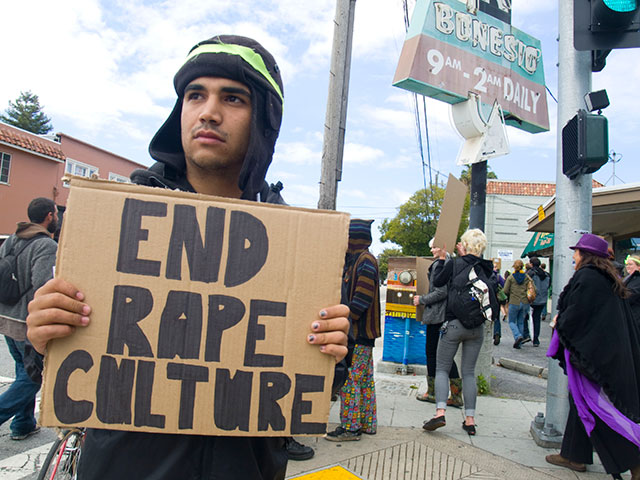
image is from here

                                               6 [x] Radical

A blogger recently wrote to me letting me know that my posts are sometimes rambling, without a central focus. I agree. It's how my mind works often enough and I don't have an editor. With on-going apologies, this is my home for my writings, and they' ll often appear here in rough form. I'd rather get my material out there to be honed another time, than not get it out there at all, which is exactly what happened for years. So, with some regret for the rambling posts that are, admittedly, hard to follow, here's the latest:

What happens when society and communities organise in the absence of radical feminist theory (and practice) on gender?

Answer: conservative and liberal agendas and perspectives flourish and any challenge to them is called hateful. 
Evidence follows...

As many radical people will tell you, our lives would have looked very different if we didn't come upon radical analysis and action designed to challenge society's ideological and institutional forces and moral and political imperatives. I had to question race and sex and gender in my life. To not do so would have been to betray every race-, sex-, and gender-oppressed person I know, including myself.

In white male supremacist societies I've been part of, there are two things that must be reinforced for the status quo to stay dominant: male supremacy and white supremacy. Without very intensive interrogation of and organised resistance to both those ideologies and forces, we are vulnerable to re-enacting them, recreating them, and reinforcing them.

The first criticism I get when I write things like that is this one: "Who are YOU to decide what RADICAL means??" Well, I'm not defining it for everyone. I'm defining it here, on my turf. You have to come here to find out my thoughts, and if you don't like 'em, you can easily steer clear of the place. Right? Yeah, you can.

I define "Radical" in many ways, not at all in keeping with how many whites and men do so. I'm not pro-Marxist, for example, and many white men define "radical" as "being a marxist". I'm not pro-Black Nationalism, because as I've understood it from Black feminist women, it's so masculist as to be anti-woman and anti-feminist too. But some Black men define "radical" as being Black Nationalist. To say I don't identify with those terms and political movements isn't to say I see no value in them. It is to say I also see where they are deeply problematic--meaning especially: heterosexist, gynocidal, or genocidal. I accept that the term "radical" isn't Absolute or ahistorical or transcultural in its meaning, but this doesn't mean it has no meaning or can be used to mean anything at all. The terms "gender radical" and "sex radical" are often used to describe actions which, to me, are anything but radical. They are usually liberal to conservative, as whites define and act out those terms.

I see most people using the term "radical" to mean "getting at the root problem". This means, often enough, not willing to settle for social change strategies that only trim branches, are only assimiliationist, and which refuse to dig out the difficult answers to difficult questions--such as "What is gender?" The radicals I know are the deepest thinkers I know, and are among the most smartest people I know--emotionally and intellectually, not "logistically" or "rationally", which some libertarians seem to think is the only kind of intelligence there is. That's masculist CRAP.

I understand "radicalism" in a context--the one I live in--which is white het male supremacist. This means I've got to interrogate what is white, het, and male supremacist in my views--constantly. Including when I try and come up with a definition of radical. I have defined it several times here, and one of those times is in this post *here*. Indigenism and feminism are the two spiritual-political philosophies that inform my work. As noted in that post, "radical" from an Indigenist point of view might look "conservative" to others. If we're seeking to conserve Indigenist ways of being and doing, we move radically outside the ways of the White Man.

What is unquestionably useful to me about radical feminism--which comes to me from women of all colors, not just white women. Too often I see whites claim the term "radical" as if it belongs only to them. That's fucking racist, to me, and I won't support a radicalism that is owned and occupied by whites who refuse to acknowledge their own white power, privilege, and entitlements.

Gender and sex are incredibly complicated social-personal phenomena. They are not set in stone; they are not uniform; they share many things across cultures but that doesn't mean we can just assume that "gender" is one thing only. Too many whites do this, in my experience. And far too many men.

Politically activist whites who won't interrogate whiteness, and politically activist men who won't address the political harm of manhood as it is constructed and enforced socially, don't get called "radical" by me. Nor do homophobes and lesbophobes. Nor do classists.

As someone who is Jewish, white, male, gay, intergender, asexual, class privileged, and disabled, I look at radicalism through all those lenses of experience.

And I don't assume that if I were Muslim, Black, transsexual, not asexual, poor, and not disabled that I'd hold exactly the same views. This means we'd better be in dialogue, attempting to and succeeding in hearing one another. I don't always do that. Lately especially. I'm often closed to hearing critique, if I'm getting a whole lot of it to the point that it all blurrs together, so individual voices of critique are not distinguishable to me. That's a private-internal experience--I don't always know when that's occurring until I'm in the thick of it. And lately I've found myself in conversations that are loaded with critique and I find myself checking out of them. I won't get into what I think is going on. I want to move on to the topic at hand: transsexuality, transgender experience, and this blogger's radical pro-feminist analysis of gender and sex.

Without that perspective, which has deepened and grown over the decades, I'd be VERY vulnerable to much more white het male conservative philosophies and political pressures to conform--which means to reinforce and enact white het male supremacy in my own life, including in my expressed ideas and feelings.

What radical feminism has done to my understandings of gender and sex cannot be underestimated. I am eternally grateful to all the women of all regions and colors who have been fighting in a very real war which men, by and large, deny exists--men's war against women. By and large, men want to pretend that, if anything, there's a war between the sexes, which neatly positions women on the same ground as men, as if men don't dominate women; as if men are not atop a social-economic-political-religious hierarchy.

Here's a theoretical hypothesis:
In the white het male supremacist West, where radical feminism is rejected, male supremacy thrives.  

Radical feminism is the antidote to male supremacy. It is the only political perspective designed to eradicate male supremacy branch and root: the only one. But that doesn't mean it is only one thing. It is an alive, diverse, and complex set of movements and practices. It shifts from culture to culture and time to time. But rooting out male supremacy is what it is designed to do. In a sense, it lives to do this.


To test this theoretcal hypothesis, I'd have to look at various communities and groups in the white West--which is where I'm located; I don't trust myself to examine societies I'm not part of without bringing into the analysis my own white, Western biases.

In this post, I'm going to very preliminarily and briefly look at three groups: white het men's activist beliefs, white gay men's activist beliefs, and white transgender and transexual activist beliefs. We ought also note how white supremacy and racism are embedded in the views and practices being examined.

1. White Het Activist Men's views and values. Most of these men belief they are fighting for justice, but myopically can only determine something to be "just" if it benefits white het men with class-privilege. The self-serving nature of this viewpoint and activism ought to be readily evident. The political programs put forth by MRAs are classist, racist, heterosexist, and misogynist. All you need to do to see this is to read the material put out by them. And visit their websites: they are loaded up with the most vile bigotry and inaccuracies about every group who isn't them; they're also not terribly insightful about their own group. WHM's activism to promote the agendas of white het men is in direct opposition to anti-racism work and pro-feminist work.

2. White gay men's activism has historically served--surprise!--white gay men, and not lesbian women of any color. White women may benefit some from the white supremacy in the political efforts, and men of color may benefit some from the male supremacy in the political efforts, but not on the deepest levels, in my view. So movements to get queers in the military and to get queer marriage in the US will necessarily mean supporting the racism and misogyny in the military and in marriage--deliberately or not. Marriage is a misogynist and racist and heterosexist institution. It is woefully naive to think that if a long-standing oppressive institution just lets in people who have been kept outside if, it will be radically transformed into one that is no longer racist, misogynistic, and heterosexist. This idea--that things change radically by allowing more people in, is liberal to the core. White gay men's political movements are racist and misogynistic. Any movement that marginalises groups of oppressed people isn't going to do much to liberate those people who are cast out or never let into leadership positions.

3. White "trans" realities--whether transsexual or transgender, have thrived at a time when radical feminism in the US was mostly dead. This means it is very likely to have a radical perspective on gender and sex. Unless it generates its own radicalism, which is entirely possible. When I see the most progressive perspectives put forth by trans activists, I don't see much that is other than conservative or liberal however. Even people who promote more progressive views, like Dean Spade, do not appear to me to hold a very radical view on gender as a structural, political reality that one is raised into despite what one feels about oneself.

This means that deep understandings of how gender works socially are not usually appreciated or respected, and the knowledge and analysis of radical feminists is either ignored or assumed to be anti-trans. It means that trans people (and conservative non-trans people) can promote an idea that we can or ought to be able to name ourselves when girls and women who are not trans, ESPECIALLY of color, have no such power or privilege or entitlement to do so. Too many women of color are told they are not women (or are not womanly) because they are not white. Women of color ought to be supported in claiming an identity as a woman. Dean Spade argues for eliminating gender-specific terms. How is that not misogynistic and racist?

Another point:
I've heard trans activists target radical lesbian feminists without similarly targeting white het men. Why would that be? Do radical feminists have more structural or any other kind of power than white het men? The two groups ought not be similarly targeted: one is oppressed and marginalised; the other is dominant and centrally located in society. I've also seen a lot of energy directed at trans people, on what are reportedly "radical" feminist blogs. The blogs are almost all white--to an alarming degree. The blogs do not demonstrate an analysis if whiteness. So I don't see them as radical.

When I think about a radical viewpoint, it isn't totalitarian in tone or absolute in assumption. It is not carved in stone but neither is it written in the sand. It has integrity, substance, and power. The power it has is to transform oppressive society into liberatory society.

If you scout around in the blogosphere, you'll be hard-pressed to find blogs that don't do one of two things: trash trans people or trash radical lesbian feminists. I reject both as hopelessly unconstructive.

I look to bloggers who are engaging with the issues before us, but not by positioning oneself as superior, more intelligent, or less bigoted than another.

One such blogger is dedgurl. She has a blog called The Vagina Conspiracy. You can find that blog linked to *here*. I encourage you to pay close attention to what she's saying there. The host is trans, a woman, a radical, and a feminist.

One argument put forth by some progressive trans activists is that because gender isn't biological, it ought not be assumed that all females are girls or women, and all males are boys or men. There's a lot that is flawed in such a perspective. One thing that's flawed about it is this: it assumes that by changing what we name each other, or what we identify as, that we are able to radically change our political location, or radically alter our structural position in society.

If I call myself trans, and I do, this doesn't stop me from occupying a social-structural space that is historically informed and currently bolstered by male power, privileges, and entitlements. For other people who were identified as male at birth, who were raised to be boys, who are identified in adulthood as men, the complex of power, privileges, and entitlement, along with places of marginalisation, discrimination, and unwelcomed acquisition of stigmas will be different.

But, in my case, while I don't personally choose to call myself a man--and never have been comfortable doing so--I won't call myself a woman. I don't believe we are one or the other only; I believe society makes us into one or the other to a large degree, but not absolutely.

To believe that people change their location completely by becoming an identity that is at another end of a politically enforced social hierarchy is, to me, to not understand how power, privilege, and entitlements work. These things don't disappear; even if they can be taken away or reduced to some degree. Coming out as gay, for example, well before I came out as intergender, did not bolster my male privileges. But it didn't take away the effects of being raised as a male. I still feel entitled to speak, entitled to be right, entitled to believe I know things I don't know jack shit about, entitled to answer questions based on thinking that if words leave my mouth, there's probably something correct about them.

There are tons of male privileges and entitlements I see in myself--coming out as gay didn't modify them appreciably although it did help ensure that I wouldn't have all the male privileges that white het men have.

I grew up being constructed to have the entitlements and privileges socially and psychically, and once located and learned, there they are. It is for me to be aware of them, to keep them in check, and to own and be responsible for when they show up socially; I do this, in part, by not forgetting where I am located structurally in society.

Another privilege, though, is to believe I don't have to be accountable for my actions. So while I see it as a radical profeminist value to be responsible, my male supremacist upbringing has another perspective on the matter. It often enough wants to tell anyone who disagrees with me to fuck off. Here's another set of privileges and entitlements: the practice of visually violating people. I have felt very entitled to do this. To objectify others if it pleased me to do so. To not be in struggle with that as an aggressive act of political-personal violation of other human beings. I have figured out how to not do it, and how to be responsibly non-violating when around other people. But it sure wasn't men (straight, bi, or gay) who encouraged me to take responsibility. Quite the opposite--men seek to protect one another's "right" (wrong) to violate people in any number of ways. To take possession of people, to acquire from them what we want and call it "ours". This shows up in some allegedly pro-trans medical and social practices. See the white middle class entirely unradical film, Red Without Blue for more. I've written about it in this past post, *here*.

If someone is raised poor and becomes rich, they don't become someone who was never poor. And being raised poor does shape a person to various degrees; it's safe to say it doesn't ever have no effect whatsoever on how one views oneself; it has a structural location so it comes with its own resources for some kinds of power and lack of resources for other kinds of power. Poor people are not made to feel superior to rich people, economically or socially, for example. And they are not welcomed in places that only serve rich people--unless they are the people doing the serving.

If someone is rich and becomes poor, they don't become someone who was always poor and never rich. I've heard class-privileged people declare themselves poor because they have no cash at the moment. This, to me, shows a lot of ignorance about what being poor (and rich) means. If they can call their parents to be wired some money to pay rent or get some food, they're not poor even when they are cashless. Why? Because they're not really cashless. Their social-economic network has reserves of cash. That's not the case with poor people. There's usually no rich uncle or mother to call for support.

I've heard whites declare themselves "not white" because they grew up in a neighborhood of color. This, to me, shows a really ignorant understanding of what it means to be white and of color.

I see people who were raised being identified as male, as boys, coming into identity as a woman and believing this means they are "only women". Why doesn't this mean we are "trans"? Why the rush to distance ourselves from who we are? Why isn't that insistence on being "a woman" or "a man" called "being transphobic"? Why is it presumed acceptable for M2F transsexual people to insist that we are exactly the same, structurally, positionally, in location, in privileges, in entitlements, in power--in all its forms, as people who were never identified as male? This appears to me to be a question most trans folks will not take up seriously. Instead, anyone who asks it is written off as transphobic. But it's a bit too important to just write off as coming from the minds of transphobes, isn't it?

One transsexual person once said to me, "Why are trans people the only group in queer culture to have to interrogate the meaning of who we are?!" My response is this: EVERY group in queer culture is required to interrogate who we are!" Lesbians are interrogated; gay males are interrogated; bi people are interrogated. And for you to not know that indicates you haven't been in queer cultures very long.

The same transsexual person who came here, once told me that patriarchy isn't real. They put forth classically liberal and conservative views and didn't understand how the immersion in those perspectives necessarily shapes one's own understanding of oneself.

I've had plenty of people tell me I'm transphobic, even while I argue for us embracing the term "trans" and not pretending we're not trans if we are. What's transphobic about that? The fact that I see gender as something that happens to someone from birth to death--and that it isn't entirely alterable by surgery or medical interventions? Where's the anti-trans bigotry in such a viewpoint?

This isn't to say I'm not transphobic. I'm racist, heterosexist, sexist, and transphobic. But that doesn't mean that everything that spills out of my mouth, or off my fingertips, is dripping with transphobia.

Another point:
I know plenty of non-trans people who use surgery and medical interventions--from cosmetic surgery to hormone replacement--to shore up their gender identities. I don't argue that non-trans people who don't have that done, if born being identified as a girl, are less a woman as an adult than those who have the procedures done.

But I am asked, by legal folks and doctors, as well as the corporate (racist, misogynist, heterosexist, classist) media, to identify M2F transsexual people as "more womanly" after they have surgery than before. If it's something one was since birth, how does someone become "more womanly" after surgery?

If trans people argue that we always were the gender we weren't assigned, what is that saying about "gender"? What does that mean "gender" is? Is asking for respectful, safe dialogue on this question "transphobic"? I welcome the argument that it necessarily is and that it can only ever be transphobic.

To me, if we're saying we were born into a body that has been assigned the wrong gender, that means it is an entirely psychological, internal experience. Gender happens to people. We are assigned a course in life--females are assigned a course that makes them more vulnerable to harassment, violation, discrimination, and degradation than males are. The process of being treated that way, for some radical feminists, is the process of acquiring a gender. One isn't born with one--it happens to us in social, structural, economic, cultural ways.

Some trans people who are not called "transphobic" argue it is also entirely biological, which ought to put them at odds with the trans people who argue gender isn't based on biology. Gender is a complex of things--"social", "structural", "political", and positional" are some of the things it is, from this radical profeminist's point of view. To deny this is to be anti-radical on gender, to me. It is also functionally male supremacist.

I don't hear, in the voices of trans people who have visited me here, any imperative to name and eradicate male supremacy from society. For those who are made to be women, and who know what that means, getting rid of male supremacy is rather important political work. How is someone arguing gender is not socially enforced on females raised as girls not anti-feminist?

Another point:
I've heard a Women's Health Center be critiqued for being transphobic for having the woman symbol (the same symbol as the one for Venus in astrology), used on the signage. Wow. Does anyone get how antifeminist it is to make it "transphobic" (meaning here: anti-trans woman) to identify as politically woman-centered?

image is from here
To me, this would be like telling gay men to stop using "pink" in our signage because it is sexist. Huh? This is like saying that African Americans using the term "Black" is racist. Huh?

Another point:
When did it get determined--and how, and in what political gestalt--that being transphobic is worse than being a misogynist or antifeminist? Across liberal white middle class blogs, I see people scrambling to make sure they can't or won't be seen and labeled as transphobic, and they're being racist, misogynistic, and antifeminist in the process. That should tell you a lot about the reality I hypothesized earlier: when social change movements occur in anti-radical feminist times, they are likely to promote male supremacy--white male supremacy in this society. I see so many liberal non-trans people being quick to own their "cis-gender" privilege without holding any radical analysis of that term at all. Why is that? Aren't they feminist any more? 

On cis-gender privilege:
This term needs some serious unpacking. Because most trans people have what is determined to be "cis-gender privilege" after all--they are not planning to have surgery; they do not significantly change their appearance across adulthood--any more than non-trans people do; they are not identifiable as "trans" according to the stereotypes and transphobic assumptions about what it means to be trans.

And many non-trans people don't have cis-gender privilege. Do you hear me telling you that the Emperor is wearing no clothes? Do you hear me identifying a white elephant in the room? I hope so.

So what does it mean?

I've interrogated this as well. See *here* for more. What it appears to mean requires us to stereotype in transphobic ways what it means to be trans. It often means passing through the social-medical world without having ones gender called into question, without being humiliated and violated by medical professionals asking really ridiculous questions about one's sexual, gendered self. Well, I hate to inform the white middle class trans folks out there promoting this idea of "cis-gender privilege" but many women of color who are not trans and who are not middle class have that experience. However we look at "cis-gender privilege" it doesn't hold together in any meaningful way at all, unless we stereotype trans AND non-trans people, believing they each have a very different (and stunningly unified) experience of genderedness. To come to that conclusion, I'd argue, is woefully transphobic.

I'll close by saying that I don't believe you can radically alter gender personally or socially while leaving male supremacy in place, unchallenged or only liberally challenged. In the opinion of this blogger, promoting and defending social and political programs in male-dominated, male-controlled society that aim to diversity gender without eradicating male supremacy and patriarchy, that refuse to name and attempt to halt all the normal and systemic violence which makes humans gendered into woman and man, is anti-radical and anti-woman, and transphobic in that it doesn't alleviate the violence done to trans people.

I'll leave it here. Comments that are not transphobic, anti-feminist, anti-lesbian, or anti-woman (as I define those terms) are welcome.

For more on a revolutionary, radical queer agenda, see *here*.


Tuesday, June 7, 2011

If you overhear discussion about a woman being stranger- or date-raped by a man, you probably should ask this...

"What was HE wearing?"

(And not "What was she wearing?")

What she was wearing is irrelevant to some man deciding he had the right and entitlement, as well as the power and will, to take something from her she wasn't offering and that he has no business trying to take in the first place. What he was wearing might lead to him being found and removed from the community.

photo is from here

Dan Savage Needs Some Asexual Education

photo of Dan Savage is from here

Gratefully, I've been led to a post by a radical feminist colleague. The Q and A on that post is already two and a half years old. It contains some of Dan Savage's sex advice.

Dan Savage is the very white, pro-mainstream, Liberal to Conservative Gay [Male] columnist who ought not be positioned as a spokesperson for the queer community, in my opinion.

You might know him as one of the  founding voices behind the It Gets Better Campaign (an anti-bullying effort and a supportive video series for queer youth). Every time I see the public service announcement on television, I'm struck with how few women are in it, and also how few people of color there are, regardless of gender. It makes it seem as though queer women of color don't matter as much to Dan as white gay boys.

What could possibly explain his strange attitudes about asexual folks? Let's have a look at what he says. You can read it for yourself, uninterrupted by me, *here*.

You can read it below, interrupted by me. I'll comment in brackets and bold. As you're about to see, Dan's positioning himself as an expert on sexuality. He's clearly no expert, however, on asexuality. He's downright ignorant and insulting, actually.

I'll address these remarks directly to Dan.

The post was titled as follows:

The truth about asexuality 

It’s just as confusing as all of the other ones.


Q Does asexuality actually exist? My partner's younger brother claims to be asexual, but I think he's just a maladjusted little shit and that he's intimidated by the thought of sex. Your thoughts? --The Sister-In-Law
A Asexuality must exist, TSIL, seeing as it has its own website---asexuality.org---where you can read this:
"Asexual people have the same emotional needs as anyone else, and like [those] in the sexual community we vary widely in how we fulfill those needs. Some asexual people are happier on their own, others are happiest with a group of close friends. Other asexual people have a desire to form more intimate romantic relationships, and will date and seek long-term partnerships. Asexual people are just as likely to date sexual people as we are to date each other."
[Correction: we're far more likely to date sexually active people because there are so few of us asexual-identified people to date! We also do have sex, sometimes, for many, many reasons. I'm asexual AND celibate, but that's not the case with all asexual people. I used to be sexually active, for example.]
I'll probably be accused of asexophobia 
[Or not--because it's a stupid term, unless you're fearful of "asexo".]
for suggesting that asexuals who date "sexual people" are obligated to disclose their asexuality, preferably on the first date and certainly no later than the third date.
[Thanks for that time frame, Dan. I'll make a point not to remember it. What makes you assume that all queer folks who date are lookin' to get laid? Or have sex? Do you really think people have to discuss a/sexual preferences and orientations by the third date? How's about people actually take more than three weeks to get to know one another? 

Or, how's about people who are not asexual let those of us who are asexual AND celibate know that they're dating us to get us into our pants, so we might have the information we need to decide if we want to pursue a closer connection? Would you please make sure that happens within the first three dates? We don't need to be led on, after all.]
Asexuals may have the same emotional needs as anyone else, but most of us sexuals---heterosexuals, homosexuals, bisexuals---expect to have our emotional and sexual needs met in our "intimate romantic relationships," thanks, and we're going to want to know if that's not in the cards before we get involved, not after.
[Most of you "sexuals"--het, bi, or neither--get your sexual needs met using pornography, Dan, while pretending no one gets harmed in that vicious industry. Come on now--surely you know that. Not 'in the cards' huh? (I'm going to assume you're speaking for yourself because I know you're not speaking for all gay, bi, and lesbian people--asexual or not.) Is dating all about getting YOUR needs met, then? I thought dating was about two people getting to know each other. Silly me. Isn't it one traditional process by which we determine who we want to get to know intimately--with or without sex?]
Someone who is incapable of meeting a sexual's needs has no business dating a sexual in the first place, if you ask me. At the very least, asexuality must be disclosed.
[Well, you might want to consider not dating then. Because life doesn't happen according to your rules and regulations for queer society. It might take those of us who are asexual at least three dates to determine how bigoted people like you are about asexuality. We may not want to come out until we have a sense of that. Of course if we've read this, we'd know before hand what sort of nonsense you believe about asexuals, and could avoid dating you altogether. What needs are you and your 'sexual' sexually active friends functionally or dysfunctionally attempting to get met by having sex, anyway? I'd say it's probably at least as important that we know about each other's abuse histories, regardless of whether or not sex is 'in the cards' and I don't imagine that's always going to happen within the first three dates for the sake of the more impatient sexually active person.]
And I'm still trying to wrap my head around this: "Figuring out how to flirt, to be intimate, or to be monogamous in nonsexual relationships can be challenging..."
Um...since monogamy is understood to mean sexual exclusivity---you don't fuck other people---I'm not sure how you define monogamy in a sexless relationship. Does your asexual partner promise not to not fuck other people?
["Monogamy" means "one mate", Dan. Not one sex partner, necessarily. It is sometimes used in our community to distinguish people from those who are polyamorous. And not all poly people have sex with everyone who is in their mate or friendship network. So how about if we define monogamy in terms related to its etymology. And let's not forget: many married couples--across sexual orientation--don't have sex with one another.]
As for your brother-in-law, TSIL, I don't see what his asexuality and/or hang-ups have to do with you. If you're prying into your BIL's sex life, I'd say he's not the only maladjusted little shit in the family.
[I agree that this really ought not be of any concern to her. I'm concerned about you using a term like "hang-ups" with the term "asexuality" as if they are synonymous. They're not. An example of a "hang-up" might be someone who isn't asexual thinking that asexuality is a hang-up.

Asexuality is not something to be dismissed or otherwise dissed. As someone who is asexual, I don't appreciate Dan Savage pretending he has a fucking clue. Or an afucking clue, as the case may be.

Those of us who are asexual are not easily pigeon-holed. We're not all celibate, for example. We don't all experience the world with no sexual feelings or desires for physical intimacy. If you want to find out what we feel and think, I recommend meeting and getting to know us with as few ignorant biases as possible. And please don't expect us to tell you what you need to know in the first three meetings.]
 

[Here are two of the comments that were posted on Dan's site:]

Comments


I would love to be asexual! Imagine how much better life would be, especially if you're a guy, if you don't have to worry about wanting and chasing tail all the time? You could focus on other more important and more productive things. You could still have close and loving relationships, you just wouldn't want to sleep with the other person. It usually just complicates things anyway.

For now, I'll just have to put up with being horny.
Posted by qpmzwonxeibcruv on September 20, 2009 at 8:31 PM |


Jesus Christ, K., get over yourself. You don't sound like you have an anti-feminist axe to grind or anything. So sorry *your* "widdle feelings" appear to be hurt by this complicated world we live in.

*I* don't care what term you use. Use the pseudo- or at-best-questionably-scientific term 'frigid' all you like, go with the cultural flow of forcing sexual minorities to reduce themselves to pathologies or "information" that you're not entitled to, be an asshole and refuse to consider anyone's identifications (while no doubt, holding strongly to your own, which we could just as easily dismantle). Just be prepared for the verbal [b-tch]-slap when you meet a person who considers themselves to be asexual (or who is a friend of such a person) and knows what they're talking about from experience.
[I hope you read that carefully and thoughtfully, Dan.]

Monday, June 6, 2011

Who Will Transgender and Transsexual Activists Support in Men's War Against Women?

image is from here
I've written a great deal on this subject but few people appear to want to engage with these issues. Here's my latest attempt to generate respectful conversation and coalition building. For background on my position and political/structural location, see *here*. For now, I'll inform you that I am what is frequently termed "male-bodied" since birth; I am white and gay and have many white male privileges but not some of the ones that white het men have; I am intergender and asexual. I don't see myself reflected in either dominant media or in queer media. I don't hear many of my issues being raised by conservative and liberal trans activists. So I'll start with that. This post isn't about how to make me more comfortable. It is about how to make the world safer for women and girls.

There is a globalised patriarchal war against women, perpetrated and protected most powerfully by men. Among these two socially gendered groups in white-supremacist North America is a third and fourth, self-identified as transgender and transsexual. The distinction between the two terms is blurry and is set in motion, not in stone. The first, I would argue, is inclusive of the second: transgender refers to individuals who experience ourselves as not fitting into the binary: woman and man. It generally means people who don't identify strictly either of these groups of grown-ups, using English-language terms which has its own significant cultural and linguistic limitations:

Group 1: people raised to be boys, identified usually as male when medically or physically examined, and who now identify as men in adulthood.

Group 2: people raised to be girls, identified usually as female when physically or physically examined, and who now do not identify as women in adulthood.

The issue of who names us male and female is a tricky one--enough of us are intersex in many ways to make such labeling spurious, invalidating, and oppressive. Why do we need to distinguish who is allegedly one of two sexes, at birth--or before? So we know what color clothes to buy? To project our own stereotypes and selfish wishes upon the child? To begin the process of socialising the newborn as a heterosexual girl or a straight boy? In my experience those are the primary reasons there's such an obsession with the "sex" of one's fetus or newborn. I say skip the balloons--there's enough latex and rubber allergies already. And mylar isn't recyclable.

I'd say social dominants would be better off not knowing and determining the "sex" of our children, as science defines the term, unless there is a compelling medical-health reason for doing so. But I wouldn't make this same prescriptive statement about non-dominant people. More on this in a bit.

The science and medical knowledge of sex is confusing, complicated, and sexist, usually leaving out two groups: intersex people and transsexual people. Those of us who are transgender and intergender do not fit the birth-bill either. But, as a radical intergender activist, I don't want anyone telling me what that is unless they are socially positioned to be oppressed by me, or unless they are also intergender. Who, among adults, is structured or located to be oppressed by me? All female people, all intersex people, and all women. That includes some transsexual and transgender people as well. I'd like to remind the reader, if you're not female, a woman, or transsexual or transgender, that many transgender people are not transsexual, and many transsexual people do not socially appear to be transsexual--at least in ways that many non-trans people assume that "looks like". Many of us are not gender non-conforming or genderqueer, for example. Many of us are not seeking or desiring surgery or other medical interventions. To watch dominant media, you'd think "transsexual and transgender" people are all surgery-bound M2F and F2M people. We're far more diverse in our understandings of self and goals at achieving greater personal and social well-being than that.

For the last year or so, I have been understanding "intergender" as one of many ways of being transgender, but there's an argument to be made that transgender people might be under the umbrella "intergender"--if we can identify non-transgender people who are not women or men. I'm an intergender person who doesn't identify as a man or a woman, who doesn't and won't claim I should be included in woman-only and womyn-only spaces, who respects woman- and womyn-only spaces, including social service, cultural, and political and educational institutions--the few that exist.

In my view, it is dangerously conservative and misogynistic for white transgender and transsexual people to seek the identities most enforced in heteropatriarchal societies--"woman" and "man', in English. I can understand anyone wanting to fit it and not call additional attention to oneself, for all kinds of reasons. Assimiliation is one of many strategies for increasing opportunities for safety and survival. But while I can appreciate the need for it, I won't promote it as a radical approach across the board. Because in witnessing the conflicts that have emerged in the last twenty years, it appears to me that social change to radically transform the gender binary is not the goal of many white transsexual or transgender people; only seeking liberal forms of assimiliation and accommodation is.

Sex and gender are culturally and regionally relative and overlapping binaries in most places on Earth. Across the globe sex (and in some places, gender) is also also a means of maintaining a political hierarchy, a system of male supremacy and male privilege in which girls and women, and everyone else determined not to be a man, is oppressed structurally by men, and sometimes also by women. Those oppressed by women are lesbians, by het women, who endure interpersonal, cultural, and institutional abuse from het women, het men, and non-het men such as gay and bi men. Whites and the wealthy people--women and men, in many such systems--oppress women who are not white or who are poor and working class.

A few white-majority but not white-only situations have arisen in North America which highlight tensions and political struggles with regard to women and trans-identities. Social and cultural privileges, powers, and entitlements inhere in the identities that we are collectively assigned and seen to be--regardless of what we are. Other sets of privileges, powers, and entitlements come to those of us who adhere to socially compulsory and mandatory identities, regardless of how we experience ourselves.

At issue here, in this post: do people who were raised male, as boys, intentionally and deliberately retain their privileges and entitlements to name themselves, rather than be named by others? Do males or formerly labeled male people have the power to re-name themselves as women, and proceed to assimilate into spaces populated by women-only? Historically and currently, most woman-only spaces have been either controlled and mandated, or invaded and otherwise threatened by men. Is it reasonable to assume that another population of gendered activists might be regarded and experienced as unfriendly and unsafe by women? I'd say "Yes". Unequivocally, yes.

My experience is that this gendered group has an increasing number of allies in liberal and conservative queer communities, organisations, and institutions. And that those communities are anti-radical and anti-feminist. What I mean is that they are unapologetically misogynistic and antifeminist, as well as pro-patriarchal and anti-revolutionary. Many liberal and conservative activists and allies have some or a ton of male privileges and entitlements--usually unowned. In this respect, trans people and allies are just like men: patriarchal power over women is denied or minimised. Or worse: women are seen as the most oppressive gender.

I'd argue that when we discuss such things, we must, at the start, always acknowledge that we are living during a wartime. Not only a US and NATO war against Central Asia, but also a much older war, dating back before the genocidal slaughter (on-going) of Indigenous North Americans. I hear very little to no discussion among trans activists about the need to challenge and eradicate a very domineering and deadly Western Civilisation including US Empire. These malignant forces are increasingly globalised and infectious, carrying with them Christian patriarchal, white supremacist, and corporate capitalist values, institutions, assumptions, rituals, attitudes, and practices.

Those forces are designed to encourage and accommodate anyone who oppresses women. It is a system both of normalised and of extremist misogyny: of discrimination, violation, objectification, exploitation, degradation, destatusing, stigmatising, domination, and terrorism of all female and feminised people, who do not have the privilege and power and entitlement to name ourselves and have those names resonate accurately and be respected in the minds, actions, and institutions ruled by social dominants.Needless to say, transsexual and transgender people are not located so securely as either women or men. To white and otherwise privileged trans people: I'd argue we ought not seek assimiliation. I'd argue we ought to make social space for trans people, and not insist that we are 'either women or men'. Some of us are neither, after all.

In the last forty years, only one activist group--a very diverse and necessarily anarchistic one--has organised with the expressed political purpose of radically transforming this male-dominated, man-worshipping society. That group is radical feminists. I support their efforts to get patriarchy, pro-patriarchal activists, and their allies and apologists off women's backs.

In my experience, liberal feminists are usually organised to modify heteropatriarchy in various ways; and many modifications are needed to assist people in living in patriarchy with less unattended and unacknowledged misogynist and sexist harm. In the 1970s, for a time, it appeared that radicals and liberals might work together and in complimentary ways to achieve various goals. I don't see that happening any more, primarily because liberalism has bonded with conservatism, betraying and ostracising radicals in the process.

This has meant some very significant things for many non-dominant groups and cultures in North America. For one, it has meant that the emergence of transsexual and transgender issues and people has not occurred in an environment where radical feminism is thriving. Due to this, far too many liberal and conservative values and practices have taken hold in these communities, and in the minds of us who identify this way.

Dean Spade, a white progressive trans activist, defaults into liberal political perspectives when calling on society to use gender-neutral terms. (See *here* for more on that.) I appreciate his perspective very much. I have great respect for his work. But I see some of what is promoted there as a way to move forward as dangerous to women's effort to accomplish liberation. Efforts to pretend we don't live in a world of women and men further denies women, particularly and especially women without race privileges and power, the already comprised right and power to define themselves as they wish, including redefining what it means to be a woman as racist heteropatriarchal men oppressively define that term. Men terroristically enforce the parameters of that definition by violating women's bodies and visiting unending violence against women and girls. Again, this reality ought not be forgotten when we discuss and work for social justice.

This message might well be a broken CD, but more mutually respectful dialogue and discussion, as well as alliance-building and coalition work is needed, as we hopefully all work to radically transform a deeply racist, classist, and heteropatriarchal Western Civilisation. As you read what follows, ask yourself what the values and practices are that Tim Chevalier and Wellesley College officials are promoting. How do each support or undermine women's resistance to patriarchal atrocity? I'm not making a case that trans-identified people must be pro-feminist and supportive of radical activism as many feminists--of all colors and classes--define that term. I'm arguing for effective radical activism to thrive, it would be good for conservatives and liberals--trans or not--to support radical feminist projects, not harshly critique and otherwise attempt to subvert them.

What follows is from  AlterNet / By Cortney Harding

Please click on the title below to link back to the source website.
Tim Chevalier was told by his alma mater that he would not be allowed to interview prospective students because his male identity would be a distraction.
All Wellesley alum Tim Chevalier wanted to do was help interview prospective students for his school. What he ended up doing was sparking a debate about transgendered graduates and the meaning of single-sex education.

When an email went out from the Oregon Wellesley Club last year seeking alums of the women's school to help interview prospective students, Chevalier expressed his interest. After a few exchanges with the local alumnae coordinator, Chevalier, then a graduate student at Portland State University, set up a coffee meeting and gave the coordinator a heads-up: although he had used female pronouns and a traditionally female name while attending Wellesley, he had since transitioned and is now male.

What followed could be called as a comedy of errors, if the emotional stakes weren’t so high. In a series of blog posts from the fall of 2010, Chevalier wrote that he met with the school's coordinator, who informed Chevalier that he would not be allowed by the admissions office to do any one-on-one interviews, because of his transgendered status, though he would be welcome to participate in other alumnae events.
However, the meeting was followed by a phone call from Wellesley’s assistant director of admissions, who told Chevalier that there in fact was no policy against trans alums doing recruiting, and he would be allowed to conduct one-on-one interviews after all.

But then there was another about-face from the school: in January, the director of admissions told Chevalier, once and for all, that he would not be allowed to conduct interviews, stating that the focus of such interviews should be on students, and that Chevalier’s male identity would be a distraction.

An email to the Wellesley College Office of Public Affairs seeking comment was not returned; however, in a post to the internal Wellesley Official Announcements bulletin board, which was forwarded to Chevalier, the Dean of Admissions and Financial Aid  wrote that he wanted “to offer some clarification in response to the discussion regarding a decision by the Admission Office not to allow a transgendered male alum to serve as an interviewer. The decision in this case was influenced by our tradition of having women serve as alumnae interviewers. The question raised in this discussion is whether this decision was based on a policy of not permitting transgendered alums to interview prospective students. The answer is: no, because no such policy exists.” Later, the dean followed up: “An important component of the admission interview is that a prospective student leaves with a clear understanding of the value of attending a women’s college. One thing we do insist on is that the interviewer strongly support and articulate the College’s commitment to being a women’s college.”

Chevalier argues that if he were to appear as the public face of the college, even in a limited capacity, it would draw positive attention to other male students and alums of Wellesley. “I know there are quite a few Wellelsey alums that have transitioned,” he told AlterNet. “There are two others in my class, and I’ve heard that between three and twelve trans students are currently attending Wellesley.”

How has Wellesly treated its transgendered students and alums in the past? A 2008 trans alum, Warren Kunce, was featured in a positive article in the college’s alumnae magazine, and other trans students at Wellelsley were included in a 2008 New York Times article, “When Girls Will Be Boys,” about trans students at women’s colleges. Bathrooms in many of the dorms are now classified as “Wellesley” and “non-Wellesley,” rather than “women’s,” “men’s,” or “co-ed.”

Elsewhere, the issue of trans students at women’s colleges remains a hot-button topic. Around the same time Chevalier started blogging about his experience, a transgendered Smith junior named Jake Pecht requested to be part of the college recruiting process by hosting a prospective student in his dorm. According to an essay he wrote for the Smith college paper, Pecht works as a campus guide for the admissions office but was not allowed by the office to let a prospective student stay in his dorm. He writes that he would have emailed prospective students and told them he was male and offered to find them alternate lodging if they were uncomfortable, but the admissions office refused to budge. According to the school paper, the issue has yet to be resolved, though a petition has gathered over 1,200 signatures, and many students are calling for a dialogue around the matter.

Smith’s official policy states that “Once admitted, any student who completes the college’s graduation requirements will be awarded a degree” – presumably meaning that if a student chooses to transition after starting school, and completes the necessary coursework, he or she would be allowed to remain enrolled at the school. An article about Chevalier in the Wellelsey News quoted a student who enrolled at the college in 2002, left after a year, transitioned to male, and then returned to finish his degree in 2008. He is scheduled to graduate this year.

Males are not an uncommon presence at many women’s colleges. Wellesley participates in a college exchange program with MIT that allows both male and female MIT students to enroll in classes at Wellesley (and vice versa) and has admitted male students as part of short-term, twelve-college exchange program. Women’s college campuses are certainly nothing like the Michigan Womyn’s Music Festival -- a music festival that admits only “womyn-born womyn,” and operates a seperate “Camp Trans” for attendees who are not “womyn-born womyn”). Rather, men teach, work, and spend time on women’s college campuses on a regular basis.

Much like the Michigan Womyn’s Music Festival has become a hotbed of debate about the “womyn-born womyn-only” admissions process, Chevelier says he sees the same thing happening at Wellesley. “I don’t know why a young person who transitioned to being male would want to attend a women’s college,” he told AlterNet, “but I could easily imagine a situation where a young person who transitioned to being female would apply to Wellesley.”

The college does not require students to undergo any sort of physical examination when applying to or enrolling at Wellesley, but Chevalier says he fears that a slippery slope of anti-trans attitudes might lead to “panty checks.”

On his blog, Chevalier quoted a Wellelsey student who stated, wrongly, that “All Wellesley students, to the best of my knowledge, are biologically female at the time of admission.” He pointed out the obvious flaws in this logic; namely, that “biologically female” is a transphobic term, and without invasive exams prior to admission, there is no way to tell whether a student has a certain chromosomal makeup.

Chevalier says that he’s not “asking for any change in college policy. I'm asking for honesty about the de facto policy that already exists, a policy that involves admitting men. And to me, honesty about that policy can't mean that the administration accepts the academic, social, spiritual, and financial contributions of male and genderqueer students while telling the general public that it's ashamed of them.”

Whether Chevalier gets that level of honesty -- or even merely clarity about the admission office’s rules -- remains to be seen. But there is no doubt that this incident has touched off yet another debate about what being a “women’s college” really means.
Cortney Harding is a former editor and reporter at Billboard Magazine and currently a freelance writer based in Brooklyn, New York.


An Open Letter to Leslie Cannold @ The Age about the Rape-and-Tape Industry (Pornography)

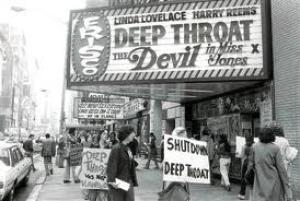
photograph chronicling the early years of anti-pornography activism is from here

Hi Leslie Cannold,

I've known many women across my life who have been negatively effected by pornography both inside and outside the industry. I found your comments about pornography startling in some regards. I'll note what was surprising or problematic for me below. You ask what motivates people: fear or hope? I'd first like to say that there are more choices than that. Hatred motivates some people. Desire to acquire power or to acquire more power--as they define it--motivates lots of people. So too does the desire to survive another day or night. Other motivators in my experience are selfishness, addiction, loneliness, desperation, need, compulsion, obsession, desire to not feel certain feelings, to not feel pain, and to not feel disconnected or isolated or alone.

As you probably know, most women in the pornography industry got there out of a need to survive, and to not be alone. A good friend of mine was taken off the street by a male pimp when she was fourteen. He seasoned her to be available to strange, much older men for sex--she was at least as young as many of the procurers' daughters. She was still on the street part of the time--working, but at least had a place to rest occasionally.

Her story would be "an anecdote" were it not for the fact that her age at the point of becoming a prostitute is the average one. This means that half the women in prostitution are fourteen or older when they start, and half the girls are fourteen or younger. Half. Do you want us to focus only on those fourteen and older in order to get us to feel more hope? Or ought we contend with the harsh reality of the fourteen and younger population no matter what it leads us to feel--even despair? I'll take the despair and the hope--and the fear--that comes from consciousness. The denial your article supports actually makes me feel far more hopeless than the facts Gail Dines brings to the public for consideration. I find activism inspiring, and efforts to shut down appropriate activism really disheartening.

Trafficking of girls as sex slaves and sexxx-things for consumers is globalised. Millions of girls are trafficked daily, as I hope you know. Every girl--a person with a future collapsed into getting through one more day--is made to endure some form of sexual abuse, or to withstand another rape, several times a day or night. To say the conditions are abysmal wouldn't be inaccurate.

This is the primary population of people who comprise the performers in pornography. And by pornography I mean the corporately produced material that is published by pimps for mass consumption that earns billions of dollars annually for those already rich-enough pimps. (I'm not talking, at all, about some heterosexual or gay or lesbian couple's sex tape, or individuals who have a web cam and decide to earn money letting people see into their bedroom as they masturbate or have sex with someone else. That stuff, quite honestly, isn't my concern. If people genuinely want to do that, then they will and they should. Nothing in my own political practice or that of any anti-pornography feminists I know will have any effect on their ability to earn money or to try and get other needs met that by performing sex in those ways. This is also to say, there's nothing the anti-pornography feminists are doing that will take away or "ban" any of your pornography of that of any else. Gail Dines opposes all efforts to ban porn: you didn't make that explicitly clear in your article.)

The primary population of girls and women who are raped and otherwise sexually assaulted as a requisite way of getting them into the industry, or to keep them there, means there's nothing only-anecdotal about the experience--it is common, usual, ordinary, and entirely status quo. (I accept that a few, more privileged women in the world "freely choose" to be in pornography, although when women are paid as much to do everything else, I'll find the words "free" and "choose" to be more socially and economically meaningful.)

Girls and women are being raped multiple times a day and some of them are photographed or videotaped and some of those images and films are sold. This is accepted, defended, protected, and accommodated in every country in which it is happening: the trafficking of girls is accepted, defended, and protected; the prostitution is accepted, defended, and protected; visually recording rape is accepted, defended, and protected. For most women--for most of us--to do it for any length of time, opiate and other categories of addictive drugs are usually needed. That's the norm, not the exception. It's easier to go after messengers of that unpleasant news than to really emotionally comprehend what that feels like.

So we have a large group of girls and women, many drug-addicted so they're not in the most empowered or liberated frame of mind, who have been raped countless times--dozens, at least; more likely hundreds. Do you really mean to pretend that there's no normalised harm in that industry? If so, I'd say that's a stunningly callous and pro-status quo position to hold.

Throughout your article, you phrase and frame the issue as if it is one of ideas only--with no rapes happening anywhere at all to the girls and women in the industry who are being photographed and videotaped while drugged. Do you honestly believe most of those performers are not experiencing routine sexual harassment and sexual abuse? If you do, please see The Price of Pleasure. You can find it free, online. (Note: I'm linking you to images that are pornographic, not trying to censor them.)

I would argue, based on the knowledge of pornography and pornographers you show in your article, that you're living an unusually advantaged life relative to most women on Earth. One kind of advantage is having the option to be unaware of the atrocities going on around the world in places you do not socialise or live.

I had some contacts in Tokyo after the earthquake hit earlier this year. Had I not, I wouldn't have known what was really going on there. The US media was not reporting most of what was happening that was terrifying--long after the tsunami destroyed so many people and so many other people's livelihoods and homes. I had to have those connections to know. (It's still a nuclear nightmare.) But being a US citizen, I wasn't required to have those connections. This is how it is with most atrocity that isn't happening to you or me, of course. Those of us who can afford to not know, generally won't take the time--or don't have the time--to find out.

If you were a girl in many cities across North America, in Europe, and in Asia, you would be far more likely not be able to not know what I've written above. You might find ways to block it, blunt it, or dissociate from it, but not knowing a thing about it would be exceptional to impossible.

Your article contains a few statements that skip over the atrocities I've identified above as socially existent and significantly and traumatically affecting the lives of millions and millions of female human beings--and plenty of male human beings too.

I'll excerpt a few below from your recent article for The Age.
Dines used her many festival and media platforms to contend that pornography degraded women. It did this by modelling Brazilian waxes and depicting women enjoying anal sex and men ejaculating on their faces. 
Have you seen a great deal of the pornography--the stuff produced by millionaire pimps? It appears from this statement you have not. Again, I hope you see The Price of Pleasure.
Dines asserted without evidence that boys as young as 11 were viewing this material, which she said was not only more violent than Playboy or Hustler but also apparently the snuff films of the 1980s that so outraged her hero, the American radical feminist Andrea Dworkin. 
Surely you're kidding. (Aren't you?) You don't actually think most eleven year-old boys with access to computers have never sought out images from that rape-and-tape industry? Do you seriously doubt that most eleven year-old boys have seen internet pornography that we used to call "hard core", and plenty of images depicting more degrading violence against women than that?

And surely you're kidding when you imply that today's pornography, overall, isn't any different than that from the 1970s. You don't see images ubiquitously on the internet that are more violent than Playboy and Hustler? You must not be looking. As I recall, those paper magazines were violent in many ways that people didn't readily see as such. Hiding the worst of what's done is standard practice for all major corporations. Why would the pornography industry be an exception to this rule? For example, with its own abuses, the pharmaceutical industry does a great deal of harm to animals, people, and the environment, but not in full-frontal view of those of us who purchase or are prescribed their allegedly safe drugs. To say any significant industry hasn't changed much in the last thirty to forty years is to not know much about what has and is going on there.
The minds of young Aussie boys would be deformed by this stuff, Dines conjectured, leading to a future filled with sexual assault, paedophilia and all forms of "economic, political, and legal discrimination" against women.
The minds of anyone who consumes anything at all--from sugar and sugar-substitutes, to McDonalds fast food,  to cocaine, to cell phones, to the exhaust from fossil fuel-burning cars, to pornography to television commercials will have their minds affected--that's the reason those things can be marketed and sold at all: surely you don't think they exist to actually meet our deepest needs or for our health. Or do you?
Dines's claims are vulnerable on almost every level.
They'd be more vulnerable if they were, in fact, just claims. But, as several commenters have noted at the article's website, her facts are backed by very solid research. That other researchers--often those hired by pimps--come up with other results that makes the industry seem not-so-bad, surprises me not at all: tobacco industry researches told us cigarettes were harmless for decades after they knew they were both addictive and damaging to our health.

So I'd argue Dines' assertions of fact are not vulnerable on the level of reality, if one cares enough to know what is happening there. Again, you'd have to be willing to leave the comforts of a middle class life to really find out. The pornography industry is many things: 'pretty' isn't one of them. Here's the first portion of what each of the two filmmakers of The Price of Pleasure--a woman and a man--have to say on beginning the journey into that largely hidden world:
Having grown up in Taiwan, I did not see my first porn film until I was thirty years old, when I came to the U.S. as a graduate student in Boston in 1990.
Contrary to many women being pushed to watch porn by their boyfriends, I had a shy partner who never had the courage to rent a porn video. The few times that I reached for the top shelf at the Video Smith in Brookline to grab a porn video, I had to endure the torturous journey – ignoring other men peering at me out of the corner of their eyes while I was cruising through this off limits section, holding the extra large video box with vivid pictures for everyone to see while I stood in a long check-out line, and then waiting for the clerk to slowly take the video out of its box and put it in a black box which everyone knew was for porn anyway. Although this journey made me descend from a respectable to a fallen woman, there was something thrilling and daring because I was against the constraints set by both Chinese and American patriarchy that disapproved of women's consumption of porn. I figured, if not being allowed to watch porn was part of the sexual repression, then rebelling against it must be liberating and even feminist. -- Producer, Director & Writer: Dr. Chyng Sun
When I began working on The Price of Pleasure over 4 years ago, I expected, more than anything, to learn the process of filmmaking. That the film’s topic was to be pornography was, at the time, of a secondary consideration. I had what can be considered conventional liberal beliefs about pornography and the contemporary pornography industry – pornography was free speech; pornography represented a liberatory sexuality, intervening in the repressive moral codes of religion, conservatism, and infantilizing protectionism; that pornography was a “free” choice, made by both consumers and performers who made their living by engaging in sex onscreen; and I had also assumed that the majority of the pornography out there looked very much the like the pornography I had experienced as an adolescent, or saw at bachelor parties during my career in investment banking – mostly “conventional” sexual practices, with a nominal degree of mutuality. -- Co-writer and Associate Producer: Robert Wosnitzer
They don't sound like fascistic anti-free speech people to you, do they? Their film is more speech on this subject, not less--isn't it?

You go on:
She confuses evidence with anecdote (talk of "my students" is the latter) and correlation with causation
Is someone referencing the experiences of people they know unethical to you? As commenters below your article remark, what backs up your arguments, besides anecdotes and possibly some well-funded research paid for by pimps to produce the outcomes that put them in the least criminal light? You offer nothing to bolster your speculations and distortions.
(does horrible violent porn turn healthy men into rapists or do rapists watch horrible violent porn?).
It might work for you to pose ridiculous-sounding questions as a strategy to discredit an expert speaker on a subject. I'll have a go at it:

Do cigarettes always turn smokers into lung-cancer patients who die an early wretched death? The answer is no. But the answer is also that cigarettes do substantively contribute, as one factor among others, to the normal maintenance of significant and grievous harm--people do lose their lives, and many lives are cut short. Many of us grieve our lost relatives or loved ones who died of smoking-related illness and disease. Someone arguing your points on this matter would come across like a shill for the tobacco industry. Do you intend to do that for the rapist pimps?

You also wrote:
She also wasn't averse to mischief


This is not to mention the irrationality of her basic proposition. Rape and misogyny pre-date hard-core internet porn by thousands of years. How then was turning off the tap of internet porn going to solve the problem?
Rape and other sexual violence against women pre-existing pornography doesn't mean pornography isn't tied to rape, Leslie. Your argument, put in other terms, might go like this: massive human suffering and death caused by plagues pre-dates the AIDS crisis by thousands of years. How then would curing AIDS stop suffering and death caused by disease? Do you get what's truly cynical, callous, and flawed, about the argument?

Unfortunately, it will probably work for most readers for you to use these words: contend, asserted, conjectured, claims, mischief, irrationality, to categorise and dismiss the work of a long-time human rights activist, professor, and writer. Regardless, I think it fair and reasonable to assume that she knows far more about the pornography industry and exactly how it is implicated in harm to human beings than do most people--except those who have worked in it and survived it. If you think Gail has never bothered to speak with many women who are in or have survived and gotten out of the rape-to-tape industry, you'd be just plain wrong. I say "survived it" because I'm not willing to make atrocity disappear; that seems like something Germans-in-denial wished to do during the era of Nazi rule. As a Jew, I object to that sort of evasion of difficult or inconvenient truths. And if the mass rape of girls isn't enough of enough of an atrocity to you, I'm worried about your conscience and your heart.

You continued:
But the big difficulty with the Dines approach is its cultivation of fear over hope. From the moment Dines set foot in Australia, she was beating the panic drum. Panic about the internet, about the developing sexuality of adolescent boys and the inevitable victimisation of poor, vulnerable girls. Don't forget about rape and sexual violence, girls, she seemed to be saying, or the complexity of pre-marital sex! Don't get too confident, or careless with your trust or your movements, the world is still a terrifying place. 
If we correct your misstatements and inaccuracies, and simply deal with the facts of the matter,  we are left with this question: what is the appropriate level of disregard and denial when confronted with news that is disturbing and upsetting because it involves actual human beings being treated inhumanely? Should we work hard to repress our anger about rape and gross sexual exploitation of girls and women--and boys and men and transgender and intersex people too? Should we try and shore up our false sense of security and delusions that the status quo works by not harming millions of people in dreadful ways?

If you are a white Australian citizen, I'm hoping you know about the genocide in your country, and the anti-Indigenous genocide in the US as well. Or do you think that because dominant media won't cover these atrocities, they aren't happening? Shall we feel hope in the face of mass denial and the corporate maintenance of delusion? Is disrupting the relative peace of the privileged, perhaps even to the point of generating some fear in those masses--or outrage, compassion, or a consciousness with which to do then work with others to effect social change--really something that is unwanted and unwelcomed by you?
I see it differently. When I look at the sexuality and values of young people, I feel hopeful of a increasingly gender egalitarian world. I read the studies and see the young men who populate my own world and feel confident that growing numbers of men understand the difference between healthy lust and sexual violence, accept their duty to share the work of home and children and respect women's rights.
Which world is that, Leslie? What part of the big, challenging world is that happening in? To whatever extent it is happening, great. But that doesn't mean that's all that's happening, does it? I mean if we have some promising research in cancer cures, does that mean chemical pollution of our bodies stops causing cancer, globally--at alarming rates?

Things can be (and are) truly awful--increasingly so for millions of people who are far less advantaged than you and me. These are the people who, so far, don't seem to be real to you. If you did, would you relate to, befriend, and believe them?
Yes, nasty porn is nasty and I'd certainly advise against watching it.
Once again you and Gail see things differently: Gail actually thinks we should be watching it--to know what it's trying to tell us about ourselves, our sexuality, and our society. So once again you're making stuff up and pretending it's a position Gail Dines takes. She doesn't. So why do you feel the need to lie? Why not just argue with the facts she describes? Are they too threatening to deal with? 
When it comes to sex, and all areas of life, I'd urge young women who don't want to do something to learn to say no. For a saner take on this issue Google Cindy Gallop's Make Love Not Porn TED video.
To learn to say no? So you want girls to say no to their fathers or step-fathers who rape them, who then grow up and have many problems with boundaries due to being told, incorrectly, that they are worthless or only exist to sexually please men? Do you want drug-addicted women living on the street, picked up by pimps, to say "no" and remain on the street--and to just say no to drugs too? Do you want the Indigenous, Black, Brown, and Asian girls and women who are enduring misogyny and racism to do what you're able to do because you're so advantaged? That's a callous and utterly compassionless thing to suggest to people, I'd say.

For the record, I like the Make Love, Not Porn website very much. And, it doesn't exist to help the privileged masses come to terms with the atrocities happening to girls and women around the world.
Yes, violence against women still happens and must be stopped but violence is not caused by porn.
How, Leslie, must it be stopped? I mean honestly and sincerely: how? Because it's very easy for liberal-minded white people to say things like "racism is bad" and "misogyny must end" without ever following that up with (or, even, promoting and supporting) decades of sustained activism actually working to achieve it. Someone once told me the definition of liberalism is that its practitioners make promises they have no intention of keeping. What are you, in your life, doing to stop the violence women and girls endure for being female not male, including in the pornography industry? Is attempting to discredit someone (who actually has been working to lessen racism and misogyny by showing it to people in such a way that they can't deny it's prevalence in our society, for decades) the best you can do?

Julian Real

Sunday, June 5, 2011

The WHM Supremacist Christian-controlled Press, Islamophobia, and Misogyny: the Reporting of the Murder of Katya Koran

image is from here
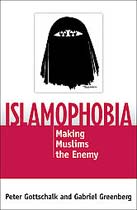
It's strange to me that a book about Islamophobia would have this cover. Islamophobia is a xenophobic Western phenomenon that includes the stereotyping, persecuting, and mass murder of Muslim women and men, particularly but not only in or from Central Asia. Are we supposed to be sure we view this bigotry and violence towards followers of Islam as something aimed primarily at women? Is "the covered woman" supposed to adequately represent Islam? Usually men who abuse women want to pretend the "real" harmed ones are all male. That's why the cover is strange to me--not because Muslim women are spared abuse from Muslim men, Christian men, Jewish men, and women who are not Muslim; they are not spared. 

For whom do women publicly represent the members of a Ibrahimic/Abrahamic religion? When white Christians write about Christianity, do they assume an image of a female on the cover will suffice?

image is from here
Apparently not. Here we have a cover showing a dark--get it? DARK, as in black, as in NOT WHITE--hand hovering behind "the" cross. That cross was one Roman soldiers killed hundreds or more Jews on. That it has become a symbol of something non-Jewish is already strange enough. But we can notice no women on the cover; in fact, we have two men--maybe gay, so maybe too feminine--too much like het men imagine het women to be? On this book cover, women are only represented symbolically in the lower right--and it's appears to me to represent the allegedly topsy-turvy morals of lesbians--because of course the morals of het white Christian het men haven't been tumbling around at all. (Cough.)

From the website promoting this vile book:
Gay apologists continually claim that there is an unreported epidemic of hate crime against members of their community. The author tackles this contention head on by analyzing statistics from various police departments and by examining just how law enforcement concludes whether or not a particular incident qualifies as a hate crime. His critique simply blows away the assertion that homosexuals qualify as a persecuted minority in Canadian society. He also exposes that the way the police delimit such crime is seriously flawed, at least in part because of their dependence on the testimony of the “victim.”
In the closing portion of his book, Emmanuel explores the term “Christophobia” and how it has informed his views on hate crime legislation. He concludes that while there are a number of factors driving legislation of this kind, one of the most basic factors is a “thoughtless and irrational reaction to Christians, Christianity and Christian teaching.” He points out that the moral absolutism of Christianity is totally at odds with moral relativism, the reigning philosophy of our age. His implicit conclusion is that people with an animus toward Christian absolutist values exhibit such hostility precisely because their moral relativism brings them into conflict with eternal Christian values. On a personal note, one could wish that Emmanuel had done a more thorough job of developing his assertions for “Christophobia” as being a key factor behind hate speech legislation, given that he chose to use the term in the title of his book.
In an interesting chapter entitled, “Stop Being Defensive,” the author takes careful aim at the common practice among Christians of issuing disclaimers whenever they critique homosexuality. Emmanuel does not approve, for instance, of disavowing hatred by saying, “While I may not morally agree with the homosexual lifestyle, I certainly do not hate them as persons.” He maintains that such “defensiveness” is unnecessary, plays into the hands of the other side, is a concession to political correctness, and is not helpful in advancing our cause in the culture war. While I endorse strongly most everything in this excellent book, I must confess that I see this point of view as misguided. Simply put, we must deal with the reality that gays and lesbians have succeeded in convincing the population that they are victims of ongoing hatred. It’s not true, of course, but perception is just as important as reality. Millions of moderate people who are not on one side or the other of this question must hear Christians renounce hatred for homosexual people. In the present cultural and political context, silence on this point simply gives fodder for gay apologists to use against us. [source: *here*]
As should be clear to most everyone, there is a direct relationship between the persecution of lesbians and gay men and the persecution, discrimination against, and domination of women generally, by men. While the debate above appears to be concerned with Christian het men vs. "homosexuals", we might take a moment to remind ourselves that Christian white het men are committing atrocities against the following groups of people: Christian white het women; Jewish and Muslim het women; lesbians of all religions and ethnicities; Jewish, Muslim, and Christian Black and Brown men; women of color of all sexualities; and Indigenous people across gender. That's quite a list to be targeted--all without the Western dominant press seeming to notice. Certainly without the corporate media posting notice to beware of this group of politically active extremists and terrorist.
 
White Male Supremacist Media cannot accurately report on the politically motivated death of a woman or girl, at the hands of one man or boy, or many men or boys,  unless the politics involved are connected to some demonised group of men, such as Islamic men. Because if non-Islamic men kill women, we are left to question other dominant societies, like white Christian male-dominated society, white secular male-dominated society. White Christian or secular men are not to be demonised; we're too busy giving them medals for murdering Islamic men and women across Central Asia, calling them heroes for their efforts and murderous "accomplishments". Do we need many more stories like this partially fabricated one, partially corrected below, to prove these points? A very young Ukrainian non-Muslim woman, Katya Koran, was murdered by a man, a boy, or a group of males. This is the salient political feature of this crime and human rights violation. Beyond the male supremacy and masculinist violence, we might notice the very particular patriarchal atrocities of the Christian-dominated European man.

My heartfelt condolences to the loved ones of Katya Koran.

Please click on the title below to link back to the source website. Shame on Western men's media. Please click on the title just below to link back.


Murder of beauty pageant contestant not connected to Islam

01 June 2011, Wednesday / YUSUF ERDOĞDU , KIEV

The murder of Ukrainian teenager Katya Koren (19) was not connected to Shariah law, as had earlier been reported in the media, with reports stating that she had been stoned to death for participating in beauty pageants.

The British Daily Mail newspaper reported that Koren was Muslim and that she was killed by three Muslim youths who claimed her death was justified under Islam. According to the daily, one of the three said Koren violated Shariah law and that he did not have any regrets regarding the murder.

The media was put to the test on Islamophobia worldwide as numerous websites covered the story without checking the facts, including in Turkey. Ukrainian authorities told the Cihan news agency that the report was made up and that the murdered teenager was Christian with Russian roots.

In a news conference in Simferopol, Crimean police officer Sergey Reznikov said they did not see any religious motives behind the killing and that the possibility of a sexual motive seems highly possible. "A student did it, killing his classmate. There is no other underlying reason, neither religious nor linked with inter-ethnic conflicts," said Reznikov.

The Ukrainian Interior Ministry also issued a statement and said that those who stoned the 19-year-old to death did not use Shariah law as a justification. Crimean authorities told the Cihan news agency that one of Koren's male classmates was detained as part of an investigation into the girl's death. The boy's statement, made in the presence of his lawyer and a teacher, was recorded. In his initial statement he said he helped the girl find something in forest and killed her there; however, he later denied this. Ukrainian authorities said police teams are continuing to search for the other assailants.

Mejlis of the Crimean Tatar People Chairman Mustafa Abdülcemil Qırımoğlu, commonly known as Mustafa Cemiloğlu in Turkey, said the detained teenager, Bilal Gaziyev, who is of Crimean Tatar descent, was pressured by police into accepting the blame for the murder. “The killing was covered in a distorted way, as if it was a religiously motivated murder, by the media around the world. The girl was not Muslim. All these [reports] are a provocation and fabricated news,” he told Cihan.

Rape Atrocity Denial: Men's not-so-secret Weapons in Protecting Male Supremacy

image is from here
• Feminism is hated because women are hated. Anti-feminism is a direct expression of misogyny; it is the political defense of women hating. -- Andrea Dworkin
• Being a Jew, one learns to believe in the reality of cruelty and one learns to recognize indifference to human suffering as a fact. -- Andrea Dworkin
• Woman is not born: she is made. In the making, her humanity is destroyed. She becomes symbol of this, symbol of that: mother of the earth, slut of the universe; but she never becomes herself because it is forbidden for her to do so. -- Andrea Dworkin [source for all three quotes is *here*]
I'll add this:

Andrea Dworkin is hated because women are hated.  And because she spoke women's truths to men's violently protected power.

As a Jew with family roots that go to Europe, I comprehend with stunned silence the level of atrocity-denial it must take for people to pretend HaShoah never occurred. One might shake one's head at the racist, anti-Semitic fools who do so but as they are the group in charge shaking one's head isn't nearly enough.

I suppose in an era of Photoshopping and other digital methods of altering images, we might expect that some people aiming to keep white Christian supremacy alive would accuse those who lived through nightmares to deny Nazi genocidal atrocity ever happened. How convenient for one's effort to maintain destructive, sadistic power that one denies is power, eh?

One might be tempted to cut the HaShoah-deniers some slack, given that the horror happened seventy years ago. Except for one thing: it is happening now against Indigenous people globally, and in particular in North America, in a time and place that is regarded as being oh-so-civil. Which, of course Hitler believed Nazi-ruled Germany was also. Now Germany currently has a relatively strong economy--albeit with debt incurred in propping up the pitiful economies of other European nations. And it has managed this, this time, without wiping out hated ethnic groups, and is banning nuclear power plants. Humane action can replace inhumane action.

In North America, the story is entirely different. Indigenous women are the poorest of the poor, the most raped of the raped, and the most invisibilised of the invisible. It's not just that whites don't wish to discuss this egregious elephant in the room, but most truly do not know genocide is happening right now, in part, I suppose, because the term genocide has been equated with tremendous levels of mass murder occurring in a very short period of time. But when the mass murder and attempts at complete cultural obliteration happens slowly while deliberately--with the apparent unawareness of the white masses--in what sense is this not also genocide?

Whites will and do come up with excuses for why we don't know about this, and why we aren't engaged in revolt against the forces which maintain this inhumanity. It's because media--white-owned--doesn't report on it. It's because systematic activism and resistance movements against the status quo--which Indigenous people all over the world are waging and have been waging for several hundred years--is not registered as important and desperate. Fighting for one's life--one's individual life and one's cultural life--is only seen as notable to Christian white het male supremacist media when it is white het men doing it, with the mythological threats being women, gays, and people of color: Muslim Arab and Asian, Ashkenazi Jewish, Black Christian, Brown Christian, and Indigenous. If you're positioned below this dominant group in various ways--such as being a woman who is Jewish and Black, you'll be rendered completely invisible in status quo society's vision of itself  which it uses media to construct in the public imagination. If you're lesbian and of color, you'll not find yourself on television. If you're trans and not M2F or F2M, you'll not find yourself on television. If you're gay, poor, and Brown, you'll not find yourself on television. The Christian whites don't want to know about us. They'd just assume we all go away.

But as lesbian Indigenous poet Chrystos has written, oppressed people--her people in particular, are Not Vanishing.

image is from here

Men deny rape is as serious a human rights problem as the imbalance of wealth distribution. Men deny rape in so many ways and for so many reasons you'd think the rest of us would determine this to be proof there must be a whole lot of men-raping-women going on. You really only need ask all the women you know how many women they know are rape-survivors and domestic terrorism survivors to know that rape is endemic and isn't going away. It could go away, but that would require men to not be in denial about it, to defend it, to protect their entitlements to practice it without negative consequence--to the male rapists.

Thirty-five years ago, Andrea Dworkin produced a brilliant radical feminist book called Our Blood. How many men have read both Not Vanishing and Our Blood, that you know? One? None? If Christian white het men were being assaulted by people who were not Christian, not white, not het, and not men, and they wrote about it, and about how they are figuring out how to survive it, I believe those books would be required reading across the educational system. Everyone would be made to read them. They'd stay in print. They'd be passed around among white het men, with a look in the eyes that says, "this speaks to our pain and our endurance".

In Our Blood, there is a very important speech, delivered March 1, 1975, called "The Rape Atrocity and The Boy Next Door". From that speech and essay we have this quote, which every man on Earth ought to have memorised in his own language.
Men who want to support women in our struggle for freedom and justice should understand that it is not terrifically important to us that they learn to cry; it is important to us that they stop the crimes of violence against us. -- Andrea Dworkin
Indeed. Almost without exception, men will self-centeredly respond: "What about the men and boys who are raped?" To this inhumane response I reply: What about the millions of girls, daily?

What shall we conclude about the moral character of white het men who will not acknowledge the pain and endurance of other people, non-male people--people these white men structurally oppress? What is the level of humanity of these rape apologists and perpetrator-protectors? How ought they be regarded or reviled, statused or stigmatised, by society? This is how they are regarded and statused: as heroes, as geniuses, as brilliant creators. This is how they, as a group, are reviled and stigmatised: not at all, in any way.

If you combine the forces and practices of genocide with gynocide, you get a truly horrifying statistic, which is numbers placed over the violence men do to women. One women in three will be raped by a man--mostly by a white het man--if she's an Indigenous woman in North America. See *this study by Amnesty International* for much more on that. And for more understanding of gynocide and genocide, please see chapter one of Andrea Smith's brilliant book, Conquest: Sexual Violence and American Indian Genocide: "Sexual Violence As a Tool of Genocide".

image is from here
For Indigenous women's stories of survival of many forms of men's violence, please read Sharing Our Stories of Survival: Native Women Surviving Violence.

If you don't get what's incredibly fucked up about this gross protectionism of white het men and their abuses of other people, you're either in great denial yourself, or you're one of lying perpetrators of it.

theoreticalgrrrl, in a recent comment to this blog, noted how many women she knows well are survivors of the rape atrocity. I hope you read it, *here* in a recent post called Hearsay and Heresy.

I welcome all readers of this blog to post their own knowledge of the globalised rape atrocity, committed by men against women, with no relief for women, and no responsibility by men, in sight.

Here's part of what I know:

My mother was raped in a place that was supposed to keep her safe. She was also incested by her father, years prior to that.

My aunt and her daughters were incested by an uncle.

One of those daughters was, many decades later, anally raped by her husband when he was drunk.

A female relative's sister threw herself in front of a train to escape being domestically terrorised--which includes rape--by her husband.

A dear female friend was raped while a prostitute when she was a teenager. She was later street raped by a strange man. And another strange man tried to rape her. She escaped.

Another dear female friend was molested three times one summer by three different men.

Another dear female friend was incested by her father and years later was street raped.

Another friend has been raped in her marriage by her husband, too many times to count. He has been a domestic terrorist.

Another dear friend was raped, as an underage teenager, at knife-point by a young man she didn't know.

Another dear friend was drugged into semi-consciousness in a hotel room by an "accomplished" man who is a serial rapist: his name is Joseph Brooks. He raped many women over thirty years, usually using drugs to physically disable the women. I am relieved to report he is dead.

I could go on and on. Statistically, I'd say, easily, seven of ten women I know is a rape survivor; ninety-nine of one hundred women I know is a survivor of some form of sexual assault or attempted sexual assault with one male or several males being the perpretrator. And none of them reported the rapes to the police, to a lawyer, to the FBI, or to a mental or physical health care provider. Not one.

Please share your stories here, in ways that keep the survivors completely anonymous and safe.

To men: please organise to end men's sexual assault of girls, and rape of women. The reason why men must do this is because it is only men's responsibility to do so.