Friday, January 14, 2011

White Men Can't Rape: A cultural, racial, gender destruction and class-action approach to understanding what rape is and does

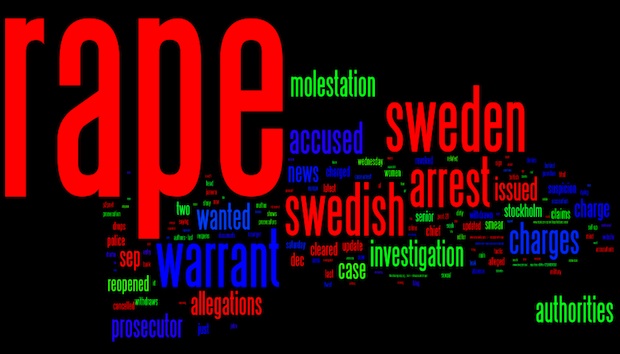
image is from here

What follows is from a blog devoted to global politics and philosophy, in part. Please click on the title below to link back. The post that follows was written by one of the contributors to that group blog, and his name is listed as Pablo K. Below his post, I'll offer some commentary.


Intimate Dissidence: Assange, Foucault and (Feminist) Rape Discourse


At Critical Legal Thinking, Narnia Bohler-Muller takes issue with the narrow legalism of the often ‘surreal’ commentaries on the Assange controversy. In amongst the denunciation and counter-denunciation she detects an undercurrent of disciplinary power. On this account, the apparently ‘very broad’ rape laws of Sweden, like efforts in South Africa to force HIV tests on rape suspects, enforce dichotomies under the guise of legal formality, and so cast the accused as impurities of the social body:
The argument is that the law is not an appropriate instrument to deal with matters of sexual intimacy as general principles can never do justice to the particularity of the situation and the nuances of sexual game-playing. Such is the forceful and violent nature of The Law. To depend on legal regulation to resolve all the complexities and quirks of human relations is a dangerous precedent and enforces the dualisms of guilt/innocence and normal/perverted. It is such dualisms that serve to re-produce Foucauldian ‘docile bodies’ that do not threaten or resist the status quo…

…The problem is that in such a way harmless conduct may be punished merely because we do not approve of it. If Assange is HIV negative, which one assumes he is, and neither of the complaints fall pregnant, then his failure to wear a condom caused no harm. Or are we now choosing to punish
potential harm or the risk of harm? Or, perhaps, punishing the failure to be a considerate lover, or the narcissism and promiscuity of a man who fucks helpless women and then leaves?
This ends up turning sexual assault into a form of dissent, a refusal “to express comfort with any kind of subservience to Authority“. As before, Assange is not really the issue, merely a bystander and stand-in. But, amidst her caution against law as a substitute for political critique and her rejection of marginalising discourse (points well-taken), Bohler-Muller’s use of him to mobilise broader arguments about a Foucauldian analytics of rape raises some stark problems.
First, feminists like Jaclyn Friedman are not involved in a legalistic fallacy. Their emphasis has been overwhelmingly on the implications of the language used to defend Assange and therape myths and apologetics that have been propagated as part of that. Bohler-Muller’s characterisation of the charges is telling in this light, since feminists are simply not arguing that “the failure to be a considerate lover” should be a criminal offence, still less that we should empower police officers to enforce ‘consent-plus’ (apparently the idea that “if sex takes place outside of a loving and intimate relationship, there is a strong indication that consent is lacking”). To speak of these particular charges as if they were merely a question of impolite sex and not ‘rape-rape’ is already to prejudge the issue and to misunderstand it as specifically about Assange, rather than about general rape culture and its prevalence.

Feminists have pointed out that holding someone down or penetrating them while they are asleep qualifies rather easily as non-consensual sex. They have suggested that having attending gender studies courses does not make an accuser untrustworthy. They have roundly and frequently agreed that the charges against Assange are suspicious and likely politically-motivated. And then they have said that this suspicion should not lead to the regurgitation of tropes about the perfidity of womankind or the agendas of man-hating lesbots.

Those are relevant points that have everything to do with the politics of rape, and very little to do with a fetishistic attitude to the statute book. In more general terms, feminists do agitate for higher conviction rates and frequently criticise the current state of evidence-gathering, classification and prosecution, as well as existent social prejudices towards rape victims. In doing so, they discuss the legal system and its manifest failings. But these are arguments about the reform of the law based on feminist political and moral positions, not a parroting of subjectivities created by it.

Which isn’t to say that there aren’t issues around feminism and law to be explored and critiqued, not least whether campaigning for a more successful pattern of prosecution is the best way to end rape (dependent as that argument is on a deterrent model, perhaps to the detriment of attempts to transform social norms in a more systematic way). But these are questions of strategy and politics, and feminists will take different positions. What doesn’t seem sustainable is to invoke the melee around Assange to indict some feminists as faux-’Law-Doers’ who “work within an impersonal system of suffocating ‘normalisation’ that aims to bring about a subtle but effective imposition of uniform behaviour on ‘law-abiding’, subservient individuals“.

Second, it is not at all clear which substantive position on rape we might recruit Foucault for. Bohler-Muller depends primarily on his arguments regarding the tyranny of morality. In itself that rather compromises the comparison with rape, since it cannot be seriously argued that the hegemonic attitude to rape in our societies is somehow a feminist one. But his own statements suggest that the allegations against Assange would very much still have counted, both ethically and legally, as crimes. In a debate on the functions of psychiatry and the uses of ‘trauma’, what Foucault proposed was that “rape belongs to the realm of physical violence and must simply be treated as such“. And speaking in 1978 on the homosexual movement and the age of consent in France, he developed a rather relevant distinction:
First, there is the question of sexual choice that must be faced. I say freedom of sexual choice and not freedom of sexual acts because there are sexual acts like rape which should not be permitted whether they involve a man and a women or two men. I don’t think we should have as our objective some sort of absolute freedom or total liberty of sexual action.
The question of what counts as a disciplinary power and what as an emancipatory one is as blurry here as elsewhere. But it is at least arguable that Foucault’s agenda was to combat the proliferation of legal codes as instruments of a disciplining morality and, as he put it in the discussion of rape as physical assault, to contest the ‘preponderant place’ given to sexual organs in moral discourse. This would reclassify rape as a crime, but not obliterate it or confine it to some variation on ‘sexual game-playing’. Consent, it seems, still rather constituted a political-ethical limit.

Read this way, Foucault’s project is entirely compatible with at least some forms of feminist anti-rape politics. For Sharon Marcus, identifying and undoing the grammar of violence in rape scripts (those implicit understandings of appropriately masculine and feminine responses to a rape situation) should be central to self-defence against rape culture. Break the role-identification (the disciplinary power) and you are fighting rape.

More than a decade ago, Ann Cahill proposed a different Foucauldian reading, one which suggested that really challenging socio-cultural discourses of the feminine and masculine meant going beyond a view of rape as just like any other assault. Instead, in the properly Foucauldian way, we should be paying attention to the ways in which rape, and the threat of rape, extend far beyond the localised effects visible to the law and help constitute female bodies as incitements and innocents. Doing so opens up a discursive space for bodies which fight back.

Catharine MacKinnon once responded to the idea that rape was about power and not sex with a disarming question. If it’s not about sex, why didn’t he just punch her in the face? Making rape equivalent to a punch in the face, whether in law or in moral discourse, recoils from its legacies and their impact on our forms of thought and action. And so it risks ignoring them. The alternative is not simply to act out the roles assigned us by an imagined Law, but to engage law as a practice, a tool and a site of contestation.
 
The issues raised here make me think about how we conceive of rape primarily as an act done by an individual against another individual, and the harm is determined by how the act effects the person making the rape charge. To me, this is a rather apolitical and ineffective, or pro-rape, way of even approaching the issue of rape in the U.S., especially, but across the West and beyond.

I begin elsewhere, and my analysis and understandings of rape come from experience enduring sexual assault, listening to women describe their experiences being assaulted, and reading many writings by radical feminists about rape, including, quite extensively, the work of Catharine A. MacKinnon and Andrea Dworkin.

One of MacKinnon's points about rape-as-sex-and-violence is that to only view it as an act of violence is to not understand why it results in an orgasm for virtually all men who succeed in committing it. Beating up women doesn't tend to produce this effect in male batterers. Nor does verbally denigrating or harassing women. This doesn't make it only-sex or only-violence for the victim. It does, certainly, make it sexual violence for the perpetrator. And sometimes 'just sex' as far as he's concerned, particularly when he finds ways to achieve rape without using physical force, such as by drugging the victim first, into unconsciousness. (See, for example, MacKinnon, "Sex and Violence: A Perspective", Feminism Unmodified.)

Another argument MacKinnon discusses is the problem of resting rape law on the concept of consent. Because there are far too many cases of rape wherein the very initiation of the violent act triggers dissociation or freezing such that verbal objection or physical fighting off is not possible. To require a "no" be spoken to affirm whether rape occurred is simply not to appreciate how domination and threat, and violation and humiliation, all works to silence people. This brings us to the criteria of an enthusiastic welcoming of the act. But even this standard doesn't account for how we feel we need to behave to appease someone who might kill us. If a man shows up with a gun at someone's home doorway, they may welcome him in, to avoid conflict and allow him to take what he wants and leave me alive. Why people thing it is different with rape is beyond me. When I see footage of bank robberies, it sometimes appears as if the teller is loading the cash into the bag rather enthusiastically. (See MacKinnon, "Rape: On Coercion and Consent", Toward a Feminist theory of the State; "Unequal Sex: A Sex Equality Approach to Sexual Assault", Women's Lives, Men's Laws.)

Might we consider a standard of consent dependent on the group of people most targeted being not at all traumatised by sex or gender to begin with? We must add to the conditions in which choice-making is meaningful a social reality in which women are not targeted by men for repeated and systematic unwelcomed and unwanted sexual advances, and a sexual life for women not predicated on being sexually available to men at some point in one's life? Might we add to the conditions for meaningful choice-making the lack of economic coercion? Otherwise we have specific groups of women, such as prostitutes and performers in pornography who, by definition or by the conditions in which she finds herself, cannot be found to have been raped. We must also require that military warfare and racist genocide not be happening, because how can we determine the political nature of an act that occurs in a context of social trauma and political terror?

When I contemplate the horror that is rape, I think about a class-specific act of terrorism against a group of people--terrorism by men against women and girls. That men also rape men and boys doesn't take away from my recognition of rape as an act of terrorism by men against women because men and boys who are raped are made to feel "feminised" by the rape. In prison, someone who is raped may be called the rapist's b*tch--a gendered and derogatory term if ever there was one. When boys are raped, they are made to feel less masculine for having been raped, are made to question the state and status of "their sexuality" meaning their presumed heterosexuality. If they are not heterosexual, before or after the sexual assaults, they are also seen to be "feminised". We might note that when women and girls are raped they are made neither more masculine nor less masculine, nor less feminine for having survived it. What they are made is female in the political sense. They are made into girls and women through both the fear of rape and the reality of it. The fear and the terror, and the harm and the intrusion, all combine to constitute the conditions in which girls and women live and negotiate social and intimate life.

The law, if it were to deal with rape for what it is, would treat every rape as a class action suit, by women against men, by a terrorised and socially and sexually subordinated group (women, girls, females), by a ruling class of terrorists (men, males, and sometimes boys). In this way we move beyond the liberal individualism that civil liberties exist to protect and into the realm of civil and human rights, necessarily founded a class-based analysis of harm. Hate may or may not be present in the mind of the rapist: he may be more callous and oblivious to any taken woman's humanity than actively loathing of her being; if pornography does its job to infuse misogynist propaganda-as-sexiness into the man's mind and body, he may not realise that his roughness or callousness is being registered by her as negative at all. And if she feels hated by him after the assault, and he claims to love her, and explains in a court of law that there was some miscommunication, whose subjectivity and truth matters more to a jury and judge?

We know that the courts are notoriously lenient on white men with money and even more notoriously punitive to men and women of color who are poor. So if the rapist is white, male, and rich, he's likely to be found innocent or to make a plea deal to keep himself out of that awful prison system where all those poor Black and Brown people are systematically placed. This says nothing at all about whether he's committed an act of sexual violation. It only tells us that, by and large, legally speaking, rich white men can't rape. We also know the courts cover their eyes not only to rape as patriarchal atrocity on the class level, but to rape as part of racist-misogynist atrocity against women of color on the cultural level. (See especially Andrea Smith, "Sexual Violence as a Tool of Genocide", Conquest.)

To pretend any rape is only impacting one person traumatically is to not understand the political meaning and function of rape. I hope the law will attend to this as a culture- and class-based act of domination and group destruction of women based on sex at least, but also often on race. What a court empowered to make justice structurally and socially real must stop protecting time and again are the rights, power, liberties, and entitlements of a ruling class of rich white men, or white men, or men, to terrorise, violate, and dominate a subordinated class, women. The objective here is not to dismiss the harm done to any individual by any given rape, but to comprehend and apprehend it as a cultural-social-political act, not a primarily individual-psychological one, even while it is that too.

Wednesday, January 12, 2011

What Jared Loughner did--how is that different from what the U.S. military and Corporate Conservative thugs do every day?

mug shot of mass murderer Jared Loughner is from here

If Jared Loughner, a white het male U.S citizen, had successfully entered the U.S. armed services, and had he opened fire on a few Afghan or Iraqi men, raping some women before or after, he might be getting a Congressional Medal of Honor. He wouldn't be considered insane for doing so, and he wouldn't be called "evil". But he didn't. He opposed both U.S. wars as international war crimes according to the articles of the Geneva Convention and he made disrespectful comments about "God". Those are some of our soulless and thoroughly corrupt pro-war mass media's favorite clues that someone might be insane. His whiteness and maleness will not be seen as clues. If he were Black, Muslim, and male, he'd be regarded not as a killer or a gunman, but as a terrorist. It takes a lot for a U.S. white man, Christian or not, to be termed a terrorist. It takes very little for a Black, Brown, or Muslim man to be regarded as such.

The media has a story to tell--a single story, of how GREAT the U.S. is, and how it can overcome adversity, such as threats and overt acts of terrorism it sociopathically doesn't see itself perpetrating. We are reminded of a false truth so often that one has to wonder what would happen if the media stopped pummeling us with this propaganda for even one hour. Here is that simple and false truth: "the U.S. is good".

We are encouraged tonight to "be better" by President Obama. "Only a more civil and honest public discourse" can show respect to the white people who are slain and injured, we are told. Only? "We may not be able to stop evil in the world", the President reminds us, which is coded language meaning, "We might need to war against Asia for another seventy years". How about President Obama, and the Republican-led Houses stopping the mass production of fire arms, weapons of war, the invading and occupying of foreign countries, and the ceasing of training of poor people, disproportionately of color, to be paid and PTSD-afflicted killers for a country as evil as any the Earth has known?

President Obama tells us, "We should do everything we can do to make sure this country lives up to our children's expectations!" He is speaking of a kind of false innocence he is assuming children have, willfully ignoring how many children are molested and raped by the age of puberty; ignoring how many children gain access to pornography through their parent's computers, or, in the olden days, through their fathers' pornography magazine collection, never stashed away well enough; ignoring how children absorb early the way their care-givers speak about "immigrants", "foreigners", "enemies", and "terrorists" often pretending the terms are interchangeable. (Never mind that Charles Manson, Timothy McVeigh, M. D. Chapman, and Jared Loughner, and thousands of unnamed rapists of American Indian women are white het men, documented-while-palien U.S. citizens, and killers and terrorists.)

Given that the government and media tell us we should expect to continue to wage war against Black and Brown people, against Asians for the last many decades, against Indigenous people for the last several hundred years, against women across race, through to this day and well into tomorrow.

A few white people lost their lives and others were seriously injured. My heart goes out to the loved ones, family and friends, of those who were hurt or killed by Jared Loughner, including federal judge John Roll, 63; and Christina Taylor Green, age 9 (born Sept. 11, 2001), a softball player invited along to the meeting as a treat by a neighbor; Rep. Giffords' aide Gabe Zimmerman, 30; Dorothy Murray, 76; Dorwin Stoddard, 76; and Phyllis Scheck, 79.

One person almost lost her life because she was a woman with some pro-woman political stances, such as being pro-Choice: defending the rights of individual women to determine whether or not they may seek and obtain an abortion to terminate an welcomed pregnancy, including those unwelcomed by a brother or father's incest and a boyfriend or husband's rape. Democratic Representative Gabrielle Giffords will be in the news as a survivor of a "lone wolf" madman, but the media won't focus on the mass murderer as a white het male misogynist or anti-feminist who specifically wanted the "b-word" to "die", and who was frustrated about his dating life. He won't be called "white" and "heterosexual" because those terms don't carry stigma in the U.S. Instead, he'll be called "a troubled young man" who occupied "a very dark world". "Dark" is the important term, as it reinforces whiteness and lightness as good, and blackness and darkness with evil.

What the corporate media won't tell you is that Jared Loughner's personality was not quite as sociopathic as any U.S. mega-corporations's practices and that of their CEOs and COOs, the U.S. military's leaders and operations, or the long-standing personality of the U.S. government. For more, please see The Corporation.

What the U.S. media exists to do is NOT focus on THE PROBLEM, and instead distract us from THE PROBLEM with relatively minor--however tragic and horrific--incidents. That over a half of a million Haitians have been injured or killed since the White-Man-Made disaster one year ago. You'd think the on-going crisis would warrant more air-time today than what happened in Tucson, AZ.

But one white person, especially if U.S. (and especially if male), has always been worth more than a few dozen thousand lives of people of color. Just note how we regard white U.S. soldiers who die, compared to Central Asian women who die in our gendered and raced wars against them, to occupy and control their land the way white het men seek to occupy and control women across race and region.

How many times has the news media alerted us, regionally or nationally, of a new U.S. casualty of one of our corrupt, racist, empire-strengthening wars against Asia? How many deaths of individuals from Iraq or Afghanistan--non-combatants, civilians, children, women, men, have we heard reported as if their lives matters as much as one U.S. rich white het man? When will those wealthy Corporate Conservative Christian white men stop  committing evil against women and children, globally, including by not doing a damn thing to end human trafficking or poverty?

I am listening to a president speak who will never admit to the sociopathic horrors he oversees, who predicts all evil to continue. He and the newly elected Republican thugs will continue to protect and defend U.S. and Western white het male supremacy, the white right to commit genocide and men's right to rape women, in part through corporately controlled exploitation and possession of women-as-sexxx-things. He and the elected Democrats and Republicans to both Houses will continue to perpetrate this and more atrocity by any means necessary. This will not be reported to you on ABC, NBC, CBS, CNN, Fox, or Comedy Central.

There has never been anything civil about what the U.S. government and corporate media do to poor people of color, globally. The U.S. media and military's leaders and spokespeople have never been honest about what the U.S. government and giant corporations exist to do. Hundreds of thousands of Haitians died and continue to die, Haitian and non-Haitian women are raped and continue to be raped, because of the past and present actions of the U.S. government, European governments, and white male capitalist pimps and greed-mongers. Let's start with that bit of honesty and see if we can "be better".

Questions and Challenges to my Gay Siblings who work for Social Change: What is your level of accountability to Radical Lesbian Feminists? What work do you do to Challenge and Reduce Male Supremacy?

herstorical archival image is from here
I predict that in time the L of LGBT GLBT will slip to last place. Why? Because the concerns of women have never been made central in any organisation of which men are a part, especially a founding or controlling part. I predict that "lesbian" will continue to become a taboo word, not that it was ever not one. I predict that trans, queer, and gay rights will become promoted and funded inside and outside the Academy and media, and lesbian rights will be increasingly under-funded and decentralised, and will (continue to) be made to seem like it is only an anti-trans, anti-gay, anti-queer idea. Specifically in the Academy, I predict Women's Studies programs will decrease as Gender and Sexuality Studies programs increase. And that Gender and Sexuality Studies programs will increasingly marginalise "male supremacy" and "patriarchal atrocity" as horrific realities worth studying, let alone doing anything significant to end.

We carry some insufficiently challenged ideas in the queer communities of which I am a part. Among those is this: gay men will always work with het men to obtain their rights. This is understood to be necessary and "sensible", practical, pragmatic. We will not sufficiently question how and in what ways gay, trans, and queer activists work with racist heteropatriarchal institutions and industries to promote liberal, reformist civil rights to the dominant society, while largely ignoring radical, revolutionary change. And when lesbian women work with heterosexual and bisexual women, they will be called out for being anti-queer. But they gay men will get to go on working with het men, few questions asked.

Gay men will not likely challenge this. Gay men, historically, have found gender to be something to play with, to bend, blend, appropriate, and to transgress. Lesbians, like all women, have, herstorically, found gender something to survive.

The less privileges one has, the more perilous "gender" is. In other posts here I have analysed the levels of privilege found among white gay, bisexual, and trans males, and also some white lesbians too, who ceaselessly speak for all of our people but too often speak of promoting white supremacy, consciously or not and not hardly ever admitting to doing so.

A question for now is this: when "Our Queer Politics" are promoted, how much white, classed, and male supremacy is loaded into the agendas and actions? How acceptable is it to ignore what men do to women, across race, class, and sexuality?

With most questions unasked and unanswered, we are left to witness both dominant and non-dominant social shifts toward an increasingly anti-woman Queer political theory and practice. When this is noted, and because women are so devalued already as a group, the women who raise these concerns are called names designed to silence them. Their voices are not heard.

The importance of lesbian feminism is the importance of women's human rights, across race, class, region, and sexuality. The ignorance of lesbian feminism, and the social-surgical removal of it from the queer body politic, will and already has resulted in an impotent social change movement. There is, as far as I can determine, no revolutionary, radical "queer" agenda that is not linked up with others on the Left--the Left that is and always has been male-led and male-ruled.

What was unique, for me, about radical lesbian feminist politics was that it had, in its heart, a radical and revolutionary vision to end manhood as a system of power (and not, as so many white het men irrationally and histerically fear, to end the existence of men-as-human beings). It had a practice of putting women at the center of each and every point of discussion and analysis, because otherwise women will fall back and outside the circles of concern.

What is the society contemporary U.S. Queer activists are working for? Is it patriarchally and racistly capitalist? Is it as gynocidal and genocidal as the one we now live in? What is the means, the route, by which Queer activists will challenge and eradicate male supremacy from society?

While in the last couple of years I have seen a re-emergence of radical feminism, including radical lesbian feminism, across class, race, region, I have also seen this accomplished against great odds. Feminist bloggers have been terrorised, for example. I know of no such acts of terrorism leveled systematically against gay bloggers who are anti-feminist or who ignore women's threatened humanity generally. I have seen a huge increase in Queer blogs and social spaces, particularly in cities and academies, wherein the political group "women" is, in and of itself, under attack by ridiculously applied post-modern theories.

No where is radical lesbian feminism embraced as crucial and critically necessary if it isn't radical lesbian women promoting their work and values.

The current state of affairs is that women who are radical feminists are once again targeted as "bigots" primarily, not human rights activists. Men have never done anything but identify feminists as something fundamentally negative, dangerous, and disgusting. Now it is white-dominated Queer culture that hates on women in part by ignoring women, claiming women are hating on queers. The critics of women cite only on a few women who express ideas that can only be processed by pro-queer activists as "anti-man, anti-queer, and anti-trans". The identification of radical feminist activism and activists is intentionally biased in favor of noting where and when some radical lesbian feminists criticise trans politics--assumptions, theories, practices, and actions--wherein it is deemed pro-woman to promote the idea that women can be surgically constructed if "the psyche" is already that of a woman.

Let's remember that it has been radical feminists, lesbian and not, who have argued that female people who seek to have gendered surgeries to produce "woman parts" do not become "more female or more womanly" as a result of having surgery performed; they resist putting into the hands of surgeons, and the medical establishment generally, any power to give gendered status or stigma to women.

This medical-surgical intervention against female bodies has sometimes been reconstructive, such as following disease, illness, injuries, and surgeries to one's breasts, vulva, and other sexual organs. Sometimes the surgeries are simply destructive, such as when sexual organ-removal procedures are done systematically and without medical benefit to control women's capacities to either reproduce or experience sexual arousal. We know that white male doctors in North America, for example, have a horrid history of removing from women their uteruses, ovaries, and other reproductive organs. We know that girl children who are intersex are often surgically disfigured and sexually disabled because doctors convince parents it will be better for the children to grow up that way: disfigured and disabled.  Nowhere do radical feminists argue that female and intersex human beings become "more womanly" as a result of such surgical interventions, even when argued by the privileged people who support them being "necessary" and "life-enhancing".

It is radical feminists, lesbian and not, who have held up for scrutiny issues of objectification and fetishisation of body parts, including the genitals, not gay men, not bi men, and not het men.

It is radical feminists, lesbian and not, who have challenged the male supremacy which inheres in every social and psychic sphere of existence that is touched or ruled by patriarchal societies.

It is radical feminists, lesbian and not, who seek to understand how child sexual abuse constructs dominant sexuality, not gay men, bi men, or het men.

It has been radical feminists, lesbian or not, who have challenged the right of men to rape anyone and everyone as they wish with no accountability to the terrorised classes. Activist men as a group, across any political spectrums, have not done this work and continue not to do it. Rape is ignored by men as a political issue of outright terrorism and inhumane social subjugation. In my experience, men across sexuality ridicule and pathologise people who speak too much against rape if the raped people being supported are female-not-male. Such activists, in my experience, are treated as if the problem of rape is that survivor of it haven't gotten over it--the individual rape or rapes, singularly or gang-perpetrated, familial or committed by acquaintances or strangers. The rapes and the survivors are tossed back onto the social heap of the "anecdotally afflicted".

It is radical feminists, lesbian and not, who have taken seriously the aftermath of sexual trauma, who write about triggering and dissociation related to surviving sexual and gender-based assaults and generalised gendered conditioning.

It has been radical feminists, lesbian and not, who have challenged as harmful and misogynistic, and also racist and classist, the industries and institutions like pornography and prostitution, while liberal men and women seek to protect the systems that make sex-slavers, traffickers, and pimps rich.

It is radical feminists, lesbian and not, who have fought for decades to challenge militarism and marriage, not to make these institutions of gross misogyny and racism "more accommodating" to gay, bi, and lesbian people.

Pick an area of human social and psychic life in the West and beyond and you will find thorough, thoughtful analysis--questioning and answering, as well as confronting and challenging, of the patriarchal systems and male supremacist structures which inhere in them.

From male Queer and Gay activists I ask: What is your plan or practice for removing male supremacy and patriarchal imperatives and mandates from our societies? How do you currently expose and challenge these oppressive and lethal dimensions of our lives? Where and when do you center the analysis of radical lesbian feminists in your work? Can you direct me to this work that males and men are doing, as a group, currently, anywhere in the world?

Even while radical feminists have always been of color, "radical feminism" is written off by white men and men of color, gay, bi, and het, as "white and racist", effectively invisibilising the work of radical women of color, however they identify.

Even while radical feminists have always been het, bisexual, and lesbian, it is assumed that radical feminism is only lesbian. This is not done to compliment the work; it is done to demean and denigrate it.

Lesbian and woman-loving women have worked on behalf of all women in the same way that gay and SGL men have worked on behalf of all men. The significant difference is that lesbians' political work, when feminist, has been anti-status quo, anti-racist, and anti-patriarchal. Meanwhile, gay men's activism--which has never been pro-feminist or respectful of women (except anecdotally), has been pro-status quo and pro-patriarchal.

I welcome gay men of conscience and courage, across race, region, and class, engaging with me here on these and related issues.

Haiti: One Year After The White-Man-Made Disaster

manifestasyon
photo: ©2010 Randall White. This image is from the Haitian Action Network report linked to below

Not many news sites will report to you the extent to which everything that happened on Haiti one year ago was a production called "The White Man's Terror". It stars lots of white men, from Europe and the U.S., some of them colonists, some of them CEOs, some of them former U.S. presidents. The people who will always suffer most at the hands of any atrocity constructed by the White Man is women of color. And so it is in Haiti. Below is a sampling of news stories out in the last 24 hours, explaining aspects of the situation there now. The reports, in order, are from The Haitian Action Network, The New Black Man, Amnesty International/Canada, and The Guardian.co.uk. I did my best to ignore news from the U.S., which only ever wants to tell you how GREAT the U.S. is, despite the fact that they are a "Lone Wolf" of terroristic evil on Earth.

I choose to remember, on this day, especially, the deaths of three feminists: Women's rights activists Myriam Merlet, Magalie Marcelin, and Anne Marie Coriolan. For more on each of these women, please see this report from Chicago NOW, *here*.


By Bill Quigley and Jeena Shah

BAI - Port au Prince, Haiti — One year after the January 12 2010 earthquake, more than a million people remain homeless in Haiti. Homemade shelters and tents are everywhere in Port au Prince. People are living under plastic tarps or sheets in concrete parks, up to the edge of major streets, in the side streets, behind buildings, in between buildings, on the sides of hills, literally everywhere.

UNICEF estimates that more than 1 million people – 380,000 of them children – still live in displacement camps.
"The recovery process" as UNICEF says, "is just beginning."

One of the critical questions is how many people remain without adequate housing. While there are fewer big camps of homeless and displaced people, there has been extremely little rebuilding. The UN reported that 97,000 tents have been provided since the quake. Tents are an improvement over living under a sheet but they are not homes. Many families have lived many places in the last year circulating from rough shelters to tents to camps to other camps to living alongside other families.

It is important to understand that families may leave the huge unsupervised camps and still be homeless someplace else – like a tent in another part of the city or country. Moving from one type of homelessness to another cannot be allowed to be declared progress against homelessness and displacement.

The key human rights goal is housing, not moving out of the displacement camps.

One illustration of the housing challenge facing the Haitian people can be found in a recent report from the International Organization for Migration (IOM). The IOM December report announced a reduction in the number of persons remaining in displacement camps. The IOM then wrongly concluded that the number of people displaced and homeless was reduced accordingly. Why is this conclusion wrong? Because the IOM report does not even try to track where displaced persons go after they leave a particular camp. They equate homeless families moving out of displacement camps as families finding housing.

These types of erroneous conclusions are not only misleading but threaten to hinder badly needed relief efforts one year after Haiti's devastating earthquake.

Careful consideration of the IOM report provides an opportunity to examine some of the many important housing challenges still facing Haitians.

IOM Assertion: "We finally start to see light at the end of the tunnel for the earthquake-affected population…these are hopeful signs that many victims of the quake are getting on with their lives." IOM reported there has been a 31% decrease in the number of internally displaced people living on IDP sites in Haiti since July.

Fact: Getting on with their lives? Of an estimated 1,268 displacement camps, at least 29% have been forcibly closed – meaning tens of thousands of people have been evicted, often through violent means. Many who are forcibly evicted from one site move on to set up camp for their families in another location, which is often more dangerous. This is not getting on with life; this is searching for less dangerous places for the family tent.

IOM Assertion: People with houses labeled red (uninhabitable or extremely dangerous) or yellow (in need of repair) have "chosen to return to the place of origin or nearby to establish a shelter."

Fact: As of December 16, 2010, only 2,074 of the estimated 180,000 destroyed houses had been repaired and a small percentage of rubble had been cleared. Decisions by desperate homeowners to move back into still destroyed homes is hardly progress.

It is also not even possible for large numbers of people who were renters to return to their destroyed homes. The destruction of more than 180,000 private residences coupled with influx of international aid workers has made Haiti's rental market soar. An estimated 80% of those rendered homeless by the earthquake were renters or occupiers of homes without any formal land title. Current rents are unreachable by the majority of displaced Haitians, many of whom who lost their means of livelihood during the earthquake. The IOM admits "The lack of land tenure and the destruction of many houses in already congested slums left many of those displaced with few options but to remain in shelters."

IOM Assertion: "Some households rendered homeless after the earthquake left congested Port au Prince all-together going home to the regions. Others sent their children to the countryside for a better life."

Fact: Rural Haiti before the earthquake was home to 52% of the population, 88% of which was poor and 67% was extremely poor. Rural residents had a per capita income one third of the income of people living in urban areas and extremely limited access to basic services. Disaster response following the earthquake has not tackled the extreme structural violence that exists in rural areas, and Hurricane Tomas further destroyed livelihoods of rural communities. People moving from displacement camps in the city to living in a tent in the countryside have not really moved out of homelessness, they have just moved.

IOM Assertion: "Surviving in poor living conditions during the long hurricane season has persuaded many to seek alternative housing solutions."

Fact: Homeless people are always seeking "alternative housing solutions." Camp conditions even before Hurricane Tomas and the cholera outbreak revealed that displaced Haitians were in camps because they had no "alternative housing solutions."

According to a study conducted by CUNY Professor Mark Schuller before both Hurricane Tomas and the outbreak of cholera:
40% of displacement camps did not have access to water;
30% did not have toilets of any kind;
10% of families even had a tent, many of which were ripped beyond repair during the hurricane season; the rest were sleeping under tarps or even bed sheets.
A study conducted even earlier by the Institute of Justice & Democracy in Haiti found that:
78% of families lived without enclosed shelter;
44% of families primarily drank untreated water;
27% of families defecated in a container, a plastic bag, or on open ground in the camps;
75% of families had someone go an entire day without eating during one week
and over 50% had children who did not eat for an entire day.
Human rights promise housing, not just forcing people away from displacement camps. Haiti needs practical and sustainable solutions for re-housing along with services and protections for the people still homeless.
One year later, it is critically important for the international community to assist Haitians to secure real housing. The million homeless Haitians and the hundreds of thousands who have moved out of the large homeless camps into other areas are our sisters and brothers and still need our solidarity and help.

Bill is Legal Director of the Center for Constitutional Rights, a law professor at Loyola University New Orleans and a long-time Haiti advocate. Jeena Shah is a lawyer serving in Port au Prince as a Lawyers' Earthquake Response Network Fellow with the Bureau des Avocats Internationaux and the Institute for Justice and Democracy in Haiti. Contact Bill at quigley77@gmail.com and Jeena atJeena@ijdh.org
Share this story with your networks


*          *          *

Haiti: Where Did the Money Go?


In January 2010, a 7.0 earthquake devastated Haiti. The international community, including one out of two Americans, pledged billions of dollars in aid, yet the nation has seen little improvement. Three hundred thousand died, nearly two million live in ramshackle tent cities. Cholera has swept through the population, killing thousands and hospitalizing many others. Only about 2% of the rubble has been cleared.

Is this what you expected when you pledged your aid dollars? Independent journalists Film@11.tv journeyed to Haiti in November 2010 to see the situation for themselves, and dig into the burning question: what happened to all that money?


*          *         *


Amnesty International and Women's Human Rights

Amnesty International regularly documents a range of violations of women’s human rights through reports, news releases, public statements, and letter writing actions. We work with women human rights advocates and like-minded organizations to encourage governments to enforce women’s human rights as defined in various international and regional human rights standards. This blog covers the full range Amnesty's concerns in the arena of human rights for women, including sexual and reproductive rights; violence in armed conflict, the community and the home; women human rights defenders; and protection of women’s economic, social and cultural rights.

Haiti: Sexual violence against women increasing

Posted by: Lindsay Mossman
Women and girls living in Haiti’s makeshift camps face an increasing risk of rape and sexual violence, Amnesty International said in a new report released today.

One year after the earthquake which killed 230,000 people and injured 300,000, more than one million people still live in appalling conditions in tent cities in the capital Port-au-Prince and in the south of Haiti, where women are at serious risk of sexual attacks. Those responsible are predominately armed men who roam the camps after dark.

More than 250 cases of rape in several camps were reported in the first 150 days after January’s earthquake, according to data cited in the Amnesty International report, Aftershocks: Women speak out against sexual violence in Haiti’s camps.

One year on, rape survivors continue to arrive at the office of a local women’s support group almost every other day.

Read the News Release

Read the Report

*          *          *


Haiti one year on: put communities at the heart of reconstruction


Haiti's earthquake drew emergency help from the charity Article 25, but its architects' main focus is finding permanent solutions


Haiti rubble
Haitian children are seen amid the rubble in Port-au-Prince, a year after the earthquake. Photograph: Hector Retamal/AFP/Getty Images

One year on from the devastating earthquake of January 2010, millions in Haiti are still struggling to meet their most basic needs. With food and water in short supply in the 1,300 temporary camps, serious threats to women's safety widely reported, and cholera having left its mark on an already dire public health situation, architectural solutions may seem low on the list of priorities.
But earthquakes in Chile and New Zealand in the same year are two illustrations that it's not earthquakes that kill people, it's buildings. Despite both measuring higher on the Richter scale than the Haitian quake, intelligent design and safer construction minimised the death tolls in Chile and New Zealand. Article 25, the UK's leading built environment charity, promotes the idea that when we build back in Haiti, we must build back better. Architecture is, as our trustee Lord Foster testifies, "a necessity and not a luxury".
Working with our partner Outreach International, Article 25 is breaking ground on the repair and reconstruction of dozens of schools, reinstating education as a driver for overcoming the trauma of the quake for hundreds of Haiti's children. On the ground for almost a year, Article 25 immediately adopted a long term approach, driven by the belief that without ensuring a sense of permanence in the relief stage, Haitians would remain trapped in a crippling state of dependency. Article 25 sees permanence as intrinsic to genuine recovery.
Our project in Pakistan that trained locals to build seismic-resistant housing within 100 days is an example of how disaster response does not have to adhere to the typical model of sticks and tarpaulin, buffeted by trickling aid agency provision. Following Pakistan's 2005 earthquake, Article 25 worked with communities to build prototype homes using locally sourced materials, designed to withstand future earthquakes. Through effective on-the-job training in construction techniques, locals are still building Article 25 houses, years after the training was completed. In this way, locals are transforming a relief-stage solution into a permanent one.
This experience proves that community participation is at the heart of sustainability in reconstruction projects. By placing local communities at the centre of the decision-making process, Article 25 leaves a community empowered and equipped with the necessary skills to rebuild and maintain their own environment. Article 25's work in Haiti over the past year has included a strong emphasis on community participation, using workshops to diagnose a long list of needs and encourage the community to prioritise those needs. These workshops help parents, staff and children become aware of the strengths and challenges of their existing education infrastructure, and to choose what is most important to them. Asking the community to establish their own needs and preferences means donor money makes the biggest difference on the ground.
With Article 25 staff as facilitators, workshops have included "problem trees", where communities are encouraged to dig deeper and recognise the root causes of problems. What has emerged is that shelter for displaced people, improved nutrition and health, more classrooms, and subsidised school supplies are key collective priorities. These issues are laid out in a "ranking exercise" in which communities asked to vote for the three issues they believed were of highest significance. A lunch programme emerged as the first priority for all participants, with internet access a close second. In a country where just 11% of the population are reported to have internet access, this is a clear sign from the next generation that they want to be better connected.
While the developed world has argued over the right solutions for Haiti over the past year, Haitians have too often been left out of the debate. Our workshop results show the people of Haiti themselves are aware of a lifeline: internet access could empower them with knowledge and and make their views heard. The Observer's recent suggestion box scheme is one that has facilitated exactly that. Recognising that local communities hold the knowledge of vernacular techniques allows a design to develop which becomes more powerful than a building. As a community member commented following an Article 25 workshop: "Thank you for coming to our village: you gave the community a voice."
Oxfam recently called the efforts of the government and international community a "quagmire of indecision and delay". Article 25 finds that only by harnessing local knowledge can we cut through the "quagmire" and make sustainable progress. By placing community participation and capacity building at the crux of reconstruction in Haiti, Article 25 ensures it is the people of Haiti who are becoming the authors of a safer, more sustainable future. It is critical that this kind of work in Haiti continues long after the journalists have gone home, and that we stay with this programme as long as it takes to help Haitians lift themselves out of paralysis and build back better.
• Robin Cross is CEO and Director of Projects, Article 25.


Tuesday, January 11, 2011

A Response to "Transphobic and Racially Confused" by Brandon Lacy Campos to Dirtywhiteboi67

photograph of Brandon Lacy Campos is from here
NOTE: I may just pull this post. I am so not a fan of Dirtywhiteboi67's manner of engaging on these issues that I'm wondering why I picked up this issue as I did. I guess for me it's the issue of "the disappearance of lesbian feminism", most especially that promoted and developed by women of color such as Audre Lorde, Barbara Smith, Cheryl Clarke, and so many other great women over the last many decades in the U.S. and beyond.

As I do not (as yet) have Brandon Lacy Campos's permission to cross-post his reply to Dirtywhiteboi67, I'm going to link to it here, and below that put my comment to him, which has been submitted but has not yet been approved--I'll full respect his decision to not post any of my comments. I may also write to him and ask him not to post any of them.

But, regardless, I kind of hope Brandon is willing to engage with me on some of these issues, when his time and energy allow. He has been doing great work in the queer community as an activist and poet for a long time and I don't presume that engaging with another white person on these issues is or ought to be atop his list of priorities. In case you are not familiar with him, here's some bio details from the end of last year:
Brandon Lacy Campos is a 32-year-old queer, poz, African-American, Afro-Puerto Rican, Ojibwe and Euro (smorgasbord) poet, playwright, blogger, journalist and novelist (that last one is slowly coming along). In 2009, MyLatinoVoice.com named him the #2 queer, Latino blogger to watch. In 2006, the Star Tribune named him a young policy wonk for his political shenanigans. His writing and poetry have appeared in numerous anthologies including, most recently, Mariposas, edited by Emanuel Xavier and published by Floricanto Press. This fall, his work will appear in the academic text Queer Twin Cities, published by the University of Minnesota Press. And, one of these days, Summerfolk Press will be publishing his first solo book of poetry: It Ain't Truth If It Doesn't Hurt. Brandon is hard at work on his first novel, Eden Lost, and he lives in New York City with his partner, artist David Berube, and his boss, Mimzy Lacy Berube de Campos (their dog). [source for this bio info and the image above it: *here*]
Hey Brandon, where's your book with David? I've been looking for it, for info about it, online.

Before reading on, I hope the y'all will familiarise yourself with the background, short though it may be, of this most recent exchange between Dirtywhiteboi67 and Brandon. For the record, I have no knowledge of who Dirtywhiteboi67 is, nor what her history of activism is, if any. I don't support her racism, her white privileged behavior, and her call to withdraw any time or resources from The Audre Lorde Project. I find her effort truly misguided and racist, as well as grossly misogynistic and transphobic. I have nothing but admiration for TALP and the work they do. Some of what I'm saying here will make a bit more sense when you read what follows, but I want to be up front with some of this now.

I don't doubt that Audre Lorde might not give a damn that someone at TALP would refer to her as queer. I have come across Brandon's name and some of his responsible, caring work and have regard and respect for him. I support him calling out Dirtywhiteboi67's gross racism and white supremacist privileges.

The story, thus far, may be read at these two posts:

http://radicalprofeminist.blogspot.com/2011/01/beyond-double-standards-audre-lorde.html

http://myfeetonlywalkforward.blogspot.com/2011/01/transphobic-and-racially-confused.html

Here is my reply:

Hey Brandon,

Thank you for your response to Dirtywhiteboi67. I am personally angered by white folks--male, female, or intersex, trans or cis, thinking they/we have the right to get up in faces of people of color about matters which they/we know little to nothing about and attempt to gain white supremacist control of every exchange or conflict. I appreciate and support your anger at the obnoxiously white-racist aspects of what Dirtywhiteboi67 is doing in her response on her blog to the issue of Audre Lorde being referred to as queer, and have come out on my blog opposing her call to withdraw funds and time to TALP.

I personally and politically don't feel TALP is beholden to anyone other than those people who work there and receive services and support due to their work. I am very grateful there are organisations like TALP and wish there was this type of organisation in every major city, or any place where queer folks need support. Thank you for being part of the group of caring people who have put time and energy into TALP.

I am similarly troubled by males and men across race attempting to silence women of any race, which is partly what I experience you doing above. I don't believe your male privilege, power, and entitlements, including the privilege, power, and entitlement to tell women to shut up and never speak again to an issue of lesbian visibility, goes away just because you're queer and of color. Nor does mine. I'm white, male, Jewish, intergender, gay, and disabled. I cross places of privilege and oppression, as do you. And, structurally and socially, I'm your oppressor and you're not mine and I get that.

It was upsetting to me to see Audre, who fought very hard, as any of her friends know, to identify as lesbian, to have her termed something other than what she termed herself. I don't believe Barbara Smith or anyone else speaks for Audre Lorde; I look to Barbara Smith to speak for herself and am so glad she has done the work she's done as a Black, feminist, lesbian writer, and as a publisher of great books. I look to Alice Walker, Cheryl Clarke, Angela Davis, Marimba Ani and any other living radical woman of color to name their realities and advance womanist, feminist, and pro-revolutionary theory and practice.

I am troubled by some of the ways you appear to me to disregard a white woman who was speaking to the issue of not invisibilising lesbianism, which, in my profeminist view, is a woman's issue across race. In my experience queer males across race and ethnicity have had a hand in collaborating together to dismiss and disrespect lesbians of color for decades, including by refusing to engage responsibly and respectfully with radical lesbian activists and writers of all colors. I'm not, in any way, accusing you of invisibilising lesbians of color. I'm just concerned about some of the ways that you are protesting a white woman's call to make lesbianism more visible. How many men do you know who put aside their male privileges to engage with the work of feminists and womanists, especially lesbian-identified writers and activists? I can count on one hand the number of men I know. And, I'm not sure I'd even have responded to Dirtywhiteboi67, were I in your shoes. And, if I worked at TALP, I'd probably find most of what she had to express annoying as hell, and also racist as hell.

Given that Audre Lorde was radical, lesbian, and feminist, what I am unclear about is this: why would you (or anyone else) seek to deny Lorde her lesbian identity, and instead put that identity under a larger banner of "queer"?

I identify as queer, intergender, and gay, and welcome anyone using any of those terms for me. Audre identified, as far as I know, as a gay-girl earlier in her life, and later as explicitly lesbian and feminist.

Across class and race, and especially in the last fifteen to twenty years, there has been an effort to invisibilise lesbians of color in the media and beyond, as such. Does that concern you as a queer male who respects Audre's work? Do you find it male supremacist of you to not only tell a woman to shut up and to remain silent but also to refer to her as "sweetness", and to psychologise her anger? All of that comes across as to me as overtly misogynistic and disrespectful. In what ways are you not treating her the way men, across race, typically mistreat women, across race? Do you believe your work with women of color, or your structural, social position as a man of color who works with queer-identified women entitles you to be misogynistic to white lesbian women?

It is my experience that the more privileges one has obtained socially--particularly if male and/or white and a U.S.er with academic privileges, the more structurally and institutionally entitled it appears one is to demand to be named as one sees fit. Few Black women I know have ever had the option or the structural entitlement to be named by society as they wish to be named--or even to be seen as fully human. Men and whites are always at the ready to put Black women of any sexuality in the boxes they wish to see them in.

I am supportive of many projects, including the Audre Lorde Project, and also the work of Aishah Simmons and Tiona McClodden, in particular, to support visibility of Black lesbians.

As someone within the trans community, isn't our politic one of respecting how we name ourselves rather crucial to establishing supportive community? Can you appreciate how it could be seen by lesbian-identified women and wimmin that having Audre referred to as queer is yet another act of invisibilising lesbianism among women of color?

I posted on this issue as well, and welcome your comment-response to my blog, as well as permission to cross-post your reply here to my blog. Here is the link to my initial post, which pre-exists your response to Dirtywhiteboi67:

http://radicalprofeminist.blogspot.com/2011/01/beyond-double-standards-audre-lorde.html

I welcome healing, respectful, productive, constructive engagement. I find that with venues like Facebook and other Internet meeting places, including blogs, the level of mutual respect and regard across difference has deteriorated substantially. I hope our exchange can not call for either of us to be silent, but rather to speak to one another with respect, across difference.

I hope your efforts with TALP are going well and looking financially healthy through 2011. If there are fund-raising efforts or events connected to TALP that I can post here, I'd be more than happy to do so.

Julian

Monday, January 10, 2011

Beyond Double Standards: Audre Lorde wasn't "Queer"-identified. She was out as a Lesbian. Now, what is it called if White Gay and Trans People Don't Honor and Respect Her Naming of Herself? Lesbophobic? Misogynist? Racist? Anti-feminist? All of these?

photograph of Lesbian poet Audre Lorde is from here
20 Jan. 2011 Addendum:  My objection to Audre Lorde being called "Queer" is not directed at anyone in The Audre Lorde Project. It comes from other sources--online, not in NYC, and I'll link to them so you have some context for what I'm addressing and analysing. Are Black women entitled to name themselves? Or once they are dead is it fine for anyone at all to call Black women by other names that erase much of what they fought hard and lived hard to accomplish in constructing their own identities?


See, for example, from *here*:

A fascinating feature of the book involves its inclusion of a striking variety of responses to threat that women have offered. The collection contains accounts of women's militance, rage, flight, unyieldingness, apathy, passion, breakdowns, and banding together, either in couples or larger groups. Couples find a prevalent place in the book, particularly in the convergence of partnership and eroticism. Lorde celebrates queer sexuality while she cites the realities of discrimination and "bashing." One exemplary poem is "Outlines," in which Lorde explores a relationship between "a Black woman and a white woman / with two Black children" (12).

See also, this, from Wikipedia:
Audre Geraldine Lorde (February 18, 1934 – November 17, 1992) was a Caribbean-American writer, poet and activist. [Hmmm. No mention of her being a LESBIAN, or, even "queer". -- Julian]
See this, also from Wikipedia:
The Audre Lorde Project is a Brooklyn, New York-based organization for queer people of color. The organization concentrates on community organizing and radical nonviolent activism around progressive issues within New York City, especially relating to queer and transgender communities, AIDS and HIV activism, pro-immigrant activism, prison reform and organizing among youth of color. It is named for the queer poet and activist Audre Lorde and was founded in 1994. [the bold and enlarged text was made so by me, Julian to note the lesbian-invisibilising portion of the paragraph]
See also these two quotes:


“When we define ourselves, when I define myself, the place in which I am like you and the place in which I am not like you, I’m not excluding you from the joining — I’m broadening the joining.”
— Audre Lorde in Sister Outsider

“If I didn't define myself for myself, I would be crunched into other people's fantasies for me and eaten alive.” -- Audre Lorde

I have read Audre Lorde refer to herself and other lesbian women of color, referring back to the 1950s, as  gay-girls. And later she was out as a lesbian and a feminist. Never, ever, had I heard her identify herself as "queer". As if we needed more signs that queer/trans/gay/het culture is eradicating lesbian-feminist existence, this is it. We already are well aware that dominant WHM society will ignore, appropriate, or destroy Black lesbian existence to its own ends, often to turn people's lives into two-dimensional pornography or to tokenise individual Black lesbian activists so as to appear "inclusive", such as when mentioning Barbara Smith, Cheryl Clarke, or Audre Lorde during Women's History Month or Black History Month in the Academy. Or to refuse to mention the values and activist aims of any Black lesbian feminist, on television or in any dominant corporate media dealing with social justice and human rights. 

When is the last time Democracy Now featured a Black lesbian feminist speaking about white male supremacy as a central problem? Probably the last time they had Angela Davis or Alice Walker on their show, actually. But one or two people isn't enough to represent the richness of Black lesbian feminism. I wish it were the case that we could hear from ONLY one white het man on any given social issue, and that would be considered sufficient.

Liberals and even some progressives tell me there's room at the table for all of us. But what I've noticed is the table is designed to only allow just so many, and if you are white and male, there's more room for you than if you're neither. If you're pro-white and pro-male, there's more room for you than if you're neither. If you're pro-racism and pro-misogyny, if you're pro-appropriation of the cultures and experiences of people of color, and pro-appropriation of women's cultures and experiences, there's also room at that table. And guess who folks with white and male privileges expect to serve them at any table?

It appears to me that there isn't room at the White Liberal Queer/Trans/Gay-dominated table for lesbians of color. No room at the table. Not even the kitchen table any more. Nor is there room for radical lesbian feminists of any color.

What will it take for the values and activism of radical lesbian feminists of all colors to be honored and respected? Will it take having governments respect and acknowledge girl-raised lesbians as a specifically gendered social-political group deserving of civil and human rights protections, including the right to not be invaded and appropriated by non-lesbians and anti-feminists?

While the person named below supports a withdrawal of lesbian time and money from The Audre Lorde Project, I don't. I don't support any form of boycott of The Audre Lorde Project by anyone given that it works to assist people with far fewer privileges than most lesbians and gay males I know; and the people who benefit from the Project also have far fewer privileges than most of the media spokespeople for queer and trans communities or activist efforts to reduce exploitation and violence against queer-identified people and against lesbians who do not necessarily identify as queer.

[Portions edited out by moi, the author, for being unnecessary, inappropriate, and stupidly racist--that's my racism, no one else's.]

It is important to me, as someone who seeks to support women of all colors who act from radical feminist analyses and ethics, that Black Lesbian Feminism not be erased from herstory in the name of "inclusion" or to make a political group become more "queer-friendly". In my experience, without exception, making a group that was formerly explicitly pro-lesbian feminist into one which is more "queer-friendly" inevitably means that group has become more male supremacist, more anti-lesbian, and more anti-radical feminist.

For more on the unwelcome male supremacist return of "GLBT", see *here*. For related posts, see
A Response to "Transphobic and Racially Confused" by Brandon Lacy Campos to Dirtywhiteboi67 and Our Civil Rights are Not Enough: Beyond Queer Inclusion to Liberation from CRAP.

See the following for what prompted me to post about this. You may click on the title below to link back to the source site. Everything below was written by a person who names herself online with this word: Dirt.

Monday, January 10, 2011


Lesbian Only and Lesbian Student Only Orgs

I spent several hours yesterday searching Lesbian/Student Lesbian only organizations and found none. I will continue to look and if I do find any or if you happen across any email me them and I will keep that list at the side. But while searching and coming up empty, my searches werent a total bust, I found out that according to wiki, Audre Lorde is now a queer poet and activist! Oh really, does the deceased LESBIAN poet and activist Audre Lorde know this? Does she also know her name is being used for this "project"...???


Using a LESBIAN activist's name, claiming to be for the "queer" alphabet soup, yet its front page picture clearly illustrates just what this "project" is all about: TRANS.

The Audre Lorde Project is another deceptive organization utilizing a famous black LESBIAN for its deceptive needs.

If you are interested in helping lesbians, do NOT donate your lesbian time or lesbian money to this "project". This is another org. who needs to alter their name to reflect their true goals.

dirt

Our Civil Rights are Not Enough: Beyond Queer Inclusion to Liberation from CRAP

image of a queer march on Washington, DC is from here

I've been reviewing how some in our community are telling our stories. I've had occasion to view After Stonewall, a 1999 documentary about queer struggles from 1969 through the rest of that century, primarily in the U.S., but also in places like Australia and South Africa. What is reflected in film is demonstrated in life: civil rights, while necessary and worth fighting for, cannot and ought not be the sum total goal of any radical social justice work, because any sustainable form of justice can't exist inside a society which requires poverty, genocide, trafficking, and rape to continue unchallenged.

If you have the chance to see After Stonewall, note especially Barbara Smith's observation about the third Lesbian, Gay, and Bi March on Washington. When our celebrations are about finding routes into two of the most racist, patriarchal institutions on Earth: marriage and the military, surely the oppressors have won. Because if we determine victory, or freedom, by the measure of how thoroughly we can be welcomed into dominant society we missed our most important objectives, to dismantle dominant society.

I have been told by many people across many political spectrums that my refusal to support Equal Marriage Laws--meaning, specifically, that I won't work to pass them and I also won't work to oppose them--is anti-gay and homophobic. When someone shows me how marriage does anything liberatory for girls and women globally--liberatory, as in radically anti-patriarchal--I'll reconsider my stance on that issue.

What we see in After Stonewall, is an entirely uncritical examination of marriage, the military, and its smaller scale enterprise, the city police force. There's never any suggestion that these institutions are problematic beyond being exclusionary.

The fundamental problem with CRAP isn't that it is exclusionary to queer people. The problem is that it is genocidal, gynocidal, and ecocidal. The problem is that it will only accept any outside group in if the outside group agrees to not challenge the core values and practices of CRAP.

I reject as inhumane any social justice work that doesn't address the atrocities which inhere in racist heteropatriarchies, including the ones called the U.S., the UK, and Australia.

If you watch After Stonewall, notice how there's no analysis of what gay men wish for lesbian women to be other than not around or care-givers. The film is carefully structured to not get into how some lesbians fought to expose the white and male supremacy of dominant sexuality and its production; instead this part of our history is written off as being co-opted by the Right, which was never the case. What was the case was that the Conservatives and the Liberals, from Ronald Reagan to Bill Clinton, didn't want anything done to stop male access to women. Neither political group has ever sought to stop male access to women.

As I consider issues that are present before me within queer community, one of them remains the entitlements men and males have to claim the following as "ours": women, including women's bodies, energy, and support. To object to an idea that males and men should have full and complete access to women, for nurture, for cooking, for cleaning, for manual labor, for getting water, for child-rearing, is to be perceived as many things, and among them "selfish" or "transphobic". So this leads me to ask my trans and intergender sibs, what is our position on men and males having unmitigated access to and the right to appropriate women, including women's bodies? In what ways do we critique a medical and psychiatric model that empowers grossly misogynist industries and institutions to reproduce women's body parts--fake ones--and pretend they are just the same as female-born women's bodies? I ask this about our support of doctors who are in the business of surgically constructed so-called female body parts onto and within female adults, male adults, intersex children or adults, or transsexual adults?

What is our political position on whites having access to and the right to appropriate Indigenous people, cultures, and land? In what ways do our efforts make Indigenous women on reservation land freer from rape by white men, for example? Or is that outside our sphere of concern?

What is our political position on the force the police and military use to beat and kill people? Do we stand with the police and military, only because some of our own are allowed to serve? What other reasons do we have for standing with them? They commit racist, genocidal atrocity daily, do they not?

What is our political position on capitalism that is ecocidal, disproportionately poisoning and polluting the land where poor and Indigenous people live? Do we stand with corporate industries and businesses because some of our own are in upper management within them? Or because the richest and whitest males among us can live in various places around the world, considered "for the taking" by anyone with enough money?

What is our political position on slavery, trafficking, and pimping? Do we stand with the most harmed around the world or with the most liberal and privileged among us, on these issues?

After watching some skewed telling of "our" story, I have to conclude that Barbara Smith was right: our LGBTIA movement died with the third march on Washington. And nothing radical or revolutionary has been done in our name since.

That the current struggle is visibility for cis gender and trans people who are queer, without any questioning at all about male entitlements to act out white het male supremacist sexuality and to take possession of women's bodies, or facsimiles of them, without any interrogation about the role male supremacy, white supremacy, anti-Indigenism, heterosexism, and capitalism play in shaping our desires, identities, efforts, and endeavors, ought to sound some loud alarms. Are we listening for them?

I hear some queer theorists speak of the need to "queer up" society. To make it "less straight". What does that mean, if we attempt to unpack those expressions and rephrase them in terms that distill how much white and male supremacy and corporate capitalism live in them?

Are we still wanting to argue that gay males are "real men"? And if so, why? Are we still wanting to argue that adults are either real men or real women, and if so, why? What is "a real woman"? Can anyone in queer circles answer that in ways that are anti-racist, pro-Indigenist, and anti-heteropatriarchal?

Are we supposed to care that Queer Theory and Queer Studies is largely if not entirely anti-feminist, anti-activist, anti-radical, and anti-Indigenist? Which queer people are we fighting for? White radical lesbian feminists? Lesbian feminists of color? First Nations? American Indians? If none of those people, what are the ethics that guides our courses of organised political action? Who does our activism exist to serve? If Queer Theorists largely reject the tenets and activist aims of radical feminism, what does it replace it with that ensures that white male supremacy is challenged and transformed? Can any Queer theorist or academician answer this question?

If we achieve legal equality with our masters and oppressors in a legally corrupt State that is perpetually at war against women, at war against the poor, at war against U.S.-located people of color including immigrants, at war against Indigenous, Brown, Black, and Asian people worldwide, what and who are we?

I'd say we're still worshiping at the alter of that giant white cock called The Washington Monument, just like in the image above.