Tuesday, February 23, 2010

A New World Record Set By Olympic Athlete Kim Yu-na!!!!

 
[image is from here]
Caption to this photograph from 2009:
Congrats to South Korean Yu-Na Kim for winning the 2009 World Figure Skating Championships at Staples Center in Los Angeles. She became the first female skater to score over 200 points. Next stop: 2010 Winter Olympics in Vancouver.

The rules for international figure skating have changed over the last few years, requiring intricacy of elements, and brilliant athlete Kim Yu-na, of Korea, is a stand-out, breaking all records for a Woman's Short Program with a score of 78.50.


CONGRATULATIONS, KIM YU-NA!!!! And good luck in the Long Program!

Kim Yu-na to Begin Quest for Gold in Short Program
ListenListen

FEBRUARY 24, 2010 08:07

World figure skating champion Kim Yu-na takes her first step toward the Olympic gold medal today at Pacific Coliseum in Vancouver with the short program.

Kim is far stronger in the short program than in free skating, whose competition starts Friday. In the eight competitions she has taken part in over the last two seasons, she has lost just once in the short program, and her sole loss was by just 0.56th of a point.


Kim did her free skating program at her official practice yesterday partly due to her confidence in the short program. She practiced her short program and free skating twice in her four official practices from Sunday.

In contrast, rival Mao Asada of Japan practiced her short program three times in her four official practices.

Kim and Asada skated in the same practice session for the first time yesterday. Kim was in her usual tracksuit but Asada wore her short program costume.


Both focused on jumping. Kim practiced her trademark triple lutz-triple toe loop combination and Asada on the triple axel.


The two competitors also played a mind game. Though they ran into each other several times, they never made eye contact. They instead just cast side glances at each other while talking with their coaches.

Both declined to hold interviews after their first practice day. Given Kim’s dominance in the short program, Asada says she can win only if she does well in the event.


An Experience of Genocidal Atrocity: Uranium Poisoning and the Right to Life for Indigenous North Americans

 
[image is from here]

Genocide is happening in what is termed the Third World and the Fourth World. What will the so-called First and Second World do about it?

What I am reminded of again and again, by activist work and struggles identified below, is how, for some white radical feminists, "pornography" is often focused on a lot as a serious social matter. And it is: any multi-billion dollar industry manufacturing misogyny and racism, and heterosexism, is seriously oppressive and violating of women's human rights, particularly when part of a larger system of gross sexist and racist subordination of women, and mass enslavement and murder of women. 

And for many women of color, uranium poisoning is far more pressing. And for many women of color access to clean water is. And for many women of color surviving men's military wars is. And for other women of color working to rebuild governments so that they are inclusive of and respectful of women's experiences and needs for freedom from male dominance are critical areas of focused activism.

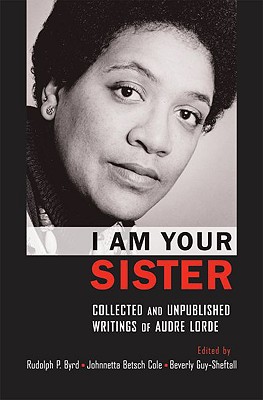
As Audre Lorde noted, "gender" is not the only matter which negatively impacts women. Women are harmed by more than gender hierarchy in the form of male supremacist practices and institutions. Women are harmed by racism. Women are harmed by poverty. Women are harmed by anti-Indigenous warfare and genocide. Genocide is, always, gynocidal.

When I think about my own areas of profeminist focus, pornography and interpersonal sexual violence have been central in my work. In the last five years especially, I have become increasingly aware of what women face that is lethal, dangerous, horrendously oppressive and harmful that is not "pornography and interpersonal sexual violence". I recognise my own privileges in "deciding" what to focus my energy on exposing and challenging. My regional, class, gender, and race privileges have meant that I can completely ignore what happens to most women--to women of color around the world--and consider myself a radical profeminist. This is no longer an option: to focus on what impacts white women with class and regional privileges isn't unimportant. "If it hurts women, feminists are against it" was something Andrea Dworkin once noted. Politically enforced race, as well as sex, hurts women. To not see and attend to this is to be racist and white supremacist, in the view of this blog's host.

What follows is from *here*. Thank you very much, Brenda!

Tuesday, February 23, 2010


Uranium Mining Begins at Grand Canyon

Uranium Mining Begins at Grand CanyonThousands of Claims Threaten Public Health and Sacred Lands

By Klee Benally

Indigenous Action Media
(http://www.indigenousaction.org/)
Photo (R): Havasupai gathered near Red Butte at the south rim of the Grand Canyon in July to oppose Denison Mines new uranium mining. Photo Brenda Norrell.
GRAND CANYON, Ariz. -- In defiance of legal challenges and a U.S. Government moratorium, Canadian company Denison Mines has started mining uranium on the north rim of the Grand Canyon. According to the Arizona Daily Sun the mine has been operating since December 2009.

Denison plans on extracting 335 tons of uranium per day out of the "Arizona 1 Mine", which is set to operate four days per week. The hazardous ore will be hauled by truck more than 300 miles through towns and communities to the company's White Mesa mill located near Blanding, Utah.

After being pressured by environmental groups, U.S. Secretary of Interior Ken Salazar initially called for a two-year moratorium on new mining claims in a buffer zone of 1 million acres around Grand Canyon National Park, but the moratorium doesn't include existing claims such as Denison's. The moratorium also doesn't address mining claims outside of the buffer zone.

The Grand Canyon is ancestral homeland to the Havasupai and Hualapai Nations. Although both Indigenous Nations have banned uranium mining on their reservations the U.S. Forest Service and Bureau of Land Management may permit thousands of mining claims on surrounding lands.

Due to recent increases in the price of uranium and the push for nuclear power nearly 8,000 new mining claims now threaten Northern Arizona. Uranium mined from the Southwestern U.S. is predominately purchased by countries such as France (Areva) & Korea for nuclear energy.

In July of 2009 members of the Havasupai Nation and their allies gathered for four days on the South Rim of the Grand Canyon at their sacred site Red Butte to address the renewed threat. Red Butte has long been endangered by the on-going threat of uranium mining.

Under an anachronistic 1872 mining law, created when pick axes and shovels were used, mining companies freely file claims on public lands. The law permits mining regardless of cultural impacts.

OBAMA APPROVES NEW NUCLEAR REACTORS AND INCREASED NEED FOR URANIUM

Currently there are 104 nuclear reactors in the United States which supply 20% of the U.S.'s electricity. In January the Obama administration approved a $54 billion dollar taxpayer loan in a guarantee program for new nuclear reactor construction, three times what Bush previously promised in 2005.

Since 2007, seventeen companies have now sought government approval for 26 more reactors with plans to complete four by 2018 and up to eight by 2020. New reactors are estimated to cost more than $12 billion each.

Although nuclear energy is hailed by some as a solution to the current U.S. energy crisis and global warming, those more closely impacted by uranium mining and transportation recognize the severity of the threat.

THE COLORADO RIVER, WATER & URANIUM'S DEADLY LEGACY

Uranium is a known cause of cancers, organ damage, miscarriages & birth defects.

Drilling for the radioactive material has been found to contaminate underground aquifers that drain into the Colorado River, and sacred springs that have sustained Indigenous Peoples in the region. In addition, surface water can flow into drill holes and mine shafts which can also poison underground water sources.

Emerging in the Rocky Mountains in North Central Colorado and winding 1,450 miles to the Gulf of California, the Colorado River is held sacred by more than 34 Indigenous Nations. The Colorado also provides drinking water for up to 27 million people in seven states throughout the Southwest.

The river that carves the Grand Canyon has been extensively used by the agricultural industry and cities that are dependent for drinking water, so much so that it now ceases to flow to the Gulf of California, forcing members of the Cocopah Nation (The People of the River) in Northern Mexico to abandon their homelands and relocate elsewhere.

Today there are more than 2,000 abandoned uranium mines in the Southwest. U.S. government agencies have done little or nothing to clean up contaminated sites and abandoned mines. At Rare Metals near Tuba City on the Diné (Navajo) Nation a layer of soil and rock is the only covering over 2.3 million tons of hazardous waste. A rock dam surrounds the radioactive waste to control runoff water that flows into nearby Moenkopi Wash. Throughout the Diné Nation, Diné families have been subject to decades of radioactive contamination ranging from unsafe mining conditions to living in houses built from uranium tailings. Well water is documented by the US Environmental Protection Agency (EPA) as undrinkable in at least 22 communities such as Black Falls on the Dine’ Nation. According to the EPA, "Approximately 30 percent of the Navajo population does not have access to a public drinking water system and may be using unregulated water sources with uranium contamination." Flocks of sheep and other livestock still graze among radioactive tailing piles and ingest radioactive water.

According to the Navajo Nation up to 2.5 million gallons of uranium contaminated water is leaching out of the Shiprock Uranium Mill near Shiprock, New Mexico into the San Juan River every year. At the Church Rock Mine in New Mexico, which is now attempting to re-open, up to 875,000 cubic yards of radioactive waste continue to contaminate the land.

In July 1979 a dirt dam breached on the Navajo Nation at a uranium processing plant releasing more than 1,100 tons of radioactive waste and nearly 100 million gallons of contaminated fluid into the Rio Puerco (which ultimately flows into the Colorado River) near Church Rock, NM. This was the single largest nuclear accident in US history. Thousands of Diné families that live in the region, including those forced to relocate from the Joint Use Area due to coal mining, continue to suffer health impacts resulting from the spill.

In 2005 the Diné Nation government banned uranium mining and processing within its borders due to uranium's harmful legacy of severe health impacts and poisoning of the environment. And yet, high cancer rates, birth defects and other health impacts still bear out the uranium industry's dangerous legacy.

NUCLEAR WASTE & INDIGENOUS SACRED LANDS

Today the US has nearly 60,000 tons of highly radioactive spent nuclear waste stored in concrete dams at nuclear power plants throughout the country. The waste increases at a rate of 2,000 tons per year. Depleted Uranium (DU) is a byproduct of uranium enrichment and reprocessing which has controversial military uses including armor piercing projectiles. DU has been found to cause long-term health effects ranging from harming organs to causing miscarriages and birth defects.

In 1987 Congress initiated a controversial project to transport and store almost all of the U.S.'s toxic waste at Yucca Mountain located about 100 miles northwest of Las Vegas, Nevada. Yucca Mountain has been held holy to the Paiute and Western Shoshone Nations since time immemorial.

In February 2009 Obama met a campaign promise to cut funding for the multibillion dollar Yucca Mountain Nuclear Waste Repository project. The controversial project was initially proposed in 1987 with radioactive waste to be shipped from all over the U.S. via rails and highways. Currently a new proposal for an experimental method of extracting additional fuel from nuclear waste called "reprocessing" renews the threat to desecrate the sacred mountain on Western Shoshone lands.

Western Shoshone lands, which have never been ceeded to the U.S. government, have long been under attack by the military and nuclear industry. Between 1951 and 1992 more than 1,000 nuclear bombs have been detonated above and below the surface at an area called the Nevada Test Site on Western Shoshone lands which make it one of the most bombed nations on earth. Communities in areas around the test site faced exposure to radioactive fallout which has caused cancers, leukemia & other illnesses. Western Shoshone spiritual practitioner Corbin Harney, who has since passed on, helped initiate a grassroots effort to shutdown the test site and abolish nuclear weapons.

Indigenous Peoples in the Marshall Islands have also faced serious impacts due to U.S. nuclear testing. In her book, Conquest: Sexual Violence & American Indian Genocide, Andrea Smith reports that some Indigenous Peoples in the islands have all together stopped reproducing due to the severity of cancer and birth defects they have faced.

CONTINUING RESISTANCE

In March 1988 more than 8,000 people converged for massive 10 day direct action to "reclaim" the test site, nearly 3,000 people were arrested. Groups such as the Nevada Desert Experience (NDE) and Shundahai Network continue their work to shut down the test site and resist the corporate and military nuclear industry.

Throughout the 1980's a fierce movement of grassroots resistance and direct action against uranium mining near the Grand Canyon had taken shape, galvanized by the Havasupai, Hopi, Diné (Navajo), Hualapai tribes and a Flagstaff group, Canyon Under Siege. Prayerful and strategic meetings were held once a year throughout the 80s. In 1989 a group known as the 'Arizona 5' were charged for eco-actions including cutting power-lines to the Canyon Uranium Mine. Attributable in some part to the resistance and but mainly to a sharp drop in the price of uranium, companies like Dennison were forced to shut their mines down.

Mt. Taylor, located on Forest Service managed lands in New Mexico between Albuquerque and Gallup, has also faced the threat of uranium mining. The mountain sits upon one of the richest reservers of uranium ore in the country, it is held holy by the Diné, Acoma, Laguna, Zuni & Hopi Nations. In June 2009 Indigenous Nations and environmental groups unified to protect the holy Mountain and through their efforts Mt. Taylor was given temporary protection as a Traditional Cultural Property.

For 7 years Indigenous People from throughout the world have gathered to organize against the nuclear industry at the Southwest Indigenous Uranium Forum on the Acoma Nation.

At the 2006 Indigenous World Uranium Summit on the Diné Nation, community organizations such as Eastern Navajo Diné Against Uranium Mining (ENDAUM) joined participants from Australia, India, Africa, Pacific Islands, and throughout North America in issuing a declaration demanding "a worldwide ban on uranium mining, processing, enrichment, fuel use, and weapons testing and deployment, and nuclear waste dumping on native lands."

Klee Benally (Diné) is a collective member of Indigenous Action Media, on the Board of Directors of the Shundahai Network, and is a musician with the group Blackfire.
Author Mary Sojourner assisted editing this article. For further information and action:
Southwest Research and Information Centerhttp://www.sric.org/
Shundahai Networkhttp://www.shundahai.org/
The Center for Biological Diversityhttp://www.biologicaldiversity.org/
Uranium Watchhttp://www.uraniumwatch.org/
World Information Service on Energy: Uranium Project
http://www.wise-uranium.org/
Western Mining Action Networkhttp://wman-info.org/
Network Sortir du Nucléairehttp://www.sortirdunucleaire.org/
Sources:
Addressing Uranium Contamination in the Navajo Nation - Map of contaminated wells
http://epa.gov/region09/superfund/navajo-nation/contaminated-water.html
Tuba City Mill Site
http://www.eia.doe.gov/cneaf/nuclear/page/umtra/tubacity_title1.html#_ftn51
EPA summit addresses uranium cleanup
http://www.gallupindependent.com/2008/08august/081408epa.html
Conservation groups challenge uranium mining threat to Colorado River
http://www.lasvegassun.com/news/2008/sep/30/conservation-groups-challenge-uranium-mining-threa
A peril that dwelt among the Navajos - L.A. TImes - November 19, 2006http://articles.latimes.com/2006/nov/19/nation/na-navajo19
Uranium Mining & Milling
http://www.wise-uranium.org/indexu.html#UMMCI
Colorado River Facts
http://www.azhumanities.org/movingwaters/faq.html
Nuclear power inches back into energy spotlight
http://www.usatoday.com/money/industries/energy/environment/2009-03-29-nuclear-power-energy-return_N.htm
AREVA: France’s nuke power poster child has a money melt-down
http://acdn.france.free.fr/spip/article.php3?id_article=506&lang=en
Environmental Working Group - January 2008 - Report: Grand Canyon Threatened by Approval of Uranium Mining Activities
http://www.ewg.org/reports/grandcanyon
Shiprock Mill Site
http://www.eia.doe.gov/cneaf/nuclear/page/umtra/shiprock_title1.html
Grand Canyon Trust
http://www.grandcanyontrust.org/
The Center for Biological Diversity
http://www.biologicaldiversity.org/
Las Vegas Review: Yucca Mountain seen as possible reprocessing site
http://www.lvrj.com/news/yucca-mountain-seen-as-possible-reprocessing-site-83787692.html
Southwest Research and Information Center
http://www.sric.org/
Nuclear Free Futurehttp://www.nuclear-free.com/
Klee Benallyindigenousaction@gmail.com
http://www.indigenousaction.org/ - Independent Indigenous Mediahttp://www.oybm.org/ - Indigenous Youth Empowerment!http://www.savethepeaks.org/ - Protect Sacred Placeshttp://www.taalahooghan.org/ - Flagstaff Infoshophttp://www.blackfire.net/
CENSORED NEWS: This uranium mining, transport and processing threatens the water supply and health of Paiute, Havasupai, Hualapai, Navajo and Ute in this immediate region, as well as visitors, other residents and those living along the Colorado River.

GRAND CANYON TRUST: "Denison Mines, a Canadian company, recently revived operations at the Arizona 1 uranium mine on the Arizona Strip adjacent to Grand Canyon. This industrial activity threatens not only the visitor experience at Grand Canyon National Park, but the water supply for twenty-five million people in Nevada, southern California, and Arizona, as well as seeps and springs in the park. Worse yet is the fact that much of the uranium will be shipped to Korea."
Uranium Mining in Region Resumes
By CYNDY COLE
Arizona Daily Sun
Driven by a rebound in prices, uranium mining has resumed in northern Arizona after a hiatus of about 20 years.
Employees working for Denison Mines began removing high-grade ore at the Arizona 1 mine north of the Grand Canyon in late December, according to the company’s president, and trucking it to a mill near Blanding, Utah.
The mine is about 45 miles southwest of Fredonia in Mohave County, and about 10 miles from the boundary for Grand Canyon National Park. Read more ...
TELL DENISON TO STOP:
Denison Mines is mining uranium on the lands of the Havasupai, Hualapai and Paiute at the Grand Canyon; Ute and Navajo in Utah and First Nations in Saskatchewan. TELL THEM TO HALT: Denison Mines Corp. Atrium on Bay 595 Bay Street, Suite 402 Toronto, ON, Canada M5G 2C2 Telephone: 416-979-1991 Fax: 416-979-5893 info@denisonmines.com

Monday, February 22, 2010

Audre Lorde: Podcast on Survival, for all the sisters who struggle with cancer and other forces challenging Black women's lives

What follows is from *here*, and is a cross-post from Eternal Summer of the Black Feminist Mind.

HappY Birthday Audre Lorde: Podcast on Survival

February 18, 2010
On this day 97 years ago…my grandfather Jeremiah Gumbs was born.  Pop-pop was the person who taught me how a love for poetry could transform my life.   It seems not mere coincidence that my favorite poet and chosen ancestor Audre Lorde was ALSO born on this day 76 years ago!  This podcast, lovingly released on this birthday of two of my beloved ancestors who make their spirits known in my life on a daily basis is also dedicated to a new ancestor.

My godmother Aunt Andie (Andria Hall) died from breast cancer a little over a year and a month ago today. To honor Aunt Andie and Audre Lorde, and June Jordan, and my stepsister Kyla’s mom Diane and Mama Nayo Barbara Watkins and so many more beautiful ancestors who are so powerfully with us, my mom, my Aunti Akosua and the brilliant and inspiring Mary Anne Adams who is a breast cancer survivor collaborated on this podcast.  May it be healing for you and may it be an invitation to the energy of all of your ancestors to fill your heart and kiss your face.

love always,
lex


http://brokenbeautiful.files.wordpress.com/2010/02/audre-lorde-survival-podcast.mp3
you can also find the recent podcast on itunes if you search “brokenbeautiful press”

And if you are in or near Durham don’t forget to come to the B-day Party this Saturday!!!!!!

http://www.facebook.com/profile.php?v=feed&story_fbid=309108934999&id=103868#!/event.php?eid=299116552453

<3<3<3<3<3HappH

Remembering Audre Lorde, a cross-post from SpeakEqual.com and Black Gay Gossip

 
[image is from here]

Audre Lorde, for over twenty-five years, has been a primary spiritual teacher in my life, a guide, role model, and exemplar of radical feminist being and practice. Her 66th birthday was on February 18th.

What follows next is from *here*


Know Your History: Audre Lorde
Know Your History[Herstory-- changed by Julian]: Audre LordeLGBT, NewsBites, Society & Culture — By Brooke Murphy on February 22, 2010 at 8:00 am

Audre Geraldine Lorde (February 18, 1934 – November 17, 1992) was a Caribbean-American writer, poet and activist.

Lorde’s poetry was published very regularly during the 1960s — in Langston Hughes’s 1962 New Negro Poets, USA; in several foreign anthologies; and in black literary magazines. During this time, she was politically active in civil rights, anti-war, and feminist movements. Her first volume of poetry, The First Cities (1968), was published by the Poet’s Press and edited by Diane di Prima, a former classmate and friend from Hunter College High School. Dudley Randall, a poet and critic, asserted in his review of the book that Lorde “does not wave a black flag, but her blackness is there, implicit, in the bone.”

Her second volume, Cables to Rage (1970), which was mainly written during her tenure at Tougaloo College in Mississippi, addresses themes of love, betrayal, childbirth and the complexities of raising children. It is particularly noteworthy for the poem “Martha”, in which Lorde poetically confirms her homosexuality: “[W]e shall love each other here if ever at all.”

Later books continued her political aims in lesbian and gay rights, and feminism. In 1980, together with Barbara Smith and Cherríe Moraga, she co-founded Kitchen Table: Women of Color Press, the first U.S. publisher for women of colour. Lorde was State Poet of New York from 1991 to 1992.

Lorde: Theory & Arguments

Lorde criticised feminists of the 1960s, from the National Organization for Women to Betty Friedan’s The Feminine Mystique, for focusing on the particular experiences and values of white middle-class women. Her writings are based on the “theory of difference”, the idea that the binary opposition between men and women is overly simplistic: although feminists have found it necessary to present the illusion of a solid, unified whole, the category of women itself is full of subdivisions.

Lorde identified issues of class, race, age, gender and even health — this last was added as she battled cancer in her later years — as being fundamental to the female experience. She argued that, although the gender difference has received all the focus, these other differences are also essential and must be recognised and addressed. “Lorde”, it is written, “puts her emphasis on the authenticity of experience. She wants her difference acknowledged but not judged; she does not want to be subsumed into the one general category of ‘woman’”.[8] In a period during which the women’s movement was associated with white middle-class women, Lorde campaigned for a feminist movement conscious of both race and class.

While acknowledging that the differences between women are wide and varied, most of Lorde’s works are concerned with two subsets which concerned her primarily — race and sexuality. She observes that black women’s experiences are different from those of white women, and that, because the experience of the white woman is considered normative, the black woman’s experiences are marginalised; similarly, the experiences of the lesbian (and, in particular, the black lesbian) are considered aberrational, not in keeping with the true heart of the feminist movement. Although they are not considered normative, Lorde argues that these experiences are nevertheless valid and feminine.

Lorde stunned white feminists with her claim that racism, sexism and homophobia were linked, all coming from the failure to recognise or inability to tolerate difference. To allow these differences to continue to function as dividers, she believed, would be to replicate the oppression of women: as long as society continues to function in binaries, with a mandatory greater and lesser, Normative and Other, women will never be free.

Works

Lorde, Audre:
The First Cities (1968).
Cables to Rage (1970).
From a Land Where Other People Live (1973).
New York Head Shop and Museum (1974).
Coal (1976).
Between Our Selves (1976).
The Black Unicorn (1978, W.W. Norton Publishing).
The Cancer Journals (1980 Aunt Lute Books).
Kore Press
Uses of the Erotic: The Erotic as Power (1981 Kore Books) Uses of the Erotic.
Chosen Poems: Old and New (1982).
Zami: A New Spelling of My Name (1983, The Crossing Press.)
Sister Outsider: Essays and Speeches (1984, 2007, The Crossing Press).
Our Dead Behind Us (1986).
A Burst of Light (1988, Firebrand Books).
The Marvelous Arithmetics of Distance (1993).

What follows is from *here*.

BGG Black History Month Spotlight: Audre Lorde

February 21st, 2010www.blackgaygossip.comBlack History Month Spotlight, Books, Celebrities, Culture
audre
Audre Lorde, a self-described “black, lesbian, mother, warrior, poet,” remains a celebrated figure in our community for her contributions to gay culture through her published works and activism.

Lorde’s body of work includes The First Cities, Cables to Rage, From A Land Where Other People Live, Coal, The Black Unicorn, Zami: A Spelling of My Name, Sister Outsider, and A Burst of Light.
In the 80s, she co-founded Kitchen Table: Women of Color Press, the first publishing company run solely by women and was also a founding member of Sisters in Support of Sisters in South Africa (S.I.S.S.A.), which spoke out on concerns of women under apartheid.

She lived out the rest of her years with partner Gloria Joseph, while battling breast cancer, which eventually took her life in 1992 at the age of 58.


Charmaine White Face has been chosen by True West as Best Living Indian Rights Crusader

 
[photograph is from here, at the Nuclear-Free News website]

This is an excerpt from an interview with Charmaine White Face. The full interview is linked to below.
I recently read and appreciated your article, "Getting to the Understanding", which explains the 7 subgroups of the Great Sioux Nation. I admit that I had been confused, even though (thanks to my grandfather) I was taught, as a child, some facts about different tribes.  Many non-Natives think Indians are all alike. Do you find that even some Native people are ignorant about other tribes, their practices, and particular concerns?
CWF:  Oh yes. There are many factors involved including the adoption of Native children out of their Tribes, the colonizing influence of the educational systems, and of course the historic 'boarding schools' where Native children were brutally treated to 'wipe out' their Indianness. These have had generational effects but slowly and in small numbers, the trend is gradually reversing.


Let us celebrate the life and support the on-going work of Charmaine White Face (Oglala Tetuwan Oceti Sakowin) whose non-Anglo name is Zumila Wobaga. What follows is from *here*.

True West selects Charmaine White Face for Best Living Indian Rights Crusader

BEST LIVING INDIAN RIGHTS CRUSADER
True West magazine
Charmaine White Face
She is a voice for the Black Hills—and it’s a task Charmaine White Face has gladly undertaken for more than two decades, as a columnist for several newspapers and an activist. She formed Defenders of the Black Hills in 2002, working to end logging, mining and exploitative tourism of this area, which is sacred to her Ogala Sioux tribe. Her work has received international recognition, and she hopes that will help return the Black Hills to its rightful owners—the American Indians.

Anti-Vancouver Olympic Games Activism: Coast Salish blockade bridge where ancestors were desecrated

 [image is from here]

With thanks to Brenda, at Censored News, *here*:

Sunday, February 21, 2010


OLYMPICS: Coast Salish blockade bridge where ancestors were desecrated

Blockade Golden Ears Bridge
Anti-2010 Olympics Convergence, Coast Salish Territories, (Vancouver, B.C.)


As part of the Anti-Olympics Convergence in Vancouver B.C., members of Coast Salish Katzie First Nation and supporters blocked the Golden Ears Bridge.

The Bridge spans the Frazer River between Pitt Meadows and Langley, and is adjacent to Katzie 1 and Katzie 2 Reserves. It is about a half hour drive outside of Vancouver.

The bridge opened on June 16, 2009. It is owned by Translink, who say, “It will have major long-term impacts on the region, improving travel times and promoting economic activity.” It is clearly disregarding the negative impacts on Indigenous people.

Construction of the bridge desecrated a 3,000 year old burial ground. Its massive pilings in the river disrupt currents, and the ability of local Katzie fishers to fish. Situated at the mouth of the Frazer River, the bridge effects already threatened habitat for Salmon and Indigenous fishing communities all up the Fraser River.


Statement by a participant in the action:

“My people have been told when to fish and how big our net can be since our book of rules (Indian act) in 1896. My family has been arrested for fishing when they were not allowed.”

“The bridge affects my family in many ways. For thousands of years my family has been fishing on the Fraser River. The exact same spot where they built the Golden Ears Bridge is where my father, my grandfather and so on, is where we were taught to fish. The exact same spot we have been fishing is where there is a 6 lane bridge.”

“That bridge has caused hurt and pain with me and my family. The bridge is built on my peoples sacred burial grounds. That bridge has destroyed the river far beyond Katzie’s boundaries. Because of the bridge I’m forced to change my teachings and ways of fishing. That bridge has destroyed the natural path for the salmon to continue up the river for indigenous people to eat to survive. Dredging gravel out of the river to build bridges and highways for the Olympics is destroying the delicate ecosystem and putting declining fish stocks at further risk.”

These people worked on the site where the bridge is now built. They asked to be anonymous because they would lose their jobs:

“We dug up history of our ancestors - human remains, arrow heads and beads. They gave us a choice: Either we dig up our peoples history or they were going to send non-native people to do it. We were forced and no options from our community!”

~Anonymous hired archaeologist worker.

After the remains were found, members of Katzie First Nations people were paid to build tiny coffins and bury the bones where they were found. Many of the workers thought this meant they wouldn’t build the bridge at that spot.

“So many bones were found, in fetal position, and scattered bones were found These are my people; these bones are my grandfathers and grandmothers. After we had a ceremony to bury the bones in small coffins we made, they went ahead and built the bridge anyway right over top of our sacred burial ground.”

~Anonymous Katzie First Nations worker.

Video: http://www.youtube.com/salmonsovereignty
Contact: salmonsovereignty@hotmail.com
For more info on Anti-2010 Olympics see:
http://vancouver.mediacoop.ca/ http://2010.mediacoop.ca/

Saturday, February 20, 2010

Across the World Wide Web and also offline, I find men with this view: that ONE MAN being wrongly imprisoned for a rape charge is WORSE than a hundred women being raped...

 
[image is from here]

I think that blogpost title tells us A LOT we ought to know about how many, many men (millions, in fact) view the value of men's physical freedom relative to the right of women to be socially, interpersonally, psychically, politically free of rape and the possibility of rape.

Add to that the reality the reality that most rape of women by men is never reported. Add to that the fact that most reported rape is never prosecuted. Add to that the fact that most prosecutions do not result in jail time or imprisonment for the rapist.

The number of rapes that are not reported, combined with the number that are, is so exponentially greater than the number of women who falsely accuse men of rape. LET ALONE the number of men who are unjustly IMPRISONED for raping ANYONE.

Let's be clear: maybe one in a million men are imprisoned falsely for rape, if that. One in four women are raped or sexually assaulted, generally, across ethnicity. One in three Indigenous North American women will be raped--by a man, mostly by a white man. Do the fucking math and determine for yourself who is being treated unjustly.

So how many men are politically organised to stop men from being falsely accused of rape, or to demand the prosecution of women who falsely accuse men of rape? And how does that figure compare with the number of men who are politically organised to stop the rape of women by men?

Let's consult Google:

"men against rape" (Google search results): Results 1 - 10 of about 93,200 for men against rape.

"men against false rape charges" (Google search results): Results 1 - 10 of about 73,900 for men against false rape charges

Next search:

"woman's live ruined by rape" (Google search results): Results 1 - 10 of about 106,000 for woman's life ruined by rape.

"man's live ruined by false allegation of rape" (Google search results):  Results 1 - 10 of about 146,000 for man's life ruined by false allegation of rape.

Next search:

"men oppose rape" (Google search results): Results 1 - 10 of about 252,000 for men oppose rape.

"men oppose false allegations of rape" (Google search results):  Results 1 - 10 of about 355,000 for men oppose false allegations of rape

Given that many men's anti-rape groups are fighting to stop the rape of men by men, or the rape of children by men, including boy children, we have to conclude that men will work for their own unjust interests, rights, privileges, entitlements, access, and power to preserve the right to rape by highlighting as "significant" the relatively non-existent phenomenon of men falsely accused of rape. They will do this far more than they will work to stop men who rape women, or to challenge men in other ways in order to bring about an end to the prevalent phenomenon of the rape of women by men.

Next, let's consider how racist and classist the criminal justice system is, and that white rich men are far less likely to be imprisoned for any form of crime against humanity than poorer men of color (and poorer white men too, for that matter).

Taken together, what we have is a set of white supremacist, heterosexist, patriarchal capitalist societies--run by wealthy white het men--that protect wealthy white het men's right to rape women. These same societies are more willing to oppose the rare prosecution of men who are falsely accused of rape than to oppose the rampant and true rape of women by men who are not charged, convicted, or imprisoned, including by the least non-falsely imprisoned group of rapists: wealthy white het men.