Showing posts with label CRAP. Show all posts

Sunday, May 8, 2016

Single-cause Analysis in the Age of the Three-Headed Monster

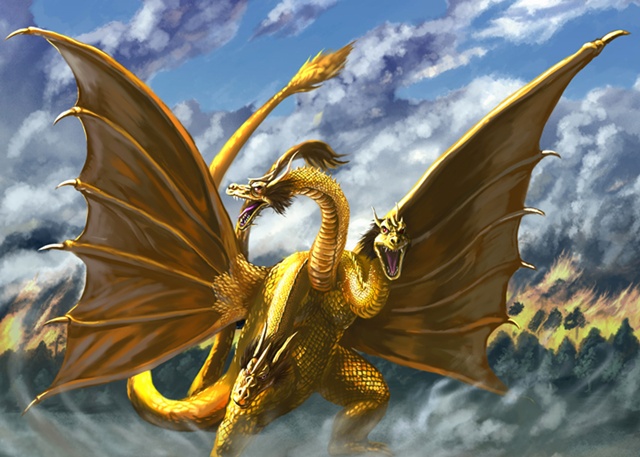
King Ghidorah is a kaiju film creature, also known as the Three-Headed Monster.
The image is from here.
I grew up with an understanding that 'radical' meant 'root' and so 'radical feminism' is the feminism that seeks to expose the root cause of women's oppression. And to uproot it, eradicate it. What I grew up learning was that eliminating patriarchy is what it will take to liberate women.

I accept that as true, but only if that root is understood in its complexity. Because in the world the women I know live in, "patriarchy" isn't only "male supremacy" and "men's violence against women". Most women--if not all women--are harmed and subordinated by those forces. But so too are most women harmed and subordinated by white supremacy and capitalism and other economic systems that require poverty and other gross economic injustice.

I also grew up seeing the limits of Marxist analysis--how it traditionally holds no deep understanding of what causes the oppression of women by men. Also, analysis of white supremacy and racism too often ignores how it is entwined with male supremacy or capitalism.

If I consider any centuries-old atrocity that causes mass destruction to girls and women, it is tied directly to patriarchy (male and hetero supremacy), colonialism (white, Anglo, and Western supremacy), and capitalism (and wealth supremacy).

Trafficking disproportionately exploits and kills girls and women of color, globally. The globalised enslavement and rape of female human beings for profit for pimps and slavers, for the pleasure and dominance of men. All three heads of the beast are implicated.

Seeing patriarchy as a force that operates separately from colonialism and capitalism is an abstraction. But it isn't just abstract: it denies what is happening and to whom it is most happening.

When women and girls of color are centered, it is impossible to ignore how colonialism/white supremacy, capitalism/wealth supremacy, and patriarchy/male supremacy are always operating against the efforts of girls and women to be free.

This blog will not ignore those forces or pretend only one form of supremacy is deadly. Radically supporting the liberation of marginalised girls and women around the world necessitates naming each head of the monster.


Tuesday, March 22, 2016

The Components of Oppression in White Supremacist Capitalist Patriarchy

this image, of a mural by Jim Chuchu,
inspired by the poetry of Staceyann Chin, is from here

The components of oppression in white supremacist capitalist patriarchy, or as it is known here on this blog, Corporate Racist Atrocious Patriarchy (CRAP):

Power-over/Status: The dominant group has a material interest in the system being oppressive and hegemonic. It is in the dominants' material interest to maintain the status quo. These interests include various entitlements, privileges, advantages, benefits, and forms of enfranchisement. Having power means, simply: If you want things done, they get done. If you want something to be a certain way, it is made to be that way; you have meaningful choices of action; you can choose to change political locations on one or more hierarchies. Your values are valued; your personhood is humanised; in myth and legend, in fiction and reality, your humanity is revered as great, genius, holy, or authoritative. Power-over is distinguished from power-with, such as in healthy friendship and communal action.

Subordination/Stigma: There exists a social hierarchy in which there are two main groups, one on top, one on the bottom. The bottom group is thought to exist for the top group. there is no identity for the subordinated group that is not in stigmatised relation to the statused dominant group.

Discrimination/Marginalisation/Segregation/Rejection: Sometimes, as needed, the oppressed group may be cloistered off, kept out, kicked out, removed from society, or purged. This may be done using culture, religion, and law, through uncentering or persistent decentering in theory and social experience. Examples: Jim Crow; poverty; pogroms.

Objectification: the dominant group dehumanises the subordinated one also through physical and sexual objectification. The group is turned into a thing, a commodity. Media reinforces this. Pornography makes it feel like 'sexual fulfillment'. For the oppressed group to be 'sexy', they/we must be available for the dominant group, to do what they want. (Even if they want you to be sexually dominant.)

Exploitation: The dominating group makes economic use of the subordinated group: their resources--emotional, physical, sexual--are taken/stolen or systematically used/used up, or withheld from the oppressed. The oppressed work directly for the benefit of the oppressor class in one way or more. The subordinated group is may be 'merely' used, or also impoverished, imprisoned, or enslaved.

Violence: the oppressed group, in part by being objectified, is targeted throughout their lives as appropriate to do violence to, including violation--being interpersonally abused directly or through proxy bullies and thugs. The violence and violation is coded into law; made to be natural, scientifically or socially inevitable, or God-ordained. Example: heterosexual couples must consummate their marriage--she must be penetrated at least once, by legal/cultural/religious mandate; "the rule of thumb"; lynching.

Bigotry: in addition to being stigmatised, it is common and normal to reduce the subordinated group to a negative characteristic, trait, or quality of being. (Note: bigotry against a dominant group doesn't = oppressing or dominating them.) Example: women are dirty; Black people are dangerous and criminal; gay men and lesbians are child molesters and perverts; trans women being misogynist predators.

Silence, threat, and death: The dominant group successfully silences or destroys the oppressed. Examples: femicide, genocide, systematic lack of access to medical care or refusal of the dominants to develop and distribute appropriate care (AIDS deaths), potable water, nourishing food, one's own homeland; the voices of the oppressed are not given the mic, are not allowed on the stage unless to promote the status quo. The oppressed group is seen as perpetually threatening the stability and status of the oppressor class. Humiliating the oppressor class is punishable by death. So is taking power from them. Serial murder and mass murder of the oppressed group is normal.

Sunday, February 14, 2016

AIM Co-founder Clyde Bellecourt's question to Bernie Sanders: "I want to know, if you become the President of the United States, are you going to honor those treaties made with Indian People?"


Caption: Clyde Bellecourt gets the microphone makes a speech and asks Bernie Sanders if he is elected president will he honor treaties the US made with Native Americans.

A portion, transcribed:

Clyde Bellecourt (White Earth Band of Ojibwe):
I want to know if you're going to honor those treaties? I want to know, if you become the president of the United States, are you going to honor those treaties made with Indian People?

Bernie Sanders: 
The Native American people have gotten a terrible deal from the American government. I will do everything I can to redress that, absolutely. 

Clyde Bellecourt:
You haven't answered the question. You still haven't answered the question!

Please also see *this post at Censored News*.


Friday, January 29, 2016

Update on "The Conversations Project: The Radical Inclusivity of Radical Feminism"


upper image is from here; lower image is from here 

To me an important breakthrough, I felt, in my work and that of others was the call to use the term white supremacy, over racism because racism in and of itself did not really allow for a discourse of colonization and decolonization, the recognition of the internalized racism within people of color and it was always in a sense keeping things at the level at which whiteness and white people remained at the center of the discussion.  — bell hooks
Quote, p. 68, Critical Foundations in Young Adult Literature (author: Antero Garcia)

[M]y vehicle was going to be truth: not a global, self-deluded truth, not a truth that only I knew and that I wanted other people to follow, but the truth that came from not lying. — Andrea Dworkin
Heartbreak: The Political Memoir of a Feminist Militant, page 21

There is difference and there is power. And who holds the power decides the meaning of the difference. 
— June Jordan
Quote, p. 220, Virtual Equality: The Mainstreaming of Gay and Lesbian Liberation (author: Urvashi Vaid)


To the leaders and moderators of The Conversations Project:

It appears as though you disappeared a lot of my writing from the Facebook group without any direct notice or personally delivered warning that this would occur. For the record, I do not consider myself as having left the group, nor have I received any notification that I am barred. So I think appropriately, I consider myself a part of it. I'll steer clear of any presumptions, as I have been welcomed, quite recently, to continue to post there. But I feel like I'm getting mixed messages. As I think you know, from the start of my involvement, I stated that I will utilise my blog to process or expand upon things I have mentioned there. So this post is simply the latest, and is not intended to be the final analysis.

My last comment, for the record, was to share a link* as an addition to a relevant discussion within the group. This is, in fact, a five-part conversation on trans and feminist issues, which I'd entirely forgotten about. Here is the full series of conversations with Sara, which occurred in late 2010:

Part 1: https://radicalprofeminist.blogspot.com/2010/11/sara-and-julian-discuss-transfeminist.html
Part 2: https://radicalprofeminist.blogspot.com/2010/11/part-2-sara-and-julian-discuss.html
Part 3: https://radicalprofeminist.blogspot.com/2010/12/sara-and-julian-discuss-transfeminist.html
*Part 4: https://radicalprofeminist.blogspot.com/2010/12/sara-and-julian-discuss-transfeminist_03.html
Part 5: https://radicalprofeminist.blogspot.com/2010/12/sara-and-julian-discuss-transfeminist_05.html


To the readers of this blog:

At this point, I've been in the group a full three weeks. A couple of days ago I thought there was a breakthrough in finally acknowledging what that group is and isn't designed to be or prepared to do. I saw that one of the creators might move forward with radical honesty--I appreciated her so much for this indication, but that got immediately thwarted by another member.

What the group cannot as yet do is deeply interrogate key aspects of gender because triggering occurs when several topics and phrases get raised. It also can't, as yet, get far because it doesn't seem committed to looking beyond white norms except to appropriate concepts, experiences, and cultural understandings of those we whites work so diligently to destroy. Sadly, racist appropriation of things like "inclusivity" and "intersectionality" are among many colonial white norms.

As one feature of The Conversations Project, there is a series of interviews with feminists or queer theorists. Some of those have been posted. At last glance, all the experts are white. The principal authors of the project are also white. (And the most vocal members of the group are white-identified.) The project itself is tethered to work and perspectives that cannot be anything but white-centric and so it loses all possibility of radical contribution to Feminist and Queer theory, unless you think more white supremacist theory is radical. But, for whom could that be true?

Gender, there, has appeared to me to be understood as social and psychological, with political meaning as well. And also scientific, using the work of some neurobiologists to note there are not two 'discreet' genders. But that has never been claimed among radical feminists I have known for decades. The dimensions of gender not well-addressed there are the economic, racial, and patriarchally sexual.

Making room for some marginalised voices is identified as radical--and marginalised voices should certainly be heard. But bringing in usually excluded perspectives while not challenging the oppressive norms or exclusionary practices in the center of the room is also designated as radical. I have disagreed.

To date, the group has refused so much of the depth and dimension of Radical Feminist herstory, such as the more radical theories and activist efforts by white women and women of color; it has created an unfortunately narrow breadth of inquiry, even within an already stifling white discourse. An interview with Catharine A. MacKinnon avoided addressing the core issues in MacKinnon's work, such as the maintenance of sex inequality through harassment, degradation, and speech acts. All of Andrea Dworkin's insights on battery and rape, on occupation and subordination, have been ignored.

So it shouldn't come as any surprise that if a group doesn't, together, welcome dealing substantively with such sharp white activists' work, the work of brilliant women of color would be completely occluded. Beyond marginalised. Audre Lorde, Alice Walker, Gloria Anzaldúa, bell hooks, Winona LaDuke, Patricia Hill Collins, Vandana Shiva--all radically feminist writers of theory and art, practitioners of activism, have not been welcomed and are viewed as off topic, too tangential in focus. Have we not heard precisely this excuse during half a century of feminist discourse--and for many centuries?

The Facebook group pays lots of liberal lip service, however sincerely, to the problem of racism and the value of women of color. But the group, as a whole, or through its leadership, will not acknowledge the degree to which it is a white supremacist space. (If you have not as yet, I invite you to read the first quote that introduces this post.) If anyone from that group, or beyond it, wants more detail, just ask, in a comment here, and I'll explicate several points of critique.

Sadly for me, and as mentioned above, it appears someone there has already removed chunks of those critiques, while giving me no notice of that occurring and no opportunity to collect my work before deletion. This speaks to a problem with ethics and process. And smacks of passive-aggressive censure. I welcome whoever did it to own up to that, in a blog comment, or to otherwise explain their reasoning below. They have endeavored to communicate clearly in the past, so I hold out hope for this occurring here in this case.

My perseverance in seeking to address several limitations within the group was seen as distracting from a stated purpose. But to even believe such a direction amounts to a distraction, means one is willfully committed to a lack of knowledge about gender politics in colonial patriarchies. I'm arguing that not even the most privileged of us can afford to ignore how white manhood and capitalism combine with misogynoir and anti-Indigenism to create patriarchal rape culture. And to grasp it, those of us who are white have to learn about others and ourselves from writers like hooks and Collins. As another white member stated there, to my cheers, white people cannot lead us.

I am reminded daily of the refusal to acknowledge the meaning and force of our whiteness. The refusal was tangible there. Blatantly visible in a number of ways. But denied, which is often enough the first line of defense. (And hopefully the only line.)

In short, the group has not been radically feminist, or radically inclusive, if being either means centering voices and theories of women of color and non-binary POC. Nor has it been one that could go far or deep with its conversations. Here's one example: To ask what is patriarchal about the majority-white conflict between what is termed T--Fs and liberal trans activists, was effectively verboten. To ask which of the dynamics and practices participate in rape culture: forget it. No go. Not even a dead end: nothing paved to even get to a dead end. Partly, the reason had to do with triggering, but not by being triggered by men's violence, per se.

Fundamentally, I think it is a support and education group for a few white trans* people who are trauma survivors. I fully support traumatised people gathering in spaces where they, themselves, define and determine the parameters of their own safety. But the only trauma discussed was committed by white natal women. When the most harm you've experienced as a white person is from a few white Radical Lesbian Feminists, one could argue you've somehow managed to avoid the brunt of what patriarchy forces on people. When the harm is interpersonal to the point that the perpetrators have names (and just a few names), I'd argue we are in the realm of a kind of abuse that is not what attempts to kill most women. Most harm is structural, systemic, institutional, including the interpersonal or intimate expressions of it. To the extent the harm named there shows up in institutions, it is due to its application by white men, not white women. Or it is directly caused and controlled by men across ethnicity.

We were not discussing PTSD as arising from misogynist, institutionalised rapist violence. Or as emanating from racism alone, or from misogynoir. The forms of dissociation and denial I personally witnessed in that minority group have been raced white and were not assigned female at birth. (That is meant to be a deeply political, not an anatomical, point.)

Thus far, the group's efforts have had limited applicability to the actual world of oppression. This is partly due to mining only a few bits of some white radical feminists' work. Then combining that with liberally inclusive elements of white-dominated Queer theory. To be clear: the bits are veridical; the elements are estimable. But anti-feminism--the willed erasure of most women and the sources of their subordination and injury, ought not permeate radical pro-feminist conversations. It especially ought not delineate them.


Monday, January 18, 2016

RadFem. Check. LibTrans. Check. RadTrans? Checking.


The title of this post may be seen as mildly cheeky. But it is also deadly serious.

Life circumstances have kept me offline in the last while. A good friend died of metastatic uterine cancer. She was like a sister to me. And then there were other health issues in her family. The cancer and the treatment was brutal and she was increasingly brave with each passing month. The battle ended two and a half years after diagnosis. I know there are so many people fighting or coping with cancer in some regard. Most along with poverty and additional insults and insecurities of marginalisation and invisibility.

But I'm here today to speak to a few things that have been off my radar, more or less, during that period. For example, I have found that a lot more people across a much wider age bracket use the term 'radfem'.

Due partly to my age, I don't experience 'radfem' and 'radical feminist' as synonyms. I grew up before tweeting and texting when feminist terms being shortened was not usually a sign of respect. Such as when Women's Liberation was turned into Women's Lib.

So in my ancient mind, shortening means going from this: [Content Warning: the second image is stupidly sexist.]

women's liberation movement photo is from here
to this:

blatantly sexist visual is from here

So, no disrespect intended to anyone who identifies as radfem or who uses both terms. Lorde knows I'd have more time on my hands if I'd written radfem every time I wrote out the longer version.

Anyway, I realise that in the last couple of years, the shorter term has taken root more widely. And that's not all. What also seems to have amped up are distressing and awfully bitter battles over terrain and terms, land and language.

Whose land comprises the U.S. of Amerikkka? Will the Federal government or individual States or citizens ever hand back significant tracts and regions of Indigenous land, or does the government remain a land-hoarder and destroyer? Will whites ever concede, en masse, that the Confederate flag is a symbol of white supremacy? That people from Mexico aren't aliens. That Muslims aren't terrorists. Will the xenophobic CRAP that spills out of Dumpty Trumpty ever cease? Will Black Lives Matter?

Does it register that some of us don't have clean water to drink, or reliable access to water?

Will Bernie Sanders become the DNC candidate for president: how would he rule, and make reparations regarding government-stolen land and colonialist-dependent wealth? Will Hilary Clinton be the first white woman to be U.S. president?

Hey: If you want great political leadership in this country, I think Winona LaDuke and Alicia Garza are as good as you get. LaDuke/Garza 2020!!!

Winona, a revolutionary feminist, has pointed out how a curiosity, to me anyway, regarding Anglo uses of the term 'radical', relative to many Indigenist traditional values. That is, from an Indigenist point of view, one may see U.S. government policies as radical, extreme, militant, for decades, for centuries. Genocidal. Seen this way, we can concur that Indigenist feminism is deeply Conservative, but not using the term in at all the same way the U.S. Republicrats do. I read that perspective for the first time many years ago in Talking About a Revolution. We're still waiting for that and are literally dying for it to arrive. Too often, though, it is just liberal talk about terms. Here I go with that.

Digging down and scraping the bottom of the barrel of this blog's archives, from 2008, I found this:

What does 'Radical' mean here? It holds up for me.

What I bring with me as a way to understand any form of oppression are lessons taught to me by radical feminists across race, region, and ethnicity. There are many who deeply inform my thinking and feeling. Among the earliest and most significant are Audre Lorde and Andrea Dworkin. But there more contemporary voices of wisdom and radical knowledge on the scene.

I will bring radical feminist theory and agendas, of color and white, with me as I go, never settling into any perspective or practice with colonial patriarchal Certainty. Andrea Dworkin, for one, never advocated for theory being mistaken for truth. She knew theory could be made into reality--to look, feel, taste, sound, and smell like CRAP. And like everything. And like the core of who I am, which may be why so many people feel like CRAP. And the danger to us, in part, is not knowing whose theories we are living inside, which ones we benefit from and protect, and which we are under and must continue to rise up against.

The more liberal academic side of the sometimes-termed RadFem vs. LibTrans turf war is a contest over theory--issues of gender, essentialism, and privilege. But the social and legal side of it is about spaces of safety and struggle. As noted above, it is clear who is fighting for land and language. In some sense we all are. But not equally.

________________

When I approach any conversation about gender, I first center this question: Whose bodies are marked for terrorism and destruction? What I see is that the bodies, the souls, of those who are identified as female, Indigenous, Black, and Brown, especially, are being terrorised. As they have been for centuries, at least. More recently, it is also Black trans bodies that are marked and murdered.

Corporate media would rather tell us of these horrors as individual tragedies perpetrated by one, two, six, or a hundred 'bad men' or 'rogue cops'. Mainstream media will not report the violence as systematic: patriarchal, colonial. Most white people I know are willing to settle for dimensions of mass media's truth. As are most men. I wonder how many other excuses white folk can conjure to excuse a cop's murder of someone not threatening them. I wonder how many rapes have to occur before it is seen as something men do normally, whether or not most men normally do it. In some sense it should not be surprising that rape happens, even while it should always be understood as part of a complex, involving entitlement and the requirement patriarchies have for some people to be femaled, 24/7/365. It is, tragically, an arrogant and desperate need of too many people for access and accommodation; for violence as violation. For land and language.

I am speaking of a need imposed on others, by human beings who are maled, who are always complex and nuanced in their hirstories and their lives, located in positions of privilege and marginalisation, as most of us are. But the color and sex of normal brutality must be noticed and named. I am mindful, heartful, of the violent disappearance of trans and nontrans Black women, murder after murder. And of the reality of rape culture, and how it is tethered both to patriarchy and to colonialism.

Within white spaces, also always complex and multifaceted, the only L  G  B  T movement I've ever seen as being radical was the L. I have looked to white Lesbian Feminist theorists for keen analysis of heteropatriarchy for over thirty years. Among my fav of those philosophers is Marilyn Frye. But there are many. My most fav, however, is not white. She is, as noted above, Audre Lorde.

The _GBT+ organisations and campaigns which are white-led or coloniser-centered, that claim to be radical, do not appear to me to be revolutionary in theory or practice. This has been brought to my attention in detail quite recently.

In some of the next posts, I will endeavor to carefully and respectfully identify what I find to be politically problematic with a facebook group I have been in as a commenter. It is called "The Conversations Project: Radically Inclusive Radical Feminism". It is welcoming and not supportive of flame wars--that alone is rare online. It has tolerated my very privileged presence for almost two weeks: we'll see who exhausts the other first. Hopefully amicable relationships will be nourished. But unowned intellectual liberalism is toxic to me. And denial of any form of privilege by anyone, as a way of life, is atrocity-supporting. When I see it, I endeavor to call it out, hopefully respectfully and with increasing sensitivity to how my own places of privilege effect the reception of the critique.

The two founders are well known in some progressive circles that contend with gender and privilege. Cristan Williams with Trans/Gender politics. John Stoltenberg with what used to be called Sexual Politics. With the doubly radical title as my guide, I presumed they are doing something radically feminist. In at least two senses, I believe they are using the term, well, liberally.

I have already written to them about my concerns, within the closed facebook group. Projects termed radical that are, in theory and reality, liberal, are nothing new. But the name of the project did direct me to a set of expectations and I was intrigued. I am attempting, in many ways wrongly, to hold them to my expectations. It's an unfair thing to do and I can be a pest about it. They have been kind, and I do well with kindness, so I'm working diligently at keeping my critiques clear of passive-aggression and void of shaming under- and over-tones. That in and of itself is good work for me to be doing in an online or offline community setting.

___________________

I will update you, here, on my own issues by noting that I've been continuing to search for terms to locate my sense of myself relative to gender. Given that I believe (I think in a radical feminist tradition) that the subjectivity of the oppressed matters more than the subjectivity of the oppressor, how women experience me is, first and foremost, what my gender is. That means I don't get to control it: the naming. The best I can do, subjectively, personally, non-essentially, while using the English language is "a maled adult". (And, being a good Amerikkkan, I only speak one language.) I'm a white maled adult, nonbinary, with more economic security than most people, which increasingly doesn't have to be a whole hell of a lot; but I have a kind of stability few people have: I can pay my bills on time and have no debt. And, while gay (in this case: maled, attracted to men--very few, but men), I do not engage in romantic or sexual relationships. That means the ways I can harm people interpersonally are dramatically reduced. And, yes, the ways I can be hurt and misunderstood: but that's what the internet is for. Or not.

If we're talking about dominant gender--CRAP-loaded gender--then using a term like 'anti-gender' works well for me. I have been identifying as 'intergender' but as a fierce white Feminist Lesbian called out, doing so locates me, affirmatively, between the poles of a gender binary that's also a hierarchy. That is, such a term, applied to me, reinforces the hierarchy linguistically (her point). I agree. It also pretends that by being 'in between', I may have less male privilege or sense of entitlement than others who ID as men. So, as either trans and cis, or neither trans and cis, and while I don't have heterosexual privilege, and while I'm not of Northern European gentile stock, I am afforded most male supremacist advantages and benefits. No doubt about it. No denial about it. Please.

I yearn for social spaces which share and practice community-enriching, humane values that I learned from radical feminism. Values like listening, self-awareness, accountability, mutuality, humor, and assertiveness. One especially important ethic is radical honesty: digging for the truth of one's feelings and experience, not settling for the views and interpretations of others just because they appear to be mandatory or popular. And not forgetting: we live inside the theories of others--most of whom are long gone, who may not ever have had any living creature's best interests at heart. I leave you for now, with this:
The purpose of theory is to clarify the world in which we live, how it works, why things happen as they do. The purpose of theory is understanding. Understanding is energizing. It energizes to action. When theory becomes an impediment to action, it is time to discard the theory and return naked, that is, without theory, to the world of reality. People become slaves to theory because people are used to meeting expectations they have not originated—to doing what they are told, to having everything mapped out, to having reality prepackaged. People can have an antiauthoritarian intention and yet function in a way totally consonant with the demands of authority. The deepest struggle is to root out of us and the institutions in which we participate the requirement that we slavishly conform. But an adherence to ideology, to any ideology, can give us the grand illusion of freedom when in fact we are being manipulated and used by those whom the theory serves. The struggle for freedom has to be a struggle toward integrity defined in every possible sphere of reality—sexual integrity, economic integrity, psychological integrity, integrity of expression, integrity of faith and loyalty and heart. Anything that shortcuts us away from viewing integrity as an essential goal or anything that diverts our attention from integrity as a revolutionary value serves only to reinforce the authoritarian values of the world in which we live.  —  Andrea Dworkin, Letters from a War Zone, U.S. edition, pages 127-128
Monday, January 11, 2016

The Seven Deadly SINS of the Anglo Turf Wars

Africa-centering global map image is from here

A work in anti-progress.
Constructive radical feedback welcomed.

The most dangerous and deadly seven political realities (SINS) within CRAP, aka The Anglo Turf Wars

1. Genocide of Indigenous Peoples
2. Gynecide/Femicide
3. Misogynoir/misogyny
4. Sexual Trafficking of children and adults
5. Militarised cultural colonialism, particularly white USUK-led
6. Global West and North's hoarding of natural, capital, and human resources; accomplished through sexual, chattel, and wage slavery
7. Ecocide

________________________

Glossary:

Amerikkka: The United States of America.

Black:
1. racially despised, diasporic African people. (Within Africa, people generally have various national and ethnic identities.)
2. Aboriginal People in Australia.

CRAP:
1. Corporate Racist Atrocious Patriarchy: the increasingly globalised governing political and philosophical paradigm of the West.
2. Enforcement of capitalist white male supremacy.
3. Portrait of USUK cultures and ideas as 'progressive' pinnacles of human evolution, maintaining English as a primary language.

Ecocide:
1. the mass extinction of plant and animal species and ecosystems.
2. the murder of Gaia.

Eroticism: See Uses of the Erotic: The Erotic as Power, by Audre Lorde.

Femaled (adjective, verb): [referring to humans] made sexually vulnerable, accessible, and compliant.
--In this usage, it does not refer to anatomical or physiological features, in or beyond humans.

Genocide: the eradication or destruction of a people--their culture, economy, and sexuality--through mass murder, enslavement, incarceration, cooptation, possession, removal or denigration of identity, theft of land, and banishing of languages.

Gynecide:
1. a combination of agendas and actions that subordinate, enslave, and mass murder femaled people, by intention or effect, individually, culturally, and regionally.
2. The physical and psychological possession and control of people deemed dangerous and threatening to male supremacist rule and authority.
3. Also termed Femicide.

Indigenous Peoples:
1. the Native, Aboriginal, or First Nations people of any region.
2. The people whose homeland (or region) was established without the use of genocide and land theft.
3. The people of color who have faced imperialist, colonialist, and capitalist extinction for 500 years.

Maled (adjective, verb):
1. people structurally positioned to oppress patriarchally femaled people.
2. human beings who, unnaturally, make it their practice to render others sexually vulnerable, accessible, and compliant.
3. as applied to a group, the people who unconsciously or not, by intention or effect, actively co-maintain male supremacist systems and institutions; they do so as the primary beneficiaries, as those atop that particular sexed hierarchy.
--In this usage, it does not refer to human anatomy or physiology.
See also, "white-maled".

Misogynoir (noun):
1. misogyny specifically directed at Black women and nonbinary people who are seen as femme or feminine.
2. Assumptions and agendas, in theory and practice, that decenter or eliminate Black women and girls to the benefit of CRAP and USUK.
3. Antiwomanism.

Misogyny (noun):
1. hatred of and toward women.
2. contempt for anyone who femaled, and who is seen, by men, as femme, effeminate, or too feminine.
3. It is also directed at women for being too masculine, butch, or not feminine enough--with each of those three categories being distinct.
4. Antifeminism.

Sexual Trafficking: owning, selling, and renting human beings in ways that female them, usually across territories.

Sexuality: the economic, cultural, social, and psychological means through which people are maled and femaled.

SINS: social, institutional, naturalised subordinations.

USUK: the combined colonial force of white British and white Amerikkkan people.

White-maled (verb):
1. Socialised and structurally positioned to oppress white women and people of color.
2. Reflecting or enforcing white male supremacy, as in white-maled literature. (Accomplished by narrowly and unconsciously or uncritically operating within USUKian or CRAPpy paradigms and philosophies to the detriment of everyone oppressed by USUK.)

________________________

Understood this way, many social conflicts are interlocking and overlapping. Most anti-status quo campaigns reinforce some of these political projects, even while they may also intend to challenge them. We are called to compassion, accountability, and responsibility for being caught up, without natural cause, in each other's oppression while we seek liberation. On their own, liberal reforms to CRAP are deadly for the global majority of girls and women who live with fewer privileges and access to resources than do most whites and men.

________________________

Parenthetical points:
There are no revolutions in CRAP or USUK without the centering of radical activism led by women of color globally.

Not addressing the core paradigm problem is deadly, as identified by Vandana Shiva here:
http://www.democracynow.org/2010/7/8/a_debate_on_geoengineering_vandana_shiva

Intersex and nonbinary people ought not have to be conceptualised as intermediate, in between, or in need of alteration, whether surgically or psychiatrically. We are who we are.

The term gender, masculinity, femininity are so widely naturalised and misunderstood in CRAP. Indigenous and less colonialised people, at least historically and sometimes presently, have economically, culturally, spiritually richer traditions. USUK forces reduce those terms to something that is understood to be primarily personal, God-given, natural, beyond science, and not born of politics and economics.

We are dangerously, epistemically limited by the English language.

Cis and trans, re: gender, become deeply politically problematic in the view of this blogger.
See, for understanding of the terms: http://trans-fusion.blogspot.com/2015/06/cis-gender-ipso-gender.html

Racial bigotry, prejudice, intolerance are mistaken as comprising the problem of racism in a white liberal State. The problem is colonial white supremacy. As described so well and so radically by Ta-Nehisi Coates, racism creates race, not the other way around.

As was argued most recently in a group I am in, John Stoltenberg noted the same is true with sex and sexism. Many feminists have made this point over the decades.

In this view, whiteness, non-whiteness, maleness, and femaleness, are systematised, policed and self-policing actions-in-being more than they are anything else. To take offense to being termed 'white' and 'maled', for example, is to have ego-personified concepts that are structural, not natural. I see anti-racist, anticolonialist, Indigenist, Feminist, Womanist, and nonbinary people's activism as the resistance and challenge to those actions.


Partial Reading list:
Andrea Dworkin, Intercourse; Letters from a War Zone
Audre Lorde, Sister Outsider
bell hooks, all titles
Catharine A. MacKinnon, Toward a Feminist Theory of the State; Are Women Human?
Marimba Ani, Yurugu: An African-centered Critique of European Cultural Thought and Behavior
Patricia Hill Collins, Black Feminist Thought; Black Sexual Politics
Roxanne Dunbar-Ortiz, An Indigenous Peoples' History of the United States
Vandana Shiva, all titles
Winona LaDuke, all titles

Further reading and viewing:
Cleansing ourselves of european concepts, Marimba Ani:
https://www.youtube.com/watch?v=pvZ-en9oiqo

Indigenous Feminism Without Apology:
https://prezi.com/2c1rycwvalrq/indigenous-feminism-without-apology/
(With this link about the controversy over Andea Smith's claim of Cherokee heritage:
http://moontimewarrior.com/2015/07/01/no-andrea-smith-is-not-the-native-american-rachel-dolezal/)

Geoengineering, paradigm challenge by Vandana Shiva:
http://www.democracynow.org/2014/9/23/vandana_shiva_winona_laduke_desmond_dsa

Indigenist Feminist Reading list:
https://unsettlingsettlers.wordpress.com/suggested-readings-and-resources/

Radical Women of Color reading list:
http://mylifeasafeminista.tumblr.com/wocfeministtexts

Science as Mythology:
http://webcache.googleusercontent.com/search?q=cache:http://ecophilosophy.org/articles/011101_science.html


Tuesday, October 27, 2015

Bill O'Reilly and the Problem of CRAP-loaded Propaganda

The image of Bill O'Reilly is from here. 

[CRAP is an acronym standing for Corporate Racist Atrocious Patriarchy]

Bill O'Reilly wants your mind.

Here's a synopsis of what he wants everyone to believe, or at least tries to convince others of:

The poor are a threat to the rich, in that they allegedly exploit the rich to get things they don't deserve or aren't entitled to. Capitalism is good. Being a billionaire is enviable and desirable.

Undocumented workers, immigrants, and refugees, particularly if from Mexico or Syria--not of European descent--are a threat to the employment and rule of white/U.S./European working and middle class people, and to mythic ideas about such political/regional heritages. And, again, 'they' exploit the system to garner advantages they are supposedly not entitled to and that ruling classes supposedly do not have.

Black and Brown people allegedly threaten the relative well-being and entitlements of whites.

Women are allegedly threat to men, sexually, economically, socially, and politically. What they threaten is the dominant standing of men and unbridled sexually violent, abusive, harassing, or coercive actions of men.

Islam is allegedly purportedly evil. There are variations on this theme. Muslims allegedly threaten the safety and well-being of non-Muslims, globally. Arab Muslims are allegedly aligned with extremist terrorist's ideologies and practices. The Koran allegedly only promotes violence, especially against the West.

LGBT people are presented, generally, as a joke or source of entertainment for het folks. The socially conservative anti-queer perspective is that we are also a threat to the alleged sanctity of dominant institutions, both religious and secular. Especially marriage. We also pose a risk of recruiting, sexually abusing, or morally corrupting youth.

The globe and all its life is not threatened by corporate environmental destruction.

Now, for some truths:

The rich don't work to increase their wealth. They invest. They don't work to maintain their lives; they hire people for that. The rich exploit corporate capitalism in every way conceivable, through tax loopholes, inheritance, off-shore bank accounts, shared awareness of how the system works, using social connections, arranged marriage, and inheritance laws to hoard wealth. The resources made available to some poor people are paltry and punishing, and are paid for by the labor of other poor people who support the economy rich people exploit. The rich do not generously fund a healthy economy. They greedily ruin it for everyone except themselves.

This economy always has been built on and rests heavily on the unpaid or exploitively paid labor of people who are not white. Work conditions for poorer people are intended to be brutal, exhausting, and dehumanizing. Nothing has changed. Black, Brown, and Indigenous people are under attack and continuously are threatened with genocide, which is on-going.

Men's wealth depends on white women's and women of color's unpaid or exploitively paid labor. Men's identities depend on sexual access to, and abuse of, women. Women of color

Islam is a rich complex religious and multi-cultural practice and system of belief rooted in history, like Christianity and Judaism.

LGBT people present alternatives to the dehumanizing reality of heterosexist existence. We are targeted for harassment and murder, particularly and disproportionately when Black and/or poor.

Corporate exploitation of the Earth is the practice of ecocide.

What this reveals to me is something far too many of us in the U.S. may already know: it perpetuates the most typical narratives of this dominant culture. But with particular focus on perpetuating and further entrenching xenophobia, racism, misogyny, and heterosexual normalcy.

Not only that, but such media outlets and popular spokespeople are engaged in very well-crafted propaganda techniques which include:
Panic mongering
Character assassination
Projection
Rewriting history and reinforcing false cultural myths
Scapegoating and 'othering'
Naming resistance to oppression as being dangerous violence or terrorism
Naming U.S. militarized foreign and domestic policy as necessary and peace-making
Bullying of anti-status quo truth-tellers and overt hostility to truths that undermine the status quo
An assault on higher education as a means of truth-gathering; a rejection of academic 'experts' as only biased by liberalism
Diversion and avoidance of substantive engaged subjective sharing of experience and theory-naming

For more on that, see here: http://www.truth-out.org/news/item/1964:fourteen-propaganda-techniques-fox-news-uses-to-brainwash-americans

I conclude that Bill O'Reilly is thuggish and bullying propaganda-pusher, along with all Right-wing corporate media and extremist Christian and Jewish media and spokespeople. Their terrorism goes unnamed as such by their media, not surprisingly. They perpetrate all significant manifestations of Earthly evil.


Thursday, June 20, 2013

Why we shouldn't just be offended by Paula Deen's racist remarks

photograph of Paula Deen is from here

The latest trending example of white's racism showing itself on the level of language-use, is white Southern cooking show/merch millionaire, Paula Deen. Here's the transcript of her deposition which is now being widely circulated and critiqued.

A common white liberal response is to be offended. And I'm not sure there's much wrong with being offended. But the problem, if the only response is to feel offended, is that we don't see racism for what it is. We accept it as the 2004 Academy Award-winning film Crash, depicts it: a problem located in how individuals act. We see it as a matter of sensibilities, feelings, and behavior between people. We psychologise and sociologise it because our response is psychological and we reduce it to a social problem.

What is also being discussed with this case is the culture of white Southerners: romantisizing that old, old culture of building an economy on slavery and apartheid and then holding that past in a romantic air. But why the nostalgia for a culture that isn't only "old": U.S. Southern white and Northern white society and its economy is still dependent on slavery. And genocide. Both are on-going and both have never gone away. Apartheid has morphed into different manifestations, but segregation built on violence and discrimination is still part and parcel of how the U.S. operates, economically, educationally, culturally, religiously, and politically.

The danger of targeting Paula Deen's attitudes and language-use (or her acceptance of her family's language-use) as "the problem" is that the deeper, more pernicious, and far more deadly problem is never even named, let alone challenged, let alone eradicated. It stays invisible which is exactly how many white supremacists, who are far more influential and powerful than Paula Deen, like it.

The problem beneath Deen's remarks is white supremacy as a political system that is institutionalised and invisibilised by whites. It simultaneously shapes and saturates, regulates and relies on capitalism, class, and colonialism; militarism, imperialism, and war; dominant forms of Christianity, gender, sexuality, and, of course: race. This is where white supremacy lives and prospers. It also shows up as offensive language, aka actionable hate speech, but according to some rules (which do shift over time).

What are the rules, currently? They include whites making racist jokes on stage and otherwise publicly, sometimes without using the most overly harmful (not just offensive) terms; whites discriminating overtly against Black and Brown people, in hiring practices, in housing decisions, in every area of social and economic life; whites holding onto our deep racism, freely displaying it when with other whites for mutual supremacist validation and as part of a larger project of white power-hoarding. The rules allow for cloaking white supremacy in calls for colorblindness and treating everyone as equal on an unequal shooting field. The rules allow for practicing slavery and committing genocide out of view of the corporate media, which intentionally ignores the atrocities, pretending a fictitious fiscal cliff or a factual revelation of Paula Deen's usually hidden remarks ought to be of central concern.

Identifying the racism problem only as a matter of language, culture, or societal mores means those with race privilege stay dissociated from it as an organised system of power that is foundationally structured into in every political institution we have, including "patriarchy". The problem with white anti-sexists pretending that "male supremacy" is our only problem is that what we know as male supremacy in the West is bound to and dependent on white supremacy. The problem with progressives being anti-capitalist, or environmentalist, or vegan, without working to eradicate male or white supremacy, is that pretending each isn't embedded in what we're fighting against means we're protecting both. Lethally.


Wednesday, May 2, 2012

Critique and Commentary about US Sexual and Gender Politics

image if from here

Part I: Viewpoints and Vision

a. The dominant cultural discourse on gender and sexual politics is, as far as I call tell, most hatefully expressed by orthodox allegedly heterosexual and non-trans religious leaders. It is most liberally expressed by Academics. And there is a kind of liberal-conservative version expressed in some corporate media and through some law.

b. All of those institutions (dominant religion, the Academy, corporate media, and Law), and more—such as marriage and the military--exist to promote and protect CRAP: corporate, racist, atrocious patriarchy, which is also to say capitalism, white supremacy, and male supremacy.

c. Seen this way, contemporary discussions and agendas by marginalised-while-dominant and/or oppressed-while-advantaged gendered and sexed people are usually uncritically white-centered, male-centered, and pro-capitalist. They don't or won't offer the larger society, or ourselves, terminology and campaigns, analysis and understandings, that oppose holding on tightly to those three pillars of CRAP.

d. If the alleged spokespeople for all of us who are sex and gender outsiders don't oppose those three pillars, among others, of CRAP, what happens to the radical and CRAP-resisting spokespeople's voices? Are they heard? By what means and mechanisms do over-privileged people among us—let alone the more dominant members of society—listen for them, and more importantly hear them, and even more importantly take them to be wise and worth adopting, centrally, into our own politics and cultures? How likely is it that their/our own alternate analysis and agendas will be accepted as “the right view” or “the most liberating project”?

e. Naming and agenda-setting, theory- and practice-building is happening in communities and through networks of people who are not white, not male, and not pro-capitalist. But to hear dominant contemporary conversation online and off, you wouldn't easily know it unless you're already part of those communities and networks.

f. How progressive or radical is it to ignore and/or silence the voices of those who are so marginalised that they don't even appear in corporate media (and most alternative media either)? How progressive or radical is it to believe and act as though these voices don't ought not matter to white and male supremacist spokespeople on matters of gender and sexual politics?

g. If our politics—our viewpoints and vision, our theory and our practice—is counter-CRAP, is at least attempting to be CRAP-resistant (if not also explicitly anti-CRAP), how do those of us who are white, male, and class-advantaged support and be responsible and accountable allies to the people promoting radical political positions who are not white, are not male, and are not class-advantaged?

I'm asking.

Part II: Theory and Practice

Contemporary theories and practices building from transgender, queer, and women's experiences tend to protect or deny either the oppressive and genocidal force of white supremacy, the subordinating and gynocidal power of male supremacy, or the generally dehumanising and Earth-murdering power of corporate capitalism.

What I see in plenty of dominant-while-marginalised Queer and Transgender Theory, is this idea: that lack of medical, legal, and cultural acceptance and celebration of “difference” is the central problem to be addressed by pro-liberation queer and pro-queer activists. Racism, misogyny, and corporate exploitation are maintained, in part, through the systematic denial and repression of ethnic and sexual differences. But this is done for the sole purpose of maintaining the power of the elites to protect grossly inhumane race, sex, and class hierarchies. Narrowing our struggle to accepting and celebration of difference among subordinates without opposing the congealed power of the (often ignored or enabled) elites in each hierarchy may allow us increasingly diverse sexual and gendered subcultures but not ones free the least privileged of us from oppressive and lethal raced, sexed, and economic force.

In my experience, no mention (let alone plan) of dismantling these hierarchies is required to come across as progressive. CRAP-denying policies, practices, and points of view pretend that diversity of perspectives and identities is the solution to our problem. In such environments, gender and sexual categories are self-chosen and individually identified. Meanwhile, CRAP's institutions and acted out ideologies force raced, classed, and sexed “identities” (read: denigrated and disenfranchised positions on a hierarchy) on us. They are fundamentally imposed and enforced, not chosen. To highlight the validity of subculturally chosen identities without also identifying how white and male supremacy are systems of brute force that exist in and around them, is to enable that raced and sexed force to continue to rule.

CRAP has demonstrated time and again that its ruling classes may tolerate (or ignore) many forms of difference in oppressed and marginalised people as long as the embodiers of those forms don't threaten to expose and challenge CRAP's key pillars of power-over social control and terrorism.

We have seen how far white, self-defined gay men can get in CRAP as long as they are (admittedly or not) anti-feminist, pro-racist, and pro-classist; they cannot achieve the power of white het men but they can acquire or continue to exhibit power not allowed to anyone female. In such politic practices we see how everything from prostitution to sexual sadism is promoted by white gay men as liberatory. I have seen white gay men condemn feminist critiques of prostitution and sexual sadism as virulently homophobic, ignoring how many of the critics are lesbians who are also harmed by homophobia. Meanwhile, when white het men are challenged in any way (or just as part of the routine maintenance of dominant systems of power), they argue that their oppressive political practice is natural, God-ordained, genetically encoded, or socially inevitable.

We have seen the resistance of white feminists, including lesbian feminists, refusing to acknowledge and center the experiences, voices, and analysis of radical womanist and feminist women of color, lesbian and not. In such politics we see the covert and overt maintenance of white power being promoted as “radical” while the white power that is present is denied. The naming of this has been understood as anti-feminist and woman-hating by some white women, as if the radical women of color being ignored and silenced aren't women and aren't working for women's liberation. But the ignoring and silencing--often enough through overt systematic physical and economic force and chronic murder--is fiercest by white het men.

We have seen how white, non-poor pro-transgender spokespeople (many of whom are not transgender) promote a view of sex and gender that is glaringly white and male supremacist. Women who have always been female, who are socially (and also often intimately) targeted for being female by non-trans men, are sometimes portrayed as anti-trans. Some of those pro-trans people simultaneously neglect to name their threatening, abusive, and oppressive heterosexist, misogynist, and male supremacist practices. These self-uncritical practices currently flourish in gender-conservative and gender-liberal environments, whether non-queer, queer, non-transgender, or transgender. But the most virulently anti-trans, anti-queer, and anti-lesbian communities are those ruled by white het non-trans men.

Part III: Concluding thoughts

Among liberal communities covertly protecting white and male power, there is an accepted practice of promoting “diversity” without radically interrogating such an idea as unequivocally good, or as unquestionably leading us to liberation. From what are we liberated through such a practice? How does a liberal challenge to “the gender binary” with no concurrent work end to white and male supremacy (race, sexual, and gender hierarchies) allow females, women, lesbians, and transgender people to be free from violence and dehumanisation on the collective level? How do we respond to individualistic understandings of liberation (usually sexist, classist, and racist) continually usurping class-based liberation struggles?

Many of these political perspectives and strategies are lacking a revolutionary practice of radical self-critique and accountability to those structurally (not morally) beneath socially advantaged people. These practices are also holding tight to at least one pillar of CRAP. Not naming these pillars when defining our struggles doesn't assist us in the project of liberatory social transformation. I call on all whites, all men, all pro-queer, pro-feminist, and pro-trans people, to responsibly seek out and center the analysis and agendas of Indigenous and non-Indigenous radical feminists and womanists of color.

Thursday, November 10, 2011

Liberal vs. Radical, and the Politics of Critique

https://inthesetimes.com/images/5213149069_c6bda1985e_z.jpg
image is from here
I begin by asking: what's problematic or privileged about categorising differences in strategies to challenge the status quo “liberal vs. radical”? I don't want that question ignored or to pretend it ought not exist.


I move on to say: my experience is that there are dominant ideologies ruling the society I live in and that white and male supremacist pro-capitalist liberalism is one of them, with white and male supremacist pro-capitalist conservatism being another. “Radical” is a term used a lot of different ways by people all along the dominant political spectrum, but it is also used by people off that spectrum too.

I am working to be one of the people off the spectrum. That means I am conscientiously trying to figure out strategies for surviving and overcoming CRAP (corporate racist atrocious patriarchy) that is responsive to the struggles of people with less social privilege and structural advantages than I have.

I see unacknowledged liberal perspectives and points of view far more than I see radical ones, as I understand those terms, anyway.

For example: I see people write about ideas as if they are exactly as powerful as systems of brutal force exercised against people in order to oppress and kill them. I consider that part of what Liberalism in my “Western” country wants us to believe, so that if someone is said to be “a Communist”, “we” will all be more afraid of them than if they say they are a “Capitalist”.

Another example: I see people treat, act out, and discuss gender as if it were more a matter of difference than of dominance (in patriarchal societies the ruling ideology and system of force, violation, and control is male supremacy: dominance of people who are not men by dominant men; especially: the subordination and gynocide of girls and women by men).

Another example: I see people treat race as a matter of difference than a matter of white supremacist violence and control of people who white supremacists do not consider to be white.

Another example: Among region-, class-, and/or education-privileged people, I see the privileging of gender over sex when discussing “oppression by gender and sex”. Part of this involves considering the core social-political problem “the gender binary” rather than experiencing or naming it as male supremacy and female subordination. Part of the this involves considering the problem as being limited to two choices (girl or boy, woman or man) rather than two gendered realities being enforced and rigidly controlled within a virulently and violently girl-hating and woman-hating male supremacist society.

“Radical Queer” or “Sex Radical” are two terms often used to describe people who consider the social practice of transgression to be politically and structurally revolutionary, or to describe people who don't consider the need for revolution at all. For example: many people see Western Civilisation as basically good but in need of being more tolerant of “deviates” (a term reclaimed by some radical queers and sex radicals as affirmative) and non-dominant people. I see the problem more as this: Western Civilisation, capitalism, white supremacy, male supremacy, heterosexism, ecocide, and anti-Indigenism.

I see transgression as more or less acceptable within the dominant society, more or less tolerated depending on region. (In parts of San Francisco, transgressive actions and behavior may be tolerated—which ought not be taken to mean that people who transgress some boundaries are always safe or free from violence from the most terroristic and controlling members of society. I see revolutionary action, for the most part, as not tolerated at all anywhere. I see transgressors calling things that are oppressive to many people “acceptable” such as sexual violence and sexual abuse. I see revolutionaries seeking to end sexual violence and sexual abuse.

A practical matter is this: given how anti-revolutionary and anti-radical society is, most of us grow up only having liberal-to-conservative forms of naming and understanding available to us. That means many of us will use liberal terms if we have experiences and responses to us that place us outside various norms. We may then consider identifying with those differences as “radical” whether or not they are. Is it “radical” to be a vegetarian or a vegan in a meat-producing society? I'd say no. But I think some v'gans would say yes. Is it “revolutionary” to be into bdsm? I'd say definitely not. But I think some people into bdsm might not agree with me.

One of the components of having a radical perspective on social matters is that everything must be open to being interrogated including the terms we use to describe ourselves. I see it as a profoundly and problematically liberal-to-conservative posture of many social dominants, and some subordinates, that such questioning, in and of itself, is seen only as a threat, not a constructive activity. As Pearl Cleage writes, it is incumbant on social dominants, when challenged by social subordinates, to maintain a posture of listening, openness, and humility, rather than a posture of self-centered and too often aggressive defence. It is argued that the interrogations by subordinates brought to dominants ought to happen in ways that are not overtly violent and in ways that are not designed to be terrifying and shaming. But some of those guidelines are likely shaped by privilege and an unowned wish to maintain oppressive power structures, or a fear of being assertive and appearing non-accommodating and not deferential to social dominants. Those of us who have occupied positions of social subordination learn quickly to appear to appease our masters or risk being harmed either individually or as a group.

One key question I ask in critique of that point about style of critique is this: when people who are systematically harmed by a social and structural practice—a practice that is enforced and controlled by an oppressive group and by institutions—how “shaming” and “terrifying” is it to the oppressive group to hear criticism of that practice? That is, what are the politics of “feeling shamed and terrified”? I bring this into focus because many whites feel very threatened and in danger around many different people of color (regardless of what the people of color are doing) while white supremacy in practice, in society, in reality, systematically snuffs out the lives of people of color while most whites don't give a damn in visible ways—and even more rarely in well-organised ways. Men often speak about fearing being shamed by women. (While women speak or remain silent about fearing being killed by men.)

A privilege of many oppressors is to equate what happens interpersonally and subjectively with what happens externally, institutionally, to groups of people. So “feeling and being hurt, harmed, degraded, or oppressed by someone's words” is equated with “feeling and being hurt, harmed, degraded, or oppressed by individuals' verbal actions and institutional non-verbal actions”. In my liberal society, a woman calling a man a prick is the same kind of harm as a man calling a woman a “c—t”. Liberals I know believe there is a war between the sexes. I believe there is a war among the sexes: men's war on women.

In conservative society, a man being insulted or disrespected by a woman individually or anecdotally is a much greater offence, or speech crime, than a man insulting or disrespecting a woman interpersonally and systematically.

Liberals, operating out of a value for an abstract idea of “fairness” and “equality” might condemn me for writing out the word “prick” but not spelling out the word “c—t”. But I don't see the terms as equal in their capacity to do harm, and nowhere is fairness practiced systematically. In the real world, women are called c—t (or the b word, or any number of other misogynist terms) before being punched and beaten by a man. Or when scripted and videotaped by a corporate pimp's photographer to mass produce misogyny sold as “hot sex” for male consumers. I know of no men at all who were beaten by women while the women called the man a prick.

Abstraction of values is a key tool of the liberal worldview in which lived ethics are assumed to be present institutionally and meaningfully prior to coming into existence. Liberals tend to abstract or isolate social phenomena in ways that either disappear institutional and structural realities or downplay their significance and role in maintaining systems of oppressive harm and horror. Or, the institutional and structural dimensions of harm and horror are only paid lip service to but are not substantively addressed in critique or other action.

So, for example, words used to shame and harm people are thought to exist on an as yet non-existent playing field. In my world, words are one tool used by oppressors against the oppressed in many social, political, economic war zones. Playing fields are mined and dangerous. Wars don't happen between sexes: they happen by men against women. Wars also are perpetrated by adults against children; by whites against people of color; by the rich against the poor; by settler-colonist-imperialists against Indigenous Peoples; by the white-dominated Global North against the non-white American, African, and Asian Global South; by structurally dominant humans against the Earth and its living beings.

While there may well be various forms of social privilege layered into the practice of radicals naming some political strategies of resistance and challenge to oppressive controlling forces liberal and not radical (or, transgressive but not transformative, or rebellious but not revolutionary), I find meaning and value in at least preliminarily identifying such differences in perspective and approach among members of CRAP-loaded societies. I do this hopefully with sensitivity to their various locations as both privileged and marginalised people. By and large, in my experience, it is the radicals who see the problem with liberalism; self-identifying liberals, in practice, in my experience, hold little to no comprehensive critique of their own paradigmatic beliefs, terms, or agendas. And, for me, systematic critique is a fundamental, crucial tool for radical (not liberal or conservative) social change.

Liberal vs. Radical, and the Politics of Critique

https://hungrymonsterreview.files.wordpress.com/2017/08/the-critique.png
image is from here
I begin by asking: what's problematic or privileged about categorising differences in strategies to challenge the status quo “liberal vs. radical”? I don't want that question ignored or to pretend it ought not exist.

I move on to say: my experience is that there are dominant ideologies ruling the society I live in and that white and male supremacist pro-capitalist liberalism is one of them, with white and male supremacist pro-capitalist conservatism being another. “Radical” is a term used a lot of different ways by people all along the dominant political spectrum, but it is also used by people off that spectrum too.

I am working to be one of the people off the spectrum. That means I am conscientiously trying to figure out strategies for surviving and overcoming CRAP (corporate racist atrocious patriarchy) that is responsive to the struggles of people with less social privilege and structural advantages than I have.

I see unacknowledged liberal perspectives and points of view far more than I see radical ones, as I understand those terms, anyway.

For example: I see people write about ideas as if they are exactly as powerful as systems of brutal force exercised against people in order to oppress and kill them. I consider that part of what Liberalism in my “Western” country wants us to believe, so that if someone is said to be “a Communist”, “we” will all be more afraid of them than if they say they are a “Capitalist”.

Another example: I see people treat, act out, and discuss gender as if it were more a matter of difference than of dominance (in patriarchal societies the ruling ideology and system of force, violation, and control is male supremacy: dominance of people who are not men by dominant men; especially: the subordination and gynocide of girls and women by men).

Another example: I see people treat race as a matter of difference than a matter of white supremacist violence and control of people who white supremacists do not consider to be white.

Another example: Among region-, class-, and/or education-privileged people, I see the privileging of gender over sex when discussing “oppression by gender and sex”. Part of this involves considering the core social-political problem “the gender binary” rather than experiencing or naming it as male supremacy and female subordination. Part of the this involves considering the problem as being limited to two choices (girl or boy, woman or man) rather than two gendered realities being enforced and rigidly controlled within a virulently and violently girl-hating and woman-hating male supremacist society.

“Radical Queer” or “Sex Radical” are two terms often used to describe people who consider the social practice of transgression to be politically and structurally revolutionary, or to describe people who don't consider the need for revolution at all. For example: many people see Western Civilisation as basically good but in need of being more tolerant of “deviates” (a term reclaimed by some radical queers and sex radicals as affirmative) and non-dominant people. I see the problem more as this: Western Civilisation, capitalism, white supremacy, male supremacy, heterosexism, ecocide, and anti-Indigenism.

I see transgression as more or less acceptable within the dominant society, more or less tolerated depending on region. (In parts of San Francisco, transgressive actions and behavior may be tolerated—which ought not be taken to mean that people who transgress some boundaries are always safe or free from violence from the most terroristic and controlling members of society. I see revolutionary action, for the most part, as not tolerated at all anywhere. I see transgressors calling things that are oppressive to many people “acceptable” such as sexual violence and sexual abuse. I see revolutionaries seeking to end sexual violence and sexual abuse.

A practical matter is this: given how anti-revolutionary and anti-radical society is, most of us grow up only having liberal-to-conservative forms of naming and understanding available to us. That means many of us will use liberal terms if we have experiences and responses to us that place us outside various norms. We may then consider identifying with those differences as “radical” whether or not they are. Is it “radical” to be a vegetarian or a vegan in a meat-producing society? I'd say no. But I think some v'gans would say yes. Is it “revolutionary” to be into bdsm? I'd say definitely not. But I think some people into bdsm might not agree with me.

One of the components of having a radical perspective on social matters is that everything must be open to being interrogated including the terms we use to describe ourselves. I see it as a profoundly and problematically liberal-to-conservative posture of many social dominants, and some subordinates, that such questioning, in and of itself, is seen only as a threat, not a constructive activity. As Pearl Cleage writes, it is incumbant on social dominants, when challenged by social subordinates, to maintain a posture of listening, openness, and humility, rather than a posture of self-centered and too often aggressive defence. It is argued that the interrogations by subordinates brought to dominants ought to happen in ways that are not overtly violent and in ways that are not designed to be terrifying and shaming. But some of those guidelines are likely shaped by privilege and an unowned wish to maintain oppressive power structures, or a fear of being assertive and appearing non-accommodating and not deferential to social dominants. Those of us who have occupied positions of social subordination learn quickly to appear to appease our masters or risk being harmed either individually or as a group.

One key question I ask in critique of that point about style of critique is this: when people who are systematically harmed by a social and structural practice—a practice that is enforced and controlled by an oppressive group and by institutions—how “shaming” and “terrifying” is it to the oppressive group to hear criticism of that practice? That is, what are the politics of “feeling shamed and terrified”? I bring this into focus because many whites feel very threatened and in danger around many different people of color (regardless of what the people of color are doing) while white supremacy in practice, in society, in reality, systematically snuffs out the lives of people of color while most whites don't give a damn in visible ways—and even more rarely in well-organised ways. Men often speak about fearing being shamed by women. (While women speak or remain silent about fearing being killed by men.)

A privilege of many oppressors is to equate what happens interpersonally and subjectively with what happens externally, institutionally, to groups of people. So “feeling and being hurt, harmed, degraded, or oppressed by someone's words” is equated with “feeling and being hurt, harmed, degraded, or oppressed by individuals' verbal actions and institutional non-verbal actions”. In my liberal society, a woman calling a man a prick is the same kind of harm as a man calling a woman a “c—t”. Liberals I know believe there is a war between the sexes. I believe there is a war among the sexes: men's war on women.

In conservative society, a man being insulted or disrespected by a woman individually or anecdotally is a much greater offence, or speech crime, than a man insulting or disrespecting a woman interpersonally and systematically.

Liberals, operating out of a value for an abstract idea of “fairness” and “equality” might condemn me for writing out the word “prick” but not spelling out the word “c—t”. But I don't see the terms as equal in their capacity to do harm, and nowhere is fairness practiced systematically. In the real world, women are called c—t (or the b word, or any number of other misogynist terms) before being punched and beaten by a man. Or when scripted and videotaped by a corporate pimp's photographer to mass produce misogyny sold as “hot sex” for male consumers. I know of no men at all who were beaten by women while the women called the man a prick.

Abstraction of values is a key tool of the liberal worldview in which lived ethics are assumed to be present institutionally and meaningfully prior to coming into existence. Liberals tend to abstract or isolate social phenomena in ways that either disappear institutional and structural realities or downplay their significance and role in maintaining systems of oppressive harm and horror. Or, the institutional and structural dimensions of harm and horror are only paid lip service to but are not substantively addressed in critique or other action.

So, for example, words used to shame and harm people are thought to exist on an as yet non-existent playing field. In my world, words are one tool used by oppressors against the oppressed in many social, political, economic war zones. Playing fields are mined and dangerous. Wars don't happen between sexes: they happen by men against women. Wars also are perpetrated by adults against children; by whites against people of color; by the rich against the poor; by settler-colonist-imperialists against Indigenous Peoples; by the white-dominated Global North against the non-white American, African, and Asian Global South; by structurally dominant humans against the Earth and its living beings.

While there may well be various forms of social privilege layered into the practice of radicals naming some political strategies of resistance and challenge to oppressive controlling forces liberal and not radical (or, transgressive but not transformative, or rebellious but not revolutionary), I find meaning and value in at least preliminarily identifying such differences in perspective and approach among members of CRAP-loaded societies. I do this hopefully with sensitivity to their various locations as both privileged and marginalised people. By and large, in my experience, it is the radicals who see the problem with liberalism; self-identifying liberals, in practice, in my experience, hold little to no comprehensive critique of their own paradigmatic beliefs, terms, or agendas. And, for me, systematic critique is a fundamental, crucial tool for radical (not liberal or conservative) social change.