Showing posts with label White Man's Wrongs. Show all posts

Wednesday, November 23, 2016

The Original U.S. Viral Fake News Story: The Good White Man's Thanksgiving


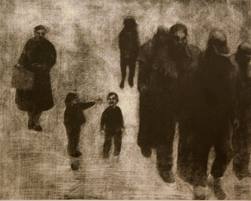
image is from here
On this eve of Thanksgiving, I will post a link to the true story, not the Good White Man story, of Thanksgiving. The Wampanoag story.

From this website: http://indiancountrytodaymedianetwork.com/2012/11/23/what-really-happened-first-thanksgiving-wampanoag-side-tale-and-whats-done-today-145807, an excerpt:

So the Pilgrims didn’t invite the Wampanoags to sit down and eat turkey and drink some beer?
[laughs] Ah, no. Well, let’s put it this way. People did eat together [but not in what is portrayed as “the first Thanksgiving]. It was our homeland and our territory and we walked all through their villages all the time. The differences in how they behaved, how they ate, how they prepared things was a lot for both cultures to work with each other. But in those days, it was sort of like today when you go out on a boat in the open sea and you see another boat and everyone is waving and very friendly—it’s because they’re vulnerable and need to rely on each other if something happens. In those days, the English really needed to rely on us and, yes, they were polite as best they could be, but they regarded us as savages nonetheless.


Monday, February 1, 2016

New Reports on child trafficking and slavery

graphic is from here

This month marks the 198th anniversary of Frederick Douglass's birth. He was a firm believer in the equality of all peoples, whether black, female, Native American, or recent immigrant. 


 "I would unite with anybody to do right and with nobody to do wrong." 
Frederick Douglass

From Al Jazeera, January 31, 2016, this report on trafficking of Syrian children in Europe.
More than 10,000 unaccompanied refugee and migrant children have disappeared in Europe, the EU police agency Europol said on Sunday, fearing many have been whisked into sex trafficking rings or the slave trade. 
Europol's press office confirmed to Al Jazeera the figures published in British newspaper The Observer. [See: http://www.theguardian.com/world/2016/jan/30/fears-for-missing-child-refugees]
The number relates to the past 18-24 months. 
Brian Donald, the agency's chief of staff, said that the vulnerable children had disappeared from the system after registering with state authorities after their arrival in Europe. 
"It's not unreasonable to say that we're looking at 10,000-plus children," Donald told The Observer, adding that 5,000 had disappeared in Italy alone. 
"Not all of them will be criminally exploited; some might have been passed on to family members. We just don't know where they are, what they're doing or whom they are with." 
Donald said there was evidence of a "criminal infrastructure" established since mid-2014 to exploit the refugee flow. 
The Observer reported that Europol found evidence of links between smuggling rings bringing people into the European Union and human trafficking gangs exploiting migrants for sex and slavery. 
"There are prisons in Germany and Hungary where the vast majority of people arrested and placed there are in relation to criminal activity surrounding the migrant crisis," Donald said. 
More than one million migrants and refugees, many fleeing the Syria conflict, crossed into Europe last year. 
"Whether they are registered or not, we're talking about 270,000 children," Donald told the paper.
"Not all of those are unaccompanied, but we also have evidence that a large proportion might be," he said, adding that the 10,000 is likely to be a conservative estimate.
READ MORE: Syrian children struggling to eat in Istanbul  
____________________________________________


Keeping in mind that the Western world, and the white First World is deeply invested in slavery and sex trafficking, we have this report from The New York Times, January 28, 2016:

WASHINGTON — The Department of Health and Human Services placed more than a dozen immigrant children in the custody of human traffickers after it failed to conduct background checks of caregivers, according to a Senate report released on Thursday.
Examining how the federal agency processes minors who arrive at the border without a guardian, lawmakers said they found that it had not followed basic practices of child welfare agencies, like making home visits. 
The Senate’s Permanent Subcommittee on Investigations opened its inquiry after law enforcement officials uncovered a human trafficking ring in Marion, Ohio, last year. At least six children were lured to the United States from Guatemala with the promise of a better life, then were made to work on egg farms. The children, as young as 14, had been in federal custody before being entrusted to the traffickers. 
“It is intolerable that human trafficking — modern-day slavery — could occur in our own backyard,” said Senator Rob Portman, Republican of Ohio and the chairman of the subcommittee. “But what makes the Marion cases even more alarming is that a U.S. government agency was responsible for delivering some of the victims into the hands of their abusers.” 
In addition to the Marion cases, the investigation found evidence that 13 other children had been trafficked after officials handed them over to adults who were supposed to care for them during their immigration proceedings. An additional 15 cases exhibited some signs of trafficking. 
The report also said that it was unclear how many of the approximately 90,000 children the agency had placed in the past two years fell prey to traffickers, including sex traffickers, because it does not keep track of such cases. 
“Whatever your views on immigration policy, everyone can agree that the administration has a responsibility to ensure the safety of the migrant kids that have entered government custody until their immigration court date,” Mr. Portman said. 
Continue reading this story

Tuesday, October 27, 2015

Bill O'Reilly and the Problem of CRAP-loaded Propaganda

The image of Bill O'Reilly is from here

[CRAP is an acronym standing for Corporate Racist Atrocious Patriarchy]

Bill O'Reilly wants your mind.

Here's a synopsis of what he wants everyone to believe, or at least tries to convince others of:

The poor are a threat to the rich, in that they allegedly exploit the rich to get things they don't deserve or aren't entitled to. Capitalism is good. Being a billionaire is enviable and desirable.

Undocumented workers, immigrants, and refugees, particularly if from Mexico or Syria--not of European descent--are a threat to the employment and rule of white/U.S./European working and middle class people, and to mythic ideas about such political/regional heritages. And, again, 'they' exploit the system to garner advantages they are supposedly not entitled to and that ruling classes supposedly do not have.

Black and Brown people allegedly threaten the relative well-being and entitlements of whites.

Women are allegedly threat to men, sexually, economically, socially, and politically. What they threaten is the dominant standing of men and unbridled sexually violent, abusive, harassing, or coercive actions of men.

Islam is allegedly purportedly evil. There are variations on this theme. Muslims allegedly threaten the safety and well-being of non-Muslims, globally. Arab Muslims are allegedly aligned with extremist terrorist's ideologies and practices. The Koran allegedly only promotes violence, especially against the West.

LGBT people are presented, generally, as a joke or source of entertainment for het folks. The socially conservative anti-queer perspective is that we are also a threat to the alleged sanctity of dominant institutions, both religious and secular. Especially marriage. We also pose a risk of recruiting, sexually abusing, or morally corrupting youth.

The globe and all its life is not threatened by corporate environmental destruction.

Now, for some truths:

The rich don't work to increase their wealth. They invest. They don't work to maintain their lives; they hire people for that. The rich exploit corporate capitalism in every way conceivable, through tax loopholes, inheritance, off-shore bank accounts, shared awareness of how the system works, using social connections, arranged marriage, and inheritance laws to hoard wealth. The resources made available to some poor people are paltry and punishing, and are paid for by the labor of other poor people who support the economy rich people exploit. The rich do not generously fund a healthy economy. They greedily ruin it for everyone except themselves.

This economy always has been built on and rests heavily on the unpaid or exploitively paid labor of people who are not white. Work conditions for poorer people are intended to be brutal, exhausting, and dehumanizing. Nothing has changed. Black, Brown, and Indigenous people are under attack and continuously are threatened with genocide, which is on-going.

Men's wealth depends on white women's and women of color's unpaid or exploitively paid labor. Men's identities depend on sexual access to, and abuse of, women. Women of color

Islam is a rich complex religious and multi-cultural practice and system of belief rooted in history, like Christianity and Judaism.

LGBT people present alternatives to the dehumanizing reality of heterosexist existence. We are targeted for harassment and murder, particularly and disproportionately when Black and/or poor.

Corporate exploitation of the Earth is the practice of ecocide.

What this reveals to me is something far too many of us in the U.S. may already know: it perpetuates the most typical narratives of this dominant culture. But with particular focus on perpetuating and further entrenching xenophobia, racism, misogyny, and heterosexual normalcy.

Not only that, but such media outlets and popular spokespeople are engaged in very well-crafted propaganda techniques which include:
Panic mongering
Character assassination
Projection
Rewriting history and reinforcing false cultural myths
Scapegoating and 'othering'
Naming resistance to oppression as being dangerous violence or terrorism
Naming U.S. militarized foreign and domestic policy as necessary and peace-making
Bullying of anti-status quo truth-tellers and overt hostility to truths that undermine the status quo
An assault on higher education as a means of truth-gathering; a rejection of academic 'experts' as only biased by liberalism
Diversion and avoidance of substantive engaged subjective sharing of experience and theory-naming

For more on that, see here: http://www.truth-out.org/news/item/1964:fourteen-propaganda-techniques-fox-news-uses-to-brainwash-americans

I conclude that Bill O'Reilly is thuggish and bullying propaganda-pusher, along with all Right-wing corporate media and extremist Christian and Jewish media and spokespeople. Their terrorism goes unnamed as such by their media, not surprisingly. They perpetrate all significant manifestations of Earthly evil.


Saturday, May 18, 2013

Who Among the non-Indigenous Stand with Indigenous People to End Genocide?


https://blogger.googleusercontent.com/img/b/R29vZ2xl/AVvXsEi0s9ga1_hJHtWPrTXTRUF_vjyGoqbLk4yw845Tcd2FMpuxrrFmPmPry5UnDjx3TGLswydT26UYDtswIUTSQIMA05Edyyu1kV7PPaaP1ILiSzZfxVKj_pswEBbvoG9VTRP5d-cygVgRhgOQ/s1600/DSC_0494.jpg
photo of Indigenous activist Rigoberta Menchú is from here
I'm not sure what has to happen for genocide to end. Hopefully not the disappearance of all despised and oppressed people. Hopefully not the destruction of all Indigenous people and their homelands, if they still have their homelands. See these two stories if you are not aware that genocide is on-going. The first was shown on NBC, which surprised me as corporate media usually ignores these realities, and/or profits from them. But thank you to Ann Curry for reporting this infuriating story.


And from Democracy Now!, this recent interview with Rigoberta Menchú:
http://www.democracynow.org/2013/5/15/nobel_laureate_rigoberta_mench_hails_genocide


One small step is to sign this petition:

http://www.change.org/en-GB/petitions/ministry-of-environment-quito-ecuador-stop-selling-last-of-the-ecuadorian-amazon-rainforest-to-oil-companies

Please let me know what else is being done.


Monday, February 4, 2013

Remembering the Rich and Radical Political Life of Rosa Parks. Featuring audio of her, on what would have been her 100th birthday!

All that follows is from Democracy Now! (I only added links to the title of Jeanne Theoharis's political biography of Ms. Parks.) You may link back to Democracy Now! by clicking *here*. 

Happy 100th Birthday, Rosa Parks!


Born on Feb. 4, 1913, today would have been Rosa Parks’ 100th birthday. On Dec. 1, 1955, Parks refused to give up her seat to a white passenger on a city bus in Montgomery, Alabama. Her act of resistance led to a 13-month boycott of the Montgomery bus system that would help spark the civil rights movement. Today we spend the hour looking at Rosa Parks’ life with historian Jeanne Theoharis, author of the new book, "The Rebellious Life of Mrs. Rosa Parks." Often described as a tired seamstress, no troublemaker, Parks was in fact a dedicated civil rights activist involved with the movement long before and after her historic action on the Montgomery bus. "Here we have, in many ways, one of the most famous Americans of the 20th century, and yet treated just like a sort of children’s book hero," Theoharis says. "We diminish her legacy by making it about a single day, a single act, as opposed to the rich and lifelong history of resistance that was actually who Rosa Parks was." We also air audio of Rosa Parks in her own words. In the midst of the boycott in April of 1956, she spoke to Pacifica Radio about the action she took. [includes rush transcript–partial. More to come. Check back soon.]
Guest:
Jeanne Theoharis, author of The Rebellious Life of Mrs. Rosa Parks. She is a professor of political science at Brooklyn College and has written extensively about the civil rights and Black Power movements.

Transcript

AMY GOODMAN: A hundred years ago today, civil rights pioneer Rosa Parks was born. It was February 4th, 1913. On December 1st, 1955, when she was 42 years old, she refused to give up her seat to a white man on a city bus in Montgomery, Alabama. She was arrested, convicted of violating the state’s segregation laws. Her act of resistance led to a 13-month boycott of the Montgomery bus system that would help spark the modern-day civil rights movement and launch Dr. Martin Luther King Jr.

We want to go to a clip of Rosa Parks, in her own words. In the midst of the boycott, April 1956, she spoke to Pacifica Radio about the action she took.
ROSA PARKS: I left work on my way home, December 1st, 1955, about 6:00 in the afternoon. I boarded the bus downtown Montgomery on Court Square. As the bus proceeded out of town on the third stop, the white passengers had filled the front of the bus. When I got on the bus, the rear was filled with colored passengers, and they were beginning to stand. The seat I occupied was the first of the seats where the Negro passengers take as they—on this route. The driver noted that the front of the bus was filled with white passengers, and there would be two or three men standing. He looked back and asked that the seat where I had taken, along with three other persons: one in a seat with me and two across the aisle were seated. He demanded the seats that we were occupying. The other passengers there reluctantly gave up their seats. But I refused to do so.
I want to make very certain that it is understood that I had not taken a seat in the white section, as has been reported in many cases. An article came out in the newspaper on Friday morning about the Negro woman overlooked segregation. She was seated in the front seat, the white section of the bus and refused to take a seat in the rear of the bus. That was the first newspaper account. The seat where I occupied, we were in the custom of taking this seat on the way home, even though at times on this same bus route, we occupied the same seat with whites standing, if their space had been taken up, the seats had been taken up. I was very much surprised that the driver at this point demanded that I remove myself from the seat.
The driver said that if I refused to leave the seat, he would have to call the police. And I told him, "Just call the police." He then called the officers of the law. They came and placed me under arrest, violation of the segregation law of the city and state of Alabama in transportation. I didn’t think I was violating any. I felt that I was not being treated right, and that I had a right to retain the seat that I had taken as a passenger on the bus. The time had just come when I had been pushed as far as I could stand to be pushed, I suppose. They placed me under arrest.
AMY GOODMAN: That was Rosa Parks speaking in April 1956 in the midst of the Montgomery bus boycott. She had refused to stand up for a white passenger just a few months before, December 1st, 1955.

Rosa Parks is often described as a tired seamstress, no troublemaker. The fact was, she was a troublemaker, a first-class one. At the time of her arrest, she was secretary of the local NAACP. She raised money to defend the Scottsboro Boys in a rape case that was trumped up, attended trainings at the Highlander Folk School of Tennessee. In fact, she had sat down on the bus before and refused to get up for white passengers. When she died in October 2005, she became the first African-American woman to lie in state in the Capitol Rotunda.

Well, I just recently sat down with Jeanne Theoharis, historian, author of the new book, The Rebellious Life of Mrs. Rosa Parks. She is a professor of political science at Brooklyn College who’s written extensively about the civil rights and Black Power movements. I began by asking her to tell us the story of Rosa Parks.
JEANNE THEOHARIS: This is a story of a life history of activism, of a life history, as she would put it, of being rebellious, right, that starts decades before her historic bus stand and continues decades after. And so, very much what the story I’m trying to tell in this book is the story of that scope. It begins: Her grandfather was a supporter of Marcus Garvey, and so that is really where she gets her start, is with her family, her mother and grandparents. And they sort of inculcate her in a sense of pride and a sense that you demand and expect respect from people around you. And so, it is that spirit that she then brings into the world. She marries Raymond Parks, the first real activist she ever met.
AMY GOODMAN: Marcus Garvey was?
JEANNE THEOHARIS: Marcus Garvey headed the Universal Negro Improvement Association. He was a Pan-Africanist and also a proponent of sort of black nationalism and black pride. And her grandfather was a supporter.
So, she meets her husband, Raymond Parks, and he is working on the Scottsboro case. This is 1931. And the Scottsboro case, these are nine young men, ages 12 to 19, who get arrested riding the rails. Right? This is the Great Depression. And very quickly, the charge turns to rape, and very quickly, they are all sentenced to death, except the youngest one. And so, a support movement grows up—
AMY GOODMAN: These are black boys—
JEANNE THEOHARIS: Black boys.
AMY GOODMAN: —teenagers, and white young women.
JEANNE THEOHARIS: Right.
AMY GOODMAN: Girls.
JEANNE THEOHARIS: Basically, these young boys are riding the train, like many people did. When they get arrested, it is discovered there are two young white women riding the train. And it is that moment where these nine young men—again, ages 12 to 19—where the charge then turns to rape. They were not originally arrested for rape. And so this support defense committee, this grassroots defense committee, grows to defend these nine young men. And Raymond Parks is part of that movement, and that’s what he’s doing when she meets him. And so, he’s sort of the first activist she met, and in many ways, that—her political development as an adult starts with sort of being a newlywed with Raymond and working on the Scottsboro case.
AMY GOODMAN: And what happened to the Scottsboro Boys?
JEANNE THEOHARIS: Ultimately, they are not—they are not executed, and that movement really prevents that travesty of justice from happening.
So then, in 1943, she sees a picture of a classmate attending a local NAACP meeting, and she realizes that women can be part of the NAACP, and so she decides to go and attend a Montgomery NAACP meeting. And she’s the only woman there. And they’re having branch elections, and so she is elected branch secretary at her very first meeting in 1943. And that begins a decade of activism, right, before her bus arrest, where she is working with the NAACP.
And she’s working with a man by the name of E.D. Nixon. And E.D. Nixon is a sleeping car porter, and he’s active in the union of sleeping car porters. And he and Rosa Parks want to transform the branch into a more activist branch, and so he actually runs for president and wins in 1945. And he and Parks set about to investigate cases of white brutality, work on black voter registration. And this is very controversial. And in fact there is controversy in the branch. There are many middle-class members who oppose this. They try to unseat Nixon and, to a certain extent, Parks. But that does not work.
And so, for this decade before her stand, she is doing this very dangerous work. You know, I think we say NAACP today, and it sounds not so dangerous. But to be a NAACP activist in the '40s, doing what she's doing—she’s traveling the state, she’s taking testimony of people, she’s trying to get them to sign affidavits—that is extremely courageous work. And there’s sort of only a small handful of people in Montgomery, you know, sort of committed to doing that work.
AMY GOODMAN: So, how does this moment happen? Actually, as you point out in the book, it wasn’t the first time Rosa Parks sat down on the bus and refused to get up. But explain what was different, when she tried it the first time and when she tried it in 1955.
JEANNE THEOHARIS: So there’s a—right, as you mention, there is a longer history of bus resistance in Montgomery. There had been numerous cases sort of in the decade after World War II, before her arrest in '55, of people getting arrested on the bus. And she's very familiar with many of these cases, so she knows what can happen. A neighbor of hers in 1950 is arrested, thrown off the bus and killed by police. The young Claudette Colvin, in March of 1955, is manhandled by police when she is arrested for her refusal to move. Parks herself had made various stands on the bus. She abhorred the practice that many bus drivers insisted on, where black people would have to pay in the front, get off the bus, and reboard in the back of the bus. And she refused to do that. She had been kicked off the bus by this very same bus driver a decade earlier for refusing to do that. She had had trouble with other bus drivers. She describes some bus driver passing her by because he didn’t—you know, he felt like she was a trouble—you know, she raised trouble. So she had this sort of history of bus resistance. There is this larger history of bus resistance in Montgomery. And then we get to December 1st, 1955.
One other thing is, that summer in August, she had gone for a two-week workshop to Highlander Folk School. They were having a workshop on school desegregation. This is 1955. So, we have the historic decision in 1954, Brown v. Board of Education, but then the Supreme Court comes back in '55, right, and refuses to put a timetable on it, right? It's the historic words: "with all deliberate speed." And so, activists, like Parks, like Myles Horton and Septima Clark, who were running the Highlander workshops at the time—
AMY GOODMAN: In Tennessee.
JEANNE THEOHARIS: In Tennessee. This is a—this is a workshop to bring together people who want to push for and make a plan to implement school desegregation, because the court is clearly not going to press it forward. So she attends this workshop in August, and it is a very important and transformative time for her. She describes it as the first time she felt like she could discuss things with white people and not feel hostility. She’s obviously—there are 48 people attending this workshop. These are all people committed to this work of school desegregation. So, both—her own spirit really lifts. She talks about loving Myles Horton’s sense of humor, getting to just eat and be in a interracial space, that was a matter-of-fact interracial space, that just—that people just ate together, they shared rooms together, they sat outside together, that that freedom was also transformative, personally.
So she comes back, and then, in some ways, the atmosphere of the segregation in Montgomery, the conditions become harder to bear, I think. So, the evening of December 1st, 1955, she’s gotten off work. She actually decides to wait for a less crowded bus, so she goes to a drugstore, buys a few things and boards the bus around 5:30 at night. She sits in the middle section, right? One of the myths is that she was sitting in the white section; she was not. She was sitting in the middle section. The middle section was sort of a no-man’s land, in that the bus driver could ask you to move from that section even though Montgomery city code at the time said black people were not—did not have to get up out of their seats if there was no seats available. But bus drivers routinely violated that city code. So, that night, she’s sitting in the middle section. There are four black people sitting in this row. And at the third stop, the bus fills up, and there is one white man standing. And by the terms of Montgomery segregation, all four people will have to get up so that one white man can sit down. And the bus driver, James Blake, who, like all bus drivers in Montgomery, is carrying a gun, orders them to move. And she refuses.
He says, "I’m going to have you arrested." She says, "You may do that." He gets off the bus, and he first calls the supervisor, his supervisor. And the supervisor says, "Well, get her off the bus." The supervisor—I want to repeat that—just says, "Get her off." He does not say, "Have her arrested." Blake calls the police. The police come and evict her from the bus. And she believes the police don’t want to arrest her. It is Blake who sort of takes that sort of final historical step and says—
AMY GOODMAN: And he’s a white driver.
JEANNE THEOHARIS: He’s a white driver. All the drivers in Montgomery are white. I think one of the less-known facets of the Montgomery bus boycott is that it’s also pressing for black bus drivers. So, yes, he is a white driver. The police—she describes also, in those moments, while Blake is off the bus calling, people grumbling—right, people are clearly nervous. What’s going to happen? The police, you know, take her off the bus. Blake says he wants to sign a warrant. He’s going to come after his run to sign the warrant. And they take her to jail.
And she describes the moment in various ways. She describes it as she had been pushed as far as she could be pushed and that to get up meant that she consented to this, and she did not consent. But one of my favorite passages is also that she talks about finding her arrest annoying. And I think this speaks to how she does not necessarily believe that some movement is going to happen, right? She’s taking this stand because she thinks it’s important. But she finds it annoying because she’s actually working on this youth workshop for the weekend, and she sees this sort of as a distraction, and now she’s gotten herself arrested, right? And who knows how long this is going to take? And who knows what’s going to happen? And who knows if some sort of violent thing is going to happen to her? And so, in that moment, it’s a very hard moment, and then it’s also a moment where she in no way can see what’s about to happen.
AMY GOODMAN: Jeanne Theoharis is the author of the new book, The Rebellious Life of Mrs. Rosa Parks. On this hundredth anniversary of the birth of Rosa Parks, we’ll continue our conversation in a minute.

[break]

AMY GOODMAN: Pete Seeger singing "We Shall Overcome." He wrote it with others, the enduring anthem of the civil rights movement, at the Highlander Folk School in Tennessee, where Rosa Parks trained. This is Democracy Now!, democracynow.org, The War and Peace Report. I’m Amy Goodman, as we return to our conversation with historian Jeanne Theoharis, author of the book The Rebellious Life of Mrs. Rosa Parks. I asked her about the fateful day, December 1st, 1955, in Montgomery, Alabama, when Rosa Parks was arrested for refusing to obey a white bus driver, James Blake, who ordered her to give up her seat to a white passenger. I asked how long Rosa Parks was detained and what she did next.
JEANNE THEOHARIS: She’s held there about three or four hours. She calls home, and her mother is terrified. "Have you been beaten?" She says, "No." And so, her husband starts to get money together to come get her. Meanwhile, someone on the bus goes to tell E.D. Nixon. And E.D. Nixon calls, can’t find out any information, and then calls a white civil rights kind of couple in town by the name of Virginia and Clifford Durr and gets Clifford Durr, who is also a lawyer, to call and find out what’s happened to her. So, both Raymond Parks and Nixon and the Durrs all come to—down and bail her out. And they all go back to the Parkses’ apartment.
AMY GOODMAN: And the Durrs are white, famous civil rights activists.
JEANNE THEOHARIS: The Durrs, famous, whites, activists, leftists. So they all go back to the Parkses’ apartment that night to talk about what happens next, because Nixon, once he knows that she’s OK, is, in a measure, delighted, because she’s exactly the kind of person that is both respected in the community, she’s middle-aged, she’s 42, she’s super tough, right? so he knows—he trusts that she’s not going to flinch under the kind of pressure that’s going to be brought to bear. And so he really wants her to be a test case. And at first, her husband is very nervous both for her safety and their safety, but also because people hadn’t necessarily stayed together around other cases. So he’s worried. But they decide that she is going to go forward with this case.
So she calls a young lawyer and friend of hers, a black lawyer by the name of Fred Gray, to ask him to represent her. And Fred Gray calls Jo Ann Robinson, who’s the head of the Women’s Political Council, a professor at Alabama State. And the Women’s Political Council had been very active around these issues. And Jo Ann Robinson mobilizes that night, and they decide to call for a one-day boycott on the Monday when Parks is going to be arraigned in court. And so Robinson actually sneaks into Alabama State College in the middle of the night with two students and runs off 35,000 leaflets in the middle of the night. At about 3 a.m., she calls E.D.—this is Robinson—and says, "This is what we’re planning." And so, at 5:00 in the morning, Nixon starts to call some of the ministers in town to get them on board for this one-day plan. And it is not 'til midday, when Rosa Parks, as she often does, takes her lunch to Fred Gray's law office, that she finds out sort of what’s happening.
And so, they are planning, again, for just a one-day boycott, at this point, on the Monday. And people are very worried. Will people do it? Will people stick together? And then Monday comes, and it is this amazing—people stay off the bus. She describes it as sort of the best moment of the whole thing. And that night, at a mass meeting at Holt Street Baptist Church, people decide to carry on the boycott sort of—and make it, you know, a longer boycott.
AMY GOODMAN: And they choose a young minister who’s just come into town to be their leader.
JEANNE THEOHARIS: Yes.
AMY GOODMAN: Dr. Martin Luther King.
JEANNE THEOHARIS: They choose him for a number of reasons. In part, he’s young. He’s new. He’s not—he doesn’t have any—he’s not firmly aligned with one side or the other. His church is actually located right across—it’s downtown; it’s right across from the Capitol. So they have the first meeting—the ministers have the first meeting at his church on E.D. Nixon’s sort of idea, in part because it’s so centrally located, and again, because Nixon sees that King doesn’t have enemies in town. And then, it is at Holt Street where we get the first taste of sort of Martin Luther King’s sort of, you know, kind of political and oratorical brilliance, right? because the speech he gives that night is an incredible speech.
AMY GOODMAN: December 5th, 1955.
JEANNE THEOHARIS: Exactly.
AMY GOODMAN: So, Rosa Parks helped to—helps to launch Dr. Martin Luther King.
JEANNE THEOHARIS: Yes, she does. Yes, she does. And in many ways, she—there’s this interesting moment. So, on Monday, right, she goes to court. She’s very quickly convicted. And then she goes back with Fred Gray to his law office. She doesn’t go back to work. She doesn’t go home. She goes to his office, and she answers—
AMY GOODMAN: She worked at Woolworth’s?
JEANNE THEOHARIS: Ah, sorry, she worked at Montgomery Fair. She’s an assistant tailor. Montgomery Fair is the biggest department store in Montgomery at that point. So she’s—she’s working in the men’s shop. But she doesn’t go back to work. And she answers phones in Fred Gray’s office that Monday, and she doesn’t tell people it’s her, right? So this is sort of the paradox of how she negotiates this role. So she’s—she wants to be useful, so she’s answering all these calls. People are wanting to know what’s happening, what they should do. She’s not saying it’s her. And then, meanwhile, she stays and answers phones, while Fred Gray and Nixon and King have a meeting where the Montgomery Improvement Association will be born, right? So, in some sense, she—she’s sort of doing this kind of behind-the-scenes work while the kind of leadership is being formed on that Monday afternoon.
AMY GOODMAN: You talked about December ’55 coming just a few months after the murder of Emmett Till in Money, Mississippi—
JEANNE THEOHARIS: Right.
AMY GOODMAN: —fourteen-year-old African-American boy, seared into the history and consciousness of this country, what happened to him. Describe what happened and how Rosa Parks was affected by it.
JEANNE THEOHARIS: The lynching of Emmett Till happens in August of 1955. But just days before she makes her stand, they’ve had this mass meeting. So, part of what happens is, the two men—because of the attention to the lynching, the two men are actually put on trial, which is sort of a rarity, but they are acquitted. This is Bryant and Milam. And so, a campaign comes up to kind of raise awareness around this, sort of organized in part by Mamie Till, his mother, and T.M. Howard. And so they’ve had—T.M. Howard comes to Montgomery just days before, and they’ve had this big mass meeting. And so, it’s very much on her mind. When she talks about sitting there in those moments, she talks about thinking about her grandfather, she talks about thinking about Emmett Till. And she’s—
AMY GOODMAN: When had he come into town, in Montgomery?
JEANNE THEOHARIS: Howard comes in—I think it’s just literally four or five days. They’ve had this big mass meeting.
AMY GOODMAN: Four or five days...?
JEANNE THEOHARIS: Before her arrest, so—
AMY GOODMAN: So at the end of November, right after Thanksgiving.
JEANNE THEOHARIS: Exactly, exactly. And so it’s really fresh, right? And the organizing is really fresh, right? So, the lynching itself happened in August, but the kind of movement to sort of raise awareness is happening and has come to Montgomery just days before her bus stand. And so she’s very much thinking about that. And the bus driver says, you know, "You all should make it light on yourself and get up." And she thinks to herself, "This is not making it light on us as a people." And she’s thinking about Till, and she’s thinking about this kind of longer history, you know, and the Klan coming to her grandparents’ house, you know, and sort of coming by. And so, it’s very much kind of how she’s—you know, it’s with her that day.
AMY GOODMAN: The Klan came to her grandparents’ house?
JEANNE THEOHARIS: And her grandfather would sit out at night, often with a gun, to protect the house. And she would sometimes sit with him. After World War I, there’s this sort of backlash partly against black service during World War I, and there’s all of this kind of this uptake in violence in 1919, and so that also comes to Pine Level, to Alabama, where she grows up. And so she very much talks about remembering her grandfather sitting out on the porch with a gun, again, ready for sort of the Klan, if they come.
AMY GOODMAN: We’re talking to Jeanne Theoharis, author of The Rebellious Life of Mrs. Rosa Parks. When Rosa Parks died in 2005, there was a huge memorial service for her in Washington, D.C. She was the first African-American woman to lay in state at the Capitol Rotunda, then her body brought to a church before the big funeral in Detroit. And I remember the networks talking about Rosa Parks. I mean, there’s no question it was a big moment, and the media took notice. I remember CNN saying Rosa Parks was a tired seamstress—
JEANNE THEOHARIS: Right.
AMY GOODMAN: —she was no troublemaker. But Rosa Parks, as you point out, was a first-class troublemaker.
JEANNE THEOHARIS: She was.
AMY GOODMAN: So how did the image of her change? What did people understand at the time in 1955?
JEANNE THEOHARIS: I mean, I think there’s sort of two different things at work. Certainly during the boycott itself, they background Rosa Parks’s political history for the safety of the movement, right? Immediately, I mean—
AMY GOODMAN: You mean they put it on the back burner.
JEANNE THEOHARIS: And they play it down, right? They tend to talk about her as a good Christian woman. They tend to talk about her—and this is King, this is the black press, this is even Parks herself, right? They don’t tend to foreground her political history, in part because civil rights protests—this is 1955—are getting—you know, this is the Cold War. They’re immediately redbaited. All sorts of crazy rumors come up about her: She’s a communist plant, she’s an NAACP plant, she’s Mexican, she has a car, she’s not even black—I mean, just all manner of rumors in Montgomery spring up. And so, in part to counter the idea that these are outside agitators, outside forces, coming to—you know, coming to Montgomery, there is a tendency to talk about her, right, just as a kind of local woman, seamstress, Christian, right? So, that obviously then, in the decades afterwards, takes on a life of its own, in terms of her political history.
The other thing, I think, that contributes to this is Rosa Parks leaves Montgomery in '57 and spends the second half of her political life in Detroit, sort of fighting the racism of the Jim Crow North. And so, in many ways, she leaves the South as this movement that she's helped to galvanize sort of takes on, and she has this new place in which she’s sort of struggling in and part of a movement and that is not getting the same kind of attention.
But fast-forward—I think, by the '90s, right, and 2000s, right? In many ways, in the wake of the establishment of the King holiday, we see the civil rights—the history of the civil rights movement begin to get kind of reshaped and twisted into this very happy, limited story of a—this American movement that rises up and changes America, and then we vanquished racism, and there's this dreamy Martin Luther King and this quiet Rosa Parks. They’re sort of the two people we get in that narrative. And that’s a very happy story, and it makes us feel good about ourselves as a nation. And that story, I think, is part of what is at the center of the kind of national spectacle made of her passing.
AMY GOODMAN: Who was Rosa Parks’ hero?
JEANNE THEOHARIS: Rosa Parks’ hero, she describes as Malcolm X. She very much—she loved, she admired, she had—I mean, she had tremendous admiration for King, but she describes Malcolm X as her personal hero. Rosa Parks was a lifelong believer in self-defense. Obviously she gets that from her grandfather. In many ways, Malcolm X reminds her of her grandfather. Malcolm X’s willingness to sort of talk about sort of Northern liberalism and Northern hypocrisy, Malcolm X’s very early opposition to the war in Vietnam—all of these things are very similar to her sort of political outlook, and therefore, I think, she very much looks to him.
AMY GOODMAN: That’s interesting, talking about Vietnam. You write about Rosa Parks as an internationalist.
JEANNE THEOHARIS: Right, right. I mean, she is a very early opponent of the war in Vietnam, as is John Conyers. And she—in many ways, she—she comes to volunteer on John Conyers’ very first campaign, right, for this new—
AMY GOODMAN: Longtime congressmember, dean of the Congressional Black Caucus.
JEANNE THEOHARIS: Right. And he runs for the very first time. Michigan gets a new congressional seat in 1964 that looks like it’s going to, like, perhaps elect a second African American to Congress from Michigan. And this young civil rights lawyer, right, is running on this platform of jobs, peace and justice, right? So he’s running on a kind of anti-Vietnam platform in '64. Rosa Parks, very attracted to this, volunteers on his campaign in 1964 and gets Martin Luther King to come to Detroit on behalf of Conyers, right, basically prevails on King. King is staying out of doing this kind of political stuff; he doesn't. But he can’t say no to her. And this is a very crowded primary; eight people are running. Conyers wins by less than a hundred votes. And so, one of the things that he thinks really contributes is King coming, and part of what gets King to come to Mont—to Detroit, excuse me, is Rosa Parks asking him. And so, one of the first thing Conyers does is he hires Rosa Parks to work in his Detroit office. And he is very much in the forefront of kind of the opposition to Vietnam. And so—and she—and that’s—both of them are sort of working on that, and so she takes—she is part of that sort of—like the Women’s International League for Peace and Freedom. She’s supportive of the Jeannette Rankin Brigade, of the Winter Soldier hearings that are held in Detroit.
AMY GOODMAN: The American soldiers who came back from Vietnam and talked about the atrocities they committed there.
JEANNE THEOHARIS: Right. And those hearings are held in Detroit, and then John Conyers actually goes—you know, is sort of one of the voices to kind of make—to bring those—bring the Winter Soldier hearings to sort of Congress.
AMY GOODMAN: It’s when John Kerry became famous, as this soldier who’s returned and goes to Congress and testifies against the Vietnam War.
JEANNE THEOHARIS: Absolutely, absolutely. And so, that happens in Detroit, and it happens, in part, through kind of Conyers’, you know, kind of work on it.
AMY GOODMAN: Why didn’t Rosa Parks run for Congress in 1964 when the second seat opened up in Detroit?
JEANNE THEOHARIS: She is not someone who seeks or wants that kind of public limelight. She finds her fame sort of hard to bear. She is a sort of stalwart activist. She is a steadfast activist. But Conyers talks about her speaking with her presence, that she went to tons of things, she did what she could do to support, you know, prisoner defense committees, to support the anti-Vietnam—all sorts of movements, but she is not someone who likes to be in—in the front, in the limelight, in the way that running for Congress would have been.
AMY GOODMAN: Historian Jeanne Theoharis, author of the new book, The Rebellious Life of Rosa Parks, professor of political science at Brooklyn College, has written extensively about the civil rights and Black Power movements. When we come back, we speak with Theoharis about what happened after Rosa Parks was arrested and convicted in 1956, how she dealt with losing her job. This is Democracy Now!


Wednesday, January 16, 2013

Mohawk Nation News 'Awakening, 150 Million Murdered Indigenous'

There is no meaningfully inclusive women's liberation while genocide against Native/Indigenous women is on-going. This is a cross-post. Please click on the title just below to link back to this information at Mohawk Nation News.


MNN: AWAKENING, 150 MILLION MURDERED INDIGENOUS


mnnlogo1Calling out from the earth to us Indigenous people are 150 million of our men, women, children and babies who were murdered by the white race for our lands. They are urging us to bring back natural law and order for the sake of the future generations, who are waiting to be released to us by our great Mother Earth. 

Our ancestors are not gone, invisible, forgotten. We are here.

Our ancestors are not gone, invisible, forgotten. We are here. The Canadian and US corporations are trying to find and punish “leaders” of the Idle No More movement.  Our ancestors in each of us are calling us. Even the plants and animals are waiting for us to hear them.  

Canada is vulnerable. All infra-structure is critical to transport our resources to international markets for their war program. This will end. The Corporation of the US is involved when their source of electricity, oil and gas are at stake. US Military Northern Command or NORTHCOM has already been given the green light through 911 treaty fraud to invade Canada at any time they deem fit.  

The circulation of our goods, resources and energy drives the war economy.  Our duty is to stop the war problem. Critical infrastructure is at our mercy.  Blockades are deadly to the economy.  Millions are employed in the theft of our natural resources.  All consultation for our resources is between industry and government, not with us. That is why the wars continue.  

Corporations tire of Indigenous protests. They want to deal directly with Harper’s corporate Indians who are willing to be paid off without consulting us, to have the guise of legality for their contracts. Our ancestors won’t allow that. We will stop genocide.  We the owners want a list of the shareholders of each corporation. Our ancestors direct that any involved in the genocide of our people will not be doing any business on Great Turtle Island.  

Corporate Chiefs and band councils are agents of the crown, who take an oath to the Queen of England. They are no longer in but out of the canoe.  

Canada holds $3 trillion of our Indian Trust Funds. The Queen and her family take a cut on everything that’s done in Canada. It is used to finance non-stop war and to kill us off.  The criminals responsible for the biggest holocaust in all humanity will be held accountable.  

Faces coming from beneath the ground.Split of Indian Trust Money:  4% goes to the Vatican, international Court of Justice and the International Criminal Court.  3% goes to the Mediating Group? 2% for the ASM?  1% to the eternal trust deposit forever.  The Queen signs this deal.   

Nothing can stop this awakening of our people.  We stand with nothing to lose.  The fight is ours to win. 
Faces coming to us.   
As Robbie Robertson sings in “Ghost Dance”:  “Crazy Horse was a mystic, he knew the secret of the trance.  Sitting Bull, the great apostle of the ghost dance.   Come on, Commanche. Come on, Blackfoot.  Come on, Shoshone.  Come on, Cheyenne. We shall live again.  Come one, Arapahoe.  Come on, Cherokee.  Come on, Paiute.  Come on, Sioux.  We shall live again.”  http://www.youtube.com/watch?v=JLM1H8JH9XA

MNN Mohawk Nation News kahentinetha2@yahoo.com  For more news, books, workshops, to donate and sign up for MNN newsletters, go to www.mohawknationnews.com  More stories at MNN Archives.  Address:  Box 991, Kahnawake [Quebec, Canada] J0L 1B0

Monday, November 12, 2012

Sign the petition to the Chief Minister of the Northern Territory in solidarity with Aboriginal activists

Justice for Kwementyaye Briscoe - lay charges against police
photograph and text below is all from here
I begin with this reminder: white male supremacy is a hateful and horrific institutionalised ideology and it must be overthrown for peace and justice to thrive. The terrorism by white-male/anti-Indigeous/anti-Aboriginal police forces of oppressed people of color is a pro-feminist issue because whatever the gender of the assaulted and imprisoned, the burden of care and protest disproportionately falls on women. And because harassment and murder of men and boys of color by white male supremacists is one way to reinforce the same white male supremacy that enslaves, assaults, and murders girls and women of all colors.

I have not been able to find the names of the people pictured above; if you know their names, please let me know, assuming they wish to be publicly identified. All that appears in this post including the photo, other than these two introductory paragraphs, is from Change.org. You may be linked back to it and related material by clicking on any of the text in color or by clicking *here* and *here*.

Justice for Kwementyaye Briscoe - lay charges against police

Trisha Morton Thomas
Petition by
Alice Springs, Australia
On 4 January 2012, my nephew T. Daniels Briscoe died in police custody.

He was slung about the Alice Springs lock up, resulting in a head injury that the police completely ignored. Other detainees yelled for help when they heard him choking, but they were ignored. Police listened to music and surfed the net while my nephew lay dying.

My nephew was taken into custody supposedly for his own protection. The coroner found his treatment was “completely inadequate”, and the police were “utterly derelict” in their duty of care. Yet not one of the officers involved has been sanctioned.

My nephew was a soft hearted, funny and humble man. He was slow to anger and readily forgiving. He was generous to a fault and would give his last  dollar to anybody in need. He kept my family connected and reminded us that money and wealth would not mourn for us when we passed, only those we love and love us.

Since 2009, four Aboriginal people in Alice Springs alone have died in the hands of police or NT corrections authorities. They have promised changes, but my nephew’s death is proof those promises were not kept. My nephew, other victims and our community have been ignored for too long.

The Coroner’s findings are, in our view, sufficient for the Director of Public Prosecutions to investigate and pursue charges for negligent manslaughter.

On behalf of our family and community, I’m asking for charges to be laid against police for what was done and for real changes to be implemented, rather than empty words.
Please sign the petition, and encourage everyone you know to help and lend their support.


Petition Letter

Justice for Kwementyaye Briscoe - lay charges against police

Mr Briscoe was taken into Police custody against his will, purportedly for his own protection, yet died directly as a result of a shocking indifference on the part of NT Police officers to his wellbeing. In delivering his findings on the death on 17 September 2012, Coroner Greg Cavanah laid the blame for the death squarely at the feet of Police, identifying a litany of failures on their part to care for Mr Briscoe. Mr Cavanagh called the actions of Police “completely inadequate and unsatisfactory and not sufficient to meet his medical care”, and to Police as being “utterly derelict in their duty of care”. The Coroner’s findings are, in our view, sufficient for the Director of Public Prosecutions to investigate and pursue charges for negligent manslaughter.

NT Police have proved incapable of being trusted to safeguard the wellbeing of detainees. NT Police had been chastised by the same coroner in 2010 following the death of C. Trigger whilst in Police Custody. Many of the same practices and failures contributed to the death of Mr Briscoe, notwithstanding that NT Police had made promises to the Coroner to remedy these practices. As a result of their failure to do so, another man is dead.

It is imperative that all individuals in Australia are subject to objective and independent investigation and prosecution of potentially criminal acts. In order for the Criminal Law to have any legitimacy in Australia, it must apply to all, including Police. Prosecution of offending officers is vital both for ensuring basic justice and sending a message such conduct is unacceptable and will be punished.

We the undersigned support the call by the Briscoe family upon the Northern Territory Department of Public Prosecutions to review the case immediately and prosecute the appropriate officers.
[Your name]

Thursday, July 26, 2012

The mass murders in Aurora, Colorado were not caused by depression or insanity

image is from here
What's wrong with the diagram above? I'd say it pretends that violence is mostly interpersonal.

I've momentarily joined a discussion on Facebook focusing on analysis of the kind of violence James Holmes perpetrated several days ago in Aurora, Colorada in a movie theatre. As I think Facebook is a pretty scummy place, I'm probably already done speaking to this issue there.

I haven't obtained the permission of anyone else in the conversation to use their names, so I'm just putting the text below, minus the names. If the participants let me know they want their names put with their statements here, I'll gladly do so. The text written by me has my name with it. I've modified some of it for this post here, indicated with brackets below.

*          *          *
I thought I'd get a conversation going about the recent tragedy in Aurora regarding violent male culture and if we think that has anything to do with these mass killings that happen so often in this country. I know it also heavily has to do with the lack of effective gun control but I wonder how much "maleness" has to do with violence and why and if that has anything to do with the patriarchy or is it just normal, biological that men are just the more violent gender. Thoughts?
2012/07/24/

the-overwhelming-maleness-o
f-mass-homicide/

ideas.time.com
Why aren't we talking about the one thing mass murderers have in common?

http://www.scientificamerican.com/article.cfm?id=strange-but-true-testosterone-alone-doesnt-cause-violence


Strange but True: Testosterone Alone Does Not Cause Violence: Scientific American
www.scientificamerican.com

Hormones don't necessarily make men violent, but they do cause them to seek social dominance


I Don't Want to Talk About It: Overcoming the Secret Legacy of Male Depression [Paperback]
Terrence Real

Twenty years of experience treating men and their families has convinced psychotherapist Terrence Real that depression is a silent epidemic in men -- that men hide their condition from family, friends, and themselves to avoid the stigma of depression's "un-manliness." Problems that we think of as typically male -- difficulty with intimacy, workaholism, alcoholism, abusive behavior, and rage-are really attempts to escape depression. And these escape attempts only hurt the people men love and pass their condition on to their children.


Julian Real Hi all. I find the analysis by Terrence Real (who is not related to me) to be seriously flawed and politically misguided. Anyone who has endured and survived domestic violence, and anyone who is a survivor of child sexual abuse, or of rape, or of other traumas such as endemic racism and misogyny, often knows the pain and isolation of depression and PTSD. When men are violent towards others, the overwhelming desire in a patriarchy-denying culture is to psychologise this violence, to make it about men's personal histories rather than men's structural power, which manifests in institutionalised force that carries with it many entitlements for men to aggress against others, not just interpersonally, and perhaps more often not interperonally. The institutional violence of patriarchy, capitalism, and white supremacy, each system ruled and regulated by men, is the layer of violence few wish to discuss. We must understand James Holmes' violent, deadly actions in the context of that.


Julian Real When I first heard the horrible news of the massacre in Aurora, one of the first thoughts, aside from feeling a kind of sick disgust and deep sadness, was "I hope the corporate media doesn't get obsessed with being concerned about him and wondering "what caused him to do this--how did this intelligent, educated [and not stated but there: WHITE] man with such promise become a mass murderer"? What corporate media hasn't been saying is that he could only do this and be alive now if he was white and if he was privileged in a variety of other ways. If he were poor, uneducated, and of color, the police would have shot him dead in an instant and white Amerikkka would have exhaled a collective sign of relieve. I say this because white supremacist police forces murder men and women of color routinely, without consequence. Now, are those police officers "depressed"? Are we to believe that Holmes' violence and the violence of the US military and police are unrelated? That one is only psychological, while the other is primarily political. I think every expression of male supremacist and white supremacist violence is first and foremost profoundly political (structural, social, and reliant on institutions infused with the same values as the violence being perpetrated) and only secondarily a function of personal, individual history. Men are violent because not because of genetic make-up, hormone levels, or depression[, or 'insanity'].


Julian Real Men have various institutionalised permissions and social entitlements to do violence and get away with it. If they didn't get away with it, they wouldn't be that way. If most rapists were held to account, rape wouldn't flourish. If most violent male offenders of domestic and global violence were held to account, men's violence wouldn't proliferate. This isn't to say that some men don't suffer from depression. Men, women, boys, and girls do suffer, a lot. But men don't suffer from it more than women or girls or boys, in case people like Terrence Real aren't noticing. And if depression causes this kind of hostility and murderous violence, why aren't all the survivors of child sexual abuse and rape and battery I know out killing people? [Most of them suffer from depression. So clearly there are other, more significant factors at work.]


Julian Real I find Erika Christakis's piece linked to above [and *here*] to also be misguided. While she notes something obvious: men perpetrate most interpersonal violence and mass murder, she neglects to note that whites and the rich, as well as men, perpetrate most global violence, which is also mass murder, of people of color, of the poor, and of women and girls, respectively. Non-indigenous industrialised people wage warfare on Indigenous people, industrialised or not. This isn't just mass murder, it's genocide. Women are among the rich, even while more men are rich than women. Women are among whites, even [while] white supremacist cultures are run by [white] men. Conservative and liberal media usually only wants to highlight violence that totally invisibilises structural, institutional force: that violence which is done on incredibly massive scales, against whole classes of people, not necessarily indoors but also not generally in view of a public with the clout, status, and institutional power to stop it. Patriarchal violence is one form of it, and many manifestations of that are private, done in the home, in hotel and motel rooms, and in military barracks, to name a few places where masculinist predation is protected. White supremacist violence is another form. And corporate capitalist violence is another form. In my opinion, to only remark about one of these while ignoring the others is to make any one form not fully comprehensible. And, I'd argue, it also makes a world that is set up to assault poor women of color on various levels simultaneously--only partially recognisablie. I'd say that without the more complete view, it is difficult to organise against the multiple forces effectively or to be a useful ally to those who are fighting all of it at once.


Saturday, July 21, 2012

Aurora, Colorado killer, James Holmes: "gunman" or "terrorist"?

ne_072012_colorado_shooting_batman.jpg

. Judy Goos, center left, hugs her daughter's friend, Isaiah Bow, 20, while eyewitnesses Emma Goos, 19, left, and Terrell Wallin, 20, right, gather outside Gateway High School where witnesses were brought for questioning Friday, July 20, 2012, in Aurora, Colo. [Source for photo and caption: here]
Revised later in the day with additional analysis:

Through the sadness and disgust, I am paying attention to how the corporate media portray the white male terrorist who killed a dozen people in an Aurora, Colorado movie theater. Generally, a white man gets called "gunman", a term that comes from 1950s and '60s TV-Westerns where the killer is a loner. James Holmes is being described both as a "gunman" and as a "loner".

The concept of the loner is loaded with racist and sexist meaning: the advantage of being white is that one's race is generally invisibilised by whites, who control the largest systems of power in any white-ruled nation. It is to the advantage of whites to keep our race invisible and out of the realm of political scrutiny. One of several ways this is accomplished is by viewing white people, especially men, as only individuals.

How many times I've heard white men complain about how I categorise white men in terms of their race and gender. They will argue, using very similar lines of argumentation, that "I am not the White Man you speak of. I am just myself, an individual," as if anyone who is white or male doesn't benefit greatly by being a statused/destigmatised member of raced and gendered classes. The claim reveals the privilege and power: he need not know exactly to what degree he benefits in a white supremacist capitalist patriarchy by not being of color or female.

The concept of the white male loner is well-told in white men's myths about themselves. The Lone Ranger was considered alone even while he exploited the fictional assistance of Tonto. In the 18th and 19th centuries, white male trappers and genocidalist settlers in the U.S. relied on Native Americans or on the ways of Indigenous North Americans in order to survive. Men are considered alone, and consider themselves to be all alone, even while they exploit the labor and support of women throughout their lives.

Black or Brown people, women or men, routinely and systematically get identified by whites in terms of their race and how such races of people allegedly commit crime indiscriminately. We do not hear much about Black and Brown people as "loners", and when someone Black or Brown commits the kind of crime whites consider to be "criminal", s/he is always understood to be a criminal in part because s/he is Black or Brown, not in spite of it. This way of understanding humans-as-dangerous means we must ignore who, really, perpetrates atrocities against masses of people and the Earth.

We must ignore how overwhelmingly rich, white men organize and order the mass slaughter of Black, Brown, Asian, and Indigenous people, including, over the last decade, in Iraq and Afghanistan but also within the boundaries of the U.S., where genocide is on-going. And patriarchal war crimes target women and girls for particular atrocities, from sexual assault to sexual slavery to sexualised murder. Such grossly terroristic mass murders are never reported in those terms by corporate media because "terrorist" must be linked in the racist U.S. imagination with "not white", and as if the power men hold over and against women isn't a determining factor.

Current mass media stories of this most recent Colorado horror will exploit this, and are doing so right now. Where did James Holmes learn that men are entitled to direct hostility violently and terroristically against people who are unarmed? I am thinking now of efforts by some feminists to teach women how to operate firearms as means of self-defence, so that at least some men won't assume that women aren't capable of defending themselves with guns.

The sale and distribution of U.S. firearms and military weaponry within and beyond the U.S. is but one way for this country to ensure its dominance. Teaching the most powerful members of society to believe that the powerful have a right (if not also a responsibility) to violently aggress against the oppressed is another approach. James Holmes grew up in a society in which white men get to be terrorists without being called terrorists. In this same society, Black and Brown people of any sex are predetermined to be criminals; one recent publicised tragedy is the murder of Trayvon Martin by George Zimmerman. Among whites I know who fly on planes, Arab Muslim passengers are predetermined to be terrorists and any Arab person or Muslim person is assumed to be a threat to them, simply by not being white or Christian or Jewish. (I'm reluctant to write that without adding this: white Christian men in the U.S. carry far less stigma and have much more institutionalised status and power, including economic power, than do white Jewish men or women.)

My question is:
Beyond what has occurred over the last several centuries in North America and globally, how much more terrorism has to be committed systematically and individually by white, European-descended men for white men to carry the stigma of being a distinctly advantaged and governmentally protected terrorist group?

"Gunman" keeps James Holmes in the realm of heroic anti-hero. Naming him a "terrorist" wouldn't have this effect.

My heart goes out to the loved ones of those killed by James Holmes and to the loved ones of the thousands of people terroristically murdered annually by xenophobic and white male supremacist U.S. police forces and imperialistic and white male supremacist military leaders, aka terrorists.

For more, see this:

http://www.voxunion.com/ExtraJudicialExecutions.pdf


Thursday, July 19, 2012

Vandana Shiva on the Environmental and Moral Problems with Genetically Modified Seeds

From billmoyers.com.

Vandana Shiva on the Problem with Genetically Modified Seeds

July 13, 2012
Bill talks to scientist and philosopher Vandana Shiva, who’s become a rock star in the global battle over genetically modified seeds. These seeds — considered “intellectual property” by the big companies who own the patents — are globally marketed to monopolize food production and profits. Opponents challenge the safety of genetically modified seeds, claiming they also harm the environment, are more costly, and leave local farmers deep in debt as well as dependent on suppliers. Shiva, who founded a movement in India to promote native seeds, links genetic tinkering to problems in our ecology, economy, and humanity, and sees this as the latest battleground in the war on Planet Earth.

Footage from
Bitter Seeds courtesy of Teddy Bear Films

Sunday, July 1, 2012

Action Alert on the Coming of Age Ceremony (June 30 - July 3, 2012) of the Winnemem Wintu Tribe, California

This is one story among thousands of on-going struggles by Indigenous activists that go unreported by dominant/corporate/WhiteMan's media, so that the majority of people will be ignorant about the on-going genocide (physical, cultural, environmental, economic, spiritual, and political) of Indigenous People globally.

For additional information on what follows, please click *here*. To link back to Brenda Norrell's website, Censored News, where I found this information, please click on the title just below, or on Brenda's name at the end of this post. Everything that follows in this post is from Brenda's site.

Winnemem Wintu: Coming of Age Day 1, 2012

July 1, 2012: While difficulties with the Forest Service "closure" mar the ceremony, we remain focused on bringing the future chief into womanhood in the best way possible. As indigenous people of this watershed, we have the right to maintain our traditional ways without molestation.

Winnemem Wintu Tribe
At dawn, on the first day of the Coming of Age ceremony, a lake user let us know he had a "357" and was willing to use it. Even with a Forest Service "closure" for health and safety issues, we don't feel very safe.
Chief Caleen Sisk and her nephew Arron Sisk are vowing to continue their fast until a BIA representative meets with them to discuss the protection of Winnemem rights as a historically recognized tribe.

Please contact:
Amy Dutschke, of the BIA Sacramento Office
(916) 978-6000 or (916) 978-6099 amy.dutschke@bia.gov
"Meet with Chief Caleen Sisk!"


Wednesday, May 2, 2012

Ofelia Rivas, Paloma Oldham, Claire Bergstresser, and other marchers declare state of human rights emergency in Arizona

What follows was found by me at Censored News. With thanks to Brenda Norrell.
This is a cross-post with a link, *here*, back to her website and the article's appearance there.


Marchers declare state of human rights emergency in Arizona

Please read this Peaks update as well: Stop Snowbowl: Upcoming Flagstaff Elections, Know Where They Stand (http://indigenousresistance.org/stop-snowbowl-upcoming-flagstaff-elections-know-where-they-stand/)

By Klee Benally
Censored News
http://www.bsnorrell.blogspot.com
Photos by Ethan Sing and Shelby Ray

FLAGSTAFF, Ariz. -- More than 300 people including dozens of organizations rallied in Wheeler Park, then marched through the streets of downtown Flagstaff, Arizona in response to escalating human rights violations.

"Arizona is in a state of human rights emergency," stated Eli Isaacs, a volunteer with the Repeal Coalition and an organizer of the march. "We may come from different parts of this community and face different issues, but this racist state and greedy corporations can only push us so far. With our backs against the wall, its easy to see the same forces are oppressing us all, its natural to find unity against common oppressors."

Community members and students addressed reproductive justice, hetero-sexism, cultural survival, racism, sexism, ageism, police brutality and racial profiling. The gathering spoke out against racist laws such as SB1070 and HB2281, and John McCain and John Kyl's water settlement. They urged protection of the San Francisco Peaks and all other sacred places. They agreed to be in solidarity and to support one another in the struggle for human rights.

Luis Fernandez, from Arizona ALCU, asked the crowd what human rights were. Voices rang out, crying "Access to shelter, enough food, safe birth control, freedom to worship as you please" and more.

In August 2011, The Havasupai Tribe, Klee Benally, a Dine’ (Navajo) activist, and the International Indian Treaty Council, filed an Urgent Action / Early Warning Complaint with the United Nations (UN) CERD Committee, on the desecration of Sacred San Francisco Peaks, Arizona. The complaint addressed Arizona Snowbowl’s clear-cutting of 40 acres of pristine forest and the laying of over 5 miles of a waste water pipeline in furtherance of a US Forest Service and City of Flagstaff supported project to spray artificial snow made of waste water effluent on the Holy San Francisco Peaks.

The Committee on the Elimination of Racial Discrimination, known internationally as the CERD Committee is charged with monitoring compliance with the International Convention on the Elimination of all forms of Racial Discrimination (ICERD).

“The Forest Service, the City of Flagstaff, and the courts have proven that they do not understand or respect our spiritual ceremonies and practices and our spiritual relationship to the Earth,” said Klee Benally, arrested multiple times while demonstrating to protect the Holy Peaks. “We have no guaranteed protection for our religious freedom as Indigenous Peoples in the US. The desecration of this Holy site is an attack on our cultural survival.”

Steve Kugler, an advocate for the homeless, stated, "During 2007’s winter solstice, a Homeless Memorial Day Service was conducted on city hall lawn. Twelve names of the city’s unsheltered people that died from exposure during the winter were read.

Unknown to the public, twelve more people had died. These twelve were not acknowledged by city officials, nor were they mentioned in Flagstaff’s media. I feel that the officials did this, because the unreported twelve people were not substance abusers, they are a blight to Flagstaff’s service industry.

My take is that Flagstaff has 2,500 all season, homeless, people who do not have a voice. Thirty percent of the 2,500 homeless are students. Let me be their voice. Flagstaff’s city’s officials were elected by the people to be a proxy voice for the people. Do Flagstaff’s citizens have justice when its elected officials feel that they are above the law, adhere to their own agendas and are not accountable to the people that elected them to office?"

Ofelia Rivas from O'odham Voice Against the Wall, talked about resisting border militarization and how she just testified before a UN special rapporteur in Tucson, Ariz. "The rights of mother earth is what we need to protect today to survive as human beings." stated Rivas.

Paloma Allen, O'odham, who has been working to stop loop 202 from desecrating the sacred South Mountain in Phoenix stated, "Indigenous rights and indigenous identity don't mean anything to this state, that's why we have to be vocal."

Lola, a youth member of a new Flagstaff based group called B.L.A.S.T. spoke passionately about how she has been impacted by Arizona's immigration laws, "This has affected me by my family getting deported, I cannot see them any more because they are on the other side of the border. It just hurts me inside to have them leave and just wake up one day and they're not there. What if that was your family getting deported, what if that was your mother getting put in jail? That is not good, that's not a way we as humans should be treated. We all have rights we all should be treated equal, so I do not understand why they are trying to take away our families."

Raquel, a former member of Tucson based U.N.I.D.O.S., the youth organization that occupied Tucson Unified School District's (TUSD) school board meeting last year, stated, "It's very clear the path that this state lays for youth of color.

It's very clear from the militarization of schools, from the militarization of neighborhoods, from the militarization of the border itself on O'odham lands. The reason that ethnic studies is under attack is because these classes represent a rupture in the plan that Arizona had for youth of color. The TUSD fears resistance so much that every parent or teacher has to go through metal detectors."

Claire Bergstresser, an NAU student and member of Immigration Action Research Team, directly addressed SB1070 and HB2281. Bergstresser quoted HB 2281 as "prohibiting ethnic solidarity" and responded to it by expressing, "I could not understand why our government had mixed politics with education, why students were being limited education on ethnic studies, the things that they can connect with, understand, and love." Bergstresser addressed the crowd, "Your voice and your passions hold no borders and will be heard. At the end of the day, it is not the loudest voices that are remembered but the ones with the passion and courage to listen, express and act in the name of something bigger than yourself. We will march today for our passions, we will march today in the name of human rights, but also we will march today to have our voices heard."

.