Showing posts with label proWomanism/profeminism. Show all posts

Saturday, January 7, 2012

Do the Ends Justify [the Meanness of] the Means? What are the Values and Practices of the Internet Blog-and-Comment Culture?


DO THE
image is from here

?


A friend recently reminded me that a blogger colleague of hers insists on a strict set of values and practices at her blog: no insults, no ad hominen attacks, no disrespect, no tearing down of other human beings to build oneself up. The blog is defined as feminist and that understanding of 'feminist' is one I grew up with. Audre Lorde took issue with stuff Mary Daly wrote; Andrea Dworkin and Audre Lorde had very different perspectives on the erotic; Dworkin and MacKinnon weren't on the same page with what happened to their anti-pornography ordinance in Canada, but that didn't mean they couldn't be respectful of one another. Audre Lorde wrote explicitly about the need for oppressed people to find respectful and compassionate ways to engage across differences such as race and sexuality. Alice Walker has demonstrated an increasingly rare form of compassion for people who structurally oppress women. See this piece for more, from her blog:

http://alicewalkersgarden.com/2009/12/a-letter-to-tiger-woods-from-alice-walker/

I don't see much care, respect, or mutual regard on the internet any more among people who are not the most socially dominant. Or, even, among those who are--to each other. Insults fly easily. Disrespect and snark is the increasingly defaulted mode of communicating disagreement.

The whole of contemporary Western society, of many societies, is set up to infuse spoken and unspoken acts with misogynist hatred and degradation. When women notice and speak out about it, the act of objecting or resisting or organising against such misogyny is itself termed another form of hatred: misandry. I don't believe objecting to one's people being denigrated as a class by another more powerful class of persons constitutes a form of hatred. Self-love on the class level is not hatred. Resistance to being used and abused on grand and grotesque scales isn't hatred either. So we have to be careful about how language is used to mean anything at all.

In my own experience, any challenge to white power and entitlement by anyone who isn't white is considered an insulting thing to do--to whites. As noted above, the same holds true for women's serious challenges to men's unearned and lethal power over and against women and girls. It makes sense, in a perverse sort of way, for the uplift and mutual support among members of an oppressed group to be portrayed as action that is hostile to their oppressors. Such a portrait of marginalised and subordinated people by those who exploit and assault them is part of how social dominants maintain control and power over them/us. The very use of the term "uppity" for politically active anti-racist African American men and women and for anti-sexist women across race is proof enough that trying to get where white men are structurally located is not acceptable to most white men. The amount of anti-feminism among men across race demonstrates men's contempt not only for women but for women's efforts to be free of men's dominance. Andrea Dworkin, among other feminists, noted that whether women resist men's dominance or not they will still be degraded by men. This truism applies to many oppressed people and is reason enough to resist and organise revolutionary strategies of social change.

I have tried to create a blog space that is free of snark but I have failed at times. I think I used to be a snarkier person than I am now, only in part because I see it taking over what were once reasonably compassionate zones of discourse. Snark is "in". I've never been one to do what is fashionable, especially if it is part of how the status quo stays empowered. But another reason for doing away with snark is that I've come to see the raced and gendered dynamics of snark and self-satisfied insult-hurling. It wears thin, in my experience, as a way of communicating important ideas and political challenges. If I had it to over again, I might withdraw all the insults I've hurled at MRAs here. Not because I think MRAs are respectful of women or care about being respectful even among themselves. I see most MRAgendas as profoundly dangerous to women and I've seen how bullied MRAs are among each other. I guess I now see how being snarky towards MRAs is practicing their own well-honed values.

I just want to opt out of the pattern of anti-feminist disrespect and degradation. It isn't what brilliant radical feminist authors and activists like Audre Lorde and Alice Walker taught in their own work.

I believe in having role models as long as we don't turn them into idolised G-ds. I've been accused of doing just that with the use of a term I occasionally have used here, "Lorde knows..." My point in bringing Audre's last name into the term wasn't to pretend she wasn't human. It was to note that her humanity was as divine as anyone else's, and so why not say "Lorde knows" instead of "Lord knows"?

I understand Audre Lorde and Alice Walker to be deeply human beings. I studied their work to understand what "feminist ethics" means, in practice, in daily life. It means, in part, not participating in bully-culture.

A lot of what I've seen men and whites do is bully other people to bolster their/our own already structurally well-supported sense of self. Of course any individual's sense of self may be worn down by verbal or physical assaults against them. Or by various injustices flowing from institutionalised heterosexism, racism, and misogyny. People with white power don't necessarily have the powers afforded people who are heterosexual and male. Men are degraded socially by class, race, and sexuality if not by gender.

Among males and among whites, I've seen many hierarchies develop and how the values of social dominance infuse interactions designed to have a few control the many.

I was bullied for seven years in grade school. I felt the emotional burn of humiliation and the visceral fear of being beaten. I generally avoided being hit but not always. I'm not into physical fights. I was called a coward for not fighting boys. "Cowardice" in male supremacist and masculinist world is often understood to be akin to "pacifism". As I recall from my early life and accounts since of the era, white male hippies were called misogynist names by old-fashioned patriarchal white men who believed real men shoot and kill one another--well, not one another necessarily, but shoot and kill men and women of color in many parts of the Americas and across Asia. I was too young to be part of hippy culture but I did grow up with an erotic aesthetic build on the idea that males could be gentle and caring people. One of the boys who bullied me when I was young was degraded at home by his father. I didn't know this at the time. I kind of wish I had, as it might have helped me despise him less. That I despised him wasn't evidence of me being a man-hater. It was evidence of me trying to find some way to feel better about myself by distancing myself from him and his hurtful behavior.

On MRA sites over the years, I've seen little to no evidence that any of those men value care and gentleness. I see how the culture of bullying, meanness, and self-aggrandisement pervades particular disagreements and overall discourse. I see how terrorism and threats of gross brutality are collectively passed off as appropriate treatment of those they disagree with.

The last time I engaged with an MRA on this blog, I did so with the understanding--his and my own--that we would attend to each other's perspectives with regard and respect, no flame throwing, no verbal assaults. I regret he ducked out of the conversation. It was indeed refreshing to have one like that with someone I strongly disagree with on several points. See the links just below for more of that. They are from the blog in late May and early June of 2011.

http://radicalprofeminist.blogspot.com/2011/05/can-enemies-become-allies-conversation.html

http://radicalprofeminist.blogspot.com/2011/06/enemies-or-allies-part-2-of.html

http://radicalprofeminist.blogspot.com/2011/06/can-enemies-become-allies-conversation.html

http://radicalprofeminist.blogspot.com/2011/06/are-womens-rights-also-human-rights-for.html

Some women have written to me privately about how much bullying there is among white self-defined feminist bloggers and commenters online. Facebook, in particular, can be a vicious place to hang out in: I go there rarely. I know women who have been driven out of there by other women who apparently valued being very mean and hurtful. (And by men too. Lots and lots of men.) The women who have written to me don't or won't speak out against the very patriarchal practices (their determination, which I agree with) of woman-demeaning and woman-hurting done by white women; they don't want to be more targeted for harm and degradation than they already are by people they want to believe are on the same side of their political struggles.

I've witnessed some white women engaging in the very threatening tactics of the men's rights activists they claim to oppose and be so different from. According to some radical feminist women of color I know, they are behaving in similarly cyber-terroristic ways in the name of doing feminist work. I can't say for sure but I don't believe Audre Lorde, Andrea Dworkin, or Alice Walker would call such behavior "feminist". Alice is still alive and perhaps somewhere in her work she addresses this directly. If you know of such passages, please let me know of them. Some of Andrea's and Audre's work is still being published and somewhat available to be read. I'll refer you to their writing to verify my hunch and not to rely my own suppositions about it.

Meanness, callousness, and cruelty weren't feminist values according to every feminist activist and writer I grew up reading and adoring--unless I greatly misread their work, of coure. Given what I've witnessed early in my life and more recently, I currently understand being mean and cruel as definitionally white and male supremacist ways of being human. And while anyone can participate in such behavior, the practice of it seems to only reinforce and maintain white and male supremacist power not ameliorate, mitigate, or eradicate it.

I don't mean to put value on a liberal kind of humanistic kindness or on "civility", which as I understand it, is a dishonest and despicable form of covering up the bloodiness of a society's genocidal and gynocidal practices by appearing to be 'good-natured' and 'reasonable' in the classist, racist, misogynist sense. I admire oppressed people who don't prioritise caring about oppressors over caring about the oppressed. And all of the most radical activists I've known personally didn't make it their practice to consider any class of people inhuman, no matter how entitled or oppressive.

I've encountered some white women, mostly women who don't identify as radical feminist, who consider men to be less-than-human. When I've asked them if they'd advocate a political perspective that supports women of color viewing whites--men and women, as less-than-human, they don't answer the question. I believe this means they don't see how lethal and horrific the power of their institutionalised whiteness is. I've encountered men of color who believe they are more oppressed than women of color. When I note that men of color systematically assault women of color in their homes and beyond, they don't respond.

More startling still, I've encountered many white men--heterosexual and economically-empowered at that--who believe they are the most oppressed and put-down group on Earth. To this there isn't much to say, really. Such avoidance of knowing how other people live demonstrates a kind of self-centeredness and willful refusal to empathise with people-not-oneself. Meaningful intervention into such normalised sociopathy, unfortunately, is difficult for me to imagine. I've certainly not had much luck shifting that kind of political self-unawareness and spiritual myopia through conversation. I attempted to address these issues with James Huff in the posts linked to above but he disappeared before we got that far.

I wish us all luck and strength as we find ways to radically transform a very mean society into one that cares about humanity and all life on Earth, off-line if not also on.


Wednesday, November 30, 2011

Hiding in Plain White: the problem of protecting institutionalised power in allegedly radical political theory and practice


archived photo of feminist activists is from here

Across the web and offline as well, there are many arguments being made about "men" or "women" or "transgender people" that fail to mention this: only a small minority of people in any of those groups are speaking on behalf of everyone else.

So, we ubiquitously hear white rich men speak about the value of capitalism all the while ignoring how it is fused to both white and male supremacy. They do not speak for "the 99%" of men who do not benefit from capitalism.

We also hear socially empowered transgender people speak about what it means to be trans, using elitist terms like "transmisogyny" and "cisgender" without considering that most trans people are cisgender and most trans people internalise misogyny that is acted out against women and trans people too. We also see some white lesbians speak out against trans people as if trans = M2F or F2M transsexual people. As someone who has described myself as intergender--a politically problematic term I continue to wrestle with--I see most trans people as not being described or represented anywhere in dominant social discourse.

The invisiblisation of most trans people, most women, and most men, by social elites, be they whites, men, or the wealthy, is part of the problem for those of us seeking to end all forms of oppression and for those seeking to survive those systems of callousness and cruelty.

When we put forth theory or advise others on political practice, we ought to consider who we speak for, who we represent, and who has the ability to do what we promote if we promote acts of resistence and revolution. To what extent are our views white? To what extent do they reinforce male supremacy? Do our theories center the experiences of girls and women of color? Of women who do not live in white-majority countries? Of women who are not part of the Western world?

This blog supports the work of women who name how race, region, sexuality, and class impacts their own and other women's lives. Whites--women and men--who refuse to do this are not acting in radical ways. Pretending "white-majority" views are not only representative of all women but are also radically feminist is a well-known practice of misogyny and racism both: it is white male supremacy in action. What's "radical" about that?

Saturday, October 8, 2011

Remembering the Work and Values of Derrick Bell (Nov. 6, 1930 - Oct. 5, 2011)


Men across race, religion, and region usually oppressively ignore or obnoxiously take credit for women of color's contribution to matters of social justice, political resistance, and liberation struggles--particularly those for women. Derrick Bell was not that kind of man. He was a better person than that. What follows is from The Root. You may link back by clicking on the title just below.

Derrick Bell: Losing a Champion for Equality

The famed law professor was a great teacher, mentor and friend, says a former Harvard Law colleague.


Derrick Bell: Losing a Champion for Equality

It was with great sadness that I received the news that my mentor, teacher and dear friend professor Derrick A. Bell Jr. passed away in New York on Oct. 5 after a long illness. He was 80 years old.
I had the honor and privilege of being one of Bell's students when he taught at Harvard Law School during the 1970s. He took me, and the small cohort of other students of color who were there, under his wing and became a beloved figure whom we admired, trusted and turned to repeatedly for guidance and support.

I remained close friends with Bell for more than 35 years. Today I mourn his death as a deeply painful and personal loss, as well as a loss to the cause of racial equality and to the thousands whom he inspired and mentored.

Early on in his career, Bell distinguished himself as a staff attorney for the Civil Rights Division of the U.S. Justice Department. He relinquished the position after two years over pressure to give up his membership in the NAACP. As counsel to the NAACP Legal Defense Fund, under the tutelage of Thurgood Marshall, Bell administered 300 desegregation cases involving schools and restaurant chains in the South between 1960 and 1966.

Later, for more than 40 years, Bell was a distinguished teacher and scholar who influenced the lives and careers of law students at the University of Southern California; Harvard Law School, where he was the first black tenured professor; the University of Oregon Law School; and, for the past 20 years, New York University Law School.

He pioneered a new field of critical race theory and legal scholarship when he was asked to write a foreword for a very prestigious annual article for the Harvard Law Review, focusing on civil rights, race, gender and equality. The article was supported by then Harvard Law Review President and now Harvard Law professor Carol Steiker, as well as by then Supervisory Editor and now Supreme Court Justice Elena Kagan.

The article was called "The Civil Rights Chronicles." Bell created a fictitious character by the name of Geneva Crenshaw who asked probing questions about race, gender and equality throughout the piece. This approach and format was completely novel and changed legal scholarship across the country. The article became the basis of several subsequent books by Bell, inducing Faces at the Bottom of the Well: The Permanence of Race; And We Are Not Saved: The Elusive Quest for Racial Justice; and Silent Covenants: Brown v. Board of Education and the Unfulfilled Hopes for Racial Reform.

Only Bell could write a Law Review article that became the topic of several books that ultimately became a new way to examine the legal system. This was part of his creative genius and his bold leadership. He inspired others to follow his lead, and he found creative new ways to make complex legal arguments accessible and provocative.

He also championed the building of a first-rate law-school faculty that reflected our nation's diversity, and he sacrificed his own career, more than once, to advocate for fairer hiring practices in the institutions where he taught. Bell's departure from Harvard was, as was true at Oregon before that, a result of the failures of the two schools to promote women of color to their tenured law-school faculty.  
For me his loss is personally devastating. He started out as an inspiring teacher and mentor who became a close and beloved friend. I was particularly thrilled that he taught my daughter, Rashida Ogletree George, when she was a student at NYU Law School and a teaching assistant for Bell.

His influence over two generations of Ogletrees offers just one example of the huge impact of his life and scholarship on the legal profession and on legal training. He taught me so many lessons: about the complex legal challenges posed by our nation's racial history, about mentoring and serving as an example to the next generation, and about taking professional and personal risks over issues that matter. I'm sure that, in my lifetime, I will never see another like Derrick Bell, and I will miss him every day.
He also leaves behind a devastated family. Bell's first marriage was to Jewel Bell, who died in 1990. They were the parents of three sons: Derrick III, Carter and Douglas. In 1992 he married Janet Dewart Bell, a communications expert. The couple lived in New York City.

In lieu of flowers, the family has asked that contributions in his name be made to the Derrick Bell Lecture Fund at the following address:

Derrick Bell Lecture Fund
New York University School of Law
Office of Development and Alumni Relations
D'Agostino Hall
110 W. Third St., Second Floor
For more on his books, please see here: 


Monday, February 28, 2011

The Spiritual Ethics and Social Politics of Sudden Disengagement: a few cases in point

image from the Trans Youth Support Network is from here

I've had the experience in my life of disengaging from people and of them disengaging from me. When this happens abruptly, often enough this is due to one or both people being triggered into some old, deep well of pain, and when one is dropped by unresolved associations into that lonely well, isolating from what appears to be (or is) the current source of pain may seem like the best route to getting out of the well. But the more alone one is, the fewer hands there are to offer a lift up and out to a better emotional-spiritual place.

But no single person is responsible for someone else's well of pain, unless they have inflicted gross pain across one's whole lifetime. And such things do happen. They happen not just interpersonally, among and between people; they also happen institutionally. So, for example, I've heard many people with health care, with access to health care, state, defiantly, "I will not go to see a doctor! I don't trust the medical establishment."

The point of this post isn't to make a case for going to see people who consistently hurt, exploit, or dismiss or disrespect you. Or for staying engaged with institutions and systems of harm, degradation, and atrocity. But the point here is to note that only some of us have the option to leave places of discomfort, wounding, and disregard.

I have the privilege to do this: to leave places I don't feel comfortable in. People with less privilege than me have pointed this out to me--how when I don't feel welcome or safe in an environment, I leave and don't return. Or I wait a long time to return.

Considering the fact that most people have no means with which to travel anywhere, including out of one's village, away from one's family, or even the social resources with which to end friendships and acquaintanceships with a swiftly sent email, I think it is worth exploring other ways to find respect in places where one is often hurt.

I'm going to give as an example my own reactions and responses to men. And I'm speaking here as a male person, not as a female or intersex person. I'm speaking here as someone raised to be a boy and then a man. This ought not be generalised outside of this political realm, to, say, apply to women who seek permanent refuge from abusive men.

I'll hone down the group more: I'm speaking here, at this moment, about white men who are not overtly abusive, who do not intend to do harm, and who are generally skilled enough, emotionally, to communicate feelings as well as thoughts. Because these members of society are also skilled at appearing to survive by "going it alone", they can pretend they can do without human connection. Or, they will invest too much in one particular connection, burdening that relationship and often crushing it under the weight of great expectation.

That's my pattern with men, generally. I'll invest a lot, emotionally, and when disappointed or hurt, if it happens enough or triggers me sufficiently, I'll end things. Or, when they feel too burdened by my expectations, they'll end things. This ending can be done with more or less grace; with more or less compassion; with more or less concern, care, and regard for the humanity of the other person.

I've had men in the last year decide they don't want to stay friends with me because they were either triggered by something I said, or because I placed too heavy a burden of expectation upon them.

Within that population, I see tendencies for us males to cut each other out of our lives without much consideration for the effect on the other person. And if we've come to see someone as "THE ENEMY", we're not likely to want to find ways back into a relationship. Including with institutions that seem like "the enemy". Or, even, those that are the enemy. And when males cut one another out of their lives, this generally means a burder of care is put more intensely on the women in the lives of those males.

Structures of enemyhood abound, in places where destructive hostilities are reigning--whether in a home or a country--or within oppressed populations where self-hatred is deep and alliances and trust are hard to find.

In my experience, many friendships can appear momentarily, or longer, to be dangerous. Friendship, after all, is dangerous. As are all relationships. And the more traumatised and betrayed one has been in friendship and relationship, as well as by institutions, the more difficult it can become to maintain them.

I elect to not establish many relationships with men because my loading from the past is so great, and wounds can be accessed so easily, that I'd rather not inflict the pain of my own triggering onto myself and other males, if I can help it. But how many of us have this luxury--to cut out all men? To separate from all males? Or, pick the oppressor group: all whites? All people with power who use their bigotry to hurt others? I will, necessarily, bring more of my needs for care to women if I have few to no relationships of care with men. And what does that do for the women who also wish to limit their contact with males?

I'll shift gears to another population: queer folks across gender. This is also a site of great loading for me. I've been hurt and have felt rejected a lot from people within this population. And, no doubt, there are many people who are queer who have felt judged, rejected, or hurt by me. The issue is, "What do we do about that?" Do we mend and repair when possible and when it is humane to everyone concerned to do so? Or do we simply cut others out and try and leave no traces of ever having known someone.

I shouldn't make it seem like cutting people out of one's life is simple. For those of us who have stayed in abusive or grossly exploitive relationships for far too long, ending a relationship may be the healthiest thing someone can do. And, for example,  choosing to live without men in one's life may be exceptionally difficult, while also greatly spiritually and personally beneficial.

I'm not promoting a single ethic here. I'm discussing conditions in which we break or mend relationships. I've been militantly all for women seeking shelter from men who harm them. Interpersonally and institutionally. To whatever extent women can manage to accomplish it, I support women removing men from their lives if those men demonstrate chronic and direct disrespect--as named by the women, or misogynistic exploitation or abuse--as named by the women.

Different personal or social contexts call for different approaches. One has to decide when to flee one's home, if being abused. One also has to know whether fleeing is really possible. Something that stands out for me is Andrea Dworkin's discussion--I'm not sure where or if it exists online--of women being battered by men in intimate relationship. She spoke of how, for a time, the battered women's (shelter from men) movement used to advocate a single approach: leave him. As soon as you physically can, leave him. And what many women being battered by men reported to those activists--including to activists like Andrea who had, herself, been battered--was that leaving him would be very dangerous to her life. And the response, for a time was, "Woman, staying with him is very dangerous to your life!" And what Andrea discusses was what happened when it was discovered that women who left male batterers were far more likely to be killed by the terrorist-abuser than if they stayed in the home of the terrorist.

Clearly there ought to be far more options for women than that. Because in either case, she is being destroyed. But time and again we have people advising other people to do things that "make sense" and seem to be principled, and yet "don't work" in reality. And Andrea has spoken in her work of the need to always re-assesss one's own stance, to adjust one's politics, to adjust the course of action, given new information. And new information could be this: "Women battered by men, intimately, in their homes, know far better than anyone else what is best for them to do to survive."

Which brings me back to queer community. I disagree with so much that I see going on in my own queer community. I see flagrant expressions of misogyny among gay males, for example. And levels of racism among the whites that stun me, even while I shouldn't be shocked at all at this point. I see willful refusal to be aware of class and region privilege. For example, this shows up with mandates to "come out, come out, wherever you are!" Well, that's easy to demand of lesbians and gay males when they have a place to go once kicked out of their home-of-origin. And, yes, such homes are not safe places for queer youth if they are virulently lesbophobic, homophobic, and transphobic. But, more often than not, those very out-and-proud queer people promoting the ethic of "come out, come out, wherever you are!" are offering safe shelter to the youth who decide to do so. And where, really, are those truly safe places for women battered and sadistically controlled by men to go, where their terrorist-husbands can't find them?

So many times women, and queer youth, either find ways to stay in abusive homes and survive, biding time, or they flee and end up on the streets, which are no less friendly to anyone who is queer or female, or anyone younger than seventeen. Male predators abound on the streets. And some of them appear to be friendly--very friendly. And many of those "friends" turn out to be pimps or procurers, or slavers or traffickers. Or boyfriends or future husbands who will also turn out to be abusers, if not also woman-hating terrorists.

What I can ask of myself and others is this: when you are about to end a relationship, are there genuinely no options for repair and rebuilding, or does it feel like there aren't any? And determining one from the other--reality beyond but inclusive of feeling, from the inner realm of feeling only one's most triggered emotions, isn't at all easy. And those are waters for each person to negotiate and find buoyancy in.

But one thing I learned and keep learning from Audre Lorde's essays and speeches is this: we are not one another. And we ought not expect others to become ourselves. And the conditions under which friendship, relationship, and political alliance occur ought not be "falling in line" with one set of rules of behavior or one code of conduct. What I've learned from Audre is that for radical communities to exist--and here I specifically mean communities of revolutionary resistance to oppressive institutionalised forces of human and other destruction--the communities must accept differences as a welcomed requirement, not as something to endure or only fear.

At the beginning and end of a speech to women in an academic setting, Audre Lorde spoke these words:
I agreed to take part in a New York University Institute for the Humanities conference a year ago, with the understanding that I would be commenting upon papers dealing with the role of difference within the lives of American women: difference of race, sexuality, class, and age. The absence of these considerations weakens any feminist discussion of the personal and the political.

It is a particular academic arrogance to assume any discussion of feminist theory without examining our many differences, and without a significant input from poor women, Black and Third World women, and lesbians. And yet, I stand here as a Black lesbian feminist, having been invited to comment within the only panel at this conference where the input of Black feminists and lesbians is represented. What this says about the vision of this conference is sad, in a country where racism, sexism, and homophobia are inseparable.  [...]
Women of today are still being called upon to stretch across the gap of male ignorance and to educate men as to our existence and our needs. This is an old and primary tool of all oppressors to keep the oppressed occupied with the master's concerns. Now we hear that it is the task of women of Color to educate white women -- in the face of tremendous resistance -- as to our existence, our differences, our relative roles in our joint survival. This is a diversion of energies and a tragic repetition of racist patriarchal thought.

Simone de Beauvoir once said: "It is in the knowledge of the genuine conditions of our lives that we must draw our strength to live and our reasons for acting."

Racism and homophobia are real conditions of all our lives in this place and time. I urge each one of us here to reach down into that deep place of knowledge inside herself and touch that terror and loathing of any difference that lives there. See whose face it wears. Then the personal as the political can begin to illuminate all our choices.  -- Audre Lorde, "The Master's Tools Will Never Dismantle the Master's House" [source: *here*]
Three things have happened to me in the last week: I received a death threat by email. It was from a man who, based on whatever allegedly "misandrist" posts of mine here that he'd read, decided I was "a monster" who needed to be shot and killed. (I know that many feminist activists and non-feminist radical activists do get these, on far too regular a basis. So I don't think there's anything special about me for having received this message.) Since this person threatening me--or whoever he thinks I am--is not part of my life and has demonstrated a gross lack of regard for my humanity, I feel no obligation to engage with him in any way. In fact, to engage with him is to acknowledge him too much. It would mean giving him too much credit for being human, when all he's shown me is that he's inhumane. So that one is easy: I don't respond. I don't engage. I don't seek out connection across difference.

And, there's a white feminist blogger who wrote to me privately that she no longer welcomed contact with me. She's never indicated any disagreement with me in the past. She's never brought any complaints, any charges, any expressions of anger, hurt, or anything else that would let me know that she's been dissatisfied with our connection. It was never a close connection, but it was one that lasted for a few years--at least two, I think. And it was friendly, at least to me it was. And, she's not obliged to communicate with me. But the point is this: to just end something the way she did, with words that appear to be intended to hurt or humiliate, does what, exactly? Does it make her safer in the world? Does it make her feel less isolated?

I have not demonstrated myself to be someone who can't listen. Or who won't listen. So if she instead wrote to me to say "I've got some strong disagreements with some of what you're expressing on your blog!" I'd be interested to know what those are. Instead, she linked me to one post--one post of hundreds that I've put up over the last couple of years--and gave that as the reason why she doesn't wish to hear from me ever again. As if I shouldn't be using this blog as a place to explore my own political and emotional positions on things. Or, as if me doing so is reason enough for someone who criss-crosses me in privileges and power to decide that the time has come for no further interaction. (As far as I know, she is not Jewish, is not lesbian, is not disabled, and is not transgender; I obviously have male privilege and power that can be used to hurt and oppress her.)

And, well, of course she gets to do that. She gets to take care of herself as she sees fit. My ethical practice isn't that people ought not take care of themselves, even while it is my personal practice too often. But was that, truly, her only option? Only she can answer that question. And as I'm not sending her a link to this post, she'll not likely ever read it.

In relationship with many other feminists, we express concern, disagreement, and hurt, and we move through it, building stronger connections that feel safer and enrich our lives, making each of us feel less isolated, not more so.

Also this week a man contacted me by email with care and support. And some criticism too--of a particularly U.S. American way I have of communicating here--but not the kind of criticism that was expressed outside a context of regard and respect. And, really, love. So I'm engaging with him. And maybe we'll be friends. I've had other men arrive via my email box. And I've befriended some of them. And one time one many was hurt by something I said to him about his own behavior. I probably could have found a more gracious way to express myself, but I was, admittedly, a bit triggered by something he wrote to me that sounded very misogynistic.

He, in turn, was triggered by my sloppiness and felt very confused and misunderstood--not seen and invalidated--by what I brought to him. This was not a white man. In some ways that doesn't matter, but the dynamics of people who aren't white being unseen or invalidated by someone who is white carries its own institutional, experiential loading. I think--or hope--that I acknowledged at some point that I might have been wrong in my assessments of his behavior. And he, months later, after his wound healed up and his capacity to trust me and be vulnerable to me was internally/spiritually re-established by him, he reconnected with me. We are on good terms again. I'm glad for that. And so it goes.

When it is emotionally, spiritually possible, I recommend that as a way to proceed: working across differences and disagreements if they are not loaded with gross disregard and disrespect--or with hostility or terrorism as a strategy of control and destruction. I recommend this approach to myself, so that when some parts of the revolution are occurring, we are not all fighting these battles alone. And, when it is time to celebrate, we have a room full of people with whom to share the joy.

Tuesday, February 8, 2011

On Media, Heterosexism, Misogyny, Racism, and Men's Willful Refusal To Get What Women Experience Daily

image is from here

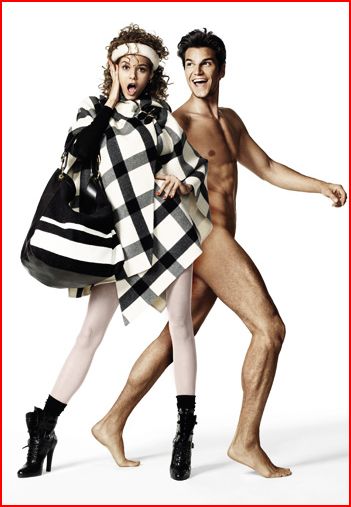
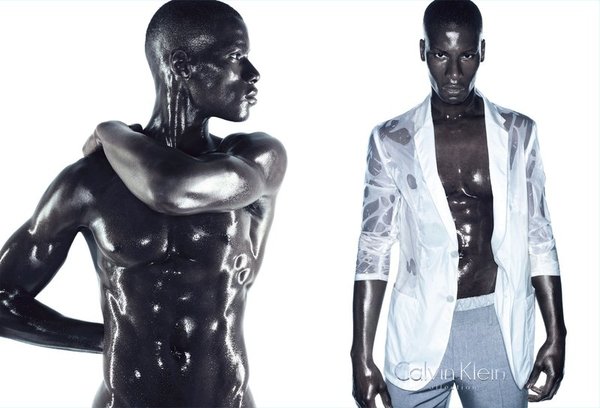
The image above, and several others: racist, heterosexist, as well as grossly hostile to women, have been discussed for a while at the blog Sociological Images. I was part of a discussion there months ago. And recently some fellow named Lawrence has shown up to offer up one of the more inane and preDICKtable replies to viewing such images as the one above.

He really doesn't get it at all (or, well, he does but is just pretending not to get it) about why men objectifying women is different than women objectifying men--if we're going to even pretend such things happen "equally". For the whole ugly truth, see *here*.

A reply I posted a while ago is this analysis of the image above and others like it. I have edited it a bit, for clarity. Below that is Lawrence's recent comment and my response to him.


Julian 10:18 am on April 19, 2010 | # | Reply

First, if you’re not among the ten to eleven million who have seen this, I welcome you to see this:

http://www.youtube.com/watch?v=iYhCn0jf46U (or just Google “Dove Evolution video”)

No matter how thin, no woman wakes up in the morning computer-digitally altered.

I’ll add that these ads perpetuate the most vile forms of contempt for certain “other” women. AS IF women are all extremely pale, thin, young, and very tall. This particular body type, where it does occur “in nature” occurs in Europe among a very few Caucasians. Not commonly in Asia–and Asia goes from China to Indonesia, and from the “Middle East” to Japan! Not so much in Indigenous populations in Asia and the Americas. Not in any part of Africa, unless among a few whites descendants of colonists. And, in case no one has noticed, the Americas, the UK, and Australia, and other places where Elle magazine and Vogue magazine are sold and distributed [--in many cities across the globe] mostly people who [have none] of those attributes live there, including NYC, London, and Perth.

Yes, Laura. I totally agree. Why don’t we men organise and not just speak up when it seems “the women are ignoring our pain”? Why don’t men speak out against what pornographers do to men, what pimps do to males of various ages, and advertising execs get rich doing to mostly white people that negatively impacts all people?

“The fairer” sex also means whiter/lighter, as in “mirror, mirror on the wall, who’s the fairest one of all”. (Answer: Snow White… get the racism?) Fair-skinned is allegedly “better” than dark-skinned. So racism against women runs all through these images. And that is horrendously marginalising and alienating to women of color, to non-superthin women, to older women, and one other category as well… can you guess which category?

The “type” of woman that rarely gets discussed when discussing ads about women, and is never seen in media at all, unless to denigrate her terribly, is butch women, non-femme women. These magazines won’t go near any woman who isn’t ultra-femme to the point of having to be painted from head to toe, because NO women look like the women above, ever. (See that famous “Dove Ad” on YouTube to know what I mean, linked to above in this comment.)

So that one man, as mentioned, could be gay, but the women only exist for/draped on the men to do with as they please. They are Barbie dolls. Is he HER accessory, or is she HIS? (Hmmmm: is there a “gay” inference: do naked white-but-tanned men play with Barbie dolls?)

@Matt: almost no white men have hairless upper bodies AND hairy lower bodies. Possibly some “Aryan”/Nordic men. So you do, and another .001 percent of the population. But “nature” doesn’t work that way for most of us, and men’s chests are now moving back towards being hairy on television, which means those actors won’t have to have that hair ripped or shaved off.

If you sense agitation in my posts, it’s because I hear from the people who are profoundly negatively impacted by this and other media. The women and men who believe women are “undesirable” and “ugly” and “ought to stay inside” if they don’t have stick-legs, are not “pretty” as defined by pimps and cosmetics companies, and “fairest of them all”. The lesbian women who never see their desire, their aesthetics, depicted anywhere. Even depictions of “lesbianism” in dominant media is “for heterosexual men” to “enjoy”. Ugh.

These women, above, and men, only exist in relation to one another. For each other. Lesbians and gay men exist too, and we don’t all look like the people in the images above. And NO Black man looks like that polished ebony form above. (Not even him.) If you don’t see the harm, just breathe in the pain and suffering caused by these and all the other images shoved at us 24/7. Feel that pain. Of raw throats from vomiting several times a day. Of not having a clear mind and strong body due to self-starvation for one to twenty years. Of all the girls who don’t have, as Toni Morrison wrote, “The Bluest Eye”.


For my response to Lawrence, read on...


Lawrence 7:37 pm on February 7, 2011 | # | Reply

I agree. women constantly whine about objectification and then insult us and call us immature if we point out their double standard. You cant watch a TV show or movie without all these athletic cut 20 something guys losing their shirts and many times even more. We have had a push of show showing male genitalia and they have been rated down to R. Show a woman’s pubic hair and you automatically get a NC-17, and you haven’t even shown her genitals. And then we get all these experts saying, “a flacid male organ is not erotic”. So, its still indecent and should garner the same treatment as female genitals. The beefcake in ads has gone way over the top and they know it. Women just want to have their beefcake and eat it too.


  • JPLee 12:28 am on February 8, 2011 | # | Reply

    Yes, we all have to contend with exceptionally hot (and touched up) people on TV. But at the same time…..now you know how we feel!

    Women are still objectified far more often than men (just going by the ads I see everyday). And only recently has the number of scantily dressed people in the media started to even out among the two genders…….I have to wonder why you are so pissed, when it is really just an eye for an eye.
    You really have to consider the long history of women being objectified before you can complain about things not being fair.

    PS. Who the hell are these experts telling us what to find erotic? I think we can figure these things out for ourselves. :P


  • Julian Real 1:26 am on February 8, 2011 | # | Reply

    @Lawrence – You seem not to grasp a very basic truth: that the men objectified are still valued for being powerful; the women objectified are valued for being weak. Why? Because however much men are objectified–including the objectification of white rich men as “wealth objects”, wealth, power, control, and force still remains in the hands of white men in the US. There’s no level playing field onto which such images fall. The field is land-mined against women of all colors in ways it never has been for men. It is land-mined against all people of color in ways it never has been for whites.
     
    If you want to narrow the gaze myopically to this issue of how people are presented in some print ads, that’s your myopic choice. In the real world, however, those images are part of a larger pattern of very threatening and horrific realities which, I would imagine–correct me if I’m wrong–you’ve not had the displeasure to be terrorised by, such as men following you as you walk to a bus station or train stop, or to your car; men pulling their cars over asking you to get inside; men harassing you on the street or at work; men feeling entitled to rape you at home, or to batter your face until bones are broken, or to batter your belly if it carries a fetus; grown men sexually abusing, trafficking, and enslaving thin girls–by the millions. I’ll wager you don’t register these horrors and terrors as “real” at all. And so you can pretend we are only discussing “a few images in some magazines”. You are quite privileged to be able to not make any more connections than that. This is to say, your privilege is showing.

Monday, February 7, 2011

An Honest, Open Letter to the LGBTIQA Blogging Community (Lesbian, Gay, Bisexual, Transgender /Transsexual, Intersex/Intergender, Queer/Questioning, and Asexual)

image is from here

Dear Queer Community,

It seems to me there's kind of a general culture online of throwing around of hateful and disrespectful speech, particularly if not uniquely in the queer blogosphere. I see this in many blogs which I won't name in part because there are too many to name. That said, the list isn't uncountable. It's a definite number--perhaps growing, perhaps not. But what I'm seeing is a rather nasty, almost compulsively snarky, and generally unconstructive way of engaging that seems to do little more than demonstrate that yes, we can insult each other and treat each other in emotionally harmful ways, while never really engaging in meaningful dialogue and respectfully agreeing to disagree.

I also find that our online blogging community both is and is not a voice for the offline community. After checking this out with several people in our community as citizens and activists, what I find is that many of the terms we use to divide ourselves up, to fuel tensions and deepen disagreements do not exist offline in general discourse. This means one of three things:

--the realities we discuss here are not relevant to the lives of people who do not blog, or
--what we discuss does not reflect actual lived life of most LBGTIQA people, or
--how we discuss things is elitist and removed from how people offline speak of their lives and their struggles

I think particular environments are likely to creating their own ways of being and doing things. And in the blogging world, it seems, being snarky, nasty, mean, and hateful is too often held as both acceptable and a worthwhile endeavor.While it may benefit a few individuals to write about other groups of people in demeaning and grossly stereotypical ways, I wonder what the effect is generally on our capacity to care about one another or at least see one another as full human beings.

I hold out little hope that white het men will "come around" and care about the concerns radical activists working to end male and white supremacy, and Western corporate tyranny, and U.S. militarism-as-foreign-policy. I want them to get it and challenge one another accordingly. But I don't have much hope for that. The levels of protections and privileges, the forms of power and the range of entitlements, that WHM possess and maintain, are so encouraging of living in denial about what everyone who isn't a WHM experiences. The denials is a consequence of not experiencing what most people around the world experience.

If you are not raped, or your body isn't socially targeted for rape, and your gender isn't targeted for rape, how are you to know what it feels like to hear that another woman has been raped? How are you to register "rape" as a form of gendered terrorism that men commit disproportionately and intentionally against women and girls? If  you are white, how are you to know the forms of invisibility and stigma people of color carry within them that are inflicted and maintained by white society?

What people raised with male privileges (however modified they might be by other factors), don't generally acknowledge, is the degree to which they shape the behavior of the people with them. I find the same dynamic operating among whites: willful denial of privileges based on race.

What I see in our community is men and males who (intentionally or not) disrespect and hurt women--lesbians and women who are not lesbian--without regard for the effect, except to take pleasure when the effect is damaging to women.What I have observed is gay men, bisexual men, trans men, and trans women raised with male privileges, discounting women's experience as not sufficiently real or valid to take seriously. Or to cause one to make changes in one's own male-privileged and/or misogynistic behavior.

I would say that white racism, male supremacy, and an attachment to the values of corporate capitalism are three forces that combine to make our community one more place where many women are not safe from abuse and harassment. I see this harassment and abuse online, on blogs that seem to think that radical feminists--the few they name--are able to inflict oppressive harm systematically against some in our community the way that men do. To me, that's utter nonsense. How, structurally, would that even be possible? How could that happen systemically, when radical feminists aren't in charge of any dominant systems? Men and males are in charge, not women, not females. And in the West, whites are in charge--not people of color.

Unowned and irresponsible use of white and male privileges are two things I see being acted out on blogs. Gay men disrespect women, lesbian or not, and male-privileged people, trans or not, disrespect radical lesbian feminists--the few they name or believe they know.

I have yet to see one book written by a radical lesbian feminist responsibly and respectfully engaged with. Not one. Why is that? I see writings by men engaged with as if the author was a person deserving of respect and regard. Whole academic disciplines are organised around the ideas and ideologies of men, too often white men. But when the author, the historian, the social and cultural critic, the activist, is a lesbian-identified woman who is not transgender or transsexual, there is not such engagement or care to understand the meaning of the work.

I welcome someone linking me to even one gay male-privileged, bi male-privileged, or trans male-privileged blogger who responsibly, thoughtfully, carefully, respectfully analyses and engages with just one book written by a radical lesbian feminist. Just one. Or with just one activist who is a radical lesbian feminist. Just one. Because I'm beginning to wonder whether anyone who is not a radical lesbian feminist is even capable of doing this. I mean emotionally and intellectually capable. I mean spiritually and politically capable. I have "virtually" no evidence of such engagement happening. And I believe that ought to be a concern for all of us. Because radical lesbian feminism is one of the most pro-liberatory and intentionally anti-status quo movements to rise out of our community, or one portion of it. I know many lesbians do not identify as queer or feel a part of queer community. But het male society does locate lesbians of any political affiliation or identity as "who is queer", and we are defined, often enough, by our oppressors.

Why won't non-lesbian, non-feminist, non-radical people engage responsible and respectfully with radical lesbian feminist authors and activists? I'd like someone to explain why without being anti-feminist, misogynistic, or arrogantly male supremacist when doing so.

Yours in the struggle,

Julian

Monday, January 31, 2011

Questioning M2F Entitlements that Women Raised as Girls Don't Have: More on Trans Political Agendas, Practices, and the Challenges of Radical Feminism (or Radical Pro-Feminism)

image is from here
NOTE: on 9 Feb. 2011, I changed the title of this post to remove the term "cisgender women" and replace it with "women raised as girls". I did this in response to one of the comments posted below.

In the last few months, I have posted probably two dozen times about issues in trans and radical feminist politics. And, to date, almost no one has been willing to engage with these issues in responsible, respectful ways.

I understand why any of us who are queer/genderqueer/trans/intergender/GNC would want to lay claim to 'being one gender', if that gender is not the one someone was raised as but didn't experience oneself as being, when the defining feature of our outsiderhood is that we've had a mixed gender experience.

I don't understand the politics of fighting for trans-visibility while also demanding to be termed in ways that renounce or refuse to acknowledge being transgender or transsexual as anything other that conservatively assimilationist. I also want to point out that working to be termed "women" or "men", if M2F or F2M erases or invalidates the experiences of women who were girls as a distinct social-political experience, and, for that matter, the experience of men raised as boys. It also makes a very transphobic assumption that most trans people are living lives that are not what is termed "cisgender". Lest we forget, most trans people have bodies that are not surgically altered, that appear gender ambiguous; as the gender they are socially perceived to be; as the gender which has or doesn't have male privileges and entitlements embedded in it.

Someone whose name I don't have permission to use wrote to me recently pointing out a few other issues with the concept of "cisgender". I have slightly modified some of the points raised to me in that email and I thank them for writing.

"Cisgender privilege" is specifically defined in a way that excludes anyone who does not want to transition, or transition completely. If you do not hate the way your primary and secondary genitalia is formed or appears, or if you do not strongly dis-identify with your genitals--enough to get drugs or surgery to change them--then apparently you're cisgendered and carry all the privileges the term is designed to confer. (This is how the term has been described by some trans activists and trans spokespeople.)

So the idea that someone is "privileged" specifically for not wanting to get drugs or surgery on or to reshape their genitalia, when most people can't afford to do so, is oxymoronic.

If you are genderqueer but do not want to alter yourself surgically or with hormones, does that mean:

a. you're comfortable with the way you are perceived?
b. you are judgmental and dismissive of the people who are different than you?

Don't both "a" and "b" both have to be true for cisgender privilege to exist? In my experience, genderqueer people are unlikely to find those both to be true of them as individuals.

While I understand anyone not wanting to so consistently be living along the outer margins of status quo society (often in only some regards), to do so by denying one's acquired, practiced, and structurally well-protected privileges is, to my view, status quo political behaviour that reeks of white and male supremacy. When a few vocal white M2F pseudo-spokespeople for "trans experience" do it, I certainly experience it as male supremacist. As a person in trans/intergender community, does my subjectivity and perspective on this matter as much as the white class-privileged M2F person who claims to not be male supremacist? You'd think, because I am male, that it would.

"You call me what I demand to be called, or else you will be stigmatised and marked as a bigot and hater" is not a politic or a practice that is enforceable or practical for most oppressed people to employ. Why, then, do M2F transsexuals get to employ it as if it is an entitlement and a right? How many women of color, trans or not, get to be termed what they most wish to be called? How many men of color, trans or not, have that luxury?

A queer white, ethnicity-, class-, ability-, and profession-privileged person named Noah has showed up here accusing me--a gay, Jewish, disabled, non-profession-statused, transgender/intergender person, of being "transphobic", as if me advocating a responsible radically pro-feminist trans politic is anti-trans!

A very anti-radical, anti-feminist race-privileged, class-privileged transsexual person named Sara has come here and made individualistic arguments that show no regard or respect for the anti-patriarchal efforts of women to remove all man-infestations of anti-lesbian white male supremacy from the Earth. Sara basically denies there is such a thing as "patriarchy".

A non-transgender person, a Latina woman vlogger who calls herself Divinity, who works in close alliance with a well-known white misogynist/anti-feminist non-trans man/troll has expressed gross disregard and disrespect for the radical feminist of color politic and ethic of naming white male privilege where and when it rears its entitled head.

I have posted thoughtful responses to each of these people. Only Sara has been willing to engage respectfully, if not responsibly. Noah has presented gross condescension as "respectful engagement". Divinity has not engaged with me at all.

I have noted several instances where male supremacist and other oppressor privileges are present in some arguments put forth by a few trans people. What I see online, argued determinedly and systematically by a very few transsexual and transgender people, is not what I see or experience offline.

What trans people I know off-line request is to be respected as people, to be shown basic human regard, to be treated with consideration, to not be assumed to be anti-feminist, and to be termed "transgender", understanding gender to be socially constructed. Their stance with regard to radical feminism--white and of color; lesbian and not--does not resemble or support the views expressed by people like Divinity, Sara, and Noah.

For a few very privileged M2F transsexual people (claiming status as spokespeople for all trans people) to demand use of arguments or terms that obfuscate or evade responsibility and accountability for the political privileges one carries is just plain ol' status quo oppressor behavior. (Including statements like this one: "Any critique of trans experience is regarded as transphobic." This would mean that trans people questioning our own experiences, and interrogating the meanings of our emotions and feelings, is "transphobic", which of course is horseshit. It would also mean that lesbian feminists with totally legitimate political critiques, such as Carolyn Gage's analysis of the life of Tenna Brandon, is transphobic and not useful to our experience and political agendas. I think work such as that must be engaged with. Pun intended.)

I will expect those few transsexual cyber-"activists" who pose as pseudo-spokespeople and non-trans Internet trolls who claim to speak for all trans people, or who claim to "represent", legally and otherwise, ALL trans people, to do one of two things:

1. To disrespectfully and/or unintelligently and/or anti-radically and/or anti-feministly respond to what is in this post because they have the privilege and entitlement to be disrespectful without being accountable.

2. To ignore and disregard anyone with whom they disagree because they have the status and power to not need to engage with people with fewer privileges who are charging the male-privileged pseudo-spokespeople with defending and upholding male supremacy.

For me, queer politicals as it manifests interpersonally and socially fails to even achieve being "progressive" in the ways it supports lack of insight and analysis into what "gender" means and is, politically, in Western or Western-colonised societies. Traversing a hierarchy by changing external gender cues (and I'm understanding this is done for some people to feel less internal disonnance), is to privilege the capacity to do so (a privilege not available to most people) while also acting on the entitlement to deny privileges one either believes they never had (M2F), or to deny the threat to women and girls of privileges and entitlements one moves into (F2M).

Poor people who become rich acquire privileges while also carrying a legacy of having been poor. Rich people who become poor, if raised rich, do not lose their class privileges in so many regards.

Many class-privileged people I know, when in college, claim to be "poor". This term is used so often as to de-politicise the social meaning and global experience of poverty. I've always called out people who do this: not having money readily available isn't "poverty" if one is raised with class-privilege. It is a temporary loss of some of the abilities one has with money in the bank.

While gender privilege acquisition, or loss, is not the same as wealth acquisition or loss, what remains constant-while-not static is the effect of one's upbringing on how one engages with the world.

There is a pretense and claim of "never having been a boy" that a few very vocal, very cyber-dominant F2M pseudo-spokespeople make. This must be called out in all cases: the issue is not whether one "was a boy"; the issue is whether one was raised with male privileges, whether they were consciously and willfully acquired and acted out, or not. As a child who never felt like a boy, who didn't identify with boys, who didn't like or gravitate towards "boy-behavior", and who was bullied and ostracised throughout my social childhood for playing with and befriending girls-as-political peers, for doing "girly" things, for "throwing like a girl", for refusing to play boy team sports, I nonetheless acquired plenty of male privileges and entitlements--far more than any F2M across a similar period of one's life.

The proof (for me) of the unacknowledged male privileges, entitlements, dominance, supremacy, and power is that when this charge is made by a few M2F transsexual people--of never having or not having male privileges and entitlements--it can be dismissed by those few M2F pseudo-spokespeople by consistently calling the exposer of this political truth "grossly insensitive" or "being a bigot". Where else does this happen?

Anyone hear of these terms: "femi-nazi" and "misandrist"?


I personally-politically find the appropriation of the term "feminazi" to be anti-Semitic but it too, as I know you all too well know m Andrea, is another linguistic device loaded with political meaning, used against women who resist and challenge men's domination and rule. I ought not and will not tell you what terms to use to describe yourself online. I'm only noting that I find the term anti-Semitic, particularly when used by non-Jewish people. (And, m Andrea, I don't know whether or not you are Jewish.)

But what I'm addressing also applies to the terms: "femi-fascist", "misandrist", and "misandry". They are over-used enough, deliberately and systematically, in radio and other media, and often online, in certain very privileged circles, so that hopefully a few people who are men or who are defenders of men will also believe the terms refer to something that is socially and structurally existent (even though it isn't). Misogyny is structurally/socially existent. Male supremacy is also. White supremacy and dominance and rule of the wealthy is also.

In conclusion, for this post, I'll note that there are rather glaring political problems with the terminology constructed within some trans circles to marginalise and portray girls who grow up to be women as "oppressors" of trans people, or as having privileges trans people do not. Again, most trans people are not surgically or hormonally transitioning and are in the same perceived category as any woman or girl, or any female person who is genderqueer but not trans. There is also a glaring level of unacknowledged privilege among the few M2F and other transgender and transsexual people who are claiming that girls and women raised as girls have more privileges than they do. Among those privileges is the power to name reality and to socially name, with authority, "who one's oppressor is".

Our collective social justice and political liberation struggles are not served by refusing to own or discuss when and where white and male privileges are present but denied.

I welcome respectful discussion on these and related issues.

Sunday, January 23, 2011

Calling All Activists--Across Africa, Asia, the Pacific Island nations, the Caribbean, the continents of the Americas, Australia, and Europe: I Welcome You to Share what You're Doing to Challenge and Stop Men's Domination of Women. Here.

image is from here

I am writing to ask women (or anyone else) the world over who are working to end male supremacy, male dominance, and men's abuses of women and girls to promote their activism here, if doing so would be helpful to their efforts.

Please post your actions, report your notices, news, and events, and allow other women to be inspired and encouraged by the work you are doing.

And men who are working with accountability to womanist and feminist activists, please let me know what you're doing.

I'm hoping that seeing what people are doing the world over will serve to support other women whether people in activist groups or people who are working in their own lives to resist patriarchal atrocities and abuses as best they can.

My hope is that the network of women working to end male domination grows, and gets stronger and stronger. And that people in various parts of the world can make lasting connections, build sustainable communities, regain stolen land and resources, grow healthy food, make streets, neighborhoods, and homes safe, and increase the support you have for the difficult and wonderful work you are doing.

You may post comments to this blog or send me an email with any information you'd like me to share here. The address is: aradicalprofeminist@gmail.com

To all women working to resist and transform patriarchal societies into woman-respecting humane ones: Thank you.

Tuesday, January 11, 2011

A Response to "Transphobic and Racially Confused" by Brandon Lacy Campos to Dirtywhiteboi67

photograph of Brandon Lacy Campos is from here
NOTE: I may just pull this post. I am so not a fan of Dirtywhiteboi67's manner of engaging on these issues that I'm wondering why I picked up this issue as I did. I guess for me it's the issue of "the disappearance of lesbian feminism", most especially that promoted and developed by women of color such as Audre Lorde, Barbara Smith, Cheryl Clarke, and so many other great women over the last many decades in the U.S. and beyond.

As I do not (as yet) have Brandon Lacy Campos's permission to cross-post his reply to Dirtywhiteboi67, I'm going to link to it here, and below that put my comment to him, which has been submitted but has not yet been approved--I'll full respect his decision to not post any of my comments. I may also write to him and ask him not to post any of them.

But, regardless, I kind of hope Brandon is willing to engage with me on some of these issues, when his time and energy allow. He has been doing great work in the queer community as an activist and poet for a long time and I don't presume that engaging with another white person on these issues is or ought to be atop his list of priorities. In case you are not familiar with him, here's some bio details from the end of last year:
Brandon Lacy Campos is a 32-year-old queer, poz, African-American, Afro-Puerto Rican, Ojibwe and Euro (smorgasbord) poet, playwright, blogger, journalist and novelist (that last one is slowly coming along). In 2009, MyLatinoVoice.com named him the #2 queer, Latino blogger to watch. In 2006, the Star Tribune named him a young policy wonk for his political shenanigans. His writing and poetry have appeared in numerous anthologies including, most recently, Mariposas, edited by Emanuel Xavier and published by Floricanto Press. This fall, his work will appear in the academic text Queer Twin Cities, published by the University of Minnesota Press. And, one of these days, Summerfolk Press will be publishing his first solo book of poetry: It Ain't Truth If It Doesn't Hurt. Brandon is hard at work on his first novel, Eden Lost, and he lives in New York City with his partner, artist David Berube, and his boss, Mimzy Lacy Berube de Campos (their dog). [source for this bio info and the image above it: *here*]
Hey Brandon, where's your book with David? I've been looking for it, for info about it, online.

Before reading on, I hope the y'all will familiarise yourself with the background, short though it may be, of this most recent exchange between Dirtywhiteboi67 and Brandon. For the record, I have no knowledge of who Dirtywhiteboi67 is, nor what her history of activism is, if any. I don't support her racism, her white privileged behavior, and her call to withdraw any time or resources from The Audre Lorde Project. I find her effort truly misguided and racist, as well as grossly misogynistic and transphobic. I have nothing but admiration for TALP and the work they do. Some of what I'm saying here will make a bit more sense when you read what follows, but I want to be up front with some of this now.

I don't doubt that Audre Lorde might not give a damn that someone at TALP would refer to her as queer. I have come across Brandon's name and some of his responsible, caring work and have regard and respect for him. I support him calling out Dirtywhiteboi67's gross racism and white supremacist privileges.

The story, thus far, may be read at these two posts:

http://radicalprofeminist.blogspot.com/2011/01/beyond-double-standards-audre-lorde.html

http://myfeetonlywalkforward.blogspot.com/2011/01/transphobic-and-racially-confused.html

Here is my reply:

Hey Brandon,

Thank you for your response to Dirtywhiteboi67. I am personally angered by white folks--male, female, or intersex, trans or cis, thinking they/we have the right to get up in faces of people of color about matters which they/we know little to nothing about and attempt to gain white supremacist control of every exchange or conflict. I appreciate and support your anger at the obnoxiously white-racist aspects of what Dirtywhiteboi67 is doing in her response on her blog to the issue of Audre Lorde being referred to as queer, and have come out on my blog opposing her call to withdraw funds and time to TALP.

I personally and politically don't feel TALP is beholden to anyone other than those people who work there and receive services and support due to their work. I am very grateful there are organisations like TALP and wish there was this type of organisation in every major city, or any place where queer folks need support. Thank you for being part of the group of caring people who have put time and energy into TALP.

I am similarly troubled by males and men across race attempting to silence women of any race, which is partly what I experience you doing above. I don't believe your male privilege, power, and entitlements, including the privilege, power, and entitlement to tell women to shut up and never speak again to an issue of lesbian visibility, goes away just because you're queer and of color. Nor does mine. I'm white, male, Jewish, intergender, gay, and disabled. I cross places of privilege and oppression, as do you. And, structurally and socially, I'm your oppressor and you're not mine and I get that.

It was upsetting to me to see Audre, who fought very hard, as any of her friends know, to identify as lesbian, to have her termed something other than what she termed herself. I don't believe Barbara Smith or anyone else speaks for Audre Lorde; I look to Barbara Smith to speak for herself and am so glad she has done the work she's done as a Black, feminist, lesbian writer, and as a publisher of great books. I look to Alice Walker, Cheryl Clarke, Angela Davis, Marimba Ani and any other living radical woman of color to name their realities and advance womanist, feminist, and pro-revolutionary theory and practice.

I am troubled by some of the ways you appear to me to disregard a white woman who was speaking to the issue of not invisibilising lesbianism, which, in my profeminist view, is a woman's issue across race. In my experience queer males across race and ethnicity have had a hand in collaborating together to dismiss and disrespect lesbians of color for decades, including by refusing to engage responsibly and respectfully with radical lesbian activists and writers of all colors. I'm not, in any way, accusing you of invisibilising lesbians of color. I'm just concerned about some of the ways that you are protesting a white woman's call to make lesbianism more visible. How many men do you know who put aside their male privileges to engage with the work of feminists and womanists, especially lesbian-identified writers and activists? I can count on one hand the number of men I know. And, I'm not sure I'd even have responded to Dirtywhiteboi67, were I in your shoes. And, if I worked at TALP, I'd probably find most of what she had to express annoying as hell, and also racist as hell.

Given that Audre Lorde was radical, lesbian, and feminist, what I am unclear about is this: why would you (or anyone else) seek to deny Lorde her lesbian identity, and instead put that identity under a larger banner of "queer"?

I identify as queer, intergender, and gay, and welcome anyone using any of those terms for me. Audre identified, as far as I know, as a gay-girl earlier in her life, and later as explicitly lesbian and feminist.

Across class and race, and especially in the last fifteen to twenty years, there has been an effort to invisibilise lesbians of color in the media and beyond, as such. Does that concern you as a queer male who respects Audre's work? Do you find it male supremacist of you to not only tell a woman to shut up and to remain silent but also to refer to her as "sweetness", and to psychologise her anger? All of that comes across as to me as overtly misogynistic and disrespectful. In what ways are you not treating her the way men, across race, typically mistreat women, across race? Do you believe your work with women of color, or your structural, social position as a man of color who works with queer-identified women entitles you to be misogynistic to white lesbian women?

It is my experience that the more privileges one has obtained socially--particularly if male and/or white and a U.S.er with academic privileges, the more structurally and institutionally entitled it appears one is to demand to be named as one sees fit. Few Black women I know have ever had the option or the structural entitlement to be named by society as they wish to be named--or even to be seen as fully human. Men and whites are always at the ready to put Black women of any sexuality in the boxes they wish to see them in.

I am supportive of many projects, including the Audre Lorde Project, and also the work of Aishah Simmons and Tiona McClodden, in particular, to support visibility of Black lesbians.

As someone within the trans community, isn't our politic one of respecting how we name ourselves rather crucial to establishing supportive community? Can you appreciate how it could be seen by lesbian-identified women and wimmin that having Audre referred to as queer is yet another act of invisibilising lesbianism among women of color?

I posted on this issue as well, and welcome your comment-response to my blog, as well as permission to cross-post your reply here to my blog. Here is the link to my initial post, which pre-exists your response to Dirtywhiteboi67:

http://radicalprofeminist.blogspot.com/2011/01/beyond-double-standards-audre-lorde.html

I welcome healing, respectful, productive, constructive engagement. I find that with venues like Facebook and other Internet meeting places, including blogs, the level of mutual respect and regard across difference has deteriorated substantially. I hope our exchange can not call for either of us to be silent, but rather to speak to one another with respect, across difference.

I hope your efforts with TALP are going well and looking financially healthy through 2011. If there are fund-raising efforts or events connected to TALP that I can post here, I'd be more than happy to do so.

Julian

Thursday, January 6, 2011

The Politics of Ganging Up On and Insulting One Individual Black Woman

NOTE: This post was edited and revised on 8 January 2011 in response to a critique of the original that I received by email. Thank you, to the sender of that email.

Black writers, of whatever quality, who step outside the pale of what black writers are supposed to write about, or who black writers are supposed to be, are condemned to silences in black literary circles that are as total and as destructive as any imposed by racism.
Audre Lorde

Black women are programmed to define ourselves within this male attention and to compete with each other for it rather than to recognize and move upon our common interests.
Audre Lorde

But the true feminist deals out of a lesbian consciousness whether or not she ever sleeps with women.
Audre Lorde

I have come to believe over and over again that what is most important to me must be spoken, made verbal and shared, even at the risk of having it bruised or misunderstood.
Audre Lorde


I remember how being young and black and gay and lonely felt. A lot of it was fine, feeling I had the truth and the light and the key, but a lot of it was purely hell.
Audre Lorde

If I didn't define myself for myself, I would be crunched into other people's fantasies for me and eaten alive.
Audre Lorde

It's a struggle but that's why we exist, so that another generation of Lesbians of color will not have to invent themselves, or their history, all over again.
Audre Lorde

Life is very short and what we have to do must be done in the now.
Audre Lorde

Only by learning to live in harmony with your contradictions can you keep it all afloat.
Audre Lorde

The master's tools will never dismantle the master's house.
Audre Lorde

There's always someone asking you to underline one piece of yourself - whether it's Black, woman, mother, dyke, teacher, etc. - because that's the piece that they need to key in to. They want to dismiss everything else.
Audre Lorde

We have to consciously study how to be tender with each other until it becomes a habit because what was native has been stolen from us, the love of Black women for each other.
Audre Lorde

[source site for the quotes above is *here*]
This post consists of three parts: the quotes by Audre Lorde above; the main body of the post by me below; and an essay on this subject below that, with some closing thoughts by me.

There are a few occasions online, in the last weeks, months, and years, where various groups of people in the white male supremacist West have ganged up to very harshly criticise One Individual Black Woman. There have been many occasions, over the millennia, where this has been done in public places. This is always done at the same time that Black women as a group are ganged up on, insulted, and degraded. So the individual acts mirror the class-based acts. They are, structurally speaking, one and the same thing: oppressive to Black women and supportive of white and male supremacy.

In case the critics of "One Individual Black Woman"--countless individual Black women--haven't noticed, none of those targeted Black women have any of the social-structural-institutional power and privileges of any individual white person or of any individual man who has the ways and means to rally a mob-like group against anyone. And curiously it is disproportionately, if not only, whites and men who gang up on these individual Black women, protesting how "hateful" they are, as if Black women's hatred, or alleged hatred, has ever been the primary source of fuel running social systems designed and protected by whites and men. In case you choose to be so ignorant--whites and men--Black women's anger, rage, and hate has historically been most used against oneself and other Black women. But especially against oneself. To not know that is to prove your structural location as a white and/or male privileged person.

To be a Westerner and to target one Black woman as an object of inhumanity, while inhumanity is what Western Civilisation is founded on and thrives on, is an especially nasty strain of liberal individualism. Are the actions of any individual Black woman really so threatening to the masses that they warrant a response such as ganging up in mob-fashion and publicly insulting an individual in ways that are always consistent with how the group, Black women, is targeted generally? (I don't observe critics of an individual Black woman publicly critiquing her individual actions or views as whatever the critics feels they are. No. Their critique necessary and predictably goes after the humanity of of the person.)

I hear, occasionally, from whites and men: "Why aren't you speaking out against [so-and-so: the actions of an individual Black woman]?!" as if this blog was ever designed to target individual Black women as the source of ANY form of oppression known to the Western world, and the world beyond, imperiled as it is by white het male supremacy, now globalised.

This blog speaks out against systemetised, structural, institutionalised oppression, not hurtful things individual Black women do to a few individuals. I hope that's clear from the banner of this blog and from every post that's been put up here, now approaching 1300 in number. And, unlike many people, I don't use Facebook--that fucking putrid cesspool of anti-radical, anti-activist misogyny and racism, to express my views about individual Black women. Sorry. Naht-gonna-duit.

I critique the acts of some individual whites and individual men, here particularly, because their actions participate in white supremacy and male supremacy--those institutionalised ideologies of callousness and murder. If and when I challenge the viewpoints of any woman of color for being pro-white male supremacist, it's the viewpoint I challenge: I don't "go after" the person and don't rally "friends" to help me do so; I especially don't criticise her humanity.

The ways that whites and men gang up on an individual woman of color is life-threatening to women of color, in case you haven't noticed. The way some individual Black women do hurtful things to individuals who are white, men, or other women of color--because individual Black women are fully human and do human things like become hurtful to other people at times--is never accomplished in such a way that the critiqued people are threatened by multiple other people with all manner of systematised harm and institutionalised insult at their disposal, or with such systems and institutions "having their backs".

Note the anti-radical, anti-feminist, pro-racist location of the politics of whites and men not ever taking the side of any individual Black woman, especially including by bothering to find out the whole story. Note the anti-radical, anti-feminist, pro-racist location of the politics of whites and men insulting and degrading the humanity of any individual Black woman who speaks out in whatever way she chooses--when she speaks out at all, when she isn't being systematically silenced by white and male supremacy and its enforcers. And that doesn't mean I haven't and don't call out individual Black women who do things that I view as racist, misogynistic, heterosexist, or transphobic. I just won't do it PUBLICLY. And I name my own issues with the particular action or actions, I don't call into question the full humanity of the person I bring an objection to.

I don't hold individual Black women to be saints or sinners, holy or heathens, gods or monsters. I use the phrase "Lorde knows" because I think Audre Lorde was fully human, not fully "divine". I use the phrase precisely because her humanity was as good an example of complexly divine humanity as any that of any white person or any man who has been termed "holy" or "god-like". If Jesus (the fully human, not fully divine, man), or Gandhi (who abused women), or Martin Luther King, Jr. (who used women), can be made into various forms of gods, so too can Audre Lorde and any number of other brave, brilliant Black women.

If U.S. white male presidents can be regarded as [cough] Great, for committing, promoting, and permitting genocidal murder, for engaging in military warfare, for never ever declaring rape to be an egregious and entirely preventable atrocity men must work to stop, then I can declare "Great" any woman of any color for standing up to men in whatever ways she determines to be useful and necessary; and I can declare any Black woman "Great" for standing up repeatedly to misogynists and racists who come in all shapes and sizes, who go on and on and on and on about how "dangerous" an individual Black woman is.

To the critics of the One Individual Black Woman:
Spare the world your "concern" for humanity because One Individual Black woman appears to be "out of control" to you. Yes, you do get to find anyone of any color or gender "hurtful" or "offensive" or "disrespectful". But when you find allies with whom to gang up on one individual woman of color and publicly go out of your way to call her all manner of misogynist-racist terms in retaliation as if "this is war", you are doing the White Man's work. And the White Man's work is what this blog is designed to call out and name as atrocious, in case you haven't noticed.
.
I hope this blog supports more individual Black women, and women of any color, to take action against the evils of institutionalised whiteness and patriarchal manhood. More power to the women who do so. And if I see any whites, or any men, ganging up on ANY individual Black woman, publicly or privately, and attacking her humanity, and insulting her being, I may well call those actions out here on my blog. Because that CRAP is racist and misogynistic to its core. There's nothing anti-status quo about whites and men insulting and degrading Black women, even if it is done one individual Black woman at a time.

For more, please read this (please click on the title to link back to the source website):
An Introduction to a Feminist Perspective on Prejudice and Racism (64)

By cobras

In defining racism, Beverly Daniel Tatum turns to David Wellman’sPortrait of White Racism. According to Ms. Tatum, Mr. Wellman defines racism as “a system of advantage based on race.” (pg. 360, Women) In “White Privilege: Unpacking the Invisible Knapsack,” Peggy McIntosh refers to racism as “invisible systems conferring unsought racial dominance.” (Pg. 426, Women) In “Age, Race, Class, and Sex: Women Redefining Difference,” Audre Lorde writes of “systemized oppression” (pg. 427, Women) and of “the belief in the inherent superiority of one race over all others and thereby the right to dominance” (pg. 428, Women) when characterizing racism. Each of these writers stresses that the nature of racism is systemic and, as such, cannot be perpetrated by a lone individual. Each writer correctly makes a clear distinction between simple-minded personal bigotries and institutionalized wholesale racism.

“Prejudice,” Beverly Daniel Tatum points out, “is a preconceived judgment or opinion, usually based on limited information,” (pg. 361, Women) and goes out of her way to disagree with most people’s tendency to equate prejudice with racism. Ms. Tatum sees racism as extending well beyond the boundaries of personal ideologies. In effect, she understands prejudice to be a mere subset of racism, and believes that people often benefit from (and contribute to) racism without being overtly prejudiced. She sees racism as a system of oppression involving established cultural and institutional standards as well as individual behavior and beliefs. Racism is “prejudice plus power.” (pg. 362, Tatum, Women)

Peggy McIntosh agrees and further elaborates by comparing racism to a double-edged sword; on the one hand it disenfranchises and puts at a disadvantage one segment of the community (people of color), while on the other it confers “unearned advantage” (pg. 426, Women) and privilege to another (whites). McIntosh refers to the advantages she, and other European-Americans gain from racism as white privilege, and writes that this “privilege is like an invisible weightless knapsack of special provisions, maps, passports, codebooks, visas, clothes, tools and blank checks.” (Pg. 424, Women) It is important to note that, from her point of view, white privilege is as much a part of racism as is cross-burning at a Baptist church, and she goes a step further. She echoes her colleague Beverly Daniel Tatum’s opinion that anyone enjoying the fruits of white privilege, willingly or not, consciously or not, is a racist.

McIntosh’s and Tatum’s opinions may seem harsh and extreme to some, but as presented by them, make good sense. Humanity long ago reached an evolutionary status that affords each of us a level of understanding that precludes any valid excuse for the persistence of racism. No one may justly plead ignorance. As is often the case, ignorance in this instance, is simply a matter of convenience. “Most talk by whites about equal opportunity,” says McIntosh, “seems to me now to be about equal opportunity to try to get into a position of dominance while denying that systems of dominance exist.” (Pg. 427, Women)

What these ladies have written is insightful and true. Prejudice is carried out individually; racism is a collective effort. Oafish racial prejudice may be ugly and undesirable, but it cannot be compared to the pervasive cancer of racism. One individual’s narrow-minded and exclusionary outlook may hurt those immediately around him. The damage may even spread somewhat beyond that individual’s scope of influence and life, but it will certainly not alter for the worse the wellbeing and evolution of entire cultures, generation after generation. Prejudice cannot subordinate one race to another. Only racism can enslave a race. Prejudice cannot threaten the very survival of an entire race. Only the virulence of racism has the capacity to wipe entire cultures off the face of the Earth.

And it persists. “Black women and our children know the fabric of our lives is stitched with violence and with hatred, that there is no rest…violence weaves through the daily tissues of our living—in the supermarkets, in the classroom, in the elevator, in the clinic and the schoolyard, from the plumber, the baker, the saleswoman, the bus driver, the bank teller, the waitress who does not serve us.” (Lorde, pg. 430, Women)

White women must deal with racism also, but on a whole different level. Audre Lorde warns that white women must guard against “being seduced into joining the oppressor” (pg. 429, Women) in the hopes of sharing the oppressor’s power. Tatum insists that white women “intentionally or unintentionally…benefit from racism.” (Pg. 364, Women) This is not to say that European-American women are immune to racial hatred. White women are victims of racial prejudice. I have met people who openly profess their hatred of whites simply for their whiteness. This, however, does not constitute, by any stretch of the imagination, the methodical assault upon and oppression of a people of the sort referred to by Lorde when she says to white women: “You fear your children will grow up to join the patriarchy and testify against you, we fear our children will be dragged from a car and shot down in the street, and you will turn your backs upon the reasons they are dying.” (Pg. 430, Women)

Works Cited

Kesselman, Amy, Lily D. McNair, and Nancy Schniedewind, eds. Women: Images and Realities, A Multicultural Anthology. 3rd ed. Boston, MA: McGraw Hill, 2003

*          *          *

If you're still note clear on what's fucked up, racist, and misogynistic about what some whites and men are doing online and offline, to target and demean individual Black women, please read Sister Outsider, by Audre Lorde, cover to cover, and anything else by her too. It's not that I believe she speaks to and for all Black women. It's that I believe her words--all of them, if carefully listened to and taken to heart and mind by whites and men, will humanise every reader, to some degree. If you're still not clear about what's wrong with targeting individual Black women, online of offline, then I'd say you're being willfully ignorant in ways your raced and gendered privileges support and encourage. Before you criticise, demean, or degrade another individual Black woman, ask yourself this: is she exactly as human as you are? If your answer is "no", then read more by Audre Lorde, as many times as it takes to "get it" that no Black woman is less human that any white person of any gender, or any trans person or man of any color. -- Julian Real
.