This blog exists to support liberatory collectivist activism that seeks to uproot patriarchy, colonialism, and capitalism. It also acts to center the experiences, theories, and agendas of radical and feminist women of color.
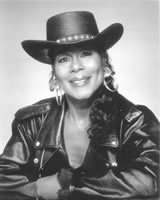
I don't recall a time when I didn't know of Etta James. Yet for all the time I knew of her, I knew so little about her life. What I knew, like so many other people, was her music. Although her recordings varied in genre, I associate her most with the blues.
A few weeks ago a national news program did a feature on her but it wasn't an announcement of her passing. The report mentioned she was in poor health, however. I hoped she wasn't suffering. Then, on January 20, a week and a half ago, came the news I'd been anticipating. She was gone. I will miss her living presence on this Earth.
Kanye West sparks controversy with 'violent' Monster video
December 31, 2010
US rapper Kanye West has sparked controversy with dead models hanging from nooses around their necks and dismembered heads in his leaked video for Monster. The video for Monster, which leaked online yesterday, also shows West in bed with a couple of apparently dead models, while he positions their hands to touch one another. In another scene a woman is seen dragging a dead male model across the floor. The video features appearances from Jay-Z, Nicki Minaj, Rick Ross and Bon Iver. The 33-year-old rapper also shows off his shiny teeth in the clip. [source for text and photo above is *here*]
It's not new news. But as I steer clear of most overtly misogynist popular music, I haven't encountered Kanye West's somewhat recent video.
The line between visual depictions of overt woman-hating in pornography made by rich white pimps for procuring men's consumption, and visual depictions of woman-hating found outside of that industry, is blurred to the point of being aesthetically non-existent. And if misogyny were only a matter of aesthetics, we'd be in better shape. But no aesthetic that is misogynist or racist is only aesthetic. It's also economic, social, structural, actual: lived out against the bodies and minds of real people.
No Black woman I know supports, encourages, or apologises for Black men's misogyny--whether culturally or commercially produced--including when funded by white rich men who own most of the companies that mass distribute misogyny--not just Black men's. In Beyond Beats and Rhymes, Byron Hurt does a very good job, imo, of locating where African American men's misogyny comes from: it comes from society. And dominant/controlling society in the US belongs to the White Het Man. So let's not forget that. And, as I see (and hear about it), African American men's misogyny is damaging, degrading, and dehumanising to women across race, but particularly to African American women.
I try not to reproduce and mass distribute misogyny--even from my blog when critiquing it. So I'll just link to the video, titled Monster, *here*. White men want to believe Black men are monsters, while Black women have to endure too much racist-misogynist monstrosity from Black men, Brown men, and white men, and, tragically, from white women who call themselves "radical" too. There's very little difference, in my experience, between the denial or defensiveness of white women's racism against women and men of color and men of color's misogyny against women of color and white women.
When I searched for feminist critiques about this online, I knew that if I found some by white women they'd likely be racist in some way. Here's an example from Tennessee Guerilla Women; in their writings about who they are, they appear to be white. Here's an example of white women's speech:
Tennessee Guerilla Women are working to mobilize a very large
state-wide internet-based community of politically active women
who are committed to achieving the following goals:
Equal and full opportunity for all
regardless of sex, gender, race, ethnicity, nationality, sexual orientation, socioeconomic status, religion, ability, marital status, or age.
The full range of reproductive choices
from legal abortion to bearing healthy children.
Generous social support
for the most vulnerable among us, especially poor mothers and children.
Not mentioning forced sterilisation is one clue the women are white. Not noting that the most vulnerable women are not only poor, but Black, Brown, and Indigenous, is another clue. Given that American Indian women are raped more than groups of more privileged women in the US (one in three, compared to, for example, one in four white women), how are they not more vulnerable, even if you only measure vulnerability in terms of who gets raped?
Here's more typical white women's speech, from [white] TNGuerillaWomen, on the West video:
If a woman depicted black men in a similar fashion, she'd be lucky to retain her life, never mind her career. But misogyny ain't hate speech in a woman-hating culture. The depraved so-called men in this woman-hating video are Kanye West, Rick Ross and Jay-Z[.] [source: *here*]
Um. Women? Which women? Do they mean WHITE women? Because plenty of WHITE women produce and distribute racist images of Black men and of Black women, and they get away with it all the time--including by retaining their lives. Institutionalised racism in media produced by white women and men is conveniently invisibilised in such a comment. So the comment reads as truly fucked up and white supremacist to me. Racist speech isn't hate speech either in a white supremacist society, in case that collective of bloggers and activists haven't noticed. And if the speech is both racist and misogynist--well, forget anyone who is white or male seeing that as hatefully BOTH racist and misogynistic; typically, white women only see the misogyny, and men of color only see the racism.
The people in US society who are murdered and imprisoned most disproportionately are not white men or white women with any economic power. The most imprisoned and invisibly murdered people are poor, are women across race, are trans, and are men who are not white.
Dead women, clad in lingerie, hang by chains around their necks. West makes sexual moves toward dead or drugged women propped up in a bed. A naked dead or drugged woman lays sprawled on a sofa.
The victims in this video are clearly women. Only women. And the men, Kanye West, Rick Ross, and Jay-Z are far from bothered by the female corpses. They seem to enjoy being surrounded by lifeless female bodies, apparent victims of a serial killing.
We call on Universal Music Group and MTV to combat violence against women by refusing to support, promote, and/or give airtime to West's "Monster" video. Please add your name to the petition.
Beyond that protest, also from the blogosphere, there are these discussions:
Post Bourgie posted this, titled: "Rant-ish? On Kanye’s ‘Monster’". Analysis and observations typically ignored by whites are these, from Post Bourgie:
The dichotimization of women as it pertains to race; in the video, white women are predominantly locked into roles of subordination to the point of gruesome lifelessness while black women are cast as aggressive, angry and threatening sexual beasts.
Nicki Minaj’s scenes are mild compared to rest because A) they have no corpses of any kind and B) the self-interrogation part can be seen as “edgy” and “different.” But, that would be too kind. What sort of internal conflict can be that deep if the two versions of yourself that are having issues with one another — dominatrix Nicki versus barbie Nickie — are also ones that readily appeal to male-fantasies?
In some ways, the conversation around dead women in Kanye’s video reminds me of the conversations that happen around feminism and black women. The reality of black women is assumed to be exactly the same as white women – if it is mentioned at all. The fact that the majority of the women pictured lying dead where white, while black women are all part of the monster crew is generally not mentioned.
So, I’m not surprised that no one has looked at the very specific positioning of white women in the video as opposed to black women, which dives deeply into the history and construction of black women as beast-like and fearsome, the sexualization of violence, and how the video is a win for both normalized misogyny and upholding the ideals of white supremacy.
But back to you Kayne: please cut the CRAP. ASAP. Just because you're making social commentary doesn't give you license to promote the dehumanisation of and violence against women--of all colors. And please call out the racist-misogyny of the men all around you. Because if you don't, you leave it to Black women, disproportionately, to do so. And that's also really fucked up.
John Lennon's song "Imagine" spoke to my heart when I was very young. How did I understand what it meant, I wonder? Perhaps that was the gift of his lyrics, strongly influenced by Yoko Ono's work in her book Grapefruit.
Men have organised civilisations in ways that make slavery, genocide, and rape crucial to some men's well-being. Surely many of us can gather our energies and transform what these men have made into something far more humane and sustainable. Can't we?
I know some very kind men, het men and bi men and gay men, who would be on board with this more humane world. I know far more women who have been working for decades to bring this world into our present, against great odds, with so many men calling them horrid names and threatening them in vicious ways.
It's time to wrest corrupt forms of power out of the hands of men who value destruction, oppression, and war more than creativity, humane being, and peace. It's been time for centuries.
The reason I don't think the problem is "men" exactly is because many men, not necessarily people who have called themselves that English term have lived on the Earth for thousands of years never inflicting the horrors on people we've seen in the last five hundred years especially. Whiteness is a new phenomenon and brings with it an especially horrid form of human being that finds slavery and genocide and rape to be politically necessary, sexually pleasurable, and economically profitable.
I have to believe that everyone who follows this blog believes the world can be better than it is, and that girls-in-slavery, Indigenous people being threatened with genocide worldwide, and white supremacy and capitalist patriarchy are not good for us, if "us" means "all life on Earth".
Please write in to say you agree that the world needs to be radically different than it is. And that Indigenous people ought not be threatened by non-Indigenous people; that women and girls ought not be threatened, exploited, and assaulted by het men; and that life on Earth can be in harmony. Not a bliss-only kind of harmony; but a harmony that doesn't make room for gross atrocities perpetrated by oppressive humans, in groups, against other groups seen and treated as inferior.
Dream strong and bring this dream to life. And if possible, stop harming people who are not the enemy. Stop abusing and exploiting people who are female. Stop threatening and scaring people who are oppressed. Stop using terms that make women into evil things, like b*tch or wh*re. All women are fully human. There's no such thing as a "b*tch" or a "wh*re", even while so many men and women believe there is.
To all men:
Treat all girls and women with respect and regard. If a woman has harmed you harshly, get out of her life and leave her alone. Treat all oppressed people as if your life was dependent on their well-being, because it is.
One day the Sun and the Earth will work together to turn everything we know into dust. The Earth, before that time, will find ways to regain balance and make itself a far more heavenly place than the hellish one it is currently. No matter how much cancer-causing radioactive elements, diseases, conditions of preventable suffering, and other forms of pain men unleash on the Earth, it will emerge healthy--but probably not with lots of people living here. But we don't all have to perish for Life to thrive on this planet. And the most humane beings and those of us who are caring of the Earth shouldn't be the first to go.
We just need to replace the powerfully corrupt anti-woman, anti-Indigenous people with caring, compassionate people who are able to challenge and change every social, economic, religious, and political system that requires organised harm. We have to be those people. We have to work together. Now.
Photograph of Gladys Horton (1945-2011) is from here
news-1005014232
news
I loved Motown music when growing up. All of the sounds emanating nationally and internationally from Detroit through the 1960s and 1970s found their way into my ears and through my body. Motown, for a time, was the music I most loved to dance to. For this reason and others, I mourn the loss of one of the most distinctive, upbeat-while-plaintive female lead singers of that era and genre, Gladys Horton. At fifteen (!!), she brought Berry Gordy his first #1 smash hit: "Please Mr. Postman" which would later be picked up and whitened by the Beatles.
What is strange to me is that Ms. Horton's passing has been noted (briefly) in some media, including in print media, but they can't agree on what day she passed, nor how old she was at the time of her passing. I know there was controversy about when George Harrison was born: February 24th or 25th? This confusion can happen whenever anyone is born or passes close to midnight. Medical reports may written up recording a time that may differ from eye-witness accounts of such indelible moments into and out of live. But this level of erroneous reporting seems totally messed up to me (and when I say "messed up" what I mean is racist and sexist). Will the age and date-of-death of any of the white British male band-mates who comprised members of The British Invasion, to name but one music genre contemporaneous with a portion of the U.S.'s Motown success, be misrepresented in the mass media, and in Billboard, specifically? Will media really get wrong the day and age of any living member of The Dave Clark Five, or Herman's Hermits, for example, when such time comes when one of them passes on?
Can no one at the Associated Pressdo the math? She was born on May 30, 1945, which would mean she lived only until the terribly young age of 65. She would have turned 66 later this year.
The cause and specifics of her health struggles also remind me of the very lethal scourge that is cardiovascular disease among all U.S. women, but particularly African American women, what with it being a stress-related condition, with Black women having to endure and resist the systematic assaults and everyday aggravations both of racism and sexism from birth on to what is far too often an early death.
What follows was found by me at billboard.com and may be linked back to by clicking on the title. This material produced largely by the Associated Press, is edited by me and those edits appear in the form of strike-throughs, the adding of the correct age, and minor additions to the text which appear in bold and in brackets. The material is being reproduced here for the purposes of honoring an artist's life and passing, for political commentary and analysis, and not for material or personal gain.
Gladys Horton, who co-founded the 1960s Motown group The Marvelettes and sang on hits including "Please Mr. Postman," has died in Los Angeles at age 66 [65].
Her son, Vaughn Thornton, says Horton died Wednesday night [not on Thursday, as some media are reporting] in a Sherman Oaks nursing home where she had been recovering from a stroke.
Video: The Marvelettes sing "Please Mr. Postman"
Horton was a teenager in the Detroit suburb of Inkster when she and some friends formed a group they called "The Casinyets," which was short for "can't sing yet."
When Georgia Dobbins had to leave, Horton became lead singer. The group changed its name to The Marvelettes, and Horton was 15 when Motown released "Please Mr. Postman" in 1961. "Postman" reached No. 1 on the Billboard Hot 100 on Dec. 16, 1961 and was the first No. 1 for Berry Gordy's Motown Record Corporation.
The Marvelettes went on to chart a total of 23 Hot 100 hits, including "Postman," "Playboy" (No. 7), "Beechwood 4-5789" (No. 17) and "Don't Mess With Bill" (No. 7). Horton was replaced as lead singer in 1965 and left the group two years later.
(Additional reporting by Monica Herrera, Billboard.com)
As you watch this film, please note how much of the destruction depicted comes from white het male supremacist societies--how much of the destruction was designed and carried out under the control and order of patriarchal and racist white het men and their way of understanding things like progress and value. For much more on this, please read Yurugu: An African Centered Critique of European Cultural Thought and Behavior, which may now be purchased for as little as $18 (US).
The film is a series of views of the modern world, using music and images to tell a story about what happens when life goes in anti-Indigenist directions.
This 1982 documentary was the first of three films sometimes referred to as the Quatsi Trilogy and each title is a Hopi word: Koyaanisqatsi (Life in turmoil; Life out of balance), Powaqqatsi (Parasitic Way of Life; Life in transformation), and Naqoyqatsi (a Life of Killing each other; Life in war).
I do sincerely believe the work of Dr. Vandana Shiva and many Indigenist activists across the globe have thoroughly addressed and found solutions to the problems raised in these films by the Western non-Indigenous film-maker and musical director.
The film asks questions that many pro-Indigenous and Indigenist activists have had the answers to for hundreds of years--indeed, there were answers before the questions came to rise in the imaginations of the dominant whites. One question remains: do those of us who are not Indigenous, and who live in what is called the First or Second World, want to hear the answers from those living in what is called the Third World, or the Fourth World (the worlds of Indigenous Peoples internationally and globally)?
Do we care enough about humanity and animals, plants, rivers, oceans, and sky, to place the interests and concerns and perspectives of Third and Fourth World women at the center of our own concerns and activism?
For more about the project, see this, which is from *here*.
The film consists primarily of slow motion and time-lapse stock footage of cities and many natural landscapes across the United States. The visual tone poem contains neither dialogue nor a vocalized narration: its tone is set by the juxtaposition of images and music. Reggio explains the lack of dialogue by stating "it's not for lack of love of the language that these films have no words. It's because, from my point of view, our language is in a state of vast humiliation. It no longer describes the world in which we live."[6] In the Hopi language, the word Koyaanisqatsi means "crazy life, life in turmoil, life out of balance, life disintegrating, a state of life that calls for another way of living".[7] The film is the first in the Qatsi trilogy of films: it is followed by Powaqqatsi (1988) and Naqoyqatsi (2002). The trilogy depicts different aspects of the relationship between humans, nature, and technology. Koyaanisqatsi is the best known of the trilogy and is considered a cult film. However, because of copyright issues, the film was out of print for most of the 1990s.[8]
This was a favorite photograph of John Lennon's of himself with his partner in art and life, Yoko Ono. It was taken by famed Rock n' Roll photographer, Bob Gruen. Thanks Bob, for taking such wonderful portraits of the Ono Lennons. For more, please see www.bobgruen.com and also here.
[There is a companion A.R.P. post that accompanies this one, posted later the same day, which may be found *here*.]
We are both sensitive people and we were hurt a lot by it. I mean, we couldn't understand it. When you're in love, when somebody says something like, 'How can you be with that woman?' you say, 'What do you mean? I am with this goddess of love, the fulfillment of my whole life. Why are you saying this? Why do you want to throw a rock at her or punish me for being in love with her?' Our love helped us survive it, but some of it was pretty violent. There were a few times when we nearly went under, but we managed to survive it and here we are.
-- John Lennon
Thirty years ago. It was a Monday night. I was watching TV. A special announcement came on with a very sober-looking newsperson stating that John Lennon had been brought to the Roosevelt Hospital after being shot and was pronounced dead on arrival.
Shock. What???!!! No. Can't be. No.
But it was the case. I spent the next hours in grief, having two radios on, each one broadcasting various memorial programming, mostly airing Beatles and John Lennon/Yoko Ono songs. Double Fantasy had been released weeks earlier and had brought their music back into the lives of the public. The whole album was a love song in the form of a musical conversation between Yoko and John.
And it was off to school in the morning, with my eyes only wanting to find the eyes of one other person: a classmate who I knew would be mourning too. She came in looking so sad. The way I felt. So very sad. We hugged. Everyone else, for most part, seemed oblivious. It was just another day. Hardly. John Lennon was gone. It was inconceivable, yet true. Grief and mourning is the soul's process of coming to terms with great loss, however personal or social.
Three decades have passed since that night. In those years there have been many wars by the U.S. against the rest of the world--both military and economic. In that time many millions of women have been brutalised by men who believe they have the right to do so.
What has struck me most in the remembrances of John since what would have been his 70th birthday on 9 October 2010 and since, through to this day, is how little mention has been made about his feminism, his attraction to Yoko Ono as a romantic/idealistic/artistic/creative/intellectual/political equal. When media folks remember his activism, it is focused on him being against the Vietnam war (which he was, at least since 1966), and for peace. But John understood that being for peace means being against men's control and brutality of women. He understood that being pro-feminist is the principled, honorable stance for any man to take. If they're humane, that is. If they wish to be fully human. I am hoping more men will get the message and take it to heart, and to other men.
John Lennon always had a deep connection to several women. His love of specific women he knew was a force, directing him lyrically and in life. John admitted his propensity for violence against women (and also towards other men). He understood it was no way to be a man, and he figuring out how to stop it, even while so much of his earlier socialisation had promoted him being a brute, misdirecting his own feelings of grief and anger and hurt and frustration through his male supremacist entitlement to harm others. He learned how to not be violent against women, which shows us that every man can. He missed out on raising his first child, Julian. He was sure not to make that mistake with his second son, Sean, who he stayed home with during Sean's first five years, until John was murdered in front of their home in The Dakota apartment building, across from Central Park in NYC.
I remember seeing live footage of tons of fans gathering there that night, December 8, 1980, singing his songs, tears streaming down their faces. I wished I could have been with them. I found out many years later how difficult that was for Yoko, to hear her deceased husband's songs all night long. But she understood their need to gather.
Sean picks up John's love of Yoko in singing this track of his father's, written by John to his mother, Julia, about his love for his spiritual-intellectual-political-creative life-partner Yoko Ono, who aside from being a great visual, conceptual, and musical artist, is also John's widow and Sean's mom:
When you think of John Lennon today, please remember the man who learned how to stop being violent to women in his life. Remember the man who chose to spend time with a woman who sparked his imagination more than three guys he'd spent the prior several years with and how this choice of his outraged so many men, who believe there is nothing more sacred than male bonding and that women "get in the way". Remember the quote that begins this post, about how hurt they each were that so many people said such ignorant and insensitive things about their love for one another, and about Yoko Ono specifically. Remember the man who understood that Yoko Ono was not beneath him or above him--she was with him, as an equal: a partner in love and life. And please don't forget that he was her love too. The love story isn't just about what she gave to him.
From The Scotsman. After the short article is one more video by John Lennon about his love for Yoko Ono. Please click on the title to link back.
John Lennon's widow Yoko Ono gave a heartfelt plea for the former Beatle to be remembered "with deep love and respect" on 30th anniversary of his murder today.
As she spoke yesterday of her continued love for the star, she said: "On this tragic anniversary, please join me in remembering John with deep love and respect.
"In his short-lived life of 40 years, he has given so much to the world.
"The world was lucky to have known him. We still learn so much from him today. John, I love you."
Ono, who was beside Lennon when he was gunned down in New York 30 years ago today, will lead the tributes as millions of people pay their respects to the Imagine singer.
She will perform at a charity concert she has organised in Japan called Dream Power John Lennon Super Live.
Jerry Goldman from the Beatles Story, a museum dedicated to the band, was behind the European Peace Monument coming to Liverpool.
He said: "Although the European Peace Monument has only been on public display for just over a month, it's already taken on a global significance of its own.
"People from all over the world are coming to the city to pay their respects and consider Lennon's message of peace through his music.
"The city is very excited that we finally have a focal point at which to remember Lennon and look forward to a vigil that will reach out to people the world over."
The vigil of remembrance will last from 8pm to 9:30pm.
Lennon was shot dead outside the Dakota building where the couple lived in Manhattan on 8 December, 1980, two months after his 40th birthday.
Fans on the other side of the Atlantic are expected to pay their respects at the Strawberry Fields memorial garden in Central Park, directly opposite the spot where he was shot by crazed fan M*** C******. [edited by Julian]
I am wishing everyone love in their life. Every person on Earth. (Including white heterosexual men!) And peace. And joy. And if you have it or find it, please share that love, joy, and peace with others who need it in ways that respect them and validate their and your own humanity.
(See YouTube for over 80 tribute videos by musicians and fans)
(Check out Google's mainpage for this)
See IMAGINE *here*, featuring John Lennon and Yoko Ono. I'm wishing you joy and peace, Yoko!
I'd kind of like to think, even with the Italian version, that I was named after Julian Lennon. But as I was born over two months before he was, that's unlikely. Julian is now 47. He's lived seven years longer than his father did. I'm wishing you joy and peace, Julian! Joy and peace also to your mum, Cynthia, who wrote a great book about John.
And a very happy, joyful, peaceful 35th birthday to you, Sean!
What follows is from CBS Sunday Morning. Click on title below to Get Back to the original website.
Having Grown Up Separately in the Shadow of a Beatle, the Half-Brothers Discuss Their Careers and Their Close Bond
Sean Lennon, Yoko Ono and Julian Lennon at the opening of an exhibition of Julian's photographs in New York City. (CBS)
Play CBS Video Video The Lennons Come Together John Lennon's two sons grew up living completely different lives raised by two different people. And who would have thought his two long estranged families would ever come together in peace and harmony. But as Anthony Mason now shows us, they have.
(CBS) Fans of John Lennon plan to COME TOGETHER at events around the world next Saturday to mark the anniversary of his birth. Hard to believe, but that's the day Lennon would have turned 70. And who would have thought Lennon's two long estranged families would ever come together in peace and harmony. But as Anthony Mason now shows us . . . they have:
In the often-bitter history of the Beatles family . . . it was a surprising moment of unity.
John Lennon's first wife Cynthia and the woman he left her for, Yoko Ono, embracing.
On the eve of what would have been Lennon's 70th birthday, his two wives and their two sons . . . all together now.
"That was most curious how that came together," said Julian Lennon. "I did tell everybody that everybody was going to be there - and wasn't quite sure if everybody was going to turn up!" he laughed.
The occasion was the opening of Julian Lennon's first exhibition of photographs.
At 47, John Lennon's first-born son is already 7 years older than his father was when he was killed in 1980.
"If millions of people weren't coming up and asking you about your father's 70th birthday, is it something you would be marking in any way?" Mason asked.
"I'm actually looking at my age and his age, going, Jesus, what happened?" Julian laughed. "You know, time has flown. And now more than ever look back with a great deal of respect for him as a man, and his work, but not necessarily as a father. There's a lot of forgiveness now."
It's been the paradox of Julian Lennon's life that he spent his childhood chasing after his father's love, and the years since running from his father's shadow.
He scored a series of his own hits in the Eighties, but was always being measured against his father's almost mythological image:
But earlier this year Julian suddenly set out in a new direction . . . considering a career as a photographer.
"It's kind of unexpected, isn't it?"
"Listen," Lennon replied, "six months ago, I had no idea."
Urged on by celebrity photographer Timothy White, who admired his work, Julian began to put together a show based around a series of landsacpes and skyscapes:
"It sort of became a bizarre hobby. But I can't help myself for taking pictures of clouds," Lennon said.
"I guess also, the other side of the coin is, Dad wasn't necessarily known for his photography. Not that that's the reason I'm doing this by any means."
"But you don't have to suffer the comparison," Mason said.
"Yes, in that respect. So there's a joy in this and a freedom to this."
But Julian has also tried to hold onto him. For years he has been buying up Beatles memorabilia at auctions around the world.
He's collected the Afghan coat John wore on the set of "Magical Mystery Tour."
"How did you feel about having to do that?" Mason asked.
"Well, I mean, it does suck, doesn't it? But if that's the only way I can get them back, then that's what I'm going to have to do."
"What means the most to you?"
"I guess the postcards," Julian said. "It means that he was thinking about me at a time he wasn't around."
After the divorce, Julian often went years without seeing his father, who later doted on his half-brother Sean:
"When I saw the fact that, you know, he'd basically given up music for a couple of years to look after Sean, you know, that was - it was hurtful. I thought, 'Well, why didn't he do that for me?'
"But then in retrospect, and [seeing] what duress he was under at the time when the Beatles hit, I mean, they hit as big as it got. I started to grasp, Well, he couldn't have stopped. You have to let go and sort of say, Well, I get it. I understand. I really do."
The day before the opening of his photography show, his mother Cynthia arrived from Spain where she now lives:
"We've never seen my son so happy as he is now," she said.
When asked if he was nervous, Julian Lennon said, "Yeah. I do get incredibly anxious. Almost borderline panic attacks."
On opening night at New York's Morrison Hotel Gallery, Julian's show packed the house:
"I think it was more insane than backstage after a gig," he said.
The crowd included George Harrison's first wife, Pattie Boyd.
(CBS)
And then Yoko arrived with Sean.
Julian and his younger brother, who is now 34, grew up in different homes, in different countries, but they're very close:
"Julian is the reason I started playing music, actually," said Sean. "Because when I was a kid I remember when his record came out. And he was, you know, the biggest thing that existed in the world."
"Biggest thing in our family," said Yoko.
For the first time together, they talked about their relationship:
"Actually he taught me how to play guitar," Sean said. "I remember him teaching me the song, 'Faith' by George Michael."
"Oh, jeez," Julian exclaimed.
"But the truth is Julian was like my hero. He still is," said Sean.
The show included photographs Julian had taken of Sean, when he surprised him on tour in Eastern Europe a few years ago.
For two weeks, Julian rode the tour bus with his brother:
"So he was your roadie?" Mason asked.
"I actually became the sort of assistant tour manager for restaurants."
Sean said, "He's much better at organizing than I am."
"Just experience, my dear boy," Julian said. "Just experience."
"You're the organized one! Anyway, it was the most touching thing."
Julian's relationship with Sean's mother has been far more difficult.
For years he fought bitterly with Yoko for a share of his father's estate, before they finally reached a settlement.
"You've had your differences in the past," Mason said. "Forgive me, but you've decided to 'give peace a chance.'"
"Jeez!" Julian said. "It's just not worth the stress. It really isn't. The stresses and the strains. I think the key point to all this, for me at least, has been Sean. If I hurt Sean's mother, then I hurt Sean. It's a roundabout way of thinking about things. But because I love Sean so much, I just don't want to hurt him. I can get over it. Have gotten over it."
"And thank you for doing that," Sean said.
"Thank you for being here tonight," Julian said.
In the end, Julian Lennon's show of photographs produced its own remarkable picture, that of John Lennon's family together.
This is a lovely photograph of Rufus and Martha Wainwright on either side of their mother, Kate McGarrigle, who sadly passed away on 18 January 2010.
I always wanted an awesome sister and a gay brother, so no matter how you look at it, Martha and Rufus Wainwright have something I don't: each other. But they each have suffered a great loss, as their mother, the folk singer Kate McGarrigle, to whom each paid tribute on Friday, passed away earlier this year.
I have seen them together before, but always welcome seeing them perform on the same stage. The last time I saw them both together was in Montreal. Here is a lovely review by Megan Ritt, with photograph gallery by Meghan Brosnan, from here @ CoS: consequenceofsound.net. You can also click on the title below to link back. Thank you Megan and Meghan!
The marquee was bright; the walls were edged in gold; the tickets said “Broadway in Chicago”, for heavens’ sake. When Rufus Wainwright decides to put on a show, you know you’re in for something magical, but his current tour in support of All Days Are Nights: Songs for Lulu takes magical to a whole new level. “Mesmerizing” is the word most often bandied about by the crowd after the first half of his set—but wait! We’re getting ahead of ourselves, and no part of the show, which took place this past Friday at Chicago’s Bank of America Theater, could conscionably be skipped over.
Opening for Mr. Wainwright would be no easy feat for any musician, which may explain why Wainwright chose his little sister Martha for the job. Martha is best known as a folk singer, and I wondered how her music would jive with the audience, who came in want of high pageantry. But if you’ve grown up with someone, of course, it would be hard to be intimidated by him. Martha filled her role capably, comfortably, and dare I say, wonderfully. Her gorgeous, buttery alto poured from her throat, the folk-flavored female compliment to Rufus’ tenor. Like her brother, Martha slides effortlessly up and down the scales, one moment shouting, now quiet; one moment throaty but up to falsetto in an instant. She sings a fearless, bottomless brand of folk comparable to her brother’s music only in its limitlessness. One wishes to be a fly on the wall in their childhood home.
The crowd clearly adored Martha, whooping almost involuntarily throughout her set. Crowd favorites included opener “Bleeding All Over You”, which showcases Martha’s beautiful capability for heartbreak; “This Life”, during which Martha often closed her eyes and looked to the ceiling as if to invoke the gods of music, to a quite moving effect; and “Soudain Une Vallee”, for which her husband joined her on piano, from her recent record of Edith Piaf songs, Sans Fusils, Ni Souliers, A Paris. Martha’s Piaf is throaty, raw, nuanced—in a word, lovely. The crowd was so taken with this latter piece—and with an a cappella last song performed at the edge of the stage, hands wrung—that her Piaf record sold out at the show during intermission. Martha took the great, cavernous theater and made it feel like a small coffeehouse joint, like you were sitting five feet away, like she was the coolest girl you knew from college. Never have I had such a strong desire to sit over whiskeys with a musician.
After a brief intermission, the crowd was reminded of the particulars of Rufus’ set: He would play Lulu start to finish, and there was to be no clapping or interruptions of any kind during this song cycle portion of the program. The lights dimmed, and Rufus appeared stage left in his now-famous costume: the feathers, the jewels, the 15-foot train, all in black. He walked somberly, slowly to the piano and took his seat under a single spotlight. He paused, and then launched into the meandering, river-like piano intro of “Who Are You New York”. The somber black-and-white setting, lit from behind by Douglas Gordon’s art film of a heavily made-up eye opening and closing, threw both the high and low emotional points of the record into sharp relief.
A particular highlight of the set was Rufus’ stark love song to his sister, “Martha”, dealing with their beloved mother’s recent fatal illness. The somber setting and the bareness of his voice all alone on the wide-open stage made the song heartbreakingly plaintive; I cannot have been the only audience member moved to tears. Though the crowd forgot their instructions and clapped at the beginning of the set (possibly an after-effect of their boundless enthusiasm for Martha), Rufus took only a silent sip of water and kept playing; by the third song, the silence between pieces was an actual absence of sound. At one point, car horns could be heard outside the theater. The piano parts on the record are quite challenging at times, and Rufus leaned into the difficult ones, giving the audience a real sense of his effort. The Shakespearean sonnets took on a new drama in that setting, as did “What Would I Ever Do With A Rose”, with its slightly insidious piano part. I never before noticed the darkness of that piece until I heard it live under the spotlight. “Zebulon”, the closer of this set, was given new depth as well; one was struck by the degree to which Rufus laid his soul bare on that stage. This was high drama, living opera– performance art at its finest– and conceiving of and performing it surely took some moxie. Bravo, Mr. Wainwright, bravo.
After another brief intermission (cue the audience to say “mesmerizing”), Rufus took the stage again, this time dressed as himself, to a standing ovation. He played a mix of popular songs from his previous records, with Martha joining him on stage for a few. Highlights of this set (copious applause permitted) included “This Love Affair”, “Memphis Skyline”, and particular crowd favorite “The Art Teacher”, all from Want Two; and “Nuits de Miami” and “Complainte de la Butte”, both sung with Martha and in French (“since we’re in the Paris-Berlin-Moscow of the Midwest!” Rufus proclaimed to adoring Chicagoans). And yes—finally, for this long-time fan– he played a heartrending version of “Hallelujah”.
The crowd brought him back out for an encore, which ended with his late mother’s song for his father, a beautiful rendition of her “Walking Song”. The show lasted three hours, but we could have stayed all night. A mix of operatic drama and coffeehouse warmth, costume and charisma, light and dark, soft and loud, male and female, stark sadness and bright optimism: The Wainwrights surely know how to put on a show for the ages.
Martha Wainwright setlist:
Bleeding All Over You
Comin’ Tonight
Four Black Sheep
This Life
Soudain Une Vallee (Edith Piaf cover)
(unknown)
Baby
(unknown song in French)
Rufus Wainwright first setlist (song cycle):
Who Are You New York
Sad With What I Have
Martha
Give Me What I Want and Give It to Me Now!
True Loves
Sonnet 43
Sonnet 20
Sonnet 10
The Dream
What Would I Ever Do with a Rose?
Les feux d’artifice t’appellent
Zebulon
Rufus Wainwright second setlist:
Beauty Mark
Grey Gardens
This Love Affair
Matinee Idol
Memphis Skyline
Art Teacher
Nuits de Miami (with Martha)
Complainte de la Butte (with Martha)
Hallelujah (with Martha)
Little Sister
Dinner at Eight
Cigarettes and Chocolate Milk
Encore:
Poses (with Martha)
Going to a Town
Walking Song (Kate McGarrigle cover)
——


 December 31, 2010



 Sean Lennon, Yoko Ono and Julian Lennon at the opening of an exhibition of Julian's photographs in New York City. (CBS)


