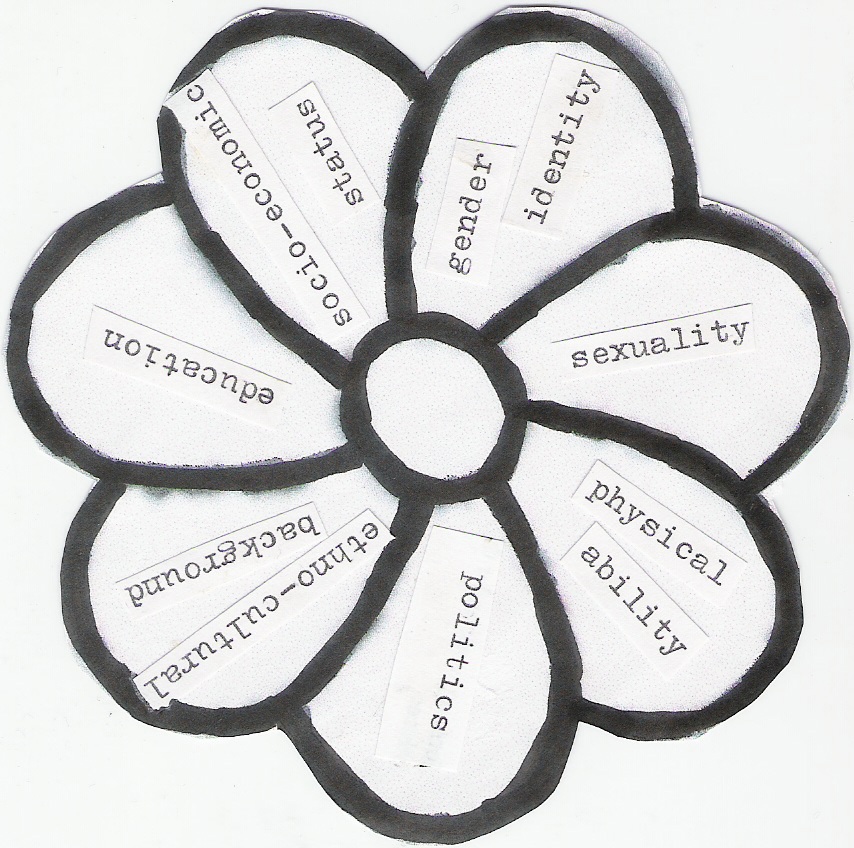
Showing posts with label classism. Show all posts

Sunday, March 22, 2015

The Life without Privilege: the Inhumane Consequences of Pro-Prostitution Politics, part 1

photo of girls learning techniques for empowerment is from here
I sit here now in North America, typing, with a great deal of privilege. Here are a few ways that privilege exhibits itself:
  • I have clean water to drink.
  • I have enough food to eat.
  • I am not economically insecure.
  • I am not designated as dangerous due to my race.
  • I am not presumed a terrorist due to my religious and cultural ethnicity.
  • I am not assumed to be lazy due to my class.
  • I have good health care and choices about who I see for treatment.
  • I have a safe home to live and sleep in.
  • I have privacy when I want it.
  • My socially perceived gender does not target me as 'rapable'.
  • I am not raped daily.
  • My sexual life is not a function of pimps', brothel-keepers', and procurers' economic and sexual demands.
  • I have choices about when and where I am sexually available. I choose not to be sexually available to anyone and am not harassed, beaten, or murdered because of that decision.
  • My body belongs to me.
  • I am generally regarded as a human being with rights to be treated humanely.
  • When I am harmed, what happens to me is seen as harm.
  • Criminal justice systems and prison industrial complexes don't punish and imprison me for unjust reasons.
  • I can see similarly privileged people in the media portrayed as good, honorable, and moral.
  • Men across the globe do not assume I exist for the sole purpose of meeting the demand too many men have for gross sexual exploitation of female human beings, including unlimited visual and physical access to female incest and rape survivors of all ages.
If we went down the list and removed each form of privilege, what might the conditions be that define and limit my life?

I would be poor or economically insecure. Available clean water and nutritious food would not be givens, or easy to get, or reliably available. I'd be perceived and portrayed as a threat to the health and well-being of more privileged people. I'd be seen as someone who ought to endure serial rape and slavery but it would be called something else by the rapists and their apologists: it would be called sex, or sex work, or men having fun with me with my consent. I would not be safe. Violation, denigration, and other forms of violence would be a routine part of daily and nightly life. I would not have a place to sleep that was without threat of invasion, capture, and horrific mistreatment. I would not have any assurance of living another day. In the social-political sense, I would not be human to most people; I'd be invisible, unheard, and disposable.


In some political groups, there appears to be a pressing need to define something one way for everyone, regardless of how various people name their own experiences. For example, straight white men typically define prostitution as harmless and consensual and as something that ought to be legal for all involved. I find such a viewpoint spiritually callous and politically self-serving.


In various parts of the world, different conditions intertwine to make practices with the same name quite different in experience. I accept that each nation and state has its own historic, geographical, cultural, and social dynamics. Challenging and ending various forms of subjugation and terrorism by men against children and women require their own respective approaches. And of course women will define their conditions differently, in part because the conditions are different. So too are the structural locations of various groups of women.


Some identify and experience prostitution as slavery; some identify and experience it as sex work. It certainly is not for me to tell any woman how to define her experience. But engaged conversation can happen and I have asked several women, all young, how their respective plans to be a stripper, or a performer for a pornographer, gets them closer to achieving their longer-term goals. I ask them to consider the consequences of being repeatedly viewed or engaged with as an object of sexist men's desires. I ask them if they'd support their best friends making the same choices.


Promoting international human rights policy is a different matter than engaging with various populations about oppression. I'd argue that any human rights organization created to address globally oppressive conditions ought to be sure the most invisible and most silenced among us are brought into the center of our conversations, considerations, recommendations, and policies. If the organization is male-dominated, it ought to center the experiences of women. If it is majority-white, it ought to centralize the experiences of people of color. As I live in a society that is both, I see no reason not to center the experiences of women of color within and outside this country, especially groups of women generally invisible to the majority of U.S. citizens.


There are on-going efforts in various parts of the world to respond to the reality of prostitution as different populations experience it. There is often confusion among many about the difference between legalization and decriminalization as approaches; there are wide differences about who it is that is needing protection. 


For procuring and pimping men, the protection needed is a condom and appropriate laws making what they do legal. But those men want it also to be legal everywhere they prey. See this link for details on how 100 countries understand and legally deal with prostitution: http://prostitution.procon.org/view.resource.php?resourceID=000772


Legalization of prostitution sometimes means legalizing pimping and brothel-keeping, sometimes not. It sometimes means working to protect only traffickers and procurers from negative consequences, but not always. 


If pimps and procurers in 'First World' countries embrace their nations' efforts to legalize prostitution, or if it is already legal, the lack of accountability to committing rape 'at home' may serve to embolden their predation abroad. If it is not legal, they may travel to countries where it is, in order to commit those rapes with impunity. I support laws that render actions, such as the following, illegal and criminal: purchasing, renting, and physically and sexually abusing children and women--as those children and women define and describe it, not as it is defined for them by men or other more privileged people.


To frame prostitution primarily as a health crisis for predatory men in need of condoms and (even more) liberties is to abandon the human rights abuses endemic in places where trafficking, pimping, procuring, and brothel-keeping are done. Decentering or completely ignoring the perspectives and experiences of female and/or transgender human beings is wrong generally. But to do so from a position of structural or institutional power, even relative power, within human rights organizations, can too easily be utterly callous to the realities done to people who have identified their conditions as deplorable and atrocious.


I believe more privileged people ought to listen carefully to what less privileged people have to say about what is going on in the world. Not only that, but design their laws and policies to support the human rights of the least privileged. This blog exists to challenge and support the uprooting of core wrongs such as male and white supremacy, globalized exploitive capitalism, and 'First World' and anti-Indigenous colonialism, occupation, and genocide.


Newer approaches introduced in the last several years, such as one in Norway, identify a core problem when naming the problem of prostitution:

"A new law has come into force in Norway making the purchase of sex illegal.
Norwegian citizens caught paying for prostitutes at home or abroad could face a hefty fine or a six-month prison sentence, authorities say.
The prison sentence could be extended to three years in cases of child prostitution.
The Norwegian authorities say they want to stamp out sex tourism and street prostitution by targeting clients rather than prostitutes...
The tough new measures go further than similar ones introduced by other Nordic countries such as Sweden and Finland.
There has already been a visible decrease in women working on the streets of central Oslo, local media report...
Prostitutes will be offered access to free education and health treatment for those with alcohol or drugs problems."
BBC News, "New Norway Law Bans Buying of Sex," www.news.bbc.co.uk, Jan. 1, 2009
This approach rises out of the work of activists such as Ruchira Gupta and the girls and women who are part of it. In part 2, I shall place her voice, and her experiences with those other women and girls, at the center of this discussion.

Part 2: click here
Part 3: click here


Tuesday, February 12, 2013

On Attraction, Sexual Interest, and White Het Male Supremacy

the image above is from here
I chose the chart above to open this post not because it is one that reflects my beliefs, but because I think it does represent some dominant views about how relationships form and progress.

As I noted at the beginning of my last post, I recently submitted two comments to a white transgender feminist's blog. She didn't publish them but did explain that she wouldn't be posting them.

I'd like for the topics to be addressed to allow any of my readers to comment here on these issues. I think each issue is relevant to building respectful, radical, revolutionary community. So I've posted links to her blog's two posts (with my revised comments) here and in my last post, also published today at A.R.P. I've revised my comment quite a bit below to elaborate on and clarify points I'm trying to make.

Thank you to A Radical TransFeminist for promoting and supporting these discussions.

The discussion there, as I understand it, was about challenging our internalised and externalised supremacist attitudes and practices, including the practice of focusing our attention on those atop various hierarchies and leaving out of our vision of attractiveness those lower on various political-social hierarchies.

Related discussions and struggles elsewhere have focused on getting masculinist, pornographic, and predatory values, aesthetics, and practices out of our sexual, romantic, social, and economic lives. This one divided up the white queer community I was part of decades ago. (Masculinism and pornography won out, unfortunately. But with the awareness of the disproportionate number of queer people who are survivors of sexual abuse, particularly in childhood, at least predatory practice has been consistently challenged.) Yet another set of concerns and challenges relates to how lightness of skin, straightness and lightness of hair, and eye shape and color become a measure of attractiveness and value within and without communities of color, including Jewish communities.

Another dimension of this struggle is the one towards decolonial love, something I've heard only a very few white people talk about as an ethical value and political-personal necessity. Novelist Junot Diaz addresses this and intersectionally related matters *here* in a video of a speech he gave last year. This speech generated a very good and deep discussion among many activists and artists I know, which is taking place in email. And, I'll include a link to a critique of his work *here* at the blog QueerBlackFeminist.

On Attraction

http://radtransfem.wordpress.com/2011/11/20/significant-othering-attraction-down-the-privilege-gradient/

Here is a very revised version of my comment.

I’d written something a while back that I’d like to post a link to here as response-piece to what you’ve written above and in your second post on the subject.

Compulsory Sexuality and Asexual Existence

To summarise my reason for linking to it, I experience the perspective above as pro-compulsory sexuality and as pro-sexual, in the liberal sense. I question whether the challenge before many of us, rather than expanding who we find attractive sexually or romantically, is challenging why we find anyone “attractive” in the dominant sense. An argument I read somewhere stated that we ought to see the beauty in everyone. But that sentiment, while admirable on some level, unfortunately puts aside the issue of what ‘beauty’ is in imperialist, racist, colonialist, capitalist, patriarchal societies. I hear a clear demand that we challenge the ways we internalise oppression, writing off classes of people as unattractive.

That makes me uncomfortable. But why?

I get how white singer John Mayer stating that his genital is white supremacist is racist and misogynistic in all kinds of ways. I’m arguing that it wouldn’t be my counsel or charge to him, or wish for him, to find Black or Brown people attractive and to act on that; he’s clearly so bigoted that such interaction flowing from his white and male entitlements to get what he wants would quite likely trigger and oppress anyone of color; it would be my counsel that he interrogate what an attraction to whiteness means and is and see where that leads him.

I live in a dominant culture that requires us to manifest (well, sell and purchase) ‘beauty’ in some form. That requirement comes with the belief and attitude that being not-beautiful is to also be worthless, except perhaps as labor. Implicit in a charge for us to expand the populations of classes of people we find attractive, I see a somewhat anti-asexual charge to be attracted to people in the first place.

I want to support the effort to encourage meaningful, caring, honest, intimate, counter-hegemonic, decolonial mutual relationships among people as a way to build sustainable, healthy, revolutionary community; I just take issue with that being identified as primarily a matter of attraction and sexual interest. I see our struggle as this: to form friendships first–whatever else follows. Friendship, as many feminists and womanists have written over the decades, normally requires and presupposes a kind of equality of interest and needs. Romantic and sexual relating, historically and traditionally, requires and presupposes inequality. This is why sexual relationships are compulsory and institutionalised and friendships, however ubiquitous, are not.

There’s an appeal here in my remarks for people who occupy oppressive positions structurally to stop engaging in the practices that traditionally oppress, and nurture those that traditionally do not, in part because doing something with history and tradition behind it is, I’d say, going to be less exhausting than doing otherwise. Not that ease is a primary value. There's little about challenging and transforming the status quo that is easy. But an argument I hear a lot is how self-condemning it can be for lesbian, gay, het, and queer people to continually interrogate their/our lack of attraction to women or men or transgender people. The process of coming out as lesbian or gay, as I understand it personally and from personal friendships with lesbian women, involves unlearning heteronormative and patriarhcal ways of being, ways of feeling, and ways of acting. It may also lead to challenging ageist, racist, and classist assumptions, among others.

Speaking as a profeminist gay male, radically rejecting heterosexuality and heterosexism means rejecting the ways het men have arranged for people to meet and get to know each other. What het male culture appears to prize is a kind of attractiveness that is directly related to appearance, not substance. Looks are what matter first and often enough, most. Sexual desirability, determined and defined by het men, is what the human objects of het men's attention are supposed to achieve. To reject het men's standards for being "sexy" and "attractive" is to be deemed ugly and worthless--except as labor--by them.

I see the bar and club scenes as doomed to replicate heterosexist and heteronormative standards of appealing to one another as sexy things, as sex objects, as people who must do a whole lot to ourselves before we leave home to go to the bar or club.

So one question is this: in what social spaces are we supposed to challenge ourselves to be attracted to people lower on various social-political hierarchies? In the workplace? In the home? On the street? All of those places are sites of misogynist and racist oppression, and of ageism, of ableism, of classism.

It has been mentioned that if one’s social circle is white, that’s what needs to be challenged. A proposed antidote to someone's all-white circle of potential dates or mates is to bring white folks into potentially romantic or sexual contact with people of color. This, to me, privileges a value of white people expanding our dating pool, but in no way identifies what the benefit would be to people of color, should that pool-expansion occur. So I begin with friendship as a foundation for revolutionary community and affection, not with attraction and sexual behavior as that base. In the realm of friendship, physical and sexual attractiveness isn't a primary value; shared intellectual pursuits, common interests, similar senses of humor, and how people might be helpful to one another are at least as important.

White people, or men, learning to do 'attraction behavior' less oppressively isn't something I hear oppressed people wanting tried out on them. As a survivor of sexual abuse, as an asexual person, as a gay person, and as a Jew in a Christian-dominated country, I certainly don’t want more people smiling at me or approaching me because of ‘attraction’. I’d welcome someone getting to know me in contexts where it is appropriate for us to know each other, due to progressive economic, social, or political work, not in contexts where ‘getting to know someone’ is the sole or primary objective. Not where the reason for people wanting to seek out each other's company is to raise the possibility of obtaining sexual contact or fostering romantic feelings.

I don't want to negotiate social spaces where I'm increasingly put in the position to say no or yes to the advances of het-identified men who are challenging themselves to be open to dating or bedding gay men. Not discussed thus far is the issue of who along the hierarchies ought to be entitled to approach whom? I'd see it as radical if the challenge wasn't for oppressors to find those we oppress more suitable for dating and mating, but rather for us to altogether stop approaching (for the purposes of getting a date or "a fuck") those we oppress.

As I think Catharine A. MacKinnon states in one of her books of essays, consent isn’t all that meaningful a lived concept for women if one only ever is in the position of saying no or yes to the advances of men. One would have to live in a world where such advances are neither compulsory nor anticipated to know what one wants from and with men. I can extrapolate from that to other hierarchies.

I feel that very personally and very strongly, as someone who is gay and a survivor of child sexual abuse and adult sexual exploitation, who unhealthily while normally feels compelled to meet the sexual, emotional, and affectional needs of someone who shows interest in me, especially when they are men. As I contemplate finding someone attractive, and contemplating being found attractive, such imaginings are problematically bound up with racist, anti-Semitic, anti-Muslim, misogynist, ableist, ageist, heterosexist, transphobic 'beauty' standards and oppressive interpersonal habits and social customs. Challenging the standards without also challenging and interrupting the oppressive dynamics and habits surrounding them is, for me, a set-up for more oppressive behavior to occur, not less.

To even imagine someone being ‘interested’ in me–when they don’t know me–means that I am led to try and change myself in self-oppressive, self-objectifying, and dehumanising ways. Opting out of the social attraction circuit, like opting out of the social sexual-behavior circuit, can be personally and interpersonally liberatory. I don’t see that course of action identified as valuable and viable in the discussion thus far.

I'm not comfortable with anyone white addressing an audience that isn't only white with a set of demands for what we should do that is deliberately designed to inflict on people of color our own social learning curve. I’ll add that I experience the term “demand” here, in this context, as white or race-superior. Why? Because making demands on readers is something I only experience whites and men feeling entitled to do--and doing regularly. In other words, it demonstrates having enough racial (or, in my own case, also sexual) social power to even proceed in doing it. I believe those of us in dominant structural positions, by race, class, gender, sexuality, age, ability, and so forth, ought not demand something from our political peers that will likely violate and trigger those we oppress.

Also on the matter of race, was the race awareness training session for bi community activists in the UK either white-led, white-organised, or majority-white in attendance? If any of those, I’d then proceed to articulate a critique of such a process for arriving at what terms are most racially respectful and appropriate. Recognising that there are some significant differences between U.S. and UK dominant society that I might not be sensitive-enough to, I’ll add that I prefer the term 'racially oppressed', to 'minority-ethnic' when discussing who is subordinated, marginalised, and imperiled by race. For me, the latter term problematically reinforces whiteness as normal-majority and race-neutral. It also pretends that whites aren’t a global minority. It also conflates race with ethnicity.

While this comment contains challenges, I want that to be held in the context of me strongly encouraging you to keep up the great work. I’m thoroughly enjoying reading your deeply thoughtful pro-radical posts. I find you, a white blogger, to be deeply and sincerely committed to complex, intersectional, counter-hegemonic practice and that’s as rare in my experience as finding a man who does the same.


Tuesday, March 20, 2012

The Lynching of Trayvon Martin by George Zimmerman: a perspective

image of George Zimmerman (left) and Trayvon Martin (right) is from here
What follows was written by Carolyn Edgar of CNN and by Michael Skolnick of GlobalGrind. I found these excerpts posted together at Racialicious. I have inserted my own commentary in bold and brackets.
Trayvon Martin was a teenaged boy who was walking home from a convenience store. He was not engaged in an unlawful activity. [Other than being Black in the US and walking in a place where non-Blacks live.] He was in a place where he had a right to be – near the home of his father’s fiancée. [He should have had the right to be there.] George Zimmerman followed him [read: stalked him with the intention of doing harm], even after being told by the 911 dispatcher not to. [His fragrant disregard for the counsel of the 911 dispatcher demonstrates to me that he was wanting some form of public attention, or applause, for what he was about to do.] Zimmerman left his vehicle holding a loaded gun and began pursuing Martin on foot. It is plausible to infer that Zimmerman, not Martin, initiated the attack. The tapes indicate that Zimmerman may have been the aggressor in initiating contact with Martin. ["Plausible"? "May have been"? In what moral universe does disregarding the advice of someone trained to deal with crime and crisis, and instead stalking--with a deadly weapon--an innocent person, NOT constitute "initiating an attack"? How could a boy walking from a store where he purchased Skittles to the home of family constitute, and then screaming for help when his live was threatened, constitute "intitiating an attack"? The boy, by all accounts, was not seeking to engage in any way with the virulently white supremacist George Zimmerman. Would anyone think that a Black or Brown man similarly going after a white boy armed with Skittles would be regarded as anything other than behaving with an intent to kill?] Assuming the published reports are true, Martin, not Zimmerman, was exercising his lawful right to “stand his ground and meet force with force” by engaging in an altercation with Zimmerman. [Florida apparently has a law which allows (wealthier and whiter) people to murder (poorer and darker) people who are in their neighborhood if deemed "threatening". But last I heard, carrying Skittles and minding one's own business, such as by talking with a girlfriend on the phone, isn't threatening behavior to residents of a neighborhood.]
By questioning why Martin didn’t simply stop and answer Zimmerman’s questions, and characterizing Martin as the aggressor [aren't we supposed to teach kids not to talk to strangers?], Sanford Police Department Chief Bill Lee Jr. appears to have assessed the Martin case using the standards that apply to law enforcement officers. [This puts aside the rather unavoidable issue of white supremacist police forces systematically harassing and mass murdering people of color in the US.] This is wrong. Martin was under no legal duty to obey or to cooperate with Zimmerman in being questioned, because George Zimmerman is not a law enforcement officer. [And if he were? What right should a law enforcement officer have to stop such a youth?]
Being the local neighborhood watch captain [read: assassin or cold-blooded killer] does not elevate him to that status. Nor was Zimmerman asked by any law enforcement officer to assist in detaining Martin – in fact, he was specifically told not to follow Martin. Zimmerman is entitled to none of the presumptions available to law enforcement officers under Florida law. The presumptions of acting in good faith that are afforded to law enforcement officers do not apply to Zimmerman. [The presumption of acting in good faith should not apply to armed members of racist police forces.]
- Carolyn Edgar, CNN
I got a lot of emails about Trayvon. I have read a lot of articles. I have seen a lot of television segments. The message is consistent. Most of the commentators, writers, op-ed pages agree. Something went wrong. Trayvon was murdered. Racially profiled. Race. America’s [uber-white] elephant that never seems to leave the room. But, the part that doesn’t sit well with me is that all of the messengers of this message are all black too. I mean, it was only two weeks ago when almost every white person I knew was tweeting about stopping a brutal African warlord from killing more innocent children. [Yeah, about that: white celebs and news people, and their followers, are upset about human rights atrocities when whites don't commit them against Black and Brown people; let's see George Clooney speak out against white and male supremacy in the U.S.A.] And they even took thirty minutes out of their busy schedules to watch a movie about dude. They bought t-shirts. Some bracelets. Even tweeted at Rihanna to take a stance. But, a 17 year old American kid is followed and then ultimately killed by a neighborhood vigilante who happens to be carrying a semi-automatic weapon and my white friends are quiet. Eerily quiet. Not even a trending topic for the young man. [Thank you. And in a report about two kids who very negligently threw a shopping cart over a railing, causing a white woman below to be seriously injured, I took note of how many whites made sure to characterize the two youth as "thugs". The first comment on this story at Huffington Post reads as follows:
05:24 PM on 11/04/2011
Charge them as adults with attempted murder. At 12 years old they should have known they could hurt someone. The severity of the charges must fit the severity of the crime."]
We’ve heard the 911 calls. We seen the 13 year old witness. We’ve read the letter from the alleged killer’s father. We listened to the anger of the family’s attorney. We’ve felt the pain of Trayvon’s mother. For heaven’s sake, for 24 hours he was a deceased John Doe at the hospital because even the police couldn’t believe that maybe he LIVES in the community.
There are still some facts to figure out. There are still some questions to be answered. But, let’s be clear. Let’s be very, very clear. Before the neighborhood watch captain, George Zimmerman, started following him against the better judgement of the 911 dispatcher. Before any altercation. Before any self-defense claim. Before Travyon’s cries for help were heard on the 911 tapes. Before the bullet hit him dead in the chest. Before all of this. He was suspicious. He was suspicious. suspicious. And you know, like I know, it wasn’t because of the hoodie or the jeans or the sneakers. Cause I had on that same outfit yesterday and no one called 911 saying I was just wandering around their neighborhood. It was because of one thing and one thing only. Trayvon is black.
- Michael Skolnick, GlobalGrind
Again, thank you, Michael.

See also *here* and *here* for more on some of these stories at Democracy Now!

What I take from all of this is that the genocide of Black, Brown, and Indigenous people is on-going without relief across the Americas, across Central Asia (including the mass murder of an Afghan family by Sgt. Robert Bales), and across the globe, by wealthy white male supremacists and their imperialist militias. We know, too, that millions of women and girls will be raped, tortured, and murdered by men again this year, for the "crime" of being female, and that the gynocide will not be reported or understood in these terms. 
 
 
The issue of what constitutes crime (including hate crime), terrorism, and human rights violation and who is immune from any and all laws supporting human rights, will not likely be discussed by the most structurally powerful members of my society who engage in criminal and violating behavior. What will be defended in court by supremely well-paid attorneys is the rights of militias and rich folks and whites--disproportionately male--to threaten, harass, terrorise, and mass murder Black, Brown, and Indigenous people by any means "necessary" to sustain and affirm het white male and imperialist corporate power.

To sign the petition calling for the arrest of the assassin of Trayvon Martin, please see *here*.


Thursday, February 16, 2012

On White and Male Privilege and Power

image is from here

First up, things for me to be grateful for today:

I have food for the day and for tomorrow too.
I am not worried about starving or dying from ingesting unclean water.
I have easy access to clean water and to shelter that is relatively safe.
I live in a region of the world that isn't being bombed (or militarily invaded) by the US and NATO.
I live in a place that white male supremacist society doesn't designate as an appropriate place to bury nuclear waste and other highly toxic, cancer-causing chemicals.
I am not considered a failure for not having children and a spouse by now.
I am not physically immobilised.

When we consider that most females are not safe in their own homes, and that most people of color are under assault by whites and their police forces, we may conclude correctly that based on this and on the implications of what's written above, I am white, male, able-bodied, and class-advantaged. The additional facts of me being ethnically and sexually marginalised and stigmatised by dominant society isn't central to what follows.

With thanks to Kathy Miriam for getting a particular conversation going, I have been re-assessing the prolific use of the term "privilege" in some self-defined progressive to radical circles. What I have been thinking about since pondering her perspective on this (see *here* for that), isn't only the individualism that can be woven into the use of the term "privilege" (which Kathy addresses).

I'm also thinking about how such a term, such as "privilege", can alienate or be off-putting to non-blogging, non-academic people (aka, "the majority"). I'm thinking at this moment of my family-of-origin, and how the only time they'll likely use the term privilege is to acknowledge that something is a pleasure to be part of, as in: "It's a privilege to be at this event." But to be honest, that's not likely a phrase that'd come out of their mouths. They'd more likely say, "I'm thrilled to be here" and leave it at that.

I'm also thinking about how the term is often a linguistic cover for something more broadly pernicious that I do believe ought to be regularly and plainly named both on the interpersonal front and on the institutional front as well: abusive power, oppressive power, and unjust advantages and entitlements afforded to some classes of people and acted out against other classes of people.

"Privilege" is frequently used to bring attention to how oppressive behavior and practice is acted out interpersonally. When this attention obscures or eclipses larger structural and systemic realities, it can leave us with the impression that if we only attended to the interpersonal realm more, we might achieve something radically better than what we now have. I do see the term used primarily to give a name to the many ways individuals aren't mindful, accountable, and responsible in the ways they act out structural position and power against oppressed people.

It might be good to investigate why this is too often necessary. One huge, on-going, decades-long critique of the white male Left (especially but not only radical environmentalists, Socialists, and anarchists) is that they declare what is radical and revolutionary in "political action" while ignoring the interpersonal realm almost completely as a site of oppressive (read: structural, political) behavior. How many white male progressives and radicals tell sexist and racist jokes or center whiteness and maleness as "just human" without questioning this as anti-radical, anti-revolutionary (harmful, hurtful, insulting, oppressive, status quo) practice? How many times do whites and men behave in racist/sexist ways without challenging one another? How do whites and men reduce horrors like the international trafficking and enslaving of poor girls of color to one system of harm only? In my experience, whites and men usually and typically do not call each other out on our racist/white supremacist and sexist/male supremacist behavior, when it occurs in words or other non-verbal actions.

The assumption that whites and men can and ought to speak for all people has not shifted much in the last forty years, although I do notice a few more men these days using less sexist language. (Police officer instead of policeman, for example.) Anthologies by and about oppressed people, when edited by whites and men, still presume that anything written by a white or male person can be relatively universal, addressing the whole oppressed group, for example. Meanwhile the voice that is female, Black, Brown, or Indigenous is structurally presented as only ever able to speak for that group only. (So, the chapter or few chapters in which the writings by women of color are predominant are not likely to be presented as addressing the larger universal themes of the book--even when they do.) Find me the book edited by whites or men that presents the views of Indigenous, Brown, and Black women as "universal" and addressing the whole of humanity, with whites and men in the same volume only speaking about white and male experience as particularly white and male, and I'll be surprised: I've not seen it.

When oppressed people call out oppressive behavior in their oppressors, I believe it is important to heed the counsel of Pearl Cleage, expressed in Deals With The Devil and Other Reasons to Riot: listen in a posture of non-defensiveness. Too often oppressor-class people, especially whites and men, in my experience, move instantly and reflexively into a posture of self-defense, defense of our allegedly good name, our allegedly good political work, our allegedly good group. We resist knowing how we are being hurtful and harmful because we are invested in a sense of ourselves as "Radical" and "Good". Radical and self-identified good people, if white or male, are still positioned to act out oppressively against women of color on all fronts: interpersonal, social, and institutional (whether religious, economic, or otherwise). And our efforts to be responsible, accountable, and conscious don't mean we stop being positioned to be oppressors every minute of the day.

Irresponsible, non-accountable, and unconsciously oppressive actions come into sharp, cutting focus in online communities, which, in the comments sections especially, are one realm of the interpersonal. I suspect that is why "privilege" shows up there as a concern.

All of that said, social-political advantages and power when exercised by speakers against those they/we structurally oppress, are reflecting and reinforcing larger social-political realities. Regardless of the thoughtfulness and sensitivity of our micro interpersonal actions, it is usually the case that many other aspects of our lives support the more macro systems and institutions that are murderous to women, to the poor, to people of color, and to Indigenous peoples globally.

Radical political change requires attention to multiple realms of human existence, not in an either/or way. My political practice ought not consist of detailing anti-status-quo analysis of race and sex while doing so in ways that are unconsciously white-splaining and man-splaining. Rendering my own racial and sexual position, location, and advantages, and power irrelevant and invisible in a radical political conversation is one form of white-splaining and man-splaining, after all.

At this blog and away from it, I work to support radical practices in myself and other people that refuse to accept the expression of whiteness as being unraced, irrelevant, or universal, and the exercise of manhood as being just human, not gendered in politically harmful ways.

When whiteness and manhood is acted out visibly as such, it often does oppressive harm. And when it is acted out while also rendered invisible, it does at least as much oppressive harm.

I want the institutional power and systemic destructiveness, not just the interpersonal "privilege" of whiteness and manhood to be made conscious, to be challenged, and to be overthrown.

After being asked several questions by interviewers on topics they wished to hear her discuss, Andrea Dworkin was asked if she had anything else she wanted to say. I hope those of us who are white, male, and class-advantaged who are working for radical social change take notice of the explicitly intersectional and pro-activist answer she gave:
AD: I want to say more than anything that the Women’s Movement has a chance to do something miraculous, which is to really tear down these hierarchies of sex and race and class. We can do it, but the way that you do it is not through rhetorical denunciations of injustice. You do it through attacking institutions of injustice through political action. That hasn’t changed. That’s what we have to do. The other thing I would like to say is, do something. You don’t have to do everything. You don’t have to be perfect, you don’t have to be pure, do what you can do. Do it. Life is short and you don’t know when it is going to end for you, so do it, do it now. [Source: here]


Monday, January 30, 2012

An Anti-racist Radical Profeminist Critique of a Socialist Review of White Radical Feminism

image/logo is from *here*


image is from here

(The NOTES section was revised and added to on 1/31/2012.)

The excerpted writing below is from Links: International Journal of Socialist Renewal. You may click *here* to link back to that site in order to read the whole article. You may also link back by clicking on the title just below:

Socialists in the Australian women's liberation movement


The author is Margaret Allan. She is a member of the national executive of the Democratic Socialist Party of Australia. This article is based on an educational talk to the party's congress, held in Sydney in January 1999.

Below is the section of that article on Radical Feminism, reproduced here for the sole purposes of radical pro-feminist political analysis and discussion. 

I have not altered the content of the text in any way other than to add footnote numbers which may refer you to comments below the original writing, within this blog post. The section by Margaret Allan is reproduced here in full, but again keep in mind it is part of a larger piece of writing. Please refer back to that for the context in which the following discussion occurs.

Radical feminism
First I will look at radical feminism. “Patriarchy” was the word used by Engels[1] when describing anthropologically the different types of family or kinship units that have existed. He called families, clans or other social groupings that traced descent through the mother's side matrilineal. Descent traced through the father's side was patrilineal. Matriarchal or patriarchal were used to describe situations in which the auhtority and power over the group were invested in either the woman or the man.
The term patriarchy was redefined by radical feminism, and put into common usage, to refer to whole social systems controlled by men through their control of women's reproductive functions. That is, women are seen as oppressed because of their biology and their role as child-bearers.[2]

Adherents to patriarchy theory tend to agree on these four points:
  1. Patriarchy expresses the totality of the social relations of male supremacy and female subordination.[3]
  2. Patriarchy has existed in all known socioeconomic formations, though most analyses tend to focus on the particular features of capitalist patriarchy.[4]
  3. Patriarchy is a hierarchical system in which power and control are vested in men to effect and reproduce their domination over women. Patriarchal relations are said to be reproduced through the sexual division of labour and patriarchal ideology.[5]
  4. Patriarchy unites men across class lines. Their unity is based on the fact that although men hold different degrees of power within the patriarchy, all men dominate at least some women.[6]
Radical feminist arguments are explicitly or implicitly biologically determinist -- women are “naturally” caring, sharing, nurturing peaceful beings -- a stabilising force in society, whereas men are prisoners of their raging hormones, aggressive, warmongering.[7] Men cannot control their animal-like instincts -- they rape women and are violent, so for women to survive, they must separate from this threat to them and their children.[8]
An extreme view held by some radical feminists was summed up by Kimberley O'Sullivan in Girl's Own, a Sydney-based radical feminist newspaper, No. 5 1981:
Wimmin and men are two different species. Not different races within the one humanoid species but different species who evolved separately and differently. Wimmin are biologically and morally superior but men hold power by force of arms.[9]
The flaw of any theory that relies on this notion of patriarchy (our theory is also based on patriarchy, but as Engels defined it) to explain women's oppression is that it counterposes the liberation of half of humanity to the liberation of the other half. All men are said to have a primary interest in women's oppression.
Like liberal feminism, this type of radical feminism is fundamentally a bourgeois feminist current. While liberalism seeks to humanise capitalism through reforms -- getting more women into positions of power, etc. -- both tend inevitably to develop a reactionary aspect because of their insistence that capitalism is not founded ultimately and necessarily on class exploitation, and therefore on women's oppression.
The two most influential and original statements of radical feminism were Kate Millett's Sexual Politics and Shulamith Firestone's The Dialectic of Sex: the case for feminist revolution, both published in 1971.[10]
Since then, writings from academics such as Andrea Dworkin (a vehement supporter of censorship, who says that pornography is the theory, rape is the practice)[11] and Renate Klein and Robyn Rowland in Australia have been influential. One of the main centres for radical feminist theory in Australia in recent years has been women's studies courses at Deakin University in Geelong. This is also the base of finrrage, Feminist International Network Resisting Reproductive and Genetic Engineering, which campaigns against the use of science to violate and manipulate women's bodies and their reproductive capability.
They oppose all reproductive technology -- including things such as IVF technology and the use of RU486, the morning after pill, on the basis that male doctors experimenting with women's bodies is another form of the violence that is naturally a part of men's attitudes and behaviour. This is an ironic reversal for radical feminism, which originally argued in favour of reproductive technology to free women's reproduction from men's control.
We have argued against radical feminist views consistently, in many different forums. One area was the censorship and pornography debate, on which we wrote and distributed a pamphlet encapsulating our opposition to censorship as a path to stopping the sexual exploitation of women.[12]
One section of radical feminists advocate separatism as political practice, based on their analysis of the origins and nature of women's oppression.
The identification of men as the enemy led many radical feminists to the conclusion that women should separate themselves from men politically and socially. Lifestyle preferences for all-women households, personal relationships, cultural institutions and even communities, were often promoted as the key to liberation.
This often leads to the assertion by some separatists that a “true feminist” is one who does not have sex with men, and is celibate or a “political lesbian”.
Most radical feminists in the second wave eventually went into academia or worked in women's services such as rape crisis centres and women's shelters.[13]
NOTES:

My overall critique of the discussion about radical feminism is four-fold:

--it relies on anti-radical, anti-feminist academic assessments of radical feminist work
--it is very white-centered and white supremacist
--it ignores crucial writings by white radical feminists and radical feminists of color that directly address and contradict the points made above
--it reproduces and reinforces many of the anti-radical and anti-feminist arguments made by well-published corporate pimps and other white male supremacists interested in defending their right to rape and traffic in women and girls and otherwise maintain rule over female human beings

1. There has been a fairly thorough rejection of Engel's understanding of women's oppression based on family relations as Engels understood them. That some non-feminist Socialists still prefer to hold to his theories when better theories by radical feminists exist only means to me that some people prefer to believe, sexistly, that men (or Socialists) are the best theorists, including on matters relating to women and women's liberation. Very generally speaking, I don't find this to be the case at all. I don't think it is because men and women think and theorise differently due to biological or natural factors. Instead, I think that men's minds, as shaped and structured in patriarchal and woman-hating societies, learn to abstract reality and organise theory around hypothesis--well away from the scary feelings and emotions men dread consciously including into their intellectual work, while many feminist's minds, in response to patriarchal conditions in which men's abstractions about women are part of the problem, learn to be able both to abstract reality and keep theory grounded in it. For more discussion on what's wrong with Engels, please see the following links to a four-part post by Stan Goff. I will add that many white het men there were willing to read a pro-feminist (Goff's) and feminist critique of Engels (MacKinnon's) only because a white het man with Socialist cred produced and published it.
Why the Left should drop Engels on Gender, part 1

Why the Left should drop Engels on Gender, part 2

Engels and Gender, part 3

Engels and Gender, Last Installment

2. This goes against the bulk of radical feminist writing I'm familiar with. See, especially, Catharine A. MacKinnon's radical feminist critique of such biologically deterministic viewpoints in Feminism Unmodified and in Toward A Feminist Theory of the State.

3. I'd argue that other systems of oppression carry within them the means and methods to reproduce male supremacy. White supremacy and capitalism, to name two, are infused with patriarchal (male supremacist) power structures, values, and practices. White supremacist notions of Race are also sexed. Class positions are infused with sexual meaning. Thus, if a woman is poor and of color she is subordinated socially, sexually, and economically in multiple ways, with each reinforcing her subordination to rich white men and to various groups of less economically powerful men. We may note how this manifest in the global trafficking of girls and women, predominantly poor girls of color to predominantly rich white het men. This horrific reality cannot and ought not be understood or analysed only in terms of patriarchy, capitalism, or race oppression. It is the weaving together of the three that identify key features of the atrocity. Similarly, the higher incidence of rape of Indigenous North American women by white het men, compared to the also-alarming rate of rape of white women by white het men, cannot either.

4. This conclusion, proposed by some white-centered and/or European-centered feminists, ignores and further marginalises of the work of many other radical women of color, particularly Indigenous and Black feminists who note how white or European patriarchy is currently globalised. See, for example, Yurugu, by Marimba Ani.

5. Another key site of male supremacist (or patriarchal) oppression is the sexual subordination of women by men through normalised sexual acts and sexual behavior as men experience and define it. Among other radicals, including many male socialists, the oppressive nature (as opposed to the "natural power") of sex expressed and enforced by men over and against women has largely been ignored or relegated to the realm of the "natural".

6. It is not only that patriarchal societies function to allow and encourage all men to dominate at least some women. With female human beings denied basic human rights such as access to private safety and sustained dignity, and with so many girls and women surviving (or not surviving) sexual assault and other misogynist atrocities and gynocidal practices, boys are encouraged to dis-identify with girls, men are encouraged to dis-identify with women, and males on the whole are supported in engaging in misogynistic practices which simultaneously homosocially bond males to one another and socially subordinate women to men in various ways. One example of this may be seen in the normalised rapist practices of young men in college and university fraternities. Men across class and race from region to region in many places--but not universally--are seen as more manly by other males if they engage in such practices. In such places, the man or boy who refuses to degrade or assault women or girls in front of other males is understood by the men present to be "less of a man"; he loses sexual status among those patriarchally positioned to confirm it. See note 2 for more.

7. Even if reviewing white feminist writings alone, this is not generally the case. No radical feminists I have ever read or known make such a case, and in fact argue exactly the opposite: to be a radical and feminist is to believe in the humanity of men against much evidence that men value being inhumane to women. See, for more, Andrea Dworkin's speech to 500 men, "I Want A Twenty-Four Hour Truce During Which Their Is No Rape".

8. No anti-rape or anti-pornography radical feminist-identified women I know or have read believe that men are "naturally" prone to rape, to batter, or to otherwise exhibit masculinist or patriarchal aggression against girls and women. To be an activist is to believe that such behavior and systems which promote it are "not natural". The only women I know who do believe this are not "Radical Feminist" identified. Instead, some are Radical Lesbian identified.

9. For a good example of how this was challenged within a predominantly white branch of the US Women's Movement, please see: "Biological Superiority: The World's Most Dangerous and Deadly Idea", by Andrea Dworkin.


10. This would be true only according to mostly white academics who only consider white authors and activists to be worthy of writing about, reviewing, and critiquing. That white editors compile the writings of white writers is nothing new and ought not be seen as an indication that women of color were not and are not centrally involved in all realms of radical anti-patriarchy activism.

11. This is inaccurate in three respects:
  1. Andrea Dworkin was not an academic. She as a front-line Women's Liberation activist and author. She quit college before graduation. She marched in streets to protest women's subordination to men. She didn't teach except once in Minneapolis (a course on pornography, and also a course on literature), while also doing non-academic activist work.
  2. Andrea Dworkin was not "a vehement defender of censorship". She was against all state censorship and was opposed to the ways her ordinance was (mis)used in Canada in a censorial manner. She wrote eloquently about what censorship is and she and MacKinnon wrote about the myth--perpetuated by corporate pimps and spread by liberal academics who defended them--that their stance on pornography was pro-censorship. For more, see Pornography and Civil Rights: A New Day for Womens' Equality. See also, Andrea Dworkin, "Against the Male Flood: Censorship, Pornography, and Equality".
  3. Andrea Dworkin never said or wrote "Pornography is the theory; rape is the practice". The quote belongs to Robin Morgan. Dworkin said "Pornography is the practice; rape is the practice." Andrea understood pornography materially, not primarily or centrally as an idea or a theory; it is one white and male supremacist (racist patriarchal) industry that makes sexual subordination socially existent, marketing rape as entertainment primarily for men. Meanwhile, pornography's defenders--including those who materially profit from the industry--see it as only idea, fantasy, and subjectively determined. (One wonders how they got so rich only engaging in thinking.) Dworkin and MacKinnon have argued convincingly against such a determination. (Source: *here*.)
12. I have witnessed how debates among Socialists misunderstood--often willfully--Dworkin's views and activism on the issue. She was a key proponents and crafters of a radical feminist anti-pornography law, and other actions against the industry, and she's already been miscategorised above. This doesn't surprise me as anti-radical feminists in Socialist and Libertarian circles commonly and purposefully misrepresented the positions and actions of radical feminists against pornography. The Socialist anti-feminists I'm aware of did this, in part, as a means of protecting the power of men against women practiced and promoted in industry pornography.

13. The whole "wave theory" of feminism is academic mythology as much as anything else, steeped in narrow white- and euro-centric understandings of activism and liberation struggles against men's cultural and systematised subordination of women. Asian, Black, Brown, and Indigenous radical feminists, self-defining as such or not, are usually written out of such "wave theories", or are marginalised in special chapters or sections on race--as if women of color must only ever speak for people of color as a class, never for women as a class. The above discussion by Margaret Allen, unfortunately, perpetuates this euro-centrism and white supremacy. And the supposition that a great many radical feminists went into academia is in itself classist; most radical feminists are poor women of color globally, with little to no access to the academic institutions run by ruling class whites and men.

I hope that future discussions among Socialists about radical feminism demonstrate more awareness of the many theories and practices of radical feminist women of color, and also don't distort the political viewpoints of white radical feminists usually misinformation provided by corporate pimps and their defenders and apologists.

I encourage radical and feminist activists to offer comments at the original site.