Showing posts with label lesbophobia/transphobia. Show all posts

Saturday, November 5, 2011

Andrea Dworkin on Transsexuality, and my own thoughts on Trans and "Rad Fem" Politics

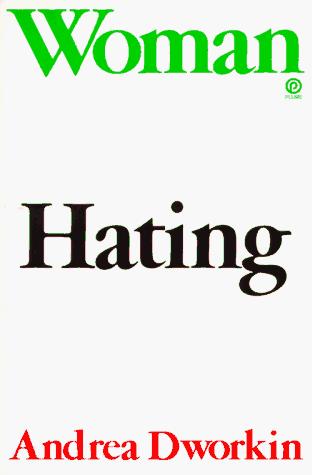
image of book cover is from here
There is an update following the main post, which is below.

Earlier this year I wrote a great deal here about concerns regarding liberal queer politics, including liberal trans politics. Please see those posts for more detailed discussion on those topics, if you wish to. In this post I'll take on some current mischaracterisations and oversimplifications of radical feminism. (I've also posted a fair amount here over the years about misogynist men's nonsense about radical feminists. This post won't concern itself with those virulent anti-feminists.)

Any time anyone speaks of what "those radical feminists" or "those radical lesbian feminists" are doing, or believe, or feel, I'm skeptical to disappointed. For one thing, when "they" are accurately referenced, the criticism of radical feminism tends to reference only a very few region-, race-, and academically-privileged white women.

Two women who get touted as exemplars of radical feminism are Mary Daly and Janice Raymond. So let me begin by saying that while Mary Daly and Janice Raymond are two voices in the herstory of US radical feminism of the last forty years, they aren't "US radical lesbian feminism" to me. Alice Walker and Audre Lorde are two key voices in US radical lesbian feminism. Their work has had a much greater impact on me. Why are they rarely-to-NEVER referred to when anti-radical feminist spokespeople are expressing their own critiques?

One answer is racism: the obnoxious and erroneous contention that all radical feminists are white women is but a wee part of the on-going effort within and beyond the cultivators and purveyors of anti-feminism to erase women of color from the "canon" of radical feminist writers and activists. Another answer is that Lorde and Walker's written views and values don't necessarily match up with those of Daly and Raymond. And this inconvenience for those who wish to lump all radical feminists together as being all "transphobic" or "anti-male" or "anti-sex", isn't so easy if one contends with the depth and breadth of US radical feminist writings.

Personally, I never read Janice Raymond during the long years of my own initial education in radical feminism. I've read very little by Mary Daly. Neither woman represents "radical feminism" to me, while I fully acknowledge the significant--and amazing--contribution to radical lesbian feminist thealogy by Mary Daly. As noted above, Lorde and Walker, and also Andrea Dworkin, have been far more influential in teaching me what radical feminism can do in responsible theory and activist practice.

I found what follows typed up online, on a Tumblr account called Head Girl (*here*), and so cannot vouch for the accuracy of the text, but it sounds like what I remember reading in Woman Hating (1974). I'm checking online for the text and from what I can find there are several inaccuracies in what was at the Tumblr page and so I've made some corrections in what appears below.
Transsexuality

How can I really care if we win “the Revolution”? Either way, any way, there will be no place for me.
A transsexual friend, in conversation
Transsexuality is currently considered a gender disorder, that is, a person learns a gender role which contradicts his/her visible sex. It is a “disease” with a cure: a sex-change operation will change the person’s visible sex and make it consonant with the person’s felt identity.
Since we know very little about sex identity, and since psychiatrists are committed to the propagation of the cultural structure as it is, it would be premature and not very intelligent to accept the psychiatric judgment that transsexuality is caused by a faulty socialization. More probably, transsexuality is caused by faulty society. Transsexuality can be defined as one particular formation of our general multisexuality which is unable to achieve its natural development because of extremely adverse social conditions.
There is no doubt that in the culture of male-female discreteness, transsexuality is a disaster for the individual transsexual. Every transsexual, white, black, man, woman, rich, poor, is in a state of primary emergency (see p. 185) as a transsexual. There are 3 crucial points here. One, every transsexual has the right to survival on his/her own terms. That means every transsexual is entitled to a sex-change operation, and it should be provided by the community as one of its functions. This is an emergency measure for an emergency condition.
Two, by changing our premises about men and women, role-playing and polarity, the social situation of transsexuals will be transformed, and transsexuals will be integrated into community, no longer persecuted and despised.
Three, community built on androgynous identity will mean the end of transsexuality as we know it. Either the transsexual will be able to expand his/her sexuality into a fluid androgyny, or, as roles disappear, the phenomenon of transsexuality will disappear and that energy will be transformed into new modes of sexual identity and behavior.
Andrea Dworkin, in Woman Hating, 1974

At another blog called Transmeditations, with posts written by Joelle Ruby Ryan, there was a post documenting tensions between a few non-trans radical feminist-identified people and one trans-identified person (who I believe also identifies as a radical feminist). The account of what happened is one person's experience of it; I've heard differing accounts by people who were also there about inaccuracies in Joelle's description. But of course that is likely to be the case with any upsetting or triggering experience.

I've commented there, most recently to another commenter. I just saw that my comment was not posted (so far) and I'd like it to be on record here. First, the link to the post and comments is *here*.

Amber is the name of the recent commenter. Here's that comment edited slightly (please see the full comment in context at the site linked to above), and after that is my response to her:

[...] The vicious hate related here truly upset me. Dont these so-called “rad-fems” understand that the people they hate so badly are real people with real things and that they detest am entire group of people, with no reason, who mean them no harm and who are often a great danger but only to themselves.
amber said this on October 26, 2011 at 11:26 pm | Reply
  • Hi amber,
    I know of countless examples of trans-identified people demonstrating willful, purposefully aimed misogyny and anti-feminism at lesbians. From arrogantly insisting on invading lesbian spaces, to disrespecting lesbians interpersonally, I’ve seen it happen and I have read so many accounts of it happening that I really have to challenge, as woefully inaccurate, the statement you make above. Misogyny and anti-lesbianism is flourishing right now in many queer spaces. Gay and bi men have been perpetrating it for decades and more recently far too many trans people do too. Do you doubt that?
    JulianReal said this on Your comment is awaiting moderation. November 3, 2011 at 8:39 pm |Reply

I probably ought to note that people who identify as "rad fem" are not necessarily representatives of radical feminist thought or exemplars of radical feminist practice. I'll tell you a story that illustrates the necessity of me making that point. A pro-radical, pro-feminist male I know told me a year or more ago that he was considering giving up on radical feminism as a valid political theory and practice. I asked him why. He told me that he found some of the beliefs there absurd, such as the anti-sex viewpoints. I told him that radical feminism, in my experience, isn't anti-sex at all. He referenced an online discussion among a few privileged white women that did seem to be anti-sex. I suggested that he not assign to those few women what is most notable and necessary from the vast writings and activism by radical feminist women. It hadn't really occurred to him to doubt the validity of what some "Rad Fem"- identified women said as allegedly accurate about "radical feminist" on the whole. So if Amber is also referring to a few privileged white women online who express themselves as if speaking for all of radical feminism, that might be important to know.

Given the significant contributions to radical feminist theory and practice made by heterosexual and other non-lesbian women, radical lesbian feminism and radical lesbian politics are not the sum total of radical feminism. In fact, I know of at least one Radical Lesbian who doesn't ascribe to what many "traditional" radical feminists believe about gender and sexual oppression. And I know of another woman who has identified more as a revolutionary lesbian feminist than as a radical lesbian feminist for most of her long activist life. Her own views are different than either the Radical Lesbian woman I am referring to or the views of many other radical feminists.

All of this should help build a case for the danger or saying that a single person or group's viewpoints are representative of what all radical feminists believe and do. I find the whole herstory of radical feminist accomplishments--named as such in writing and in life, to be complex, compelling, and anything but monolithic, which isn't to say the term "radical feminism" refers to anything at all.

But the assumption that some online and offline white, class-privileged trans activists or spokespeople--who often enough seem to speak for all trans people--do no harm and mean no harm is nonsense. There are too many examples of gross insensitivity and blatant hateful behavior towards radical lesbian feminist people to pretend that all actions by trans people are benign and free of misogyny and anti-feminism. (How could it be, really, that trans people, as one of many diverse populations of people--many of whom don't identify as "trans"--are free of misogyny and anti-feminism? I know of no group of people who have managed to accomplish that, including the group "radical feminists".)

I don't know what Andrea Dworkin would say about the various contests for safe space and the power to name reality that are currently occurring between those two groups in some places on- and off-line. I also wouldn't presume to know. What I've found in Andrea's writing is a commitment to name male supremacy wherever and whenever it exists, displays itself, and asserts dominance in social and personal spaces. I've seen some trans and many more non-trans people be (or, rather: act) male supremacist in many different ways, almost never owning the male supremacy embedded in the behaviors.

I think there is plenty to critique in contemporary liberal, white, class-privileged trans and non-trans understandings of gender and social justice. I make it a point to have this blog be a space that values such critique. And people telling me I'm "transphobic" or "anti-male" for doing so won't silence me. I find those sorts of accusations typical derailing strategies almost always by people with significant social privilege and power. And I see such strategies being designed and implemented to stop the radical inquiries and interrogations, not deepen and expand them.

Andrea Dworkin's own views developed and deepened. She has critiqued some of what she wrote in Woman Hating and that self-critique may be found in a 1998 book by Cindy Jenefsky titled Without Apology: Andrea Dworkin's Art and Politics. Part of Dworkin's own critique has to do with lack of interrogation of the Freudian influence she accepted in her own understandings of sexuality in her first feminist book. I have never read anything else she wrote since that demonstrates a lessening of regard and respect for transsexual people, however. (Please see the update in purple for more.)

9 Nov. 2011 UPDATE: 
I just found this post, which is a cross-post from other Tumblr accounts but is added to at The Trans Woman's Anti-Violence Project
http://transfeminism.tumblr.com/post/12371381560/andrea-dworkin-wasnt-a-friend-to-trans-people

As an anti-misogyny/anti-patriarchal violence activist, I don't agree with the writer's assessment or conclusions. I think regarding Andrea's views as identical to Jan Raymond's is a spurious thing to do: Andrea had her own voice. What she wrote in her own voice is what should be used to either agree with or disagree with her, not the writings of other women. The guilt by association tactic for condemning a writer-activist is not a respectable or responsible thing to do, imo.

The fact that Andrea didn't speak directly to this issue after writing Woman Hating means something. What it means is up for interpretation, of course. But what I know about Andrea is that she was a deeply compassionate person towards anyone who enduring the violence and violations of male supremacist harm and horror. I do not know Jan Raymond at all. But I did know Andrea and I regard Dworkin's work as a tremendously important resource, theoretical base, and activist approach to all anti-misogyny work. That someone is framing her work as being pro-misogyny (supportive of misogyny directed at some trans people) is rather absurd to me.  On that Tumblr page, there is a statement about Dworkin's promotion of "androgyny" as being terrifying. I'm troubled that an idea in a book that has no institutional or social support in the actual world, is regarded as more of a threat than the rampant, unowned, unacknowledged white and male supremacy inside and outside white-dominated queer communities. Here is that passage:
Also, I think Dworkin’s militant advocacy for replacing the sex binary with a monolithic compulsive androgyny is terrifying. Androgyny as the socially enforced norm would lead to something like the gender repression featured in “The Outcast” episode of Star Trek: The Next Generation, or Tobi Hill-Meyer’s The Genderfellator.
privilegedandgoodlooking:

“Andrea Dworkin (yes, THAT Andrea Dworkin) on Trans people: …
WOMAN HATING- by  Andrea Dworkin 1974
BRB, Continuing to be amazed that Dworkin is like, right next to Raymond and Delay as the patron saints of 2nd wave hardline anti-trans stances.
(via unobject)

As discussed a bit below in the initial post I wrote recently, Dworkin repudiated what was in parts of Woman Hating and what she believed in 1973 and 1974 ought not be held against her, given the amount of more thorough work she did on male supremacy in the twenty years that followed.

I find it troubling that people working to stop misogyny don't attach that work to addressing and challenging male privilege and male supremacy in our lives--including in the lives of people who are queer and trans. I experience that as far more terrifying than Dworkin's later-rejected theory of androgyny from a book published over 35 years ago.

Saturday, July 9, 2011

When is Critique seen as "Attack" and when is an Attack not seen as such?

http://i22.photobucket.com/albums/b337/binawe/under_attack_promopic2.jpg
image is from here
It has come to my attention that some people may view my challenge to the white women of Rad Fem Hub as "an attack". I find this understanding (or experience) of my actions as worthy of some discussion and care, in part because it is not my intended practice here or offline to "attack" women in any way. I'm surely capable of attacking women in text, or of shaming women, coming down too hard on women, displacing my anger at whites on a few white women, being condescending or arrogant, and so on. I make no claims that I cannot be oppressive in sexist ways (and I don't think my intention is what matters most). I make the opposite claim, actually: I am structurally positioned to do so quite easily, just as I am positioned to be oppressive to people of color: women, men, intersex, and trans.

White radical lesbian feminist critiques of white, class-privileged, trans politics isn't, necessarily, an "attack" against trans people or a fear-based reaction. To position all critique as only an attack, as only transphobic, is to make thoughtful, engaged discussion across difference almost impossible. Sometimes radical lesbian feminist critique of privileged trans people's political objectives is a thoughtful, important critique. Sometimes it's a series of grossly racist/classist generalisations rooted in profound ignorance of who trans people are, however. White, class-privileged trans people's critiques of radical lesbian feminism are not always "an attack" but they can sometimes be grossly anti-radical and anti-feminist, as well as anti-lesbian and pro-status quo.

My point in the recently published and revised challenge to Rad Fem Hub is to note the ways that the white women there, and beyond that site, are also structurally located to be oppressors to women of color--and to men, intersex, and trans people of color too. I don't see how noting this in a blog post constitutes 'an attack' but I am open to hearing from any women in email or through comments here to the blog if they believe or experience my actions are an attack against some white women.

As I consider all the times the term "attack" is used when a critique takes place, what I notice first and foremost is that challenges to the status quo are almost always regarded as an attack, from the point of view of the privileged; men feel "attacked" by radical feminists, for example; whites feel attacked when white privilege, power, and entitlements are called out. There's no way to challenge whiteness or manhood without some members of each group--or many white men who are part of both groups--expressing to the world that they are "under attack". Meanwhile, everything that white men do that is an assault, a violation, an abuse, an act of terrorism, against women across race is never portrayed by those men as "an attack" or as "acts of terrorism".

Indigenous people defending their land is seen as "an attack" on white society. White society's on-going genocide against Indigenous people isn't discussed or even acknowledged by whites at all.

White America is portrayed by corporate media as perpetually "under attack" by Central Asian Muslims. The truth of the matter is that Central Asian Muslims are grossly under attack by the US and NATO forces. Quite literally and not at all figuratively, "under attack". As in bombed, invaded, and occupied.

Men do, in fact, in practice, not in theory alone, assault, attack, subordinate, dominate, and terrorise women in egregious and horrendous ways. Women do not do this to men except rarely on the interpersonal level. Nonetheless, men proclaim, ceaselessly, how often they are attacked by women.

Whites do, in fact, in practice, not in theory alone, assault, attack, subordinate, dominate, and terrorise people of color across gender and class. There's are no such systems or structures in place in the West for whites to be victimised by people of color, despite how victimised and threatened whites say we feel when we encounter people of color who want to be treated as the fully human beings they are.

Fundamentalist Christian hets proclaim the threat to their lives that lesbians and gay men legally marrying, or practicing our sexuality openly, represent to them. I'd say they ought to consider how their arrogance, obnoxiousness, condescension, domination, and terrorism of queer people threatens our lives.

I hope the double and triple standards are apparent. When Black women speak up against whites and men, what I see is that they are swiftly demonised and regarded as emotionally unstable, dangerous, and a threat to all humanity, if not also the world as a whole. The outspoken Black woman appears to be seen as just slightly less (or more) dangerous to the world as, say, nuclear power plants in a process of melting down. We may wish to note that government and corporate leaders are notorious for downplaying the harm of such reactors, while up-playing the alleged danger-to-dominant-society of Black women with a critique of that society.

As a male, I am positioned to easily oppress or assault women. That's why I work so hard not to. And I worked very hard to make sure my language, tone, and content, while hopefully deeply challenging to all the white women at Rad Fem Hub, was not condescending, dehumanising, aggressive, obnoxious, or otherwise oppressive to the women there.

It would be a sorry state of white supremacy if white males could not call out white women's racism. It would mean that only white women are capable of doing so unabusively. And given that it is my long-standing experience that white women will not and often (for many reasons) can not call out other white women on their blatant or less obvious racism and white supremacist standards and practices, I'd hate to think that the burden of the task must fall to women of color--or, even, to men of color, who surely will be accused of being sexist and misogynistic if they call out a white woman. On a similar structural note, I've seen how men of color willfully and obnoxiously refuse to listen to anything white women have to say about men's sexism and misogyny, as if the white women aren't women at all, but are only white.

It appears too often to also be the case that in the minds and actions of white women, women of color are not women, but are, instead, a kind of man. The power white women displace and project onto women of color is often power only possessed by whites and men. As far as I can see, across the globe, no groups of women of color hold such power, structurally, systemically, or institutionally.

One version of my address, my letter, to the white women of Rad Fem Hub went into some detail about the history of racism among white radical feminist women towards radical feminist women of color. It's a very painful and awful history indeed. I edited most of that out as I didn't want to drift too far away from the primary challenge: to ask and recommend that the white women there deal with their whiteness in more conscientious and apparent ways, on their new blog and in their own lives beyond the blogs they are part of. I bring that challenge to them because I've seen white women and women of color challenge several of those white women and how defensive and in denial the white women get in response, often considering the challenge to be "an attack".

If the challenge to you is for you to interrogate your own positions of power over others, I'd argue that's not an attack unless the challenger is assaulting you or pretending you're not a human being. I welcome knowing where and when I assaulted anyone who has less structural power than I do. I generally attempt to respectfully make make amends when this happens. My challenge to the white women at Rad Fem Hub is no exception. I hope to hear from them if they feel comfortable engaging with me.

And if anyone is flagrantly anti-feminist, racist, heterosexist, or anti-trans, I'm likely going to speak up about it. Hopefully responsibly and respectfully to all concerned, with awareness of how I am politically/structurally positioned relative to those I am critiquing.

Sunday, June 19, 2011

Who's Got (More) Power? Radical Lesbian Feminists or Liberal Trans Activists (I'd say "Neither")

image of transgender visibility symbol is from here
[Revised later in the day after the initial posting on 19 June 2011.]

20 June 2011 update: 
I wrote to Lisa Harney at Questioning Transphobia, asking her if she'd also be willing to talk about some of this post.

Here's that comment, which has yet to be received and responded to.

Your comment is awaiting moderation.
Hi Lisa,
I’ve been trying to reach out and get some constructive discussion going around trans and radical feminist issues and tensions, to try and resolve some of the divides.
Are you open to doing that? Here’s my latest post on thee subject, and if you wish to, I welcome you to email me or post a comment to my site letting me know of your interest in discussing stuff further.
Cheers.
Julian

I found a post by a trans and radical feminist blogger named Joelle Ruby Ryan and posted a comment. Her post illustrates tensions between Radical Lesbian Feminists and Liberal Trans Activists. My understanding is that Joelle is a Radical Feminist Queer Trans Woman-identified writer and professor, and so I've welcomed her to discuss the issues that exist between the two groups--both of whom are relatively small and each of which is greatly marginalised from mainstream society.

*Here's a link* to her post, which identifies Sheila Jeffreys as a dangerous hate-monger.  This post is not about Sheila Jeffreys. This post's concerns extend beyond Sheila, to those tensions between the two non-unified groups. While you'd never know this from reading MRA sites, neither radical feminist nor trans ideology is readily identifiable as "one viewpoint". To call each "one ideology" is already getting oneself into trouble, drifting rather dramatically from social-political reality almost always misperceived as simpler than it is.

For those new to the views presented by this blogger, I identify Liberal politics as effectively (if not always intentionally) genocidal and gynocidal. While I find Sheila Jeffeys' views to be 'her own', I'll acknowledge they are not outside the current discourses found among some white radical feminists. So, to all of us I ask this preliminary ethical question: What's worse? Promoting bigotry or actually committing mass oppression, terrorism, and murder? I know there's an argument that Sheila's promotion of transphobic bigotry leads to all many other forms of violence, but that's a bit unsubstantiated--we cannot know the extent to which her own views, those that are bigoted and those that critical, lead others to commit systematic violence against trans people. We can, quite effectively, track how Liberalism-in-action directs societies to be systemically gynocidal and genocidal. I have attempted to do so here, across many posts from many activists and sources internationally.

This is a point of contention, for me, with Liberalism. There is a propensity for Liberal activists to view all forms of inhumane violence equally. But in reality it is rarely done. People across political locations tend to downplay the horror and terror of their own violence against others; trans activists participate in this process of minimisation when they discursively or verbally assault Radical Lesbian Feminists: they typically identify how they've been harmed but don't as readily identify how they've been harmful to others. Meanwhile, those same people across political locations, and others such as US Conservatives, will typically amplify the effects of violence "done to us".

The US government will proclaim what happened on Sept. 11, 2001 as the most violent action to occur in human history--or, at least, in US history. Focusing on what's gone on within the US alone, we may note that seeing the attacks on "9/11" quite effectively forgets and disappears extreme violence such as the US patriots' and government's genocide against Indigenous North Americans; white colonialists' slavery and the whole of the Maafa; the trafficking of raped girls and women; the rape of girls and women who are not trafficked; domestic terrorism of women in heterosexual marriages and other primary heterosexual relationships; and so many other forms of gross violence--all considered either non-existent (though denial and delusion), natural (by essentialising many expressions of the culturally, historically, regionally relative human "nature" of "Man"), or normal (read: acceptable, god-ordained, and inevitable).

On the subject of denial and its relationship to dominance, we can note that it takes a lot of privilege to pretend that Liberalism isn't misogyny, transphobia, racism, genocide, and other mass atrocity; you have to believe in Liberalism's stated benign-to-benevolent objectives and ignore that it has never met and cannot meet any of them because it has no means and methods by which to do so. Instead, it makes promises it cannot keep and allows and encourages all manner of horror to play out unimpeded, with lip service paid to the wrongs it protects.

Aside from dedgurl, Dean Spade, and Joelle Ryan, all the trans people I know personally of are Liberal to Progressive. At least one of the trans visitors to this blog, Sara, is a social-political Conservative. The Conservative-to-Liberal position on the unceasingly misogynist gender hierarchy is that it is a matter or condition of difference, unbridled from something Radicals call "male supremacy".

Justice, for Liberals, is achieved only theoretically, when, at some future time, non-trans women and men along with all trans people are all equal to one another in rights and entitlements. We must ignore the fact that even if this were to occur among all the white and class-privileged folks who gain maginalised access to the media microphone most of the time, it still wouldn't be true due to continuing systems of inequality known as racism, heterosexism, and classism. The Conservative position is that gender is natural through and through--completely free of human encumbrances like "ideology". Conservatism holds that pesky anti-patriarchal laws which try and regulate what men do are not only unnatural, but against a white male sky-god's right, good, and wise plan for us. Needless to say, I disagree with both the Liberal and the Conservative positions.

In Dean Spade's views, I find Liberalism embedded in the practice, not Radicalism, with regard to gender. And that's assuming a definition of Radical that I uphold and promote. I'm not meaning to say that Dean or anyone else has to adopt my definitions. I use the definitions I have here to make my posts more comprehensible and consistent with one another. I've spent a few posts identifying what I mean by Radicalism and Radical Profeminism. I welcome visitors to read those posts. Two of them* are "What Does Radical Mean Here" and "On Radical Identities and the Consciousness of some White Bloggers".

I hear Dean promoting the need to end gender but not by doing what Radical Feminists argue must happen for gender to end: removing all manifestations of male supremacy from all social and psychic worlds. I am not familiar with Joelle's views and values enough to come to any conclusion about where she stands on "gender". I don't presume she is an adherent of Spade's views. Due to how she identifies, I suspect her view is a more complex and nuanced viewpoint than any standard Liberal or Radical politic.

One problem with the presentation of women's identity within some trans communities is that it effectively distances womanness--the social-political condition, not the essentialised bodies--with having been raised, in fact and in reality, as a girl while also being socially perceived as a girl, from birth onward, across culture and region. I note this general, lived reality without declaring that it is absolutely universal. For many women if not all women, oppression based on gender is a cumulative experience of domination, degradation, and disregard, not one of choosing one identity among other options. It is a very serious matter of what happens to one's socially targeted body from birth to death. "Women", in this view, are forcibly made far more than they are freely willed into existence. To the extent they are willed at all, it is men's, not women's wills at the helm.

Much of Queer and Trans political viewpoints posit gender as Difference (not Dominance) and as Chosen Identity (not Forced Condition). Women's identity as "women", from a Radical viewpoint, is a response to the oppression. There is something comparable at work, but not identical, with many racial identities.

Blackness is not a born or freely chosen condition or identity. I take this perspective from Black activists: It is a culturally varied condition that is taken up collectively as an identity for the purposes of survival. This is the case within Aboriginal society as well as African American society. Raced force culminates in identities, not the other way around. The identities may well live out that force in many ways but the force must be institutionally or systemically in place before the identities come into existence.

Seen this way, race and gender as differing identities are responses to a virulently and viciously enforced patriarchal white supremacy or an otherwise raced male supremacy (such as in Japan) that insists on maintaining a political force cloaked as the identity: "Whiteness" in the US, Germany, and South Africa; allegedly supreme or inferiorised race among other nation-states.

Blackness is not only that, however. For it is always the case that anyone with any identity, occupying any political/structural position, is fully human and therefore not describable by identity. The conceit of whites and men is that they often enough discursively and institutionally disappear their race and gender by claiming to represent humanity as a whole. (This can only be done if the force of white and male supremacy is already firmly embedded in the institutions and systems within any given society.) In doing so they highlight other raced conditions and gender identities as somehow other than what they are.We end up with identities fused to power, privilege, and entitlement, capable of making statements like, "Feminists keep viewing me as a man; I'm a Human!" Or, "Black people want me to take responsibility for the unjust ways of my whiteness, but all I am is human." This ability to dislocate oneself from time, place, history, culture, socially organised force reeks with entitlement. What woman of any color has the capability of doing so? Even if she attempts to declare herself "just human" separate from her foremothers and other women contemporarily terrorised and dominated by men, there will be men to remind her exactly what social position they want for her to occupy. This is how oppressive power works: If social dominants want you to be somewhere, you are there. If social subordinates want dominants to not be dominant, well, keep hoping for things to change.

The theoretical and experiential parallels and intersections between race and gender have been most acutely and analytically identified by women of color who are theorists, activists, and citizens of countries ruled by others who refuse to place them in the most privileged position. For example, the Black women I know, most of whom are not rich or middle class, describe lives narrowed and obstructed with encounters with several social-political-economic hierarchies. These happen in various environments and social forms, from economic exclusion to interpersonal insult to institutional discrimination. The limitations of freely lived life are structural not personal. Shifting identity doesn't bring meaningful liberation. Effective liberation is understood to be collective not individualistic. Opposing this liberation are the members of many political groups, including white men, white women, and men of color.

Indigenism, as I understand it in limited ways, rises as a spiritual, social, cultural philosophy, or Ways, that is in response to (murderously anti-Indigenist) CRAP. Identifying as "Indian" in North America, or here or elsewhere as "Native", or "Aboriginal" or Indigenous", is always contingent on there being a colonising, often imperialistic, always pro-industrialising oppressive invading and occupying force, known colloquially in my part of the world as "Western Civilisation".

To see gender or race only as difference and identity is to ignore the political forces keeping each a very vicious hierarchy intended to do harm to those who are not ever on top. Many Radical Feminists I know object to any politic which, along with traditional white male supremacist ideologies, seeks to obscure or invisibilise the male supremacist political force that constructs and gives social meaning and manifestation to "gender".

At issue is not only whether and to what degrees Sheila Jeffreys promotes bigotry about and hatred towards trans-identifiable people. I want to distinguish between people who are identified as trans (whether or not they are) and the rest of us who are trans-identified (whether or not we are ever targeted as such by non-trans people). We ought not forget that most trans people aren't socially perceived as being trans; most trans people have what a few academic trans people call "cis gender privilege". I maintain that this form of privilege isn't socially clarifying or politically useful to the collectivist struggle if most trans people have it, and many non-trans women do not. I've yet to hear any trans activists discuss this problem with the term. I accept that on a more individualistic level, the concept has deeply meaningful resonance.

Also at issue is the matter of anti-feminism and anti-Radicalism among Liberals--trans and non-trans people. Part of this shows up as an over-valuation of the power of  Radical Lesbian Feminists. As we can see with politically Conservative MRAs and other Conservative anti-feminists, a key argument put forth by enemies of Women's Liberation is that feminists simultaneously want and already have too much power. I've seen similarly racist and patriarchal self-serving attempts to discredit, disregard, and degrade Radical Feminism--Lesbian and not; Black, Brown, Indigenous, Asian and white--by ascribing to it forms and manifestations of power, relative to racist heteropatriarchal power, that it has never had--and still doesn't have. In particular, I note how white Lesbians and Black women across sexuality are assumed to be far more dangerous-to-society than they have yet to demonstrate; they occupy no such places to substantively change the political configuration of the societies in which they currently live.

Within this dynamic emerges another: positioning non-trans women in a gender hierarchy as "the oppressor". Lost in such discourse and efforts at divisiveness, in such presentations of reality, is the role non-trans men play in determining the rest of our lives, not absolutely or in an essentialist way, but in a profoundly politically significant and substantive way. Again, there is a history that is alive and well, which targets women as The Problem population, ignoring or staying in denial about what non-trans men do to everyone--including to other non-trans men and to trans people across gender. MRAs are simplistically fond of calling feminists "fascists" and "man-haters", while ignoring the many actual ways men are fascistic trans-haters, woman-haters, and man-haters.

When I visit many Liberal to Conservative (racist and heteropatriarchal) trans blogs, I see few to no discussions of how men oppress anyone who is gendered to be "not a man who was raised as a boy". At these same blogs I see Radical Lesbian Feminism, and Radical Feminism generally, targeted as THE ideological and practiced form of anti-trans intellectual and political activity. Whose interests are served by rendering invisible the harm men do and by over-stating the power of R.L.F? I'd argue any politic that does this disappearing act of racist and patriarchal abuses, while also unfairly targeting R.L.F. is anti-woman and anti-trans, which is also to say effectively murderously misogynistic and racist, while also lethally (not just theoretically and discursively) transphobic. This means that whatever Sheila Jeffreys writes, it is structurally, positionally impotent relative to what Liberals and Conservatives do--including what Liberal and Conservative trans activists and writers do.

I welcome Radical trans writers and activists like Dean Spade and Joelle Ryan to call this out and hold Conservative and Liberal trans allies to account. Without Radical trans activists and bloggers doing so, we are left with trans bloggers calling Radical Lesbian Feminists "transphobic" while R.L.F.s remain the only activists seeking to end the systems that make transphobia socially/structurally possible. This is beyond ironic. It's misogynist.

I'll add this question: does being transphobic have more sting and stigma than being misogynistic and racist? From my views on Liberal feminist blogs, it appears to be the case. I've seen many white, class-privileged Feminist bloggers who are not trans or queer, be far more careful to not be transphobic and wedded to cis gender privileges (as a few white trans spokespeople very narrowly, define it in ways perilously steeped in classism), while those same bloggers remain unresponsive, unaccountable, and otherwise dehumanising to Radical Lesbian Feminists of all colors. This leads me to highlight that inside many Queer communities, anti-Radical Lesbian politics and practices, both Feminist and Separatist, have intensified precisely while Conservative to Liberal Trans politics have begun to take root. The connections between the two phenomena ought to be carefully examined by anyone who is pro-trans, pro-woman, and pro-Lesbian. Lesbophobia ought not disappear as a potent charge as long as transphobia and "misandry" carry stigma and sting.

In my experience, Liberalism isn't seriously called out (or even understood) by anyone other than Radicals. Conservatives don't like it, but they need it desperately as their conjoined nemesis; both Liberalism and Conservatism share more in common than the issues that make it appear they are oppositional political philosophies-in-action.

What I hear Radical Lesbian Feminists calling out about trans politics is its Liberalism and Conservatism. This is as valid a critique as the R.L.F. critiques of Gay politics, Liberal Lesbian politics, and heterosexual politics. Many trans people have brought me this argument: why do Radical Lesbian Feminists target trans people for a form of personal-political interrogation that is not leveled at anyone else. My response is that R.L.F. critiques have been and are brought to bear on everyone, of every sexual and gender expression and politic, including on its own. To not know this is to demonstrate significant ignorance about the history of Radical Lesbian Feminism.

In queer community, particularly but not only over the last twenty years, I've seen a whiddling down of R.L.F. philosophies, with very sharp intellectual knives held steady in the hands of het men, het women, gay men, bi men and women, and more recently by Conservative and Liberal trans activists. These critiques are not intended to make R.L.F. more effective; they are intended to render R.L.F. non-existent. These Conservative and Liberal challenges are predictably pro-status quo.

Academic Liberal post-modern philosophies are used to keep the institutional powers of the status quo in place, even while socially activist Radical post-modern philosophies were designed to expose and challenge the hypocrisies and horrors of that same status quo. In queer community now, Liberalism and Conservatism reigns supreme. Radical trans viewpoints are refused and refuted as being transphobic.

This doesn't mean LGBTIA communities ought to be regarded as more dangerous--or, even, just as dangerous--as het male-dominated communities. Queer communities of all colors are never atop a social hierarchy of gendered and raced sexuality. Neither are Radical Feminist philosophies rising out of communities of all colors and sexualities. It is this last point that I hope was made clear in my response to Joelle Ruby Ryan.

Here's that response:

  1. Hi Joelle,
    I am a transgender, gay, pro-feminist male. White too. I believe I have written to you inviting you to engage in mutually respectful discussion on many of these issues. But maybe I thought of it and didn’t follow through! Entirely possible. :P Anyway, I hope you will engage in mutually respectful discussion with me at my blog and here at your own, on trans and radical feminist issues, especially where they intersect. For now, do you really believe that Sheila Jeffreys ought not speak at any college? (Most have stated policies similar to that at Wheelock, don’t they? Maybe I’m wrong about that. Maybe it’s regional, with more progressive values showing up in the statements of intent in colleges in the US Northeast.) In my experience, colleges are not places of radical activism, by and large; they are places of liberal discourse, rarely practicing any radical activism on any issues at all. (As you may know better than I do, they are not in the business of promoting social change which threatens their own foundational values and practices.)

    Part of my experience is that when very marginalised groups of activists are routinely targeted from many angles, from disparate political groups, they can become kind of rigid and defensive, but not the kind of rigid that is fascistic or structurally domineering. I get that you’re not applying the term to radical feminists. But I just want to state here that I think applying it to radical lesbian feminists who are not trans is a misuse of the term. Perhaps we agree on this point: non-trans radical lesbian feminists have no state power from which to exercise methods of social control. They have no police force, no military, no law-makers, no courts in which people are sentenced to years in hellish prisons. They have no educators either in K through 12 or in university, in leadership within the state proper. Do you support people ascribing such power–fascistic power–to some truly marginalised people who get some books published and rarely gather at conferences? I realise you are not calling that power of being published “fascistic”. I hear you stating that you won’t tolerate hate speech from Christo-fascists or from radical lesbian feminists. But are you aware of how often the writings of radical lesbian feminists are called “censorial” and “fascist” by many people across many political locations?

    I’m wanting to bridge some divides with you. Are you open to discussion with me? I’m happy to mutually set some ground-rules that would make the environment safer or more constructive for us in discussion.
*For more, please see this recent post titled, "Who Will Transgender and Transsexual Activists Support in Men's War Against Women?"