Showing posts with label women sing out. Show all posts

Wednesday, May 23, 2012

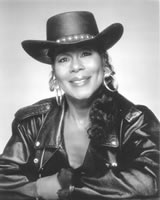
Rest in Peace, Donna Summer (born LaDonna Adrian Gaines) 31 December 1948 – 17 May 2012

photograph of Donna Summer is from here

Here at this blog, I endeaver to honor the contributions by women of color to music and the arts in general. Donna Summer was a major figure in the music scene of the mid to late 1970s. Her work continued beyond that time but in the late '70s, if you lived in the US and had access to popular media, it was almost impossible to not know what her latest hits were. Her voice was powerful and amazing. I was very sad to learn of her battle with lung cancer and that she didn't survive it.

Before reaching adulthood, I moved into and through the Disco era. It occurred during a time when some white het men's music was creating a punk rock scene: the music was anti-authoritarian, anarchistic, and deeply white het male supremacist. This branch of white het men's music was overtly condescendingly hostile to the music of women of color and of gay men regardless of race or ethnicity. At least that's how I experienced it. The white het male anger, though righteous, was generally indifferent to the plight of most people on Earth who are neither male nor white yet was assumed by the white men to be speaking for or about all of humanity. The attitude about artists putting out Disco hits, by anti-Disco white men, was that they were unserious and frivolous. They didn't understand the role of celebration and expressiveness of spirit and body that wasn't geared toward fury and destruction. Apparently they'd also never read the work of anarchist Emma Goldman. From Wikipedia:
At the dances I was one of the most untiring and gayest. One evening a cousin of Sasha, a young boy, took me aside. With a grave face, as if he were about to announce the death of a dear comrade, he whispered to me that it did not behoove an agitator to dance. Certainly not with such reckless abandon, anyway. It was undignified for one who was on the way to become a force in the anarchist movement. My frivolity would only hurt the Cause. 
I grew furious at the impudent interference of the boy. I told him to mind his own business. I was tired of having the Cause constantly thrown into my face. I did not believe that a Cause which stood for a beautiful ideal, for anarchism, for release and freedom from convention and prejudice, should demand the denial of life and joy. I insisted that our Cause could not expect me to become a nun and that the movement would not be turned into a cloister. If it meant that, I did not want it. "I want freedom, the right to self-expression, everybody's right to beautiful, radiant things." Anarchism meant that to me, and I would live it in spite of the whole world — prisons, persecution, everything. Yes, even in spite of the condemnation of my own closest comrades I would live my beautiful ideal. (p. 56) 
This incident was the source of a statement commonly attributed to Goldman that occurs in several variants[, including:] 
If I can't dance, I don't want to be part of your revolution!
One of her most pro-woman songs was "She Works Hard For The Money". Closing this post is a link to that 1983 music video. I hope that anarchist, anti-authoritarian white men learn about sexual, racial, and economic politics from this song and from the many voices of so many women of color in and beyond North America who have been speaking out and singing out for a very long time.

Please click on the following link to view the video on YouTube: http://www.youtube.com/watch?v=1TKQcWEXSKU
.

Friday, January 28, 2011

Celebrating the Career and Mourning the Loss of the Marvelous Gladys Horton (1945 - 2011), age 65, not 66

Photograph of Gladys Horton (1945-2011) is from here

I loved Motown music when growing up. All of the sounds emanating nationally and internationally from Detroit through the 1960s and 1970s found their way into my ears and through my body. Motown, for a time, was the music I most loved to dance to. For this reason and others, I mourn the loss of one of the most distinctive, upbeat-while-plaintive female lead singers of that era and genre, Gladys Horton. At fifteen (!!), she brought Berry Gordy his first #1 smash hit: "Please Mr. Postman" which would later be picked up and whitened by the Beatles.

What is strange to me is that Ms. Horton's passing has been noted (briefly) in some media, including in print media, but they can't agree on what day she passed, nor how old she was at the time of her passing. I know there was controversy about when George Harrison was born: February 24th or 25th? This confusion can happen whenever anyone is born or passes close to midnight. Medical reports may written up recording a time that may differ from eye-witness accounts of such indelible moments into and out of live. But this level of erroneous reporting seems totally messed up to me (and when I say "messed up" what I mean is racist and sexist). Will the age and date-of-death of any of the white British male band-mates who comprised members of The British Invasion, to name but one music genre contemporaneous with a portion of the U.S.'s Motown success, be misrepresented in the mass media, and in Billboard, specifically? Will media really get wrong the day and age of any living member of The Dave Clark Five, or Herman's Hermits, for example, when such time comes when one of them passes on?

Can no one at the Associated Press do the math? She was born on May 30, 1945, which would mean she lived only until the terribly young age of 65. She would have turned 66 later this year.

The cause and specifics of her health struggles also remind me of the very lethal scourge that is cardiovascular disease among all U.S. women, but particularly African American women, what with it being a stress-related condition, with Black women having to endure and resist the systematic assaults and everyday aggravations both of racism and sexism from birth on to what is far too often an early death.

What follows was found by me at billboard.com and may be linked back to by clicking on the title. This material produced largely by the Associated Press, is edited by me and those edits appear in the form of strike-throughs, the adding of the correct age, and minor additions to the text which appear in bold and in brackets. The material is being reproduced here for the purposes of honoring an artist's life and passing, for political commentary and analysis, and not for material or personal gain.

Gladys Horton of the Marvelettes Dies at 66 65

by Associated Press  |   January 27, 2011 12:02 EST
Getty Images

The Marvelettes
Gladys Horton, who co-founded the 1960s Motown group The Marvelettes and sang on hits including "Please Mr. Postman," has died in Los Angeles at age 66 [65].

Her son, Vaughn Thornton, says Horton died Wednesday night [not on Thursday, as some media are reporting] in a Sherman Oaks nursing home where she had been recovering from a stroke.


Video: The Marvelettes sing "Please Mr. Postman"
Horton was a teenager in the Detroit suburb of Inkster when she and some friends formed a group they called "The Casinyets," which was short for "can't sing yet."

When Georgia Dobbins had to leave, Horton became lead singer. The group changed its name to The Marvelettes, and Horton was 15 when Motown released "Please Mr. Postman" in 1961. "Postman" reached No. 1 on the Billboard Hot 100 on Dec. 16, 1961 and was the first No. 1 for Berry Gordy's Motown Record Corporation.

The Marvelettes went on to chart a total of 23 Hot 100 hits, including "Postman," "Playboy" (No. 7), "Beechwood 4-5789" (No. 17) and "Don't Mess With Bill" (No. 7). Horton was replaced as lead singer in 1965 and left the group two years later.

(Additional reporting by Monica Herrera, Billboard.com)

Sunday, August 15, 2010

Rufus and Martha Wainwright in Chicago: Hallelujah!

                This is a lovely photograph of Rufus and Martha Wainwright on either side of their mother,  Kate McGarrigle, who sadly passed away on 18 January 2010.

I always wanted an awesome sister and a gay brother, so no matter how you look at it, Martha and Rufus Wainwright have something I don't: each other. But they each have suffered a great loss, as their mother, the folk singer Kate McGarrigle, to whom each paid tribute on Friday, passed away earlier this year.

I have seen them together before, but always welcome seeing them perform on the same stage. The last time I saw them both together was in Montreal. Here is a lovely review by Megan Ritt, with photograph gallery by Meghan Brosnan, from here @ CoS: consequenceofsound.net. You can also click on the title below to link back. Thank you Megan and Meghan!


Rufus Wainwright and sister Martha mesmerize Chicago (8/13)

By Megan Ritt on August 15th, 2010 in Concert Reviews, Hot
The marquee was bright; the walls were edged in gold; the tickets said “Broadway in Chicago”, for heavens’ sake. When Rufus Wainwright decides to put on a show, you know you’re in for something magical, but his current tour in support of All Days Are Nights: Songs for Lulu takes magical to a whole new level. “Mesmerizing” is the word most often bandied about by the crowd after the first half of his set—but wait! We’re getting ahead of ourselves, and no part of the show, which took place this past Friday at Chicago’s Bank of America Theater, could conscionably be skipped over.

Opening for Mr. Wainwright would be no easy feat for any musician, which may explain why Wainwright chose his little sister Martha for the job. Martha is best known as a folk singer, and I wondered how her music would jive with the audience, who came in want of high pageantry. But if you’ve grown up with someone, of course, it would be hard to be intimidated by him. Martha filled her role capably, comfortably, and dare I say, wonderfully. Her gorgeous, buttery alto poured from her throat, the folk-flavored female compliment to Rufus’ tenor. Like her brother, Martha slides effortlessly up and down the scales, one moment shouting, now quiet; one moment throaty but up to falsetto in an instant. She sings a fearless, bottomless brand of folk comparable to her brother’s music only in its limitlessness. One wishes to be a fly on the wall in their childhood home.

The crowd clearly adored Martha, whooping almost involuntarily throughout her set. Crowd favorites included opener “Bleeding All Over You”, which showcases Martha’s beautiful capability for heartbreak; “This Life”, during which Martha often closed her eyes and looked to the ceiling as if to invoke the gods of music, to a quite moving effect; and “Soudain Une Vallee”, for which her husband joined her on piano, from her recent record of Edith Piaf songs, Sans Fusils, Ni Souliers, A Paris. Martha’s Piaf is throaty, raw, nuanced—in a word, lovely. The crowd was so taken with this latter piece—and with an a cappella last song performed at the edge of the stage, hands wrung—that her Piaf record sold out at the show during intermission. Martha took the great, cavernous theater and made it feel like a small coffeehouse joint, like you were sitting five feet away, like she was the coolest girl you knew from college. Never have I had such a strong desire to sit over whiskeys with a musician.


After a brief intermission, the crowd was reminded of the particulars of Rufus’ set: He would play Lulu start to finish, and there was to be no clapping or interruptions of any kind during this song cycle portion of the program. The lights dimmed, and Rufus appeared stage left in his now-famous costume: the feathers, the jewels, the 15-foot train, all in black. He walked somberly, slowly to the piano and took his seat under a single spotlight. He paused, and then launched into the meandering, river-like piano intro of “Who Are You New York”. The somber black-and-white setting, lit from behind by Douglas Gordon’s art film of a heavily made-up eye opening and closing, threw both the high and low emotional points of the record into sharp relief.


A particular highlight of the set was Rufus’ stark love song to his sister, “Martha”, dealing with their beloved mother’s recent fatal illness. The somber setting and the bareness of his voice all alone on the wide-open stage made the song heartbreakingly plaintive; I cannot have been the only audience member moved to tears. Though the crowd forgot their instructions and clapped at the beginning of the set (possibly an after-effect of their boundless enthusiasm for Martha), Rufus took only a silent sip of water and kept playing; by the third song, the silence between pieces was an actual absence of sound. At one point, car horns could be heard outside the theater. The piano parts on the record are quite challenging at times, and Rufus leaned into the difficult ones, giving the audience a real sense of his effort. The Shakespearean sonnets took on a new drama in that setting, as did “What Would I Ever Do With A Rose”, with its slightly insidious piano part. I never before noticed the darkness of that piece until I heard it live under the spotlight. “Zebulon”, the closer of this set, was given new depth as well; one was struck by the degree to which Rufus laid his soul bare on that stage. This was high drama, living opera– performance art at its finest– and conceiving of and performing it surely took some moxie. Bravo, Mr. Wainwright, bravo.

After another brief intermission (cue the audience to say “mesmerizing”), Rufus took the stage again, this time dressed as himself, to a standing ovation. He played a mix of popular songs from his previous records, with Martha joining him on stage for a few. Highlights of this set (copious applause permitted) included “This Love Affair”, “Memphis Skyline”, and particular crowd favorite “The Art Teacher”, all from Want Two; and “Nuits de Miami” and “Complainte de la Butte”, both sung with Martha and in French (“since we’re in the Paris-Berlin-Moscow of the Midwest!” Rufus proclaimed to adoring Chicagoans). And yes—finally, for this long-time fan– he played a heartrending version of “Hallelujah”.

The crowd brought him back out for an encore, which ended with his late mother’s song for his father, a beautiful rendition of her “Walking Song”. The show lasted three hours, but we could have stayed all night. A mix of operatic drama and coffeehouse warmth, costume and charisma, light and dark, soft and loud, male and female, stark sadness and bright optimism: The Wainwrights surely know how to put on a show for the ages.

Photography by Meghan Brosnan.

Martha Wainwright setlist:
Bleeding All Over You
Comin’ Tonight
Four Black Sheep
This Life
Soudain Une Vallee (Edith Piaf cover)
(unknown)
Baby
(unknown song in French)

Rufus Wainwright first setlist (song cycle):

Who Are You New York
Sad With What I Have
Martha
Give Me What I Want and Give It to Me Now!
True Loves
Sonnet 43
Sonnet 20
Sonnet 10
The Dream
What Would I Ever Do with a Rose?
Les feux d’artifice t’appellent
Zebulon

Rufus Wainwright second setlist:

Beauty Mark
Grey Gardens
This Love Affair
Matinee Idol
Memphis Skyline
Art Teacher
Nuits de Miami (with Martha)
Complainte de la Butte (with Martha)
Hallelujah (with Martha)
Little Sister
Dinner at Eight
Cigarettes and Chocolate Milk

Encore:
Poses (with Martha)
Going to a Town
Walking Song (Kate McGarrigle cover)
——
Gallery by Meghan Brosnan
TAGGED AS: ,

Thursday, June 10, 2010

Celebrating what would have been Judy Garland's 88th birthday. For my Lesbian and Gay Pride month, I'm going to try and "Get Happy"

Happy 88th, Judy!!

From the movie, Summer Stock. You gotta love a bevy of white men surrounding the female star, ending up on their knees. What a powerhouse she was. And she was under five feet tall, out of heels!

Wednesday, May 19, 2010

Ladies and Gentlemen, the Fabulous Fighter and Amazing Artist, Lena Horne (1917 - 2010)

I have already posted once on the passing of the Great Lena Horne, *here*, singing the classic original version of "Stormy Weather". But one post cannot suffice. No number is sufficient, so please find her work and enjoy it. Here are two performances and a synopsis of some of what this woman endured, breaking barriers that I hope feel inconceivable to you today. Compare, if you will, the version of "Stormy Weather" sung so many decades earlier, to this version here just below. And later, at the end of this post, see what a person on a stage can do, when welcomed to do so.


I just saw a biography on television about Lena Horne. I had learned about her life years ago, have known and admired her work for decades, but had missed learning some of the details of how this country, this endlessly wretchedly amoral country that so prides itself on being Great, worked so hard to keep her down.

What you ought to know, if you don't already, is that virtually everywhere she went in Hollywood, Hollywood's color barrier kept her out. She could only appear in movies if the cast was all Black, as no interactions among characters of different races was allowed, unless the Black performer played a maid or butler, porter, or shoe shiner "serving" the white characters. If you watch just about any movie with both white and Black actors from the 1930s, you'll be hard pressed to find an African American in any other role, and you'll also notice, if you wish to, that even when the actors had speaking parts, they were usually not listed in the credits. But Lena's father made sure that MGM would never cast her in such a role. Which meant, really, the studio couldn't do much with her. How MGM showed off her talent besides giving her parts in two all-Black films, was to have her perform solo, singing one number in an otherwise all-white film, a number which would be cut out for the films' showings in movie theaters throughout the South.

The white Ava Gardner was cast in a role Lena was meant to play, in a classic MGM musical film called Show Boat; Ava wore make-up to make her skin a bit darker, and had someone else entirely sing her songs to her mouthing the lyrics. Imagine the insult to Lena.

On tour with the U.S.O., she was made to perform for U.S. soldiers with the white ones up front, close to her, and the Black soldiers in the back. She did what the U.S.O. organisers hoped she wouldn't consider doing: she walked into the audience, right to that color line, and performed with her back to the white soldiers, for the Black soldiers up close. (She was never allowed to part of another U.S.O. show after that one.)

She found success as a singer on the stage, free of the racist restrictions of the U.S., in Europe, but when she returned she'd been "blacklisted"--a term from the McCarthy Era that only adds insult to injury. On U.S. television, a white man was not allowed to make physical contact of any kind, including a handshake, with a Black woman performer. The first time this rule was broken was due to Lena Horne being on TV--her hand and a white performer's hand greeted each other in a shake. In the 1960s, many, many great singers had their own variety shows, but no network would allow a Black performer to have her or his own show. Imagine the indignity.

Lena Horne learned both how to fight and how to keep her deepest feelings inside, away from the harsh and mercilessly critical glare of the very white spotlight. This came at a price, as having to cordon off parts of yourself because dominant society doesn't want to know who you are inevitably does. She met with James Baldwin, Martin Luther King, so many other great colleagues in the Civil Rights movement. The movement gave her some strength and began to bring her more fully into contact with parts of herself she was not allowed to show to white folks.

Only into her sixties, seventies, and eighties was she allowed to be herself on the U.S. stage, and that happened only when a mixed race audience was truly ready to embrace her. Then she did open up and allowed others to see the depth of who she was--a extraordinary talent, a powerful person, a singer with years of fierce resistance and painful stories and wellsprings of emotion available to be expressed from the entirety of her being. These two videos show THAT Lena Horne, the woman who was no longer bound to laws and customs designed to keep white supremacy safe by keeping her silent.

Monday, May 10, 2010

No More Stormy Weather, Lena Horne (June 30, 1917 - May 9, 2010). You've Left the World Far Brighter Than Before Your Grand Entrance


I have only known life on Earth with Lena Horne. Of course this is the case with anyone who dies, who was famous, who is older than me. But Lena was always a star, and one of the brightest. She shone in a social sky perennially and perpetually clouded by racism and misogyny. Oh, but how she broke through those clouds, like the Spring and Summer Sun, to pour out a beautiful, wondrous humanity that has left the world changed, better, stronger and more passionate. Her art and her life leaves behind a magnificent legacy. I am far richer in spirit for having been touched, through her music and her activism, each of which taught me to value full expression and to fight for freedom from white male supremacist intolerance and tyranny. May she rest in peace, and shine, always center stage, in the heavenly chorus. -- Julian

From The New York Times:

“My identity is very clear to me now. I am a black woman. I’m free. I no longer have to be a ‘credit.’ I don’t have to be a symbol to anybody; I don’t have to be a first to anybody. I don’t have to be an imitation of a white woman that Hollywood sort of hoped I’d become. I’m me, and I’m like nobody else.”


Lena Horne, Singer and Actress, Dies at 92


Lena Hornewho was the first black performer to be signed to a long-term contract by a major Hollywood studio and who went on to achieve international fame as a singer, died on Sunday night at New York-Presbyterian/Weill Cornell Medical Center in New York. She was 92 and lived in Manhattan.
Leo Friedman
Lena Horne appeared in “Jamaica,” a musical that ran on Broadway from 1957 to 1959.
    Associated Press
    Ms. Horne and Cab Calloway in “Stormy Weather.” The title song became one of her signatures.
    Her death was announced by her son-in-law, Kevin Buckley.
    Ms. Horne might have become a major movie star, but she was born 50 years too early, and languished at MGM in the 1940s because of the color of her skin, although she was so light-skinned that, when she was a child, other black children had taunted her, accusing her of having a “white daddy.”
    Ms. Horne was stuffed into one “all-star” musical after another — “Thousands Cheer” (1943), “Broadway Rhythm” (1944), “Two Girls and a Sailor” (1944), “Ziegfeld Follies” (1946), “Words and Music” (1948) — to sing a song or two that could easily be snipped from the movie when it played in the South, where the idea of an African-American performer in anything but a subservient role in a movie with an otherwise all-white cast was unthinkable.
    “The only time I ever said a word to another actor who was white was Kathryn Grayson in a little segment of ‘Show Boat’ ” included in “Till the Clouds Roll By” (1946), a movie about the life of Jerome Kern, Ms. Horne said in an interview in 1990. In that sequence she played Julie, a mulatto forced to flee the showboat because she has married a white man.
    But when MGM made “Show Boat” into a movie for the second time, in 1951, the role of Julie was given to a white actress, Ava Gardner, who did not do her own singing. (Ms. Horne was no longer under contract to MGM at the time, and according to James Gavin’s Horne biography, “Stormy Weather,” published last year, she was never seriously considered for the part.) And in 1947, when Ms. Horne herself married a white man — the prominent arranger, conductor and pianist Lennie Hayton, who was for many years both her musical director and MGM’s — the marriage took place in France and was kept secret for three years.
    Ms. Horne’s first MGM movie was “Panama Hattie” (1942), in which she sang Cole Porter’s “Just One of Those Things.” Writing about that film years later, Pauline Kaelcalled it “a sad disappointment, though Lena Horne is ravishing and when she sings you can forget the rest of the picture.”
    Even before she came to Hollywood, Brooks Atkinson, the drama critic for The New York Times, noticed Ms. Horne in “Lew Leslie’s Blackbirds of 1939,” a Broadway revue that ran for nine performances. “A radiantly beautiful sepia girl,” he wrote, “who will be a winner when she has proper direction.”
    She had proper direction in two all-black movie musicals, both made in 1943. Lent to 20th Century Fox for “Stormy Weather,” one of those show business musicals with almost no plot but lots of singing and dancing, Ms. Horne did both triumphantly, ending with the sultry, aching sadness of the title number, which would become one of her signature songs. In MGM’s “Cabin in the Sky,” the first film directed by Vincente Minnelli, she was the brazen, sexy handmaiden of the Devil. (One number she shot for that film, “Ain’t It the Truth,” which she sang while taking a bubble bath, was deleted before the film was released — not for racial reasons, as her stand-alone performances in other MGM musicals sometimes were, but because it was considered too risqué.)
    In 1945 the critic and screenwriter Frank Nugent wrote in Liberty magazine that Ms. Horne was “the nation’s top Negro entertainer.” In addition to her MGM salary of $1,000 a week, she was earning $1,500 for every radio appearance and $6,500 a week when she played nightclubs. She was also popular with servicemen, white and black, during World War II, appearing more than a dozen times on the Army radio program “Command Performance.”
    “The whole thing that made me a star was the war,” Ms. Horne said in the 1990 interview. “Of course the black guys couldn’t put Betty Grable’s picture in their footlockers. But they could put mine.”
    Touring Army camps for the U.S.O., Ms. Horne was outspoken in her criticism of the way black soldiers were treated. “So the U.S.O. got mad,” she recalled. “And they said, ‘You’re not going to be allowed to go anyplace anymore under our auspices.’ So from then on I was labeled a bad little Red girl.”
    Ms. Horne later claimed that for this and other reasons, including her friendship with leftists like Paul Robeson and W.E.B. DuBois, she was blacklisted and “unable to do films or television for the next seven years” after her tenure with MGM ended in 1950.
    This was not quite true: as Mr. Gavin has documented, she appeared frequently on “Your Show of Shows” and other television shows in the 1950s, and in fact “found more acceptance” on television “than almost any other black performer.” And Mr. Gavin and others have suggested that there were other factors in addition to politics or race involved in her lack of film work
    Although absent from the screen, she found success in nightclubs and on records. “Lena Horne at the Waldorf-Astoria,” recorded during a well-received eight-week run in 1957, reached the Top 10 and became the best-selling album by a female singer in RCA Victor’s history.
    In the early 1960s Ms. Horne, always outspoken on the subject of civil rights, became increasingly active, participating in numerous marches and protests.
    In 1969, she returned briefly to films, playing the love interest of a white actor, Richard Widmark, in “Death of a Gunfighter.”


    She was to act in only one other movie: In 1978 she played Glinda the Good Witch in “The Wiz,” the film version of the all-black Broadway musical based on “The Wizard of Oz.” But she never stopped singing.
    Associated Press
    Ms. Horne in 1981 after she won two Grammy awards for “Lena Horne: The Lady and Her Music.”
      She continued to record prolifically well into the 1990s, for RCA and other labels, notably United Artists and Blue Note. And she conquered Broadway in 1981 with a one-woman show, “Lena Horne: The Lady and Her Music,” which ran for 14 months and won both rave reviews and a Tony Award.
      Ms. Horne’s voice was not particularly powerful, but it was extremely expressive. She reached her listeners emotionally by acting as well as singing the romantic standards like “The Man I Love” and “Moon River” that dominated her repertory. The person she always credited as her main influence was not another singer but a pianist and composer, Duke Ellington’s longtime associate Billy Strayhorn.
      “I wasn’t born a singer,” she told Strayhorn’s biographer, David Hajdu. “I had to learn a lot. Billy rehearsed me. He stretched me vocally.” Strayhorn occasionally worked as her accompanist and, she said, “taught me the basics of music, because I didn’t know anything.”
      Strayhorn was also, she said, “the only man I ever loved,” but Strayhorn was openly gay, and their close friendship never became a romance. “He was just everything that I wanted in a man,” she told Mr. Hajdu, “except he wasn’t interested in me sexually.”
      Lena Calhoun Horne was born in Brooklyn on June 30, 1917. All four of her grandparents were industrious members of Brooklyn’s black middle class. Her paternal grandparents, Edwin and Cora Horne, were early members of the National Association for the Advancement of Colored People, and in October 1919, at the age of 2, Lena was the cover girl for the organization’s monthly bulletin.
      By then the marriage of her parents, Edna and Teddy Horne, was in trouble. “She was spoiled and badly educated and he was fickle,” Ms. Horne’s daughter, Gail Lumet Buckley, wrote in her family history, “The Hornes.” By 1920 Teddy had left his job with the New York Department of Labor and fled to Seattle, and Edna had fled to a life on the stage in Harlem. Ms. Horne was raised by her paternal grandparents until her mother took her back four years later.
      When she was 16, her mother abruptly pulled her out of school to audition for the dance chorus at the Cotton Club, the famous Harlem nightclub where the customers were white, the barely dressed dancers were light-skinned blacks, Duke Ellington was the star of the show and the proprietors were gangsters. A year after joining the Cotton Club chorus she made her Broadway debut, performing a voodoo dance in the short-lived show “Dance With Your Gods” in 1934.
      At 19, Ms. Horne married the first man she had ever dated, 28-year-old Louis Jones, and became a conventional middle-class Pittsburgh wife. Her daughter Gail was born in 1937 and a son, Teddy, in 1940. The marriage ended soon afterward. Ms. Horne kept Gail, but Mr. Jones refused to give up Teddy, although he did allow the boy long visits with his mother.
      In 1938, Ms. Horne starred in a quickie black musical film, “The Duke Is Tops,” for which she was never paid. Her return to movies was on a grander scale.
      She had been singing at the Manhattan nightclub Café Society when the impresario Felix Young chose her to star at the Trocadero, a nightclub he was planning to open in Hollywood in the fall of 1941. In 1990, Ms. Horne reminisced: “My only friends were the group of New Yorkers who sort of stuck with their own group — like Vincente, Gene Kelly, Yip Harburg and Harold Arlen, and Richard Whorf — the sort of hip New Yorkers who allowed Paul Robeson and me in their houses.”
      Since blacks were not allowed to live in Hollywood, “Felix Young, a white man, signed for the house as if he was going to rent it,” Ms. Horne said. “When the neighbors found out,Humphrey Bogart, who lived right across the street from me, raised hell with them for passing around a petition to get rid of me.” Bogart, she said, “sent word over to the house that if anybody bothered me, please let him know.”
      Roger Edens, the composer and musical arranger who had been Judy Garland’s chief protector at MGM, had heard the elegant Ms. Horne sing at Café Society and also went to hear her at the Little Troc (the war had scaled Mr. Young’s ambitions down to a small club with a gambling den on the second floor). He insisted that Arthur Freed, the producer of MGM’s lavish musicals, listen to Ms. Horne sing. Then Freed insisted that Louis B. Mayer, who ran the studio, hear her, too. He did, and soon she had signed a seven-year contract with MGM.
      The N.A.A.C.P. celebrated that contract as a weapon in its war to get better movie roles for black performers. Her father weighed in, too. In a 1997 PBS interview, she recalled: “My father said, ‘I can get a maid for my daughter. I don’t want her in the movies playing maids.’ ”
      Ms. Horne is survived by her daughter, Gail Lumet Buckley. Her husband died in 1971; her son died of kidney failure the same year.
      Looking back at the age of 80, Ms. Horne said: “My identity is very clear to me now. I am a black woman. I’m free. I no longer have to be a ‘credit.’ I don’t have to be a symbol to anybody; I don’t have to be a first to anybody. I don’t have to be an imitation of a white woman that Hollywood sort of hoped I’d become. I’m me, and I’m like nobody else.”

      Saturday, April 24, 2010

      Eliza Gilkyson and Robert Jensen Speak to other White Folks About that Emotional and Intellectual place Beyond Liberalism, and do so Compassionately and Effectively


      [image is from here]

      Above is a painting of Robert Jensen created by an important--to me--white male portrait artist named Robert Shetterly. He has created a wonderful series of portraits of U.S. progressives and radicals and folks who wouldn't suffer in silence. The whole collection is called "Americans Who Tell The Truth". Please visit here to see one artist's representation of these people who do just that.

      From one of those social networking sites, I wrote this to Mr. Jensen:

      Julian Real
      This is going up on my blog, Bob.

      I think this is a great format for getting your perspectives out there. And I love your intro about alienating annoying people. HELL YEAH! Soothing is something that is appropriate, for example, as we comfort the dying and the baby, and the children; also the ill or otherwise physically or emotionally suffering adult. But there are those who have the mental, emotional, and physical health (at least at times)--the life force--enough to move energy outward, to challenge and work to transform. For those of us who can manage it whenever possible, "annoyance" or "irritation" is certainly part of what needs to happen.

      The 'powers that be' white het male supremacist and capitalist didn't and don't call us "agitators" for no reason. The pro-status quo privileged masses who do not experience the bulk and brunt of violence churned out through systems of socially organised oppression must, by those who can speak out and write on, have our bodies and psyches systematically shaken, to the depths of our souls. It is, I think, a compassionate argument: why should the most privileged have a false view and experience of suffering and death as unfortunate and sad occurrences that happens only to individuals, as opposed, say, to one's village, town, city, and nation, or to one's race or gender? Thanks for being one of those annoying alienating agitators.

      To the blog visitors:
      I should have added: "Among our very privileged people, your speaking and writing makes me feel less alien." 

      But what was written to him was in response to this:


      Robert Jensen: Eliza Gilkyson and I did a combined concert/lecture at The Sanctuary for Independent Media in Troy, NY. Those folks do high-quality video production, and they’ve posted four segments of the event.

      http://www.youtube.com/watch?v=cxIjj_GdZK0

      http://www.youtube.com/watch?v=2y02ykeM_bA

      http://www.youtube.com/watch?v=wiosnMtFIgU

      http://www.youtube.com/watch?v=O5ZkHHGBH-k

      The Sanctuary for Independent Media welcomed Austin, TX-based folk musician Eliza Gilkyson and activist Rob Jensen on November 16, 2008. Gilkyson performed her songs, including some from her most recent album Beautiful World. ...

      *          *          *

      So now that you've got the links above, here are the videos below. Parts 1 and 3 are primarily Eliza performing her music, first singing with guitar and later at piano. Parts 2 is primarily Bob Jensen speaking about capitalism and sustainability. In Part 2, Eliza's introduction of Bob is particularly interesting to me, in addition to what follows from Bob. She addresses the difference between being "a liberal" and "a radical" in a very succinct and accurate way, I think. Part 4 is both, first Bob, on white supremacy and patriarchy. Watch the audience's reaction to this compared to him speaking about capitalism and sustainability.

      Eliza and Bob are communicating to an audience of appreciative, caring, listening white people who appear to me to be creative class and middle class.

      I marvel, in a way that is not exactly positive, at how those of us with privilege in the U.S. cannot, really, talk much about white male supremacy: for all our proclaimed and protected freedom of speech, we are largely silent on the matters of systemic injury to classes of people who are not white and class privileged, who are not heterosexual men. Consider, wherever you are, naming, out loud, to other people, the atrocious problem of "white heterosexual male supremacy". It is clear to me Bob would not be able to do in that space, not because he conceptually can't, but because his audience would shut down. One presumes they may have spent money to be there, so they must be entertained, while also challenged to think and feel something they're not accustomed to experiencing. To speak of this problem of WHM dominance would mean sending these white people into reactive privileged guilt and fits of unproductive guilt. As opposed to the unappreciative, close-minded, and overtly bigoted bunch farther to the Right, who would move into an especially dangerous form of privileged denial as well as fits of externalised rage. (Witness the Tea Party.)

      If the babies and children and adults around us are dying en masse; if the teenagers and elderly in our neighborhoods and the people of our region are being killed due to institutionalised and State-sponsored violence; if we and many in our family and friends are dying, right now, particularly of diarrhea, malaria, military bombings, radioactive poisoning, lack of basic medical care, HIV/AIDS, and the combination of rape and murder; if all of that or most of that is so, then we're likely Western and white male and class privileged. And in this sense, and others, white het male supremacy is not an evolutionary, primarily natural, or socially inevitable phenomenon. It is a socially preventable one.

      I personally find nothing at all alienating or annoying about what Bob Jensen says. I find it deeply humane and compassionate. And that some folks don't, well, means to me that they know too little about the world of humanity and about compassion.

      Part 1 of 4:


      Part 2 of 4:


      Part 3 of 4:


      Part 4 of 4:

      Thursday, April 8, 2010

      Please spread the word about this event ASAP: Zami '10: A Community Cipher on Haiti, Hope, and Homeland

       [image is from here]

      This is a cross post from here @ http://alp.org/content/zami-10-community-cipher-haiti-hope-and-homeland, and also at that site, there is a downloadable flyer you can print out and post.

      When: Friday, May 7, 2010 - 7:00pm - 9:30pm
      Where: SOHO Lofts - 167 Spring Street (Buzzer 3), New York, NY 10012
      View Map

      The Cipher Project in partnership with The Audre Lorde Project and Queer Black Cinema presents:


      Zami '10: Haiti, Hope, and Homeland - a community forum focused on raising conversation about Haiti, its history, and current status post-earthquake. We invite all members of the community to come and take part in our cipher and make connections between what is happening in Haiti (and why) and what is happening their various "homelands," whether those be other countries, identities, bodies, etc.

      The Cipher Project believes that if we begin to understand the intersecting struggles and celebrations we hold with other communities, we can begin to bond, grow, and work as a collective for the justice of all of our communities. Though our initiative serves women and the lgbtq community this community cipher is for everyone.

      Proceeds will be donated through  Partners In Health

      Emceed by the lovely  Micia Mosely

      Friday, May 7, 2010 from 7PM-9:30PM

      SOHO Lofts - 167 Spring Street (Buzzer 3), New York, NY 10012

      CipHER Speakers
      Naima Penniman and Alixa Garcia
      Kay Ulanday Barrett
      Kim Ford (The Audre Lorde Project)
      Berlotte Israel (Dwa Fanm)
      Mario J. LaMothe (Ph.D candidate and Hatian Earthquake Survivor)

      Featured Performances Climbing PoeTree
      Sweet Lorraine
      Live words and letters from earthquake survivors
      Live Music and more

      Items/services will also be available for purchase to benefit Haiti including: - Headshots for Haiti by Rebecca Pinard
      - Silent Auction
      - Original art for sale
      - Raffles
      - and more

      **DINNER WILL BE SERVED AT 7PM SHARP**
      LIMITED SPACE! REGISTER HERE: Online Form
      Suggested donation at the door - $10. NO ONE will be turned away for lack of funds.

      [CASH and CARD accepted for entry, silent auctions, all sales and donations.]

      Inquiries: Contact Cleopatra LaMothe and the committee at zamilikeme@gmail.com
      Facebook EventTwitter

      Monday, March 8, 2010

      BEHOLD RADICAL FEMINISM as We Celebrate International Women's Day by Honoring the Work of the Association For Women's Rights in Development; the Second Forum of Indigenous Women from Wangki and one of the participating organisations there, the International Indigenous Women's Forum; and last but not at all least: MADRE

       
      [image of awid activists is from here]
      One in Nine Campaign Marches in Cape Town, South Africa
      In conjunction with 800 participants from the AWID Forum on the Power of Movements, the One in Nine Campaign led a successful march through downtown Cape Town, South Africa (Nov. 15, 2008) in order to raise awareness of the high rates of sexual violence faced in South Africa, DRC and Zimbabwe. AWID stands for the Association for Women's Rights in Development, a global women's rights network. See an excellent video montage created by the Feminist Tech Exchange at the Forum.


      A Guide to Indigenous Women's Rights under the International Convention on the Elimination of all Forms of Discrimination Against Women

      The International Convention on the Elimination of All Forms of Discrimination Against Women is one of the six core international human rights instruments and the only one focused exclusively on eliminating discrimination against women. Given that indigenous women have been and continue to be subject to multiple forms of discrimination, it is obviously of great relevance to indigenous peoples’ rights.
      View the guide below
      Article License: Copyright - Article License Holder: Forest People's Programme

      *          *          *

      [image of the Second Forum of Indigenous Women from Wangki is from here]

      Second Forum of Indigenous Women from Wangki

      United we Construct our own Worth, Strength, Happiness and Wellness.

      Women from the following communities gathered in Waspam, the capital of Wangki, from October 1st through the 4th 2009: International Indigenous Women's Forum/ Foro Internacional de Mujeres Indígenas (IIWF/FIMI), Tawan Sirpi wina Asla Takanka de Urang, Sih, Rayapura, Kiwastara, Moss, Auyapura, Andris, Santa Fe, Kwiwitingni, Tee Kiamp, Dikuatara, Klampa, Planhkira, Sawa, Bumsirpi, Uhri, San Jerónimo, Kisalaya, Asang, Prinzapolka, Ulwas, Bullsirpi, Rama Cay, Esperanza Rio Coco, La Esperanza Rio Wawa, Boom, Alamikangban, Francia Sirpi, Kisubila, Kururia, Cocal- Waspuk, San Alberto, Tuskrutara, Klisnak, Utlamahta, Desembocadura del Rio grande, Batsilaya, Pacifico Centro y Norte de Nicaragua, Rancho Escondido, Laguntara, santa Ana, Wiswis, Bullkiamp, Saupuka, Bilwaskarma, Saklin, Klar, Tuskrusirpi, Wasla, Kum, Naranjal, El Paraíso, El Carmen, Wiwinak, Bilwi, Buenos Aires, Living Krik, Mozonte, Sikilta, Leimus, Capri, Polo Lakia Sirpi, Tasba Pain, Miguel Bikan, Santa Clara, Wisconsin, Mayangna Sauni As, Waspam.

      Additionally, representatives of the following organizations participated in the Forum: AMICA, IMATWA, WANGKI TANGNI, De Costa a Costa, MADRE, Movimiento Nidia White, CAIMCA, Foro de Mujeres Indígenas y Multiétnicas de la RAAN, Movimiento Indígena de Nicaragua, Alianza de Mujeres Indígenas de México y Centroamérica; and Judge Hazel Law from the Appellate Court of the North Atlantic Autonomous Regions (RAAN).

      Representatives from the Cabinet and Government of the Autonomous Region included the President of the board of directors, his Committees and Secretaries of Women, Childhood, Adolescence, Youth, and Family; Health; Education; Youth Voices Program; and the Gender Fund. The Mayor, Vice Mayor, and Secretary of the Cabinet from the Municipal Government of Waspam were also present. Other representatives included the Committee of Women from the National Police, the Nicaraguan Institute of Women in Government, and the Office of Registration of Property from RAAN, PNUD, UNFPA, AECID, MISTAP, AMC, ACTED, Salud sin Limites, Clínica Bilwi, CEIMM- URACCAN, CADPI, FUPADE, ASB, NITLAPAN, PANA PANA, CARE, Ibis- Dinamarca, Consejo de Ancianos.

      We remember our dreams, aspirations, commitments, and proposals from the First Forum of Indigenous Women of Wangki in 2008.

      We reaffirm the achievements that Indigenous women made in their commitments by the Nicaraguan Government and the Autonomous Region through the Committee on the Elimination of Discrimination against Women (CEDAW), Cairo Declaration on Human Rights (CAIRO), Committee on the Elimination of Racial Discrimination (CERD), the United Nations Declaration on the Rights of Indigenous Peoples (UNDRIP), Law 28 and its Regulations, Resolution Regional to create the Forum of Indigenous Women and the Secretary of Women, the commitments assumed by CRAAN in the investment in women’s health in June 2009, and the government of RAAN in Rosita in February 2009 in its program working with youth and adolescents.

      At the international level, Indigenous women achieved: gender policies in the national government and the proper steps have been given to the regional government in order to achieve the objective of women’s rights in the Region. We analyzed and agreed on the content of a plan of action in the following themes: intercultural health, racism and discrimination, traditional forms of justice, water and drainage, identity, art and culture, climate change, adaptation of life, organizational strengthening, indications of wellbeing, and the rights of Indigenous women.

      The Wangki claims the plea of NikiNiki for their daughters and sons to come back to listen while the girls, boys, adolescents, and youth inherit the natural and moral poverty that threatens our ancestral territory.
      In this effort we agree:
      1. To keep working in order to strengthen our organizations and networks so our voices, and the voices of our indigenous sisters from RAAS, the Pacific, and the Centro Norte are heard in the regional, national and international realms, and that our proposals are transformed into laws, policies, public programs, and projects that allow for the wellbeing of our families and communities.
      2. We demand that government authorities, organisms of multilateral cooperation, bilaterals, NGOs, and others, implement in good faith the right to an informed and established prior consent in international human rights instruments of indigenous peoples. This should be an obligatory mechanism of consultation for actions taking place in our communities.
      3. Bring back the message to each of our communities, our authorities, common territories, and local governments of RAAN and the country, that girls, boys, adolescents, youth, women, and men, all have the right to live without violence, enjoying our individual and collective rights and for this we declare a permanent movement for A LIFE WITHOUT VIOLENCE.
      4. Call on governments and non-government organizations, organisms of multilateral, bilateral, and international cooperation, communal authorities and territories, universities, research centers, organizations and networks of women and human rights, to unite complimentary human resources, technical, material, and financial forces, for the return to each community of these agreements and that our ACTION PLAN FOR A LIFE WITHOUT VIOLENCE AND DISCRIMINATION becomes effective.
      5. We agree to convene ourselves for the Third Forum of Indigenous Women in Wangki with the national project of the 1 through the 4th of October 2010.
      Given in the city of Waspam during the four days of October 2009.
      Download the declaration file
      *          *          *


      What follows is from http://www.indigenouswomensforum.org/

      "We, the women of the original peoples of the world have struggled actively to defend our rights to self-determination and to our territories that have been invaded and colonized by powerful nations and interests . . .
      We still retain the ethical and esthetic values, the knowledge and philosophy and the spirituality, that conserves and nurtures Mother Earth . . ."
      —Indigenous Women's Beijing Declaration
      Contact us for more information
      121 W. 27th Street, #301; New York, NY 10001
      (212) 627-0444; fimi@iiwf.org
      http://www.awid.org/Issues-and-Analysis/Library/A-Guide-to-Indigenous-Women-s-Rights-under-the-International-Convention-on-the-Elimination-of-all-Forms-of-Discrimination-Against-Women

      *          *          *


          Happy International Women's Day!

      2. With Iraq's parliamentary elections on Sunday, now is the time for Obama to recommit to his timeline for withdrawal.
      Read more »

      3. MADRE is at the United Nations this week, demanding that governments uphold women's human rights.
      Read more »

      4. Help Us Build the World You Want
      Be a part of MADRE's work in 2010 »

      5. January marked the sixth year that Indigenous youths traveled to Ayacucho, Peru for a stone sculpture workshop organized by MADRE and our partner, Chirapaq.
      Read more »
       

      6. Help provide humanitarian aid to earthquake survivors in Haiti.
      Donate now »

      7. Indigenous women leaders from across Latin America and the Caribbean met in La Paz, Bolivia. MADRE Program Coordinator Natalia Caruso was there.
      Read more »

      8.  MADRE's partner the Organization for Women's Freedom in Iraq works to end trafficking, honor-killings and domestic abuse.
      Read an update from their projects »

      MADRE in Action

      MADRE News & Views

      Women Worldwide Will Honor the Lives of Feminist Leaders Who Died in Haiti's Earthquake

      Friday, March 5, 2010
      MARCH 8TH, CENTENARY INTERNATIONAL WOMEN’S DAY 2010Honoring the lives of feminist Haitian leaders who died in the massive earthquake on January 12th, will be the... Read More »

      MADRE Partner Awarded Women's Order Of Merit

      Friday, March 5, 2010
      MADRE congratulates Tarcila Rivera Zea, president of CHIRAPAQ, our partner organization in Peru, on being awarded the 2010 Women's Order of Merit by the Ministry... Read More »

      MADRE Programs Combating Violence Against Women in Armed Conflicts

      Thursday, March 4, 2010
       Guatemala In the past decade, nearly 4,000 women and young girls have been murdered in Guatemala. Many of them, including girls as young as 10,... Read More »

      Ensuring Haitian Women's Participation and Leadership Are Institutionalized in All Stages of National Relief and Reconstruction

      Thursday, March 4, 2010
      MADRE is working with our partners in Haiti and with a coalition of women's organizations to ensure that Haitian women's human rights are upheld in... Read More »

      Event: Protest Friends of the IDF and Ashkenazi!

      Thursday, March 4, 2010
      Printable Flyer Join human rights organizations for a moving procession to protest the annual fundraising dinner of the Friends of the Israel Defense Forces &... Read More »