Showing posts with label Western Terrorism. Show all posts

Thursday, January 5, 2012

Yanar Mohammed on The War (Men's Against Women) In Iraq

photo of Yanar Mohammed with a male soldier is from here

What follows is an excerpt from an article I read at OpEdNew.com. For the whole article, please go *here*.

... Yanar Mohammed , founding director of the Organization of Women's Freedom in Iraq (OWFI), was interviewed on the state of Iraq as the American occupation ends.  She described Iraqi cities full of destroyed buildings and broken streets, with intermittent electricity and unsafe drinking water.  Iraq, she said, is now a country of 99% poor and 1% rich living in the Green Zone, burdened with the most corrupt government in the world that is giving control of oil resources to multinational oil companies.
Iraqi women "are the biggest losers" in this war, Mohammed asserted, ending up with extreme lack of freedom, lack of social security, lack of opportunity, and increased sexual terror.  Her organization has conducted extensive high-risk investigations into the prevalence and plight of Iraqi widows, women kidnapped and killed, and women trafficked into prostitution. Fifteen percent of Iraq's 1 to 2 million widows are seeking temporary marriages out of economic desperation and extreme insecurity in being a single woman. By 2006, OWFI had observed an "epidemic rise" in the number of women prostituted in brothels, workplaces, and hideouts in Baghdad. Through covert investigation, they learned of the trafficking of women within Iraq for Iraqi men in all regions and for US military, as well as to nearby countries.  Democracy in Iraq has been crushed for women. 
American women soldiers in Iraq were big losers, also.  Nearly 200,000 served there, in as dangerous situations as men.  Though barred from combat, they patrolled streets with machine guns, served as gunners on vehicles, dismantled explosives, driven trucks down bomb-ridden streets, and rescued the dead and injured in battle zones. These same women found themselves, concurrently, caught in a second, more damaging war - a private, preemptive one in the barracks.   As one female soldier put it, "They basically assume that because you are a girl in the Army, you're obligated to have sex with them."  Resisting sexual assault in the barracks spills over to battlefield, according to many women veterans, in the form of relentless verbal sexual harassment, punitive high-risk assignments, and the morbid sense that your back is not being watched. ...

Saturday, October 8, 2011

Will "ecocide" gets legal legs in UK and US courts?

image of book cover is from here
Let's not forget that Indigenous activists have been speaking out about this since the White Man's ecocidal practices first violated Sacred Ground. And if you haven't yet, please read the radical ecofeminist books by South Asian activist Vandana Shiva and the white Jewish North American ecofeminist, Starhawk.

From The Guardian:

See the video:

http://www.guardian.co.uk/environment/video/2011/oct/05/mock-ecocide-trial-video

Read the text (and please click on the title to link back to the source web page):

Test trial convicts fossil fuel bosses of 'ecocide'

Top lawyers put fossil fuel bosses on trial in the UK's supreme court in a mock case to explore if ecocide - environmental destruction - could join genocide as a global crime

Update: Two verdicts of guilty, one not guilty: that was the conclusion of the mock ecocide trial (details below) held at the UK's supreme court on 30 September. Real lawyers, judges and a public jury found the CEOs of fictional fossil fuel companies guilty of "extensive destruction, damage to or loss of ecosystem(s) to such an extent that the peaceful enjoyment by the inhabitants of that territory, and of other territories, has been severely diminished", as a result of their company's extraction of oil from tar sands in Canada. The jury found one of the CEOs not guilt on the count of damage caused by an oil spill in the Gulf of Mexico.

Polly Higgins, the driving force behind the trial and who is working to have ecocide join genocide and three other crimes against peace in the UN, said: "For me the trial was a moment of truth. No longer is it acceptable to pursue profit without consequence. Corporate Ecocide is a global crime that is far greater and far more prevalent that most people realise. Those few people who dare to speak up about Corporate Ecocide in Wall Street have been arrested for speaking out about a greater crime, a far greater breach of the peace than their own shouting and campaigning. Surely it is now the time to prosecute the true destroyers of our world."

She added: "I'm not keen to see lots of [people] in the dock. What I want to see is people making responsible decisions. For example, a crime of ecocide could force governments to change the incentive structures for businesses by redirecting subsidises for fossil fuels towards clean energy sources. In this way the dirty energy companies that are wrecking the environment today could be transformed into the clean energy companies of tomorrow."

Original story (29/09/11):
It's a grim list: genocide, crimes against humanity, crimes of aggression (such as unprovoked invasions) and war crimes. All are recognised by the UN as crimes against peace and prosecuted through the international criminal court.

But should the bosses of polluting companies and the leaders of environmentally-unfriendly states join those responsible for mass murder in the dock. They could if a fifth crime against peace - ecocide - joined that list of human evils? The United Nations is now considering the proposal and the first test of how a prosecution for ecocide would work takes place on Friday, with fossil fuel bosses in the dock at the UK supreme court in London. It is a mock trial of course, but with real top-flight lawyers and judges and a jury made up of members of the public. The corporate CEOs will be played by actors briefed by their legal teams.

The crime of ecocide is the brainchild of British lawyer Polly Higgins, who in her UN submission defined it as:
Ecocide: The extensive damage, destruction to or loss of ecosystems of a given territory, whether by human agency or by other causes, to such an extent that peaceful enjoyment by the inhabitants of that territory has been severely diminished.
Crimes being considered for prosecution in Friday's trial include the extraction of oil from Canada's tar sands, a major oil spill in the Gulf of Mexico, fracking for shale gas in Nigeria and bauxite mining of Niyamgiri mountain, India. The real world parallels are not accidental, I'm sure.

An international law against ecocide, enforceable in the UK, will be assumed for the purposes of the mock trial. But there is no script and the jury's verdict is theirs alone to decide. "It is nerve-racking, it is not a done deal," says Higgins.

She argues the link between ecocide and genocide is that damage and destruction to the environment depletes the Earth's resources, which leads to conflict. Only by making ecocide a crime for which individuals can be jailed, will we change the norm which allows profit to be put before the planet, she told me.

Higgins says a key inspiration is William Wilberforce, whose campaigning led to the abolition of slavery in the UK. He changed to norm of how black people were treated, she says, and ecocide law would change the way the planet is treated. "We have go to the point when the ethical imperative trumps the economic imperative," she says. At the moment in many countries, she points out, the first responsibility of CEOs is a financial one to their shareholders. If environmental destruction is not illegal but can boost profit, it will happen, she says.

But she is not anti-corporate or anti-profit, she says: "I started as a corporate lawyer. Now I want to make the problem part of the solution." She says companies should be making profits from solving the problems of global warming, habitat destruction and the extinctions of animals and plants. The companies that traded in slaves did not go out of business after slavery was abolished, she claims.
I asked her about the problem of proving causation between the acts of companies and environmental damage, which has doomed previous attempted prosecutions in the US.

"Genocide is a crime of intent, but ecocide is not," she says. An ecocide law would create a pre-emptive responsibility to prevent ecological damage, she explains, in the same way that "superior responsibility" or "strict liablility" enables people to be prosecuted whether or not they intended to cause damage. "I am really not wanting to see lots of CEOs locked up," she says, but wants them deterred from ecocide in the first place.

I also asked her about the phrase in her ecocide definition that says "whether by human agency or by other causes". If there is a natural disaster, who can be prosecuted? The "other causes" term is there, she says, to place an obligation on governments to intervene in disasters to minimise damage.

If this all seems utter fantasy to you, it is worth noting that Bolivia has already passed laws granting all nature equal rights to humans. Furthermore, ecocide could become an international crime by amendment of the ICC's Statute of Rome, which would need 86 nations to back it. Are there 86 states backing the ICC who feel climate change, the crisis in the oceans and other environmental problems are trashing their "peaceful enjoyment" of the Earth's bounty? I wouldn't be surprised if there were.

Update (11:22 Friday): The two crimes chosen for the ecocide mock trial are the extraction of oil from Canada's tar sands, a major oil spill in the Gulf of Mexico. I'll update the post again when the verdict comes.

Note: The trial, organised by the Hamilton Group, begins at 0900 BST on Friday 30 September and will be broadcast live by Sky News's Supreme Court web channel. Members of the public can attend. I'll post updates on this page. Michael Mansfield QC leads the prosecution against Nigel Lickley QC for the defence. Michael Norman will sit as the judge and the jury are members of the public recruited through Facebook and other social media and vetted for conflicts of interest.


Sunday, September 18, 2011

Immediate removal of all troops from Afghanistan: Malalai Joya on the Occupation by the US and NATO

Imagine, if you will, that humane leaders within a country, such as Malalai Joya, get to decide who enters their country and assists in governance, military struggle, or humanitarian aid. Now consider that anything else is terrorism, brutality, and domination of one nation-state by another.

Everything below is from Green Left, *here*. You may also click on the title below to link back to the original source website. Thank you for your work in reporting on this, Annette Maguire.

Malalai Joya. Marrickville Town Hall, September 9. Photo: Annette Maguire

Tuesday, September 13, 2011
Afghan parliament, addressed a packed Marrickville Town Hall on September 9. More than 500 people braved the cold to hear Joya speak defiantly about the war waged on her country by US/NATO forces for the past decade.
On the eve of the 10th anniversary of the September 11 attacks, which became the pretext for the invasion of Afghanistan less than a month later, Joya advocated for immediate removal of all occupying troops.
“I agree with my people that democracy never comes by bombing wedding parties, by committing war crimes,” she said.
Joya exposed Obama’s much-publicised “troop draw-down” as a mere exercise in “image-management”. Afghan President Hamid Karzai has agreed to permanent US control of military bases in the nation.
She said “they don’t want to leave Afghanistan because it’s in the middle of Asia, so it’s a base for US control in the whole region”.
Refuting Prime Minister Julia Gillard’s claim that removing the troops will leave Afghanistan in the hands of the terrorists, Joya said: “Someone should tell Gillard that Afghanistan is already in the hands of terrorists.”
Joya was famously expelled from her parliamentary position after denouncing the warlords and war criminals holding seats in the Afghan parliament.

She identified three forces embattling her people’s lives: the warlords, the Taliban, and occupying troops.
While the Taliban posed right-wing resistance to the occupation, it is “the resistance of ordinary Afghani people that gives hope for the future”.
Joya openly acknowledged that Afghanistan would still face problems even after the removal of troops, and appealed for humanitarian support.
“Nobody says when occupying troops leave, it will be heaven,” she said. “There’s no question we need a helping hand, but that never means we want occupation.
“We don’t want troops, but we want your solidarity — we need educational support, teachers, health clinics … When war-makers and fundamentalists can unite, so can we.”
The Stop the War Coalition Sydney, which organised the public meeting, announced a protest to mark the 10th anniversary of the invasion, on October 8 at noon, Sydney Town Hall.
[The September 9 event was supported by the Marrickville Community Peace Group, the Sydney Peace Foundation and the Centre for Peace and Conflict Studies at the University of Sydney. Malalai Joya's trip to Australia was organised by Stop the War Coalition Sydney and Melbourne Writers Festival. For more information about Stop the War Coalition Sydney visit its website.]

Friday, December 17, 2010

Mass Rapes, Torture, Executions, Detention, Disappearance, Discrimination against women, lesbians and gay men, people with disabilities, the elderly, migrants, "foreigners", Black, Brown, and Indigenous People, and an Erosion of Human Rights in Democratic Societies is the Rule, not the Exception

What follows is from Voice of America News. Please click on the title to link back. I offer commentary in bold and brackets in the text.

Human Rights Violations the Rule Not Exception in 2010

UN Human Rights Chief Navi Pillay (file photo)

Human rights violations were the rule rather than the exception in 2010.  [And this has been the case for the last 500 years, with 2010 being no exception. The issue, as always, is this: Who or what government counts as a terrorist, and what counts as terrorism and a violation of human rights?] The United Nations says crimes such as mass rapes [not to mention individualised rapes which are also terroristic against women as a class], torture, extra-judicial executions, arbitrary detention, disappearances remain widespread throughout the world.  Even [corporately controlled quasi-]democratic societies are experiencing an erosion of human rights due to the so-called war on terror and growing xenophobia. [Consider this: which of the following is actually "a war on terror" and which is the perpetration of terrorism? And how do you distinguish the two? Is it by the number of humans who are terrified? Which generates more terror? First World genocide against the Fourth World or Indigenist activism to combat corporate-militarised invasion and occupation of Native Lands? Men's war on women or feminist activism to stop it? And, if three thousand U.S.ers and two buildings are destroyed in an act of terrorism, the U.S. response to invade and occupy two countries in Central Asia is seen as an appropriate response by the U.S. government. Does that mean that when the U.S. government murders hundreds of thousands of people, and destroys thousands of buildings, Afghanistan or Iraq invading and occupying the U.S. for a half dozen or more years would not be terrorism but instead would be the appropriate thing to do?]

[...] U.N. Human Rights Chief Navi Pillay is capping off a turbulent year by celebrating the Universal Declaration of Human Rights.  Throughout the past 62 years, the Declaration has acted as a guide for human-rights values and a beacon of hope for millions of oppressed and abused people. [And it has been routinely, arrogantly, and flagrantly ignored or rejected by many nations in the West, including, especially, the U.S.]

She marks its achievements on Human Rights Day by honoring the hundreds of thousands of human-rights defenders who speak up against discrimination, often at great cost to themselves and to their loved ones. [And the retaliation for speaking out doesn't just impact individuals, although it certainly does do that. Speaking truth to power, and trying to hold brutal governments and corporations accountable also causes additional retaliatory distress and devastation to whole groups and classes of people, such as Indigenous people, Black and Brown people, and women across race, region, and class.]
"While combating discrimination and other important human rights causes, they themselves are often subject to discrimination," she said. "In fact, every year, thousands of human-rights defenders are harassed, abused, unjustly detained and even murdered." [And routinely murdered.]

Geneva Director for Human Rights Watch, Julie de Rivero says it is hard to say whether the situation of human rights now is better or worse than in previous years.  [We can at least conclude this: the rich are richer and more destructive. There's more rape and slavery of girls and women now than ever before.] But it is possible to detect certain patterns. [I'd identify the patterns as specifically this: Christian white het male supremacist. I wonder why no one else does.]

One of these, she says, is impunity for major violations. [Such as the relative impunity to any white- and male-dominated country for global violations of humans, non-human animals, and other life including to the Earth. Such as the relative impunity of the white het male supremacist Christian Churches who have committed child-rape, promoted patriarchal control of women by men; promoted heterosexist practices; lesbian self-hatred, gay self-hatred; promoted and conducted physical, sexual, and spiritual violations of Indigenous children across North America and beyond. Such as the relative impunity of corporate pimps raping and trafficking women. Such as the relative impunity of men who batter women. Such as the relative impunity of husbands who rape women. Such as the procurers who rape women in systems of prostitution. Such as fathers and father-figures and male relatives who, more than twice as often as abusing boys, incest their daughters or other girls in the family. Such as the complete impunity of U.S. white men who rape Indigenous women. But...] She gives Sri Lanka as an example.

"We saw the war end in Sri Lanka, but at a very high cost for civilians that were caught in indiscriminate fire by both sides," said Julie de Rivero. "And, yet, no accountability for war crimes in that country…And last of all, I would say the Bush era cases of torture that were committed under the guise of the war on terror that have remained unaccounted for and for which there is still impunity." [There is never any form of accountability for the war crimes, corporate and other economic crimes, non-war military crimes, anti-woman crimes, anti-queer crimes, racist crimes, genocidal crimes, and ecocidal crimes committed by the U.S. against any other country, nation, tribe, or people.]

De Rivero says the war on terror [but not on U.S. terrorism] and heightened concern for national security are leading to a further erosion of human-rights values, even in democratic societies.  She says the same fears are increasing xenophobic sentiments in European countries. [Translation: this means that white het male-ruled Europe is moving in a fascistically racist/misogynist direction.]

She says another worrying trend is sexual violence against women, particularly in the Democratic Republic of Congo. [The rape of women and girls by men is not, in any reasonable sense of the term, a "trend" nor is it, in any way, limited to the DRC, even while the gross frequency of terroristic rape in the DRC is a particular atrocity. Something that has been going on for millennia cannot be termed "a trend". Or, if that's the case, then over the last 500 years there's been a growing trend of European-descended Christian white het men taking over the Earth and destroying as much of it as possible. The highlighting of rape in one country in Africa without noting how it has been taught to many males across centuries by European men is, to me, racist and misogynistic. This is not to say that European men invented rape. It is to say European men globalised it as a form of terrorism of women and girls.]

"The scale of the phenomenon, I think, always compels us to focus on this particular situation because rape has been so normalized as a weapon of war in that country [and as a weapon of men's war against women in hundreds of countries] that it is shocking and the devastation that it causes is incredible in the lives of individuals and the community," she said. [The global community of womankind.]

"I think you have certain human rights violations that just continue year after year," said Rupert Colville. [Like rape. Like battery. Like trafficking. Like sexual and wage slavery. Like poverty. Like famine. Like loss of access to clean water or to water at all due to damming, such as in Borneo.]

Rupert Colville is Spokes[person] for the U.N. High Commissioner for Human Rights.

"You get some progress and then you get backsliding on something like torture," he said. "Almost all states have laws that prohibit torture and declare it a crime.  And, yet many states are still practicing it and many States do not prosecute those who commit it."

He says impunity for a whole range of crimes is a major concern, as is discrimination.

"Discrimination [and terrorism] against women, discrimination [and terrorism] against homosexuals, discrimination [and terrorism] against people with disabilities, the elderly, many, many groups - minorities, indigenous peoples," [against whom the problem is spiritual, cultural, sexual, and physical genocide, not only discrimination] said Colville. "So, that is a constant theme really on every continent, including in the developed countries, [especially in and by the CRAP-developed countries] where I think the treatment of migrants [and immigrants if they aren't Christian and white] or foreigners [or people who are returning to land that was stolen from them by "foreignors"] has clearly deteriorated in the past decade or so."

Colville notes the wheels of justice often grind slowly. [Because they are principally controlled by Westerners, Global Northerners, whites, heterosexuals, and last but not least: men.]  He says it can take years for the victims to get redress, but it does happen. [Not in the case of Black people, Brown people, Indigenous people, and women across race. Not in the case of the poor or the people of the Third World. Not by the non-human animals, plant life, seas, atmosphere, and the Earth as a whole system of Life. Can he point to any substantive redress achieved by and for any of those populations or places?]

"As we have seen, there is Chile and Argentina for example," he said. "You do not need to give up hope.  [As Derrick Jensen often notes, hope is not primarily what is needed. Effective oppression-ending systems of full accountability and the complete composting of CRAP is what is needed.] Twenty-thirty years down the line, people still are being brought to court and charged with serious crimes. [That's a pitiful example of justice, and again, "redress" is not primarily what is needed. The ending of all forms of gross exploitation, human violation, and the destruction of Earth is. Poor people cannot sue. Most trauma survivors cannot or will not sue. The Earth cannot sue Western/Global Northern governments, although it will eventually consume them all.] You still see people being brought to courts for crimes during World War II. [This is a classic example of using exceptional cases being presented as if they can be anything other than that.] So, that perhaps is the strength of the system. [No. Wrong. The fact that these cases will always only be exceptions to the rules proves that it is, in fact, the weakness of the system, if "strength" means effectively standing for, creating, and maintaining human rights.] It is that with these very serious crimes there is no statute of limitations. [Well, individual survivors do die.] Circumstances do change and people who think they are actively immune to justice sometimes find that is not actually the case in the long term." [I await this being the case with male supremacist perpetrators of misogynist violence. As yet, I see no evidence of  circumstances substantively changing for girls and women globally.]

The efforts of people who fight for human rights are supported by a body of international human rights law. [This is, tragically, more theoretical than experiential.]

Nine core international human-rights treaties lay out the rights and protections afforded individuals against specific violations.  They specify the obligations and responsibilities of States toward their citizens. [And they, alone, cannot stop States, governments, nations, corporations, and other perpetrators of human rights violations from ENDING the abuses and the crimes.]

Laws are no guarantee of good behavior. [No. But they are frequently a guarantor of very bad behavior--such as the laws that allow corporations to exist at all, let alone avoid paying taxes and being accountable to the abuses they perpetrate.] But states that have signed  treaties are more likely to be persuaded to implement them.  [This is not an adequate tool for achieving justice and liberation. Making patriarchal social organisation illegal and actionable, the pimping and procuring of girls and women illegal and actionable, making militarisation of genocidal First World governments illegal and actionable, and economic globalisation illegal and actionable, and making corporations an illegal entity would be a start. Why won't the UN acknowledge this?]

*          *          * 

Julian's note: I sent this blog post's URL to the UNwatch.org. I await their reply.

Thursday, December 2, 2010

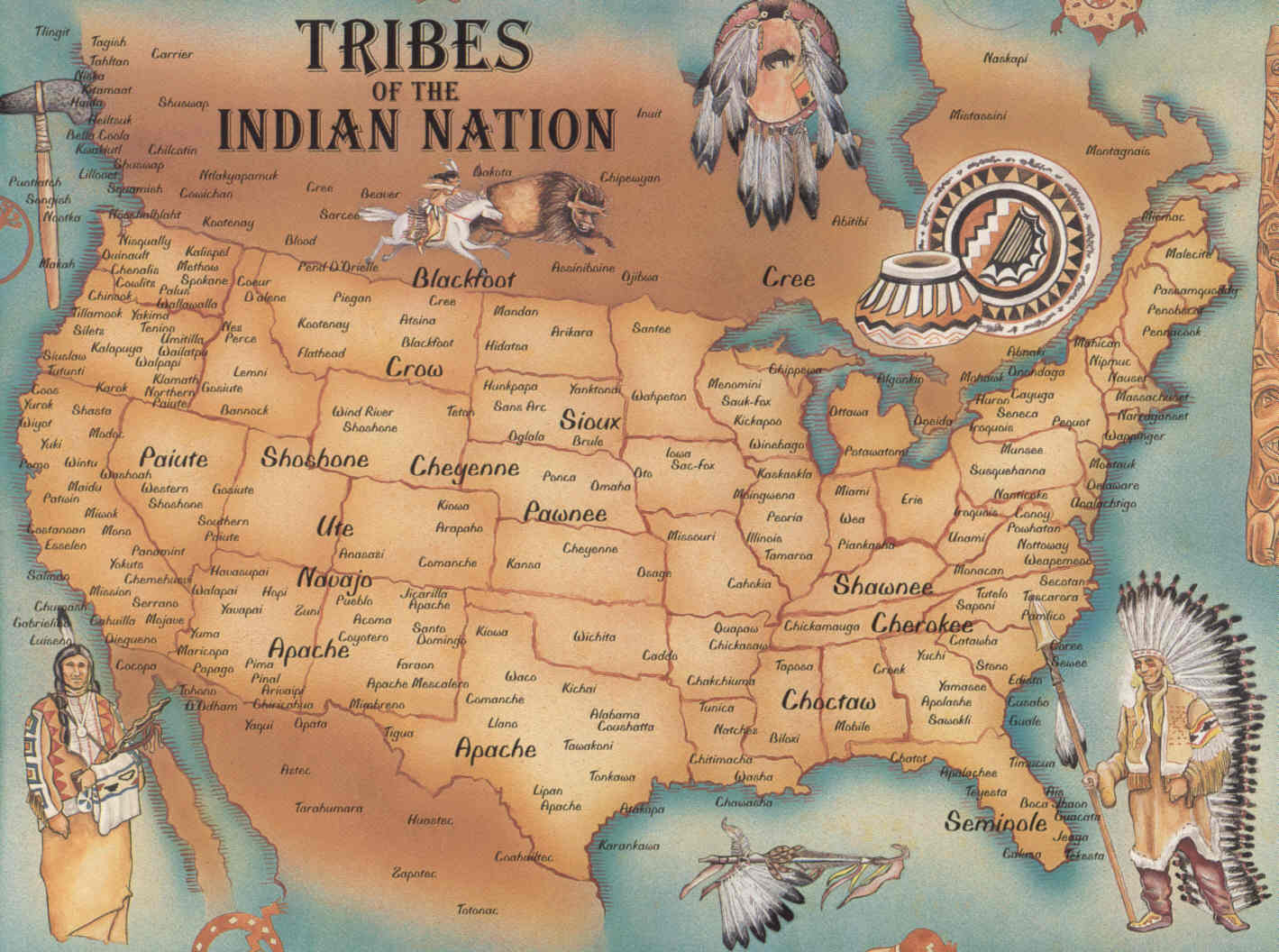
First Nations and American Indian Societies and Gender: a primer for whites

image of map, available to be seen larger, is from here
The above map might more accurately be called: 


Nations of The Indigenous Peoples 
of the North American Region

But I expect things I encounter about First Nations peoples and American Indians that are not from the people directly to be inaccurate most of the time.

I just heard the news that the prominent, famous actor who is from the U.S. but lives in France has been cast in yet another terribly racist role: that of Tonto. The actor's name is Johnny Depp and he has gone from being someone whose work I respected, to being among my least favorite actors. He keeps doing work that is so grotesquely racist that it is stunning to me that such films, as the Pirates of the Caribbean series, are still able to be funded. It's not surprising to me that they are funded; just stunning. That anything so racist is funded by Hollywood comes as no surprise whatsoever. I hope the producers and Johnny Depp are targeted for protest and boycott. The last thing I want to see is any movie about "The Lone Ranger" and his "sidekick" Tonto--perpetuating the racist/genocidal mythology that "it's all good" between the White Man and the Red Man, or, in the case of the image below, the whiter man and the greyer man.

image of "Tonto and The Lone Ranger" is from here

"Tonto" was played by First Nations athlete and actor, Jay Silverheels, Mohawk, born on the Six Nations of the Grand First River Nation, Ontario in 1937. In the early 1960s, assisted in the establishment of the Indian Actors Workshop in Echo Park, California as a place where American Indian actors could develop their acting skills. The workshop is still active. Jay died in 1980 at the age of 67. I think the white guy had a name and a a life too. The horse was named "Silver" in the TV series, "The Lone Ranger". Both characters' histories go back to a late 1930's serial.

But it's not really all that good--I mean between the White Man and the Red Nations. It's mostly quite atrocious, actually, if the whole ugly truth is to be told. It's particularly atrocious for the American Indian and First Nations women who are systematically raped and prostituted by and for the White Het Man. And the sooner Hollywood gets that straight and responsibly, not exploitively, portrays that reality accurately (and not with Kevin Costner as some sort of white hero, either) the better.
Even outside of Hollywood, stereotypes abound in white dominant culture about what it means to be American Indian. Growing up, within white-dominated queer culture, I heard tale of "the Berdache" as a great example of how much more liberal Native Americans were--you know, all those Native Americans who shared one culture that had this place in it for the Berdache.

About that term, from Wikipedia, *here*:
The term berdache is also used to indicate "two-spirit" individuals, but is increasingly considered outdated and inappropriate. According to the American Heritage Dictionary, 4th. ed., berdache is North American French, tracing back, through European French, Italian, Arabic, Persian, Middle Persian, and Old Iranian, to Proto Indo-European welƏ, "to strike, to wound"; making the term "berdache" a linguistic relative of such words as "Valhalla", "Valkyrie" and "vulnerable".

There are, in fact, many indigenous terms for these individuals in the various Native American languages — including Lakota winktje and Navajo nádleehí (Burrus & Keller, 2006: p. 73).

Berdache is a generic term that was used primarily by anthropologists in the past (no longer an accepted concept or term within the field). It is a loan from French bardache implying a male prostitute or catamite. The word's origin is complex: the French derives from the Spanish bardaxa or bardaje / bardaja via Italian bardasso or berdasia via Arabic bardaj: البَرْدَجُ" meaning "captive, captured" from Persian bardaj < Middle Persian vartak < Old Iranian *varta-, cognate to Avestan varəta- "seized, prisoner," formed from an Indo-European root *welə- meaning "to strike, wound." The term berdache is widely considered offensive, due to its roots.

Use of the term has widely been replaced with two-spirit (except in scholarly literature,) which originated in Winnipeg, Canada in 1990 during the third annual intertribal Native American/First Nations gay and lesbian conference. It is a calque of the Ojibwa phrase niizh manidoowag (two spirits). It was chosen to distance Native/First Nations people from non-natives as well as from the words berdache and gay.
The concepts of gender and "traditional" gender and sex roles--if by that we mean "Western white heteropatriarchal" gender and sex roles--are culturally-specific and temporally relative ideas and realities. The atrocious racist/misogynistic/heterosexist reality of the last half-millennium especially but also for far longer than that, is that many, but not all, Indigenous/Aboriginal/Native/First Nations peoples have been invaded and occupied by whites and their customs, religions, and languages. Invasion came with variations: colonisation of people who lived on land before whites came, and mass murder of those people. Colonisation was done by white women and men. Mass murder was usually done by white men.

A perhaps incalculable number of whole cultures and nations were destroyed; in North America alone it is estimated that between 70-90 million people were savagely and barbarically slaughtered by the creators of modern "civilisation" and that this slaughter was part of the meaning and value of "being civilised" and/or "Christian". Many nations and cultures so invaded still survive and have had to negotiate survival in the presence of the occupying force, usually euro-anglo-white. Both women and men of anglo-white-euro-Christian descent and belief have played various sadistic and criminal roles in the destruction of Indigenous peoples, particularly but not only in what Westerners/whites call North America.

Prior to and also since invasion, there have been many varied ways of being gendered, sexed, and/or expressing sexuality. Some of these forms of relating and being were not constant over the course of one's lifetime. Some were modified according to economics--not capitalist economics, but "economics" as in "what a people needed to do to survive". If what we call "men" were needed to cook and sew, then in some instances men cooked and sewed. If what we call "women" were needed to slaughter non-human animals and engage in warfare with enemies, then in some instances they did so. I have written a while ago about one "woman" as the white West defines this term, who did fight with the males of her people. Her name was Lozen, she was Chihenne-Chiricahua Apache, and her story is *here*.

It is a serious problem of subjective language and worldview that when white Westerners tend to "study" other peoples, we tend to impose our own values, assumptions, worldviews, and philosophies onto the people we are studying. This can manifest in many ways that make meeting with other people and sharing ideas and concepts difficult if not impossible, because rarely do whites and Westerners seek to give up our own views of things and "check them at the door" when entering the spaces of other societies. So we tend to collapse or condense what we see that may be more diverse than what we "know" into pre-packaged categories we bring with us. Societies have existed and still do exist that are matrilineal and matriarchal, or one or the other but not both.

Assumptions by some whites and Westerners that "only patriarchy" exists now is wrong, and racist. Assumptions by some whites and Westerners that there are only two genders or sexualities are wrong and racist. Assumptions by some whites and Westerners that gender is only a dominator-hierarchy for all people living on the Earth is wrong and racist. What is not common to human history, much as some white het men fear it, is this: a matriarchal society which subordinates men to women. This is not evidenced in societies known about or written about. What appears to be the case is that some patriarchal societies were and are especially brutal to women. Some of these patriarchally brutal societies were Indigenous. Most current patriarchal societies that are pro-rape and pro-male supremacist are not Indigenous.

I recommend reading what follows, if you are white and non-Indigenous, ethnically or racially. When you are finished, I imagine that you, like me, will find it far more difficult to make assumptions about "Native Americans honoring a third gender" or "not honoring a third gender", or "embracing homosexuality as well as heterosexuality" or "not embracing homosexuality as comparably valuable to heterosexuality". This is because "homosexuality", "heterosexuality", and "gender" are, in and of themselves, anglo-white-euro concepts that don't apply to all peoples, especially to people who do not rise out of those regions where white-anglo-euro people lived or live, or once colonised or colonise to this day.

I'll note that terms like "Sioux" and "Iroquois" are not Indigenous terms chosen by the people who are called those national names. They may have been appropriated, but what we know is that their linguistic heritage is French, not Indigenous North American. That is what what appears below offers alternative names for the people who are sometimes called "Iroquois" and "Sioux". In one case the non-French term was provided by Wikipedia. In the other case I added the non-French terms.

What follows is, by and large, from Wikipedia. Please click on the title to link back to the source web page.

Gender roles in First Nations and Native American tribes

This article concerns the "traditional" gender roles of some of the Native American, Canadian First Nation and Aboriginal peoples, and the Indigenous peoples of North America. The roles vary greatly from region to region and from tribe to tribe, and in some cases even from band to band within a tribe or people. Pre-Columbian era gender role traditions may be a historical heritage, and not in contemporary practice.

Contents


Algonquians

In the traditions of the major Algonquian First Nations, a more or less egalitarian view of gender roles is taken. Chastity and marital fidelity are emphasized as honourable aspects of character, for both men and women. Historically, certain Algonquian bands were noted for the stability of their conjugal unions, as opposed to their serially monogamous Iroquois neighbours, whose marriages were often short-lived. The responsibility of caring for young children was shared between both parents to a greater extent among the Algonquians than among most other native groups.

Among the Ojibwa and Menominee, both in the past and on present-day reserves/reservations, agricultural activity is often based on the collaborative work of married couples. For example, the harvest of manoomin (wild rice) is done by couples in special canoes (traditionally made of birch bark, although in recent years some aluminum ones have begun to appear). One spouse, the "poler", pushes the canoe with a directional pole, while the other, the "knocker", sits or stands in the canoe and thrashes the rice against the rim beam (a process which can garner 200 kg of rice daily). The partners may take turns at knocking and poling, since poling is harder.

The Mississauga were considered "cast-off" by the Anishinaabe tribes because the Mississauga practised polygynous marriage, and violated other aspects of Midewiwin morality.[citation needed]

The Tidewater and Chesapeake tribes (ie: Powhatan and Nottoway people), although they spoke an Algonquian language, culturally shared less commonalities with other Algonquians. They were culturally closer to Southeast Indians, and had a gender-based division of labour more akin to that of the Southeast tribes.


Apache

Although the traditional Apache had different adult gender roles for men and women, the skills of both were taught to both boys and girls. They all learned how to cook, follow tracks, skin leather and sew stitches, ride horses, and use weapons. This was done because the Apache realized that new and unforeseen situations would require that gender roles change over time in order for the tribe to survive and adapt. [1]


Dene – Athabascans

The Dene tribe (Athapaskans) of Athabascan speaking people, are patriarchal and patrilineal. During the 16th through mid-19th centuries, among the Dene in Alberta, married women were the first to go hungry if food was not available,[2] and in the early trading era were often expected to carry burdens of meat or furs on their backs. According to historian Carl Waldman, the Chipewyan (Denesuline) Athabascan women were "at the mercy of their husbands", and their lot was probably worse than the women of any other aboriginal tribe.


Inuit

Gender roles vary widely among the Inuit. Early Inuit were likely very pragmatic and had few preconceptions concerning "appropriate" male and female roles.

Over time, various views of gender were developed, for example:
  • In the Baffinland Inuit settlements of the Frobisher Bay and Pangnirtung areas, "traditional" gender roles and ideologies are strikingly similar to and have been influenced by those of late 19th-century and early 20th-century Britain.[citation needed]
  • The Greenlanders and Caribou Inuit are very egalitarian with regard to gender.
  • There are no known "third gender" roles in Inuit culture, and almost throughout the Inuit cultural region male or female homosexuality was not respected.[citation needed]


Iroquois or Haudenosaunee

Although different roles were traditionally assumed for males and females, they overlapped to a significant degree. The Great Law of Dekanawida gives approximately equal rights to each sex. The chief was always male, but was elected by women.
In the Iroquois culture up until the middle of the 19th century serial monogamy was common among the Iroquoians. Although adultery was frowned upon, divorce and remarriage were not. Due to the Iroquois matrilineal system, children usually stayed with the mother rather than the father, if divorce occurred. Most divorced mothers quickly remarried. [3]


Navajo

The third gender role of Nadle (meaning "one who is transformed" or "one who changes"), beyond contemporary anglo-american definition limits of homosexuality, was part of the Navajo Nation society, a "two-spirit" cultural role. The renowned 19th century Navajo artist Hosteen Klah (1849–1896) is an example. [4][5][6]


Osage

The Osage, although considered patriarchal like all Siouans, did not have rigidly defined gender roles. During the 18th century the care of corn and squash crops was done primarily by women, although men also participated, and men's participation in the growing of these crops increased greatly during the 19th century. When the Osages sent expeditions onto the plains for trading and Bison hunting; the expedition groups were composed largely of men, but women were frequently found in the groups as well, according to contemporary writings of the French who traded with them.


Pacific Northwest Coast peoples

The wide variance in gender roles between Pacific Northwest Coast peoples has been a subject of sociological study for a century and a half, as is their different history of having gone directly from hunting-and-gathering to commerce and exploration.[citation needed]

The Haida are matriarchal or matrilineal, whereas many other Pacific Coast peoples are patriarchal, or patrilineal. The Kwakwaka'wakw are considered bilineal.[citation needed]

It was erroneously thought by many 19th-century anthropologists that the Kwakwaka'wakw were becoming more patrilineal as time went on, but studies of history show that the opposite was in fact taking place.[citation needed] (Some early anthropologists subscribed to the now-disproven hypothesis that all societies move from matriarchy to patriarchy as they advance.)[citation needed]

Of the inland Ktunaxa people, or "Kootenai tribe," the early 19th century person Kaúxuma Núpika lived a third gender role of the culture, beyond contemporary anglo-american definition limits of homosexuality. [7]


Puebloan peoples

Of the Puebloan peoples, the Tanoans and Hopi are matrilineal, with property inherited through the maternal line. Men do most of the agricultural fieldwork, except for corn planting which is a community event in which both men and women participate. The native Tanoan religious system, unlike Hopi mythology, was dominated by men, as was the tribe's political system. [8]

Spanish records and native traditions indicate that when the Pueblo settlements were being built (after those of the Ancient Pueblo Peoples during the 15th to 18th centuries), the work was done by both sexes: framing of the poles was the man's role in pueblo-building, but the mixing of plaster and the concretion of walls were done by women. Hopi pueblos are said to have been built by men and women working together, although whether they followed this cooperation of labor is obscure.

Among the Hopi, unlike in many other tribes, the arts of weaving and leatherwork were not confined to women, but were done by men as well. Many Hopi husbands made moccasins for their wives, sometimes from the skins of jackrabbits they collected in hunting. [9]

A third gender role of Lhamana (Ihamana), beyond contemporary anglo-american definition limits of homosexuality, is accepted by many Pueblo peoples, as part of the "two-spirit" cultural role. The 19th century Zuni person We'wha (1849–1896) is an example. [10][11]


Sioux or Lakota or Dakota or Santee

The Sioux are patriarchal and have historically had highly defined gender roles. In the 19th century, a number of ritualized customs pertaining to gender were recorded among the Sioux, e.g. that the women were to walk five feet behind the men in processions (among the Lakota), and that men customarily harvested wild rice whereas women harvested all other grain (among the Dakota or Santee).[12]

A third gender role of Badés, beyond contemporary anglo-american definition limits of male or female homosexuality, is accepted by many Sioux, as part of the "two-spirit" cultural role. The 19th century Crow people Osh-Tisch and Pine Leaf are examples. [13][14][15][16]


See also


References

  1. ^ 100 Native Americans Who Shaped American History, Juettner, 2007.
  2. ^ Waldman & Braun
  3. ^ A History of the Native Americans, passim.
  4. ^ Franc Johnson Newcomb (1980-06). Hosteen Klah: Navaho Medicine Man and Sand Painter. University of Oklahoma Press. ISBN 0806110082.
  5. ^ Lapahie, Harrison, Jr. Hosteen Klah (Sir Left Handed). Lapahie.com. 2001 (retrieved 19 Oct 2009)
  6. ^ Berlo, Janet C. and Ruth B. Phillips. Native North American Art. Oxford: Oxford University Press, ISBN 978-0-19-284218-3 . pg. 34
  7. ^ Salmonson, Jessica Amanda. (1991) The Encyclopedia of Amazons. Paragon House. Pages 39 and 267. ISBN 1-55778-420-5
  8. ^ A History of the Native Americans, 2001.
  9. ^ American Indians Yesterday and Today, Grant, 1958.
  10. ^ Aldrich, Robert & Wotherspoon, Garry, editors (2001). Who's Who in Gay and Lesbian History, from Antiquity to WWII. Routledge, London. ISBN 978-0-415-15983-8
  11. ^ http://andrejkoymasky.com/liv/fam/biow2/weiwha01.html . accessed 7/4/2010
  12. ^ Jonathan Periam, Home and Farm Manual, 1884, likely citing USDA brief on "Wild Rice".
  13. ^ Will Roscoe (2000). Changing Ones: Third and Fourth Genders in Native North America. Palgrave Macmillan. p. 25, 35. ISBN 0312224796
  14. ^ Sabine Lang (1998). Men as women, women as men: changing gender in Native American cultures. University of Texas Press. p. 117. ISBN 0292747012
  15. ^ Thomas D. Bonner (Ed.): The Life and Adventures of James P. Beckwourth, Harper & Brothers, New York, 1856, p. 201–203, 403
  16. ^ Edwin T. Denig: Five Indian Tribes at the Upper Missouri, University of Oklahoma Press, Norman, 1961, p. 195–200

Sources and further reading

Tuesday, November 30, 2010

Muchas Gracias Ecuador! News About the Pro-Earth Activists Who Have Filed A Lawsuit Against BP (Brutish Petroleum)


image of horrendously devastated water bird and the Gulf of Mexico's sea is from here

I posted a very brief note a few days ago about this historic event. But here's more about it, cross-posted from Whenua Fenua Enua Vanua. With thanks to Ana. Please click on the title to link back.

11/30/10


Historic Moment in the defence of the Rights of Nature

Quito, Ecuador, 26 November 2010

A historic case was filed by an international coalition of defenders of nature’s rights at the Constitutional court of Ecuador against BP and its crimes against nature. Ecuador recognises the rights of nature in its current constitution adopted in 2008. The rights of nature are universal. This provides the fundamental basis for this legal case.

The case was brought with regard to the massive environmental disaster caused when BP’s Deepwater Horizon rig exploded on April 20, 2010. That incident exposed BP’s drive to maximise profit with total disregard of nature and its rights. The company constantly lied with regard to the scale of the
disaster and toped this up by using unusually high amounts of toxic chemical dispersants to cover up the spill. This disaster was not limited to the Gulf Coast but has wider reach through the movement of water as well as atmospheric pollutions.

The defenders of nature are not seeking financial compensation since the harm done to nature cannot be compensated for in monetary terms. Some of the key demands in the case include that BP should release all data and information on the ecological destruction caused by the oil spill. Another
demand is that they should also to refrain from extracting as much oil underground as they spilled in the Gulf of Mexico incident.

Besides this case the activists called for support for the Yasuni ITT proposal of the Ecuadorian government to leave the oil in that sensitive ecosystem underground. They also urged the US government to extend the moratorium on offshore oil drilling.

Speaking after filing the case, the defenders of nature insisted that phasing out crude oil as a major energy source should be an issue of critical importance at the climate conference in Cancun. It is the key way to phase out the current carbon economy, tackle climate change and halt the forces
that are driving the current global crises.

The case was jointly filed by

1. Vandana Shiva, (eco-feminist and winner of the1993 Right Livelihood
Award, considered the Alternative Nobel Prize)

2. Nnimmo Bassey (Friends of the Earth Nigeria and Coordinator of
Oilwatch international and 2010 laureate of the Right Livelihood Award)

3. Delfín Tenesaca (President of ECUARUNARI, indigenous Andean
ecuadorean organisation)

4. Blanca Chancoso (ecuadorean indigenous leader)

5. Líder Góngora (representative of the ancestral peoples of Mangroves)

6. Alberto Acosta (Ex President of the Constitutional Assembly of
Ecuador)

7. Ana Luz Valdéz (representative of social movements from Chiapas,
México)

8. Diana Murcia (Colombian human rights lawyer) and

9. Cecilia Chérrez (President of Acción Ecológica, Ecuador)

Saturday, November 20, 2010

Indigenous Sovereignty, November 21 -28, 2010 ECD, Toronto and other Cities Across Canada

What follows is a cross post from The Speed of Dreams blog. Please click on the title just below to link back. With gratitude to Rowland Túpac Keshena.

The Indian Act

Posted: November 20, 2010 by Rowland Túpac Keshena in Ideas: History, Places: Northern Turtle Island (Canada), Struggles: Imperialism/De-Colonization, Struggles: Indigenous Struggles
 

As this upcoming week is Indigenous Sovereignty Week, organized in various cities across Canada, I present a short lesson on the history and uses of the Indian Act, from Defenders of the Land.

The Indian Act is one of the cornerstones of Canadian colonialism. Some of the main points we need to remember about the Indian Act are:
  • It imposes a foreign system of government on First Nations in which accountability is to colonial masters in Ottawa, not to our people
  • The government controls the disbursement of federal money to band councils and uses this as a means of controlling band councils’ political decisions.
  • Through the Indian Act, the government gives itself the power to determine who is an Indian and who is not.
  • The Indian Act was imposed on First Nations without our consent and it has no basis in treaty
  • Its fundamental purpose is not protection, but assimilation and termination of Indigenous Peoples.
History of the Indian Act
Before Confederation, legislation had been passed in Upper Canada dealing with the protective duties of the crown in relation to Indigenous Peoples. As Canada increasingly sought to open land for settlement and resource extraction, Indigenous peoples were seen as a barrier that had to be overcome. This drove a new approach to Indian policy by the Crown: assimilation and termination. These policy objectives have driven federal Indian policy from that time until the present. The first legislation to reflect this shift in policy was the Act for the Gradual Civilization of the Indian Tribes of the Canadas (1857).  The purpose of this Act was the “gradual removal of all legal distinctions” between Indians and settlers, and it provided criteria for so-called “enfranchisement”. This marked the beginning of intrusive legislative measures which began to interfere in the internal affairs of the Indian nations. At the same time, these pieces of legislation increasingly contradicted the nature and scope of the treaty relationship, and the terms of the treaties themselves.

The first Indian Act was passed in 1876.This Act embodied all of the contradictions of previous legislation, only more so. On the one hand, there were sections which highlighted the protective duties of the Crown, and provided a legislative base for the implementation of the treaties. On the other hand, there were sections which were highly intrusive and which focused on the government priorities of assimilation, “enfranchisement”, and “civilization”. This Indian Act was the model for colonial laws in Australia and for the Apartheid system in South Africa. Under the Indian Act, the government assumed control of and responsibility for Aboriginal lands. The Indian Act unilaterally gave the government the power to deem who was a “status Indian” and who not.

During the early years of the Indian Act, First Nations persisted in electing their customary leadership, who generally proved more stubborn in resisting the changes Ottawa was trying to impose. As a result, the Indian Act was amended and tinkered with to produce a leadership selection process that would favour leaders more pliant to Ottawa’s will. The imposed system of governance also disenfranchised women, who had played important roles in government in many nations. Fierce resistance in some nations was put down by force.

Over the next 80 years, the Act was amended numerous times, focusing more and more on intrusion, control, and assimilation, and less and less on protection and the treaties. Controls and prohibitions were placed on ceremonies, leadership selection, mobility off-reserve, trade & commerce, and the raising of funds for claims. Government was given increased powers to break up Indian reserves and Indian Bands. In 1884, companion legislation was passed - An Act for conferring certain privileges on the more Advanced Bands of the Indians of Canada, with the view of training them for the exercise of municipal powers. Among other things, it provided for Band Councils to levy taxes from Band members. This was the first example of government policy which persists to this day – the attempt to assimilate First Nations by turning them into municipalities “like others” and calling this “self-government”. The real objective is to strip First Nations of their Aboriginal and collective rights.

Among provisions of the Indian Act in these early years:
  • Under the Act, it was an offense for an Indian to retain a lawyer for the purpose of advancing a claim.
  • Under the Act, traditional ceremonies like potlatches and sundance were banned.
  • Under the act, Indians could not vote — unless they gave up status. The aim was assimilation and an end to “the Indian problem”.
  • Indigenous people were also required to get a pass from the Indian agent (a white bureaucrat appointed by Ottawa) if they wanted to leave the reserve. These pass laws inspired similar apartheid laws in South Africa.
  • After Mistahimaskwa’s Sun Dance at Poundmaker’s reserve in 1884, which was attended by 2000, Canada amended the Indian Act to make it illegal for 3 or more Indians to gather in one place.
  • Under the Act, Indians people could be jailed for drinking alcohol.
  • In 1927, Indian political organizing was outlawed.
  • Under the Indian Act, a woman who married a non-Native man would lose her Indian status, without gaining any right to vote.
Recent reforms of the Indian Act
Beginning in 1951, Canada began a series of reforms to the Indian Act. None of these, to this day, has questioned the core of government policy: maintaining the government’s fiduciary, trust, and protective duties to First Nations only until such time as the policy goal of assimilation, termination, and extinguishment has been achieved. The 1969 White Paper of the Trudeau government and the Buffalo Jump Memo of the Mulroney government define the underyling approach of Canada: Under the guise of “giving” Indigenous Peoples the “same” rights as other people, the White Paper proposed to eliminate Indigenous Peoples’ inherent, collective, and treaty rights by eliminating the legal concept of Indian Status and repealing the Indian Act. The White Paper was met with fierce resistance from First Nations, led by people like George Manuel and Harold Cardinal, who presented an alternative Red Paper proposing a new relationship based on Aboriginal and treaty rights.

The Mulroney government’s Buffalo Jump Memo adopted an even more deceitful approach, which has persisted in federal Indian policy to this day.  The memo used the metaphor “Buffalo Jump” after a Plains practice of herding unsuspecting bison over a cliff to their death. The memo proposed a series of apparently innocuous policy changes that Indians would voluntarily accept, so that Indigenous Peoples would be herded towards assimilation and extinction. It proposed a ‘management approach’ for First Nations policy & programs, which had the following intent:
  • Limiting & eventually terminating the federal trust obligations.
  • Reducing federal expenditures for First Nations, underfunding programs, and prohibiting deficit financing.
  • Shifting responsibility and costs for First Nations services to provinces and “advanced bands” through co-management, tri-partite, and community self-government agreements.
  • “Downsizing” of the Department of Indian Affairs and Northern Development (DIAND) through a devolution of program administration to “advanced bands” and transfer of programs to other federal departments.
  • Negotiating municipal community self-government agreements with First Nations which would result in the First Nation government giving up their Constitutional status as a sovereign government and becoming a municipality subject to provincial or territorial laws.
  • Extinguishing aboriginal title and rights in exchange for fee simple title under provincial or territorial law while giving the province or territory underlying title to First Nations lands.
Comprehensive reforms embodying the approach of the White Paper and the Buffalo Jump Memo have periodically been put forward by Canada, notably in the 2001 First Nations Governance Act, and in a 2009 agenda of administrative reforms to Indian Governance by the Harper government to achieve most of these objectives without a political process or consultation which could block it. This agenda and its intent were leaked and blocked by widespread outrage.

To date, the government’s motives for reform to the Indian Act have not been about refounding the relationship between Indigenous Peoples on a basis of respect and responsibility, and recognition of Indigenous and Treaty rights. Amendments to the Indian Act have never seriously considered the wider issues:
  • Relationship between the Indian Act and treaty & aboriginal rights
  • Relationship between s.91(24) authority and the Crown’s trust, fiduciary and treaty obligations
  • Relationship between the Indian Act, s.91(24) authority, and the inherent right of self-government
Instead, reforms have sought to achieve the following ends:
  • Shedding fiduciary and trust responsibilities
  • Fiscal restraint and cutting the costs of Indian expenditures
  • Reducing the burden of C -31 implementation
  • Encouraging integration into the provincial mainstream
  • The imposition of taxation
  • Diluting or neutralizing constitutional and treaty protections and obligations.
Conclusion
The fundamental intent and effect of the Indian Act is to manage, assimilate, and terminate Indigenous Peoples in Canada. The Indian Act has been, and continues to be, an unjustified infringement on the Aboriginal & treaty rights of the First Nations. They have never consented to its application.

Saturday, October 23, 2010

"Europe's New Sex Equality: Rape, Battering, and Trafficking" delivered by Catharine A. MacKinnon, 8 Nov 2010 @ EUI

image is from here

What follows may also be found *here*.

About the EUI

The European University Institute (EUI) was set up in 1972 by the six founding Member States of the European Communities to provide advanced academic training to doctoral researchers and to promote research at the highest level. It opened its doors to the first researchers in 1976.

It carries out research in a European perspective in Economics, Law, History and Civilization, and the Political and Social Sciences.

Seminars and Events

The Ursula Hirschmann Annual Lecture on Gender and Europe

Date/Time
Monday 08 November 2010 17.00 - 19.00
Location
Theatre, Badia Fiesolana
Affiliation
Robert Schuman Centre for Advanced Studies, Department of Law, Department of History and Civilization
Type
Lecture
Description
Catharine A. MacKinnon
"Europe's New Sex Equality: Rape, Battering, and Trafficking" delivered by Catharine A. MacKinnon.

Prof. MacKinnon is a lawyer, teacher, writer, and activist on sex equality issues. She created the concept that sexual abuse violates equality rights, pioneering the legal claim for sexual harassment as sex discrimination. Empirical studies document that she is one of the most widely-cited legal scholars in the English language.

For organisational purposes, please register with sarah.beck@eui.eu

Contact


Organisers


Speaker

  • Prof. Catharine A. MacKinnon (The University of Michigan Law School)

Friday, October 15, 2010

Toby Hemenway: How Permaculture Can Save Humanity and the Earth, but not Civilization. Vandana Shiva: Human Freedom and a Fragile Planet

ALERT: DEMOCRACY NOW! on FRIDAY, 15 OCTOBER 2010 ECD will feature Derrick Jensen and many other important guest speakers. Please tune in locally or find the program on Democracy Now!'s website. Hopefully, I'll be posting the program to this blog some time within the next 24 hours so stay tuned here if you can't hear the program when it airs live.


What are the words you do not yet have? What do you need to say? What are the tyrannies you swallow day by day and attempt to make your own, until you will sicken and die of them, still in silence? Perhaps for some of you here today, I am the face of one of your fears. Because I am a woman, because I am Black, because I am lesbian, because I am myself — a Black woman warrior poet doing my work — come to ask you, are you doing yours? -- Audre Lorde, "The Transformation of Silence Into Language and Action"
I appreciate the information in this lecture, even while I have concerns and criticism of it. But I want to thank Toby for doing his work. I want to thank him for speaking his truths. And I want to remind us that there are many truths that remain unlistened to. Most people's voices are not heard in media. I dare say that the most important people's voices, the most knowledgeable people's voices, the smartest people's voices, and the most necessary voices are not listened to. Instead we have Rupert Murdoch and advertising executives and pimps speaking up a great deal to sell us an idea of civilisation that is utterly calloused, savage, and in profound denial. It is a death culture, promoting pollution, heteropatriarchal atrocities, and and white supremacist destruction. One key privilege required to believe one is good while doing evil is this: the privilege to not see or feel the consequences of own's own actions. I am speaking primarily collectively here, not as much individualistically. It may apply interpersonally too, but this is more about whole groups of people with privilege believing we are all only individuals--except those we oppress as groups, not as individuals.

I'm speaking about what the exorbitant price paid for Western Civilisation, from the vantag epoint of Indigenous people globally, from the perspective of poor people in the Global North and the Global South, from women everywhere. If we are privileged in many ways and are only willing to listen to those with similar levels of privilege, it is guaranteed we will never know what we need to know to be good, loving people co-creating a better world. By better I mean this: sustainable, not oppressively hierarchical, living with rather than on the Earth among the other Living Beings here, not establishing dominion over them, and not engaged in any form of warfare because resources will be maintained locally and regionally, not internationally or across continents.

Indigenous people's voices, especially Indigenous women's voices, from thousands of diverse societies across the globe, are largely silenced in dominant media. Almost completely silenced. This media is designed to promote a very narrow voice within the Western white het male supremacist mono-culture.

Why are so many voices silenced through slaughter or trauma? Why are their words, when spoken, not listened to? I believe it is because the dominant "we" would rather not be reminded of what its civilisation does to that of the other "we"--the people who are struggling to survive. To know in one's body and mind, in one's heart, that suffering is manufactured on a global scale, and that it isn't necessary at all, is to come into a kind of compassion that requires action. To feel that suffering as if it were one's own--and often enough it is one's own--requires that one have support to bear it and the validation from loving people that there is reason to believe it will be different one day.

It is quite terrifying to know that my life requires rape and death across the globe. It is something my people--whites, males, Westerners, class-privileged people--want to shut out. I see it happening every day. It is frightening how easy it is to ignore human suffering that is happening on massive scales to millions of people and to pretend, as a very privileged person, that one's own pain is the only pain that matters.

I see reports of the despicable ways the U.S. military leaders treat soldiers--sending them back into warfare after they report having major post-traumatic stress disorder and suicidal feelings. And what I think about is how invisible the people U.S. soldiers are, because the U.S. media never informs us about their post-traumatic stress, and what it means that President Obama sent more troops into Afghanistan when he became president.

What levels of denial or coercion does he live with to make that decision and think it is morally, or good, or loving? How do you decide to send mostly poor people overseas to commit atrocity and witness horror, to mass murder people you are trained to not see as human-like-you? How does a president do that and sleep at night? What does he tell himself that makes not only not ending war, but escalating it, an acceptable policy?

How do whites mistreat, ignore, stereotype, and discriminate against people of color and think that's a good, loving thing to do? How do men subordinate, rape, batter, pimp, procure, enslave, harass, and discriminate against women and think of themselves as good people at  the end of the day? I am speaking collectively, not only individually. I mean how to whites, men, Westerners, participate without objection to social arrangements that are brutal for some and beneficial for others, and think that is necessary or acceptable?

When I listen to people I structurally oppress speak, what I hear over and over again are two things: frustration at not being seen or heard, and the knowledge that the oppressor cannot and will not liberate the oppressed because they wake up one day and realise the horror of what they've been doing for hundreds of years. I also hear an awareness of how oppressive systems work that oppressors may know, but won't admit to.

The main problem I have with videos, lectures, and writings by white men about matters of sustainable living is that the audiences, usually of relatively privileged people, are not brought into awareness that maintaining our dominator societies require whole groups of people, plants, animals, waterways, and land masses to become diseased and die. Necessarily. And if white men don't give their privileged platform to people who are suffering in ways white men are not, they are keeping the idea, the myth, alive that the information we need to survive must come from Western white men. This is a dangerous idea. Even while some white men have very useful, loving things to say about humanity and the Earth, such as men like Derrick Jensen. I hope you tune in to hear him on Democracy Now!

When privileged people are listening to oppressed people not because oppressed can teach the oppressor, but simply because oppressors need to know what we're doing and to stop doing it, then something radical will have occurred: radical love will flourish on Earth when that happens. When oppressors change their/our behavior not for ourselves, but for other people who are not us.

I leave you with these lectures, by Dr. Vandana Shiva and hope that her voice is at least as meaningful to you as Toby Hemenway's.

Part four of Vandana Shiva's talk for Moravian College as their fifth Peace and Justice Scholar. Dr. Shiva, an internationally known scientist, environmental activist, ecofeminist philosopher, author, and recipient of the Right Livelihood Award (also known as the Alternative Nobel Prize), is speaking on the topic of "Human Freedom and a Fragile Planet."