Showing posts with label Andrea Smith. Show all posts

Saturday, April 21, 2012

Male Supremacy, White Supremacy, and Heterosexism: what's missing from this list of oppressive forces?

image of book cover is from here
As I consider the movements organised to oppose and eradicate each of the above forms of grotesquely inhumane power, I am reminded that something is missing. Even if we work to end white and male supremacy and heterosexism, we are left with a world of industrialised and post-industrialised citizens who won't necessarily hear, comprehend, or respond to the activism of Indigenous People. Indigenism, when centered on women's experiences, offers a worldview that necessarily takes on white and male supremacy, and globalised Western economic and cultural imperialism.

It is the anti-oppression work that cannot divorce human rights from land rights, or destruction of people with destruction of the Earth. Indigenous People live on smaller and smaller portions of land, increasingly possessed and pillaged by white male and corporate power-brokers. A few years ago the call to Indigenist consciousness rang loudly in my head and I see how easy it is to let that echo fade. My world, my daily life, isn't obviously tied in obvious ways to the struggles of Indigenous people either regionally or globally. At least not as I experience my world of relative economic security, white-centered and white-dominated living, and heteromale supremacist values and expectations. My world is a world in which whites fight for land, and once possessed it is never relinquished. It is a world that uses science and spirituality differently, towards different aims. It is a world in which conceptions of gender and ethnicity are often considered matters of individual choice, not structural, social imposition.

I am beginning to question how and to what degree discussions of gender identity, when divorced from the politics of race, class, and region, locates the arguers' positions as anti-Indigenist. Among very socially and environmentally advantaged people, the practice of isolating forms of oppression is typical: one may fight for queer rights, for women's rights, or for the rights of the working poor. But often enough each of those struggles entails demanding or achieving access into a dominant society that is hell-bent on destroying every Indigenous person on Earth who isn't willing to divorce themselves from their own ethnic and ancestral traditions.

We know that the "kinder, gentler" version of genocide is, rather than committing mass-slaughter outright, to demand that Indigenous people give up language and land, among other things. And to assimilate into usually white supremacist society. White male-ruled nation-states are, without exception, anti-Indigenous: genocidal and ecocidal.

The white men who pride themselves on taking a "radical" stance on The Environment are notoriously misogynistic, racist, classist, and Western-focused, seeing land as something for white men to control, even if the effort is to "liberate" the land; white male environmentalists are known for taking on Indigenous People, framing the latter as the exploiters or heartless ones, and white men as the moral saviors of the Earth. For decades, I have seen how whites and men are famous for not being accountable to Indigenous women activists.

As a "First-worlder", I know that my concerns will tend to be myopic and self-centered. This is often enough true for me as a white person and as a male also. After all, the conditions most people live in are not the conditions I live in. I have to venture out of my tiny, powerful scene and myopic worldview to get to know people living with traditions and threats viscerally, experientially unknown to me.

I have posted about this before, but here again is an important piece of writing about the need to center Indigenous women's lives and work in social justice movements:

http://unsettlingamerica.wordpress.com/2011/09/08/indigenous-feminism-without-apology/

If you want to see a good example of how a "First World" activist refuses the perspective and worldview of a "Third World" activist, watch (and read) this:

Part 1:
http://youtu.be/3BcVxgW-vO8

Part 2:
http://youtu.be/pPue0Gq4JmE

Transcript

AMY GOODMAN: Our guests are Gwynne Dyer — he’s author of Climate Wars: The Fight for Survival as the World Overheats — and Vandana Shiva joins us, an Indian environmentalist, scientist, philosopher, global justice activist and eco-feminist, a longtime critic of genetically modified crops and the system of corporate-driven agriculture and neoliberal globalization that’s privatized natural resources and impoverished farming and indigenous communities across the Global South.
Well, we’re talking about geoengineering. You just came from giving a speech last night at St. John the Divine. What are your thoughts on geoengineering, Vandana Shiva?
VANDANA SHIVA: Well, three thoughts. The first is, it is the idea of being able to engineer our lives on this very fragile and complex and interrelated and interconnected planet that’s created the mess we are in. It’s an engineering paradigm that created the fossil fuel age, that gave us climate change. And Einstein warned us and said you can’t solve problems with the same mindset that created them. Geoengineering is trying to solve the problems with the same old mindset of controlling nature. And the phrase that was used, of cheating — let’s cheat — you can’t cheat nature. That’s something people should recognize by now. There is no cheating possible. Eventually, the laws of Gaia determine the final outcome.
But I think the second thing about geoengineering is, we’ve just had the volcano in Iceland, in — yes, it was Iceland. And look at the collapse of the economy. And here are scientists thinking that’s a solution? Because they’re thinking in a one-dimensional way. It’s linear, issue of global warming, anything to do global cooling. I work on ecological agriculture. We need that sunlight for photosynthesis. The geoengineers don’t realize, sunshine is not a curse on the planet. The sun is not the problem. The problem is the mess of pollution we are creating. So, again, we can’t cheat.
And the final issue is that these shortcuts that are attempted from places of power — and I would add, places of ignorance — of the ecological web of life, are then creating the war solution, because geoengineering becomes war on a planetary scale, with ignorance and blind spots, instead of taking the real path, which is helping communities adapt and become resilient. That’s the work we do in India. We save the seeds that will be able to deal with sea level rise or cyclones, so that we have salt-tolerant varieties. We distributed them after the tsunami. Last year we had a monsoon failure. But instead of sending armies out, we distributed seeds. And the farmers who had seeds of millets had a crop. The farmers who were waiting for the green revolution chemical cultivation had a crop failure. So building resilience and building adaptation is the human response. It’s the ecological response. And we don’t have to panic. The panic and fear is coming out of ignorance.
JUAN GONZALEZ: I’d like to ask you about the — something you’ve talked about quite often: the global land grab that is going on around the world by countries fearing the scarcity in terms of their food products, going out and grabbing other countries’ lands. Could you talk about that?
VANDANA SHIVA: Well, you know, my last book, Soil Not Oil, I talk about the fact that, you know, the oil culture has given us climate change. And if we continue on that same paradigm, the only next step is eco-imperialism: grab what remains of the resources of the poor and take it to create insularity and a false defense of security, because the planet is interconnected, our lives are interconnected. The rich cannot isolate themselves in islands of defense against a planetary instability. The other option is earth democracy, as I talk about it. Now, those who have power, those who have money, and those who are driven by greed and injustice, are now seeking to grab the lands of the poor. It’s happening on a very large scale in Africa. It’s happening in India. The World Bank is promoting it, because there’s this very false idea that large-scale farms will help us with food security, when all the detail is showing smaller farms produce more food, so if you have to be food secure, you’d better be small. Diversified farms can deal with climate change much better, because if one crop doesn’t do well, some other crop will do fine. And the monoculture of large farms will be more vulnerable to climate collapse. And, of course, the biggest issue is half the world farms, you can’t rob them of their livelihoods.
Forget the running out of water and climate wars related to water wars. You’re going to have — you already are having in India, as a result of the land grab, in this case more for mining and industry, what we are seeing is a war within. And Operation Green Hunt has been launched by the government in order to clean out the lands to be able to grab the lands on behalf of corporations. We talked about the Kashmir crisis and the shootouts. But those scenes are taking place in every remote tribal area today. And that issue of war for resources, that as long as you’re powerful, you have the right to grab anyone’s resources, and you have a right to use all kinds of illegitimate violence, that militarized mindset that I say comes from capitalist patriarchy, is really at the root of so many of our problems, which is why we need to feel at home with nature, and we need to recognize that the resources of the earth belong to all, have to be shared. And the land rights of the poor defenseless indigenous person and the peasant is the biggest peace initiative of today, and it’s the biggest climate insurance of today.
AMY GOODMAN: Gwynne Dyer, define and defend geoengineering, and tell us which governments are engaging in it.
GWYNNE DYER: Well, first of all, Vandana and I agree about 95 percent.
VANDANA SHIVA: We agree about the problem, that there is a problem.
GWYNNE DYER: Yeah, yeah. We agree about the problem, and I don’t disagree with any of her solutions. But I don’t think they’re going to happen in time, if we do not intervene directly, as well, to avoid a massive human dieback in population. We are heading for the brink very fast.
VANDANA SHIVA: But your solutions commit the planet to a massive dieback.
GWYNNE DYER: I don’t — I don’t agree with you. Holding the temperature down is an intervention. It’s an intervention that’s intended to be temporary. It wins you time to get your emissions down. The goal is still to get the emissions down. And many other goals that you and I would agree upon are attainable, but only with time. And we don’t have the time. We are going to be — the last report out of the Hadley Center suggested, on current track, we are four degrees Celsius hotter, average global temperature, by 2060. It’s only fifty years.
VANDANA SHIVA: But Gwynne, every one of your solutions is further disrupting the web of life, which is the problem. The problem is not warming and cooling. We can survive. The planet can survive that.
GWYNNE DYER: Oh, of course, it can. But not all of us.
VANDANA SHIVA: Yeah, but the problem —- not all of us, but the problem is the -— geoengineering is an experiment. It is not a solution.
GWYNNE DYER: No.
VANDANA SHIVA: And you cannot experiment in such a violent way without full assessment of the impact. And as I said, just the simple thing of blocking the sun rays is a problem for the planet. It’s a problem for humanity.
GWYNNE DYER: You’re talking one percent. I mean, you’re talking about one percent of solar radiation.
VANDANA SHIVA: No, but the iron filings? Iron filings being thrown into the ocean?
GWYNNE DYER: I don’t like iron —- that’s ridiculous.
VANDANA SHIVA: Or reflectors in the sky, or artificial volcanoes. But that’s geoengineering. Every one of them, if the solution is looked at, all its spinoffs, in a full ecological way, and a full social impact of what does it mean. And the most important thing is, it’s undemocratic. I think the crisis of the climate is so serious that people need to be involved. The problem of geoengineering or genetic engineering is a bunch of experts sitting with a bunch of corporations saying, "We’ll decide on behalf of the people."
GWYNNE DYER: Vandana.
VANDANA SHIVA: That’s part of the problem.
GWYNNE DYER: Yeah.
VANDANA SHIVA: And that’s why I really respect Evo Morales.
GWYNNE DYER: Well, I’m -—
VANDANA SHIVA: He called the people of the world after the collapse of Copenhagen, and so the people of the world will decide the solution.
GWYNNE DYER: OK, the people of the world will not decide. You know that, and I know that. This is not —-
VANDANA SHIVA: But they are deciding.
GWYNNE DYER: I haven’t noticed yet.
VANDANA SHIVA: Well, there’s a Universal Declaration on the Rights of Mother Earth that came out of that amazing gathering, that we need to shift to an earth-centered paradigm -—
GWYNNE DYER: I’d love to believe this.
VANDANA SHIVA: — rather than an arrogant, narrow, reductionist, mechanistic, science expert-based paradigm.
GWYNNE DYER: Do you know what will happen? Do you know what will happen —-
AMY GOODMAN: I just want to interrupt for a second -—
GWYNNE DYER: Yeah.
AMY GOODMAN: — to say, Gwynne Dyer, if you can explain —- I don’t even think most people understand what geoengineering is.
GWYNNE DYER: OK. Geoengineering is short-term interventions to avoid a climate runaway disaster, in order to give us more time to get our emissions down, which, in themselves, will cause a runawa, climate disaster if we simply allow them to go ahead. Without geoengineering, you hit that disaster in less than fifty years. And you probably need more than fifty years to get your emissions down. Now, first of all, obiously, you’ve got to do the experiments. You’ve got to figure out are there horrendous side effects you don’t want to do. But if you don’t do this, you know who dies first? It’s the people in the tropics and the subtropics. Not up here. We watch you die on television.
JUAN GONZALEZ: Can I ask you, in terms of geoengineering, what companies or what governments are now promoting this as a potential solution?
GWYNNE DYER: We still don’t have any official government commitment to it anywhere.
JUAN GONZALEZ: What companies are investing in it and developing it?
GWYNNE DYER: Companies are investing in a couple of marginal things that, frankly, I don’t believe have any credibility. Vandana mentioned iron filings chucked into the sea. Well, I don’t think that’s actually -—
AMY GOODMAN: What does that do?
GWYNNE DYER: Well, the idea was you cause blooms of algae, which will then die, and as their bodies drop to the seabed, embed carbon in the seabed, and take it out of the atmosphere.
AMY GOODMAN: And volcanoes, what are they?
GWYNNE DYER: Well, the volcano, the idea is that big volcanoes, when they explode, put sulfur dioxide, large amounts of it, into the stratosphere, where it stays for a couple of years, because it doesn’t rain up there. The particles stay, and they reflect enough sunlight to lower the temperature of the earth.
AMY GOODMAN: And seeding the clouds?
GWYNNE DYER: Seeding the clouds is make them more reflective, spray up some sea water into low-lying clouds, and they’ll reflect a little bit more incoming sunlight than they did before —-
AMY GOODMAN: And what else?
GWYNNE DYER: —- and lower the temprature. The other proposals — I mentioned, you know, paint the hollow roofs green —- or white, but I think that’s probably a one-time solution.
VANDANA SHIVA: And I wouldn’t object to that.
GWYNNE DYER: No, I wouldn’t object -—
VANDANA SHIVA: What color you paint, it doesn’t really matter.
GWYNNE DYER: Yeah, yeah. There’s a new one that’s come up recently. A fellow at Harvard suggested that you could actually begin with rivers and resevoirs, but put rather microscopic scale bubbbles into the water, which would whiten it. In other words, you know, it would reflect more sunlight than normal dark water does, without actually changing the quality of the water.
AMY GOODMAN: And as Juan asked, the corporations involved?
GWYNNE DYER: In none of these cases so far are there corporations involved. This is coming out of the scientific community. They’re looking for —-
AMY GOODMAN: Is it also coming out of the Pentagon?
GWYNNE DYER: —- links with both the Pentagon, I think, and the scientific community, and with corporate funding. But the initiatives are coming out of the scientific community. The scientific community is scared and desperate. I mean, there’s an undercurrent of panic in most of the interviews that I held with the scientists.
AMY GOODMAN: Well, Vandana, Gwynne’s argument that there’s just not enough time to talk about the people-oriented solutions you’re talking about?
VANDANA SHIVA: Well, the first thing is, there’s never enough time, but you have to find the solutions. And to use the excuse of immediacy and urgency to take the wrong action is not a solution. In terms of time, we do orgaic farming, and again, in my book Soil Not Oil, we’ve shown that a localized ecological biodiverse system of farming could solve 40 percent of the climate problem, because 40 percent emissions are coming from food miles, nitrogen oxide emissions, cutting down the Amazon forest, all linked to a globalized industrialized food system. Tomorrow we can do that. In three years’ time, all of the world’s farming could be ecological, absorbing the carbon dioxide and putting fertility back in the soil. It’s not a fifty-year experiment. It’s an assured, guaranteed path that has been shown to work.
And it does three things for you. It reduces emissions, while increasing food security and food productivity and increasing water security, because soils rich in carbon and organic matter are the best reservoir of water. But I want to just mention — actually, there’s — just as there are a group of scientists who are panicking because of their reductionist approach —- I’m a scientist. The reason I do ecology today is because I realize science was just shrinking in terms of the knowledge an individual gets in a particular stream. And so many of the narrow expertise is where you’re getting this panic, because they don’t know there are other solutions. I’d love to take some of your geoengineering friends from the scientific community to our farm, to show here’s a solution that works in the short run, in the immediate run. But there is an organized movement now -—
GWYNNE DYER: I don’t think —- I don’t think that they -—
VANDANA SHIVA: I want to mention this.
GWYNNE DYER: Yes.
VANDANA SHIVA: There is a movement against geoengineering called HOME — Hands Off Mother Earth —- citizens telling irresponsible scientists, arrogant in their path, hands off mother earth.
GWYNNE DYER: Look, your solutions are good. They will work. And if you were the dictator of the world and could impose -—
VANDANA SHIVA: Which I would never be.
GWYNNE DYER: No, but let me finish. Let me finish. If you were the dictator of the world —-
AMY GOODMAN: You have ten seconds.
GWYNNE DYER: —- and could change land ownership patterns in the United States, like that, you could have it all done in three years.
VANDANA SHIVA: It’ll happen.
GWYNNE DYER: You can’t do that.
VANDANA SHIVA: No, it will happen.
GWYNNE DYER: Not in three years. Not in thirty.
VANDANA SHIVA: The young people will. They are ready to make change.
AMY GOODMAN: We will leave it there. Vandana Shiva, her books — well, among them, Soil Not Oil. And Gwynne Dyer, Climate Wars: The Fight for Survival as the World Overheats


Tuesday, October 25, 2011

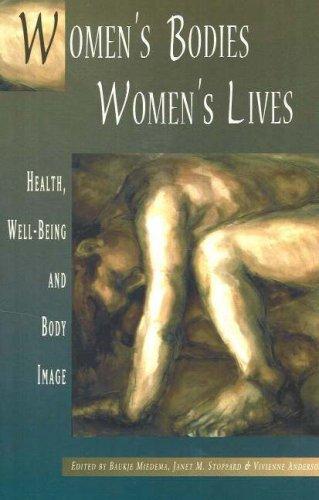
Why isn't the Misogyny and Anti-Radical/Anti-Feminism in and beyond Queer communities being seen as just as important to challenge and uproot as Anti-Trans practice?

image of book cover is from here
As I see it and experience it, gender is force more than it is choice; it is dominance more than it is difference. As I see it, contemporary white, academically privileged Queer Theorists are increasingly rejecting that reality for one that is far more abstract and also far more supportive and protective of white het male supremacy.

I'm hearing from Lesbian and Queer women who are not transgender that misogyny is running rampant in Queer and Queer-friendly spaces, often in the form of anti-Lesbianism, as well as anti-Radical Feminism. In communities that often proclaim feminist values and politics, privileging the experience, views, theories, and politics of a few privileged trans activists and theorists has become the norm in spaces and places that are already anti-Lesbian, anti-Radical, anti-Feminist. Turns out the feminism that is being embraced is liberal at best and anti-feminist at worst. And radical feminism is being distorted, misrepresented, and/or homogenised into something it has never been.

Of particular concern to me, as someone who has attempted to find a home in Queer spaces as a radical activist and a pro-feminist, is the level of unqualified and unmodified misogynistic anti-Lesbian politics, views, attitudes, behaviors, and political practice, including the practice of theory-making, that attempts to shame or marginalise women who are not trans, who wish to acknowledge that they are women with no prefix.

I also have great concerns over the ways in which women who organise around various health and medical/social/cultural/environmental issues, like breast cancer, ovarian cancer, uterine cancer, cervical cancer, cardiovascular disease, and other conditions, illnesses, and challenges that face girls and women in various ways (and in varying proportions depending on age, ethnicity, ability to get health care, and so on) are being shamed, ridiculed, or otherwise scorned with terms like "essentialist" by academically privileged (if not also race-, region-, and class-privileged) individuals who want us to believe "woman" is an identity more than it is the group of people targeted for violence, subordination, and many forms of discrimination, marginalisation, and ostractism due to not being men.

I have learned recently of a woman who has been treated medically/surgically for a form of cancer originating in one of her reproductive organs. There appears to me to be newly acquired post-traumatic stress associated with medical offices, doctor visits, and phone calls. Her body has been compromised by cancer but also by the misogyny and anti-woman's body practices which pretend either that women are only their bodies or, more recently, that female bodies aren't necessarily part of being a woman at all. I am a male person who has seen how the medical-surgical industrial complex hates on girls and women, and expresses this hate against girls' and women's bodies directly, and against female and intersex bodies when those bodies are socially treated as not boys and not men's. Some of the ways this has been done historically is by forcibly removing from women their reproductive organs or ability to conceive, by poisoning girls' and women's bodies, by interpersonally and intimately violating and doing violence to girls' and women's bodies, by equating sexual well-being with being heterosexual, and by medically neglecting women, particularly and especially girls and women without class, region, and race privileges.

I reject (as harmful to girls and women) a political theory of gender which would posit as inconsequential the bodies we have from birth in understanding the gender we are forcibly made to have.

We are told by PoMo academics to understand women's bodies as being "text" or "textual" primarily--bodies upon which men write misogynist myths and lies. I don't hear from women in my life that their primary complaint or experience with men is that they are being "read" and "rewritten" upon. The chief complaint is one of being subordinated--not necessarily using that term. "Put down", "insulted", "degraded", "raped", beaten, and violated in innumerable ways are major complaints I hear about and support being brought to the powers that be, to end. "Being read incorrectly" is one way to discuss the issue of violence against women without naming the violence done to women by men. I find that an anti-woman/pro-male supremacist practice.

As someone who has identified as intergender, who has understood myself as being under the umbrella with people who are transgender, I stand with radical lesbian feminists who refuse to not name misogyny and anti-Lesbian practices where and when they occur, including in Queer spaces.

For more discussion of some of these issues, please read the following:

Andrea Smith, Conquest: Sexual Violence and American Indian Genocide

Silvia Federici, Caliban and the Witch:Women, the Body, and Primitive Accumulation

Sunday, June 5, 2011

Rape Atrocity Denial: Men's not-so-secret Weapons in Protecting Male Supremacy

image is from here
• Feminism is hated because women are hated. Anti-feminism is a direct expression of misogyny; it is the political defense of women hating. -- Andrea Dworkin
• Being a Jew, one learns to believe in the reality of cruelty and one learns to recognize indifference to human suffering as a fact. -- Andrea Dworkin
• Woman is not born: she is made. In the making, her humanity is destroyed. She becomes symbol of this, symbol of that: mother of the earth, slut of the universe; but she never becomes herself because it is forbidden for her to do so. -- Andrea Dworkin [source for all three quotes is *here*]
I'll add this:

Andrea Dworkin is hated because women are hated.  And because she spoke women's truths to men's violently protected power.

As a Jew with family roots that go to Europe, I comprehend with stunned silence the level of atrocity-denial it must take for people to pretend HaShoah never occurred. One might shake one's head at the racist, anti-Semitic fools who do so but as they are the group in charge shaking one's head isn't nearly enough.

I suppose in an era of Photoshopping and other digital methods of altering images, we might expect that some people aiming to keep white Christian supremacy alive would accuse those who lived through nightmares to deny Nazi genocidal atrocity ever happened. How convenient for one's effort to maintain destructive, sadistic power that one denies is power, eh?

One might be tempted to cut the HaShoah-deniers some slack, given that the horror happened seventy years ago. Except for one thing: it is happening now against Indigenous people globally, and in particular in North America, in a time and place that is regarded as being oh-so-civil. Which, of course Hitler believed Nazi-ruled Germany was also. Now Germany currently has a relatively strong economy--albeit with debt incurred in propping up the pitiful economies of other European nations. And it has managed this, this time, without wiping out hated ethnic groups, and is banning nuclear power plants. Humane action can replace inhumane action.

In North America, the story is entirely different. Indigenous women are the poorest of the poor, the most raped of the raped, and the most invisibilised of the invisible. It's not just that whites don't wish to discuss this egregious elephant in the room, but most truly do not know genocide is happening right now, in part, I suppose, because the term genocide has been equated with tremendous levels of mass murder occurring in a very short period of time. But when the mass murder and attempts at complete cultural obliteration happens slowly while deliberately--with the apparent unawareness of the white masses--in what sense is this not also genocide?

Whites will and do come up with excuses for why we don't know about this, and why we aren't engaged in revolt against the forces which maintain this inhumanity. It's because media--white-owned--doesn't report on it. It's because systematic activism and resistance movements against the status quo--which Indigenous people all over the world are waging and have been waging for several hundred years--is not registered as important and desperate. Fighting for one's life--one's individual life and one's cultural life--is only seen as notable to Christian white het male supremacist media when it is white het men doing it, with the mythological threats being women, gays, and people of color: Muslim Arab and Asian, Ashkenazi Jewish, Black Christian, Brown Christian, and Indigenous. If you're positioned below this dominant group in various ways--such as being a woman who is Jewish and Black, you'll be rendered completely invisible in status quo society's vision of itself  which it uses media to construct in the public imagination. If you're lesbian and of color, you'll not find yourself on television. If you're trans and not M2F or F2M, you'll not find yourself on television. If you're gay, poor, and Brown, you'll not find yourself on television. The Christian whites don't want to know about us. They'd just assume we all go away.

But as lesbian Indigenous poet Chrystos has written, oppressed people--her people in particular, are Not Vanishing.

image is from here

Men deny rape is as serious a human rights problem as the imbalance of wealth distribution. Men deny rape in so many ways and for so many reasons you'd think the rest of us would determine this to be proof there must be a whole lot of men-raping-women going on. You really only need ask all the women you know how many women they know are rape-survivors and domestic terrorism survivors to know that rape is endemic and isn't going away. It could go away, but that would require men to not be in denial about it, to defend it, to protect their entitlements to practice it without negative consequence--to the male rapists.

Thirty-five years ago, Andrea Dworkin produced a brilliant radical feminist book called Our Blood. How many men have read both Not Vanishing and Our Blood, that you know? One? None? If Christian white het men were being assaulted by people who were not Christian, not white, not het, and not men, and they wrote about it, and about how they are figuring out how to survive it, I believe those books would be required reading across the educational system. Everyone would be made to read them. They'd stay in print. They'd be passed around among white het men, with a look in the eyes that says, "this speaks to our pain and our endurance".

In Our Blood, there is a very important speech, delivered March 1, 1975, called "The Rape Atrocity and The Boy Next Door". From that speech and essay we have this quote, which every man on Earth ought to have memorised in his own language.
Men who want to support women in our struggle for freedom and justice should understand that it is not terrifically important to us that they learn to cry; it is important to us that they stop the crimes of violence against us. -- Andrea Dworkin
Indeed. Almost without exception, men will self-centeredly respond: "What about the men and boys who are raped?" To this inhumane response I reply: What about the millions of girls, daily?

What shall we conclude about the moral character of white het men who will not acknowledge the pain and endurance of other people, non-male people--people these white men structurally oppress? What is the level of humanity of these rape apologists and perpetrator-protectors? How ought they be regarded or reviled, statused or stigmatised, by society? This is how they are regarded and statused: as heroes, as geniuses, as brilliant creators. This is how they, as a group, are reviled and stigmatised: not at all, in any way.

If you combine the forces and practices of genocide with gynocide, you get a truly horrifying statistic, which is numbers placed over the violence men do to women. One women in three will be raped by a man--mostly by a white het man--if she's an Indigenous woman in North America. See *this study by Amnesty International* for much more on that. And for more understanding of gynocide and genocide, please see chapter one of Andrea Smith's brilliant book, Conquest: Sexual Violence and American Indian Genocide: "Sexual Violence As a Tool of Genocide".

image is from here
For Indigenous women's stories of survival of many forms of men's violence, please read Sharing Our Stories of Survival: Native Women Surviving Violence.

If you don't get what's incredibly fucked up about this gross protectionism of white het men and their abuses of other people, you're either in great denial yourself, or you're one of lying perpetrators of it.

theoreticalgrrrl, in a recent comment to this blog, noted how many women she knows well are survivors of the rape atrocity. I hope you read it, *here* in a recent post called Hearsay and Heresy.

I welcome all readers of this blog to post their own knowledge of the globalised rape atrocity, committed by men against women, with no relief for women, and no responsibility by men, in sight.

Here's part of what I know:

My mother was raped in a place that was supposed to keep her safe. She was also incested by her father, years prior to that.

My aunt and her daughters were incested by an uncle.

One of those daughters was, many decades later, anally raped by her husband when he was drunk.

A female relative's sister threw herself in front of a train to escape being domestically terrorised--which includes rape--by her husband.

A dear female friend was raped while a prostitute when she was a teenager. She was later street raped by a strange man. And another strange man tried to rape her. She escaped.

Another dear female friend was molested three times one summer by three different men.

Another dear female friend was incested by her father and years later was street raped.

Another friend has been raped in her marriage by her husband, too many times to count. He has been a domestic terrorist.

Another dear friend was raped, as an underage teenager, at knife-point by a young man she didn't know.

Another dear friend was drugged into semi-consciousness in a hotel room by an "accomplished" man who is a serial rapist: his name is Joseph Brooks. He raped many women over thirty years, usually using drugs to physically disable the women. I am relieved to report he is dead.

I could go on and on. Statistically, I'd say, easily, seven of ten women I know is a rape survivor; ninety-nine of one hundred women I know is a survivor of some form of sexual assault or attempted sexual assault with one male or several males being the perpretrator. And none of them reported the rapes to the police, to a lawyer, to the FBI, or to a mental or physical health care provider. Not one.

Please share your stories here, in ways that keep the survivors completely anonymous and safe.

To men: please organise to end men's sexual assault of girls, and rape of women. The reason why men must do this is because it is only men's responsibility to do so.


Friday, January 14, 2011

White Men Can't Rape: A cultural, racial, gender destruction and class-action approach to understanding what rape is and does

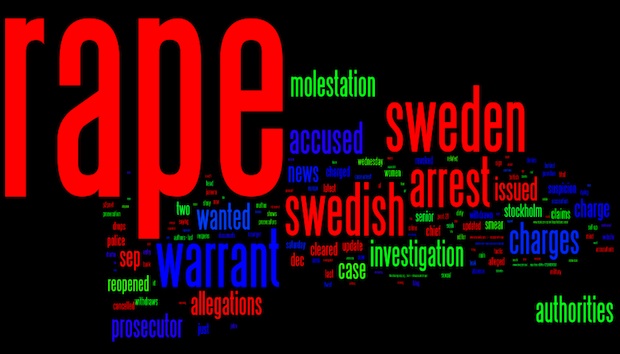
image is from here

What follows is from a blog devoted to global politics and philosophy, in part. Please click on the title below to link back. The post that follows was written by one of the contributors to that group blog, and his name is listed as Pablo K. Below his post, I'll offer some commentary.


Intimate Dissidence: Assange, Foucault and (Feminist) Rape Discourse


At Critical Legal Thinking, Narnia Bohler-Muller takes issue with the narrow legalism of the often ‘surreal’ commentaries on the Assange controversy. In amongst the denunciation and counter-denunciation she detects an undercurrent of disciplinary power. On this account, the apparently ‘very broad’ rape laws of Sweden, like efforts in South Africa to force HIV tests on rape suspects, enforce dichotomies under the guise of legal formality, and so cast the accused as impurities of the social body:
The argument is that the law is not an appropriate instrument to deal with matters of sexual intimacy as general principles can never do justice to the particularity of the situation and the nuances of sexual game-playing. Such is the forceful and violent nature of The Law. To depend on legal regulation to resolve all the complexities and quirks of human relations is a dangerous precedent and enforces the dualisms of guilt/innocence and normal/perverted. It is such dualisms that serve to re-produce Foucauldian ‘docile bodies’ that do not threaten or resist the status quo…

…The problem is that in such a way harmless conduct may be punished merely because we do not approve of it. If Assange is HIV negative, which one assumes he is, and neither of the complaints fall pregnant, then his failure to wear a condom caused no harm. Or are we now choosing to punish
potential harm or the risk of harm? Or, perhaps, punishing the failure to be a considerate lover, or the narcissism and promiscuity of a man who fucks helpless women and then leaves?
This ends up turning sexual assault into a form of dissent, a refusal “to express comfort with any kind of subservience to Authority“. As before, Assange is not really the issue, merely a bystander and stand-in. But, amidst her caution against law as a substitute for political critique and her rejection of marginalising discourse (points well-taken), Bohler-Muller’s use of him to mobilise broader arguments about a Foucauldian analytics of rape raises some stark problems.
First, feminists like Jaclyn Friedman are not involved in a legalistic fallacy. Their emphasis has been overwhelmingly on the implications of the language used to defend Assange and therape myths and apologetics that have been propagated as part of that. Bohler-Muller’s characterisation of the charges is telling in this light, since feminists are simply not arguing that “the failure to be a considerate lover” should be a criminal offence, still less that we should empower police officers to enforce ‘consent-plus’ (apparently the idea that “if sex takes place outside of a loving and intimate relationship, there is a strong indication that consent is lacking”). To speak of these particular charges as if they were merely a question of impolite sex and not rape-rape’ is already to prejudge the issue and to misunderstand it as specifically about Assange, rather than about general rape culture and its prevalence.

Feminists have pointed out that holding someone down or penetrating them while they are asleep qualifies rather easily as non-consensual sex. They have suggested that having attending gender studies courses does not make an accuser untrustworthy. They have roundly and frequently agreed that the charges against Assange are suspicious and likely politically-motivated. And then they have said that this suspicion should not lead to the regurgitation of tropes about the perfidity of womankind or the agendas of man-hating lesbots.

Those are relevant points that have everything to do with the politics of rape, and very little to do with a fetishistic attitude to the statute book. In more general terms, feminists do agitate for higher conviction rates and frequently criticise the current state of evidence-gathering, classification and prosecution, as well as existent social prejudices towards rape victims. In doing so, they discuss the legal system and its manifest failings. But these are arguments about the reform of the law based on feminist political and moral positions, not a parroting of subjectivities created by it.

Which isn’t to say that there aren’t issues around feminism and law to be explored and critiqued, not least whether campaigning for a more successful pattern of prosecution is the best way to end rape (dependent as that argument is on a deterrent model, perhaps to the detriment of attempts to transform social norms in a more systematic way). But these are questions of strategy and politics, and feminists will take different positions. What doesn’t seem sustainable is to invoke the melee around Assange to indict some feminists as faux-’Law-Doers’ who “work within an impersonal system of suffocating ‘normalisation’ that aims to bring about a subtle but effective imposition of uniform behaviour on ‘law-abiding’, subservient individuals“.

Second, it is not at all clear which substantive position on rape we might recruit Foucault for. Bohler-Muller depends primarily on his arguments regarding the tyranny of morality. In itself that rather compromises the comparison with rape, since it cannot be seriously argued that the hegemonic attitude to rape in our societies is somehow a feminist one. But his own statements suggest that the allegations against Assange would very much still have counted, both ethically and legally, as crimes. In a debate on the functions of psychiatry and the uses of ‘trauma’, what Foucault proposed was that “rape belongs to the realm of physical violence and must simply be treated as such“. And speaking in 1978 on the homosexual movement and the age of consent in France, he developed a rather relevant distinction:
First, there is the question of sexual choice that must be faced. I say freedom of sexual choice and not freedom of sexual acts because there are sexual acts like rape which should not be permitted whether they involve a man and a women or two men. I don’t think we should have as our objective some sort of absolute freedom or total liberty of sexual action.
The question of what counts as a disciplinary power and what as an emancipatory one is as blurry here as elsewhere. But it is at least arguable that Foucault’s agenda was to combat the proliferation of legal codes as instruments of a disciplining morality and, as he put it in the discussion of rape as physical assault, to contest the ‘preponderant place’ given to sexual organs in moral discourse. This would reclassify rape as a crime, but not obliterate it or confine it to some variation on ‘sexual game-playing’. Consent, it seems, still rather constituted a political-ethical limit.

Read this way, Foucault’s project is entirely compatible with at least some forms of feminist anti-rape politics. For Sharon Marcus, identifying and undoing the grammar of violence in rape scripts (those implicit understandings of appropriately masculine and feminine responses to a rape situation) should be central to self-defence against rape culture. Break the role-identification (the disciplinary power) and you are fighting rape.

More than a decade ago, Ann Cahill proposed a different Foucauldian reading, one which suggested that really challenging socio-cultural discourses of the feminine and masculine meant going beyond a view of rape as just like any other assault. Instead, in the properly Foucauldian way, we should be paying attention to the ways in which rape, and the threat of rape, extend far beyond the localised effects visible to the law and help constitute female bodies as incitements and innocents. Doing so opens up a discursive space for bodies which fight back.

Catharine MacKinnon once responded to the idea that rape was about power and not sex with a disarming question. If it’s not about sex, why didn’t he just punch her in the face? Making rape equivalent to a punch in the face, whether in law or in moral discourse, recoils from its legacies and their impact on our forms of thought and action. And so it risks ignoring them. The alternative is not simply to act out the roles assigned us by an imagined Law, but to engage law as a practice, a tool and a site of contestation.
 
The issues raised here make me think about how we conceive of rape primarily as an act done by an individual against another individual, and the harm is determined by how the act effects the person making the rape charge. To me, this is a rather apolitical and ineffective, or pro-rape, way of even approaching the issue of rape in the U.S., especially, but across the West and beyond.

I begin elsewhere, and my analysis and understandings of rape come from experience enduring sexual assault, listening to women describe their experiences being assaulted, and reading many writings by radical feminists about rape, including, quite extensively, the work of Catharine A. MacKinnon and Andrea Dworkin.

One of MacKinnon's points about rape-as-sex-and-violence is that to only view it as an act of violence is to not understand why it results in an orgasm for virtually all men who succeed in committing it. Beating up women doesn't tend to produce this effect in male batterers. Nor does verbally denigrating or harassing women. This doesn't make it only-sex or only-violence for the victim. It does, certainly, make it sexual violence for the perpetrator. And sometimes 'just sex' as far as he's concerned, particularly when he finds ways to achieve rape without using physical force, such as by drugging the victim first, into unconsciousness. (See, for example, MacKinnon, "Sex and Violence: A Perspective", Feminism Unmodified.)

Another argument MacKinnon discusses is the problem of resting rape law on the concept of consent. Because there are far too many cases of rape wherein the very initiation of the violent act triggers dissociation or freezing such that verbal objection or physical fighting off is not possible. To require a "no" be spoken to affirm whether rape occurred is simply not to appreciate how domination and threat, and violation and humiliation, all works to silence people. This brings us to the criteria of an enthusiastic welcoming of the act. But even this standard doesn't account for how we feel we need to behave to appease someone who might kill us. If a man shows up with a gun at someone's home doorway, they may welcome him in, to avoid conflict and allow him to take what he wants and leave me alive. Why people thing it is different with rape is beyond me. When I see footage of bank robberies, it sometimes appears as if the teller is loading the cash into the bag rather enthusiastically. (See MacKinnon, "Rape: On Coercion and Consent", Toward a Feminist theory of the State; "Unequal Sex: A Sex Equality Approach to Sexual Assault", Women's Lives, Men's Laws.)

Might we consider a standard of consent dependent on the group of people most targeted being not at all traumatised by sex or gender to begin with? We must add to the conditions in which choice-making is meaningful a social reality in which women are not targeted by men for repeated and systematic unwelcomed and unwanted sexual advances, and a sexual life for women not predicated on being sexually available to men at some point in one's life? Might we add to the conditions for meaningful choice-making the lack of economic coercion? Otherwise we have specific groups of women, such as prostitutes and performers in pornography who, by definition or by the conditions in which she finds herself, cannot be found to have been raped. We must also require that military warfare and racist genocide not be happening, because how can we determine the political nature of an act that occurs in a context of social trauma and political terror?

When I contemplate the horror that is rape, I think about a class-specific act of terrorism against a group of people--terrorism by men against women and girls. That men also rape men and boys doesn't take away from my recognition of rape as an act of terrorism by men against women because men and boys who are raped are made to feel "feminised" by the rape. In prison, someone who is raped may be called the rapist's b*tch--a gendered and derogatory term if ever there was one. When boys are raped, they are made to feel less masculine for having been raped, are made to question the state and status of "their sexuality" meaning their presumed heterosexuality. If they are not heterosexual, before or after the sexual assaults, they are also seen to be "feminised". We might note that when women and girls are raped they are made neither more masculine nor less masculine, nor less feminine for having survived it. What they are made is female in the political sense. They are made into girls and women through both the fear of rape and the reality of it. The fear and the terror, and the harm and the intrusion, all combine to constitute the conditions in which girls and women live and negotiate social and intimate life.

The law, if it were to deal with rape for what it is, would treat every rape as a class action suit, by women against men, by a terrorised and socially and sexually subordinated group (women, girls, females), by a ruling class of terrorists (men, males, and sometimes boys). In this way we move beyond the liberal individualism that civil liberties exist to protect and into the realm of civil and human rights, necessarily founded a class-based analysis of harm. Hate may or may not be present in the mind of the rapist: he may be more callous and oblivious to any taken woman's humanity than actively loathing of her being; if pornography does its job to infuse misogynist propaganda-as-sexiness into the man's mind and body, he may not realise that his roughness or callousness is being registered by her as negative at all. And if she feels hated by him after the assault, and he claims to love her, and explains in a court of law that there was some miscommunication, whose subjectivity and truth matters more to a jury and judge?

We know that the courts are notoriously lenient on white men with money and even more notoriously punitive to men and women of color who are poor. So if the rapist is white, male, and rich, he's likely to be found innocent or to make a plea deal to keep himself out of that awful prison system where all those poor Black and Brown people are systematically placed. This says nothing at all about whether he's committed an act of sexual violation. It only tells us that, by and large, legally speaking, rich white men can't rape. We also know the courts cover their eyes not only to rape as patriarchal atrocity on the class level, but to rape as part of racist-misogynist atrocity against women of color on the cultural level. (See especially Andrea Smith, "Sexual Violence as a Tool of Genocide", Conquest.)

To pretend any rape is only impacting one person traumatically is to not understand the political meaning and function of rape. I hope the law will attend to this as a culture- and class-based act of domination and group destruction of women based on sex at least, but also often on race. What a court empowered to make justice structurally and socially real must stop protecting time and again are the rights, power, liberties, and entitlements of a ruling class of rich white men, or white men, or men, to terrorise, violate, and dominate a subordinated class, women. The objective here is not to dismiss the harm done to any individual by any given rape, but to comprehend and apprehend it as a cultural-social-political act, not a primarily individual-psychological one, even while it is that too.

Tuesday, December 21, 2010

Moving Out from BelowThe Belt: Theory-Q and Julian Real Discuss Radical Activism and Academic Liberalism

image is from here

Or BETTER YET!
Join the Radical Feminist and Pro-Indigenist 
 Challenge to Academia and the Conservative-to-
   Liberal Civilisation that Maintains It!!    

This is, effectively, part 2 of what may be a series of conversational posts between myself and Theory-Q, a white academically-educated U.S. liberal-to-progressive man who is one of the contributors to a pro-Queer Theory blog called Below The Belt. I hope he is comfortable with them existing on both of our blogs.

Part 1 may be found *here*.

Theory-Q writes:

Julian,

Many thanks for what is indeed a thorough analysis of my posts. I am sorry to have disappointed you so much, but I am eager to engage with your comments. I see some of your criticisms as a wake-up call, e.g. - to read more radical feminist work, esp. by Black feminists, to find out more about the movement, and to be more informed about Andrea Dworkin.

Regarding the critique on your website…

I do think that Andrea Dworkin is putting forth “a perspective.” There is no necessary identical correspondence between what she describes in her book and the reality “out there.” And since my column on this blog is academically-oriented, I see Dworkin’s view of the world as overly rationalistic and as depending on the presumption that extremely large collectives behave in conscious ways. I am not going to assume that everything she says is true because she is a radical feminist, nor am I going to assume that the way she describes reality is the only way to do it or the best way to do it.

About “the burden always being on women” to figure out how to combat misogyny – this is not at all what I am saying (unless you see Andrea Dworkin as a representative of all women). I believe that if a writer/activist/theorist attacks an oppressive system, they should also provide a plan for overcoming that system. Plenty of excellent writers and activists do not do this often enough – Noam Chomsky’s books on U.S. hegemony, for example, are full of important critiques, but contain precious little about how U.S. imperialism can be overcome.

You are right about my lack of empathy with the author and my lack of understanding for her predicament or of the social context of her work. I don’t think I have enough specific knowledge to understand why she became more pessimistic in the late 1970s, why the whole women’s movement moved in a more pessimistic direction, actually. I also do not know enough about the feminist work of non-White thinkers – I’ve read some bell hooks and a smattering of Audre Lorde, but definitely not enough. I also haven’t read all of Dworkin’s work – my commentary is based on a reading of three works – so I’m definitely not an expert. I do really like that essay she wrote critiquing biological determinism. Evidently, I need to learn more. Thanks for pointing that out – I would welcome more advice on stuff to read.

About the problem residing with men, you’re also right. I am not saying that Andrea Dworkin is completely delusional and that the small numbers of men who have committed themselves to overcoming patriarchy has not led her to become more pessimistic. The misogynistic society, and misogynistic men, are responsible for her pessimism – there is no doubt about this. That misogyny is prevalent among men (and among some women too) is indisputable. But how one portrays that reality, how one responds to it, and how one views its origins, is very much up for debate.

I guess the thread that runs through our disagreements is about the relationship between empirical and normative claims. You seem to believe that people can unproblematically perceive the world “as it is,” that all Andrea Dworkin is doing is describing a problem, and not making a normative statement about what ought to be done to end oppression. In my work on Below the Belt and elsewhere, I’ve argued that descriptive claims cannot be separated from normative claims in this way. I think that when we are discussing complex phenomena such as genders, nations, and economic systems, it is impossible to describe them exactly as they are. This is because social reality is complicated; descriptive claims can never fully capture it. Indeed, there is a real difference between describing the chair in my room and attempting to describe “all women” or “patriarchy.” And since every description of phenomena such as the latter is necessarily incomplete, this means that different descriptions (prioritizing varying aspects) will proliferate and that each description will have huge implications for how one normatively behaves towards the phenomenon. The solutions that one seeks to end oppression (the normative) will depend hugely on how that oppression is described, which elements of it are prioritized, what its causes are viewed as etc… As silly as this may sound, description is not a purely empirical venture!

Hence, it makes a major difference whether one sees misogyny as beginning in the individual minds of virtually all men (as a response to the mother’s powerlessness in the face of the father’s violence) or whether one sees it as a system-level social characteristic, as embedded in collectively held ideas, political institutions, and in expectations about what it means to be a man and what it means to be a woman. Neither of these views is completely empirically accurate, but they both promote different kinds of responses to the problem of oppression. As I said above, with the first response, one might be tempted to write off men altogether as inevitably “the way they are.” The second offers more room for action, more hope for change. I think this is important…

And on more theoretical matters…

I don’t think that seeing power as rooted primarily in ideas that are collectively held about the world is particularly neo-liberal. As I understand it, neo-liberalism assumes that people are motivated by the desire for self-preservation and that they make decisions about the world on the basis of rational (cost-benefit) analyses. In that sense, Dworkin’s view of how misogynistic mindsets are developed is actually very neo-liberal. And I define neo-liberalism here as the extension of market capitalist logic to all other social spheres, which basically involves the assumption that people always behave as consumers, looking to minimize costs and maximize benefits.

Now – I do understand that the dominance of social constructivism in academic thought during the 1990s and 2000s has led to a complicity with neo-liberalism, in that the system of narrowly concentrated material wealth in the United States and around the world remained largely free of critique. While social constructivists have attacked the explanatory value of materialist theories (e.g. – that distributions of material wealth are the driving force behind a variety of social phenomena), they have not undermined the power of materialism itself, nor the power of those who horde virtually all the material wealth. Thus, it can be said that social constructivism – as it was practiced in the 1990s and 2000s – is complicit with neo-liberalism, and largely silent about its evils, even though its analysis of society does not contain the main tenets of neo-liberal ideology.

Evidently, therefore, social constructivism needs to be transformed – but in what way? I don’t think that it should ditch its focus on the power of ideas in society. While a fist in a woman’s face, gang rape, or sexual slavery are not ideas as such, it is ideas about women and their place in society which make such acts possible. I am not talking about causality here – what leads a man to violate a woman in a specific instance can be a variety of things. Rather, these ideas form the condition of possibility for the man to even think about forcing himself on her. Without the ideas to uphold it, such an act would be inconceivable. Ideas serve to circumscribe the realm of the do-able and the acceptable in society, and until the notion that the body of a woman does not solely belong to her is crushed, rape will always be a possibility.

So how to reconcile social constructivists’ ideational view of social relations with the reality of material oppression? Simply put, constructivists need to critique materialism as a dominant ideology. Apart from fulfilling one’s basic needs (food, shelter, clothing, etc…), the seeking of material wealth is an ideological choice – the ever-greater amassing of wealth and power by a privileged few is dependent on the fact that money and positions of power are imbued with such significance in society, that material possessions are valued so much at the ideational level.

Yesterday, 5:27:32 PM

*          *          *

My reply follows with a few minor revisions since it was posted to Below The Belt. I'll put those minor changes in bold for Theory-Q to be able to easily note them:

Hi Theory-Q,

I genuinely appreciate your willingness to discuss these issues, and thank you for your thoughtful reply. Would you mind if I cross-post our discussion here to my own blog?

I'll respond to several points trying not to leave any major area of critique or concern you raise unresponded to.

I see the U.S. academic project, in the broadest sense, to be an entirely different and only occasionally overlapping project with that of many radical activists. As I see it, liberal arts exists in academia not to stop rape, genocide, or poverty, but only to examine them in various ways--through the lenses, for example, of psychology, sociology, anthropology, and economics. The Academy, generally, exists to maintain the status quo, if also being open to studying it. And occasionally those who study the status quo might figure out how deeply oppressive and deadly it is, and might be motivated to do something about that, although the current climate is one which refuses almost all radical activist efforts.

I'll note that in my opinion this is not the fault of the radical activists putting forth inadequate or poorly presented ideas, primarily. It is primarily a problem of a corporately controlled media which refuses to allow radical activists to speak to the public about anything at all of substance, about "the status quo". Even Facebook is notorious for tossing off pages of activists who are challenging the status quo, while allowing pages that promote ideologies such as one that HaShoah never happened, or that rape is fun. To reduce the lack of revolution on the radicals being not so good at expressing ourselves, I'd argue, is to basically blame the victim for our conditions. Women who are raped speak out rather eloquently against rape. The ideas some radical anti-rape activists express aren't that complicated: rape is terrorism; rape is subordination (by men) of a class of people (women), and is not just the bad behavior a few rude men.

So a fundamental difference in our own writings is what they are designed to do. And this also gets to what Andrea Dworkin's writing was designed to do. It, and my own, and that of many radical activists, is not designed to get people to think more about things. It is designed to move people to act, to take action against systematised harm. To speak out against injustice, however they can do so without being arrested and killed. This isn't easy. I've had death threats leveled against me, for example. And the threat of being raped and beaten first. This isn't done because I write things that make people think. The threats come because I write things to incite social change, to challenge male supremacist power, white supremacist power, genocidal anti-Indigenist power, and heterosexism too. As Andrea's life partner once remarked, rather astutely--I'll paraphrase, although these may well be his exact words--"If you're not catching shit, you're not doing shit." He said this not to an audience in a college, but to fellow activists. So that was the context. It wasn't meant to shame people. It was intended to offer people a measure by which we might know whether or not we are being successful at challenging the powers that be.

I may be misusing the term "neo-liberal" and my apologies for doing so. I'll stick to a term I'm more familiar with, which is simply, "liberal". As in how politic positions and movements express themselves in the U.S. currently. As someone once said, the problem with liberalism is that it makes promises it has no intention of keeping. This means, specifically, that while liberals are notoriously anti-racist and pro-gay, they have absolutely no social program for making racism or heterosexism be challenged other than by trying to assimilate marginalised people into dominant culture, which remains racist and heterosexist. Do you know the work of Dean Spade?

Here's a link to a speech which gets at some of my own concerns, although I wouldn't say his views express mine exactly. There are clips of this available, and I realise I'm sending you a link to something that is about 45 mins. long. But maybe we could have a whole separate discussion on Below The Belt and A Radical Profeminist about it. That'd be something I'd be interested in doing.


http://vimeo.com/4596216

Liberal academic enterprises are not designed, usually, to do anything to remedy the evils of society: to stop rape, to end racism, to curb genocidal practices that are currently globalised. So this very discussion can do several things. I want it to inspire you and others to take action against injustices that are real to you and also to consider the injustices that are not real to you as just as important to take action against.

You may wish for us to engage in lots of theoretical debate. I don't see these two aims to be in opposition, necessarily, but I'll note that I'm not likely to launch into deep discussion about the history of ideas, including the idea called "neo-liberalism", because, again, I don't see "the problem" the same way you do. Here are some of your words that leads me to conclude you see what activists do and don't do as "the problem" with activism not being effective:

I believe that if a writer/activist/theorist attacks an oppressive system, they should also provide a plan for overcoming that system. Plenty of excellent writers and activists do not do this often enough – Noam Chomsky’s books on U.S. hegemony, for example, are full of important critiques, but contain precious little about how U.S. imperialism can be overcome. 


I guess the thread that runs through our disagreements is about the relationship between empirical and normative claims. You seem to believe that people can unproblematically perceive the world “as it is,”

And since every description of phenomena such as the latter is necessarily incomplete, this means that different descriptions (prioritizing varying aspects) will proliferate and that each description will have huge implications for how one normatively behaves towards the phenomenon. The solutions that one seeks to end oppression (the normative) will depend hugely on how that oppression is described, which elements of it are prioritized, what its causes are viewed as etc

Do you appreciate how, from my vantage point as a radical activist working with Indigenous people, working with women across race and ethnicity, working with marginalised queer folks, this kind of discourse isn't terribly helpful, and in many ways functions to be obstructionistic? Diversionary? And anti-change?

Again, there's a place for theorising. But noting that American Indians and First Nations people's societies are under assault isn't really something you and I need to debate, is it? The reality that rape is an endemic globalised problem that functions to terrify a class of people and to sexually subordinate a class of people--and other people too in other contexts, is not something we need to debate, is it? That capitalism functions to oppress the poor I hope is evident to those who come to your blog, and to its contributors.

So, I begin, usually, with truly basic observations that I believe don't require post-structuralist intellectual responses as much as they require--or ought to instigate--responses of outrage and "What can we do about this!?!"

That's where I want most every conversation I have to go: to the place where we talk about strategy, and share news of one another's actions to challenge the oppressive, murderous, and otherwise grossly inhumane status quo.

Dworkin was an activist writer, not an academic writer. Chomsky is a bit of both. Each, I believe, has generously and generally assumed that people can take in information about "what's going down" and find their own best ways to respond to it, hopefully not in isolation. There have been many things written and said about "how to organise", including against gendered oppression, but I'll bet you that there are far more books on "how to critique the idea of 'gender'" in Academia right now than there are on "how to end male supremacy". Why? I'd be interested to know why you think that is the case, and what the function of such anti-activist 'gender discourse' is, politically/socially?

I do appreciate your statements about not having enough knowledge of Dworkin's work and of other radical activists' writings, particularly those by women of color. There is, in my experience, never enough time to gather up all the knowledge one might need to act, and I think it's important we not make being fully informed a prerequisite to engaging in political activism. Nor should misguided, unguided, unaccountable, irresponsible action be what people with privilege "just go out and do". This is all to say, engaging in responsible, informed, political activism is one way to get an education, a very good one, in fact. Not one that capitalist, racist, patriarchal society will give you any degrees for, usually. And one gets informed in the process of doing it responsibly. For me that means being accountable directly to the people who are activists and are also the population targeted for the specific harm we're working to end or curb. I oppose most white activism against racism if whites are not directly accountable, in meaningfully engaged relationships of cooperative action, to those we structurally oppress who are fighting racism. The same with sexism, heterosexism, and genocidal atrocities.

A sort of personal question is this: what do you wish to do with your many talents and abilities? You have a voice, a writing style which is sharp and not obtuse, and a platform, on your blog. What do you wish to do about rape, genocide, and poverty, on Below The Belt?

When you, as a white man, take up the issue of whether or not Dworkin is describing reality, the first and potentially diversionary question is this: whose reality? As someone who has studied post-modern and post-structuralist philosophies of the White West, I will affirm that no one can accurately describe the whole of reality, but the whole of reality is, for you, really only what those you know and engage with, and are impressed or influenced by, collectively agree it is. Whites and men are uniquely positioned, as classes of privileged people, to regulate and control how oppressed people speak of their reality.

Dworkin fully owns that what she writes is her own view and supports her readers and listeners to take from it what is useful and leave the rest. But to request that any activist only or always couch their discourse in terms of "how I see it", is to do to women and non-white people what white men have always historically done: to place oneself over and above the speaker/activist, as an authority on "reality".

My challenge to men and whites is this: what if you read the work of radical feminists and radical anti-racism activists as if their reality WAS reality? This isn't making an argument that there's only one; it is making an argument for the importance of recognising the subjectivity of oppressed people as just as valid as any other, particularly in political contexts (in societies) where marginalised voices become understood as less-than-truthful. And it is to put forth a hope that whites and men can learn how not to control (or attempt to control) discourse when the discussions are about people being beaten, raped, and killed en masse.

I've gotten a threat or two. Malalai Joya has to move most nights from place to place because both the Taliban and the U.S. invaders want her dead and have many threats out to accomplish this heinous task. You can read all about it in her autobiography, A Woman Among Warlords. Here's a link to it:


http://www.powells.com/biblio/95-9781439132487-0

But women leave each day, intimately, with men who threaten their lives in non-verbal ways. And Indigenous people are not being relocated across the globe from their homelands because of a failure to communicate effectively their own needs and viewpoints. These things are not done because of improper sharing of ideas; they are done because of structural differences in power, concretely arranged, systemically and institutionally imposed, and interpersonally and socially enforced.

As for a critique of liberalism, I welcome you to read some of the written work of Catharine A. MacKinnon, a U.S. Constitutional Law professor, an attorney who has fought for women's human rights globally, and a feminist writer. 

If time permits, I recommend reading the first few chapters of her book, Toward a Feminist Theory of the State. Links follow, but it should be available through a library system, as should Malalai Joya's book. Specifically I recommend, for now, the four chapters which comprise section one of the book, "Feminism and Marxism"; in it, she discusses the problems within U.S. white liberal feminism, offering up a marxist critique. She also offers up a radical feminist critique of Marxism, or at least some branches of it. Further along in the book there is a single chapter I'll link to separately which you may wish to start with as it's available to be read online. Here's the one that's immediately available, which may tackle some of your own criticisms of some forms of feminism.


http://fair-use.org/catharine-mackinnon/toward-a-feminist-theory-of-the-state/chapter-8

Beginning with the link above may suffice for out discussion. But here is a link to the whole of the book:

http://www.powells.com/biblio/17-9780674896468-0

In two other MacKinnon books, there is a chapter in each which deals with some of the issues you touch on and I think you will find them to be very engaging and useful.

The first of those is called "Keeping It Real: On Anti-"Essentialism", and is found at Google Books, in her book Women's Lives, Men's Laws:


http://books.google.com/books?id=N48y66ArkIcC&pg=PA400&lpg=PA400&dq=women%27s+lives,+men%27s+laws,+mackinnon,+on+anti-%22essentialism%22&source=bl&ots=CEgaoIwVP_&sig=WpC6b_99D44xX8rfuXbG9ELhCbQ&hl=en&ei=ekcQTaGXHMP98AaBmZiRDg&sa=X&oi=book_result&ct=result&resnum=1&ved=0CBgQ6AEwAA#v=onepage&q=on%20anti-essentialism&f=false

The other chapter is called "Postmodernism and Human Rights", in her book, Are Women Human?: And Other International Dialogues, which may also be found at Google Books. But another incarnation of it appears in a PDF doc, here:


http://docs.google.com/viewer?a=v&q=cache:uzSViu4cznEJ:www.adelinotorres.com/filosofia/Against%2520Postmodernism.pdf+catharine+a.+mackinnon,+post-modernism+and+human+rights&hl=en&gl=us&pid=bl&srcid=ADGEEShVJDygbkndmzbBtKmkHjFKBkebLD3FvFf65YLko0ygm9vd7xKHYr-UMPsnr3szEr4s4mW2VZ5zdvbJ3fbSaTrLRh5VEwSdcakGCXk7s_dhhgXFnin-PxeLhHpVEehZqd8geYVn&sig=AHIEtbQf2PXASn2ir_kiW0DzCAWWUKa3HQ

Additionally, and for now, I'd recommend reading this book by Andrea Smith called Conquest: Sexual Violence and American Indian Genocide, particularly chapter 7, "Anticolonial Responses to Gender Violence", and chapter 8: "U.S. Empire and the War Against Native Sovereignty". Here is a link to that book:


http://www.powells.com/biblio/62-9780896087439-1

Finally, I want to thank you for reminding me to use non-corporate links to books! It's really something I'd gotten sloppy about, in part because I know most of my readers cannot afford to pay full prices for books and may not have access to them through libraries.

I look forward to your reply, Theory-Q.

Cheers. And Happy Solstice! I hope you got to see the first Lunar Eclipse falling on a Winter Solstice in about 450 years.