This blog exists to support liberatory collectivist activism that seeks to uproot patriarchy, colonialism, and capitalism. It also acts to center the experiences, theories, and agendas of radical and feminist women of color.
What follows is written with gratitude and love to James Baldwin (August 2, 1924 – December 1, 1987), Audre Lorde (February 18, 1934 – November 17, 1992), Andrea Dworkin (September 26, 1946 – April 9, 2005), and Chrystos (born November 7, 1946), whose photo appears below.
And to She who speaks wisdom, whether I listen to Her or not.
One my deepest frustrations about white and male people--including myself--is our inability or unwillingness to ground our political actions in radical love. Radical politics must have a root spiritual base, because the struggles will always been more challenging than we can endure. And so we need forces beyond our individual selves to access when we are feeling or are beaten down.
I've seen revolutionary activists who act with love. Malalai Joya and Yanar Mohammed are among them. So too is Vandana Shiva. I call upon the love found in the work of James Baldwin, Audre Lorde, and Audrea Dworkin; I keep their spirits and their work in my heart. They transformed rage into a deep loving regard for humanity. It was still rageful, at times, but not without love as its base. I'm not saying they didn't hurt, exploit, or abuse anyone. I know better. But in their life-long radical political practice, they made sure to keep a profound respect and deep regard for humanity as a foundational revolutionary value.
Sometimes I wonder if part of the pact whites and men make in order to maintain their whiteness and manhood (or whatever I, as intergender, hold in myself) is that we give up our capacity to love, deeply, radically, and in ways that will support and sustain revolutionary action. Because what I see is that we whites, for example, too often use disagreement as a way to disconnect. And there's too little love to be found in the oppressive institutions we passively and actively support.
There will always be compelling reasons to part company. And we will always have reasons to turn away from one another, in hurt, in anger, while triggered, when too tired to speak what needs to be said to move forward towards healing. But we cannot afford to not move forward, more deeply into ourselves, in community, if we are to create a movement that can resist the forces of the white Master. When we are using and holding tight to all the most anti-humane tools of the white Master, we can be sure he will continue to rule our lives and destroy the lives of those of us with fewer privileges and dominant social visibility.
In North and Central America, African American, Caribbean, Latina, Asian, and Indigenous women are systematically disappearing without regard or notice from whites and men. This gross human destruction is due, often enough, to men's and whites' violence and our refusal to join forces with Black and Brown women globally to intervene and stop the atrocities which appear in many forms.
Girls and women across ethnicity are incested, battered, raped, trafficked, and enslaved by men--of all races. Why do men, collectively, care so little about this? Is it really because men need some women to be tortured and terrorised, exploited and violated, in order to have a good life as men define it?
This is not to say that people of color have some God/dess-given ability to love. To survive being oppressed and abused, we often absorb society's messages about us, too often open- or close-hand delivered by our alleged loved ones--family members and people in our communities. This lack of love may be delivered with looks and tones of voice that lack compassion, care, regard, and respect. And internalised oppression and self-hatred are viciously successful means through which the oppressor maintains his rule.
But class and race privileged do make disconnection into a kind of sign of righteousness, I find. I see that in the white blogosphere, and offline also. If you're REALLY radical, you'll shut up, shut down, or shut out those who disagree with you. You'll cut people out of your life so swiftly because, well, you can afford to do so.
I know from some of the women of color in my life that this "deleting" of people is a luxury many women of color cannot afford. To cut people out is, often enough, to be entirely without support--however uneven that support is. And with no friends there is also no institutional support. In a society that is founded on your invisibility or that requires your slavery, imprisonment, destruction, or death, without human contact there isn't much else. There's no summer home with a room of one's own in which to write and gaze out at the sea. There's no police force that isn't terroristic. There's no court system that wants to see you and justice meet. Every white-man-made institution is designed to make women of color do the hardest work of all people for the benefit of the very few who do not ever have to work so hard, collectively. Exhaustion and exasperation doesn't make love easy.
So why is it that whites and men are so versed in uncompassionate action when we are disproportionately cared for and about by other people? When we have more social resources with which to take care of ourselves? When we make all kinds of pacts to stick together when challenged by women of color but not so much when we challenge each other?
Watching the news, seeing the revolutionary struggles that have been occurring with amazing bravery and compassion for one's citizens being oppressed, I am reminded of how much love is missing from the more privileged classes of people who might join forces with the most disenfranchised among us.
I'll pray to the Goddess that somehow, She will lead us to each other across difference, across disagreement, and across the divides that become chasms and mass graves most often for those of us who are neither white nor male.
Chrystos once said to me, after an embrace, "Make beautiful things."
Disrespect and disharmony aren't all that beautiful, are they? While honesty requires telling truths that can be unintentionally hurtful, it ought not require any willfully harmful action. Goddess help me understand the difference, with what I do and what I receive that others do.
Goddess be with me and help me through my triggered states of being. Goddess bless me, and those working for a better, more beautiful world. Goddess inform my choices about how to act towards my enemies, my friends, and all our relations.
There once was a woman who lived in a small but traveled village. Most of the travelers were missionaries. They brought the word of their god to the disbelievers. They never spoke directly to her, at her, for they saw that she was a lost cause. What person of great spirit would spend her days dying cloth blue, in such a fashion as to only produce a few finished items across a long season? They knew of her output because villagers would tell them about her if asked, but only with praise for her work. Nevertheless, the god-fearing missionaries scoffed at her methods and thought her either evil or insane. After all, she lived and worked alone. She never married any man nor bore any children. Aside from feeding her animals and tending to her vegetables, she worked only to dye cloth blue. She spoke up when she had to but wasn't known for being a conversationalist. The missionaries fed off village gossip as they made their way out of one and into another, and so took the villagers' regard for her and her general silence as signs of condescension or impudence.
When she collected the cloth initially it was more or less white. The blue dye was the most beautiful rich blue you can imagine or have ever seen. Her process for transforming the cloth, however, was ridiculed by many passers-by. They mocked her because they saw a bit of her process, and they thought it, and her, utterly crazy, ludicrous. They felt she was engaging in activity, every day, that was preposterous and an absurd waste of time, if she wanted "success". It's not that her cloth wasn't, when finished, blue. It's that the process took so long they felt she'd never earn enough to make a living. So although they mocked her, on some level they wished her to be well.
The villagers being busy with their own chores and tasks, never have the time to watch her for more than a few minutes, and they knew from experience that her blue cloth was the best in the village--they had no reason to deride her for any reason. Though they didn't understand her process, they respected it for what it produced. And throughout the village many of them saved their earnings to purchase blue cloth from her. Even some of the travelers had a sense about her product. And some of them, too, bought her cloth, even while they may have muttered something unkind under their breath about her being crazy.
Her process was as follows:
She prepared a pot of very hot water by adding a certain number of handfuls of blue dye which she kept in a bin quite nearby. With a clean branch she stirred until the water was evenly blue--deep, rich, dark blue. To look into the pot, even at noon, was like looking into the depths of night with no moon. She immersed the white cloth fully and let it soak a while, simmering. She then slowly lifted it out with the stick, let it drip over the pot and cool down, and then took it into her hands and wound it tight, rinsing out all excess liquid directly over the pot so all the extra dye-water fell back into the pot for the next immersion of cloth. She wasted nothing.
Once wrung out she shook open the cloth and placed it nearby on a very large round stone, expansive and curved, so that the cloth directly faced the sun as it journeyed across the hot sky.
On the already warm stone, the cloth dried quickly. Was it time to re-soak the cloth? She could get in several dunkings in an hour or two, depending on the intensity of the sun. But for her, no. She left the cloth on that stone for most of the afternoon. Finally she'd take it up and bring it inside at the end of the workday. Any morning she began to work she repeated that process. Back onto the large sunned stone the same soaked, simmered, cooled, and wrung out cloth would go. What the missionaries who passed through her village whispered to one another as they saw the dye in the pot and the cloth on the stone is this, "Doesn't she know that the sun BLEACHES any color at all OUT of the cloth?!?"
She heard them often--some of them wanted her to hear them. Some travelers were so rude as to say it loudly, as if intending to make her feel like a fool. She had little interest in considering the validity of their insults. There was nothing any missionary said that she hadn't heard many times before.
Day after day, travelers passed and whispered or made a point not to whisper, calling her names, calling her dying process crazy.
But back to the cloth. Each day, apparently, the cloth went from wet and blue-ish, to dry and bleached back to white. From day to day there was no noticeable change. She also saw no change, but this didn't stop her for she knew how things worked. For days, weeks, the same cloth went into the pot, was wrung out, and was placed flat on the warm stone to dry, and, it seemed, to be sun-bleached.
From the beginning of one lunar cycle to another, something did change, however. Imperceptibly, the cloth began to hold more of its dye. Incrementally. Over a long period, it shifted from white, to a very pale light blue, to a clearer blue, through the middle hues, and finally ended up a deep rich blue, even at the end of that last days time in the blazing sun. And when that day's work was done, the cloth was no longer white-turning blue. It was, through and through, a blue cloth. You could dig into any fiber and no whiteness would be found. And no amount of sun could bring it back. It was different now than it once was. It has become something new. Blue.
This is a story about radical personal-political-spiritual transformation through practice. The individual practice, let's say if daily, shows no demonstrable change. But over time transformation happens, as long as the actions are repeated in accordance with how one is taught. There isn't one way. I have told you of one way that worked for her. But there are other ways to make something change even in a context where ones ways are mocked and ridiculed.
I am contemplating the relationship between ego and the gods of human imagination. And the relationship between men's egos and men's gods. And what, if any, relationship they have to G-ddess, aka She Who Is All.
I am realising from recent conversation with a friend, how the male god sneaks in when one is least inviting him in as a male-specific god. I have watched for a long while how the Male God/Ego is meant to be worshiped, with all other matters placed subordinate to that prime commandment.
A beloved white woman, a lesbian feminist friend I once knew who has since passed on, believed in the power of language-in-life. She grew up with a white male god image and with white male god-language, and chose later to change that to a female G-d/dess in her own imagination but not from her ego. She conjured this G-ddess, who had many faces and many colors from stories of Her from the past. And, also, she grew to make contact with this G-ddess who was revealed to my friend. This felt artificial initially, in the ways, I think, that learning a new language can feel utterly strange and impossible to feel at home in--as if it will never be and can never be a mother tongue. But over time, sure enough, She was realised/experienced by my friend as surely as the old male god once was.
My friend gained strength in this G-ddess, a kind of strength the male god, the only-white god, had not ever provided. The old god took from her and also repeatedly asked a lot of her. He asked her to be submissive to Him, always. To do otherwise, so it was said by the men who worshiped Him, was a sin against Him. She did not believe in anyone being submissive. Nor in a kind of dominance that was practiced in society by white people and by men, throughout the time in which she lived. And she lived through the Civil Rights Movement and the Women's Movement in the U.S., so she saw hate in the faces of many whites and many men who felt threatened by Black men, Black women, and by white women too who wanted justice, not subordination. She noticed how such people, herself included, were called "uppity", as if to strive to reach a level of human stature and standing in a white male supremacist society--a level that white men took for granted and felt fully entitled to, was way to ask for too much to ask for, as well as unnatural and against the white man's god's will.
Her G-ddess did not ask for her to practice either submission or dominance, only to be true to herself by listening deeply to herself, beyond the seemingly ceaseless echos of men's voices. In the depths of her own being was the G-ddess's being and becoming. In the depths of everyone's being, the G-ddess assured her, was the power of the G-ddess of Joy, Love, Wisdom, Peace, and Joy. Also of Rage, Action, Perseverance, and Justice.
The white and male supremacist dualisms taught to her--that to feel rage against injustice is somehow not peace-seeking and joy-bringing, or is and must be some kind of condescension or hatred for whites or for men, was revealed to her as untrue. Most of that only-white male god's knowledge wasn't from any G-d/dess at all. These truths were written in hand by men. Only men, some of whom later became white and pretended their new god always was white. They spoke their truths and put them down as G-d's truth, believing that what their egos conceived and apprehended must be As It Is and As It Should Be. Their egos got in the way of apprehending and appreciating the wisdom of G-d/dess.
Beware the voice of any god that comes in the words written only by men in ancient texts or on Internet web pages, especially ones that proclaim with certainty that lightness is holy and darkness is evil. And remember that in practice, with perseverance, white cloth can be made blue, and can remain blue no matter how long it bakes in the sun.
In this post I am bringing Jesus Home, from Those who Stole Him,
Misunderstood and Misused Him to Promote Their Homophobic, Patriarchal,
White Supremacist, and Corporate Capitalist Agendas of Atrocity.
It's time. Or past time. Perhaps it is centuries past time. Or perhaps someone ought to have had a good talking to with Matthew, Mark, Luke, John, and Paul, giving those Jewish men a heads up about how people who would come to call themselves "Christians" would almost completely misunderstand and misuse Jesus-the-person to promote their own patriarchal agendas and project their own needs for a Father-God who is also a Son.
A month or sometimes a week cannot go by without someone approaching me--a Jew who is neither atheist nor theist--with the idea that "You need Jesus". What they mean is "You need to believe in this cultish religion I've decided is The Truth because I've taken in the delusions and distortions human beings have spoken and written about Jesus and I MUST believe they are true--my faith in my cult depends on it." That's what they usually mean. Some are more good-hearted. Some approach me with a kind of condescending compassion that makes me want to vomit. Some with an arrogance that makes me want to spit in their faces.
Regardless of their reasons and anti-Jesus-while-"Christian" ambitions, they won't get away with it here at A.R.P. Jesus will be spoken about respectfully here as the Jewish person he was, not the Christian God he wasn't.
Let's begin with a few basic truthful facts, as opposed to the kind many Christians preach, promote, and proselytise.
Jews in the time and region of Jesus (while he walked the Earth) didn't tell history the way contemporary Western Christians often do--as a set of facts that are understood to have actually occurred in ways that are not open to interpretation and contradiction, discussion and disagreement.
Christian Fundamentalism is a deeply and dangerously anti-Jesus phenomenon.
What most Christians don't want you to know about Jesus: a top ten list.
1. Jesus was not ever a Christian, nor did he ever advocate that anyone be a Christian.
2. Jesus was not THE son of G-d. He was, as all of us are and each of us is, a child of G-d if we're going with the metaphor of G-d as parent.
3. Jesus used metaphors to make his beliefs and experiences more comprehensible to his audience. Making G-d a "Father" was not something Jesus believed a "truth". He used the language as a device to convey deeper meaning to his listeners. Jesus was a Jew, and while Jews frequently defaulted to various patriarchal metaphors, any rabbi who has studied and experienced G-d, knows that G-d does not have a gender, a sex, or a patriarchal personality.
4. Jesus was not pro-capitalist, and anyone who honors and respects capitalism as a social good that should be made sacred or should be worshiped is behaving in a way that is anti-Jesus.
5. Jesus was not a white supremacist or a racist. Jesus was also not ever white. (Whiteness didn't exist when he lived, for one thing. And Jesus was Semitic, or what would now be called a person of color.) Anyone who believes Jesus was white and behaves as though whiteness is better than any other politically constructed and enforced racial identity is not behaving in accordance with the teachings of Jesus.
6. Jesus was not homophobic and was not an anti-gay or anti-lesbian bigot. He didn't speak on the subject but he did stand with the oppressed, the marginalised, and the socially ostracised and disempowered, the castigated and degraded, and not with the corrupt power-brokers of society. If you are homophobic, heterosexist, and anti-lesbian or anti-gay, you are behaving in a way that is anti-Jesus.
7. Jesus was not anti-woman . He was pro-woman; he held Mary Magdalene as his closest disciple, an equal to him, not beneath him. He never said she was a prostitute. A comma in the New Testament has been ignored, as Jesus, according to that biblical story listed people he encountered including Mary Magdalene and a prostitute. He stood with women enslaved in systems of prostitution, not in patriarchal, misogynistic judgment of them. If you are anti-woman, including against women who are trapped in systems of prostitution, you are behaving against the teachings of Jesus.
8. Jesus was not born from the womb of a woman who was "a virgin" if by "virgin" we mean a woman who had never had sexual intercourse. She may not have had sexual intercourse willingly: she may well have been raped. Joseph, quite possibly, was not his biological father but was a man who took care of Jesus' mother, Mary, after she was raped. Regardless, Jesus had a biological father, not a heavenly one. A sperm and an egg combined and Jesus was born, like every other human being on Earth. The notion of Mary the Mother being a "virgin" is a misread and mistranslation of a term that more accurately means "maiden" or very young woman.
9. Jesus was opposed to the worship of Man, of Mankind, of Men and of Patriarchal societies, particularly and outspokenly against the one he lived in that was governed and ruled by the Roman Empire, which, as all ought to know by now, was lethally anti-Jesus. The Roman Empire was coercive and corrupting of some of his people, the Jews. If your values and practices are pro-man-worshiping, believe in the man as the only appropriate head of household, or head of state, or if you are in any other ways pro-patriarchal, you are anti-Jesus.
10. Jesus was not resurrected in any way that is different than any other human being. In other words, he was not uniquely resurrected. The Resurrection spoken about in the New Testament is metaphorical, and a device to communicate something about our spiritual nature, not only Jesus'. He was not a kind of human being metaphysically different than others but he has been made into one who is metaphorically different. He was a human being, like me and like you, who noted that we are not just animals as "animals" were understood in that anti-Indigenist framework and culture: all beings are and all being is divine. All of Life is Divine. He welcomed people to know and experience this. If you believe Jesus was qualitatively different in his humanness; if you believe he was a fundamentally more metaphysical being than anyone else; if you believe he was "more spirit" than any Indigenous, Wiccan, Taoist, Buddhist, Muslim, Hindi, Jewish, agnostic, atheistic, or pagan person, you don't know Jesus.
Now spread THAT word.
Peace to us all, collectively, when we realise we are not entirely separate beings who need warfare, social hierarchies, rape, racism, and civilisation. When we join with revolutionary feminist women and revolutionary Indigenous warriors in the effort to radically transform all patriarchal and genocidal societies, we may begin to collectively know peace on Earth--if Earth survives what industrial and corporate patriarchal civilisation has done to it.
We may know peace, love, and joy in the mean time as well, in a way that is sometimes termed "individually" by those who may limit our being to the distortions of a kind of living-experience not promoted by Jesus. We may know peace, love, and joy by reminding our apparently individual selves who we really are: waves on the sea of non-separate Being that are simultaneously and paradoxically Many and One.
We may know peace, love, and joywhen we accept and experience, against much Christian mis-teaching, that G-d, which is not male and is not a man; which doesn't live only in (as) the sky--which lives equally as Earth; which doesn't look down upon us as a patronising father might; which is not in us, or outside us, or above us, or beyond us.
G-d is not a being who is fixed in some sort of sacred portion of outer space. G-d is Being and Becoming. In this sense, G-d is not theistic and theists are wrong about G-d. G-d is non-theistic, not atheistic as that term is commonly used by that arrogant bunch who call themselves atheists.
G-d is us--all of us, and is all that is not us' G-d always has been and always will be becoming this in ways that our limited human minds register as paradoxical and perplexing.
G-d is not Giant Ego that cares one bit whether G-d is referred to as Jesus or "Christ" or Buddha or Krishna or Abraham, or "Allah" or "God" or "Great Spirit", or Goddess, or G-d or any other name that humans can speak or write. For G-d is authentically unspeakable and ultimately unknowable by humans who believe they are not part of all Being as a wave is part of the sea.
To promote one name for G-d, including the term G-d, or Christ, is to not understand AT ALL what Jesus was preaching about and experiencing. It is, rather, to be egotistical and arrogant, lost in one's own private being and ego while often pretending one is doing what Jesus spoke about as seeing and knowing G-d. Delusions about G-d, or about Jesus, or about other human beings, or other Life, will not serve us in our collective quest to find peace, love, and joy on and with Earth and its Biosphere, which is, metaphorically and not-so-metaphorically speaking, our parent.
There is no heavenly Father. There is "us" living in a nightmare of our own making, in part by not understanding what Jesus and Buddha and Indigenous Spiritual Guides were, are, and said.
Wake up from the nightmare. Now.
Know yourself as Being. Sit humbly in the knowledge that G-d is not absolutely or objectively knowable to you, and that you have no moral business going door to door or nation to nation to proclaim that you, and your people uniquely know what G-d is and wants better than any other people who know G-d or Buddha-nature, Goddess or Great Spirit.
Above is a painting of Robert Jensen created by an important--to me--white male portrait artist named Robert Shetterly. He has created a wonderful series of portraits of U.S. progressives and radicals and folks who wouldn't suffer in silence. The whole collection is called "Americans Who Tell The Truth". Please visit here to see one artist's representation of these people who do just that.
From one of those social networking sites, I wrote this to Mr. Jensen:
I think this is a great format for getting your perspectives out there. And I love your intro about alienating annoying people. HELL YEAH! Soothing is something that is appropriate, for example, as we comfort the dying and the baby, and the children; also the ill or otherwise physically or emotionally suffering adult. But there are those who have the mental, emotional, and physical health (at least at times)--the life force--enough to move energy outward, to challenge and work to transform. For those of us who can manage it whenever possible, "annoyance" or "irritation" is certainly part of what needs to happen.
The 'powers that be' white het male supremacist and capitalist didn't and don't call us "agitators" for no reason. The pro-status quo privileged masses who do not experience the bulk and brunt of violence churned out through systems of socially organised oppression must, by those who can speak out and write on, have our bodies and psyches systematically shaken, to the depths of our souls. It is, I think, a compassionate argument: why should the most privileged have a false view and experience of suffering and death as unfortunate and sad occurrences that happens only to individuals, as opposed, say, to one's village, town, city, and nation, or to one's race or gender? Thanks for being one of those annoying alienating agitators.
To the blog visitors:
I should have added: "Among our very privileged people, your speaking and writing makes me feel less alien."
But what was written to him was in response to this:
Robert Jensen: Eliza Gilkyson and I did a combined concert/lecture at The Sanctuary for Independent Media in Troy, NY. Those folks do high-quality video production, and they’ve posted four segments of the event.
The Sanctuary for Independent Media welcomed Austin, TX-based folk musician Eliza Gilkyson and activist Rob Jensen on November 16, 2008. Gilkyson performed her songs, including some from her most recent album Beautiful World. ...
* * *
So now that you've got the links above, here are the videos below. Parts 1 and 3 are primarily Eliza performing her music, first singing with guitar and later at piano. Parts 2 is primarily Bob Jensen speaking about capitalism and sustainability. In Part 2, Eliza's introduction of Bob is particularly interesting to me, in addition to what follows from Bob. She addresses the difference between being "a liberal" and "a radical" in a very succinct and accurate way, I think. Part 4 is both, first Bob, on white supremacy and patriarchy. Watch the audience's reaction to this compared to him speaking about capitalism and sustainability.
Eliza and Bob are communicating to an audience of appreciative, caring, listening white people who appear to me to be creative class and middle class.
I marvel, in a way that is not exactly positive, at how those of us with privilege in the U.S. cannot, really, talk much about white male supremacy: for all our proclaimed and protected freedom of speech, we are largely silent on the matters of systemic injury to classes of people who are not white and class privileged, who are not heterosexual men. Consider, wherever you are, naming, out loud, to other people, the atrocious problem of "white heterosexual male supremacy". It is clear to me Bob would not be able to do in that space, not because he conceptually can't, but because his audience would shut down. One presumes they may have spent money to be there, so they must be entertained, while also challenged to think and feel something they're not accustomed to experiencing. To speak of this problem of WHM dominance would mean sending these white people into reactive privileged guilt and fits of unproductive guilt. As opposed to the unappreciative, close-minded, and overtly bigoted bunch farther to the Right, who would move into an especially dangerous form of privileged denial as well as fits of externalised rage. (Witness the Tea Party.)
If the babies and children and adults around us are dying en masse; if the teenagers and elderly in our neighborhoods and the people of our region are being killed due to institutionalised and State-sponsored violence; if we and many in our family and friends are dying, right now, particularly of diarrhea, malaria, military bombings, radioactive poisoning, lack of basic medical care, HIV/AIDS, and the combination of rape and murder; if all of that or most of that is so, then we're likely Western and white male and class privileged. And in this sense, and others, white het male supremacy is not an evolutionary, primarily natural, or socially inevitable phenomenon. It is a socially preventable one.
I personally find nothing at all alienating or annoying about what Bob Jensen says. I find it deeply humane and compassionate. And that some folks don't, well, means to me that they know too little about the world of humanity and about compassion.
CODE RED: Caribbean conversations on politics, sex, gender and freedom.
People, if you haven't read this essay by Audre Lorde, what, pray tell, HAVE you been reading? Seriously! To read the essay, please click on the page numbers in the next sentence. As the blogger notes and as I also say in my comment below the brief cross post, the profound essay appears in a classic feminist text, Sister Outsider, pages 53 - 59. The whole essay is there.
What's up next is cross posted, from a Caribbean feminist discussion blog Code Red, *here*, and please link back to it to answer THERE, but you can answer here too!!! This is a "both/and", not "either/or" proposition! If you only do one, please answer there. They posed the question, after all.
What follows is from that blog; it is a short-but-sweet post consisting of one morsel of the goodness of Lorde's awesome essay. And my comment is under that. It's less sweet. Bitter even. But you know me!! I'll be sweet as honey after the revolution. I promise!
A little Audre Lorde in the morning…
The principal horror of any system which defines the good in terms of profit rather than in terms of human need, or which defines human need to the exclusion of the psychic and emotional components of that need – the principal horror of such a system is that it robs our work of its erotic value, its erotic power and life appeal and fulfillment. Such a system reduces work to a travesty of necessities, a duty by which we earn bread or oblivion for ourselves and those we love. But this is tantamount to blinding a painter and then telling her to improve her work, and to enjoy the act of painting. It is not only next to impossible, it is also profoundly cruel.
Source: Audre Lorde, Uses of the Erotic: The Erotic as Power.
I can tell you what it doesn’t mean:
1. Advertising, Cosmetics, and Fashion-industry B.S.
2. Sadism or masochism, brutality in any form
3. Anything associated with corporate capitalism
4. Anything “marketed” or “marketable”, anything “bought and sold”
5. Sexism-as-sexiness
6. Racism-as-”racy”
7. Heterosexism, in any guise or form or expression
8. Any other form of oppression, like ageism, worship of youth, despising the elderly as asexual-only
9. Dehumanisation and inhumanity
10. What pornographers and pimps make and distribute
I’ve only found this essay by Audre Lorde in print, in her book, Sister Outsider (1984), Crossing Press, or online unedited in one place (even while it appears supposedly in full on some websites–there’s a “Cool Beans” one that is missing the ending, for example!!). That one place is in “Google books” where you’re reading it right off the pages, so to speak. This essay, The Uses of the Erotic: The Erotic as Power” is about as radical and important an essay as I’ve ever read on any subject. One could read it daily all one’s life, and just let its truths marinate into one’s soul and transform one’s being.
Above: Anderson Cooper, reporting on CNN, takes us through a brief timeline of the current pope's involvement with child sex abuse cases. Note: Anderson is cute. Immediately following his report, he interviews Sinead O'Connor on this matter.
Since reading in Mary Wollstonecraft's 1792 ECD feminist classic decades ago, I have firmly and unwaveringly believed in vindication for the rights of women. And I hope that now, FINALLY, Sinead O'Connor is seen to be the brave spokesperson she always was (and is) for survivors of child sexual abuse. What follows is discussion about her most recent interviews online and in other media, on the Catholic Church sex abuse scandal, specifically now, the reports that the current pope was part of the cover-up, years ago.
I have always loved Sinead O'Connor. She and Cyndi Lauper were two of my white musical artist sheroes in the 1980s. I liked their standing up for other women, including for themselves--each a survivor of child sexual abuse. I loved it that she tore the image of the pope on Saturday Night Live, and the level of hostility that came down on her, aggressively, proved beyond a shadow of a doubt that she was targeting someone who deserved to be targeted, but who was protected--pardon the pun--by the masses. (But not for long.)
Once the recurring stories of Catholic priests sexually abusing children maintained presence in the dominant press, detailing horror after horror, each case both produced and protected within the Roman and Irish Catholic Churches' hierarchies, administration, and practiced values of harming others for selfish reasons, Sinead was proved she was right. What Westerners learned, as a civilisation, was that the ripping apart of children's souls WAS more important and more destructive than ripping up one photo of a predator-protecting pope. (At least I hope that's what Western societies have learned.)
What follows in italics is from the blog Feminist Looking Glass, *here*, by Mike. I find some of his assessments of her and her past actions to be disgusting. From considering her to have once been "hysterical" to being incredulous about why and how she could now call herself Catholic, to considering her current actions to be "reasonable" (read: she seems not to be a lunatic now), Mike has no business claiming to be "feminist" if he's going to be insulting of and insensitive to women survivors of child sex abuse, to abuse survivors generally, and how it is we choose to express our disdain for gross abuse of authority and power necessary for that abuse to happen in the first place.
The "looking glass" through which a man determines a woman to be hysterical and nonsensical when speaking out against child sexual abuse is indeed patriarchal and misogynistic.
He begins by reminding us of what led to her being banned from television and "mass" media, except to be crucified in print, much the way John Lennon was for once saying that the Beatles were bigger than Jesus. (Note: it has recently been revealed that a preacher said precisely the same thing about the Beatles, not long BEFORE John said it. But U.S. Christian white supremacists went ballistic, got quite histerical indeed, and called for the burning of Beatle records, which in the mid-1960s was VERY different, socially and culturally, than burning CDs forty years later.)
Mike writes:
In 1992, based on her song “Nothing Compares to U,” Sinead O’Connor was very popular. Then she appeared on Saturday Night Live and sang a song that was anti-war and pro-human rights. She ended the song by tearing up a photo of Pope John Paul II while saying “We have confidence in the victory of good over evil. . . . . Fight the real enemy!” And that effectively ended her career.
He goes on: [...] Sinead O’Connor has weighed in on the issue with a letter in the Washington Post. She also went on line today to answer questions. In a good sign, almost all of the questions were reasoned and on point. There was almost none of the hysteria that accompanied her tearing up of the Pope’s picture nearly 18 years ago.
[Yeah, well, fuck you Mike.]
O’Connor says that she is still a catholic [note: women can't speak Truth, and so whatever women say is "allegedly true" such as "O'Conner says that she is still a catholic"] and would once again fully participate in the church if the current church leaders were ousted and changes were made. I find that a difficult position to take. It would seem to me that anyone who has identified the huge and repeated faults of the leaders would almost necessarily decide that the entire church and religion is corrupt and would not want to have anything to do with it. [Well, get over yourself. Maybe people can do things you can't imagine, Mike. And maybe they can also "make sense" and have integrity.] But O’Connor has somehow managed to convince herself that the church can be separated from the acts of its leaders. ["somehow" is male supremacist code for "psychotically"]
I think that O’Connor’s letter is very much on target [well I'm glad you approve, Mike] and shows the issues involved in the sex abuse scandals–and the Pope’s involvement in them–that are currently in the news. I show the letter below in its entirety. And here is a link to the online questions.
[I sincerely thank Mike for posting her letter and linking to the online questions and for attempting to be supportive on this issue.]
* * *
Next up is her statement and answers to some questions linked to by Mike.
To Sinead O’Connor, Pope Benedict’s apology for church sex abuse rings hollow
[What follows was written by Sinead O'Connor:]
When I was a child, Ireland was a Catholic theocracy. If a bishop came walking down the street, people would move to make a path for him. If a bishop attended a national sporting event, the team would kneel to kiss his ring. If someone made a mistake, instead of saying, “Nobody’s perfect,” we said, “Ah sure, it could happen to a bishop.”
The expression was more accurate than we knew. This month, Pope Benedict XVI wrote a pastoral letter of apology — of sorts — to Ireland to atone for decades of sexual abuse of minors by priests whom those children were supposed to trust. To many people in my homeland, the pope’s letter is an insult not only to our intelligence, but to our faith and to our country. To understand why, one must realize that we Irish endured a brutal brand of Catholicism that revolved around the humiliation of children.
I experienced this personally. When I was a young girl, my mother — an abusive, less-than-perfect parent — encouraged me to shoplift. After being caught once too often, I spent 18 months in An Grianán Training Centre, an institution in Dublin for girls with behavioral problems, at the recommendation of a social worker. An Grianán was one of the now-infamous church-sponsored “Magdalene laundries,” which housed pregnant teenagers and uncooperative young women. We worked in the basement, washing priests’ clothes in sinks with cold water and bars of soap. We studied math and typing. We had limited contact with our families. We earned no wages. One of the nuns, at least, was kind to me and gave me my first guitar.
An Grianán was a product of the Irish government’s relationship with the Vatican — the church had a “special position” codified in our constitution until 1972. As recently as 2007, 98 percent of Irish schools were run by the Catholic Church. But schools for troubled youth have been rife with barbaric corporal punishments, psychological abuse and sexual abuse. In October 2005, a report sponsored by the Irish government identified more than 100 allegations of sexual abuse by priests in Ferns, a small town 70 miles south of Dublin, between 1962 and 2002. Accused priests weren’t investigated by police; they were deemed to be suffering a “moral” problem. In 2009, a similar report implicated Dublin archbishops in hiding sexual abuse scandals between 1975 and 2004.
Why was such criminal behavior tolerated? The “very prominent role which the Church has played in Irish life is the very reason why abuses by a minority of its members were allowed to go unchecked,” the 2009 report said.
Despite the church’s long entanglement with the Irish government, Pope Benedict’s so-called apology takes no responsibility for the transgressions of Irish priests. His letter states that “the Church in Ireland must first acknowledge before the Lord and before others the serious sins committed against defenceless children.” What about the Vatican’s complicity in those sins?
Benedict’s apology gives the impression that he heard about abuse only recently, and it presents him as a fellow victim: “I can only share in the dismay and the sense of betrayal that so many of you have experienced on learning of these sinful and criminal acts and the way Church authorities in Ireland dealt with them.” But Benedict’s infamous 2001 letter to bishops around the world ordered them to keep sexual abuse allegations secret under threat of excommunication — updating a noxious church policy, expressed in a 1962 document, that both priests accused of sex crimes and their victims “observe the strictest secret” and be “restrained by a perpetual silence.”
Benedict, then known as Joseph Ratzinger, was a mere cardinal when he wrote that letter. Now that he sits in Saint Peter’s chair, are we to believe that his position has changed? And are we to take comfort in last week’s revelations that, in 1996, he declined to defrock a priest who may have molested as many as 200 deaf boys in Wisconsin?
Benedict’s apology states that his concern is “above all, to bring healing to the victims.” Yet he denies them the one thing that might bring them healing — a full confession from the Vatican that it has covered up abuse and is now trying to cover up the cover up. Astonishingly, he invites Catholics “to offer up your fasting, your prayer, your reading of Scripture and your works of mercy in order to obtain the grace of healing and renewal for the Church in Ireland.” Even more astonishing, he suggests that Ireland’s victims can find healing by getting closer to the church — the same church that has demanded oaths of silence from molested children, as occurred in 1975 in the case of Father Brendan Smyth, an Irish priest later jailed for repeated sexual offenses. After we stopped laughing, many of us in Ireland recognized the idea that we needed the church to get closer to Jesus as blasphemy.
To Irish Catholics, Benedict’s implication — Irish sexual abuse is an Irish problem — is both arrogant and blasphemous. The Vatican is acting as though it doesn’t believe in a God who watches. The very people who say they are the keepers of the Holy Spirit are stamping all over everything the Holy Spirit truly is. Benedict criminally misrepresents the God we adore. We all know in our bones that the Holy Spirit is truth. That’s how we can tell that Christ is not with these people who so frequently invoke Him.
Irish Catholics are in a dysfunctional relationship with an abusive organization. The pope must take responsibility for the actions of his subordinates. If Catholic priests are abusing children, it is Rome, not Dublin, that must answer for it with a full confession and a criminal investigation. Until it does, all good Catholics — even little old ladies who go to church every Sunday, not just protest singers like me whom the Vatican can easily ignore — should avoid Mass. In Ireland, it is time we separated our God from our religion, and our faith from its alleged leaders.
Almost 18 years ago, I tore up a picture of Pope John Paul II on an episode of “Saturday Night Live.” Many people did not understand the protest — the next week, the show’s guest host, actor Joe Pesci, commented that, had he been there, “I would have gave her such a smack.” I knew my action would cause trouble, but I wanted to force a conversation where there was a need for one; that is part of being an artist. All I regretted was that people assumed I didn’t believe in God. That’s not the case at all. I’m Catholic by birth and culture and would be the first at the church door if the Vatican offered sincere reconciliation.
As Ireland withstands Rome’s offensive apology while an Irish bishop resigns, I ask Americans to understand why an Irish Catholic woman who survived child abuse would want to rip up the pope’s picture. And whether Irish Catholics, because we daren’t say “we deserve better,” should be treated as though we deserve less.
What follows next is from *here*, and is the Q&A session Mike linked to.
Sinead O'Connor on Pope Benedict and Catholic abuse scandal
Sinead O'Connor
Musician
Friday, March 26, 2010; 3:30 PM
Musician Sinead O'Connor was online Friday, March 26, at 3:30 p.m. ET to discuss her Outlook article: Pope Benedict's apology for church sex abuse rings hollow. Editor's Note: washingtonpost.com moderators retain editorial control over Discussions and choose the most relevant questions for guests and hosts; guests and hosts can decline to answer questions. washingtonpost.com is not responsible for any content posted by third parties.
_______________________ Sinead O'Connor: Hi... Sinead here... happy to be speaking with u... am looking forward to ur questions
_______________________ Richmond, Va.: Thank you for your editorial today. Why has there been no legal action in the U.S. or Ireland taken against anyone or everyone who was aware of these crimes, and helping to cover them up? Why can't or won't the courts force the Church to divulge what they knew and what they did? Sinead O'Connor: It's an absolute mystery 2 me.. I can only guess it's history has made govts afraid to challenge church... or.. govts have bodies buried.. i..e. .. collusion by govts?
_______________________ Arlington, Va.: I am very moved by your article, and wonder what steps you would like the Pope to take to show true understanding? Sinead O'Connor: I feel out of respect for victims, The Holy Spirit and all catholics.. The Pope shud admit Vatican cover up.. and attempted cover-up of cover-up. Shud open Vatican to allow for full criminal investigation. and should stand down. For not having represented The Holy Spirit accurately.
_______________________ Ann Arbor, Mich. : Hi Sinead, Are your kids baptized? I am an Irish American practicing Catholic. I love the Church but very often not what the clergy does. How do we get to a place where there are more checks and balances inside the ranks of the church to account for and prevent this type of abuse? I know my priest is accosted on a regular basis by non-Catholics who just assume he's a child-molester because he's a priest. Good priests everywhere should be up in arms. What can WE do to take back OUR Church? 200 deaf boys. It makes my stomach turn. Blessing.
Sinead O'Connor: To take back our church we must cease being afraid to admit the hierarchy/Vatican are not representing true catholicism accurately. We should demand a full criminal investigation of theVatican. And clean out whoever has covered up. If church is to survive it must b run by people who really do believe God is watching.
_______________________ London, U.K.: Christopher Hitchens has suggested not only must Catholic priests who abused children be prosecuted, but also the people who have been complicit in covering up their crimes, including the Pope. What are your thoughts on that?
Sinead O'Connor: I know an 82-year-old man. He's going bit dotty wiv age.. has money but stole donuts from store.. was handcuffed, arrested and spent a day in jail.. yet no one connected with cover-ups has been questioned by police.. We should ask our govts to order investigations.
_______________________ Worcester, Wash.: Will it take another generation of popes and bishops to get to the truth of all this?
Sinead O'Connor: No darling, WE ARE the generation who will rescue catholicism and The Holy Spirit from these people.
_______________________ Boston, Mass.: Hello Sinead,
I thank you for your bravery. I was a child when you ripped up the photo of JP2, and it made me start asking questions.
Do you still consider yourself a Catholic? And if so, why? I left the Church for another long ago and I'd really appreciate your perspective. Thanks.
Sinead O'Connor: Yes I am catholic. And I don't like to see catholicism being brought into such disrepute by those in charge who don't seem to believe in God at all... they act like they don't think God is watching.
_______________________ Oakland, Calif.: Greetings Sinead -- I've always admired your talents - I'm now a former Catholic, mainly because I realized that the Catholic Church is, and has long been a corrupt institution. How are you able to keep the faith in spite of that? Thanks for your time, and your courage.
Sinead O'Connor: Easy to keep faith.. God is good... only one mistake he made... free will... therefore can't intervene unless we ask.. but gospels show, when we ask we must believe we will be answered... then all manner of things will b well.
_______________________ Anonymous: Hi Sinead. love your music. Huge fan. Why do you think millions of Catholics are still giving money to the church, still being faithful to the church? It blows my mind that so many people can still apparently dismiss these allegations as being something of the past. If these allegations came out about the Church of Scientology for example, those same people would say scientologists are crazy for continuing to support the church. Is Catholic guilt so powerful??
Sinead O'Connor: I think centuries of disembowelments and burnings at the stake put fear of challenging them into our dna.. But.. let's not let them fool us into thinking TRUE catholicism isn't beautiful.. it IS. It's just they don't represent true catholicism.. or true christianity... so.. we must chant for them to move aside and be replaced by Christians.
_______________________ Philadelphia, Pa.: Have the Irish begun to leave the faith? What are the stats of the influence of Catholism in Ireland. As a former Catholic I can't understand why anyone would continue to support a church with leaders who have no morals.
Sinead O'Connor: We Irish have always adored The Holy Spirit.. we wont in the end, allow our church to die because of bad leaders. We chant for christian replacements.
_______________________ St. Thomas, V.I.: With so many other churches out there, why remain catholic? Why not join another sect?
Sinead O'Connor: I love The Holy spirit... don't matter if u call it Allah, Jehovah, God, Krisna, jah, fred or daisy.. it's all the same Spirit. I am certain the biggest shift in human thinking in the 21st century is happening now... we can love religion as we need rituals.. BUT... The Holy Spirit is a bird, free to fly and land where it likes... and we will come to see, very soon, that we don't actually need 'religion' in order to have a relationship with The Holy Spirit.. Too many wars an violence over religion... we need to see it's all the same spirit and we are part of that spirit.. so we shouldnt b fighting over what name we call it... its a free bird.
_______________________ Wilmot, N.H.: Do you feel that abuse victims are afraid or will be stigmatized that they will treated as "bad or unfaithful catholics if they press for prosecution of these criminals?
Sinead O'Connor: I think victims have carried awfully heavy burden and shud now lay it at the feet of those of us who were not abused by clergy and we shud now take up the fight for justice on their behalf.. Chanting for truth, transparency and confession also.. the fight for justice for The Holy Spirit which has been so badly misrepresented
_______________________
washingtonpost.com: To Sinead O'Connor, Pope Benedict's apology for church sex abuse rings hollow (Post)
_______________________ Arlington, Va.: Is it not amazing that despite the abuse, you were given a faith that survives in you from a religion that you stand ready to reengage with should it come clean?
Is Yusuf Islam a model to you to remain engaged with a faith despite other persons' use of that faith to kill and engender hate?
Sinead O'Connor: U mention islam.. a religion horribly misrepresented by terrorists... which is like the IRA saying they represented Irish people.. Islam is a BEAUTIFUL religion.. wud make u cry its so beautiful... and gentle.
_______________________ Reston, Va.: Not being in communion with the Roman Catholic Church, why do you feel that you are in a position to comment on their policies? Aren't you actually in a state of excommunication?
Sinead O'Connor: No darling, I have never been excommunicated... and the idea of 'excommunication' suggests a person can be excluded from God... a blasphemy... I love catholicism... I am not out of communion with it... I just don't believe the people running it presently, believe in God at all... at least not a God that watches... I would like to see us reclaim catholcism... which belongs to us.. and The Holy Spirit... There is SO much that is BEAUTIFUL about catholicism... it's just not being represented well by its leaders... and how I feel in position to comment is....I Know The Holy Spirit is truth... and I love The Holy Spirit.. and The Vatican are lying when they say there wasn't an active cover-up... they trying to cover up the cover-up... in case u don't realize what of.. let me remind u... the vicious raping of small children.... Would Christ have covered up? No. Ergo... they not fit to say they represent christ.
_______________________ Anonymous: You write about what happened in Ireland because of the church's special position there. But this also happened in the United States, where the Catholic church does not have a government-approved position. I don't think the special position in Ireland had much to do with it. If you disagree, say why.
Sinead O'Connor: I agree entirely actually... I m stumped.. as to why civil authorities are turning their backs... a taxi man yesterday told me he thinks maybe govts colluded and are afraid to be found out... so they skulking off... maybe he's right... I dunno... but it sure is staggering they doing nothing... is very weird.
_______________________ Miami, Fla.: I never hear about similar scandals in the Jewish or Buddhist faiths. Any thoughts on that?
Sinead O'Connor: Maybe they believe better that God sees everything. Maybe they run by people who actually believe in God.
_______________________ Catholic Teaching: Ms. O'Connor,
As a young catholic boy and a bit of a smart aleck, I asked the nuns whether I could kill somebody and then go to confession and "get away with it". The answer I got was that committing a crime was a sin and that confession alone could not wipe away your sin without submitting to civil authority.
I think of that answer every time I read about a priest committing sexual abuse.
Sinead O'Connor: When my father was 5 he was told a story by his priest... that a boy he knew had died without having been to confession, and was sent to hell... and priest claimed how he knew this was.. his bedroom burst into flames one night... and when the fire was put out there were two little handprints in the bottom of the bed, the boy had come "screaming back from hell" to have his confession heard... when they finish investigating sexual abuse, then it will be corporal punishment.. and then psychological abuse such as my father endured >>> are these things representative of Christ> No.
_______________________ Brooklyn, N.Y.: What do you think the best way to engage traditional, older churchgoers in a movement to question the divinity, or at least the actions of, the Pope?
Sinead O'Connor: The best way would be to ask them very gently would they please read "The Murphy Report" into catholic archdiocese handling of abuse allegations. And also The Ferns report >> can be mail ordered at www.justice.ie our govt Web site.. or click there on publications and download... older church goers are very innocent people.. it's hard for good people to recognize bad in others...
_______________________ New York, N.Y.: I loved the headline recently when the Pope condemned Irish priest abuse, as if abuse in other countries is okay. Obviously, that is not what he meant. Yet, do you see some signs that the Catholic Church may eventually be ready to admit there have been systematic cases of abuse and that they failed for a long time to deal with these cases?
Sinead O'Connor: Quite horribly... in Germany this week EXTREMELY manipulatively, Vatican/German hierarchy stated "The Church is being persecuted as the Nazis persecuted the Jews... How horrific a statement is that ? to all of us... and more to those who studied the history of anti-semitism... For which the Vatican has had a vast amount of culpability throughout history
_______________________
washingtonpost.com: The Murphy Report: Irish church and police covered up child sex abuse, says report (The Guardian, Nov. 26, 2009)
_______________________ Chicago, Ill.: Let's be honest. Priests and nuns are mostly devoted people who served their communities. Yet, the respect we give people in these positions is also an attraction to some people with certain inclinations to abuse these positions. Isn't it time we better scrutinize people who deal with our children?
Also, do you believe priests and nuns should be allowed to marry?
Sinead O'Connor: Something I want to say... when John Paul 2 was ill and dying... the man had every last drop of blood metaphorically squeezed from him by those around him. I remember him in the window overlooking peters square, after his trachia operation.. he put his hand to his throat as if there was a problem with the tube... and what came to his aid? Not a person... but a long stick... which poked his tube back into place and so they continued milking him>>> what kind of people would not have put an arm around him? Or what kind of people would not let him rest like any old gentleman?
_______________________ Washington, D.C.: Sinead, It's great to hear from you after all these years. I hope you are doing well.
What do you think about the expansion of Catholicism into the developing world like Africa and Latin America? Do you worry that these types of abuses are occurring in the Catholic Church there and that there is no way to find out about it or bring the perpetrators to justice?
Sinead O'Connor: There is growing evidence sadly, which shows that African nations have been subjects of abuse also.. and by the end of this year we will see that tragedy come to light.
_______________________ Pompano Beach, Fla.: Thank you for your editorial. In the U.S., there's been some recent controversy about the term "social justice" and whether it is an appropriate topic for churches. Some people believe the term is code for a leftist political agenda. I, personally, believe that social justice is a basic principle of Christianity.
It seems like many people would like to see Christianity be a passive force, maintaining status quo, when it was intended to be an active force of bringing truth to light, bringing people out of darkness .... including abuse, neglect, poverty, starvation.
Do you see any connection between the lack of social activism within the people of church, and their willingness to accept abuse in their church's name? Ultimately, it's the "church" (meaning the people) who allow this stuff to continue. We are willing to accept injustice of all kinds rather than standing up and overturning the money- changers tables in the temple.
Sinead O'Connor: In Ireland our religious leader is Cardinal Sean Brady.. he in trouble last week as was discovered he made three kids in 1975 sign oath of secrecy under threat of excommunication when they complained of a BRUTALLY violent rapist priest... No one reported the priest.. Brendan Smyth... google him... and in Ireland people have asked why? Cardinal Brady has actually said "I was under no obligation to go to the police" Other bishops have said same thing... that statement is proof of cover up... IF THERE WAS NO COVER-UP THEN UNDER WHOSE LAWS DID THEY NOT CONSIDER THEMSELVES OBLIGED TO GO TO THE POLICE?
_______________________ Detroit, Mich.: Sinead O'Connor's criticism on the Roman Catholic Church and Pope Benedict no doubt arise from her personal experiences which have colored her with an anti-Catholic bias. Her actions, including a scandalous 'ordination' as a priestess reveal that she is using the sexual abuse scandal as cover for more of her anti-Catholic rants.
Sinead O'Connor: U couldnt be more mistaken. I suggest u research the subject. One can only speak honestly if one is informed of the facts.
_______________________ Longmont, Colo.: Do you perceive any hope of honesty from the church regarding what is probably centuries of sexual abuse of children and develop a realistic notion of this terrible legacy of incomprehensible behavior? The church's handling of this by putting off this responsibility to those on the receiving end is a stunning paradox. I am a first generation Irishman and former Catholic having survived 12 years of Catholic school and two abusive priests. I am now a staunch atheist. How can this go on?
Sinead O'Connor: You r quite right when u say abuse goes back centuries... the murphy report (google) traces it back to 320 ad. Documents all there to prove it.. www.justice.ie download murphy and ferns reports.
_______________________ Miami, Fla.: Hi Sinead, my students and I have been debating the effectiveness of your actions since the SNL event in ending the silence of child sexual abuse by the Vatican. We have many points of view but I would like to know how you see your role, and how big of a role, do you think (or hope) you played in ending the silence?
Sinead O'Connor: I doubt the Vatican could care a rats a_ _ what i do... what's working is millions and millions of people chipping away... so.. students.. write letters to papers.. go out in the streets... write to ur governments.. and ask to be honoured with the truth
Remember bob marley's words...
Why boasteth yourself oh evil man?
Playing smart but not being clever
You work iniquity to achieve vanity
But the goodness of Jah Jah endureth forever
So if u are a big tree
We are a small axe
Ready to cut u down
To cut u down
_______________________ Eugene, Ore.: Hello.
I have always respected your work.
Do you think that the Pope may have been directly involved in the covering up and not going to legal authorities in the time before he became Pope?
Sinead O'Connor: There is documented proof that he was... i refer u to yesterday's new york times and also der spiegel magazine in germany
_______________________ Montreal, Quebec: Would you consider leaving the faith?
Sinead O'Connor: To me The Holy Spirit is beyond religion.. I could never leave that spirit.. but i don't have to go to church to find it... BUT... no>>> Im not going to let these people make me leave what is my religion of birth and culture... not gonna let them keep bring it into disrepute... Think shud b ok now.. to state in non p.c way... that it isn't a shame to be catholic, despite all this... we will clean out the bad apples and stand up our beautiful church with christian people to run it.
_______________________ Sinead O'Connor: So... let me make very clear... that I am not a hater of catholicism> I dislike those leaders of it, which have brought it into such horrific disrepute... And I believe the name of catholicism can be made good again by changing its present leaders and by confession and transperency.
There should be a FULL criminal investigation of every catholic hierarchy in all countries where abuse has been an issue.
A full criminal investigation of the vatican.
And a full criminal investigation of the present pope, for his involvement as prelate for the congregation for the doctrine of the faith < therefore the man in charge of abuse issue from 1982 til his ordination as pope.
We want a true christian to represent christ.
TRUE christians would confess.
I feel the pope, the vatican, and all involved in cover-up... should confess The cover-up... and the attempted present cover-up of the cover-up in the same words they ask us to use at mass...
"I confess to almighty God,
And to u my brothers and sisters
That I have sinned thru my own fault
In what I have done and what I have failed to do
And I ask the blessed mary, ever virgin
And u my brothers and sisters
to pray for me to the Lord our God"
_______________________ Sinead O'Connor: Ok... gotta go snuggle my boy now for bedtime. xxxx
_______________________
Artemis March, PhD, MBA, Vassar graduate, and former Fellow at the Radcliffe Institute, has been evolving her own brand of narrative nonfiction for twenty years without realizing it was preparing her to write this book. A sociologist by training, she first got into the storytelling business at the Harvard Business School where she designed dozens of teaching case studies, many of them best-sellers, for students and executives. Numerous articles and her work with clients reveal the largely invisible patterns and practices which foster or inhibit the spread of successful innovations and breakthrough organizational paradigms. Her consulting practice focuses on patient-centered care at every stage of life. In Dying into Grace, Dr. March draws on her signature gifts to distill the core structure organizing caregiving, give form and voice to a dance of ephemeral moments and subtle movement, and create a groundbreaking, relational paradigm that releases the transformative potential in dying.
Artemis wrote a beautiful book called Dying Into Grace: Mother and Daughter... A Dance of Healing. For those who have time with a dying elderly loved one, and for more on this book, please see *here*. Moving on to an examination of a different kind of death and story-telling: the death of the non-patriarchal past to a patriarchal present, and the challenge to tell another story. Please click on the title below to link back to the source of this article on the blog Reclusive Leftist.
Female Figurine, Fired Clay
Cucuteni, Drăguşeni, 4050–3900 BC
Botoşani County Museum, Botoşani: 7558
Photo: Marius Amarie
In honor of Women’s History Month, I’m pleased to present this guest post by my friend Artemis March. — V.S.
When I heard about the extraordinary exhibit of 250 artifacts from prepatriarchal “Old Europe” (c. 6500-3500 BCE) that will be shown at 15 East 84th St, NYC—the Institute for the Study of the Ancient World (ISAW)—until April 25, I wanted people to know about it. For those of us who are familiar with Old Europe and its monumental implications for women, it becomes a matter of: when can I get to NY? But for anyone who doesn’t—and that’s probably most of us—why should she bother to fit it into her busy schedule?
Rest assured that I wouldn’t be making a big deal about this exhibit if it were just about recovering more pieces from the past that enrich the Old Story—which is the direction in which the NY Times and the archaeological establishment would point us. It’s much more than that. It’s about undoing the erasure of women, gender-balanced social worlds, the sacred conceived and imaged as female, and of scholars who dare to see and tell Another Story. It’s about countering the erasure of those whose research threatens the monopoly of the patriarchal story and its alleged innateness and universality. It’s about forestalling the co-optation of the most powerful paradigm-breaking case yet unearthed.
As Mary Daly used to say, by distorting and disappearing our past, they have ravaged and purloined our present and our future. Disappearing acts have gone on for millennia, and they are going on right now, right in front of us. They can be blatant and concrete, as in the absence of women on our currency, our stamps, and the paucity of female statuary in our public life—a situation Lynette Long has recently taken on. They can be as elemental and profound as changing cosmological deities and their stories from female to male—a transition that the late Paula Gunn Allen tracked in numerous Native American traditions, and observed is still taking place. Disappearing acts can be far more devious, complex, and multi-layered as is the case with bringing these Old European artifacts forward.
The well-presented, beautifully-lit exhibit of artifacts on loan here from museums in Bulgaria, Romania, and Moldava gives visibility to the physical residues of Old European cultures. It is not to be missed. At the same time, the cultural meanings and political significance of those artifacts are being distorted and disappeared by those who have framed and interpreted the exhibition in its catalogue, wall panels, and lectures. These same biases are reflected in the NYT article that alerted many people about the exhibition, thereby beginning to shape the lens through which they see it.
Reading that article or the wall panels at the exhibit, you would never know that the Lithuanian-born archaeologist Marija Gimbutas was the one who had discovered and named Old Europe, excavated many of its artifacts, and brought forward many more that had been languishing in the back rooms of Eastern European museums (she could read about 20 languages). You would never know that it was she who recognized that these artifacts belonged to distinct-yet-related cultures in southeastern Europe—thus giving rise to the umbrella term Old Europe. You would think that the current crop of (predominantly male) archaeologists came up with this idea all by themselves.
Reading the NYT article or the wall panels at the exhibit, you would never know that her recognition of their distinctive commonalities arose via their marked contrast with the weapons-focused artifacts of the Indo-Europeanized cultures that replaced them and in which she was a world-class authority. You would not have a clue as to why this Old European civilization was “lost.” You would think that it had been “rescued from obscurity” by the male archaeologists who put together the exhibition rather than by Marija. You would never realize how these unnamed archaeologists are advancing their own careers by appropriating parts of her work that they can safely reframe and slip into the Old Story.
You would never know that Old Europe points to Another Story behind the patriarchy. Instead, they slide it into their one and only Story—the Androcentric Story, in which all societies and cultures are assumed/projected to have been formed by men, about men, for men, and organized around hierarchy and domination. Take one example.
As you enter the gallery that displays some of the gold artifacts found in a cemetery at Varna (a mid-fifth millennial trading center on the western edge of the Black Sea), the very first wall panel slips in the phrase “Old European chieftains” to identify those buried with the biggest stashes of gold ornaments. The curatorial archaeologists who framed the exhibit are not at all shy about assuming that only chieftains could warrant such gifts in the afterlife. Such boldness contrasts sharply with how agnostic the wall panels are on many subjects, especially with regard to how this civilization came to be “lost.”
It is instructive to note what they dance around (the role of external groups, especially the “steppe elements” putatively equated with the Indo-Europeans, in disappearing Old Europe) and what they conveniently treat as fact: male centrality and hierarchy in Old Europe—despite all the evidence against the existence of chieftains, hierarchy, and domination, and favoring matrilocality, matrilinearity, and gender balance. Such evidence is trumped by unstated androcentric assumptions: gold jewelry found with men = prestige items = hierarchy = domination = male authority. When women are buried with gold jewelry (as some were) or ceremonial ornaments, the assumption is that they were trying to look attractive to men, or that they were a big man’s wife—not that they were honored as clan mothers, wise elders, or priestesses.
Yet it is the latter interpretation that fits with the traditional burial patterns of Old Europe prior to the acceleration of trade, the appearance of the Varna cemetery, the infiltration of “steppe elements” into the Danube Valley, and the appearance of defensive measures such as fortifications—all beginning around 4400-4300 BCE. Old European burials were communal, and grave goods symbolic of the person’s gifts and skills in the life just passed. Elder women were the most honored and clearly central to the symbolic and spiritual life of the community. By contrast, Indo-European burials were for individual men. Grave goods were his possessions for the afterlife; they sometimes included women, servants, and/or horses. The Varna cemetery appears at that transitional moment, and does not seem to fit either pattern.
Despite its not being representative of Old Europe, the curators not only use gold artifacts to map hierarchical assumptions onto Varna, but also project them back onto 2000 years of Old European development and fluorescence. They thereby conflate the social structure that they impute to Varna with the social structure of Old Europe of the preceding two millennia. By setting the parameters of Old Europe between 5000 and 3500 BCE and naming the exhibit by this period, the curators have conveniently blurred all that, mixing up traditional Old European patterns with those affected by the intrusion of expansionary elements whose values and social structures were their antithesis. The consequence (and the purpose?) of this conflation is to perpetuate the lie that all societies of any complexity are organized around male hierarchy and that its seeds are present in all societies.
To appreciate the enormity of what’s at stake here, I invite you to read Joan Marler’s summary of Gimbutas’ work discovering and reconstructing Old Europe (OE), and another about her interpretation of its demise and the prehistoric transition to patriarchy in Europe. Marler is executive director of the Institute of Archaeomythology, dedicated to developing interdisciplinary approaches to the study of prehistoric and present cultures.
The disappearing acts perpetrated through the OE exhibit are hardly unique. Another example is the archaeological team at a key Neolithic site in Asia Minor (Çatalhöyük). Marguerite Rigoglioso exposes the strategies and tactics through which they deny evidence of, and even the possibility of, prehistoric female deities and female authority, and try to marginalize and discredit Gimbutas and others who have the courage to name what they see rather than project a patriarchal pattern onto every prehistoric society.
Marler’s and Rigoglioso’s work helps to bring home an appreciation of the some of the layers and complexity of the struggle to reverse millennia of female invisibility and the intense political struggles over the all-important issues of patriarchal origins and its finite existence rather than its alleged innate nature. Male entitlement, sole male authority, and male control over women are not god-given or “how things are,” but integral to an historically finite, socially constructed type of socio-political system that’s been around for only a few thousand years.
Logistics: The ISAW museum is closed on Monday, open 11-6 Tuesday-Sunday and until 8 on Friday. It is housed in a lovely, six-story townhouse just off Fifth Avenue. It is handicapped accessible, with an elevator just to your left as you come in that takes you up the ten steps or so to the first floor where the two galleries are. Another elevator goes to all floors, including the basement where restrooms are located. If you drive into the City, street parking is possible even during the day, but you do have to slug the meter every hour. A quarter gives you ten minutes, so bring a roll of quarters.
Admission to the museum is free. On the first floor, there is an unattended coatroom, and three guards on duty. Cameras are not allowed. There is a guest book, and you can also get a form from the office to give feedback. Catalogues are kept in that office. The 4-pound, $50 “catalogue” is a beautifully designed, hardcover book produced in Italy, full of gorgeous photographs, letters from museum directors who loaned the artifacts, and ten articles by archaeologists. It is an excellent record of a once-in-a-lifetime exhibit, the mentality of the archaeological establishment, as well as of how the process of erasure works.





 Julian On April 19, 2010 at 7:20 pm


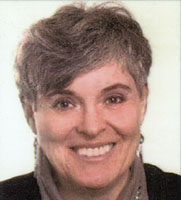


I think this is a great format for getting your perspectives out there. And I love your intro about alienating annoying people. HELL YEAH! Soothing is something that is appropriate, for example, as we comfort the dying and the baby, and the children; also the ill or otherwise physically or emotionally suffering adult. But there are those who have the mental, emotional, and physical health (at least at times)--the life force--enough to move energy outward, to challenge and work to transform. For those of us who can manage it whenever possible, "annoyance" or "irritation" is certainly part of what needs to happen.
The 'powers that be' white het male supremacist and capitalist didn't and don't call us "agitators" for no reason. The pro-status quo privileged masses who do not experience the bulk and brunt of violence churned out through systems of socially organised oppression must, by those who can speak out and write on, have our bodies and psyches systematically shaken, to the depths of our souls. It is, I think, a compassionate argument: why should the most privileged have a false view and experience of suffering and death as unfortunate and sad occurrences that happens only to individuals, as opposed, say, to one's village, town, city, and nation, or to one's race or gender? Thanks for being one of those annoying alienating agitators.
To the blog visitors:
But what was written to him was in response to this: