Monday, January 18, 2016

RadFem. Check. LibTrans. Check. RadTrans? Checking.


The title of this post may be seen as mildly cheeky. But it is also deadly serious.

Life circumstances have kept me offline in the last while. A good friend died of metastatic uterine cancer. She was like a sister to me. And then there were other health issues in her family. The cancer and the treatment was brutal and she was increasingly brave with each passing month. The battle ended two and a half years after diagnosis. I know there are so many people fighting or coping with cancer in some regard. Most along with poverty and additional insults and insecurities of marginalisation and invisibility.

But I'm here today to speak to a few things that have been off my radar, more or less, during that period. For example, I have found that a lot more people across a much wider age bracket use the term 'radfem'.

Due partly to my age, I don't experience 'radfem' and 'radical feminist' as synonyms. I grew up before tweeting and texting when feminist terms being shortened was not usually a sign of respect. Such as when Women's Liberation was turned into Women's Lib.

So in my ancient mind, shortening means going from this: [Content Warning: the second image is stupidly sexist.]

women's liberation movement photo is from here
to this:

blatantly sexist visual is from here

So, no disrespect intended to anyone who identifies as radfem or who uses both terms. Lorde knows I'd have more time on my hands if I'd written radfem every time I wrote out the longer version.

Anyway, I realise that in the last couple of years, the shorter term has taken root more widely. And that's not all. What also seems to have amped up are distressing and awfully bitter battles over terrain and terms, land and language.

Whose land comprises the U.S. of Amerikkka? Will the Federal government or individual States or citizens ever hand back significant tracts and regions of Indigenous land, or does the government remain a land-hoarder and destroyer? Will whites ever concede, en masse, that the Confederate flag is a symbol of white supremacy? That people from Mexico aren't aliens. That Muslims aren't terrorists. Will the xenophobic CRAP that spills out of Dumpty Trumpty ever cease? Will Black Lives Matter?

Does it register that some of us don't have clean water to drink, or reliable access to water?

Will Bernie Sanders become the DNC candidate for president: how would he rule, and make reparations regarding government-stolen land and colonialist-dependent wealth? Will Hilary Clinton be the first white woman to be U.S. president?

Hey: If you want great political leadership in this country, I think Winona LaDuke and Alicia Garza are as good as you get. LaDuke/Garza 2020!!!

Winona, a revolutionary feminist, has pointed out how a curiosity, to me anyway, regarding Anglo uses of the term 'radical', relative to many Indigenist traditional values. That is, from an Indigenist point of view, one may see U.S. government policies as radical, extreme, militant, for decades, for centuries. Genocidal. Seen this way, we can concur that Indigenist feminism is deeply Conservative, but not using the term in at all the same way the U.S. Republicrats do. I read that perspective for the first time many years ago in Talking About a Revolution. We're still waiting for that and are literally dying for it to arrive. Too often, though, it is just liberal talk about terms. Here I go with that.

Digging down and scraping the bottom of the barrel of this blog's archives, from 2008, I found this:

What does 'Radical' mean here? It holds up for me.

What I bring with me as a way to understand any form of oppression are lessons taught to me by radical feminists across race, region, and ethnicity. There are many who deeply inform my thinking and feeling. Among the earliest and most significant are Audre Lorde and Andrea Dworkin. But there more contemporary voices of wisdom and radical knowledge on the scene.

I will bring radical feminist theory and agendas, of color and white, with me as I go, never settling into any perspective or practice with colonial patriarchal Certainty. Andrea Dworkin, for one, never advocated for theory being mistaken for truth. She knew theory could be made into reality--to look, feel, taste, sound, and smell like CRAP. And like everything. And like the core of who I am, which may be why so many people feel like CRAP. And the danger to us, in part, is not knowing whose theories we are living inside, which ones we benefit from and protect, and which we are under and must continue to rise up against.

The more liberal academic side of the sometimes-termed RadFem vs. LibTrans turf war is a contest over theory--issues of gender, essentialism, and privilege. But the social and legal side of it is about spaces of safety and struggle. As noted above, it is clear who is fighting for land and language. In some sense we all are. But not equally.

________________

When I approach any conversation about gender, I first center this question: Whose bodies are marked for terrorism and destruction? What I see is that the bodies, the souls, of those who are identified as female, Indigenous, Black, and Brown, especially, are being terrorised. As they have been for centuries, at least. More recently, it is also Black trans bodies that are marked and murdered.

Corporate media would rather tell us of these horrors as individual tragedies perpetrated by one, two, six, or a hundred 'bad men' or 'rogue cops'. Mainstream media will not report the violence as systematic: patriarchal, colonial. Most white people I know are willing to settle for dimensions of mass media's truth. As are most men. I wonder how many other excuses white folk can conjure to excuse a cop's murder of someone not threatening them. I wonder how many rapes have to occur before it is seen as something men do normally, whether or not most men normally do it. In some sense it should not be surprising that rape happens, even while it should always be understood as part of a complex, involving entitlement and the requirement patriarchies have for some people to be femaled, 24/7/365. It is, tragically, an arrogant and desperate need of too many people for access and accommodation; for violence as violation. For land and language.

I am speaking of a need imposed on others, by human beings who are maled, who are always complex and nuanced in their hirstories and their lives, located in positions of privilege and marginalisation, as most of us are. But the color and sex of normal brutality must be noticed and named. I am mindful, heartful, of the violent disappearance of trans and nontrans Black women, murder after murder. And of the reality of rape culture, and how it is tethered both to patriarchy and to colonialism.

Within white spaces, also always complex and multifaceted, the only L  G  B  T movement I've ever seen as being radical was the L. I have looked to white Lesbian Feminist theorists for keen analysis of heteropatriarchy for over thirty years. Among my fav of those philosophers is Marilyn Frye. But there are many. My most fav, however, is not white. She is, as noted above, Audre Lorde.

The _GBT+ organisations and campaigns which are white-led or coloniser-centered, that claim to be radical, do not appear to me to be revolutionary in theory or practice. This has been brought to my attention in detail quite recently.

In some of the next posts, I will endeavor to carefully and respectfully identify what I find to be politically problematic with a facebook group I have been in as a commenter. It is called "The Conversations Project: Radically Inclusive Radical Feminism". It is welcoming and not supportive of flame wars--that alone is rare online. It has tolerated my very privileged presence for almost two weeks: we'll see who exhausts the other first. Hopefully amicable relationships will be nourished. But unowned intellectual liberalism is toxic to me. And denial of any form of privilege by anyone, as a way of life, is atrocity-supporting. When I see it, I endeavor to call it out, hopefully respectfully and with increasing sensitivity to how my own places of privilege effect the reception of the critique.

The two founders are well known in some progressive circles that contend with gender and privilege. Cristan Williams with Trans/Gender politics. John Stoltenberg with what used to be called Sexual Politics. With the doubly radical title as my guide, I presumed they are doing something radically feminist. In at least two senses, I believe they are using the term, well, liberally.

I have already written to them about my concerns, within the closed facebook group. Projects termed radical that are, in theory and reality, liberal, are nothing new. But the name of the project did direct me to a set of expectations and I was intrigued. I am attempting, in many ways wrongly, to hold them to my expectations. It's an unfair thing to do and I can be a pest about it. They have been kind, and I do well with kindness, so I'm working diligently at keeping my critiques clear of passive-aggression and void of shaming under- and over-tones. That in and of itself is good work for me to be doing in an online or offline community setting.

___________________

I will update you, here, on my own issues by noting that I've been continuing to search for terms to locate my sense of myself relative to gender. Given that I believe (I think in a radical feminist tradition) that the subjectivity of the oppressed matters more than the subjectivity of the oppressor, how women experience me is, first and foremost, what my gender is. That means I don't get to control it: the naming. The best I can do, subjectively, personally, non-essentially, while using the English language is "a maled adult". (And, being a good Amerikkkan, I only speak one language.) I'm a white maled adult, nonbinary, with more economic security than most people, which increasingly doesn't have to be a whole hell of a lot; but I have a kind of stability few people have: I can pay my bills on time and have no debt. And, while gay (in this case: maled, attracted to men--very few, but men), I do not engage in romantic or sexual relationships. That means the ways I can harm people interpersonally are dramatically reduced. And, yes, the ways I can be hurt and misunderstood: but that's what the internet is for. Or not.

If we're talking about dominant gender--CRAP-loaded gender--then using a term like 'anti-gender' works well for me. I have been identifying as 'intergender' but as a fierce white Feminist Lesbian called out, doing so locates me, affirmatively, between the poles of a gender binary that's also a hierarchy. That is, such a term, applied to me, reinforces the hierarchy linguistically (her point). I agree. It also pretends that by being 'in between', I may have less male privilege or sense of entitlement than others who ID as men. So, as either trans and cis, or neither trans and cis, and while I don't have heterosexual privilege, and while I'm not of Northern European gentile stock, I am afforded most male supremacist advantages and benefits. No doubt about it. No denial about it. Please.

I yearn for social spaces which share and practice community-enriching, humane values that I learned from radical feminism. Values like listening, self-awareness, accountability, mutuality, humor, and assertiveness. One especially important ethic is radical honesty: digging for the truth of one's feelings and experience, not settling for the views and interpretations of others just because they appear to be mandatory or popular. And not forgetting: we live inside the theories of others--most of whom are long gone, who may not ever have had any living creature's best interests at heart. I leave you for now, with this:
The purpose of theory is to clarify the world in which we live, how it works, why things happen as they do. The purpose of theory is understanding. Understanding is energizing. It energizes to action. When theory becomes an impediment to action, it is time to discard the theory and return naked, that is, without theory, to the world of reality. People become slaves to theory because people are used to meeting expectations they have not originated—to doing what they are told, to having everything mapped out, to having reality prepackaged. People can have an antiauthoritarian intention and yet function in a way totally consonant with the demands of authority. The deepest struggle is to root out of us and the institutions in which we participate the requirement that we slavishly conform. But an adherence to ideology, to any ideology, can give us the grand illusion of freedom when in fact we are being manipulated and used by those whom the theory serves. The struggle for freedom has to be a struggle toward integrity defined in every possible sphere of reality—sexual integrity, economic integrity, psychological integrity, integrity of expression, integrity of faith and loyalty and heart. Anything that shortcuts us away from viewing integrity as an essential goal or anything that diverts our attention from integrity as a revolutionary value serves only to reinforce the authoritarian values of the world in which we live.  —  Andrea Dworkin, Letters from a War Zone, U.S. edition, pages 127-128

Saturday, January 16, 2016

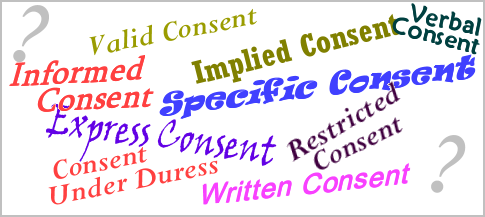
Rape + Consent = Rape. "Rape Redefined" by Catharine A. MacKinnon

image is from here
This is being reprinted here as an act of Fair Use, to clarify what rape is in oppressive societies such as the U.S., Canada, and the UK.

What follows is from here: http://kirangandhi.com/2014/10/28/sex-equality-with-professor-catharine-mackinnon/

Toward ending rape altogether. -- Julian


Rape Redefined
© Catharine A. MacKinnon, 2014
Nordiskt Forum, Malmö, June 2014
1.  Rape is recognized in international law as a “gender crime,” meaning it happens to women because they are women. It is a crime of gender inequality.
2. This analysis, partly operationalized in international law, e.g. by the International Criminal Court, is not implemented in any country’s domestic law.
3. So, What would a rape definition governed by sex equality principles look like?
4. Rape is generally defined in Western countries as sexual intercourse by force or without consent or both. It is only without consent in the UK. It is only by force or violence in France. Most US jurisdictions require both: by force and without consent.
5. None of these has a good track record even for reported rapes, which are a small percentage of actual rapes. The conviction rate for reported rape in the UK is around 6%.[1] In France, it is a breathtaking 2.6%.[2] The conviction rate for reported rapes in the US, where most states require some version of both force and nonconsent, is between 12% and 25%. Given that in the United States about one out of every ten acts of rape or attempted rape is reported that essentially fit the legal definition, this is pretty appalling.
6. Consent definitions – in which the prosecution has to prove nonconsent – require a woman be believed concerning a sexual fact that is by its nature subjective. This is why it puts the victim on trial. Essentially, it attributes victimization to the victimized. It makes the case be about what she was thinking, or what he thought she was thinking, rather than about what he did. It makes rape occur in someone’s mind, not by his body on her body.
7. It is therefore no surprise that, in legal application, consent has been found when women are married, drunk or drugged, repeatedly said no, were asleep, comatose, just seen to be raped by several other men, threatened with deportation or false criminal charges or loss of her job. In legal operation, consent to sex is routinely found in situations of despairing acquiescence, frozen fright, terror, absence of realistic options, socially situated vulnerability, and even death. Prostituted sex is regarded as consensual because it is paid. All this is what consent actually means legally, not mistakes in what it legally means.
The often accompanying standard of mistaken belief in consent means that if the accused is found to have believed she consented, whether she did or not, it is not rape. In societies saturated with pornography, a lead pipe over the head can sincerely be believed to produce consent to sex. Further no surprise that “rough sex” is such an increasingly effective consent defense.
In other words, consent is often found in situations where considerable force was used, building into law the misogynistic assumption that women want to be forced into sex. This is the real meaning of requiring a showing of both force and nonconsent, as prevails in US state laws. The same assumptions tend to be attributed to a gay man when he claims another man raped him. He is feminized, reduced on a gendered basis.
If sex occurred, her consent is essentially presumed on the most minimal of acquaintance between the parties; the survivor has to disprove it. Socially speaking, if sex happened, or if a woman had ever had sex before, especially with the accused, consent is effectively assumed. She has to disprove it. It’s a social burden of proof women enter the law burdened by. Consent in law is consistent with economic, psychological, and hierarchical threats, so long as physical injury or life are not threatened (for which purpose rape itself is generally not considered a physical injury).
8.  Consent as a concept was never designed to apply between two people in civil society. It was given its current meaning in Western liberal philosophy, hence Western law, as the basis for legitimizing the obligation to obey the laws of the state. Even as a fiction[3] it never envisioned equal parties. It exists to rationalize the exercise of dominant power (ie the state) over its subordinates (the governed). This is what it is for. Applied to sex, he is the government, she is the governed. Its purpose is to attribute and justify the requisite obedience of the powerless to the rule of the powerful. It is about compliance. One is regarded as tacitly consenting, for example, to whatever one does not leave,[4] ie you consent because you are there, whether leaving is a realistic option or not. Silence in sex, as in governing, is deemed consent, not dissent. These assumptions, along with the presumption that the two parties involved are somehow axiomatic equals—an assumption never articulated far less sought to be justified in theory or law—operate powerfully in sex- unequal circumstances, contrary to its realities, and remain invisible as assumptions under even the best of consent standards.[5]
9. Attempts to correct for this social burden of proof, the assumption of YES, women being walking consent—attempts  women are often seduced by—involves adding additional words to make consent mean anything at all, such as positive, chosen, affirmative, autonomous, unequivocal, freely-willed, etc. These can be helpful, but they cannot be relied upon to overcome what consent fundamentally means. Requiring a woman say yes – and there is a lot of not-yes-saying out there – is not enough. If you can get a woman to suck an employer’s penis weekly to keep her job or to have sex with a dog, I would suppose you can get her to say yes. Pornography is full of yes. Consensual is a fall-back stand-in for “it wasn’t so bad” in societies like ours, in which sex by definition fulfills you, it doesn’t violate you, because sex is what women are for.
10. Fundamentally, it needs to be faced that consent is not an equal concept. It is an intrinsically unequal one that presupposes an actor and an acted-upon — the purported form of power of the acted-upon being acceding to the actor’s actions, doing what you are told to do — with no guarantee of equality of circumstance. That it might make sense in a society of actual social equality does not mean that it will get us there, because it silently presupposes that the parties are equals whether they are or not. It relies on an illusory image of a woman’s “agency” under conditions of inequality, as if one can be free without being equal. The corresponding fantasy—one that well-intended, strong progressive women often accept politically and argue for, not knowing what it has actually meant legally—is that if consent is the legal standard, what the woman says, even what she actually felt she wanted whether she said it or not, will be believed and will be carry the day, determining in a criminal trial whether sex was rape.
Apart from the problem of relying for incarceration on a victim’s subjective state of mind, including when unexpressed, the concept of consent relies for its social appeal on the assumption that it stands in for desire. This is its credibility cover, but nothing limits it to that. In social discourse, the crucible of its meaning, sex that is actually desired or wanted or welcomed is never termed “consensual,” because it does not need to be. Its mutuality is written all over it. Sex women want is never described by them or anyone else as consensual, as in, “I had a great hot night last night, I consented.” 
11.  Although the European Court of Human Rights (in M.C. v. Bulgaria[6]) and the CEDAW Committee (in Vertido v. Philippines[7]) has said that consent is the core of an equality approach, for these reasons of principle and practicality, it is not. Far from it. These cases unintentionally endorse the active/passive model of sex and social conditioning to trauma and the acquiescence that goes with it, and call that equality. Under unequal conditions, many women acquiesce in or tolerate sex they cannot as a practical matter avoid. That does not make the sex wanted. It certainly does not make it equal. It does make it legally consensual in most jurisdictions. This is the wrong road. Consent is a pathetic standard of equal sex for a free people.
12. Force definitions have also been problematic. The main problem has been that they have been largely confined to physical force, and typically require an excessive and unrealistic amount of such force, often with weapons, in a standard that seems to have in mind a fight between two men. In addition, it tends to require proof of resistance as evidence that force existed, even if the law has eliminated the resistance requirement.
13. On the view that a rape is about what (usually) a man did, mostly to women and children, sometimes to other men, a useful legal starting point is the Akayesu decision (ICTR): rape is defined as a “physical invasion of a sexual nature committed on a person under circumstances which are coercive.” The notable features here are the absence of nonconsent, seen as essentially redundant – coercion is present because consent is absent – and the exclusive use of coercion, which can be circumstantial as well as physical. The definition is on the force side but is not limited to physical force. In international criminal law, when a nexus with war or genocide or campaigns of crimes against humanity is established for a sex act, such that sexual assault is weaponized, those circumstances of coercion make it arguably unequal, vitiating consent of any operative meaning. Which is why it isn’t there. In settings outside recognized zones of armed conflict or genocide, “circumstances” adapted to domestic settings of so-called peacetime could include psychological, economic, and hierarchical forms of coercion – which, in limited ways, some jurisdictions already recognize in the sexual assault context.
14. Survivors of prostitution often cogently describe it as serial rape, let’s say sex unwanted for itself that is coerced by multiple circumstances of inequality. With this in mind, consider the international definition of sex trafficking, the destination of which is prostitution, from the Palermo Protocol (2000). It prohibits the use or threat of use of force or other forms of coercion, abduction, fraud, deception, or abuse of power or a position of vulnerability for purposes of sexual exploitation. And, where any of these means is used, the consent of a victim “shall be irrelevant.”
15. The proposal for rape redefined: Suppose we combine the best of the international definitions to redefine rape domestically as “ a physical invasion of a sexual nature under circumstances of threat or use of force, fraud, coercion, abduction, or of the abuse of power, trust, or a position of dependency or vulnerability.”
16. It would be essential to explicitly recognize that psychological, economic, and other hierarchical forms of force are coercive, including age, mental and physical disability, and other inequalities, including sex and gender, and that states like drunkenness and unconsciousness are positions of vulnerability. Inequalities would be recognized as a form of coercion when mobilized to force sex in a specific interactions. As in the international context with war and genocide, for a criminal conviction, it would be necessary to show the exploitation of inequalities, their direct use, not merely the fact of them.
17. And, where any of the listed means is used, the consent of the victim would be irrelevant.
18.  Apparently it is difficult to think about sexuality in equal terms. The Swedish model of prostitution is educating the world that paid sex is forced sex, engaging in world leadership by setting a standard for what violence against women includes. This proposed definition of sexual assault in terms of circumstances of coercion could do the same. Let’s think together about it. “It all starts somewhere.”[8]
[1] Liz Kelly, Jo Lovett, & Linda Regan, A Gap or a Chasm? Attrition in Reported Rape Cases, Home Office Research Study 293 (2005), available at http://www.homeoffice.gov.uk/rds/pdfs05/hors293.pdfreport the study by Harris & Grace on p. 28 with this figure, among others.
[2] European Sourcebook of Crime and Criminal Justice Statistics 169 (4th ed, 2010). The same rate is cited by J.M. Jehle. Attrition and Conviction Rates of Sexual Offences in Europe: Definitions and Criminal Justice Responses, European Journal on Criminal Policy and Research 18,145-161 (2012). An updated edition of European Sourcebook is due out this year.
[3] David Hume was vividly clear on this, see “On Civil Liberty,” II.XII.20.
[4] See John Locke, Two Treatises on Government 224-25, ¶ 121 (5th ed. 1728). For a distinct but related doctrine, see Thomas Hobbes, Leviathan: Or, the Matter, Forme and Power of a Commonwealth, Ecclesiasticall and Civill 521-22 (A. R. Waller ed., Cambridge University Press 1904).
[5] Another use of consent in law is to allow medical intrusions to be inflicted upon a person that are injurious, but are being allowed for some other benefit. Does this sound like sex to you? Apparently, it doesn’t sound foreign to women’s situation in sex to a lot of men.
[6] M.C. v. Bulgaria, Eur. Ct. H. R. 39272/98 (2003). This opinion contains the statement regarding a U.S. case, Berkowitz, that “Pennsylvania courts held that the victim’s repeated expressions of “no” were sufficient to prove her non-consent.” As to rape, this is not the case. The appeals court held that her statements of “no” would be relevant to the issue of non-consent, but were not relevant to the issue of forcible compulsion, the requirement for rape in Pennsylvania. The jury conviction for rape was accordingly overturned. Commonwealth v. Berkowitz, 609 A2d 1338 (1992). The case was remanded for retrial on “indecent assault,” which requires nonconsent, a conviction the appeals court upheld. Commonwealth v. Berkowitz, 415 Pa. Super. 505, 641 A.2d 1161 (Pa., 1994). No discussion of equality occurred in the case.
[7] Vertido v. The Philippines, CEDAW/C/46/D/18/2008 contains excellent equality analysis of rape myths and misogynistic stereotypes. However, it does not consider inequality as a form of coercion, but challenges the force-only law in the Philippines as lacking the “essential element” of rape law: “lack of consent,” which it redefines to mean “unequivocal and voluntary agreement.”
[8]Ane Brun, It All Starts With One (2011).

Monday, January 11, 2016

The Seven Deadly SINS of the Anglo Turf Wars

Africa-centering global map image is from here

A work in anti-progress.
Constructive radical feedback welcomed.

The most dangerous and deadly seven political realities (SINS) within CRAP, aka The Anglo Turf Wars

1. Genocide of Indigenous Peoples
2. Gynecide/Femicide
3. Misogynoir/misogyny
4. Sexual Trafficking of children and adults
5. Militarised cultural colonialism, particularly white USUK-led
6. Global West and North's hoarding of natural, capital, and human resources; accomplished through sexual, chattel, and wage slavery
7. Ecocide

________________________

Glossary:

Amerikkka: The United States of America.

Black:
1. racially despised, diasporic African people. (Within Africa, people generally have various national and ethnic identities.)
2. Aboriginal People in Australia.

CRAP:
1. Corporate Racist Atrocious Patriarchy: the increasingly globalised governing political and philosophical paradigm of the West.
2. Enforcement of capitalist white male supremacy.
3. Portrait of USUK cultures and ideas as 'progressive' pinnacles of human evolution, maintaining English as a primary language.

Ecocide:
1. the mass extinction of plant and animal species and ecosystems.
2. the murder of Gaia.

Eroticism: See Uses of the Erotic: The Erotic as Power, by Audre Lorde.

Femaled (adjective, verb): [referring to humans] made sexually vulnerable, accessible, and compliant.
--In this usage, it does not refer to anatomical or physiological features, in or beyond humans.

Genocide: the eradication or destruction of a people--their culture, economy, and sexuality--through mass murder, enslavement, incarceration, cooptation, possession, removal or denigration of identity, theft of land, and banishing of languages.

Gynecide:
1. a combination of agendas and actions that subordinate, enslave, and mass murder femaled people, by intention or effect, individually, culturally, and regionally.
2. The physical and psychological possession and control of people deemed dangerous and threatening to male supremacist rule and authority.
3. Also termed Femicide.

Indigenous Peoples:
1. the Native, Aboriginal, or First Nations people of any region.
2. The people whose homeland (or region) was established without the use of genocide and land theft.
3. The people of color who have faced imperialist, colonialist, and capitalist extinction for 500 years.

Maled (adjective, verb):
1. people structurally positioned to oppress patriarchally femaled people.
2. human beings who, unnaturally, make it their practice to render others sexually vulnerable, accessible, and compliant.
3. as applied to a group, the people who unconsciously or not, by intention or effect, actively co-maintain male supremacist systems and institutions; they do so as the primary beneficiaries, as those atop that particular sexed hierarchy.
--In this usage, it does not refer to human anatomy or physiology.
See also, "white-maled".

Misogynoir (noun):
1. misogyny specifically directed at Black women and nonbinary people who are seen as femme or feminine.
2. Assumptions and agendas, in theory and practice, that decenter or eliminate Black women and girls to the benefit of CRAP and USUK.
3. Antiwomanism.

Misogyny (noun):
1. hatred of and toward women.
2. contempt for anyone who femaled, and who is seen, by men, as femme, effeminate, or too feminine.
3. It is also directed at women for being too masculine, butch, or not feminine enough--with each of those three categories being distinct.
4. Antifeminism.

Sexual Trafficking: owning, selling, and renting human beings in ways that female them, usually across territories.

Sexuality: the economic, cultural, social, and psychological means through which people are maled and femaled.

SINS: social, institutional, naturalised subordinations.

USUK: the combined colonial force of white British and white Amerikkkan people.

White-maled (verb):
1. Socialised and structurally positioned to oppress white women and people of color.
2. Reflecting or enforcing white male supremacy, as in white-maled literature. (Accomplished by narrowly and unconsciously or uncritically operating within USUKian or CRAPpy paradigms and philosophies to the detriment of everyone oppressed by USUK.)

________________________

Understood this way, many social conflicts are interlocking and overlapping. Most anti-status quo campaigns reinforce some of these political projects, even while they may also intend to challenge them. We are called to compassion, accountability, and responsibility for being caught up, without natural cause, in each other's oppression while we seek liberation. On their own, liberal reforms to CRAP are deadly for the global majority of girls and women who live with fewer privileges and access to resources than do most whites and men.

________________________

Parenthetical points:
There are no revolutions in CRAP or USUK without the centering of radical activism led by women of color globally.

Not addressing the core paradigm problem is deadly, as identified by Vandana Shiva here:
http://www.democracynow.org/2010/7/8/a_debate_on_geoengineering_vandana_shiva

Intersex and nonbinary people ought not have to be conceptualised as intermediate, in between, or in need of alteration, whether surgically or psychiatrically. We are who we are.

The term gender, masculinity, femininity are so widely naturalised and misunderstood in CRAP. Indigenous and less colonialised people, at least historically and sometimes presently, have economically, culturally, spiritually richer traditions. USUK forces reduce those terms to something that is understood to be primarily personal, God-given, natural, beyond science, and not born of politics and economics.

We are dangerously, epistemically limited by the English language.

Cis and trans, re: gender, become deeply politically problematic in the view of this blogger.
See, for understanding of the terms: http://trans-fusion.blogspot.com/2015/06/cis-gender-ipso-gender.html

Racial bigotry, prejudice, intolerance are mistaken as comprising the problem of racism in a white liberal State. The problem is colonial white supremacy. As described so well and so radically by Ta-Nehisi Coates, racism creates race, not the other way around.

As was argued most recently in a group I am in, John Stoltenberg noted the same is true with sex and sexism. Many feminists have made this point over the decades.

In this view, whiteness, non-whiteness, maleness, and femaleness, are systematised, policed and self-policing actions-in-being more than they are anything else. To take offense to being termed 'white' and 'maled', for example, is to have ego-personified concepts that are structural, not natural. I see anti-racist, anticolonialist, Indigenist, Feminist, Womanist, and nonbinary people's activism as the resistance and challenge to those actions.


Partial Reading list:
Andrea Dworkin, Intercourse; Letters from a War Zone
Audre Lorde, Sister Outsider
bell hooks, all titles
Catharine A. MacKinnon, Toward a Feminist Theory of the State; Are Women Human?
Marimba Ani, Yurugu: An African-centered Critique of European Cultural Thought and Behavior
Patricia Hill Collins, Black Feminist Thought; Black Sexual Politics
Roxanne Dunbar-Ortiz, An Indigenous Peoples' History of the United States
Vandana Shiva, all titles
Winona LaDuke, all titles

Further reading and viewing:
Cleansing ourselves of european concepts, Marimba Ani:
https://www.youtube.com/watch?v=pvZ-en9oiqo

Indigenous Feminism Without Apology:
https://prezi.com/2c1rycwvalrq/indigenous-feminism-without-apology/
(With this link about the controversy over Andea Smith's claim of Cherokee heritage:
http://moontimewarrior.com/2015/07/01/no-andrea-smith-is-not-the-native-american-rachel-dolezal/)

Geoengineering, paradigm challenge by Vandana Shiva:
http://www.democracynow.org/2014/9/23/vandana_shiva_winona_laduke_desmond_dsa

Indigenist Feminist Reading list:
https://unsettlingsettlers.wordpress.com/suggested-readings-and-resources/

Radical Women of Color reading list:
http://mylifeasafeminista.tumblr.com/wocfeministtexts

Science as Mythology:
http://webcache.googleusercontent.com/search?q=cache:http://ecophilosophy.org/articles/011101_science.html


Thursday, January 7, 2016

My Statement to a New Trans-Inclusive Radical Feminist Conversations Facebook Group: "The Radical Inclusivity of Radical Feminism"


This is a shortened version of something I posted to a relatively new facebook group. I'll be writing more soon. The bottom line for me about the group is not only am I questioning what is radical about a white-led, liberal discussion project--however well-intentioned, but there is no system of accountability in place there to prioritise the concerns of radical feminist lesbians and radical womanist and feminist women of color I know and care about: long-time friends, colleagues, mentors, and some who probably don't like me very much for operating out of privilege and entitlement in ways that have hurt some women interpersonally online.

This was posted to the membership of this group: "The Radical Inclusivity of Radical Feminism":

I may be working out some of my concerns--stated [in the facebook group] already--on my own blog, because this space, itself, is a bit uncomfortable for me--in part due to it being facebook: I dislike the interface, as I've stated elsewhere here. (I feel the same way about Tumblr and Twitter!) The way my body/mind works and the way these interfaces work don't make engaged, sustained conversation very easy for me. Using the image of offline textual communication, It feels like I'm in a room where lots of sheets of discourse get distributed and are almost immediately covered up by lots of others. One paper gets tugged out from the bottom, notes are added, and it is then lost again. I actually tried to go back to the start of this forum and it was, wait for it... virtually impossible.
More seriously, I also need to be sure I am being respectful and accountable to people who are dear to me, to people who I endeavor to serve in my work. And that simply cannot happen in this space because they are not here, as far as I know!
Response-ability and Account-ability to those I structurally oppress is a core radical 'profeminist' value. One of many things I've learned from radical feminists is that I cannot be outside the structural positions of power and entitlement I occupy and am afforded.
I don't want to accidentally be presenting myself as someone who is embarking on a project that is purporting to be liberatory to children and women of color, to anyone of any ethnicity who identifies as radical, feminist, or lesbian unless that venture is clearly and unambiguously led by radical, womanist, anticolonial, and feminist women of color, in partnership with white feminists. And unless clear and functional systems of accountability to those women are in place. Operative. "Online."


Wednesday, December 2, 2015

The Transformation of Silence into Language and Action, by Audre Lorde (complete text)

Image taken from Autostraddle - click through to see an interesting article on the evolution of book covers.
two images of Audre Lorde's classic feminist text are from here
The full text of the Audre Lorde speech and essay appears below my intro.
So many people I know fight the debilitating, paralysing fear of speaking out, of being themselves to the best of their knowledge and fierceness, of being grounded in their own liberatory power as they work to share that power to make radical and transformative change collectively and responsibly. 
How do we continue these political struggles and campaigns when fear grips us and draws us repeatedly into silence? Is it more important to know what is underneath our fear, or to find ways to move with it? My tendency is to want the understanding before moving into action; it is a useful and self-defeating way to postpone the action. 
Due to the above questions and concerns, the following writing surfaces perennially in my life and in the lives of so many women I know. In order to share it with you, I found it as a PDF document online and have replicated it here, as it appears in Sister Outsider: Essays and Speeches by Audre Lorde (Crossing Press, 1984; republished in 2007 with a foreword by Cheryl Clarke).  
I have, I hope faithfully, corrected one minor typo from the original and several others that showed up in the pasting process. If you find any other typos, please send me a comment or email so that I may correct it. Note: Audre intentionally does not capitalise 'america'. 
This is earnestly presented here under Fair Use law, without any commercial interest and with the sole intention of sharing Lorde's written and spoken wisdom and political efforts to make the lives of Black lesbians and other women of color central to our revolutionary work. That work has been and remains the heart of this blog. 
If you have not as yet, I shall greatly and joyfully encourage you to read all fifteen chapters of Sister Outsider. For now,

The Transformation of Silence into Language and Action*

I HAVE COME to believe over and over again that what is most important to me must be spoken, made verbal and shared, even at the risk of having it bruised or misunderstood. That the speaking profits me, beyond any other effect. I am standing here as a Black lesbian poet, and the meaning of all that waits upon the fact that I am still alive, and might not have been. Less than two months ago I was told by two doctors, one female and one male, that I would have to have breast surgery, and that there was a 60 to 80 percent chance that the tumor was malignant. Between that telling and the actual surgery, there was a three-week period of the agony of an involuntary reorganization of my entire life. The surgery was completed, and the growth was benign.

But within those three weeks, I was forced to look upon myself and my living with a harsh and urgent clarity that has left me still shaken but much stronger. This is a situation faced by many women, by some of you here today. Some of what I experienced during that time has helped elucidate for me much of what I feel concerning the transformation of silence into language and action.

In becoming forcibly and essentially aware of my mortality, and of what I wished and wanted for my life, however short it might be, priorities and omissions became strongly etched in a merciless light, and what I most regretted were my silences. Of what had I ever been afraid? To question or to speak as I believed could have meant pain, or death. But we all hurt in so many different ways, all the time, and pain will either change or end. Death, on the other hand, is the final silence. And that might be coming quickly, now, without regard for whether I had ever spoken what needed to be said, or had only betrayed myself into small silences, while I planned someday to speak, or waited for someone else's words. And I began to recognize a source of power within myself that comes from the knowledge that while it is most desirable not to be afraid, learning to put fear into a perspective gave me great strength.

I was going to die, if not sooner then later, whether or not I had ever spoken myself. My silences had not protected me. Your silence will not protect you. But for every real word spoken, for every attempt I had ever made to speak those truths for which I am still seeking, I had made contact with other women while we examined the words to fit a world in which we all believed, bridging our differences. And it was the concern and caring of all those women which gave me strength and enabled me to scrutinize the essentials of my living.

The women who sustained me through that period were Black and white, old and young, lesbian, bisexual, and heterosexual, and we all shared a war against the tyrannies of silence. They all gave me a strength and concern without which I could not have survived intact. Within those weeks of acute fear came the knowledge  within the war we are all waging with the forces of death, subtle and otherwise, conscious or not  I am not only a casualty, I am also a warrior.

What are the words you do not yet have? What do you need to say? What are the tyrannies you swallow day by day and attempt to make your own, until you will sicken and die of them, still in silence? Perhaps for some of you here today, I am the face of one of your fears. Because I am woman, because I am Black, because I am lesbian, because I am myself  a Black woman warrior poet doing my work  come to ask you, are you doing yours?

And of course I am afraid, because the transformation of silence into language and action is an act of self-revelation, and that always seems fraught with danger. But my daughter, when I told her of our topic and my difficulty with it, said, "Tell them about how you're never really a whole person if you remain silent, because there's always that one little piece inside you that wants to be spoken out, and if you keep ignoring it, it gets madder and madder and hotter and hotter, and if you don't speak it out one day it will just up and punch you in the mouth from the inside."

In the cause of silence, each of us draws the face of her own fear  fear of contempt, of censure, or some judgment, or recognition, of challenge, of annihilation. But most of all, I think, we fear the visibility without which we cannot truly live. Within this country where racial difference creates a constant, if unspoken, distortion of vision, Black women have on one hand always been highly visible, and so, on the other hand, have been rendered invisible through the depersonalization of racism. Even within the women's movement, we have had to fight and still do, for that very visibility which also renders us most vulnerable, our Blackness. For to survive in the mouth of this dragon we  all america, we have had to learn this first and most vital lesson  that we were never meant to survive. Not as human beings. And neither were most of you here today, Black or not. And that visibility which makes us most vulnerable is that which also is the source of our greatest strength. Because the machine will try to grind you into dust anyway, whether or not we speak. We can sit in our corners mute forever while our sisters and our selves are wasted, while our children are distorted and destroyed, while our earth is poisoned; we can sit in our safe corners mute as bottles, and we will still be no less afraid.

In my house this year we are celebrating the feast of Kwanza, the African-american festival of harvest which begins the day after Christmas and lasts for seven days. There are seven principles of Kwanza, one for each day. The first principle is Umoja, which means unity, the decision to strive for and maintain unity in self and community. The principle for yesterday, the second day, was Kujichagulia  self-determination  the decision to define ourselves, name ourselves, and speak for ourselves, instead of being defined and spoken for by others. Today is the third day of Kwanza, and the principle for today is Ujima  collective work and responsibility  the decision to build and maintain ourselves and our communities together and to recognize and solve our problems together.

Each of us is here now because in one way or another we share a commitment to language and to the power of language, and to the reclaiming of that language which has been made to work against us. In the transformation of silence into language and action, it is vitally necessary for each one of us to establish or examine her function in that transformation and to recognize her role as vital within that transformation.

For those of us who write, it is necessary to scrutinize not only the truth of what we speak, but the truth of that language by which we speak it. For others, it is to share and spread also those words that are meaningful to us. But primarily for us all, it is necessary to teach by living and speaking those truths which we believe and know beyond understanding. Because in this way alone we can survive, by taking part in a process of life that is creative and continuing, that is growth.

And it is never without fear  of visibility, of the harsh light of scrutiny and perhaps judgment, of pain, of death. But we have lived through all of those already, in silence, except death. And I remind myself all the time now that if I were to have been born mute, or had maintained an oath of silence my whole life long for safety, I would still have suffered, and I would still die. It is very good for establishing perspective.

And where the words of women are crying to be heard, we must each of us recognize our responsibility to seek those words out, to read them and share them and examine them in their pertinence to our lives. That we not hide behind the mockeries of separations that have been imposed upon us and which so often we accept as our own. For instance, "I can't possibly teach Black women's writing  their experience is so different from mine." Yet how many years have you spent teaching Plato and Shakespeare and Proust? Or another, "She's a white woman and what could she possibly have to say to me?" Or, "She's a lesbian, what would my husband say, or my chairman?" Or again, "This woman writes of her sons and I have no children." And all the other endless ways in which we rob ourselves of ourselves and each other.

We can learn to work and speak when we are afraid in the same way we have learned to work and speak when we are tired. For we have been socialized to respect fear more than our own needs for language and definition, and while we wait in silence for that final luxury of fearlessness, the weight of that silence will choke us.

The fact that we are here and that I speak these words is an attempt to break that silence and bridge some of those differences between us, for it is not difference which immobilizes us, but silence. And there are so many silences to be broken.


* Paper delivered at the Modern Language Association's "Lesbian and Literature Panel," Chicago, Illinois, December 28, 1977. First published in Sinister Wisdom 6 (1978) and The Cancer Journals (Spinsters Ink, San Francisco, 1980).


Sunday, November 15, 2015

Terrorist Attacks, ISIS, ISIL, and U.S.-Western Complicity


quote by Noam Chomsky is from here

French president vows war without pity on terroristsNov. 14, 2015 - 1:25 - Francois Hollande addresses media after visiting the Bataclan concert hall

(Source: http://video.foxnews.com/v/4614516815001/french-officials--2-jihadi-sites-destroyed-in-raqqa-syria/?playlist_id=trending#sp=show-clips) 

As I'm sure most of you have heard and seen, terrorist atrocities were committed in Paris this past Friday. Also in Beirut on Thursday. What I am hearing in corporate media is that the white West will even more militantly go after terrorist groups formed in Western, Central, and Southern Asia. What is abbreviated as "ISIS", "ISIL", and any other militant terrorist groups formed in those regions are targeted to be wiped out. So far, the West has not only been unsuccessful at this aim, but has acted in ways that only fuel more terrorism, including our own.

The West's inept effort to stop ISIS and ISIL becomes even more of a sham when we learn that we have a hand in training members of those organizations.

June 26, 2014:
“The United States itself has been complicit in training the members of ISIS in Syria who later came to Iraq and began to input their essentially reign of terror on the Iraqis,” William Beeman, professor of anthropology at The University of Minnesota, told Press TV from Minneapolis. (Source: http://www.presstv.com/detail/2014/06/26/368780/us-complicit-in-training-isil-members/)

June 3, 2015:
A declassified secret US government document obtained by the conservative public interest law firm, Judicial Watch, shows that Western governments deliberately allied with al-Qaeda and other Islamist extremist groups to topple Syrian dictator Bashir al-Assad.

The document reveals that in coordination with the Gulf states and Turkey, the West intentionally sponsored violent Islamist groups to destabilize Assad, and that these “supporting powers” desired the emergence of a “Salafist Principality” in Syria to “isolate the Syrian regime.”

The revelations contradict the official line of Western governments on their policies in Syria, and raise disturbing questions about secret Western support for violent extremists abroad, while using the burgeoning threat of terror to justify excessive mass surveillance and crackdowns on civil liberties at home.
(Source: https://medium.com/insurge-intelligence/secret-pentagon-report-reveals-west-saw-isis-as-strategic-asset-b99ad7a29092)

This is U.S. and Western history across the vast continent of Asia: terrorizing and otherwise destablizing regions of the world, through invasion, occupation, economic exploitation and slavery, resource theft, poisoning military warfare, mass murder, genocide, or all of the above. This is also the history of Europeans in the Americas. 

The West has committed this terrorism for hundreds of years, without pity.


Monday, November 2, 2015

'Other' Black Lives Matter


Photo of the leaders of Black Lives Matter, Alicia Garza (left), 
Opal Tometi (center) and Patrisse Cullors (right) is from here


In a recent exchange with S Baldwin, here on the blog, SB pointed out that in addition to Black men's lives, and those of Black male youth, there are other lives that also don't matter as far as mainstream media outlets are concerned: those of Black women and Black girls.

What is not new is that Black women's lives get subsumed in the lives of others who are oppressed and systematically killed. "Black people", too often, are sexistly assumed to only be "Black men". In too many dominant social spaces, trans people of any gender are assumed to be white.

All the Women are White, all the Blacks are Men... comes to mind.

I have had the great honor to hear Alicia Garza speak. To me, she is a solid example of "a great leader". She is also the kind of leader the white and male supremacist mainstream, in media or out of it, will unlikely acknowledge as such. Media doesn't like shared titles. Media likes 'the' leader. But Alicia speaks inclusively, which is in itself rare among white progressives or male radicals. She speaks of all the people, past and present, who art part of political struggles. Keeping with that tradition is not conducive to the Great White Male Leader narrative. Alicia speaks of the leadership and purpose of the Black Lives Matter movement, here:
http://www.truth-out.org/news/item/29813-building-movements-without-shedding-differences-alicia-garza

An excerpt:
It's really hard for people to wrap their heads around a movement that is full of leaders. That's how our homes work; that's how our communities work; that's how our workplaces work, whether or not we want to talk about it. We're just trying to reflect our own realities. We're trying to create more pathways for more people to participate and engage. If we want a full democracy in this country, we can't just have people following one person. Everyone has to feel like they have a stake in shaping the kind of world that we live in. Otherwise, we get into a situation like the one that we're living in now, where nobody's happy with the leadership that we're getting.  -- Alicia Garza

Here are some links detailing the atrocities. There are many and there are not enough, but few of them come from the white male mainstream.

http://www.theroot.com/articles/news/2015/07/at_least_5_black_women_have_died_in_police_custody_in_july_wtf.html

http://www.blackgirldangerous.org/2014/12/whose-lives-matter-trans-women-color-police-violence/

http://www.womankind.org.uk/2015/05/sayhername-police-brutality-against-black-women-in-the-us/

I have thought often about the fact--to me a truthful one--that whites and men cannot lead us--the whole us--anywhere that is radically life-affirming and justice-bringing.