Friday, December 3, 2010

Why Isn't Anderson Cooper REALLY Keeping Them Honest?? Because U.S. Billionaires With Corporate Welfare Protections and UNTAXED Foreign Bank Accounts and Other Billionaire Corporate Pimps Control The Media

image is from here
To Anderson Cooper,

I see you as one of very few voices in media who might be willing to tell the truth to the U.S. American people. I hope you have the integrity and corporate backing to do that, but I doubt you have the latter even if you do have the former.

Why don't you keep them honest and keep us informed about how the richest U.S. citizens are protected from paying their fair share of taxes? Why don't you report on how corporate loopholes still exist, how foreign bank accounts exist, and how much U.S.-earned money is siphoned off and stashed there by the richest U.S. Americans? And how that money only goes to the families of the wealthiest citizens due to corrupt inheritance laws--it doesn't go into the economy generally.

Why don't you report on how the discussion about the rich only wanting what is "fair for all Americans" is a sick joke? Why don't you, someone with professional and economic clout, call out the richest of the rich on the fact that they don't and never had paid all they should for the money they earn, and how funds siphoned off into foreign bank accounts--notably in Switzerland and the Cayman Islands, are not being re-invested to make this economy "strong-like-bull", as the most rich, their politicians, and their media shills report?

Why did you allow a segment of non-news reporting, a pseudo-debate between a white Conservative woman and a Black Liberal man to go unchallenged in follow-up reports? Why don't you stop wasting media time with such spectacular nonsense and instead hold uber-wealthy white men accountable to their repeated self-serving media lies about what it will take to balance the budget and end the federal deficit and national debt?

Why don't you note that if the U.S. had simply not engaged in two utterly corrupt wars for the better part of a decade--those in Iraq where there were no weapons of mass destruction, and in Afghanistan, where Osama bin Laden doesn't live, we would have a very different economic reality now? I hear tell that Karzai and his cronies are not responsible people. Why, then, does the U.S. government do business with him? How fucked up is that? What sort of waste of tax payers' dollars is that?

Why don't you spend a week, or two weeks, or three weeks, of programming on AC360 and in CNN special reports, interviewing no one else but Malalai Joya and RAWA, Yanar Mohammed of Women's Freedom in Iraq, Dr. Vandana Shiva of Navdanya, Ruchira Gupta of Apne Aap, and one of your own CNN Heroes, Anuradha Koirala of Maiti Nepal, about the bloody dots that your program thus far refuses to connect? Is it really beyond your scope to note the many connections between Western conglomerated media and how it silences women like those named above, U.S. militarism and its corruption, ecocidal environmental practices like those of BP and ExxonMobil, the exploitation of the Global South by the Global North, and sexual trafficking and slavery? Does the U.S. public have a right to hear from these women or not? Are you worried about allowing that depth of keeping the U.S. government and military honest on your program? Would you be fired the next day if you allowed those two women to speak honestly?

Why don't you do a series of reports on how the economic system is set up to protect the interests of the wealthy and punish and destroy the poor, in part by making poor youth vulnerable to being trafficked, pimped, and repeatedly raped for the pleasure and profit of very rich white men, primarily, not, as your reports indicate, for the profit going to street criminals and street pimps?


Why don't you note that if major corporations, alone, paid what they should, we wouldn't need to tax the working poor, the working class, or the middle class at all? Why don't you note how much of all the wealth, all the income made in the last ten years went to the top one percent of the richest people in the U.S.? Why don't you note, for example, that at least 80+% of ALL income was earned by the top few percent of people in this country and that should tax breaks happen for those earning less than $250,000/year and people earning $500,000 or more a year have to pay more, that will not hurt our economy or the rich AT ALL. Why don't you call it out that when the rich speak of doing what's fair, that there's nothing fair, moral, decent, or humane about what they do? They work a system organised by them and for them. Wall Street and the Rich are protected by a DADT foreign banking and corporate headquartering system that is about as dishonest, immoral, and corrupt as it gets. The IRS has a flimsy DADT policy with those uber-rich U.S. Americans and we all know it. Where's the economic "fairness" in the top five percent of U.S. Americans HOARDING the money people make in this country?

I await your reporting during your five hours of programming a week, on these and related issues. And stop wasting our time with ridiculist-worthy nonsense like this pseudo-debate "TAX CUT SHOWDOWN: GOP, Dems battle over Bush-era tax rates". A waste of media space NON-Discussion with Cornell Belcher and Dana Loesch. Anderson, why didn't you call out Ms. Loesch for being a racist/classist media shill for super-rich white boys (and a few white girls too)? Why did you even allow her onto your program? So we could watch the fireworks in this completely uninformative "debate"? Shame on you for allowing that anti-journalistic CRAP to air.
image from Dec. 1, 2010 AC360 program, is from here

Please, Anderson, at the very least, connect the economic, social, and political dots between these two stories:
 
December 1st, 2010
02:37 PM ET
Hoyer to allow vote Thursday on middle class tax cuts

By: CNN Congressional Producers Deirdre Walsh and Evan Glass

Washington (CNN) – On the same day Congressional and White House negotiators met to broker a compromise on how to deal with the Bush-era tax cuts that are expiring at the end of the year, House Majority Leader Steny Hoyer announced that House Democrats would push ahead on a vote Thursday to permanently extend tax breaks just for those making $250,000 a year or less. Republicans argue tax cuts should be extended for everyone, including the wealthy.

Hoyer said the House bill would include permanent extensions of income tax rates for the middle class, plus tax breaks for married couples, the child tax credit, and the earned income tax credit.

The Maryland Democrat insisted that there was common ground between Republicans and Democrats on ensuring there are no tax increases for people making $250,000 or less and cited several polls showing the American public supports this approach. "We have agreement on that. There is not agreement on other aspects of issue, as you all know. But it is a shame that what we have agreement on is being held hostage by that on which we do not have agreement."

Hoyer maintained that moving forward with just a vote on the so-called middle class tax cuts would not interfere with the negotiations on the broader tax cuts, telling reporters Wednesday he spoke with the House Democratic negotiator in the talks, Maryland Democratic Rep Chris Van Hollen. "He and I both agree that this matter moving forward should not undermine negotiations on a compromise," Hoyer said.

Outgoing House Speaker Nancy Pelosi told CNN the vote was always part of the Democrats' plans and was intended to press the importance of their policy stand.

"To show our position very clearly that Democrats support tax cuts for the middle class. We think it is fairer thing to do and is necessary at this time in our economy," Pelosi said.

Hoyer emphasized that Democrats are following through on a commitment to avoid tax increases on the middle class. Republicans, he said, are the ones who decided in 2001 to let the tax cuts expire this year. "It is an effort to show, as we said before the election, that we were going to make sure the middle income working men and women of America did not have the consequences of the Republican sunset."

House GOP Whip Eric Cantor said in a statement the Democrats' plan is a "non-starter, and is completely contrary to the discussions that we had with the President yesterday at the White House. This is nothing more than political chicanery and undermines the President's ongoing discussions and efforts on tax rates."


Cantor said the tax cuts should be extended for everyone.


"We call on Speaker Pelosi and President Obama to stop the gimmicks and allow all members of the House – Republican and Democrat – to vote on legislation that would prevent tax increases for every American, "he said.

(Julian's note to Eric Cantor: why don't you own your own constituency's chicanery and gimmicks, such as corporate welfare loopholes and allowing foreign bank accounts to be untouched by the IRS? Whip those forms of corruption, why don't ya?)

*          *          *


CNN Producer's Notebook: Surviving slavery

Posted: December 2nd, 2010 05:10 PM ET

Alexandra Poolos
AC360° Editorial Producer

Editor's Note: For more on this story, don't miss a special "AC360°" series, "American Slaves: Hiding in Plain Sight," tonight at 10 ET on CNN.


(CNN) - It all started with a random phone call early last summer.

Bridgette Carr, a leading attorney on trafficking cases, and I had worked together previously, and I wanted to see whether she was working on any interesting cases. Experts like Carr say that there are more slaves now than ever before. Worldwide, currently there are an estimated 12.3 million people enslaved. But last year, across the globe, only some 49,000 were rescued.

Carr hesitated for a moment on the phone before describing a case that involved dozens of young girls enslaved in Newark hair braiding salons that had taken three years to prosecute. Like many attorneys and activists who work with slavery victims, Carr is extremely protective of her clients. But she felt it was important to see how interested they might be in talking with AC360°.

Related: Held as slaves, now free

The response was startling. Two of the girls, who chose not to reveal their real names, said they wanted to talk, as long as we could protect their identities and locations. The young women were very clear about their reasons for talking: Both felt it was important for Americans to know that slavery is happening in front of their very eyes.

“I just want to help other people who might be in the same situation as I was,” “Jacqueline” told me over the phone, describing the years of abuse, back-breaking work in salons, withheld meals and loss of hope that she would ever be free. “What happened to me years ago still hurts me in so many ways…but slavery is around us. And you have to recognize it. When you see a little girl doing something and they are too young for it, [you] should do something. I think of all the people who asked me how young I was, and they just believed me. They could have done something. They could have saved me.”

“Nicole” echoed the same disbelief that after years of braiding hair everyday, no one went to the authorities or questioned their made up stories of not being underage. She said that everyday she hoped a customer or one of the many owners, who had unwittingly hired them not realizing their wages were being confiscated, would notice something was wrong. “At first when the police got us, I realized that we weren’t the first,” Nicole said. “It felt like this was hidden to people in the U.S. We were there for so long. It [took] forever for us to be rescued.”

Despite their conviction that Americans should hear their stories, both girls were frightened to talk to us. The head trafficker had been sentenced to 27 years in prison, but still Nicole and Jacqueline didn’t want their locations disclosed. The closer we got to the taping date, the more anxious they became. At one point, both pulled out, saying that they would only do the interview if their faces were concealed. “I have had victims’ cars bombed for this kind of stuff,” Carr told me over the phone.

Eventually, Nicole agreed to take the risk and appear on-camera. Jacqueline felt the danger was too high. When we met both of the young women, however, they told their stories bravely and eloquently. “The traffickers, they took my childhood from me, my teen-hood. They took it from me,” Nicole said. “They took everything away from me.”

In the process of reporting, another victim named Zena came forward. She took us on a tour of the Newark neighborhood, showing us the apartments were she had been enslaved and the salons where she had worked seven days a week, sometimes 14 hours a day. “Sometimes I cry,” she said. “It's not - it was not easy living in this house. I was just stuck, and I was in prison.”

The most inspiring part of these interviews was the resilience and courage each of the survivors showed. All three of the girls have moved on with their lives - securing jobs and making plans for college.

Despite the fact that all three lived a nightmare for years, each is determined not to allow the traffickers to steal their dreams. “I have found my dreams again,” Jacqueline told us. “I just want to help other people who might be in the same situation as I was. I realize now I can do something with my life. I am smart. All the years that she took from me, I am getting them back. I have told my story before, and each time it makes me stronger. I know that every obstacle that comes my way, I know I can overcome them.”

And readers of this blog, please write in at the Live Blog for Anderson's program, and let him know which rich pimps he could be reporting on if he's truly interested in keeping them honest.

Here's your chance to talk directly to AC360° during the program. Send instant feedback and sound off on tonight's headlines. Read and react to what viewers have to say, right here, right now.
JOIN AC360° LIVE BLOG: 10p-11p ET

Sara and Julian Discuss Trans/Feminist Issues, part 3: Transsexual, Intergender, and Transgender Definitions; Hormones and Biology; and Racist-Misogynist Lies about Second Wave Feminists

photo of Flo Kennedy's autobiography is from here
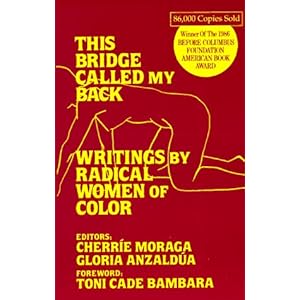
image of 1984 collection of second wave writings is from here

JR wrote: "I think saying anyone is raised as a "weird child" is a bit insulting, to be honest. "

Sara responded: I meant that they could be rejected by their family as well, for not conforming to behaviors requested of them. Much like Autistic and Asperger syndrome children are often considered "problem-children" that some parents lobby to have instutionalized or normalized at all costs (The Judge Rotenberg Center in the US is notable for its abuse, and yet the demand makes it remain open even after having been in courts for two decades about child abuse - contingent electric shock and starvation to make them obey, for example).

If trans children were considered okay, then Kenneth J Zucker would be unemployed. He uses behavioral modification to "make people not-trans", or more accurately, more gender-conforming.


Isn't that what the medical establishment and the psychiatric establishment exist to do, both to trans people and non-trans people: to get us all to be more gender conforming? If a psychiatrist and a surgeon require that someone "live as a woman" for a year, for example, before surgery is done, what does "living as a woman" mean if not conforming to heteropatriarchal standards of what a woman is? Can someone live as a butch lesbian for a year and be considered an appropriate candidate for surgery? This is a question about how oppressive those institutions are, not an indictment of anyone who wants the surgery. I think, or hope, I've already been clear that most people who obtain gender surgery are not trans people, by a long-shot. And I think targeting trans people for obtaining surgery--those very few transsexuals who can afford to do so--is misguided to some extent, depending on what the critique of the surgical procedures are. In my experience as an intergender person, I find it VERY difficult to find anyone in the medial world who even wants to understand what being intergender might mean, let alone respect it as a viable way of being. I'm wondering what your own experiences were with this.

Sara also responded with this:
Stuff like removing all feminine things, prevent the color pink from being drawn/worn, encouraging stereotypically masculine things, restricting drawings to male characters, for a "feminine" boy child. Parents wouldn't give him business if they weren't distressed by their feminine boy, or very masculine girl (the threshold is different for girls, you must be extreme to be considered more than a tomboy). Their children are probably not transsexual, or “pre-transsexual”, just simply gender-nonconforming.


I advocate for children being accepted as they are, biologically and emotionally. And wish that children were not "gendered" at all, as the West defines and enforces that process.

Part 3

Sara wrote: I'm not sure an Haitian person, raised in Haiti, would feel rejected by their own society (person of color in a culture of color). I also doubt all girls and women feel they are rejects of society. Or maybe its just all those I know, who seem to like being female and also what it entails in society, without having Stockholm syndrome or something like that. Not necessarily liking ALL that it entails...but I know of no people who think life is ONLY positive.

I wasn't talking about how children feel about being Black, or female-assigned at birth, or being girls. I was speaking about how society disenfranchises or oppresses or subordinates or stigmatises all those groups of children, and adults too. This isn't to say that any given person feels negatively about being whatever they are. Sorry for any confusion about that point.

JR wrote: "The identification of only trans children as "weird" or "considered rejects" by dominant society is simply inaccurate and overgeneralised."

Sara responded: I didn't say they were the only ones. I named Autistics and Aspies above (I'm Aspie myself). There's probably many more groups who feel they are alien, and who are treated as such also.


I hope your Asperger's doesn't hinder you too much. I've known a few folks with it and know it varies considerably from person to person, but I hope for you it hasn't caused you too much grief, particularly from others who love to bully those of us who are "different" as children. I hear you on there being lots of groups of folks who are stigmatised or put down in various ways, for various reasons.

Part 4

JR wrote: "Plenty of us who are trans/intergender didn't know what we were when we were growing up. We might have thought we were just "different" or maybe we didn't feel all that different in our earlier childhoods. There's no one experience, in childhood, of being trans or intergender, and the way some trans activists talk, there's this one kind of experience that all trans and intergender people share--of "knowing" that we weren't meant to be either girls or boys, or that our psyches didn't fit with our bodies, and so on. And I think that's a really gross stereotype about us, to be honest."

Sara responded: Transsexual people know, for sure. They might not know its THAT in childhood, but they know something serious is amiss, and often to do with genitals. It has little to nothing to do with how they are treated socially, gender roles or gender expression. I knew my genitals were wrong for certain, when I was 8. I didn't know why or how I knew it, I just did. I hadn't seen female genitals by then, and even now (at 28) I haven't seen more than surgical result pictures. I've never seen a FAAB vulva.


I get this sense too from the transsexual people I know and am only beginning to realise that "transsexual" isn't "the old passe term" for being transgender. For the purposes of our conversation, Sara, and for the readers too, I'd like for us to agree on what some of these terms mean, between us; I get that beyond the two of us other people may use the terms differently. So, let me know if this works for you. I identify as intergender, as you know. For me this means not really ever feeling like a boy or a girl or identifying, internally, as a boy or a girl; it also means, for me, that I never really understood why any children were or are asked and forced to be boys or girls; I only saw heteropatriarchy as a brutish, cruel, tyrannical system of harm and control, of enforced domination and submission, weaving together misogyny, homophobia, lesbophobia, and inter- and trans-gender phobia into an ugly oppressive society that combines in horrendous ways with racism, heterosexism, and capitalism.

As I understand you and the terms you are using, am I right to conclude that you identify as transsexual, more than as transgender. Would it be fair to say this: we're both transgender, but under that umbrella term, there are some folks with your experience, and some with mine, and some with other experiences too, such as being asexual, genderqueer, Two-Spirit, agendered, gender non-conforming, "socially/problematically" butch if female-girls or female-women (a problem for society, primarily, and secondarily for the individuals because they feel the rejection and shaming from society), feminine if male-boys and male-men (same as before, with the primary problem being society's, not the individual's)?

I would say there are elements of also being transsexual that are part of my experience. For me and for some other pro-radical feminist people I know who are gay or lesbian-identified, we agree amongst ourselves that were we raised now, in this social-political climate, we'd likely find ourselves identifying as transgender and/or transsexual, and possibly pursuing some forms of transsexual processes of transformation, such as by taking hormones and seeking surgery. Personally, I feel grateful I can up during a time when gender was so thoroughly critiqued as political, not as essentially biological. I find the medical establishment and the psychiatric community woefully ignorant on this perspective, and generally unwilling to recognise it as valid because they won't make money from us challenging heteropatriarchy to the roots, and demanding all institutions rid themselves of it.

That said, I think as individuals we must each find our own ways, hopefully with support and in some kind of caring community. And for some of us, some hormone treatments and surgical procedures may be what we need to feel a bit more like ourselves. But I think it is difficult if not impossible to know how "social" those feelings are, including what we feel about our own bodies. For example, because "breasts" and "penises" and "vaginas" are both physical features of human beings and also symbolic as well, we may be feeling alienated from the social meaning of our genitals/sex organs, in some cases. I don't get the sense that's the case with you, given how you felt at age eight. But for those of us who were sexually abused as children, there can be profound "dis-identification" with the parts of our bodies that were involved in the abuse. We can shut down or shut off those parts of us, hold trauma there, etc.

In my case there's little doubt that my non-identification with manhood has partly to do with seeing how boys-who-wanted-to-be-men behaved, and how some men behaved who valued being men, and knowing full well that's not for me. But, it is also the case that I never, ever felt heterosexual or "like a boy" in any significant, meaningful way. I mean I knew I was assigned to be a boy, and was treated like a boy in some ways, and was abused for being a not-masculine-enough boy. So in my own case I think I was intergender and non-het from the start, basically. And I suspect that may be true of a lot of folks, but many get coerced into believing they "are" girls or "are" boys, without really questioning what those terms mean. I think lots of people in my own family just grew up as the gender they were assigned, without question. And for the girls, that meant having babies early in life. And for the boys, that meant impregnating young women early in life, and not bothering to be that responsible about it, leaving the pregnant young women to bear the brunt of responsibility for the pregnancy and birthing and child-rearing. I think heteropatriarchal expectations and enforced ways of being were "acted out", basically. Rampant sexual abuse in my family also meant that there were other reasons for acting out sexually.

Part 5

JR wrote: "A lot of us grow up thinking we're queer/lesbian/gay. And we go with that for a while because trans and intergender experience isn't even identified as someone one can feel or be. And "what we are" and how we understand ourselves is a very social/interactive process, not a fixed biological one, in my view."

Sara responded: That's more in line with transgender identity. Something that has less to do with changing the body, but I can't theorize much on the causes or effects, only that they are probably different at least severely in degree (maybe not in kind), to what causes transsexual people to know their body itself is wrong.


Do you personally feel like your own transsexuality was or is "biological"--do you feel you were born transsexual?

Sara wrote: Intergender, if your sidebar definition is accurate, is explained by agender (no identity) and bigender (both) terms in the LGBTQIA community - especially the asexual (AVEN) and online trans communities, that I know of.

I think that's pretty much the case for the intergender people I know--one person feels like both genders, and I don't really feel like either one. But this gets complicated because of what "gender" is--it's a hierarchical dualism/binary in the dominant West. And if I grew up in a culture with eleven genders or sexualities, what would I be then? How would my experience be different? I can't say. I can only know how I am based on living in the society I've lived in. And I conclude that the amount of terrorism, sadism, violation, intimidation, coercion, manipulation, dishonesty, and inhumanity bound to "gender" as it is enforced in the West cannot be "irrelevant" in how any of us feel about ourselves with regard to gender and sex, at least. (But also with regard to race, ethnicity, and class, which are also so bound to gender and sex.)

Sara wrote: I know that testosterone was poisonous to my body, and that estrogen isn't. And I know that from experience. All testosterone did was make me suicidally depressed, and full of acne for over 8 years (until I cut the testosterone from my life). It didn't give me muscles, a libido, or a masculine-looking frame. It didn't make me hairy either, or make me feel aggressive. I was asexual until I started estrogen (at 24). Now I have what I'd say is a normal-low level of libido.

As someone who is asexual/low in "libido" I'd say that "being sexual" isn't a natural thing, exactly. I'm not sure how we'd know what non-patriarchal normal levels are. (I think all we have in the dominant West are patriarchally determined normal levels and seemingly abnormal levels), but I follow what I think you're saying. I think I am fairly low in testosterone, relative to many males I know. And I know some women who are high in testosterone. And that plays out in our bodies and psyches in various ways. I'm a bit unclear about the sources of your testosterone--don't most us--our bodies--produce all of the so-called sex hormones: androgen, testosterone, progesterone, and estrogen? Isn't it the case that it's the levels that vary, unless something happens to us in utero or after that results in us not producing some of those hormones? Such as when a FAAB woman gets a hysterectomy, which can throw off her hormone levels quite a bit? Or, if a male-bodied adult gets a vasectomy? Are you saying that until you had your own bodily production of testosterone shut down/shut off, that life was a particular kind of hell that ended when it got cut off and when you began to get externally introduced "female" hormones? That they all exist in most people leads many of us to wonder why they are called "female" and "male" at all. Having estrogen and progesterone is something that "normal" male-men have, right? Again, it's all determined to be "normal" or not based on amounts, levels, etc. Is that your sense too?

Part 6

"I know, for a fact, that some lesbian feminists and myself--a radical profeminist--would likely have identified as transgender early in our twenties if we grew up in some of the queer communities that exist now, that promote and welcome transgender experience while also denigrating and insulting radical lesbian feminist experience."


I found out about trans stuff online at 22, where radical feminist stuff wasn't even mentioned for the most. Only Janice Raymond and Sheila Jeffreys would get passing mention if the topic was on that or the history of the trans movement. I never got into LGBT communities, even if I knew they existed, and lived in Montreal most of my life (2 million people city).

What I hear you saying is that you've had little to no exposure to radical feminism. Sara, my life would not be what it is without radical feminism. I don't know how people who question gender get to understanding it without exposure to various radical feminist writers and theorists. Have you read Sister Outsider?

This raises a question that I'm not sure you can answer; in other words I may be asking a question that is simply too hypothetical, and, as a rule, I don't like hypotheticals even though I do get sloppy and use them from time to time. But, what the hell, I'll ask it, and you can let me know if you can't or don't wish to answer it. What I'm wondering is if you had come of age, so to speak, during the period when I did, when there was tons of radical feminist material around, challenging every aspect of gendered being, allowing all kinds of questions to be asked and answered about how patriarchy, racism, capitalism, homophobia, misogyny, heterosexism, and more, shape us into "binarily" gendered beings, and shape us through force, aggression, shame, violation, emotional neglect, and sexual abuse, and spiritual abuse through religious miseducation or molestation and rape by priests and preachers.

We were a generation--or two or more generations--that got to interrogate this stuff thorougly, if never completely--such as deep awareness of how incest impacts a person. For anyone I knew who had been sexually abused, including through "normal" socialisation into heteropatriarchy, radical feminism was invaluable--water in the dessert of male supremacist ignorance and arrogance. It was enormously helpful to me that I grew up in such a time. And, I'll add, I read only a tiny bit of Mary Daly, no Sheila Jeffreys AT ALL (until about four years ago), and no Janice Raymond AT ALL. No Robin Morgan. No Germaine Greer. No Susan Brownmiller. White women didn't equal "radical feminism" for me.

For me the 1970s second wavers were folks like Florynce Kennedy, Pat Parker, Pauli Murray, Alice Walker, Andrea Dworkin, Audre Lorde, Barbara Smith, Gloria Anzaldúa, Chrystos, and Nawal El Saadawi. That's why it pisses me off when folks refer to "second wavers" as only Daly, Jeffreys, and Raymond. Those three women share many values, but they don't represent all of second wave radical feminism by a long-shot. They don't represent second wave radical lesbian feminism either. They are three voices among a chorus of other voices. And there were additional voices coming from slightly other perspectives, such as Angela Davis from a more anti-capitalist/class-critical direction than many white middle class feminists.

Daly and Jeffreys have done amazingly important work, invaluable work in analysing many aspects of patriarchal atrocity and oppression, but their work has been cut up into pieces, butchered, and misused by anti-feminists, some trans and some non-trans, some men and some women, to make it seem like all second wavers were anti-transgender, forgetting to note what Dworkin, another white lesbian radical feminist, said in Woman Hating on the subject. Have you read Woman Hating? In the preface she states that revolutionary feminism has its sheroes, and two of them are Sojourner Truth and Harriet Tubman, neither of whom were activists in the 1970s. What is called "the Second Wave" is a generally racist and inaccurate term for a political analysis that is not stagnant and has been around for decades, at least. It lives on until this day, largely by-passing the liberalism and individualism of much of so-called "Third Wave" writings. Different approaches in feminism have usually co-existed; they don't follow each other in a linear fashion; the feminisms that flourished in the 1970s continue on to this very day; RAWA was formed in the 1970s and is still going strong, for example.

Why do you think there's so much systematically sloppy, overtly inaccurate, and blatantly racist and misogynistic re-telling of "what second wavers believed"? Have you read Backlash by Susan Faludi, cover to cover? If you do, you will understand the forces at work to effectively silence and blatantly distort the work of any radical feminist. Who benefits when the work Cheryl Clarke, Cherríe Moraga, Hattie Gossett, Susan Yung, Ana Oliveira, Rosie Alvarez, Mitsuye Yamada, Merle Woo, Alma Gomez, Jewelle Gomez, Leota Lone Dog, June Jordan, Ntozake Shange, Norma Ramos, Adrienne Rich, Marilyn Frye, bell hooks and so many other U.S. and non-U.S. women of color and white women are erased from the ethnically rich herstory of second wave radical feminism?

JR wrote: "The queer community I've known most intimately purges the radical non-trans lesbian feminists while embracing the liberal feminist or non-feminist transgender people."

Sara responded: Much (but not all, for sure) writing from the radfem point of view is filled with snark and derision towards men, either through nature (inherently) or nurture (raised that way). You might pardon half the LGBT community, and a good portion of the trans community, of being wary of being considered unchangeably evil (can't change either your status at birth, or your childhood – at best you must prove, time and time again, your harmlessness and your lack of evil intent, a guilty until proven innocent).


This commentary to me demonstrates how little you know about radical feminism and second wave feminism. You just demonstrated how much you've bought what dominant culture says about it, including dominant queer culture. And it's just as stereotypical and biased as what you believe "second wavers" think about men and trans people. And about as wrong, too. It's really sad to see this sort of stereotyping going on, to be honest. Can you tell me who you've read of the authors I've named here in this post? What books? What poems? What plays? What novels? What essays? On what are you basing your really harsh judgments? The derision of people who also never read those many, many authors, or bothered to understood what they were reading when they did pick up a book?

Sara wrote: Liberal feminists were reluctant to accept trans people at first, but not totally closed to it, unlike much of the 1970s 2nd wave feminists (who were mainstream, not fringe, then).

I'm gonna ask once more, and I'd seriously appreciate an answer: who are you referring to when you write "1970s 2nd wave feminists"? Which ones? What are their names, please? What are the books you are referring to, please?

Sara wrote: The POV of liberal feminists seem to be mostly of unconditional acceptance of trans people, with some dissenting. The POV of radical feminists seem to be the reverse of that - most opposed to acceptance, with some dissenting (many in numbers, but a fraction of the movement).


What you're saying makes little to no sense of my own readings of international radical feminists like Malalai Joya and RAWA, Yanar Mohammed, Patricia Hill Collins, Catharine MacKinnon, Vandana Shiva, and Ruchira Gupta. At all. I don't know where you're getting these ideas from, but I do want to know where you read them or encountered them so we can, together, trace the lies back to their sources. This experience of hearing your really biased and incredibly narrow views of second wavers and radical feminists is like what I encounter when I speak with male-men who only know about feminism by having "consumed" what pornographer-pimps have said about them. It's very discouraging indeed. Very sad. Very disheartening. To see political views relegated to one decade, when they don't exist there alone, is also terribly sad and discouraging. It tells me a lot about how little most non-queer and queer folks know about the brilliant herstory of feminism--not just from what you say here, Sara, but from what I hear that sounds so much like this, from so many other pro-neoliberal queer folks, who don't care, it appears anyway, to question what is profoundly racist, genocidal, ecocidal, heterosexist, and misogynistic (gynocidal) about neoliberalism. A politic that ignores the world in which women live, struggle, resist, rebel, and die is a doomed one, in the view of this blog and blogger.

I need to stop writing for right now so I can regain my inspiration for this conversation. I seek connection with you, and mutual understanding, not alienation and insult. Please regard what I say about second wave feminism and feminists with an open heart and an open mind. I will work very hard to hear and listen to you with a similarly open mind and open heart. I'm going to post this and await your responses. It seems we both move into other terrain from this point on, so this seems like a good pausing point anyway. But honestly, my heart is heavy with grief right now.

I will post responses to your other comments, however. If many of them are organised around a theme or two, I'll likely make that into a separate post, as I have this one.

Thursday, December 2, 2010

Dick Cheney WANTED FOR INTERNATIONAL CRIMINAL ACTIVITIES: the question is, which ones?

dick cheney 11 Nigeria to charge 
Dick Cheney in $180 million bribery case, issue Interpol arrest warrant
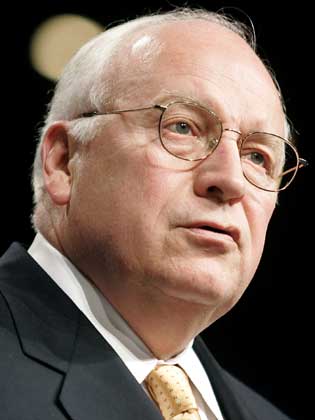
photo of an international criminal  who has yet to be held
accountable for his crimes against humanity is from here

What follows is a cross post from RawStory.com. Please click on the title to link back.

Nigeria to charge Dick Cheney in $180 million bribery case, issue Interpol arrest warrant

By John Byrne
Thursday, December 2nd, 2010 -- 8:37 am

The energy services company Dick Cheney ran prior to becoming Vice President of the United States was atop the tongue of liberals each time it was awarded a contract in Iraq.

Now the company's name, Halliburton, is being spoken somewhere else: Nigeria.

According to a story filed late Wednesday, Cheney will be indicted in a Nigerian bribery case as part of an investigation into an alleged $180 million bribery scandal.

"Last week, Nigeria arrested at least 23 officials from companies including Halliburton, Saipem, Technip and a former subsidiary of Panalpina Welttransport Holding AG in connection with alleged illegal payments to Nigerian officials. Those detained were all freed on bail on Nov. 29," Bloomberg News' Elisha Bala-Gbogbo wrote.

"Authorities in the West African nation are probing Halliburton, Saipem and Technip for the alleged payment of $180 million in bribes to win a $6 billion liquefied natural-gas contract," Bala-Gbogbo added. "Panalpina is being investigated for illegal payments it allegedly made to Nigerian customs officials on behalf of Royal Dutch Shell Plc."

The prosecuting counsel for the country's Economic and Financial Crimes Commission said that indictments will be handed down in the next three days and that an arrest warrant for Cheney "will be issued and transmitted through Interpol."

Adds Bloomberg, "Obla said charges will be filed against current and former chief executive officers of Halliburton, including Cheney, who was CEO from 1995 to 2000, and its former unit KBR Inc., based in Houston, Texas; Technip SA, Europe’s second-largest oilfield- services provider; Eni SpA, Italy’s biggest oil company; and Saipem Construction Co., a unit of Eni. Obla didn’t identify the former officials whom he said held office when the alleged bribes were paid."

A spokesman for Cheney declined to comment.  


The US Securities and Exchange Committee probe focused on the deal as early as 2004. Wrote The Washington Post at the time:
The Nigerian project, started in the early 1990s, was worth almost $5 billion to TSKJ, a partnership that included a KBR predecessor, as well as companies from France, Japan and the Netherlands.

At issue are payments made to Tristar, a Gibraltar company that had a consulting arrangement with a corporation formed by TSKJ to "administer the contracts and execute the work" in Nigeria, a Halliburton spokeswoman said in response to questions.

KBR, the engineering and construction subsidiary of Halliburton, was formed when Halliburton acquired Dresser Industries Inc. in 1998. It was a combination of Halliburton's Brown & Root and Dresser's M.W. Kellogg Co. Officials from the SEC and Cheney's office declined to comment.
Early on Thursday, Halliburton said they hadn't seen the new charges, but still denied their involvement.

"Halliburton's oil-field services operations in Nigeria have never in any way been part of the LNG project and none of the Halliburton employees have ever had any connection to or participation in that project," Tara Mullee Agard, a spokeswoman for the Houston-based company, said in an e-mailed response to Bloomberg.

Added Bloomberg: "Halliburton Co., the world's second- largest oilfield-services provider, said it hasn't seen any amended charges by Nigerian authorities who plan to indict current and former employees in a bribery scandal."

First Nations and American Indian Societies and Gender: a primer for whites

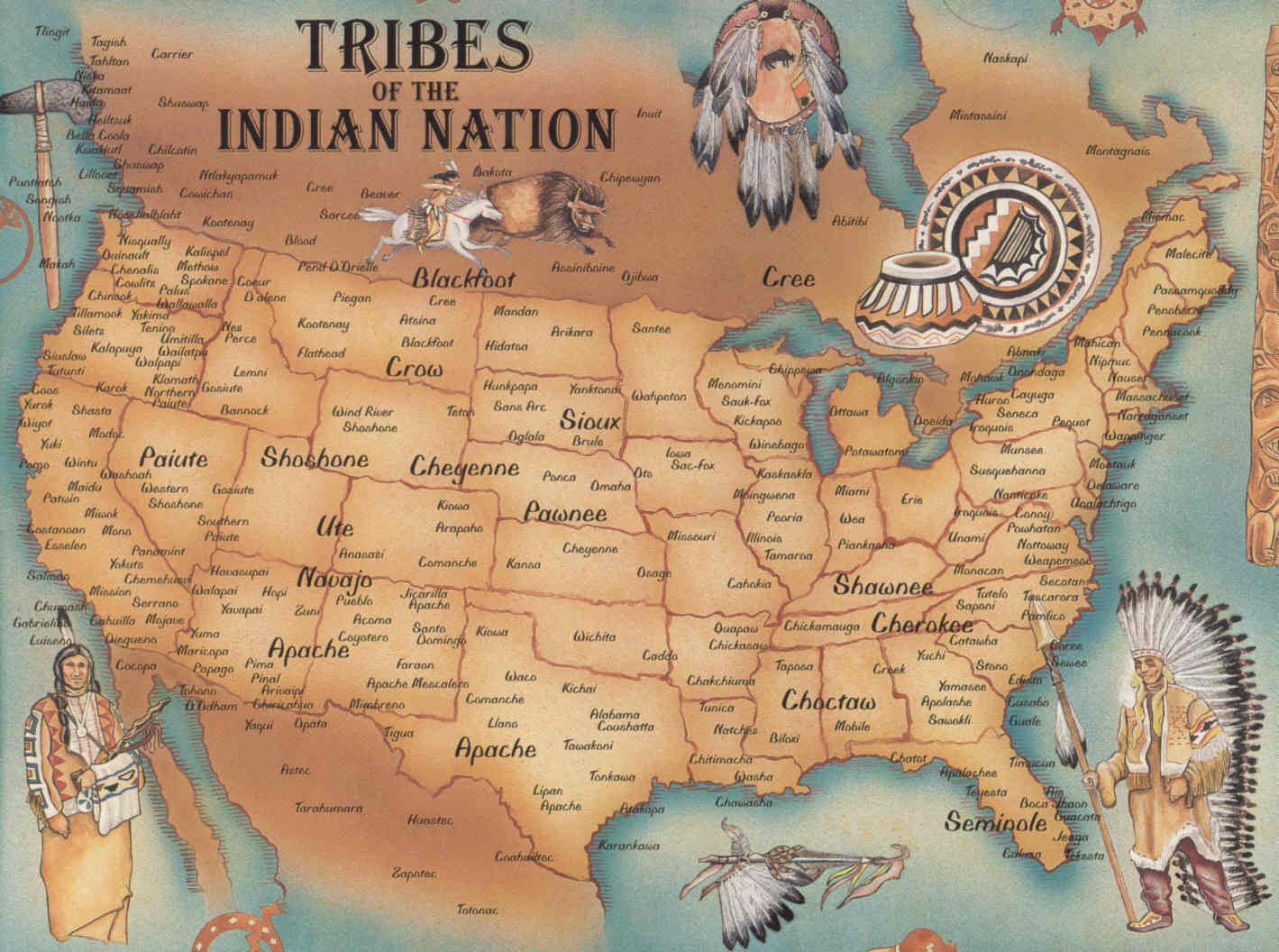
image of map, available to be seen larger, is from here
The above map might more accurately be called: 


Nations of The Indigenous Peoples 
of the North American Region

But I expect things I encounter about First Nations peoples and American Indians that are not from the people directly to be inaccurate most of the time.

I just heard the news that the prominent, famous actor who is from the U.S. but lives in France has been cast in yet another terribly racist role: that of Tonto. The actor's name is Johnny Depp and he has gone from being someone whose work I respected, to being among my least favorite actors. He keeps doing work that is so grotesquely racist that it is stunning to me that such films, as the Pirates of the Caribbean series, are still able to be funded. It's not surprising to me that they are funded; just stunning. That anything so racist is funded by Hollywood comes as no surprise whatsoever. I hope the producers and Johnny Depp are targeted for protest and boycott. The last thing I want to see is any movie about "The Lone Ranger" and his "sidekick" Tonto--perpetuating the racist/genocidal mythology that "it's all good" between the White Man and the Red Man, or, in the case of the image below, the whiter man and the greyer man.

image of "Tonto and The Lone Ranger" is from here

"Tonto" was played by First Nations athlete and actor, Jay Silverheels, Mohawk, born on the Six Nations of the Grand First River Nation, Ontario in 1937. In the early 1960s, assisted in the establishment of the Indian Actors Workshop in Echo Park, California as a place where American Indian actors could develop their acting skills. The workshop is still active. Jay died in 1980 at the age of 67. I think the white guy had a name and a a life too. The horse was named "Silver" in the TV series, "The Lone Ranger". Both characters' histories go back to a late 1930's serial.

But it's not really all that good--I mean between the White Man and the Red Nations. It's mostly quite atrocious, actually, if the whole ugly truth is to be told. It's particularly atrocious for the American Indian and First Nations women who are systematically raped and prostituted by and for the White Het Man. And the sooner Hollywood gets that straight and responsibly, not exploitively, portrays that reality accurately (and not with Kevin Costner as some sort of white hero, either) the better.
Even outside of Hollywood, stereotypes abound in white dominant culture about what it means to be American Indian. Growing up, within white-dominated queer culture, I heard tale of "the Berdache" as a great example of how much more liberal Native Americans were--you know, all those Native Americans who shared one culture that had this place in it for the Berdache.

About that term, from Wikipedia, *here*:
The term berdache is also used to indicate "two-spirit" individuals, but is increasingly considered outdated and inappropriate. According to the American Heritage Dictionary, 4th. ed., berdache is North American French, tracing back, through European French, Italian, Arabic, Persian, Middle Persian, and Old Iranian, to Proto Indo-European welƏ, "to strike, to wound"; making the term "berdache" a linguistic relative of such words as "Valhalla", "Valkyrie" and "vulnerable".

There are, in fact, many indigenous terms for these individuals in the various Native American languages — including Lakota winktje and Navajo nádleehí (Burrus & Keller, 2006: p. 73).

Berdache is a generic term that was used primarily by anthropologists in the past (no longer an accepted concept or term within the field). It is a loan from French bardache implying a male prostitute or catamite. The word's origin is complex: the French derives from the Spanish bardaxa or bardaje / bardaja via Italian bardasso or berdasia via Arabic bardaj: البَرْدَجُ" meaning "captive, captured" from Persian bardaj < Middle Persian vartak < Old Iranian *varta-, cognate to Avestan varəta- "seized, prisoner," formed from an Indo-European root *welə- meaning "to strike, wound." The term berdache is widely considered offensive, due to its roots.

Use of the term has widely been replaced with two-spirit (except in scholarly literature,) which originated in Winnipeg, Canada in 1990 during the third annual intertribal Native American/First Nations gay and lesbian conference. It is a calque of the Ojibwa phrase niizh manidoowag (two spirits). It was chosen to distance Native/First Nations people from non-natives as well as from the words berdache and gay.
The concepts of gender and "traditional" gender and sex roles--if by that we mean "Western white heteropatriarchal" gender and sex roles--are culturally-specific and temporally relative ideas and realities. The atrocious racist/misogynistic/heterosexist reality of the last half-millennium especially but also for far longer than that, is that many, but not all, Indigenous/Aboriginal/Native/First Nations peoples have been invaded and occupied by whites and their customs, religions, and languages. Invasion came with variations: colonisation of people who lived on land before whites came, and mass murder of those people. Colonisation was done by white women and men. Mass murder was usually done by white men.

A perhaps incalculable number of whole cultures and nations were destroyed; in North America alone it is estimated that between 70-90 million people were savagely and barbarically slaughtered by the creators of modern "civilisation" and that this slaughter was part of the meaning and value of "being civilised" and/or "Christian". Many nations and cultures so invaded still survive and have had to negotiate survival in the presence of the occupying force, usually euro-anglo-white. Both women and men of anglo-white-euro-Christian descent and belief have played various sadistic and criminal roles in the destruction of Indigenous peoples, particularly but not only in what Westerners/whites call North America.

Prior to and also since invasion, there have been many varied ways of being gendered, sexed, and/or expressing sexuality. Some of these forms of relating and being were not constant over the course of one's lifetime. Some were modified according to economics--not capitalist economics, but "economics" as in "what a people needed to do to survive". If what we call "men" were needed to cook and sew, then in some instances men cooked and sewed. If what we call "women" were needed to slaughter non-human animals and engage in warfare with enemies, then in some instances they did so. I have written a while ago about one "woman" as the white West defines this term, who did fight with the males of her people. Her name was Lozen, she was Chihenne-Chiricahua Apache, and her story is *here*.

It is a serious problem of subjective language and worldview that when white Westerners tend to "study" other peoples, we tend to impose our own values, assumptions, worldviews, and philosophies onto the people we are studying. This can manifest in many ways that make meeting with other people and sharing ideas and concepts difficult if not impossible, because rarely do whites and Westerners seek to give up our own views of things and "check them at the door" when entering the spaces of other societies. So we tend to collapse or condense what we see that may be more diverse than what we "know" into pre-packaged categories we bring with us. Societies have existed and still do exist that are matrilineal and matriarchal, or one or the other but not both.

Assumptions by some whites and Westerners that "only patriarchy" exists now is wrong, and racist. Assumptions by some whites and Westerners that there are only two genders or sexualities are wrong and racist. Assumptions by some whites and Westerners that gender is only a dominator-hierarchy for all people living on the Earth is wrong and racist. What is not common to human history, much as some white het men fear it, is this: a matriarchal society which subordinates men to women. This is not evidenced in societies known about or written about. What appears to be the case is that some patriarchal societies were and are especially brutal to women. Some of these patriarchally brutal societies were Indigenous. Most current patriarchal societies that are pro-rape and pro-male supremacist are not Indigenous.

I recommend reading what follows, if you are white and non-Indigenous, ethnically or racially. When you are finished, I imagine that you, like me, will find it far more difficult to make assumptions about "Native Americans honoring a third gender" or "not honoring a third gender", or "embracing homosexuality as well as heterosexuality" or "not embracing homosexuality as comparably valuable to heterosexuality". This is because "homosexuality", "heterosexuality", and "gender" are, in and of themselves, anglo-white-euro concepts that don't apply to all peoples, especially to people who do not rise out of those regions where white-anglo-euro people lived or live, or once colonised or colonise to this day.

I'll note that terms like "Sioux" and "Iroquois" are not Indigenous terms chosen by the people who are called those national names. They may have been appropriated, but what we know is that their linguistic heritage is French, not Indigenous North American. That is what what appears below offers alternative names for the people who are sometimes called "Iroquois" and "Sioux". In one case the non-French term was provided by Wikipedia. In the other case I added the non-French terms.

What follows is, by and large, from Wikipedia. Please click on the title to link back to the source web page.

Gender roles in First Nations and Native American tribes

This article concerns the "traditional" gender roles of some of the Native American, Canadian First Nation and Aboriginal peoples, and the Indigenous peoples of North America. The roles vary greatly from region to region and from tribe to tribe, and in some cases even from band to band within a tribe or people. Pre-Columbian era gender role traditions may be a historical heritage, and not in contemporary practice.

Contents


Algonquians

In the traditions of the major Algonquian First Nations, a more or less egalitarian view of gender roles is taken. Chastity and marital fidelity are emphasized as honourable aspects of character, for both men and women. Historically, certain Algonquian bands were noted for the stability of their conjugal unions, as opposed to their serially monogamous Iroquois neighbours, whose marriages were often short-lived. The responsibility of caring for young children was shared between both parents to a greater extent among the Algonquians than among most other native groups.

Among the Ojibwa and Menominee, both in the past and on present-day reserves/reservations, agricultural activity is often based on the collaborative work of married couples. For example, the harvest of manoomin (wild rice) is done by couples in special canoes (traditionally made of birch bark, although in recent years some aluminum ones have begun to appear). One spouse, the "poler", pushes the canoe with a directional pole, while the other, the "knocker", sits or stands in the canoe and thrashes the rice against the rim beam (a process which can garner 200 kg of rice daily). The partners may take turns at knocking and poling, since poling is harder.

The Mississauga were considered "cast-off" by the Anishinaabe tribes because the Mississauga practised polygynous marriage, and violated other aspects of Midewiwin morality.[citation needed]

The Tidewater and Chesapeake tribes (ie: Powhatan and Nottoway people), although they spoke an Algonquian language, culturally shared less commonalities with other Algonquians. They were culturally closer to Southeast Indians, and had a gender-based division of labour more akin to that of the Southeast tribes.


Apache

Although the traditional Apache had different adult gender roles for men and women, the skills of both were taught to both boys and girls. They all learned how to cook, follow tracks, skin leather and sew stitches, ride horses, and use weapons. This was done because the Apache realized that new and unforeseen situations would require that gender roles change over time in order for the tribe to survive and adapt. [1]


Dene – Athabascans

The Dene tribe (Athapaskans) of Athabascan speaking people, are patriarchal and patrilineal. During the 16th through mid-19th centuries, among the Dene in Alberta, married women were the first to go hungry if food was not available,[2] and in the early trading era were often expected to carry burdens of meat or furs on their backs. According to historian Carl Waldman, the Chipewyan (Denesuline) Athabascan women were "at the mercy of their husbands", and their lot was probably worse than the women of any other aboriginal tribe.


Inuit

Gender roles vary widely among the Inuit. Early Inuit were likely very pragmatic and had few preconceptions concerning "appropriate" male and female roles.

Over time, various views of gender were developed, for example:
  • In the Baffinland Inuit settlements of the Frobisher Bay and Pangnirtung areas, "traditional" gender roles and ideologies are strikingly similar to and have been influenced by those of late 19th-century and early 20th-century Britain.[citation needed]
  • The Greenlanders and Caribou Inuit are very egalitarian with regard to gender.
  • There are no known "third gender" roles in Inuit culture, and almost throughout the Inuit cultural region male or female homosexuality was not respected.[citation needed]


Iroquois or Haudenosaunee

Although different roles were traditionally assumed for males and females, they overlapped to a significant degree. The Great Law of Dekanawida gives approximately equal rights to each sex. The chief was always male, but was elected by women.
In the Iroquois culture up until the middle of the 19th century serial monogamy was common among the Iroquoians. Although adultery was frowned upon, divorce and remarriage were not. Due to the Iroquois matrilineal system, children usually stayed with the mother rather than the father, if divorce occurred. Most divorced mothers quickly remarried. [3]


Navajo

The third gender role of Nadle (meaning "one who is transformed" or "one who changes"), beyond contemporary anglo-american definition limits of homosexuality, was part of the Navajo Nation society, a "two-spirit" cultural role. The renowned 19th century Navajo artist Hosteen Klah (1849–1896) is an example. [4][5][6]


Osage

The Osage, although considered patriarchal like all Siouans, did not have rigidly defined gender roles. During the 18th century the care of corn and squash crops was done primarily by women, although men also participated, and men's participation in the growing of these crops increased greatly during the 19th century. When the Osages sent expeditions onto the plains for trading and Bison hunting; the expedition groups were composed largely of men, but women were frequently found in the groups as well, according to contemporary writings of the French who traded with them.


Pacific Northwest Coast peoples

The wide variance in gender roles between Pacific Northwest Coast peoples has been a subject of sociological study for a century and a half, as is their different history of having gone directly from hunting-and-gathering to commerce and exploration.[citation needed]

The Haida are matriarchal or matrilineal, whereas many other Pacific Coast peoples are patriarchal, or patrilineal. The Kwakwaka'wakw are considered bilineal.[citation needed]

It was erroneously thought by many 19th-century anthropologists that the Kwakwaka'wakw were becoming more patrilineal as time went on, but studies of history show that the opposite was in fact taking place.[citation needed] (Some early anthropologists subscribed to the now-disproven hypothesis that all societies move from matriarchy to patriarchy as they advance.)[citation needed]

Of the inland Ktunaxa people, or "Kootenai tribe," the early 19th century person Kaúxuma Núpika lived a third gender role of the culture, beyond contemporary anglo-american definition limits of homosexuality. [7]


Puebloan peoples

Of the Puebloan peoples, the Tanoans and Hopi are matrilineal, with property inherited through the maternal line. Men do most of the agricultural fieldwork, except for corn planting which is a community event in which both men and women participate. The native Tanoan religious system, unlike Hopi mythology, was dominated by men, as was the tribe's political system. [8]

Spanish records and native traditions indicate that when the Pueblo settlements were being built (after those of the Ancient Pueblo Peoples during the 15th to 18th centuries), the work was done by both sexes: framing of the poles was the man's role in pueblo-building, but the mixing of plaster and the concretion of walls were done by women. Hopi pueblos are said to have been built by men and women working together, although whether they followed this cooperation of labor is obscure.

Among the Hopi, unlike in many other tribes, the arts of weaving and leatherwork were not confined to women, but were done by men as well. Many Hopi husbands made moccasins for their wives, sometimes from the skins of jackrabbits they collected in hunting. [9]

A third gender role of Lhamana (Ihamana), beyond contemporary anglo-american definition limits of homosexuality, is accepted by many Pueblo peoples, as part of the "two-spirit" cultural role. The 19th century Zuni person We'wha (1849–1896) is an example. [10][11]


Sioux or Lakota or Dakota or Santee

The Sioux are patriarchal and have historically had highly defined gender roles. In the 19th century, a number of ritualized customs pertaining to gender were recorded among the Sioux, e.g. that the women were to walk five feet behind the men in processions (among the Lakota), and that men customarily harvested wild rice whereas women harvested all other grain (among the Dakota or Santee).[12]

A third gender role of Badés, beyond contemporary anglo-american definition limits of male or female homosexuality, is accepted by many Sioux, as part of the "two-spirit" cultural role. The 19th century Crow people Osh-Tisch and Pine Leaf are examples. [13][14][15][16]


See also


References

  1. ^ 100 Native Americans Who Shaped American History, Juettner, 2007.
  2. ^ Waldman & Braun
  3. ^ A History of the Native Americans, passim.
  4. ^ Franc Johnson Newcomb (1980-06). Hosteen Klah: Navaho Medicine Man and Sand Painter. University of Oklahoma Press. ISBN 0806110082.
  5. ^ Lapahie, Harrison, Jr. Hosteen Klah (Sir Left Handed). Lapahie.com. 2001 (retrieved 19 Oct 2009)
  6. ^ Berlo, Janet C. and Ruth B. Phillips. Native North American Art. Oxford: Oxford University Press, ISBN 978-0-19-284218-3 . pg. 34
  7. ^ Salmonson, Jessica Amanda. (1991) The Encyclopedia of Amazons. Paragon House. Pages 39 and 267. ISBN 1-55778-420-5
  8. ^ A History of the Native Americans, 2001.
  9. ^ American Indians Yesterday and Today, Grant, 1958.
  10. ^ Aldrich, Robert & Wotherspoon, Garry, editors (2001). Who's Who in Gay and Lesbian History, from Antiquity to WWII. Routledge, London. ISBN 978-0-415-15983-8
  11. ^ http://andrejkoymasky.com/liv/fam/biow2/weiwha01.html . accessed 7/4/2010
  12. ^ Jonathan Periam, Home and Farm Manual, 1884, likely citing USDA brief on "Wild Rice".
  13. ^ Will Roscoe (2000). Changing Ones: Third and Fourth Genders in Native North America. Palgrave Macmillan. p. 25, 35. ISBN 0312224796
  14. ^ Sabine Lang (1998). Men as women, women as men: changing gender in Native American cultures. University of Texas Press. p. 117. ISBN 0292747012
  15. ^ Thomas D. Bonner (Ed.): The Life and Adventures of James P. Beckwourth, Harper & Brothers, New York, 1856, p. 201–203, 403
  16. ^ Edwin T. Denig: Five Indian Tribes at the Upper Missouri, University of Oklahoma Press, Norman, 1961, p. 195–200

Sources and further reading

Wednesday, December 1, 2010

World AIDS Day Blog: The Honourable Dora Byamukama, Ugandan Feminist Activist, Addresses the Crisis

photograph of Ugandan feminist activist Dora Byamukama is from here
Women continue to be at particular risk of exposure to HIV/AIDS. The reasons why women are hardest hit by HIV/AIDS are mixed and hinge on economic challenges, social attitudes, and the need for sustained political intervention.

Economic challenges stem from limited opportunities. For example the Makerere Female Scholarship Initiative that supports girls from disadvantaged backgrounds has only seen 600 girls graduate. It was clear that most of the applicants could not be availed with an opportunity to access higher education.

One beneficiary narrated that she would have already been married if she had not got the scholarship. Much as there is nothing wrong with getting married, the fact is that women’s economic dependence on men deprives them of the ability to refuse sexual practices that expose them to AIDS. And therefore when women get married at a point when they are not in a position to earn a living, they are doomed to economic dependence and this in most cases perpetuates a cycle of marrying off their daughters at an early age too.

Indeed, women’s dependence on men also stems from cultural and religious beliefs that treat women as inferior to men. These cultural and religious beliefs lead to widespread practices like wife inheritance, which increase women’s likelihood of contracting HIV/AIDs. There is therefore urgent need to review and restate cultural and religious principles so that they take into account prevailing circumstances. 
-- The Honourable Dora Byamukama, Ugandan feminist's statement*, Wednesday, December 1, 2010
[*See also the end of this post for a source link.]
From Avert.org:

Started on 1st December 1988, World AIDS Day is about raising money, increasing awareness, fighting prejudice and improving education. The World AIDS Day theme for 2010 is 'Universal Access and Human Rights'. World AIDS Day is important for reminding people that HIV has not gone away, and that there are many things still to be done.

According to UNAIDS estimates, there are now 33.3 million people living with HIV, including 2.5 million children. During 2009 some 2.6 million people became newly infected with the virus and an estimated 1.8 million people died from AIDS.1

The vast majority of people with HIV and AIDS live in lower- and middle-income countries. But HIV today is a threat to men, women and children on all continents around the world.

Also from Avert.org:
“This epidemic unfortunately remains an epidemic of women.” - Michel Sidibé, Executive Director of UNAIDS1
At the end of 2009 it was estimated that out of the 33.3 million adults worldwide living with HIV and AIDS, more than half are women.2 It is suggested that 98 percent of these women live in developing countries.3 The AIDS epidemic has had a unique impact on women, which has been exacerbated by their role within society and their biological vulnerability to HIV infection.

Generally women are at a greater risk of heterosexual transmission of HIV. Biologically women are twice more likely to become infected with HIV through unprotected heterosexual intercourse than men. In many countries women are less likely to be able to negotiate condom use and are more likely to be subjected to non-consensual sex.4 5

Additionally, millions of women have been indirectly affected by the HIV and AIDS epidemic. Women’s childbearing role means that they have to contend with issues such as mother-to-child transmission of HIV. The responsibility of caring for AIDS patients and orphans is also an issue that has a greater effect on women.

There are a number of things that can be done in order to reduce the burden of the epidemic among women. These include promoting and protecting women's human rights, increasing education and awareness among women and encouraging the development of new preventative technologies such as post-exposure prophylaxis and microbicides.

Also from Avert.org:

Both HIV prevalence rates and the numbers of people dying from AIDS vary greatly between African countries.

In Somalia and Senegal the HIV prevalence is under 1% of the adult population, whereas in Namibia, Zambia and Zimbabwe around 10-15% of adults are infected with HIV. Southern Africa is the worst impacted by AIDS; in South Africa the HIV prevalence is 17.8% and in three other southern African countries, the national adult HIV prevalence rate now exceeds 20%. These countries are Botswana (24.8%), Lesotho (23.6%) and Swaziland (25.9%).3

West Africa has been less affected by HIV and AIDS, but some countries are experiencing rising HIV prevalence rates. In Cameroon HIV prevalence is now estimated at 5.3% and in Gabon it stands at 5.2%. In Nigeria, HIV prevalence is low (3.6%) compared to the rest of Africa. However, because of its large population (it is the most populous country in sub-Saharan Africa), this equates to around 3.3 million people living with HIV.4

Adult HIV prevalence in East Africa exceeds 5% in Uganda, Kenya and Tanzania.5

Overall, rates of new HIV infections in sub-Saharan Africa appear to have peaked in the late 1990s, and HIV prevalence seems to have declined slightly, although it remains at an extremely high level. History of AIDS in Africa has more information about how HIV prevalence has changed over time.


*Source for opening passage in blockquote is from *here* @ NewVision.


Haitian Women Find Power and Safety with Rape Whistles

photo of a woman with anti-rape whistle is from here

I've just blogged recently (*here*) on how alternative-progressive and dominant-corporate media both fail to centralise the experiences of Haitian women and their human lives. Here's one report that does just that. What follows is a cross post from PeaceWomen.org promoting a campaign by MADRE. Please click on the title to link back.


Campain: Haitian Women Find Power and Safety in Rape Whistles

Date: October 27, 2010
Source: opposingviews.com
Organization: MADRE
Theme: Protection, Violence Against Women,
Country: Haiti

Diana and Lisa’s recent trip to Haiti reminded us of the remarkable power in a simple tool: a plastic whistle. During their visit, women from KOFAVIV, an organization founded by and for rape survivors, gathered in circles, singing, clapping, and dancing in place as brightly-colored whistles bounced from lanyards around their necks. The whistles, which the women blow in three long bursts to alert each other of attack, are a security lifeline in camp residents’ fight against a continuing epidemic of sexual violence.

“Personally,” said one, “I feel like I am a strong, fearless woman when I have my whistle, especially when other women are responding with their own whistle. We stand tall to run after these men who think they can take control.” Women and girls of all ages, many of whom lost family members and support systems in the devastating quake, often face isolated walks on unlit paths patrolled by violent gangs, and recent reports (including MADRE’s own, co-authored with IJDH) also list numerous incidents of attackers entering their tents or dragging them off in broad daylight. Yet camp residents repeat that simple whistles and flashlights continue to play a key role in their independently-formed, women-run security patrols’ success against the violence.

Our new initiative to collect and distribute these lifesaving tools dovetails with MADRE’s continuing campaign to bring more of those same flashlights and whistles to the women of Guatemala. There, gender-motivated violence has reached such epidemic levels -- 4,000 women murdered in the last ten years, and the number continues to rise -- that feminist and human rights workers around the world have recognized it as a strategy of “femicide”. In the face of a similar lack of police protection and government intervention, flashlights and whistles collected and sent by our Helping Hands team provide Guatemalan women with the power to take back their own right to security.

We know that these are only temporary measures. More lasting solutions must come from government policies that prioritize ending violence against women. They must come from post-disaster reconstruction policies that place women's voices at the center. But we also know that whistles can save women's lives today. Click here or email us at helpinghands@madre.org to find out more.

PeaceWomen.org is a project of the Women's International League for Peace and Freedom, United Nations Office.
777 UN Plaza, 6th Floor, New York, NY 10017, USA